

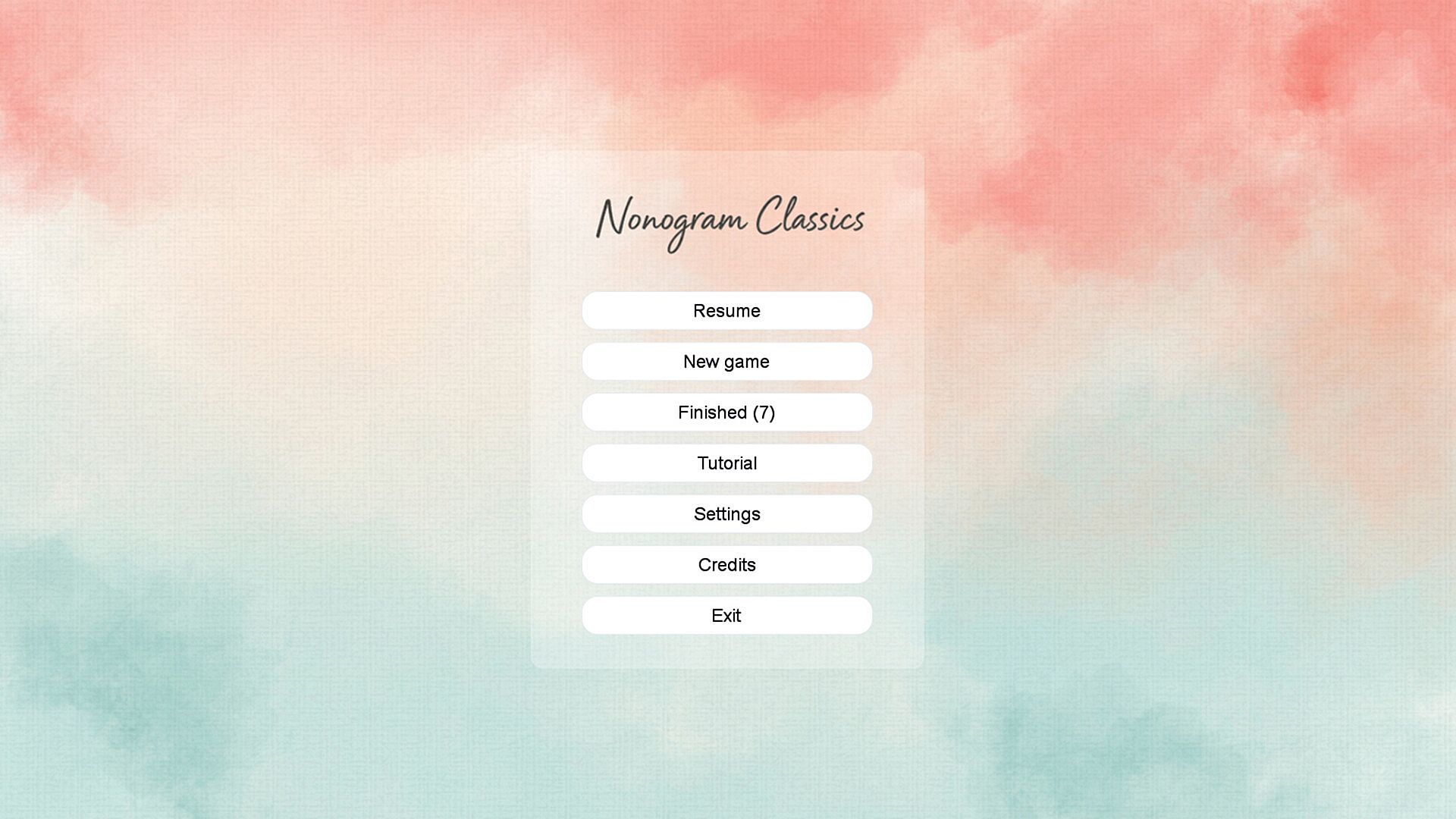
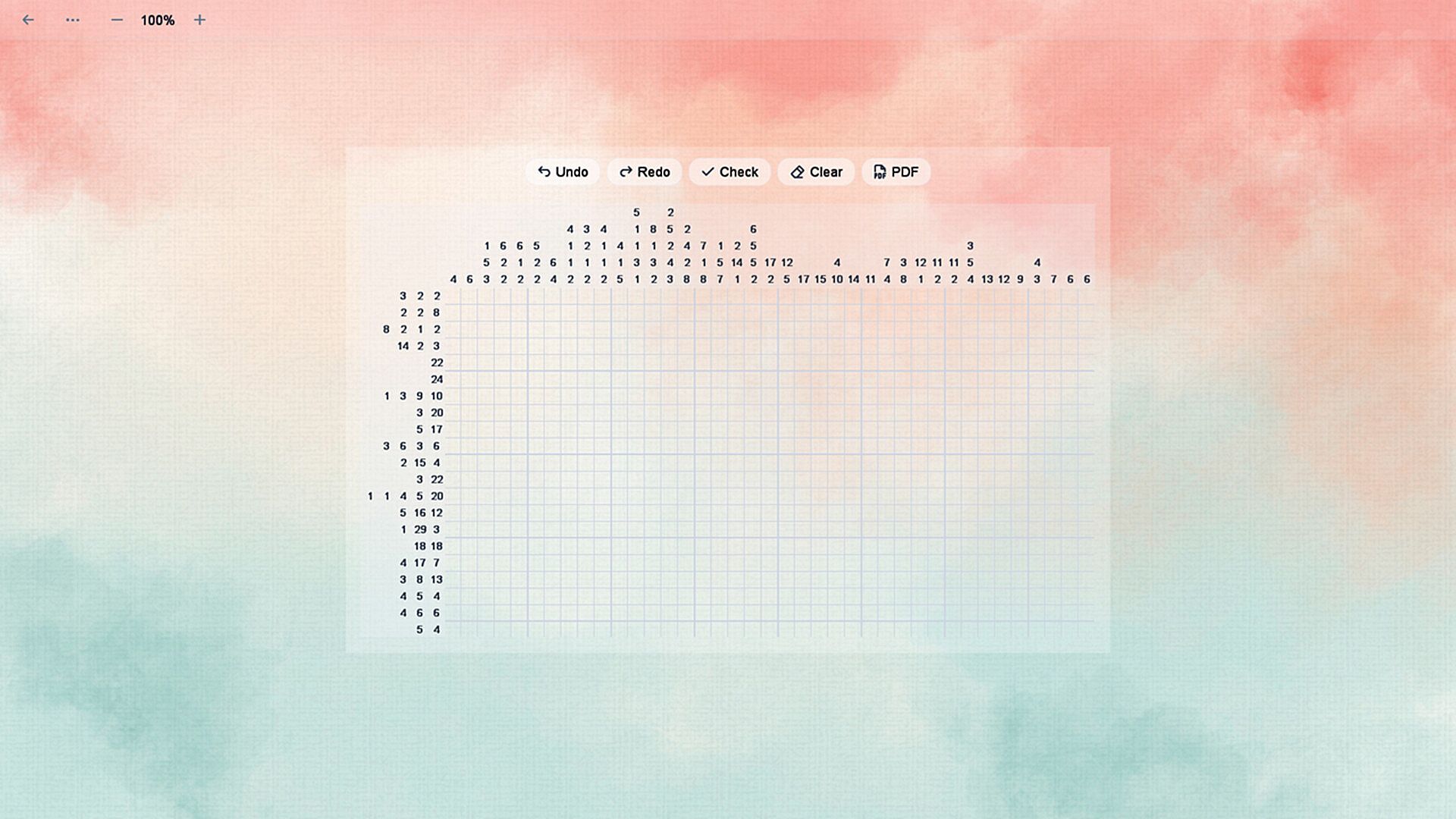
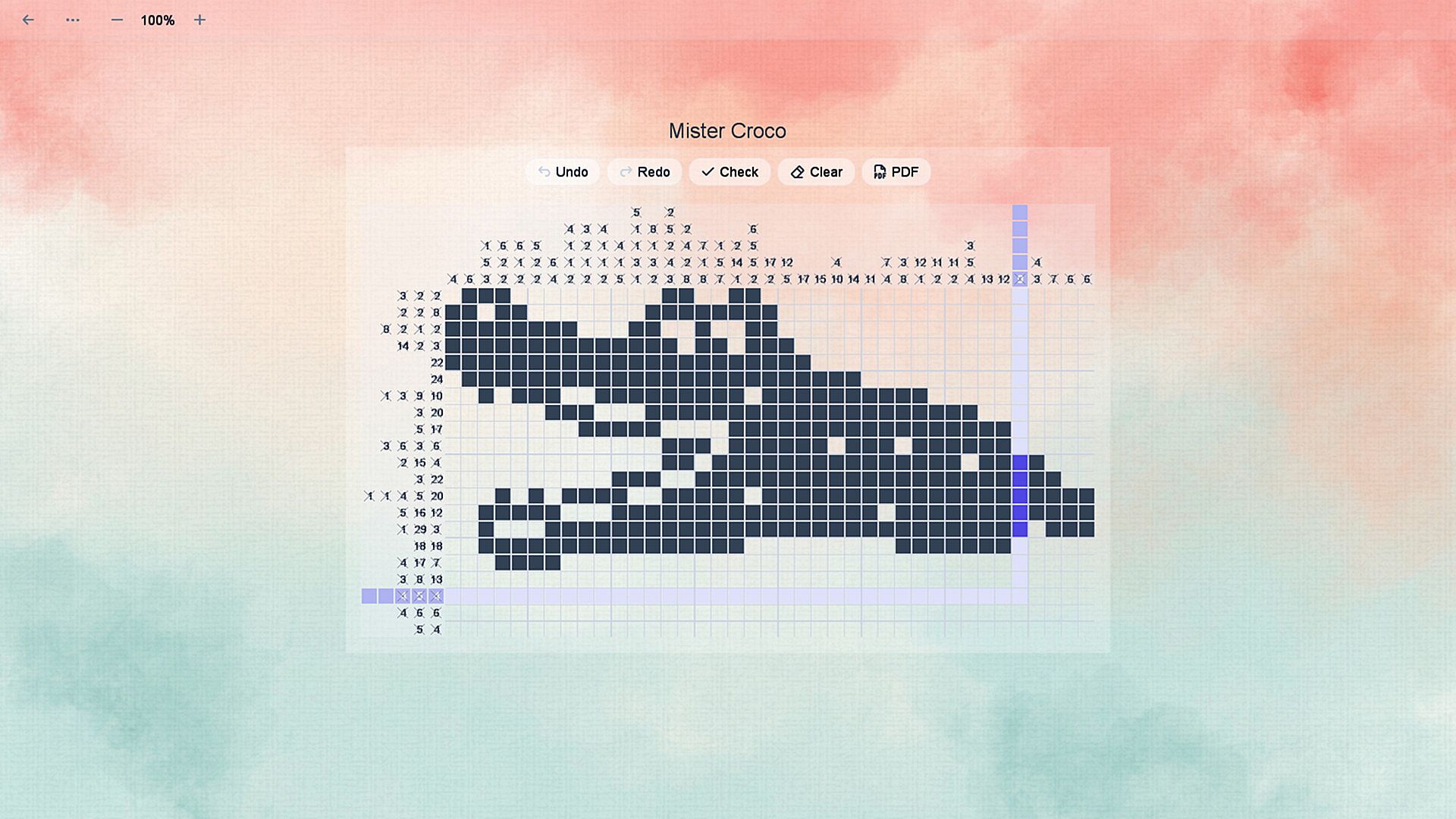
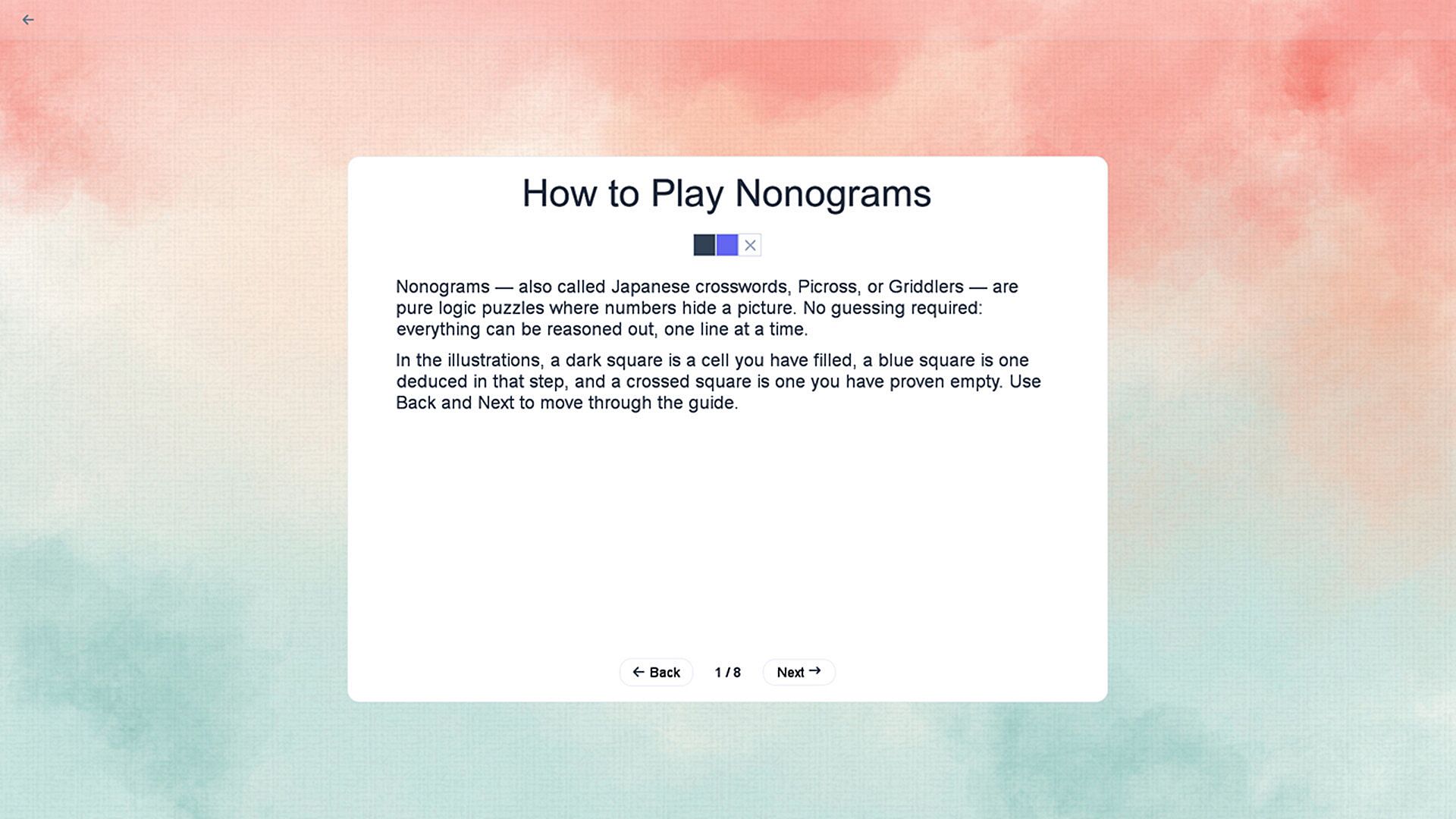
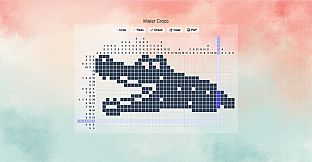
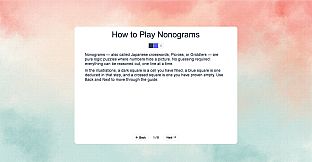
Nonogram Classics to jednoosobowa, relaksująca gra logiczna oparta na klasycznych japońskich łamigłówkach obrazkowych, znanych również jako griddlery, Picross, japońskie krzyżówki lub Hanjie. Rozgrywka polega na wypełnianiu pól zgodnie z podanymi liczbami, aby odsłonić ukryte obrazki w stylu pixel art. Gra skupia się na spokojnym, logicznym myśleniu na komputerze.
Rozgrywka
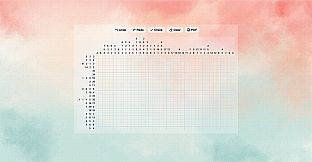
Podstawą jest odczytywanie wskazówek dla wierszy i kolumn, które określają, które komórki należy zamalować, a które pozostawić puste. Każda łamigłówka zaczyna się od siatki i zestawu liczb oznaczających kolejne bloki wypełnionych pól. Poprawne decyzje stopniowo odsłaniają cały obrazek bez konieczności zgadywania. Dostępne są różne rozmiary siatek - od krótkich sesji na mniejszych planszach po dłuższe partie na większych. Rozwiązanie nagradza precyzję i dostrzeganie wzorców, a każde poprawne pole przybliża do finalnego efektu.
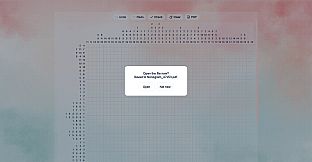
Postęp jest metodyczny i pozbawiony pośpiechu. Grę można w każdej chwili wstrzymać i wrócić do niej później, co sprawdza się zarówno przy krótkich przerwach, jak i przy dłuższych sesjach. Brak limitu czasu i elementów rywalizacji pozwala skupić się wyłącznie na satysfakcji z ukończenia obrazka czystą logiką.
Tryby gry
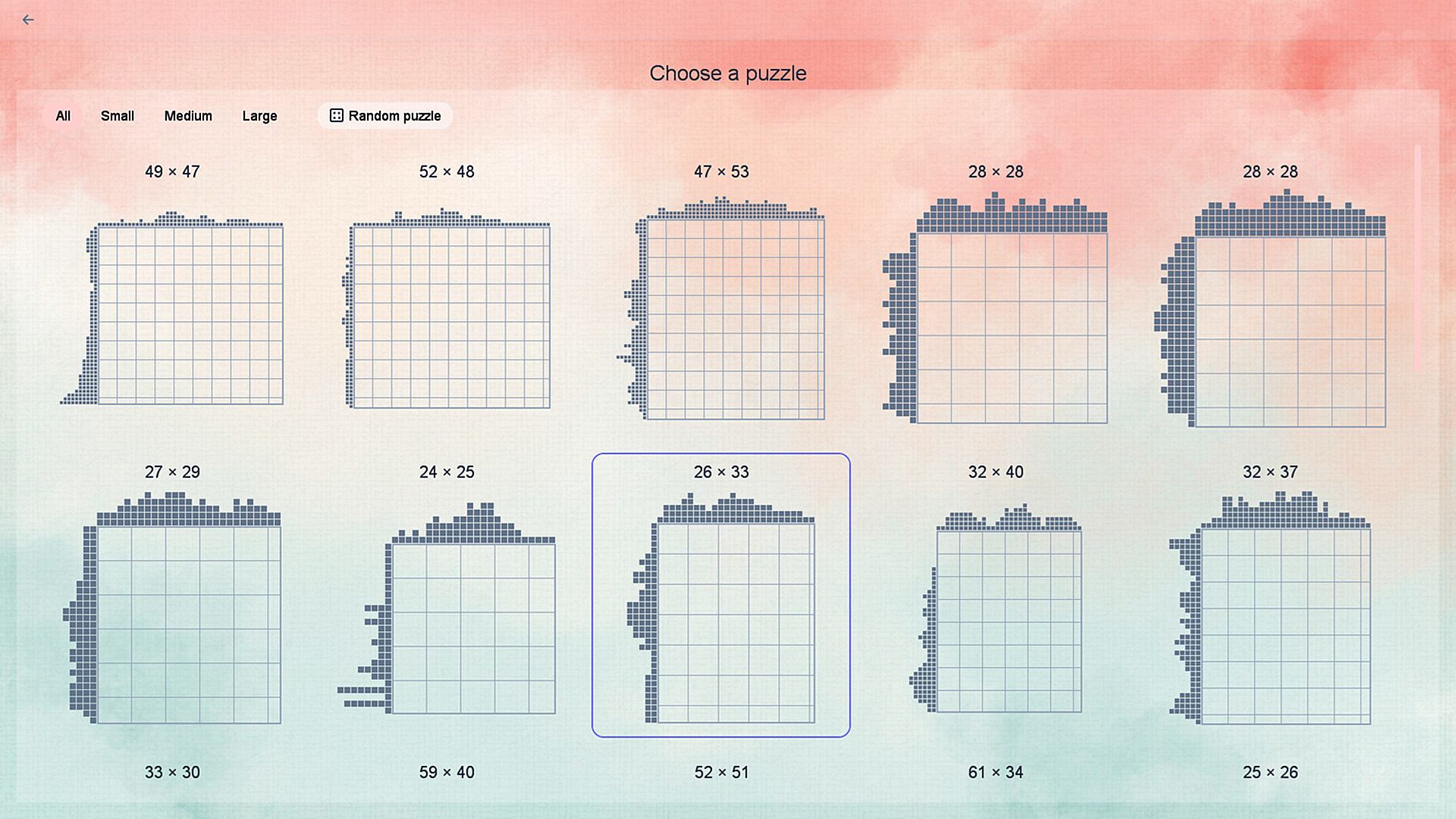
Nonogram Classics oferuje prostą, jednoosobową rozgrywkę opartą na rozwiązywaniu kolejnych nonogramów z obszernej kolekcji. Nie ma trybów wieloosobowych ani rywalizacji. Różnorodność wynika z możliwości wyboru łamigłówek o różnej wielkości i tematyce za pomocą wbudowanych filtrów. Dzięki temu każdy może dopasować sesję do aktualnego nastroju - od szybkich wyzwań po wymagające plansze - bez dodatkowych reguł.
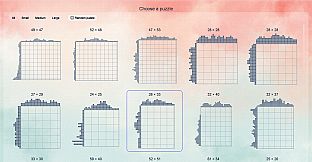
Cała zawartość znajduje się w jednej bibliotece. Gracz może swobodnie przechodzić między łamigłówkami, korzystając z filtrów według rozmiaru, poziomu trudności lub tematu. Taka struktura wspiera zarówno swobodne przeglądanie, jak i celowe ćwiczenie konkretnych typów puzzli.
Zawartość i motywy
Biblioteka zawiera 1000 unikalnych nonogramów podzielonych na ponad 50 tematów. Wśród nich znajdują się zwierzęta, krajobrazy, jedzenie, pojazdy, stworzenia fantasy oraz znane zabytki. Każdy ukończony obrazek prezentuje grafikę zgodną z wybranym motywem. Rozmiary siatek wahają się od kompaktowych 10×10, idealnych na krótkie sesje, po rozbudowane 65×65 wymagające większej koncentracji i strategii.
Tematy zapewniają różnorodność wizualną, podczas gdy mechanika pozostaje niezmienna. Regularnie pojawiają się nowe obrazki, co pomaga utrzymać zainteresowanie przy dłuższej grze. Szeroki zakres rozmiarów pozwala dopasować poziom trudności i czas rozgrywki do własnych preferencji.
Główne cechy
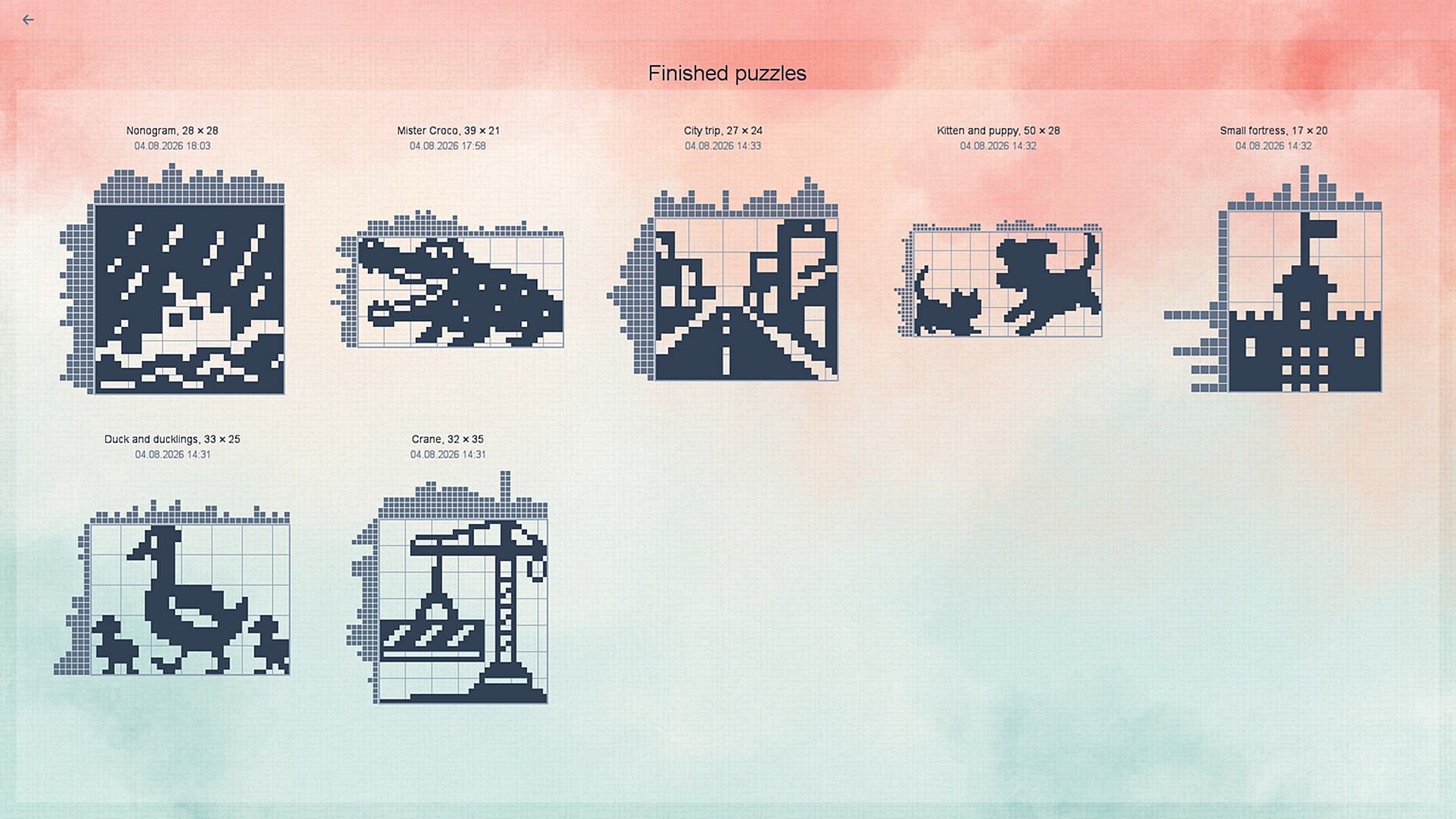
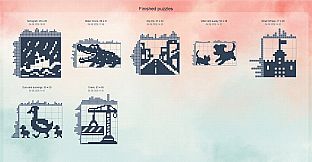
System inteligentnego wyboru umożliwia filtrowanie całej kolekcji według rozmiaru, trudności lub tematu. Dzięki temu szybciej można znaleźć odpowiednią łamigłówkę, dopasowaną do aktualnego nastroju lub dostępnego czasu. Po ukończeniu nonogramu trafia on do galerii wspomnień, gdzie można przeglądać rozwiązane obrazki i śledzić postępy.
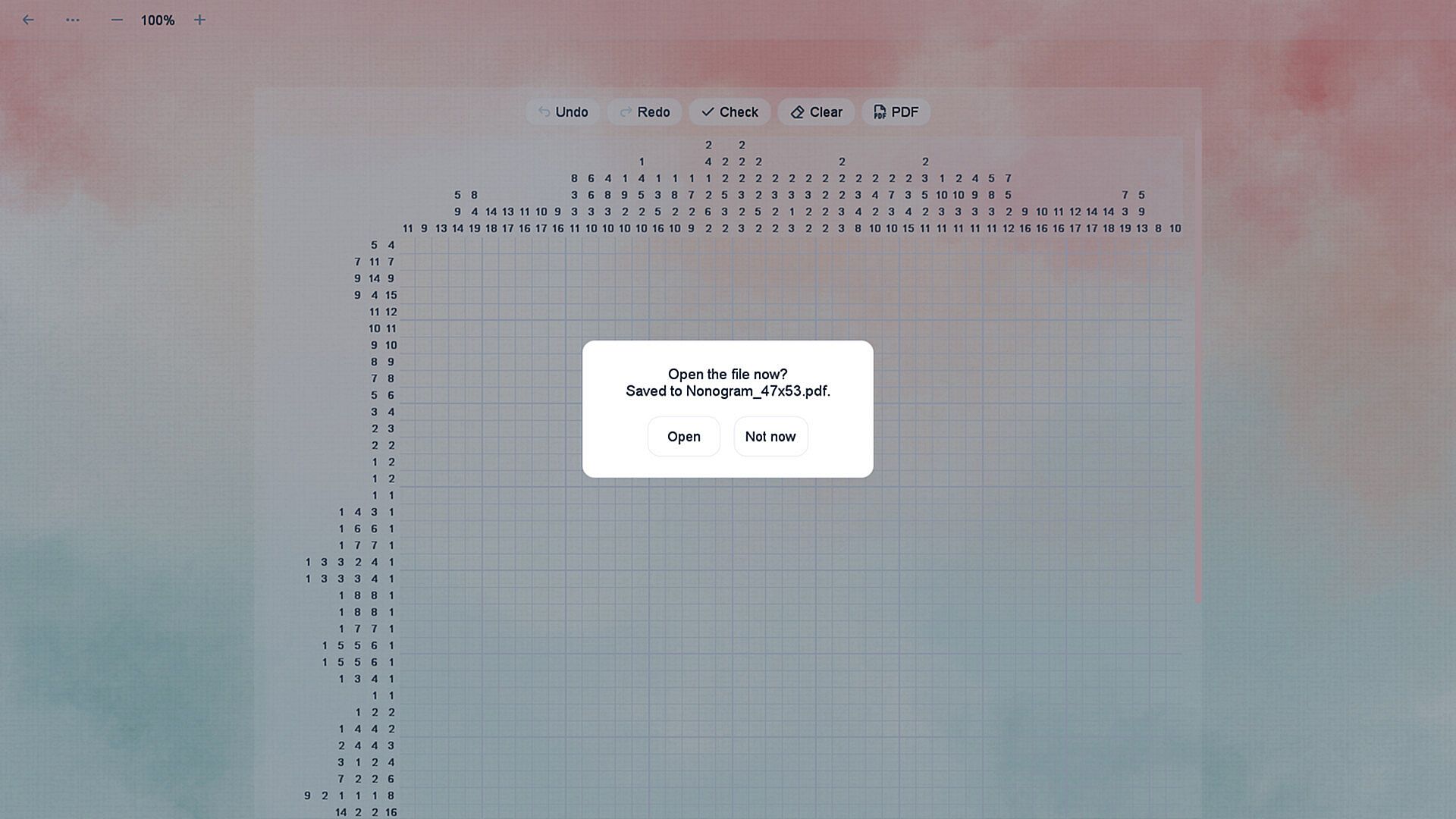
Funkcja eksportu pozwala wygenerować wysokiej jakości pliki PDF z dowolnego ukończonego nonogramu. Pliki te można wydrukować lub udostępnić offline. Opcja ta jest przydatna dla osób, które lubią mieć fizyczne kopie lub chcą zachować ulubione obrazki poza grą.
Czy warto zagrać?
Nonogram Classics jest przeznaczony dla osób lubiących łamigłówki logiczne w stylu sudoku i szukających spokojnej, jednoosobowej rozgrywki na PC. Duża liczba puzzli o różnym poziomie trudności i zróżnicowanej tematyce zapewnia sporo treści na dłuższy czas. Dodatkowe funkcje, takie jak system filtrów, galeria postępów i eksport do PDF, zwiększają wygodę użytkowania bez komplikowania podstawowej mechaniki.
Ze względu na skupienie wyłącznie na rozwiązywaniu nonogramów, bez dodatkowych elementów czy presji czasu, gra trafia w gusta osób ceniących metodyczne myślenie i satysfakcję z odsłaniania obrazków wyłącznie za pomocą logiki. Jednoosobowy format i spokojna prezentacja sprawiają, że jest to dobry wybór dla każdego, kto szuka niewymagającego, a jednocześnie angażującego tytułu logicznego. Jako nowa produkcja bez dostępnych jeszcze recenzji, jej atrakcyjność opiera się na opisanych funkcjach oraz uznanej popularności gatunku nonogramów.