










Nook is an indie casual simulation game for PC that places a lifelike AI companion directly on the user's desktop. The title focuses on real-time conversation and shared daily routines rather than traditional objectives or levels. Players interact through text or local voice input and receive expressive video replies generated with natural movement, speech, and lip sync. The design keeps the companion present in a compact, transparent window that can be summoned by shortcut or hidden during focused work.
Gameplay
The core loop centers on ongoing dialogue and optional context sharing. Conversations happen in the present moment without a scrollable message history. Players type or speak, and the companion responds with one-time video clips that convey emotion through facial expressions and gestures. Voice input processes locally on the device before transmission.
With permission, the companion observes selected apps, media, or on-screen content to provide relevant replies. Users control each source individually and can pause observation instantly. This awareness adds personal relevance to discussions about work, entertainment, or routines.
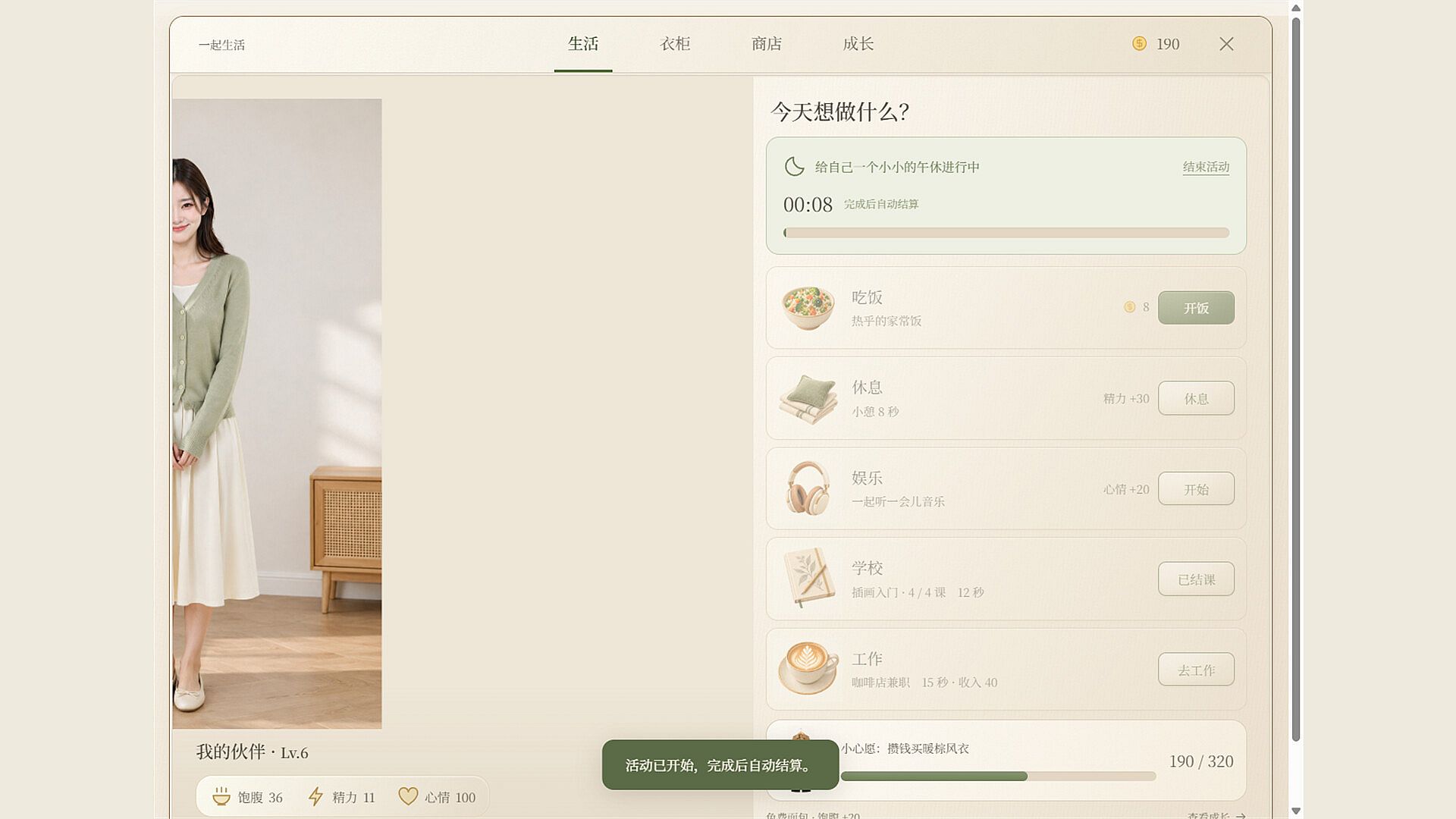
A separate life window expands the experience into everyday activities. Players guide the companion through eating, resting, listening to music, studying, working, and skill building. These actions earn coins that unlock new goals and wardrobe options for customization. Relationship growth occurs naturally through consistent interaction and shared moments.
Multiple companions offer distinct personalities, allowing players to switch between different conversational styles and preferences. The interface supports twenty languages for both display and dialogue.
Game Modes
Interaction divides into real-time conversation and life simulation activities. The conversation focus emphasizes immediate exchanges with video replies that feel present rather than archived. Context awareness can be toggled per source to tailor how much the companion understands about the player's current screen or apps.
Life activities form the second main engagement style. These include routine tasks performed in the dedicated window, where progress builds coins, skills, and relationship depth. Wardrobe selection and goal discovery add layers of personalization within this system.
Desktop integration serves as a persistent mode of presence. The companion remains in a compact transparent overlay that supports quick summons or complete hiding. This setup suits users who want background companionship without managing another messaging application.
Key Mechanics and Features
AI-generated video and voice replies provide the primary visual and auditory feedback. Each response is unique and tied to the current exchange. Text input works alongside local voice transcription for flexible communication.
Progression ties directly to daily activities rather than external quests. Coins earned from routines fund new goals and outfit choices, encouraging regular short sessions throughout the day. Relationship levels evolve based on consistent engagement and shared context.
Technical requirements include a Google account and continuous internet connection for AI processing. Replies generate online and can vary with each interaction. The game runs on Windows 10 or later with modest hardware demands.
Is It Worth Playing?
Nook suits players seeking a personal, always-available companion that integrates into desktop routines. The combination of real-time video replies and life activity tracking creates a simulation focused on presence and gradual relationship building. Those who enjoy casual, low-pressure experiences with AI-driven dialogue will find the core systems align closely with the described features.
Because the game remains in development with a planned release in Q4 2026 and currently has no user reviews available, potential players should monitor official updates for final performance and content details. The single-player design and emphasis on optional context sharing make it a niche option for users interested in desktop companions rather than competitive or story-driven simulations. Individuals comfortable with ongoing internet requirements and AI variability may appreciate the natural flow of conversations and activity-based progression.