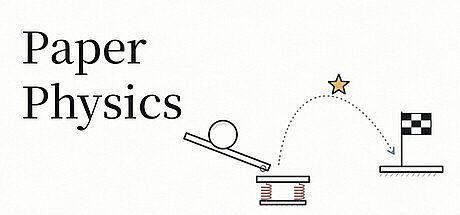


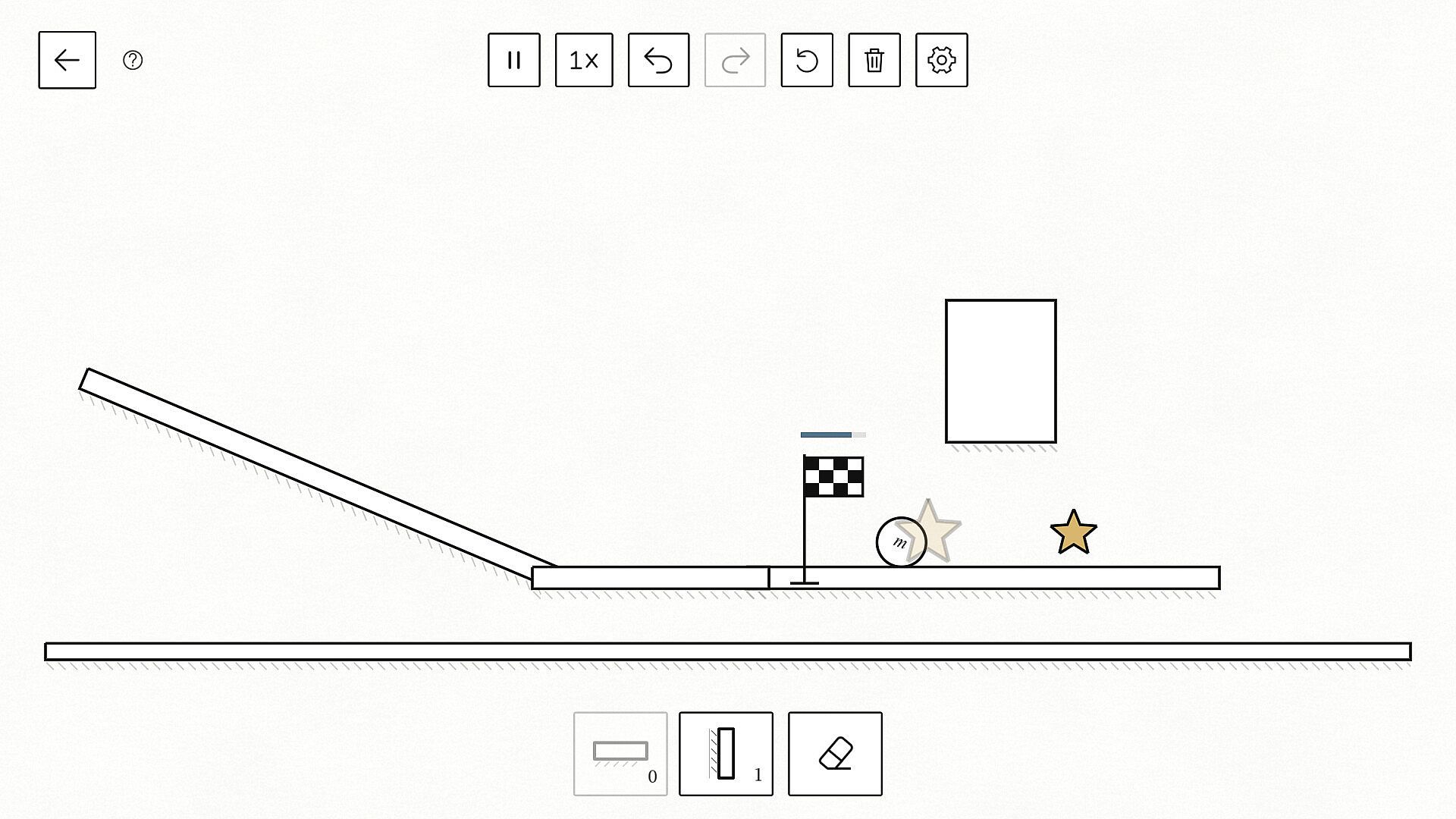
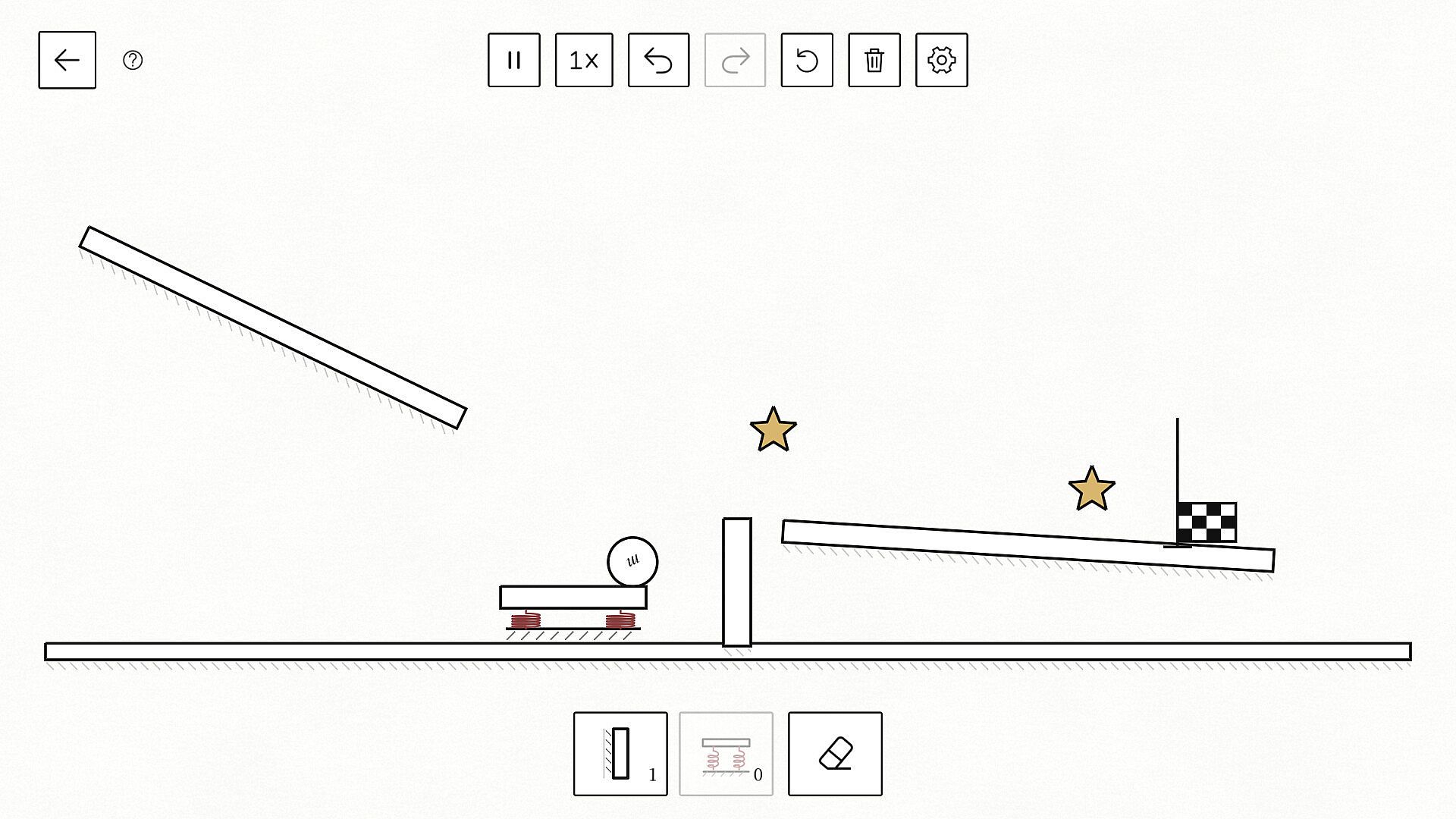
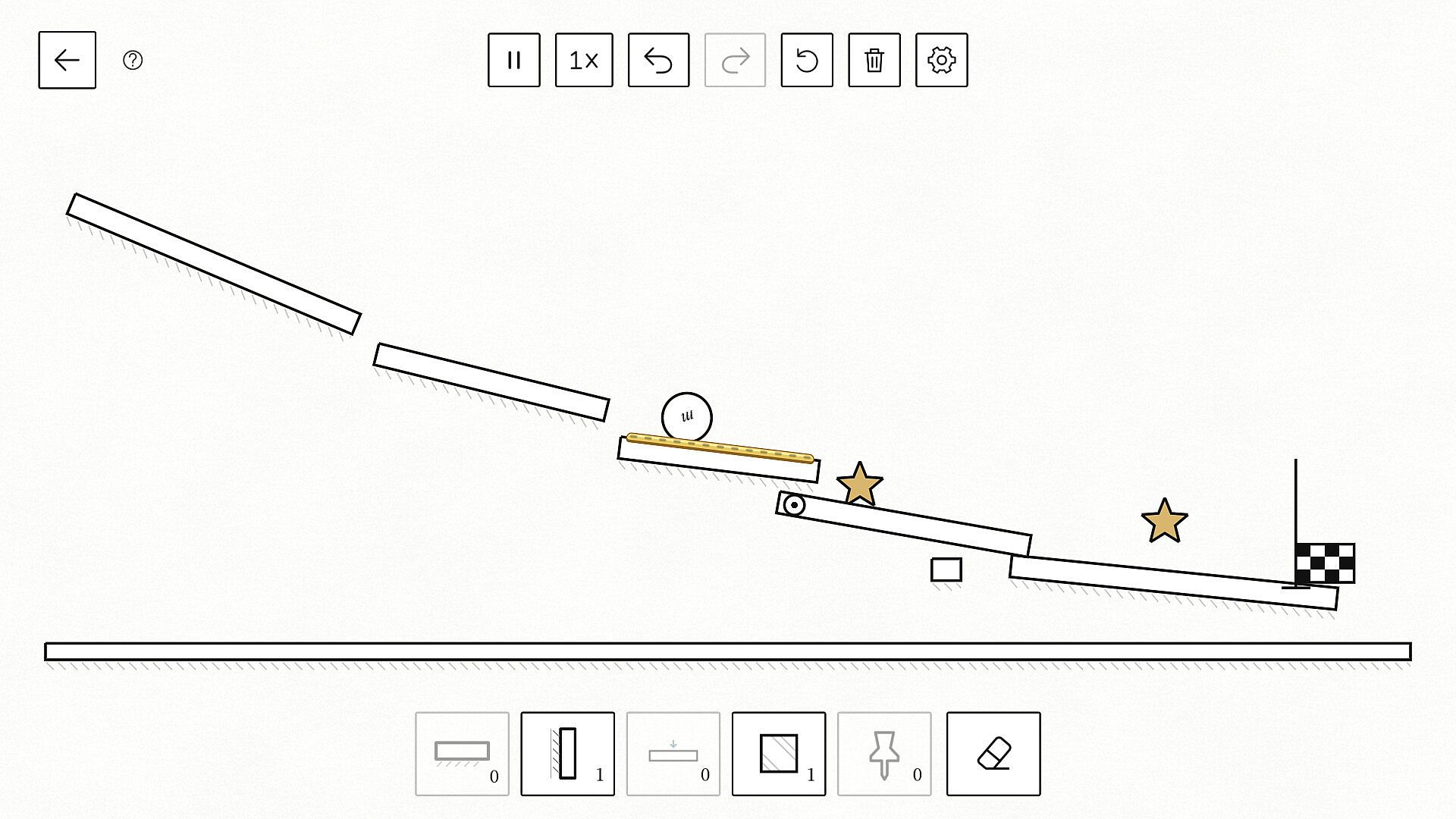
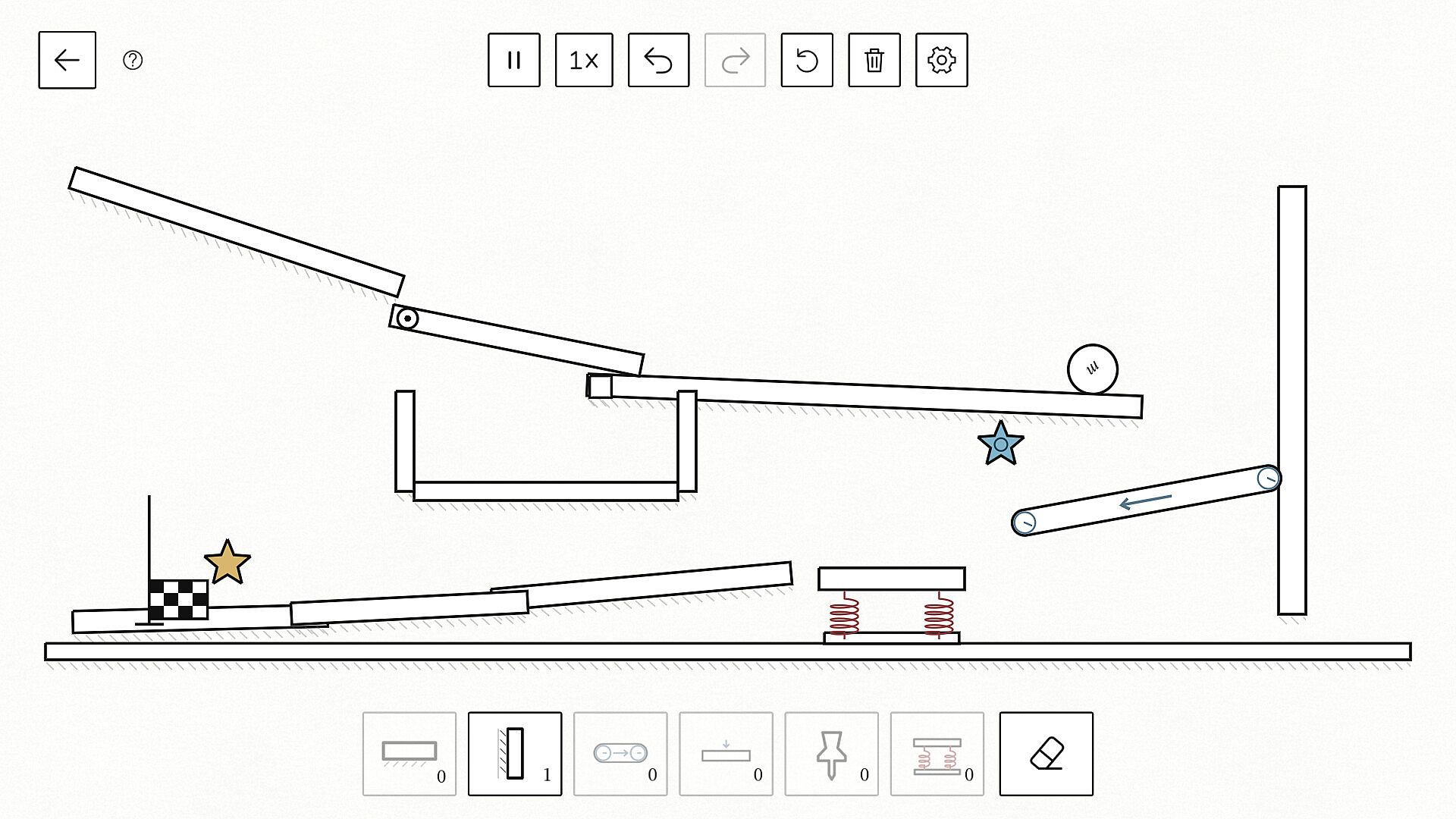
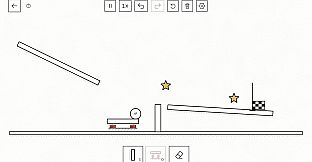
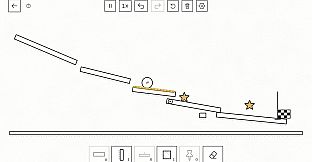
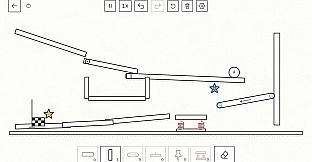
Paper Physics is a casual indie physics puzzle game for PC that challenges players to guide a ball through inventive setups to reach the finish line on each page.
Gameplay
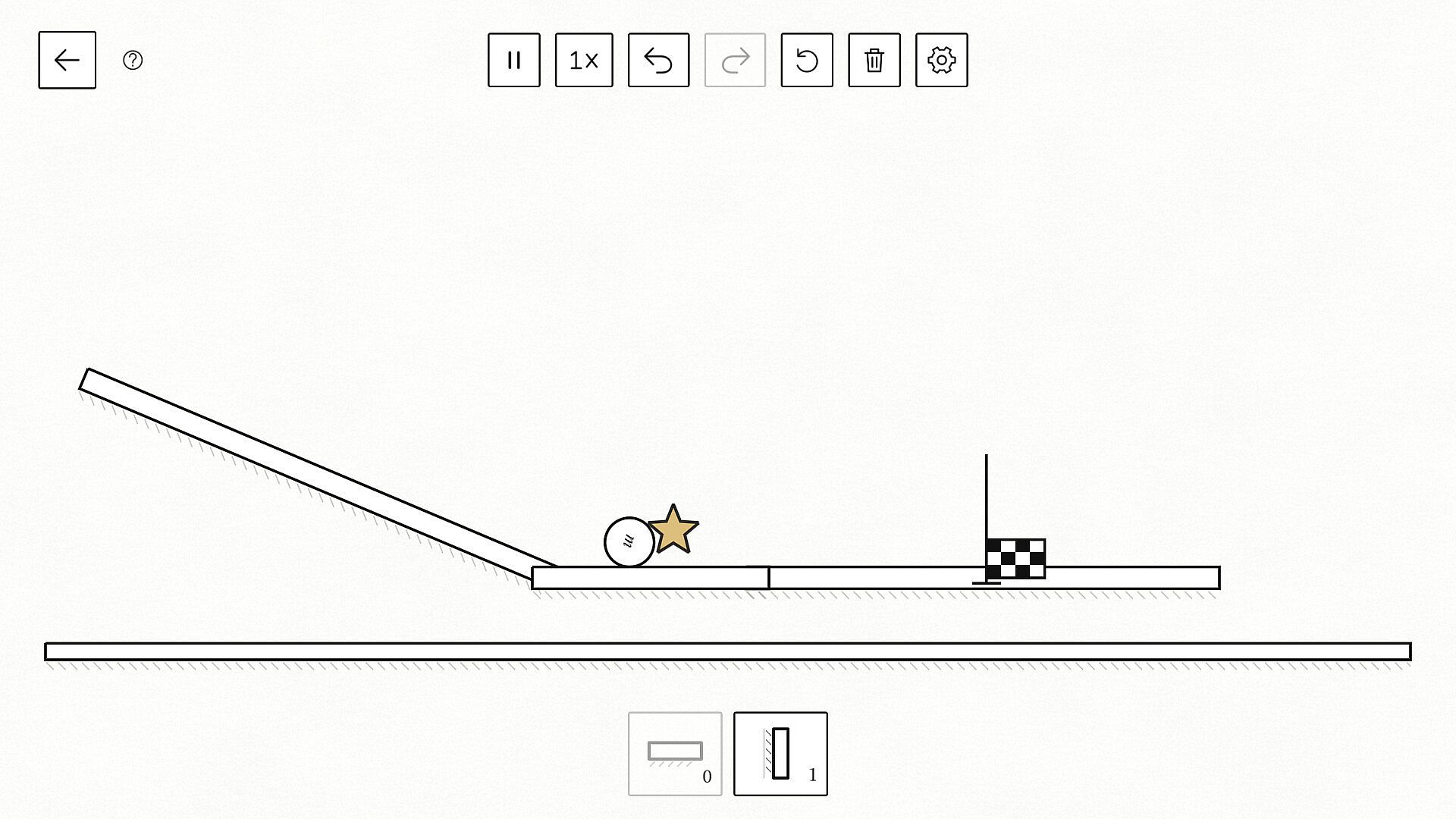
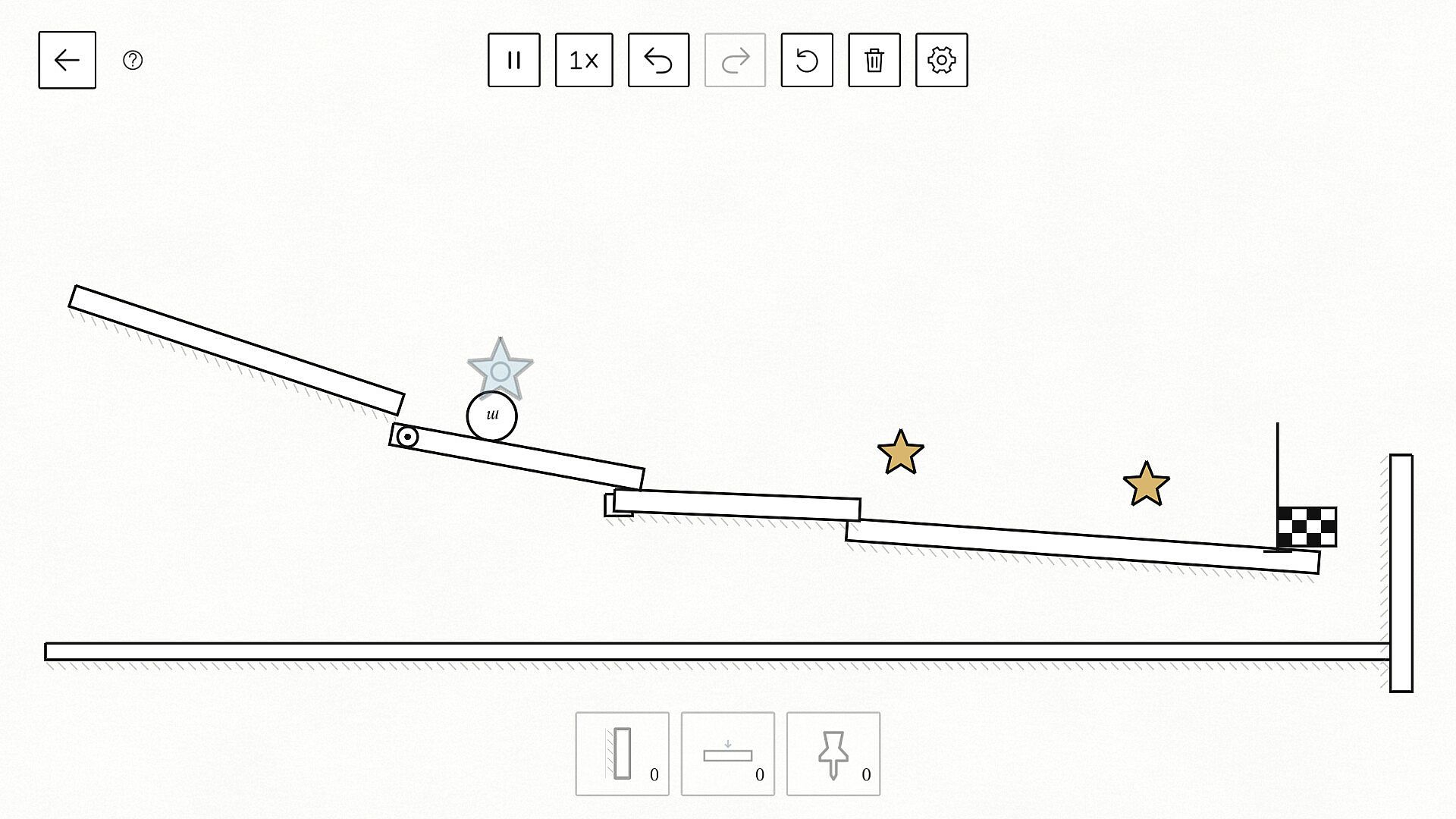
Players select items from a shelf and place them on the page by clicking or dragging. Options include laying down planks, pinning boards into pivots, launching the ball with springs, or removing obstacles. Each level includes one extra fixed guard that starts upright and can be rotated to block the ball, bridge gaps, or alter paths. The core loop revolves around experimenting with these elements to create a working route for the ball.
The puzzle remains fully editable even after pressing play. Players can place, move, or erase items while the ball rolls, allowing real-time adjustments to its path. Run Again preserves the current construction for further testing, while Start Over resets the entire level. Undo and redo functions support quick iteration during attempts.
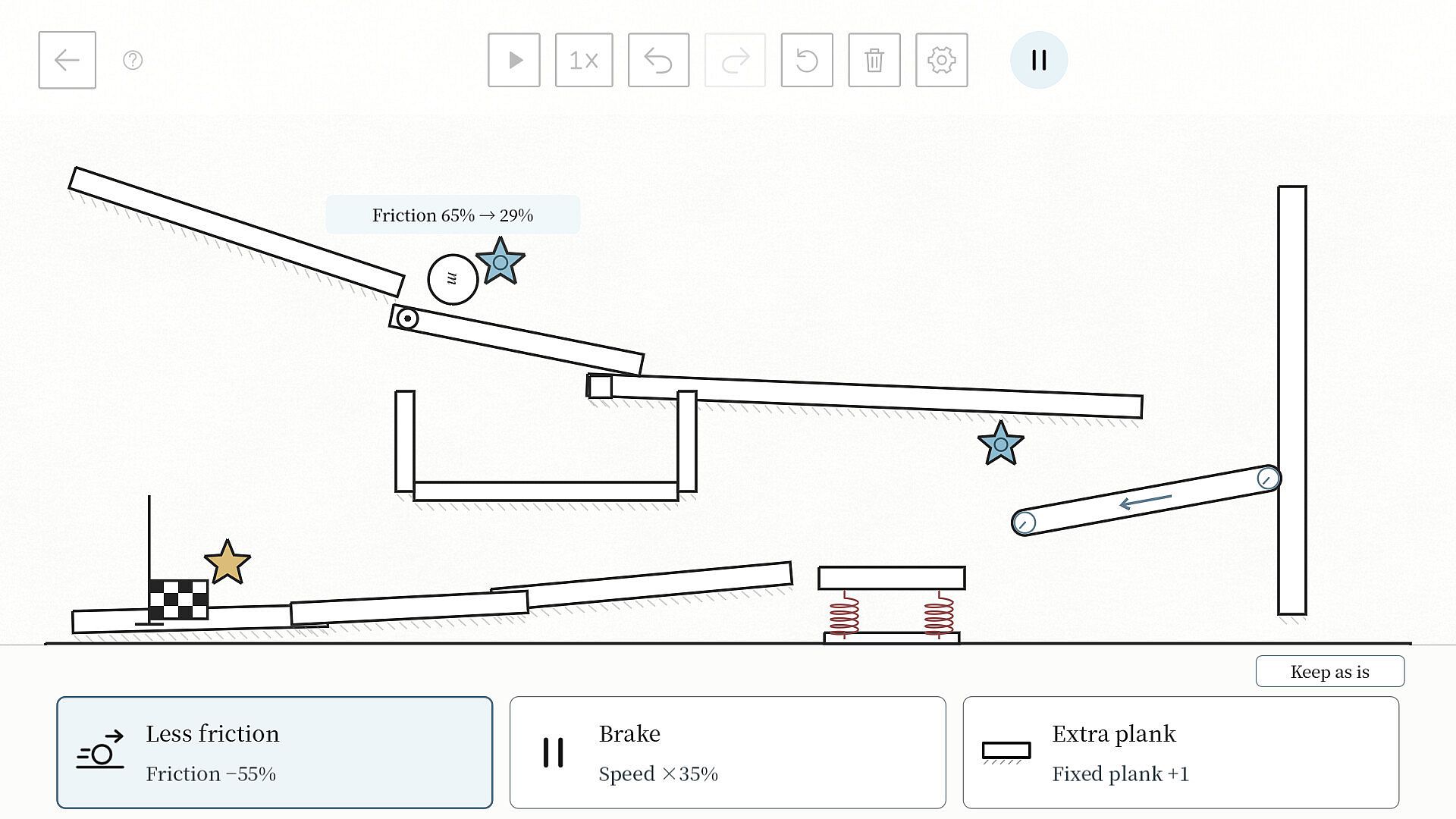
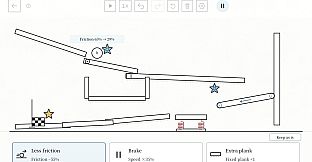
Blue stars collected during successful runs unlock new abilities over time. These include bounce, glide, impulse, an extra plank, jump, brake, and reverse. The abilities expand options for handling different level layouts. Sticky hazards and multi-floor designs further influence how routes function and require adaptive solutions.
Game Modes
Paper Physics focuses on a single-player puzzle experience across a series of levels. Each level presents a fresh page with its own layout and constraints, encouraging creative problem-solving. Progression comes through completing these challenges and gathering stars to access new tools and abilities.
There are no separate competitive or cooperative modes described. The emphasis stays on individual experimentation within the provided levels, where solutions can vary widely based on how items are arranged and abilities are applied.
Key Mechanics and Features
Placement and interaction form the foundation of every solution. Items interact with the ball through realistic physics responses, and the ability to edit mid-motion adds a layer of dynamic correction not found in static puzzles. The rotating guard serves as a versatile tool that players reposition to fit specific needs on each page.
Star collection ties directly into ability unlocks, creating a gradual expansion of options. Early levels rely on basic placement, while later ones benefit from the growing toolkit. Multi-floor elements and sticky surfaces introduce variables that change how the ball behaves and how routes must be planned.
Is It Worth Playing?
Paper Physics suits players who enjoy hands-on physics puzzles and iterative experimentation. The editable nature of levels while the ball is in motion sets it apart from more rigid puzzle formats, rewarding quick thinking and adjustments. Those who like casual indie titles with clear goals and room for personal creativity will find a consistent loop here.
Availability on PC makes it accessible for short sessions or longer experimentation periods. The gradual introduction of abilities keeps the experience fresh across multiple levels without overwhelming new players at the start. If the described mechanics align with an interest in building and refining solutions, the game offers a focused puzzle experience worth trying.