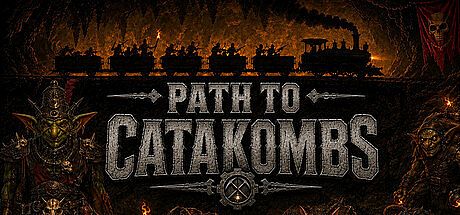


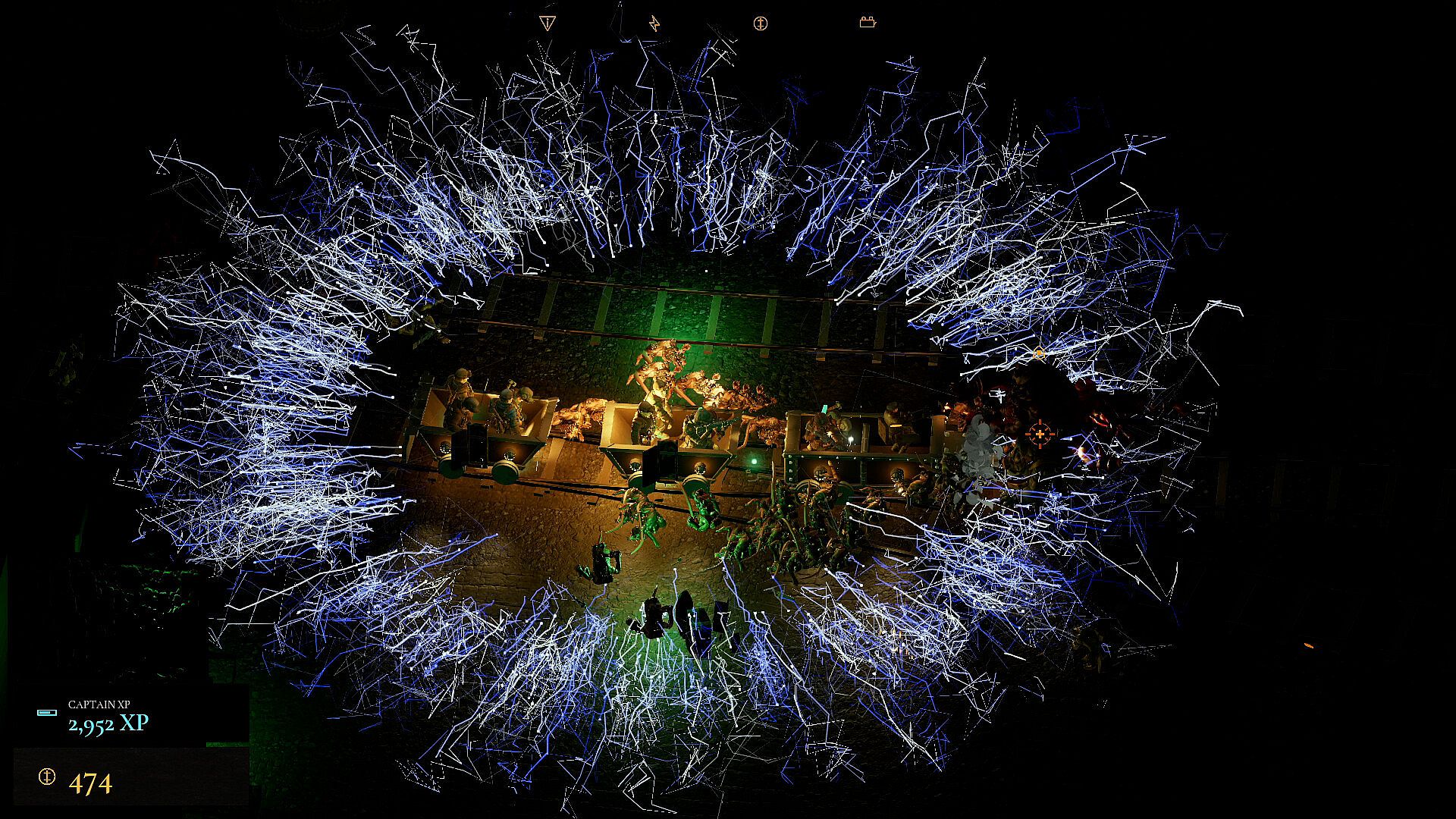
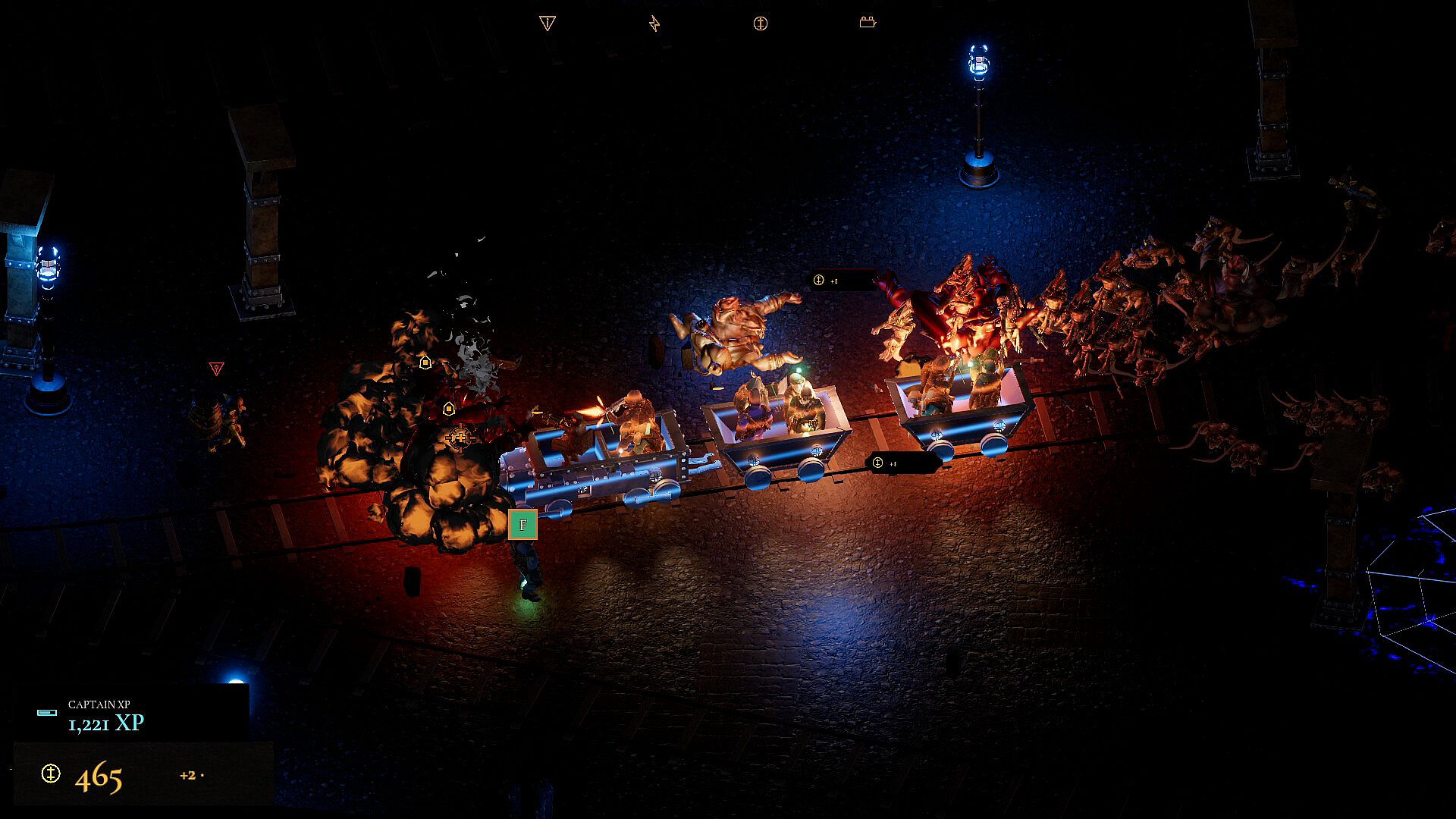
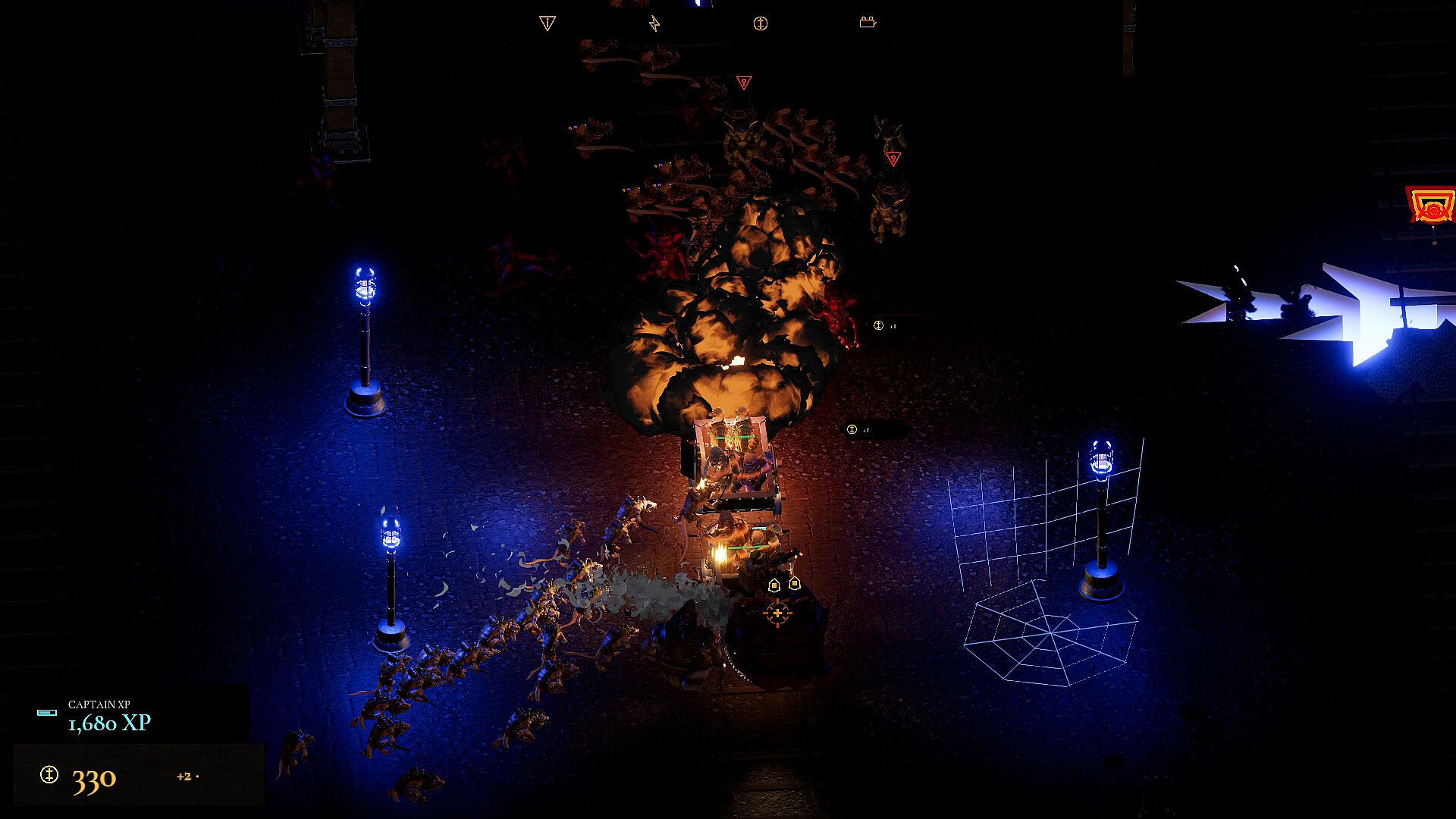
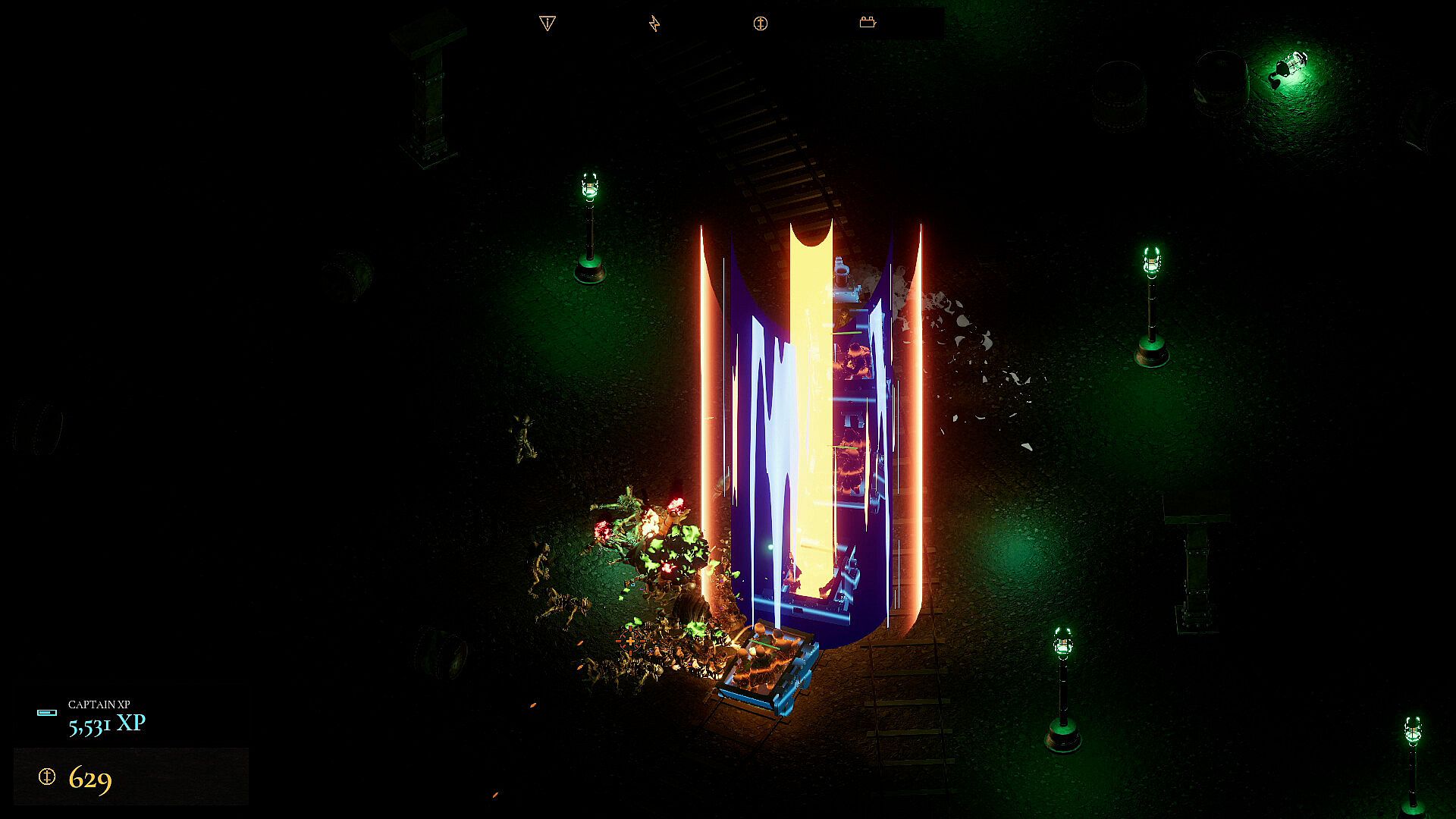
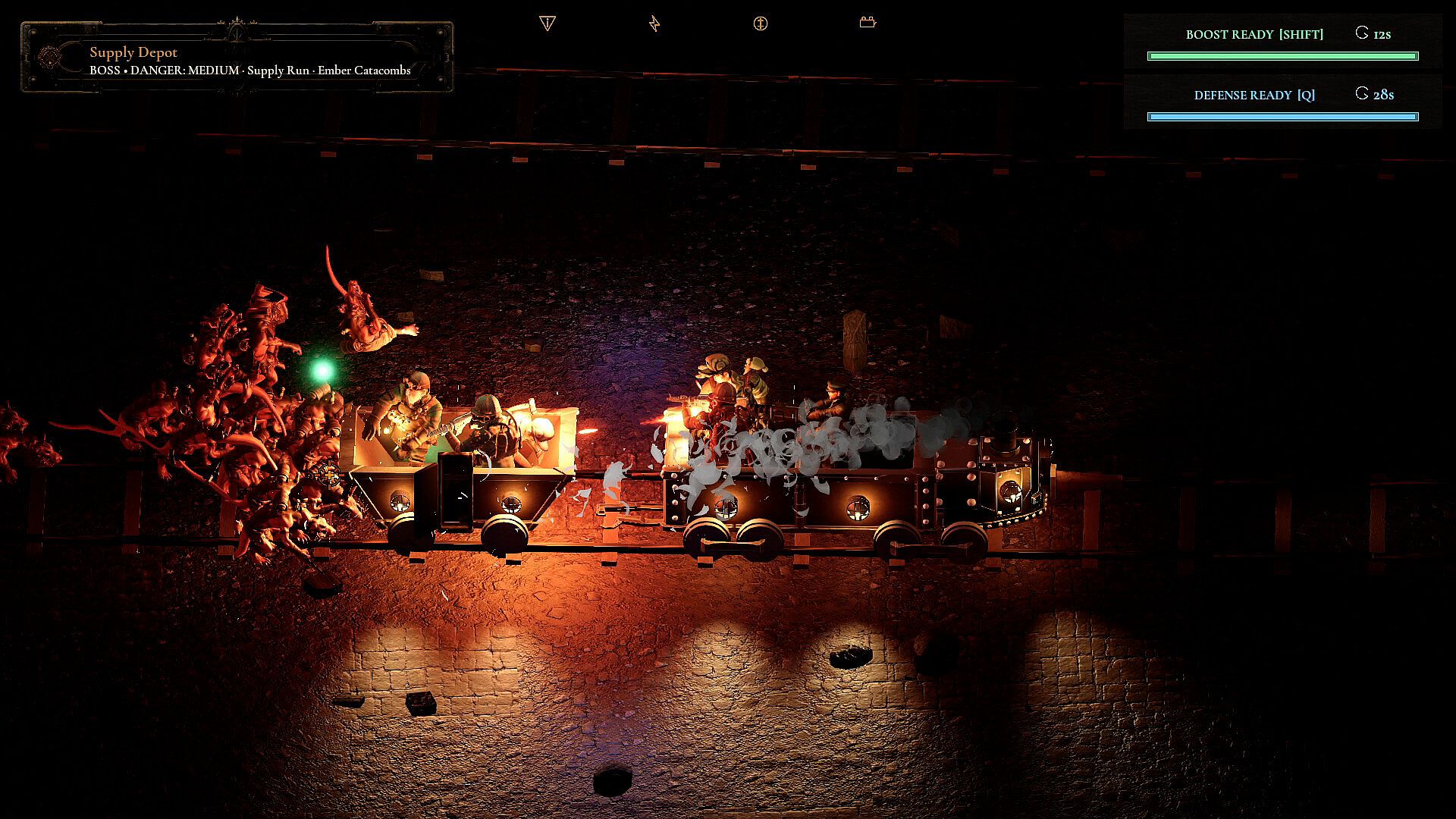
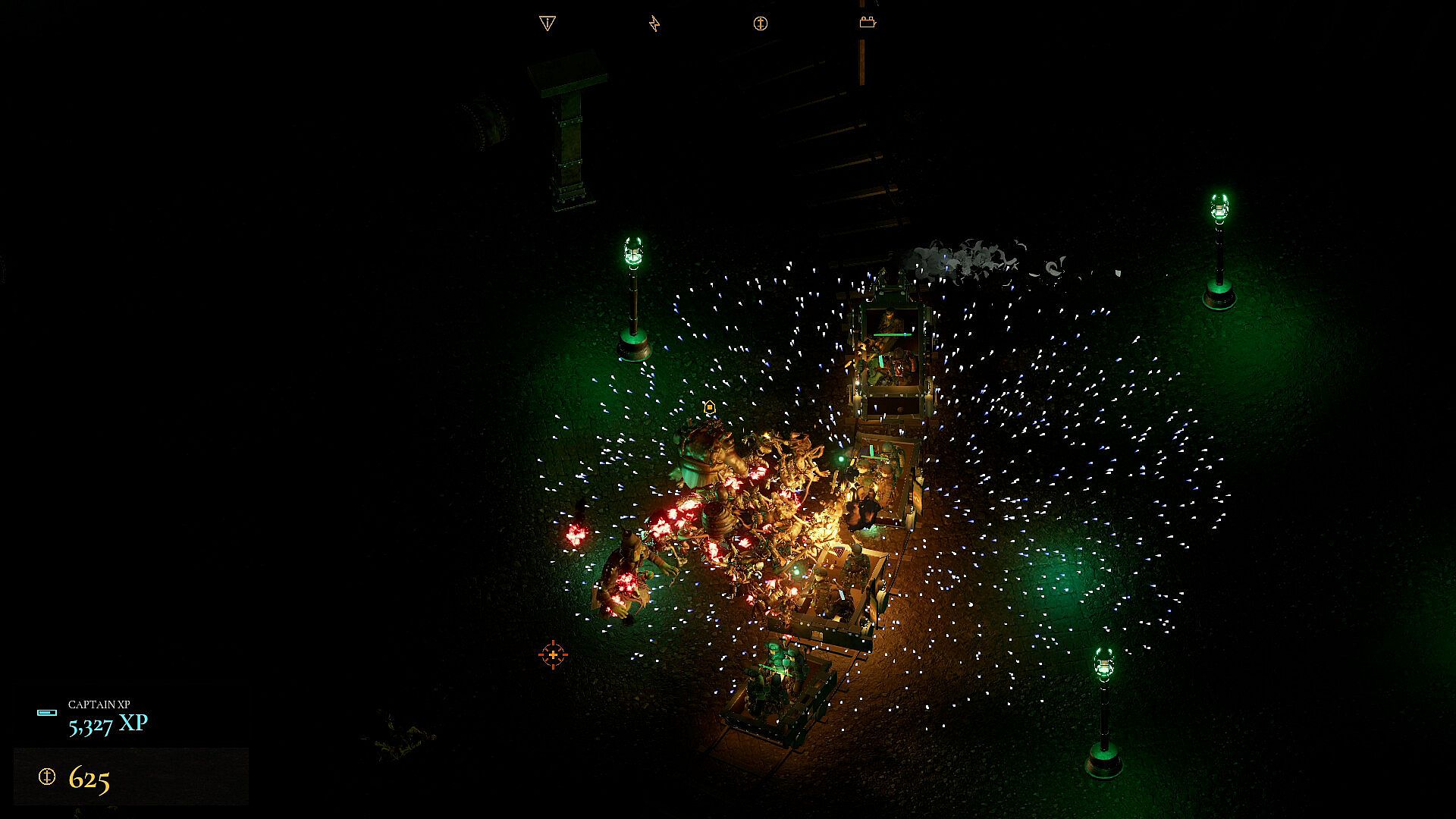
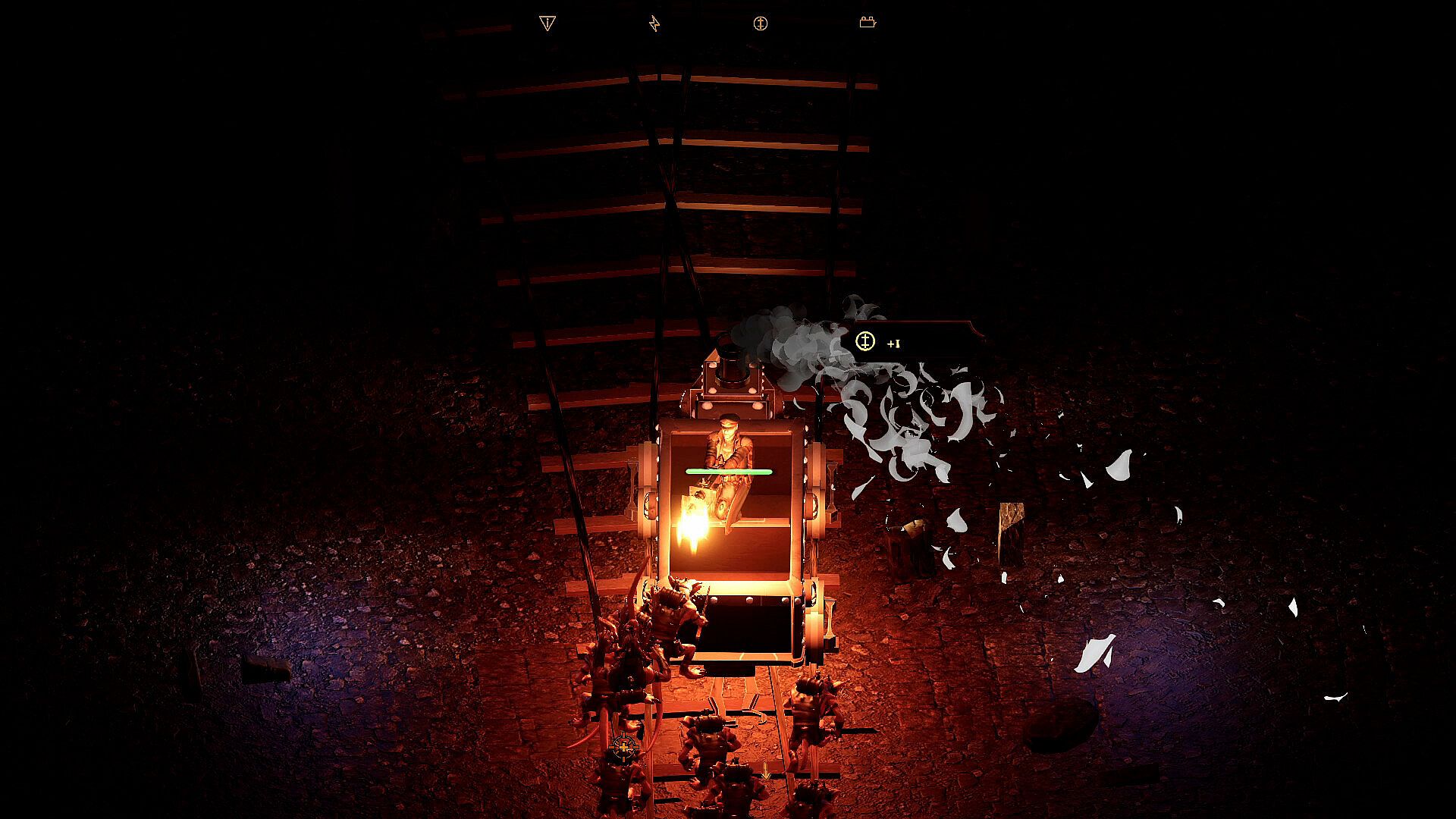








Path to Catakombs is an action-strategy roguelite that places players in command of a combat train traveling through procedurally generated underground catacombs on PC. The core experience centers on defending a locomotive and its attached wagons against waves of kobold enemies while advancing through a campaign of nine locations.
Gameplay
The gameplay loop revolves around managing the train as both a mobile fortress and a combat platform. Players man the locomotive's rotating gun, direct crew fire from different wagons, adjust train speed, and respond to enemies that swarm the tracks or board the cars. Enemies include distinct roles such as armored vanguards that target specific wagons, fast flankers that strike from the sides, ranged attackers positioned at the rear, and bombers that attempt to close in before detonating.
Progression involves expanding the convoy by adding wagons and recruiting crew members including Gunners, Alchemists, and Mechanics. These soldiers gain experience through combat and repairs, then receive promotions at pit stops along branching upgrade paths. A Gunner might specialize in long-range sniping or rapid Gatling fire, while an Alchemist can focus on fire, ice, poison, or variable mixtures, and a Mechanic can bolster individual wagons or sustain the full convoy. Wagons carry limited slots for soldiers and modules, with options to add armor, rams, or emergency charges. Destroyed wagons remain attached until repaired, but losing the locomotive ends the run.
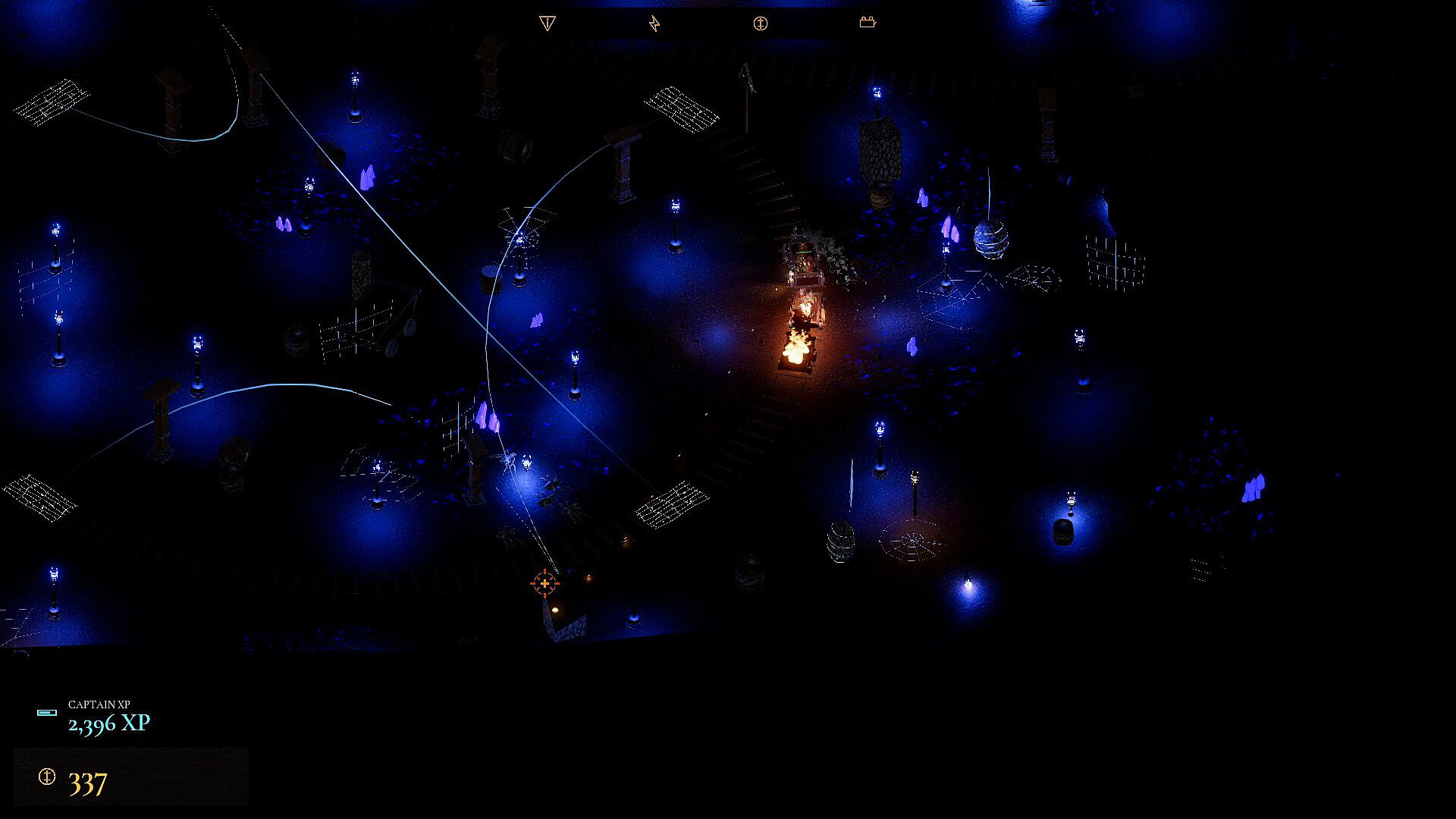
Procedural generation shapes each expedition with branching routes, combat rooms, traps, roadblocks, and hidden elements. Players choose paths at junctions, weighing greater rewards from active fights against the risk of overwhelming damage. Three major bosses appear across the campaign: a chasing ogre, a wall-attacking spider, and a kobold lord that summons reinforcements. Difficulty increases with deeper travel as enemies strengthen and elites join the fray.
Game Modes
The game operates as a single-player roguelite with a structured nine-location campaign. Each run features procedurally generated locations and routes that change between attempts, creating varied paths through the catacombs. Players select routes at junctions to balance risk and reward, pushing through encounters or retreating when the train sustains too much damage. No separate multiplayer or additional named modes appear in available details.
Train Building and Crew Management
Building the train forms a central strategic layer. Wagons attach to form a convoy where every car contributes crew and equipment, yet remains vulnerable. Armor plating, ramming attachments, and emergency systems provide defensive and offensive tools. At pit stops, players repair damage and restore wrecked cars while assigning upgrades. Crew development creates specialized roles that adapt to different threats, turning basic recruits into focused assets over multiple runs.
Enemy coordination adds tactical depth. Squads combine roles to pressure the train from multiple angles, forcing constant adjustments to gun positioning, crew assignments, and speed. The underground environment grows more hostile with each location, introducing stronger variants and requiring adaptive route choices.
Is It Worth Playing?
Path to Catakombs suits players who enjoy roguelite runs combined with real-time action and strategic resource management. The train defense mechanics and crew progression offer repeated attempts with meaningful decisions on upgrades and path selection. Those drawn to indie titles blending simulation elements with combat will find the procedural catacombs and boss encounters provide consistent challenges. The experience remains single-player focused with no confirmed free modes or seasonal content at this stage.