


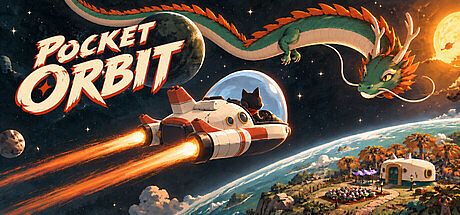


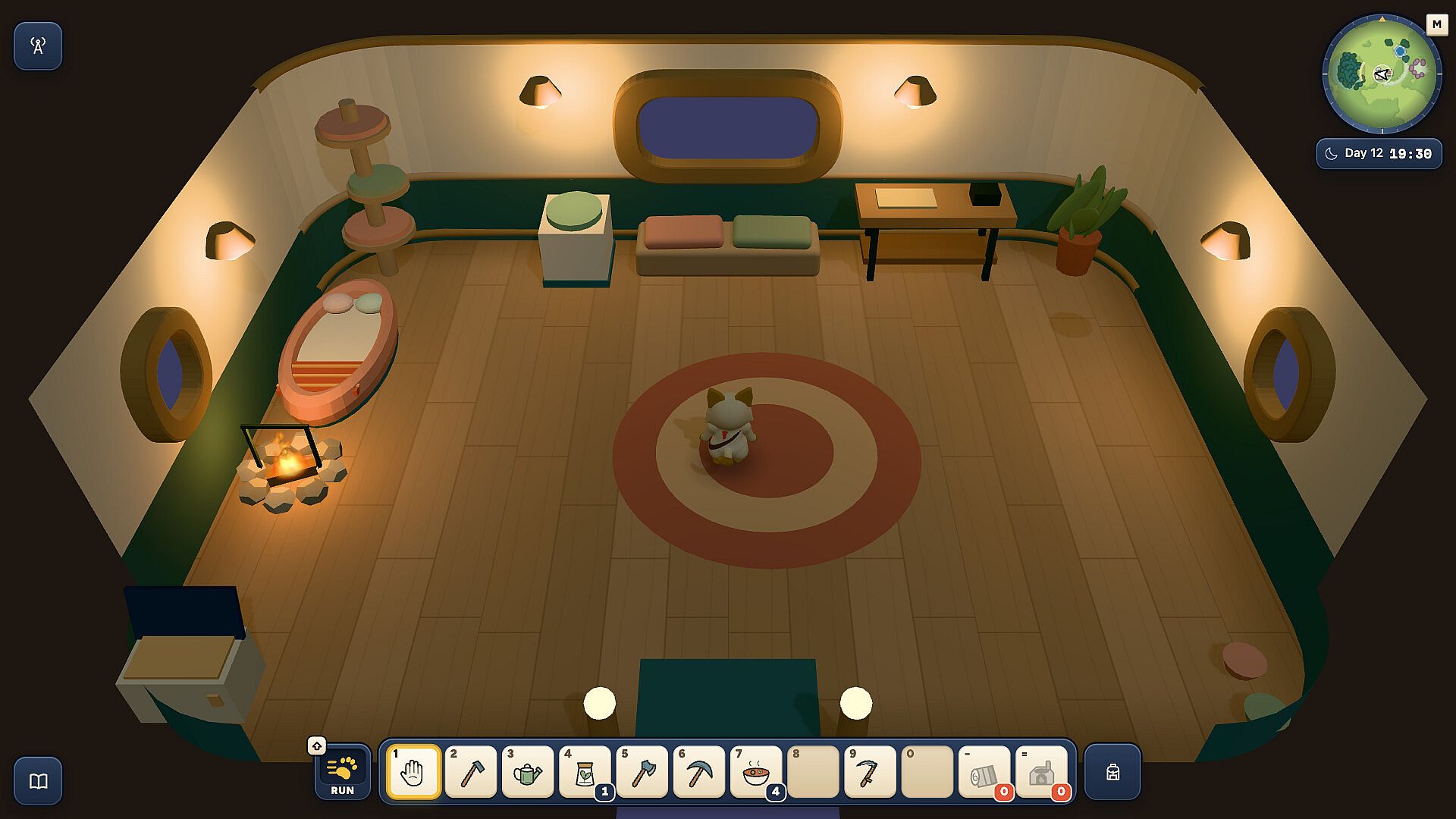
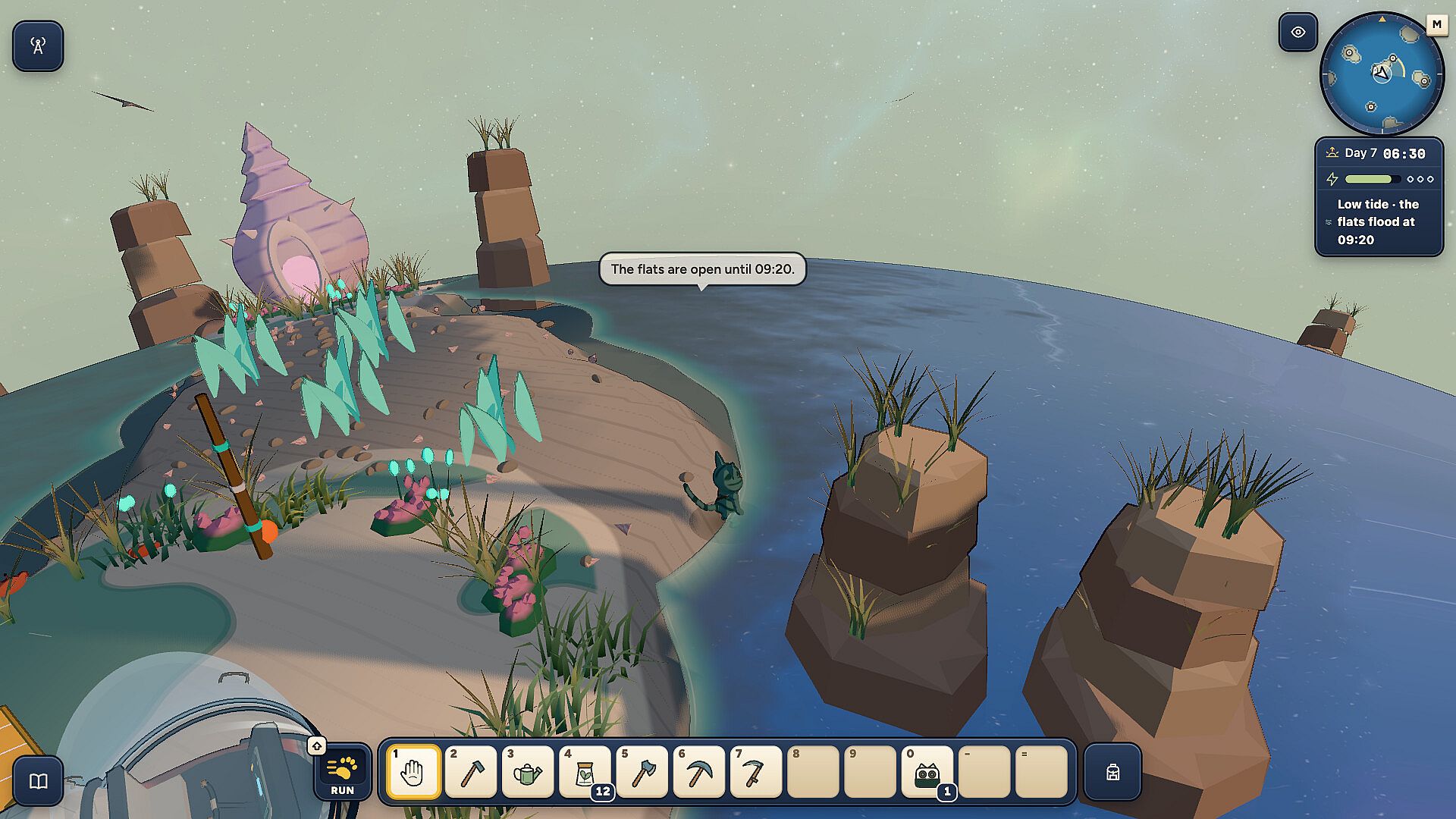
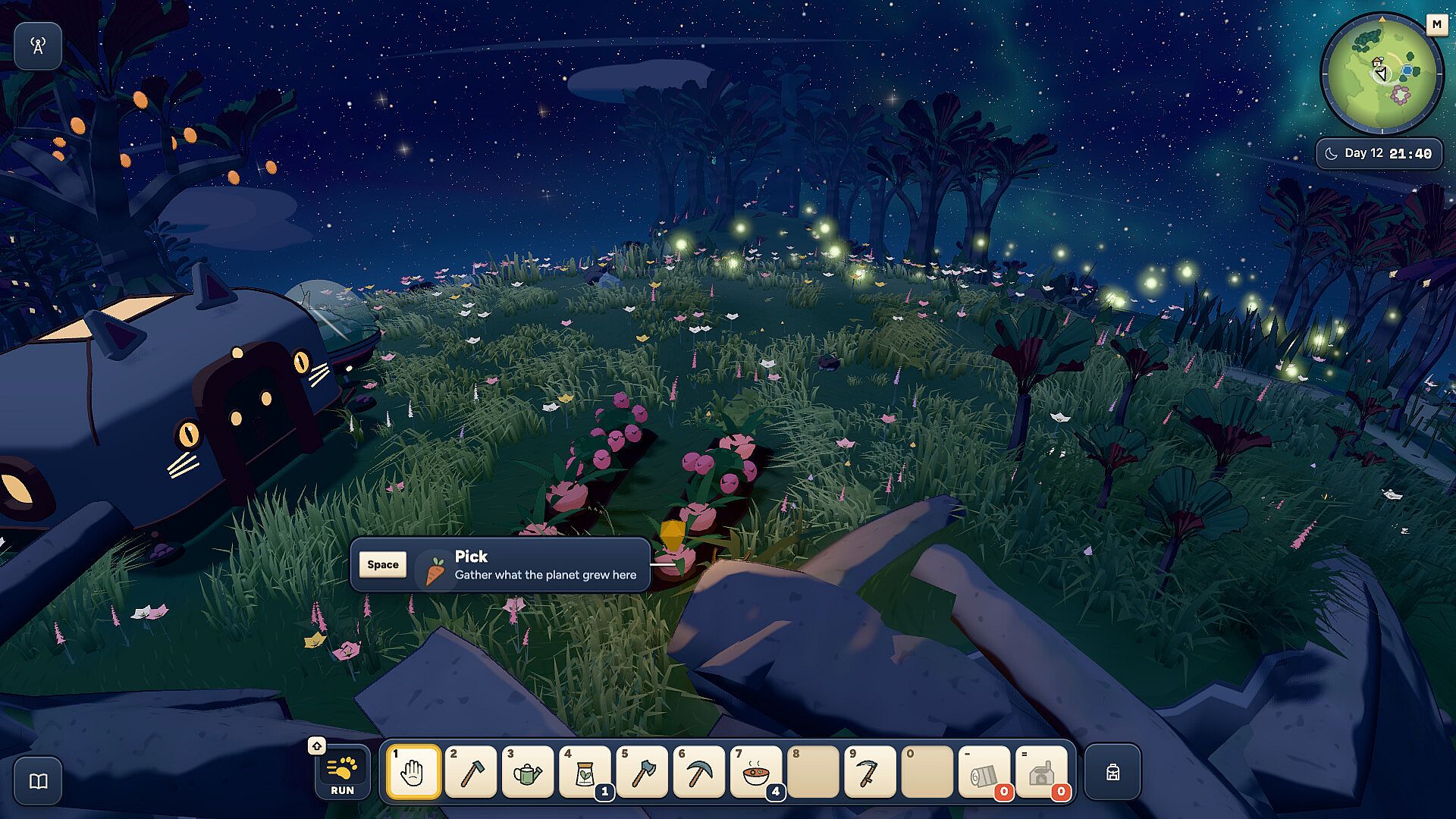
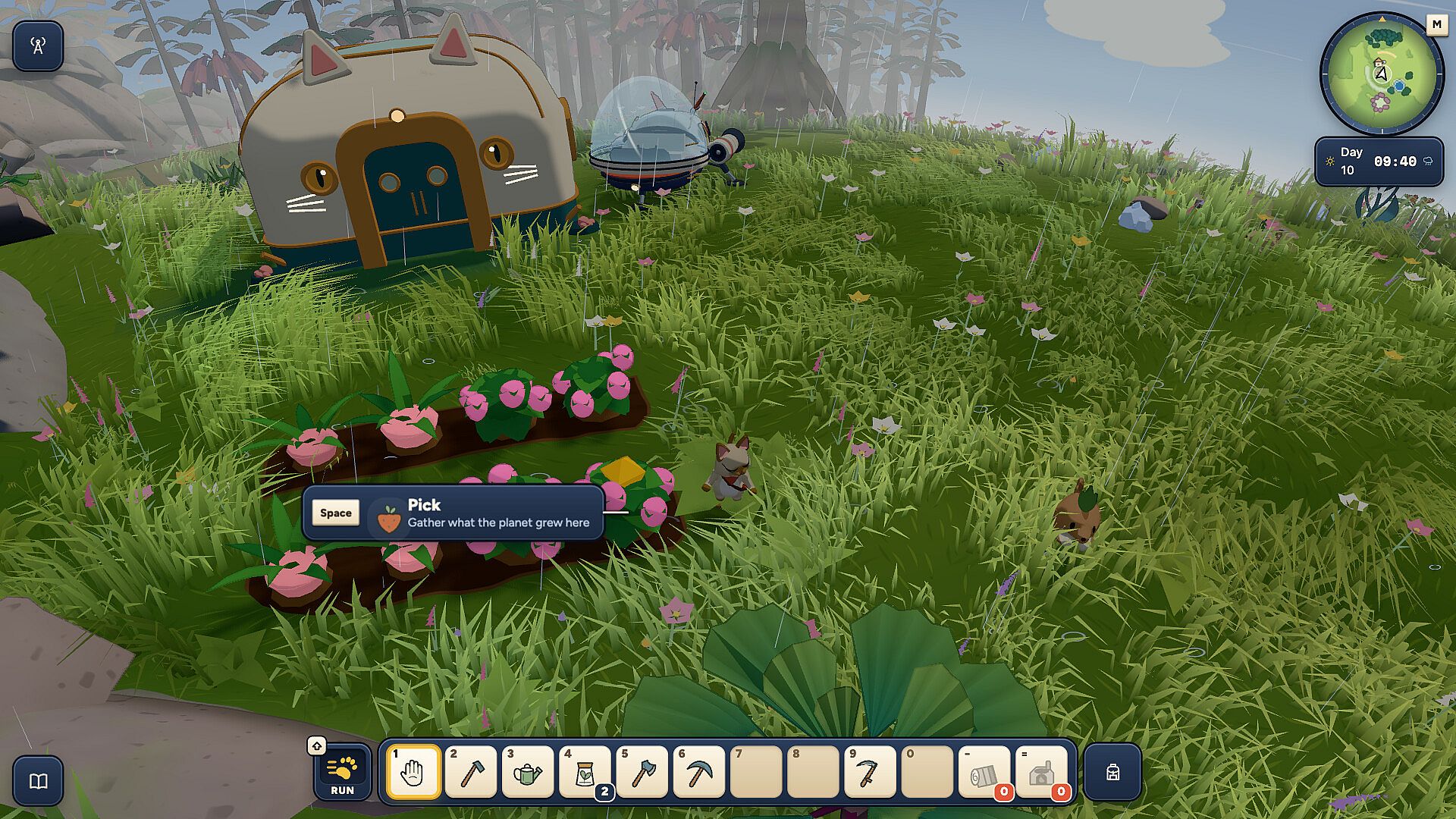
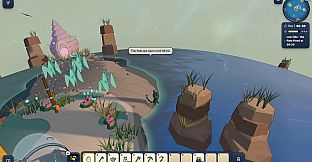
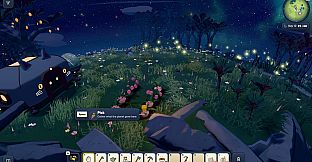
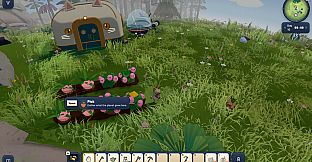
Pocket Orbit is an indie simulation adventure game set in a quiet corner of space where players control a small cat managing a personal homestead across different planets. The experience blends hands-on farming with exploration and light survival elements, letting users build and maintain a home while venturing out in a ship to gather resources and meet others. On PC, it emphasizes deliberate pacing and personal choice over high-stakes action, appealing to those who enjoy crafting routines around soil, storage, and short expeditions.
Gameplay
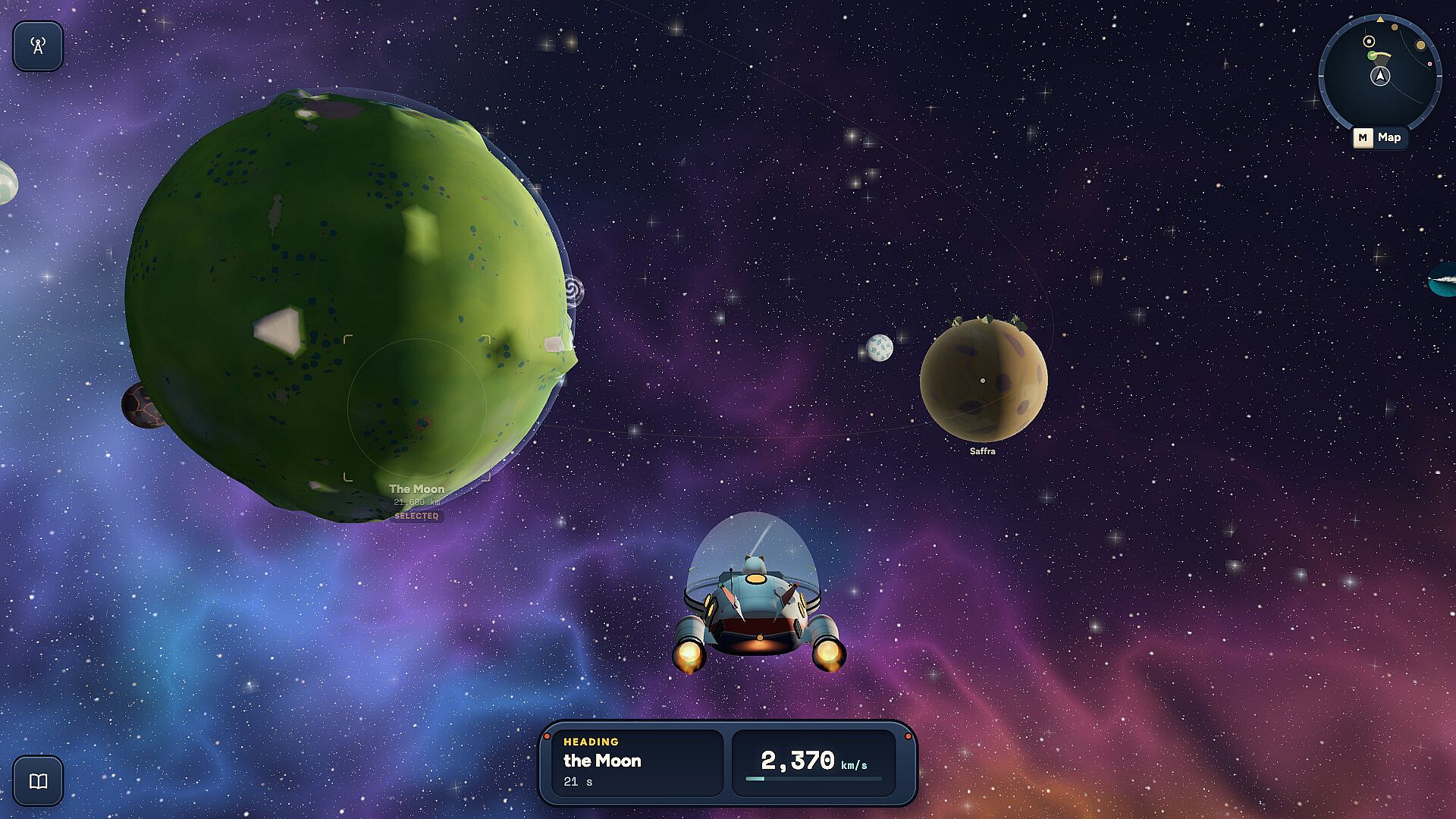
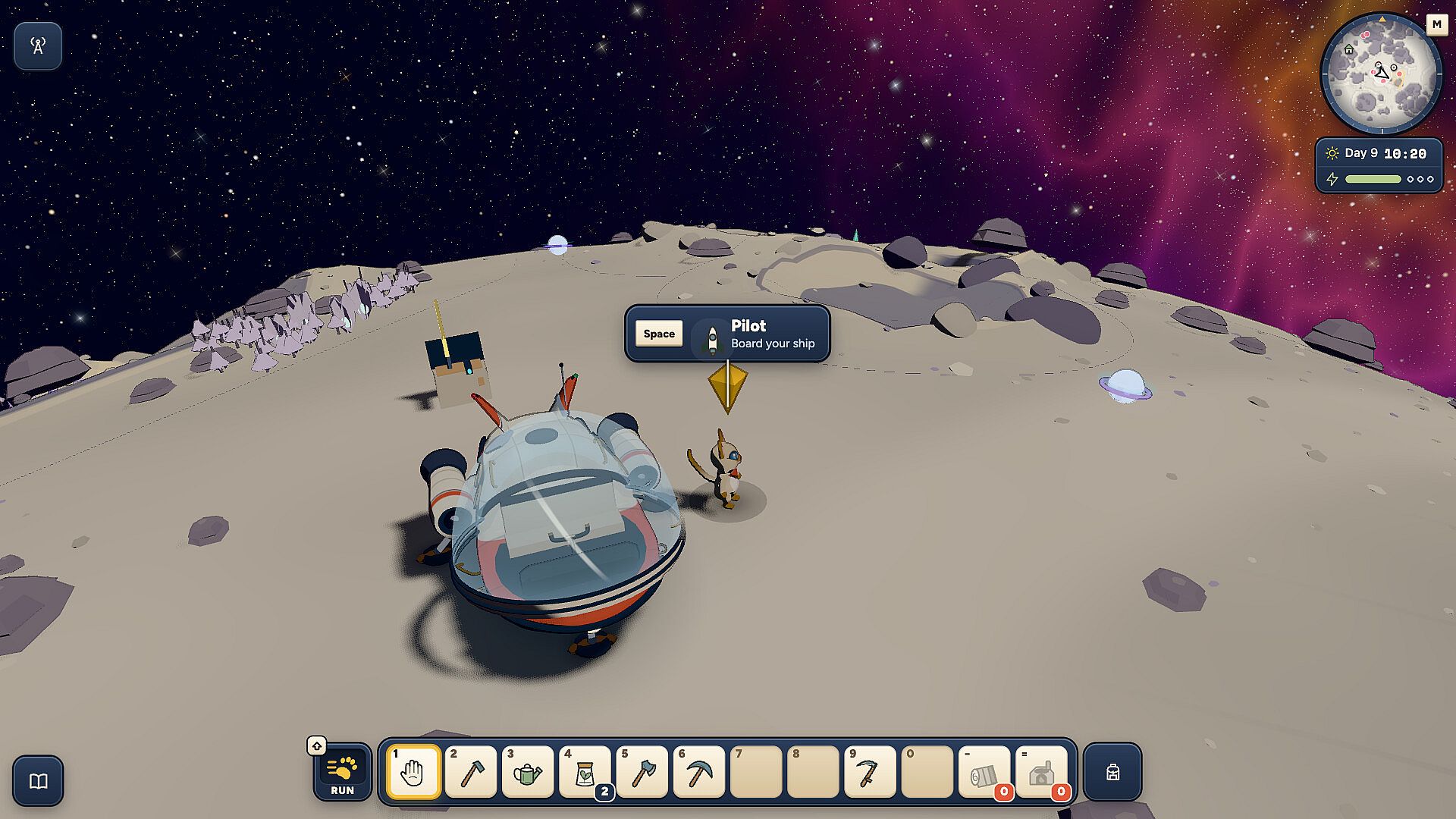
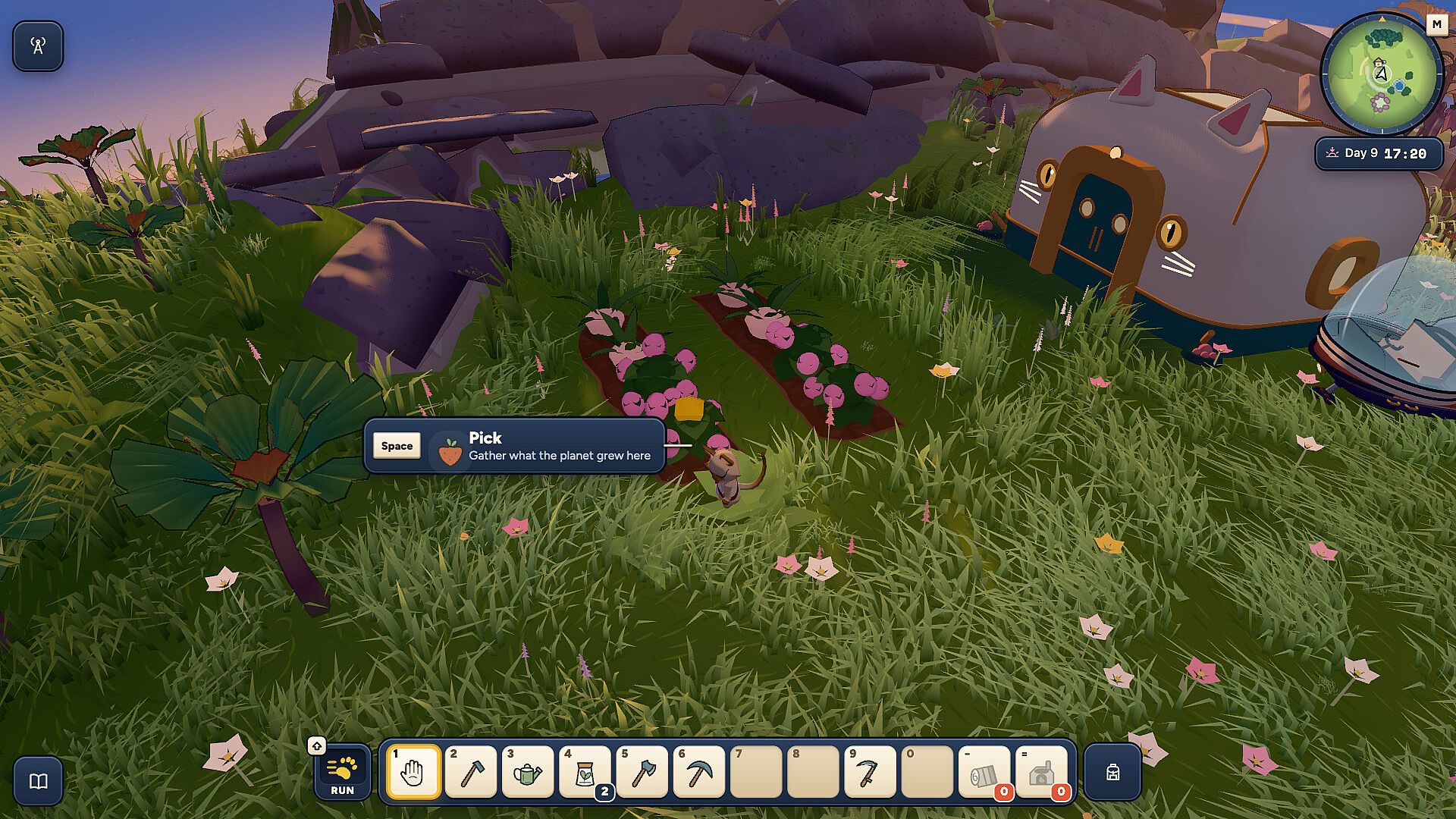
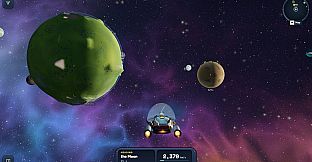
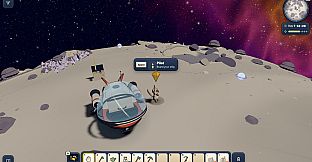
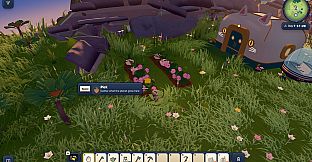
Core play revolves around selecting a landing site on planets such as Arven or Saffra after scouting from orbit. Once positioned, the habitat deploys as a fixed base that remains in place even when the ship departs for further travel. Players till soil, plant seeds, water crops, and harvest results by hand, then use those materials to cook meals or craft improvements to the living space. The ship functions as a separate tool for leaving the settlement, equipped with basic lasers for defense during optional encounters while traveling.
Exploration leads to the Moon, where a community offers new items to bring back for the garden. Meeting Iris there allows an explicit invitation to join the household, after which her contributions appear in the shared environment. The same world supports both direct control and a detached view for overseeing progress without constant hands-on input. Resources gathered during flights integrate directly into home systems, creating a loop of departure, collection, and return that rewards consistent attention to the garden and living areas.
Game Modes
Single-player serves as the primary way to experience the full journey, with complete freedom to arrange the habitat, manage daily tasks, and decide the balance between farming and travel. Two-player online co-op lets a friend join the same household, where each participant uses their own cat character, camera perspective, and carried items while sharing the garden and home layout. The host must remain online for the session to continue, and progress stays tied to that shared space.
Switching between active play and the oversee perspective provides flexibility within the same save, allowing guidance of automated care or direct intervention at any time. No additional competitive or large-scale modes exist beyond these options, keeping focus on personal or paired life-building across the explored locations.
Exploration and Daily Life
Flight controls place the player directly at the helm for trips between settled planets and the Moon settlement. Encounters remain optional and light, with basic defensive tools available rather than complex combat systems. Finds from these outings feed back into home improvements, encouraging repeated short journeys that fit around farming cycles. The settlement itself offers learning opportunities through community interactions without requiring constant presence.
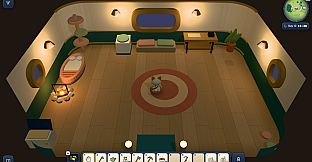
Resting at home after work completes the rhythm, with storage and work areas positioned by the player to suit individual preferences. This setup supports varied daily choices, from heavy gardening sessions to longer scouting flights, all while the base stays intact for return.
Is It Worth Playing?
Pocket Orbit targets players seeking a relaxed space-based simulation with farming and co-op elements on PC. Its hands-on approach to habitat placement, crop management, and ship-based travel creates a self-contained loop suited to those who value steady progression over rapid unlocks or large multiplayer servers. The two-player co-op option extends the experience for pairs interested in shared home-building without separate campaigns.
With a planned release in March 2027 and a demo already available, the game remains in active development. Early interest centers on its distinctive cat protagonist and the balance between exploration and settled life. Those drawn to indie simulation titles with adventure touches will find the verified mechanics align closely with cozy, deliberate gameplay rather than action-heavy alternatives. If the described systems of manual farming, fixed habitats, and optional co-op match personal preferences, it offers a focused experience worth following through release.












