

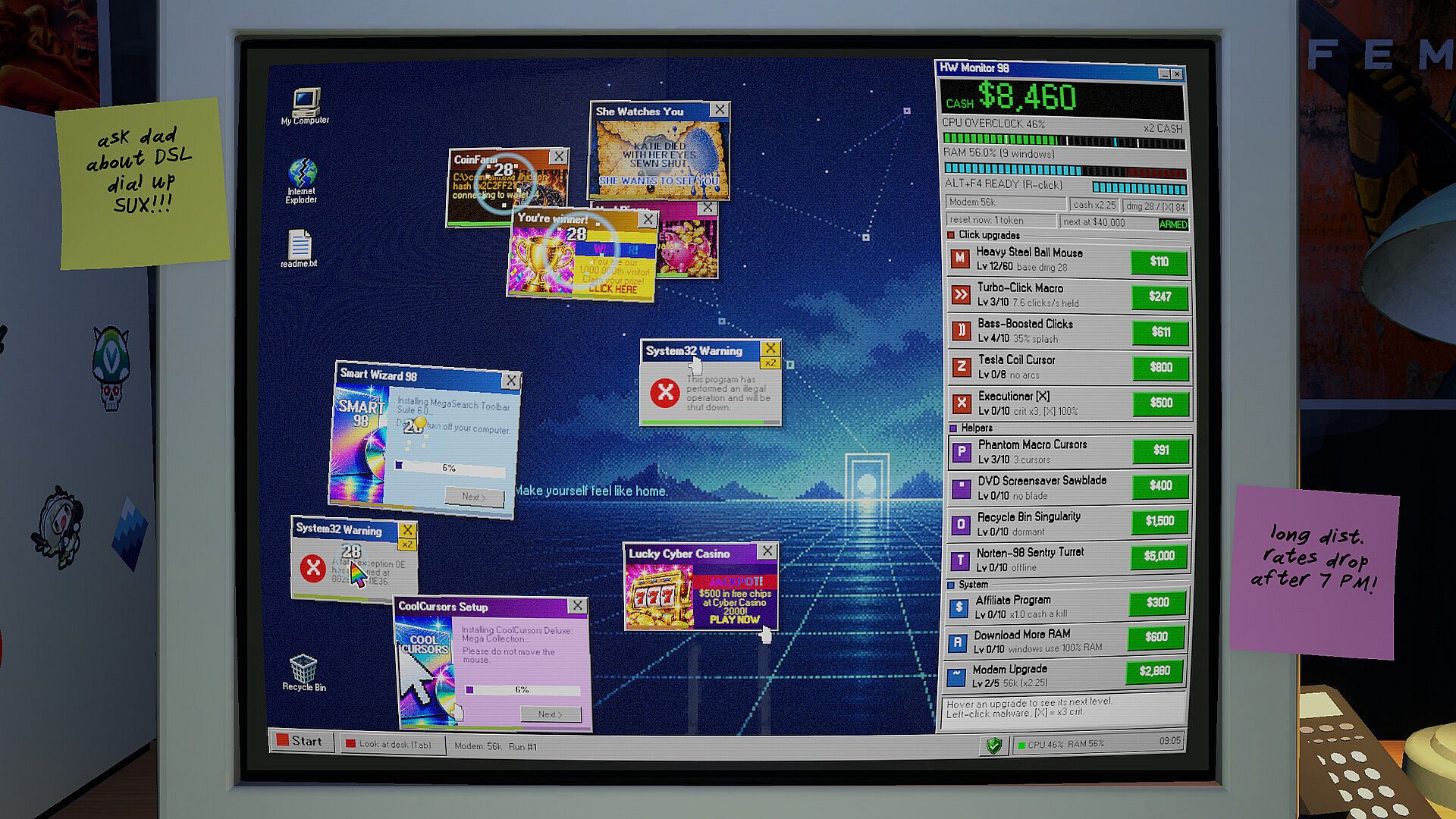
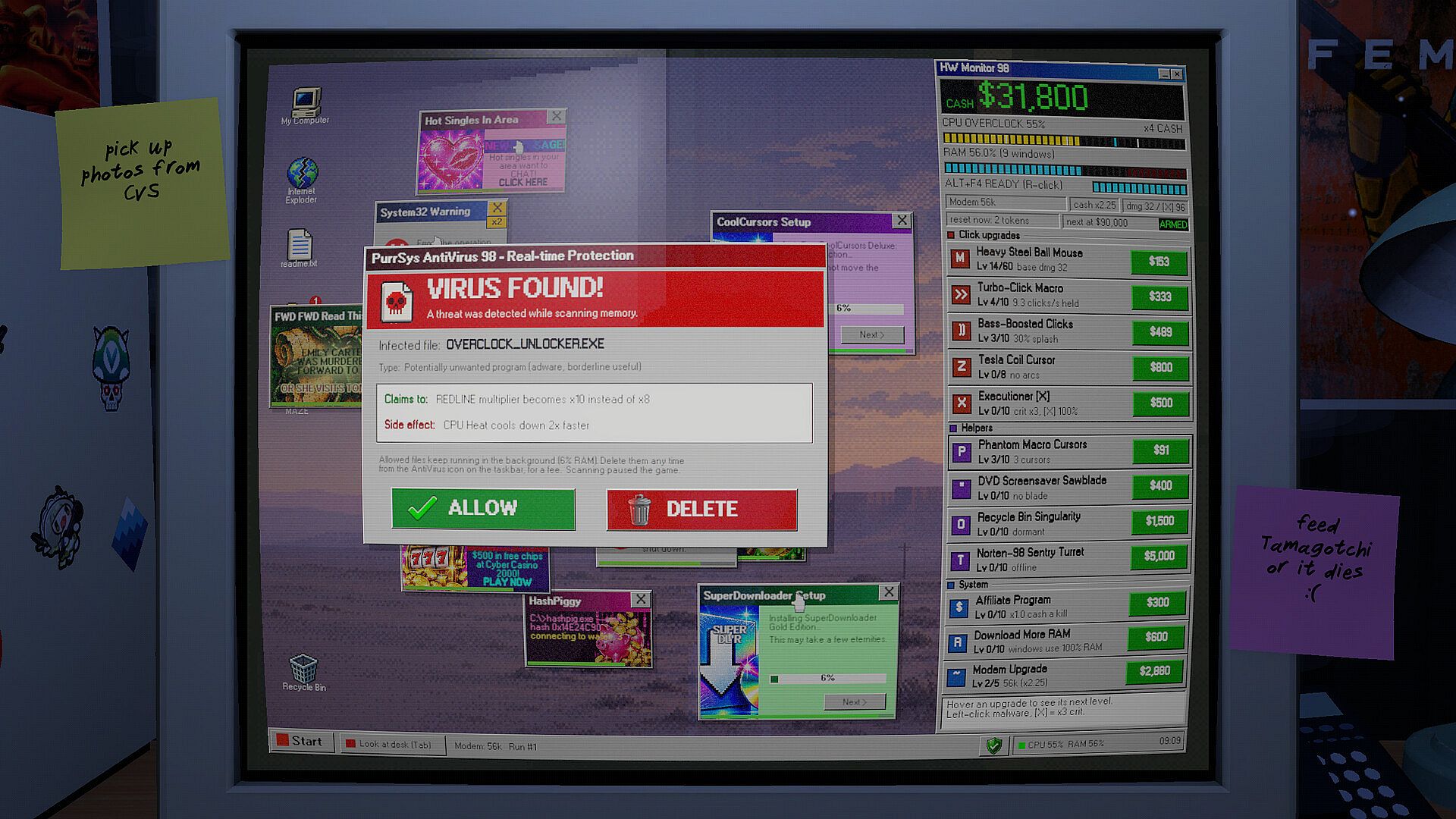
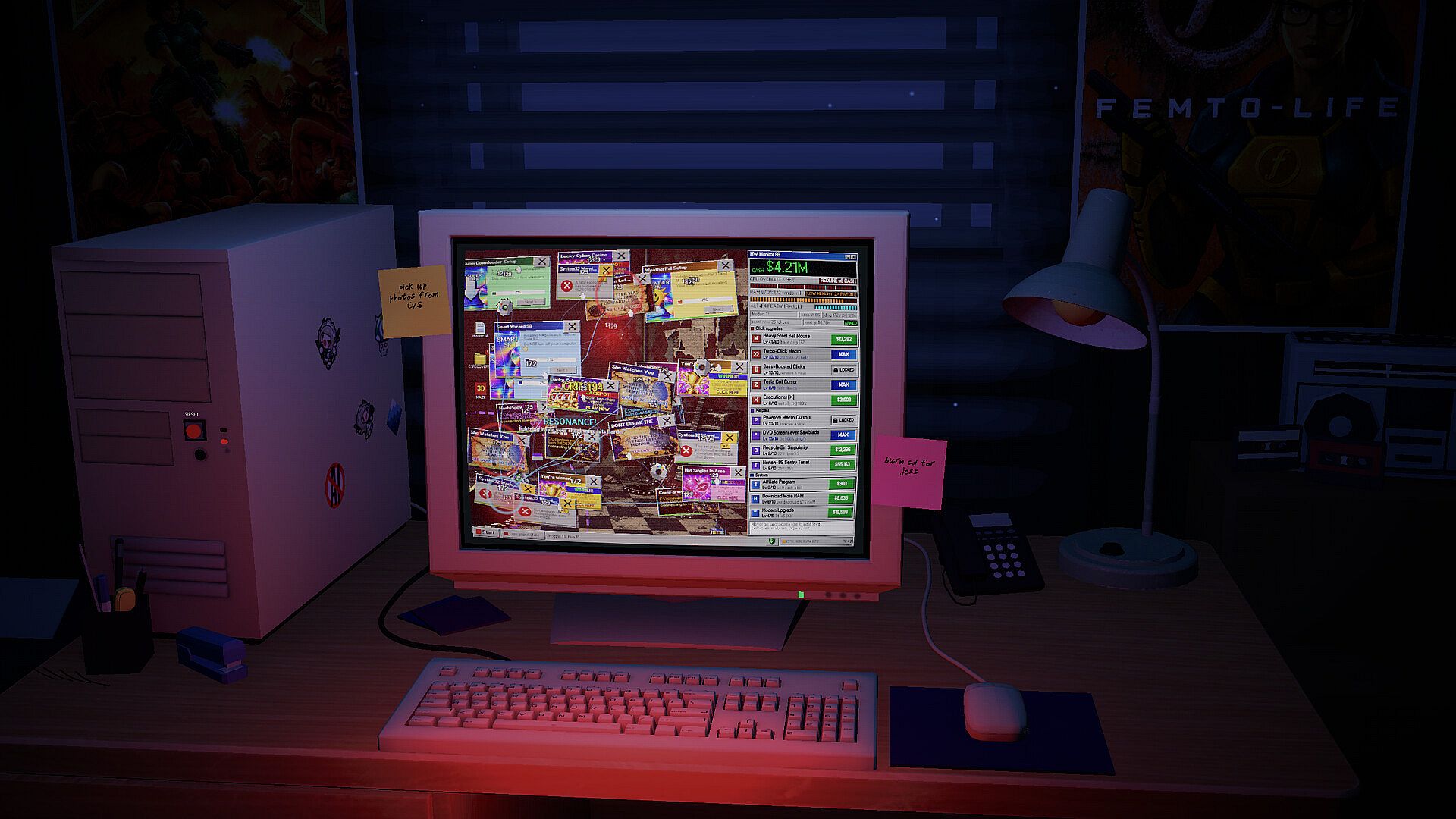
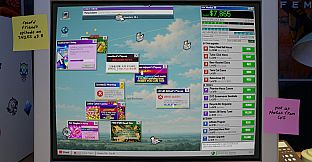
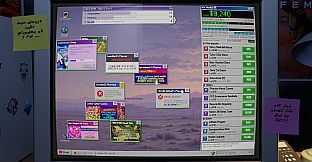
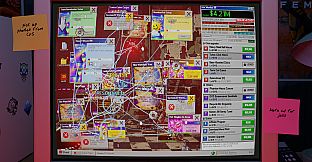
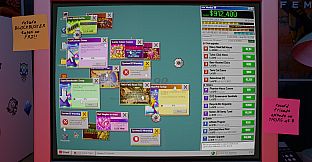
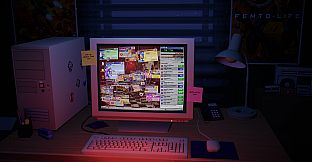
Pop-Up Purgatory is an indie casual incremental clicker game set on a PC desktop in 1998. Players click through waves of pop-up ads, chain letters, and fake installers to earn cash that funds upgrades and helpers. The core loop centers on shattering these intrusive elements while managing system resources to avoid crashes, with runs feeding into a prestige system that carries permanent improvements forward.
Gameplay
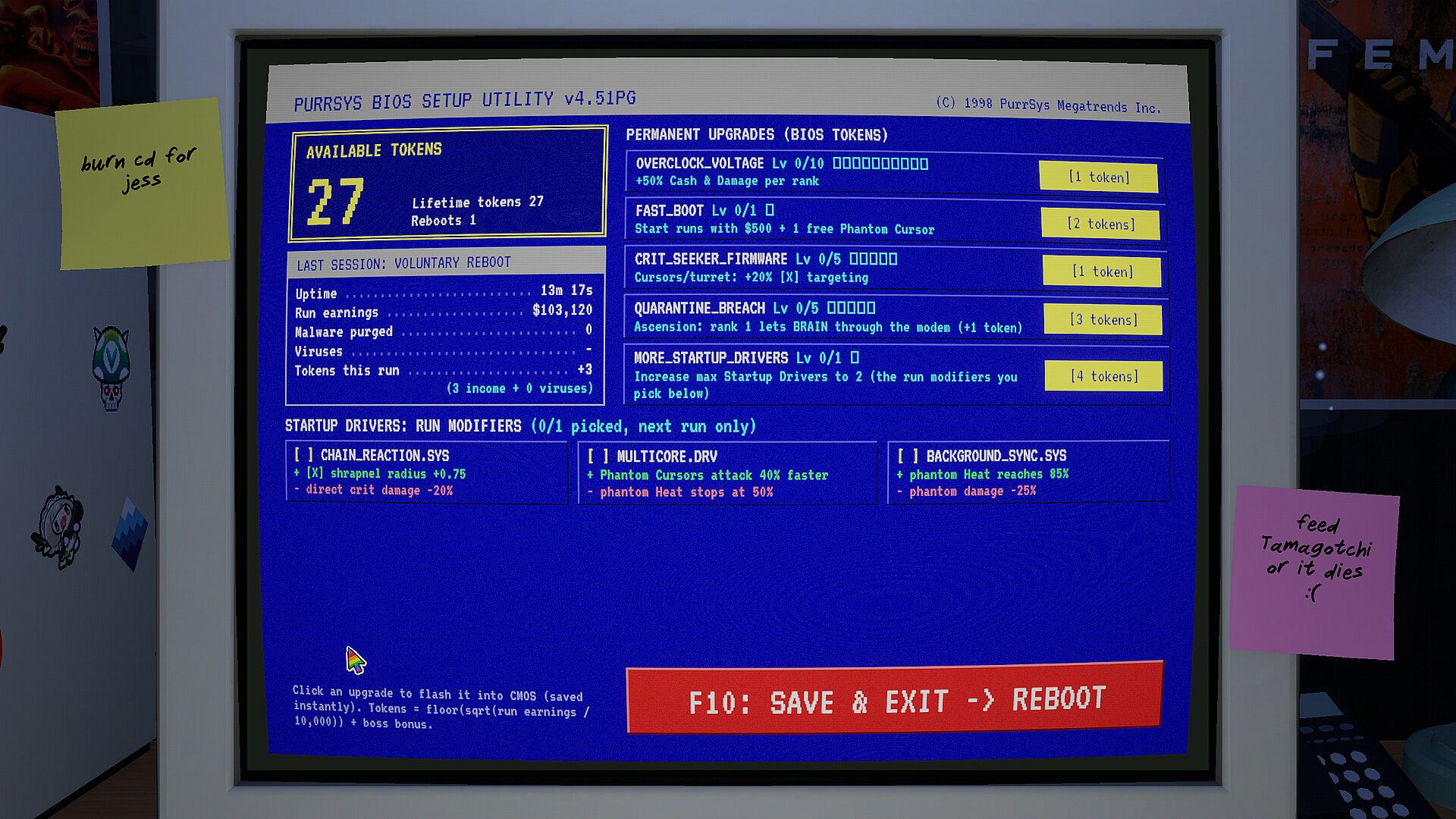
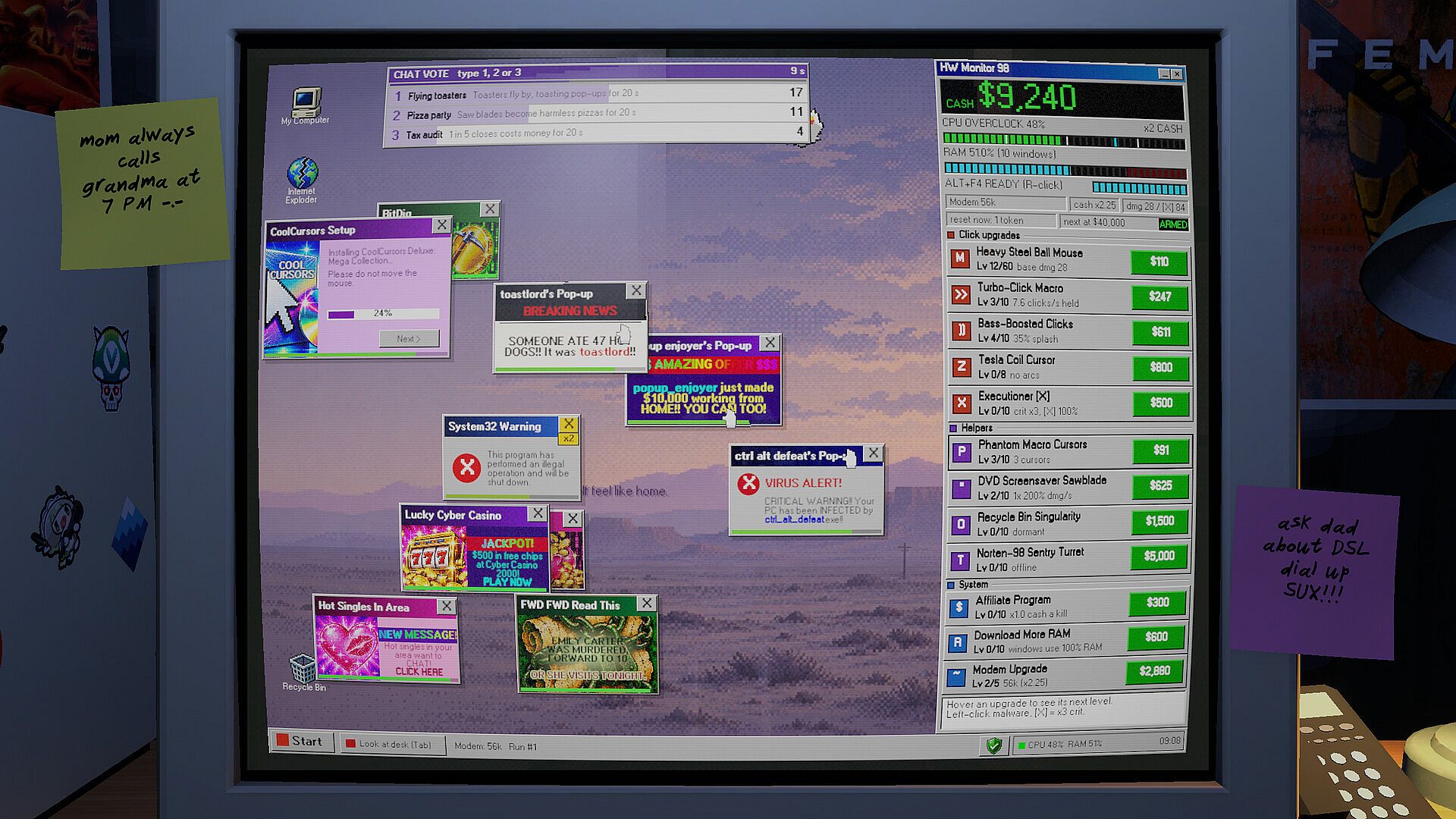
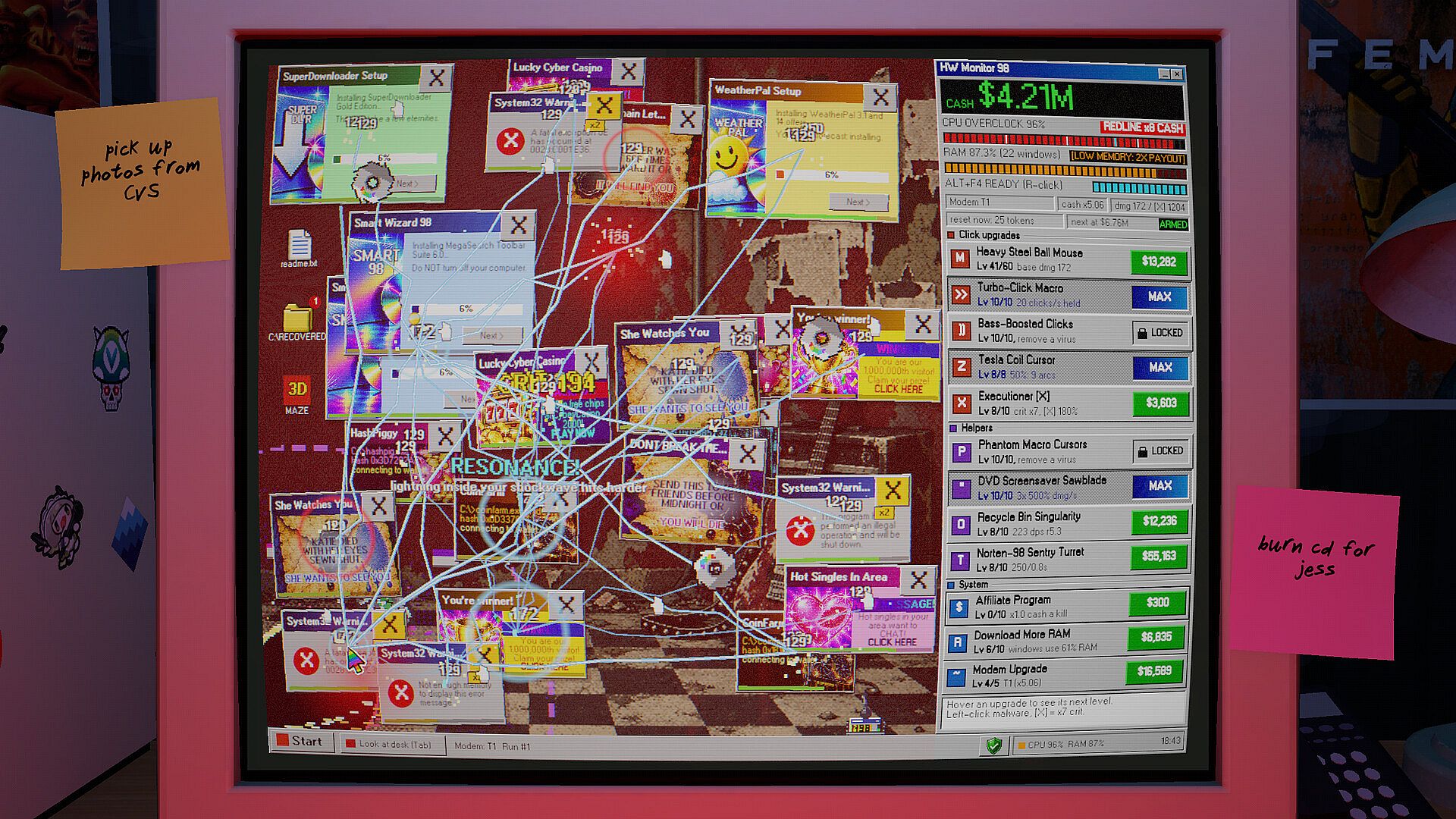
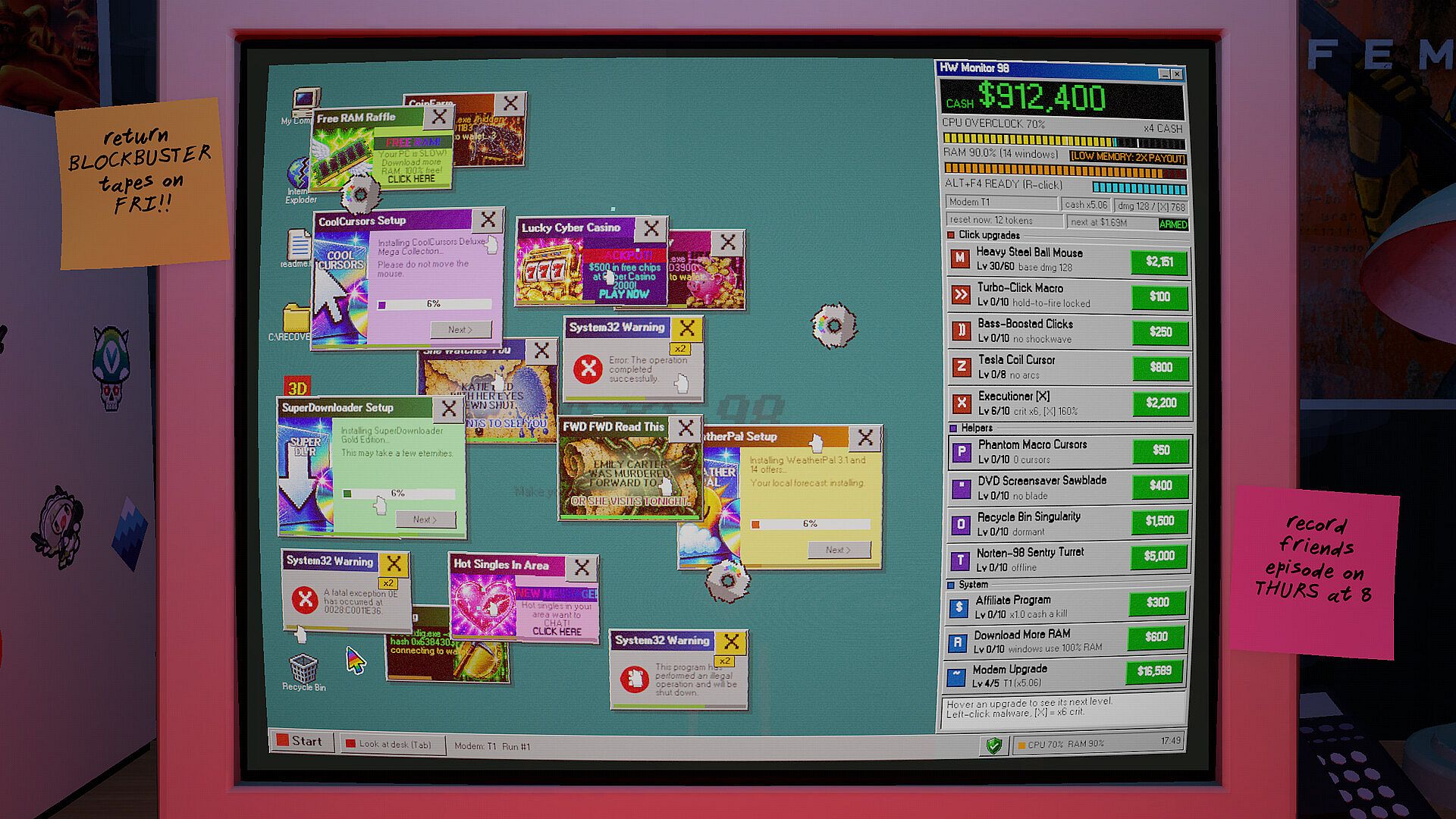
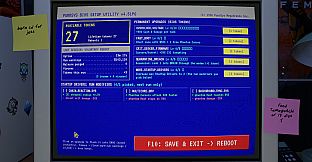
The gameplay revolves around rapid clicking to destroy on-screen pop-ups that flood the desktop. Each destroyed element generates cash used to purchase upgrades that increase click power, add automated helpers, or improve overall efficiency. Runs build toward a conclusion where the BIOS converts progress into lasting upgrades for subsequent attempts, creating a steady sense of advancement through repeated sessions.
Six historical virus bosses appear as major encounters, each drawn from real computing events spanning 1982 to 2000. Elk Cloner marks the earliest, while ILOVEYOU represents the later period. These bosses take over the screen with distinct attack patterns that require players to adapt their clicking and upgrade strategies on the fly. The progression system encourages experimentation with different upgrade paths to handle escalating threats.
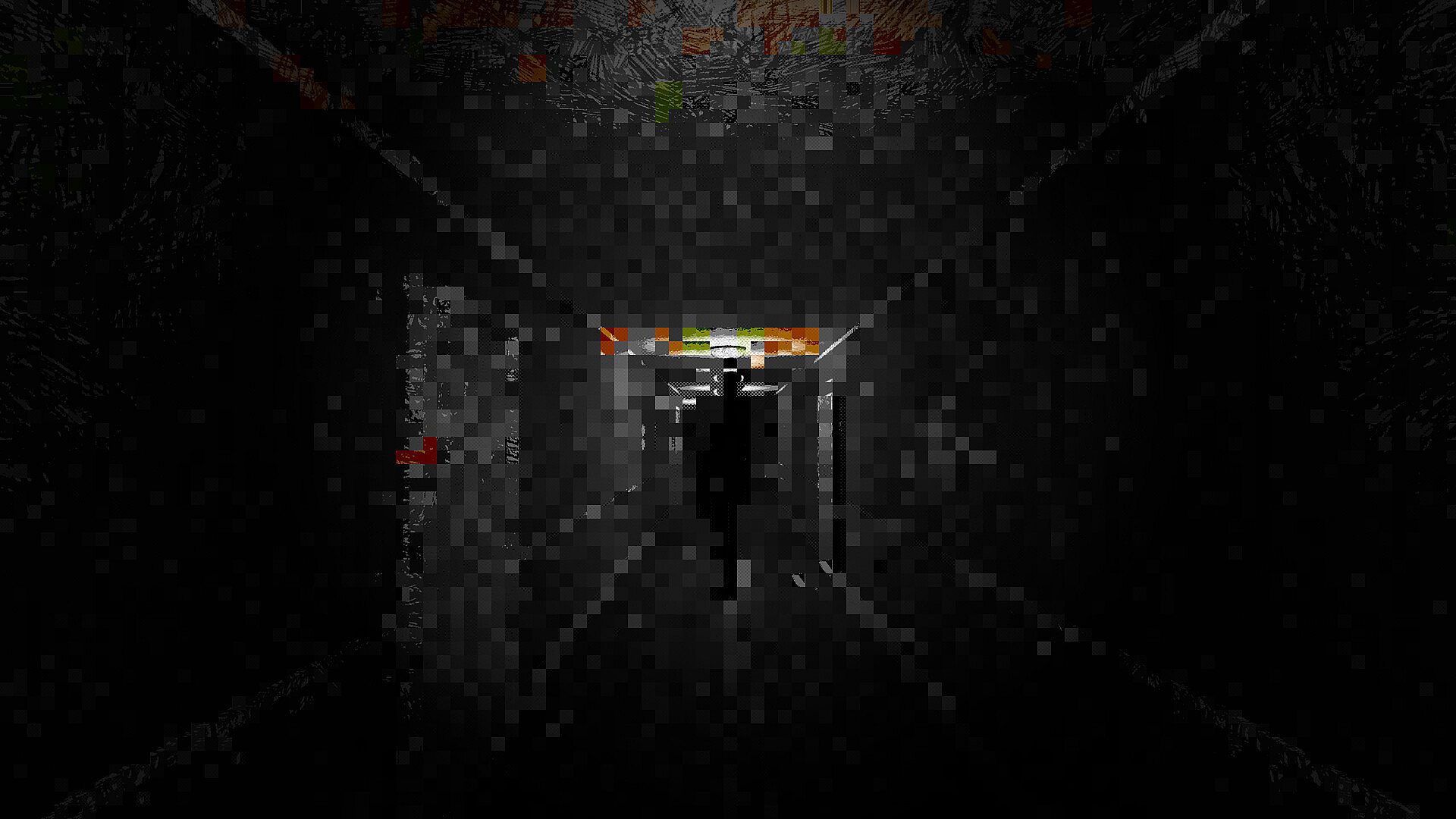
Additional layers include a narrative thread that explores themes of death, depression, and isolation beneath the surface clicking action. Accessibility options allow customization of text size, selection of a dyslexia-friendly font, reduction of flashes and glitch effects, adjustment of game speed, hold-to-click functionality, and captions for sounds.
Game Modes
The primary experience consists of single-player runs focused on incremental progress and prestige resets. Each run builds cash and temporary power, which converts into permanent upgrades upon completion to support longer and more efficient future attempts. This structure emphasizes steady accumulation and optimization over multiple cycles.
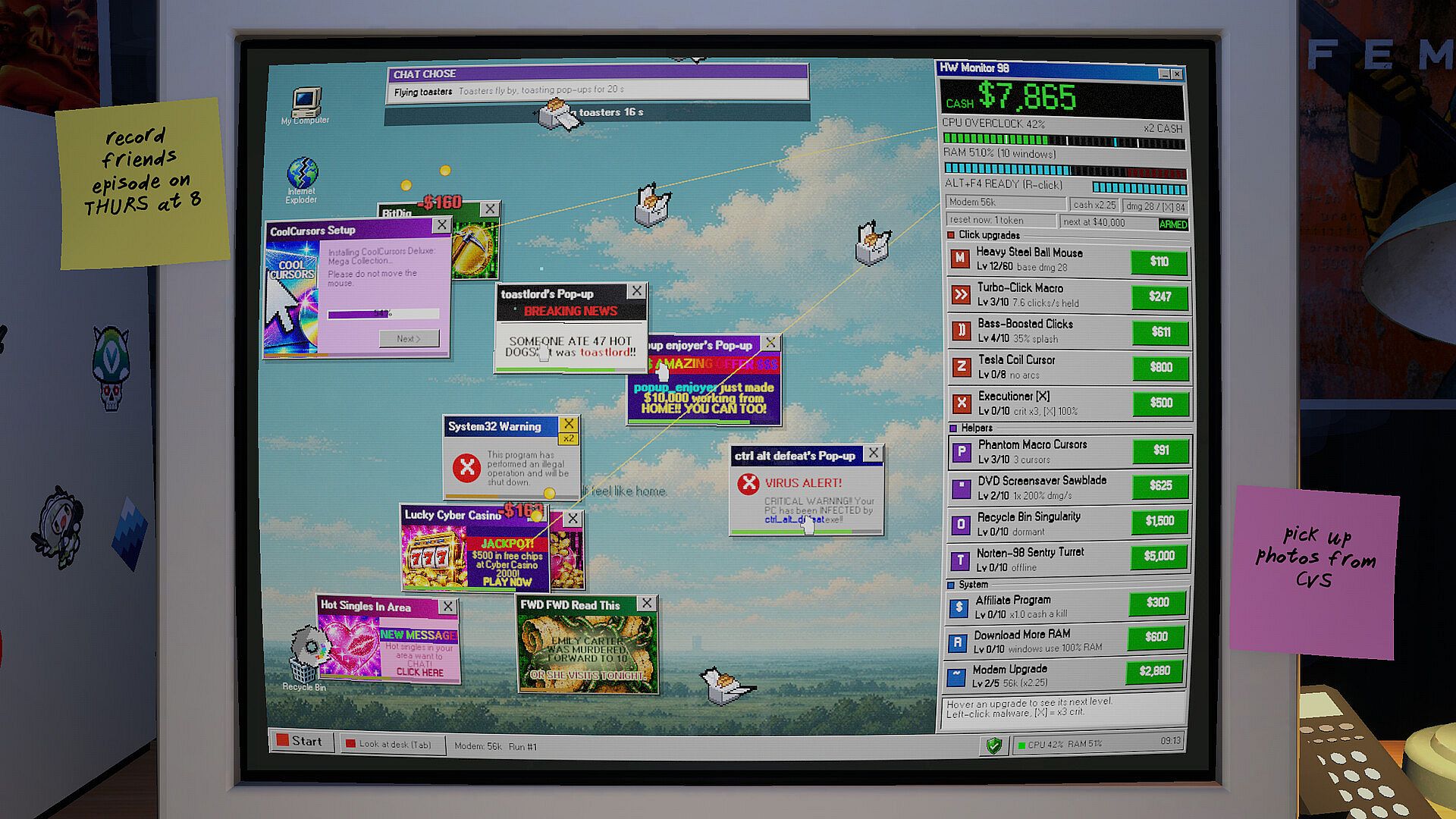
A streamer integration feature lets Twitch viewers participate directly without any login or extension required. Chat participants can trigger pop-ups bearing their names or cast votes that introduce chaotic effects such as inverted controls or flying toasters. This turns the core clicking into a shared activity during live broadcasts while maintaining the single-player foundation for solo play.
Progression and Upgrades
Upgrades fall into categories that enhance clicking speed, introduce helper automation, or bolster defenses against system overload. The prestige mechanic ensures that completed runs contribute to a growing pool of permanent benefits, allowing players to reach further into each new attempt. New upgrades and elements become available as progress deepens, expanding options for customization and efficiency.
The system rewards consistent play by turning short sessions into building blocks for longer survival against the virus bosses and denser pop-up waves. Cash management remains central, as players balance immediate spending against the long-term value of prestige gains.
Is It Worth Playing?
Pop-Up Purgatory targets fans of incremental clicker games who enjoy nostalgia-driven themes and light prestige mechanics. Its upcoming release in January 2027 means no player reviews or ratings exist yet, so reception remains unknown. The verified features, including historical virus bosses, Twitch chat integration, and extensive accessibility options, align with players seeking a focused clicking experience with optional social elements.
Those drawn to casual single-player loops centered on repeated runs and upgrade optimization will find the core systems match that preference. The content note regarding underlying story themes suggests it may suit audiences comfortable with reflective or somber undertones alongside the mechanical gameplay. Availability will be on PC through standard digital storefronts once released.