








Ransom Wave is a simulation game set in a scam compound where players handle real-time voice calls as part of a coerced workforce. The experience unfolds from the perspective of someone trapped at Workstation 17, following orders from a supervisor while navigating interactions with targets on the other end of the line. Built around AI-driven conversations, the title emphasizes choice and consequence in a psychological thriller format exclusive to PC.
Gameplay
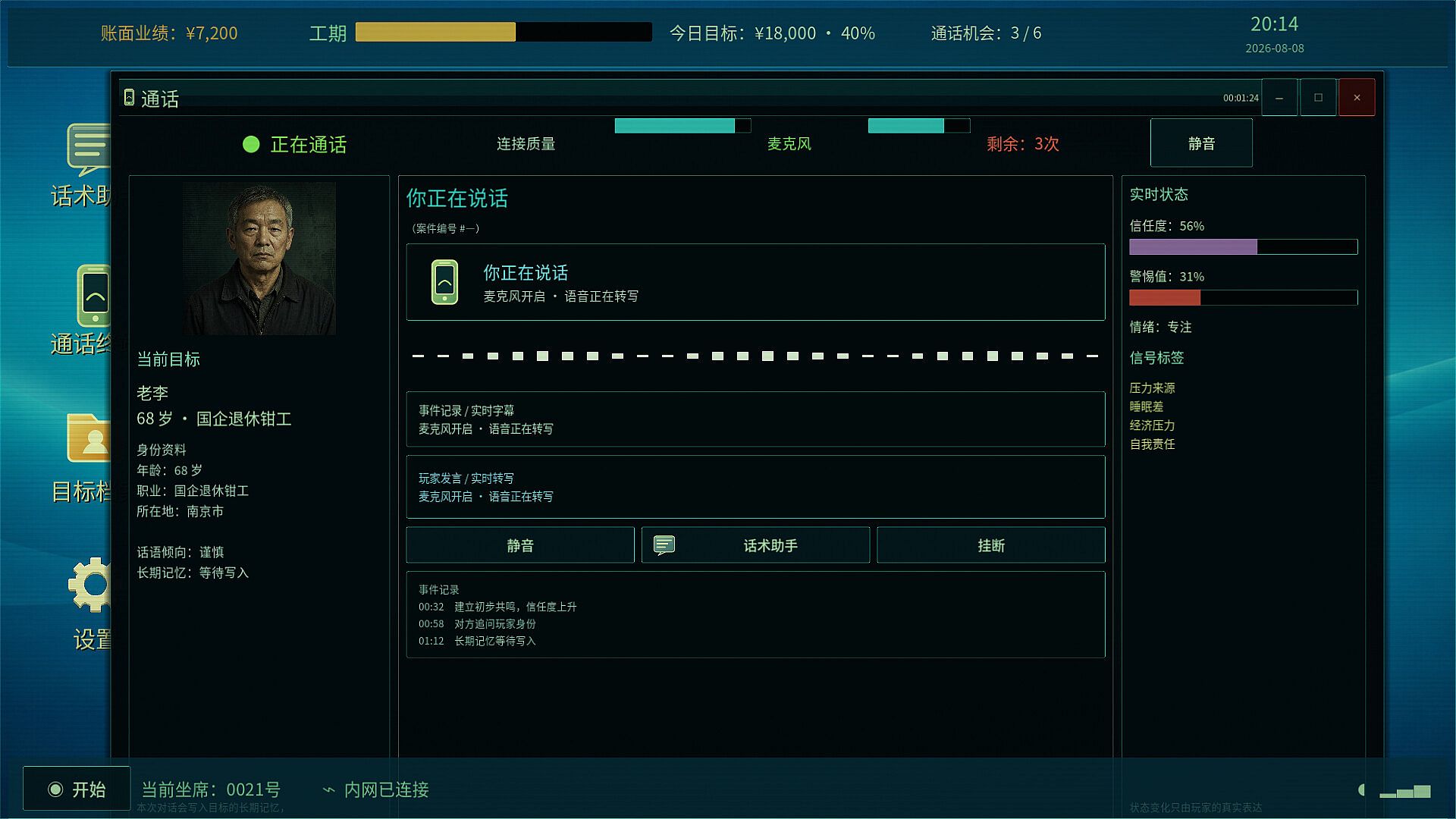
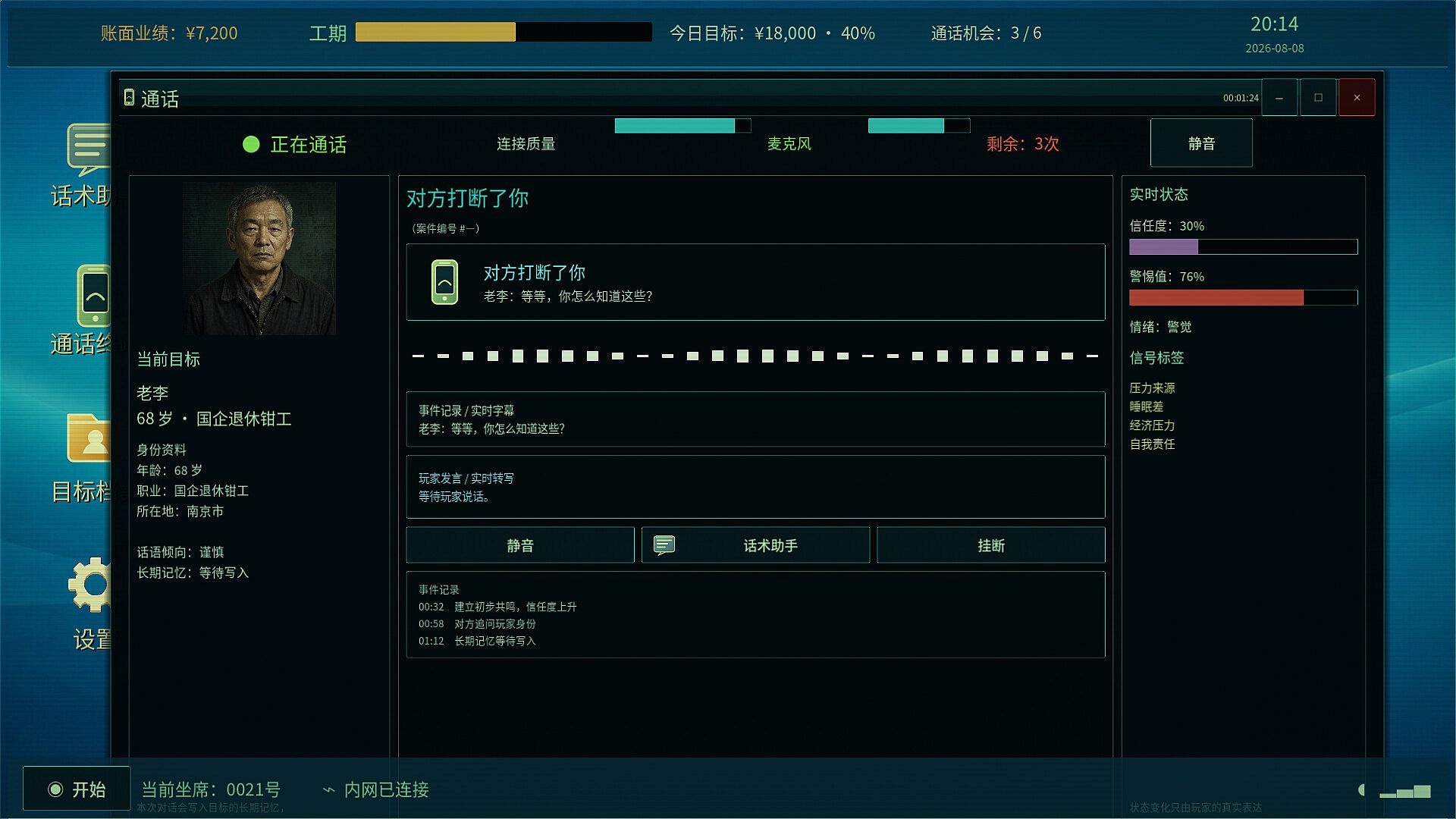
The core loop centers on connecting calls from a provided list and engaging with individuals of varying ages, professions, and backgrounds. Players speak directly through a microphone or type responses, with the AI characters processing words, tone, and prior interactions to shape replies. Actions such as following a script, improvising lies, staying silent, or ending a call early influence trust levels, emotional states, and overall performance metrics tracked by the system.
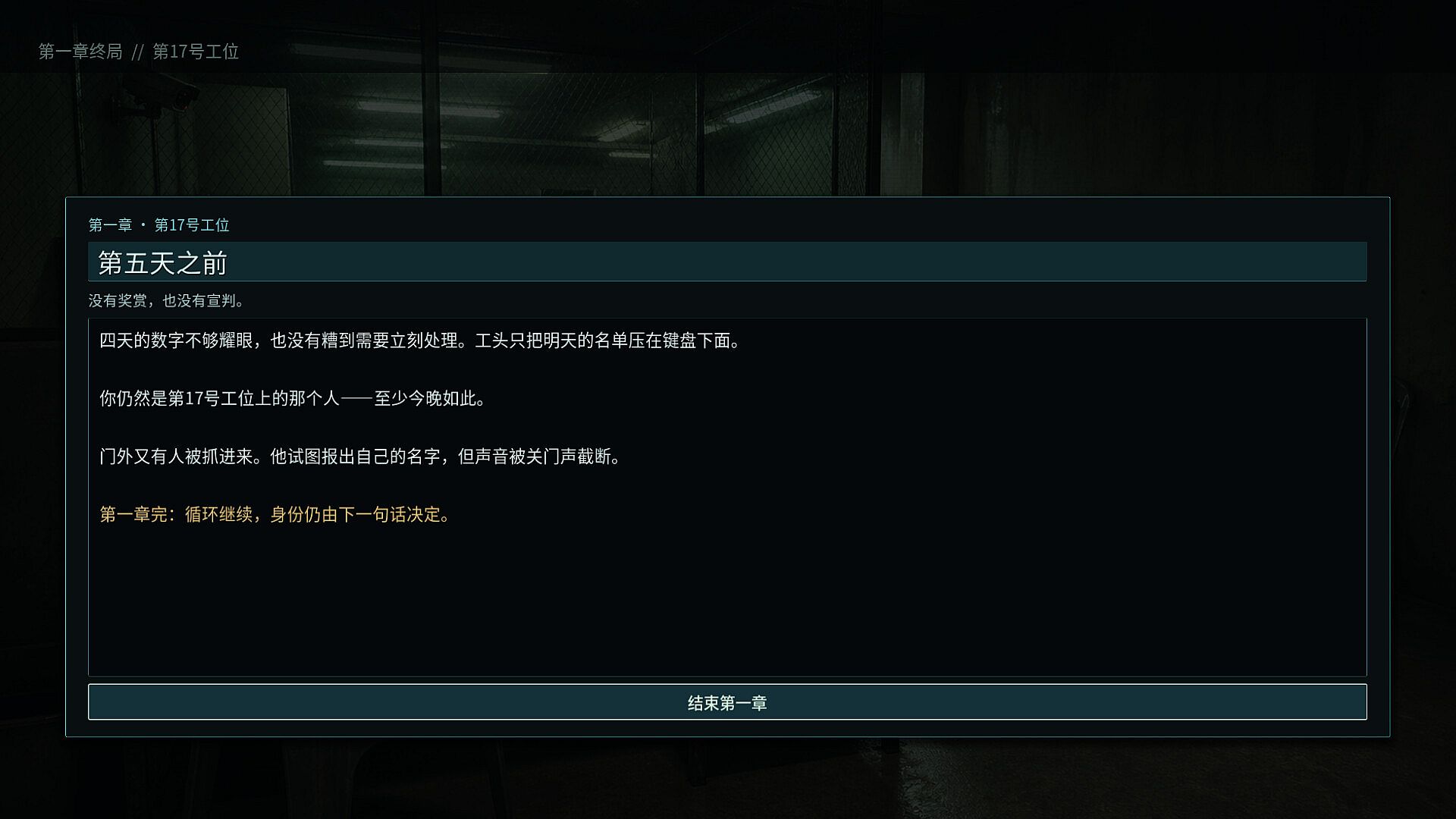
Long-term memory plays a key role, as individual targets retain details from previous encounters and may reference them in later calls. This creates branching outcomes without requiring exact dialogue matches to advance. The supervisor monitors activity in real time, adjusting expectations and applying pressure that can escalate to restrictions or penalties for underperformance. Identity elements emerge organically through spoken details, which can later surface as points of scrutiny during conversations.
Support for text input and subtitles ensures accessibility alongside voice features, though a stable internet connection remains necessary for the AI calls. The setting incorporates themes of confinement and coercion, with all characters and events presented as fictional elements for narrative purposes.
Game Modes
No distinct named modes appear in the available details. The experience operates as a continuous single-player narrative driven by sequential call handling and accumulating consequences. Progression ties directly to performance under supervision, with each interaction feeding into broader story developments and personal identity formation across sessions.
Players manage a call list that introduces targets with distinct psychological traits and family situations. Suspicion or dependence can build over repeated contacts, leading to varied reactions without fixed success thresholds. The structure prioritizes natural evaluation of choices rather than scripted paths or competitive elements.
Key Mechanics
Voice interaction forms the foundation, allowing direct microphone use where characters respond based on content, delivery, and history. Text alternatives provide flexibility while maintaining the same memory and reaction systems. Supervisor oversight introduces dynamic rule changes and performance tracking that affect available options and potential repercussions.
Identity shaping occurs through accumulated statements, turning player input into verifiable backstory elements that targets or the supervisor might challenge. Memory isolation ensures each character maintains separate recollections, preventing cross-contamination between unrelated calls. These systems combine to create pressure from both external authority and interpersonal dynamics.
Is It Worth Playing?
Ransom Wave suits players interested in narrative-driven simulations that explore psychological tension through interactive dialogue. The adult-oriented content includes depictions of unlawful confinement, coercion, psychological pressure, threats, and strong language, making it appropriate only for mature audiences. Real-time AI calls demand reliable internet and benefit from a microphone and headphones, though text and subtitle options broaden participation.
Those drawn to games emphasizing consequence, memory, and open-ended conversation may find the accumulating choices engaging. The fictional framing serves narrative and awareness goals without providing operational guidance. Availability centers on the PC platform, with the experience designed around sustained sessions rather than quick matches or multiplayer components.