


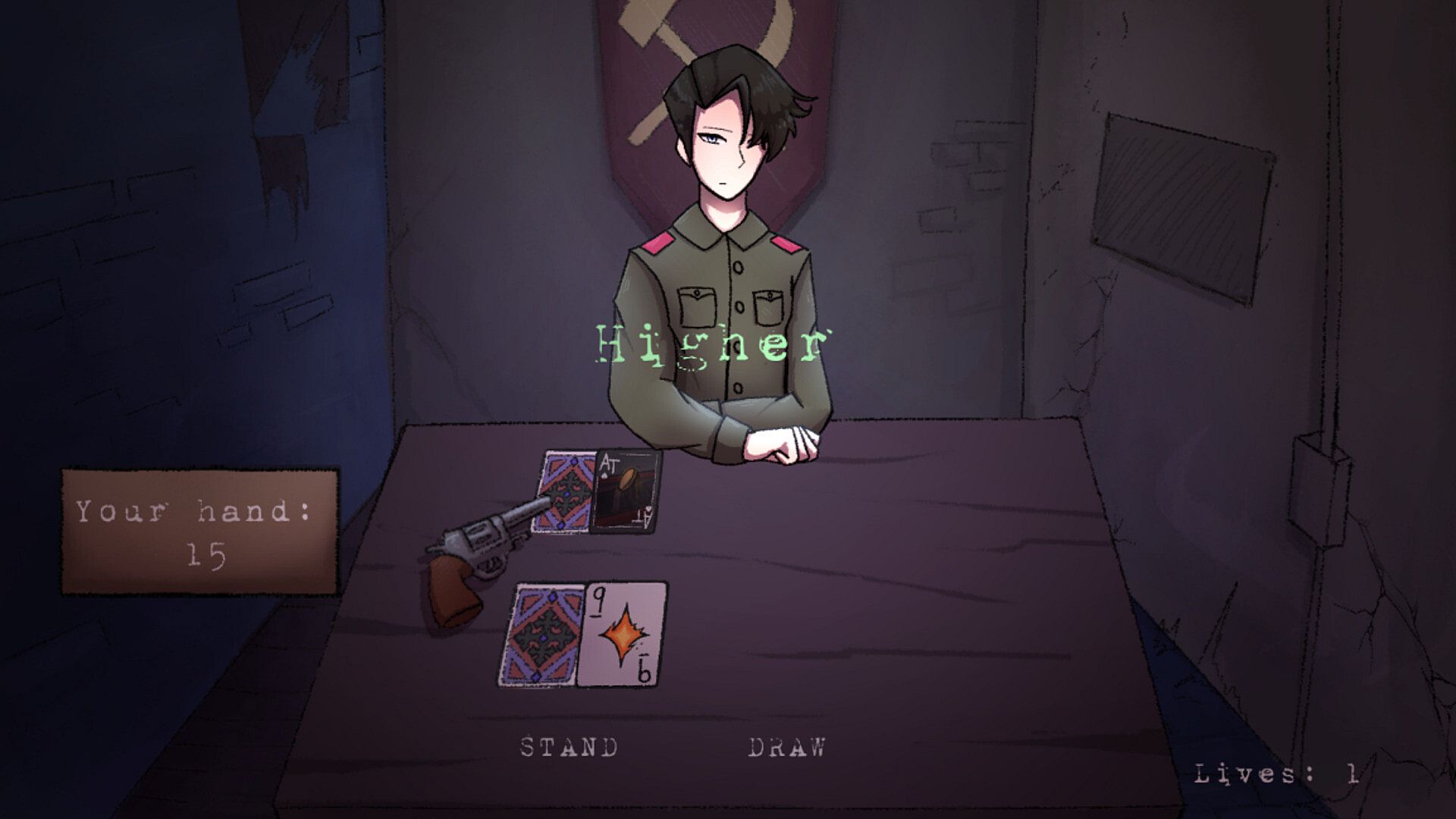

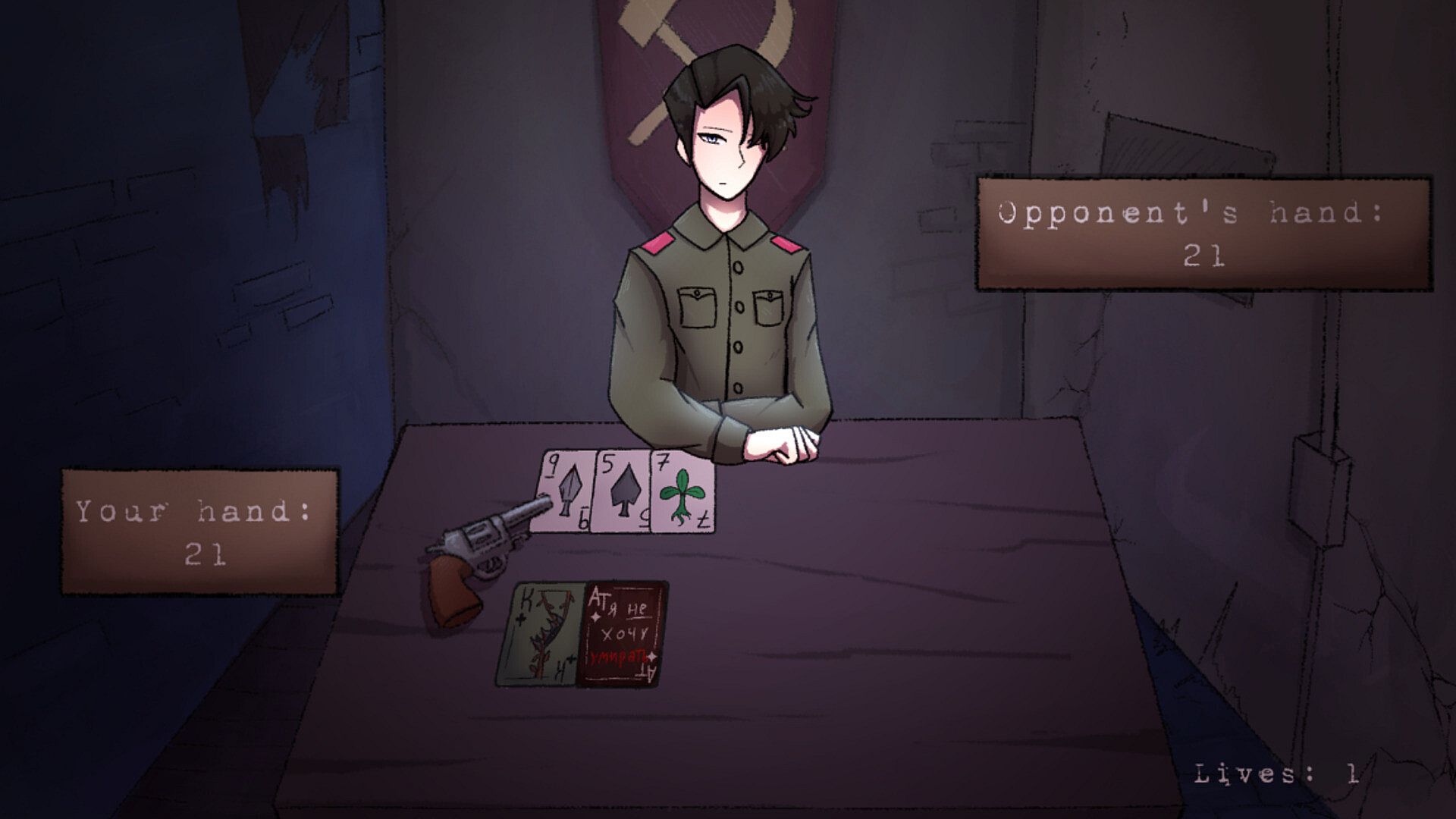
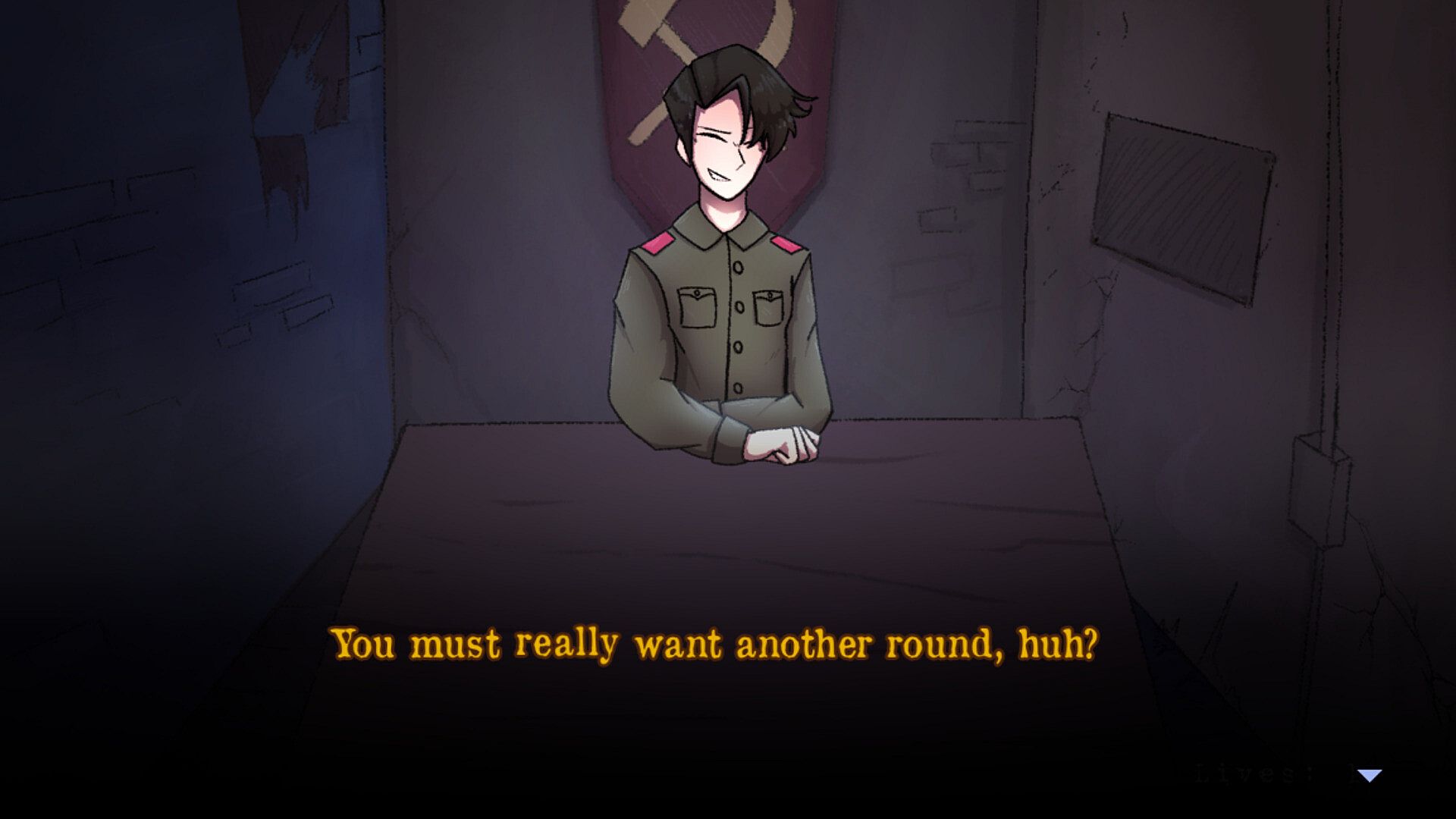
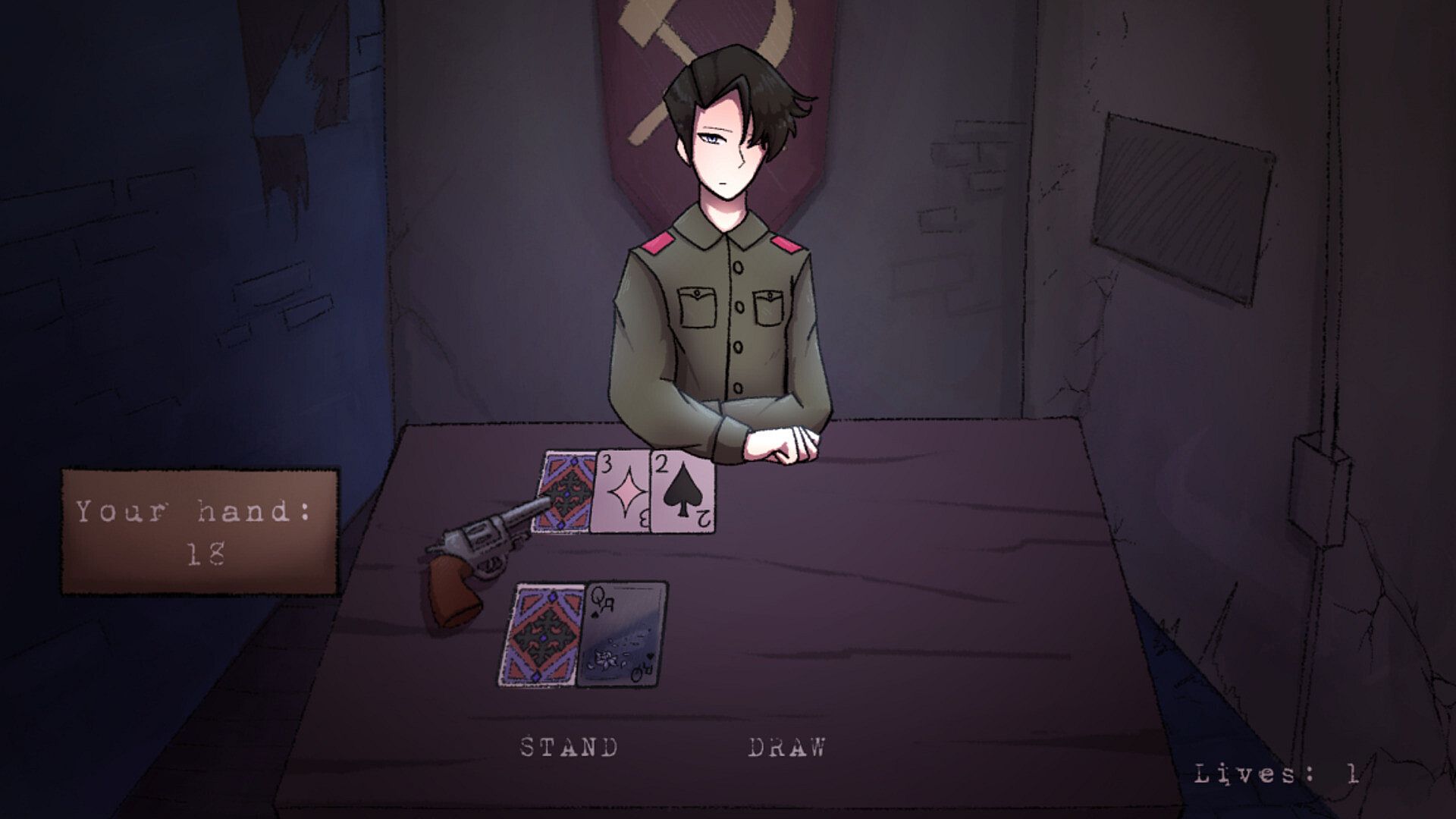
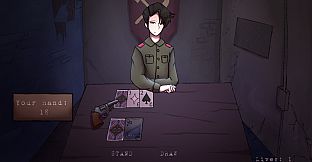
Revolver 21 is an indie narrative card game for PC that blends blackjack mechanics with a high-stakes Russian roulette element inside a World War II Soviet Union setting. Players assume the role of an employee at the Commissariat, also referred to as АКИМ, and interact with a young soldier named Mikhail whose fixation on blackjack forms the central hook of the experience. The game emphasizes story progression through repeated card rounds while incorporating risk and decision-making via custom items.
Gameplay
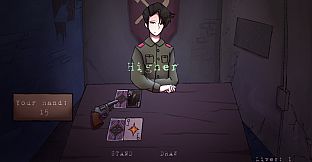
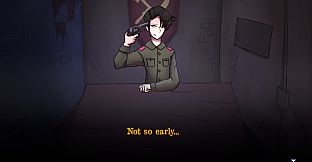
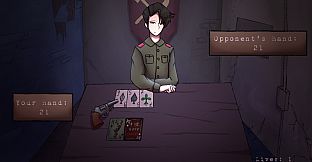
The core loop revolves around multiple rounds of blackjack played with a fully custom-designed deck. Each round follows standard blackjack rules but occurs in a narrative context where outcomes influence the ongoing conversation with Mikhail. At the conclusion of every blackjack round, the game shifts to a Russian roulette sequence in which the loser must pull the trigger on a revolver. This mechanic introduces immediate tension and permanent consequences tied to the story.
Items supplied by the Commissariat allow players to alter probabilities during blackjack or the roulette phase. These tools reflect themes of institutional corruption and provide strategic options without removing the inherent risk of the roulette element. The mature content description notes repeated depictions of suicide through the roulette mechanic, establishing a consistently dark tone throughout the sessions.
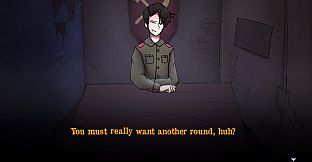
Progression centers on uncovering Mikhail's background and the losses he has endured. Narrative revelations emerge directly from the results of card play and roulette outcomes, creating a feedback loop where mechanical success or failure shapes the unfolding dialogue and revelations.
Game Modes
Revolver 21 operates as a single-player experience with no separate multiplayer or competitive modes. The entire title functions as one continuous narrative session built around the repeated blackjack and Russian roulette cycle. Players advance through the story by completing rounds, using Commissariat items, and interpreting the consequences that follow each loss or victory.
The structure remains linear in its storytelling focus, with the card gameplay serving as the sole interactive system. No additional modes such as endless play, challenges, or alternate scenarios appear in the confirmed features. The experience stays confined to the Commissariat interrogation setting and the personal history of Mikhail.
Story and Setting
The narrative unfolds entirely within the Soviet Union during World War II. Players work under the authority of the Commissariat, an organization whose influence extends into personal interrogations and the distribution of special items. Mikhail's presence in custody drives the plot, with his attachment to blackjack serving as the entry point for deeper exploration of his past.
Story beats surface through the results of each blackjack round and the subsequent roulette. Details about what Mikhail has lost and the reasons for his current situation emerge gradually, rewarding consistent play with incremental revelations. The setting incorporates historical context without expanding into broader military or political simulations.
Is It Worth Playing?
Revolver 21 remains in a coming-soon state with no user reviews or completed play sessions available at present. The confirmed mechanics deliver a distinctive combination of strategic card play and irreversible risk through Russian roulette, supported by a focused single-player narrative. This approach suits players who seek short, intense sessions centered on moral ambiguity and personal storytelling rather than expansive campaigns or competitive elements.
The custom deck and Commissariat items add layers of decision-making that differentiate the blackjack foundation from standard versions of the card game. Those drawn to dark themes and consequence-driven dialogue will find the core loop aligned with their interests. Individuals preferring lighter card games or titles with multiple distinct modes may find the singular structure less varied. Wishlisting the title provides notification upon release, allowing direct evaluation once the full experience becomes available.