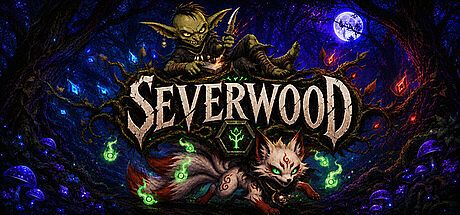


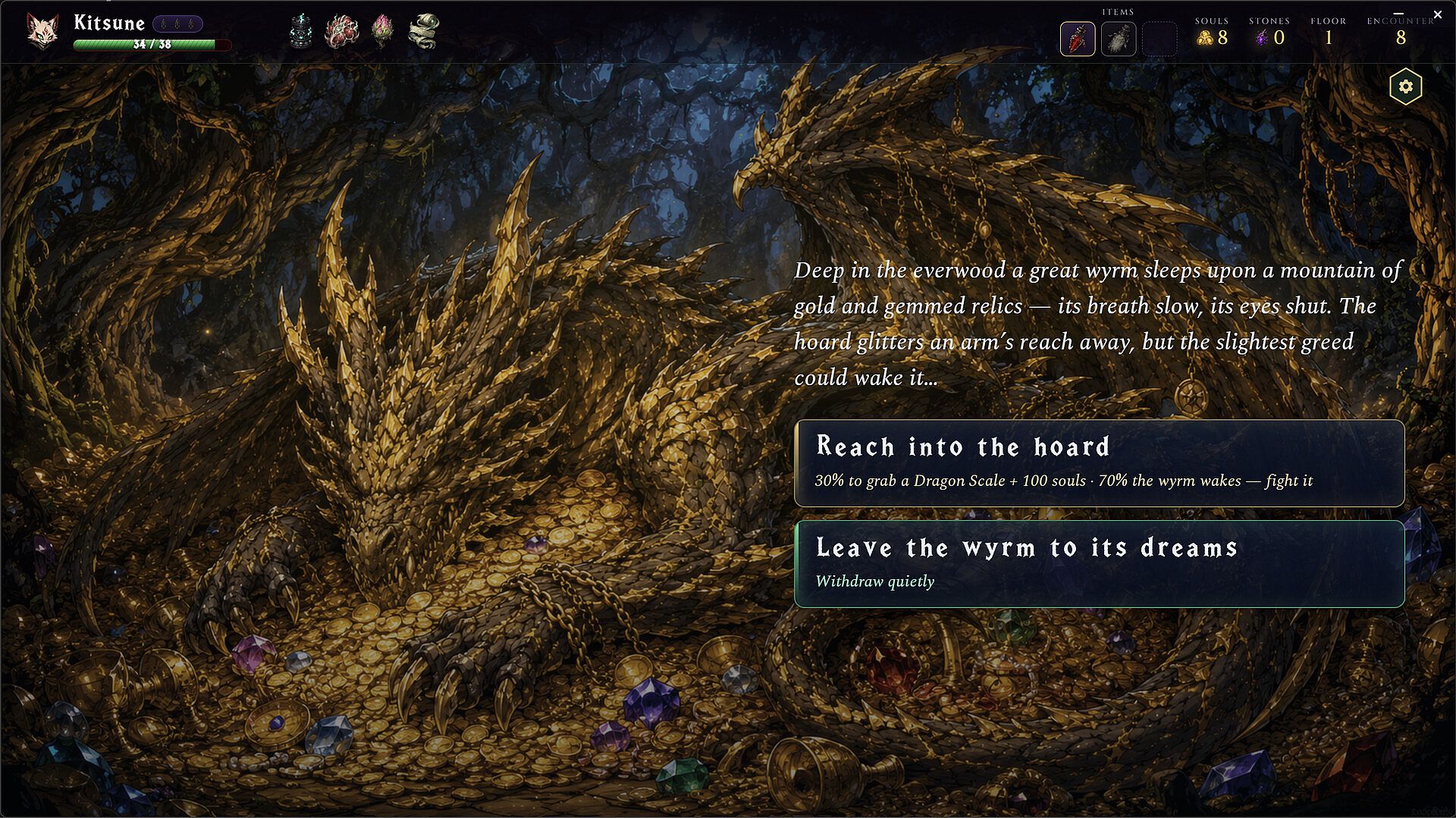
Severwood to strategiczna gra jednoosobowa łącząca mechaniki roguelike z budowaniem talii w mrocznym klimacie inspirowanym folklorem. Gracz wciela się w potwora, który uciekł z niewoli i tropi nekromantę w nieskończonym lesie zwanym Everwood. Rozgrywka opiera się na turowych starciach, w których kluczowe znaczenie ma rozmieszczenie glifów i kolejność ich aktywacji. Każde podejście wprowadza trwałe zmiany w możliwościach wybranego potwora.
Rozgrywka
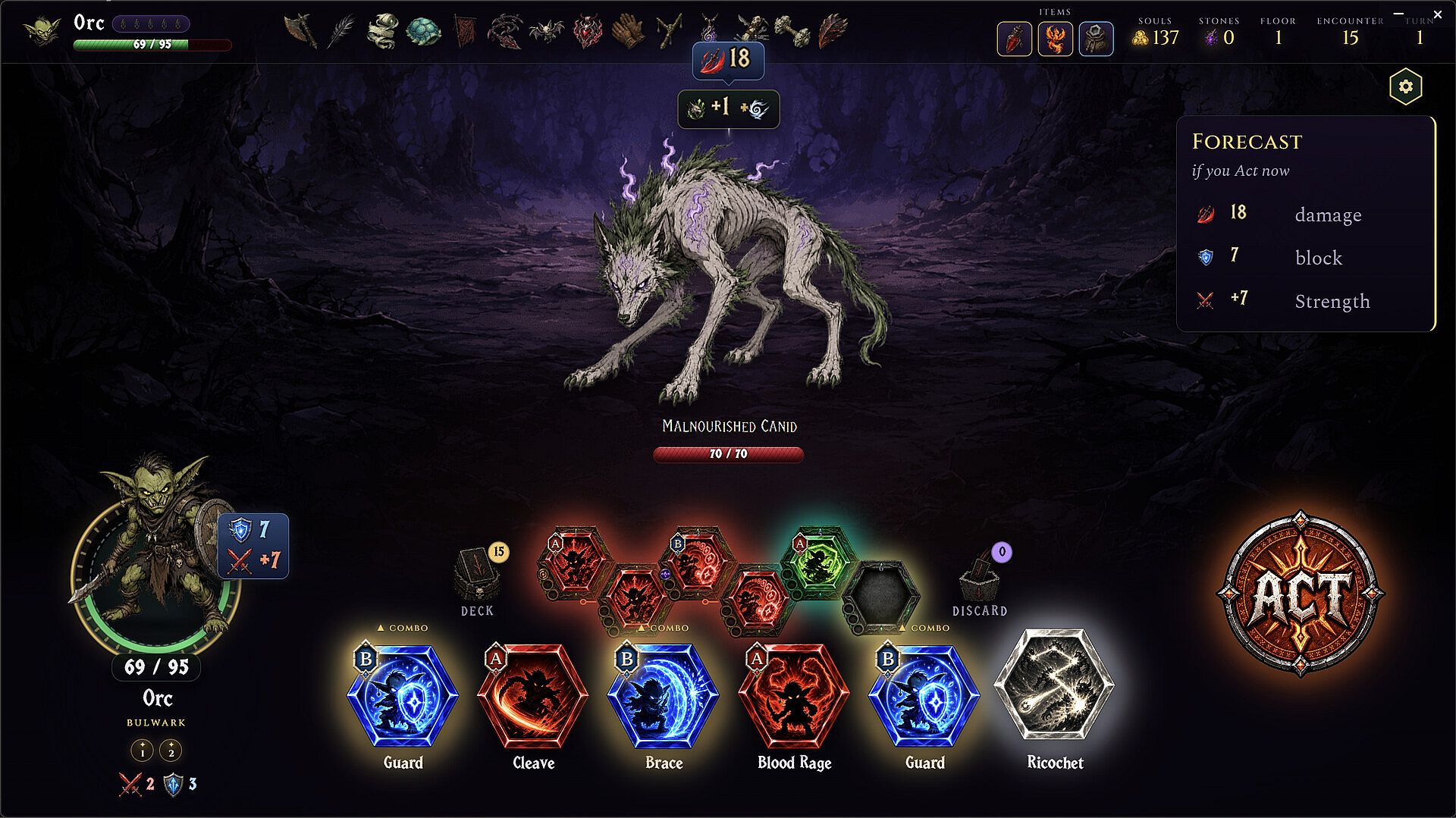
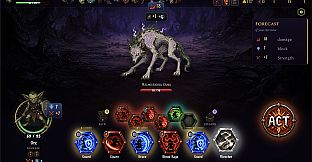
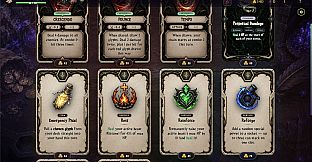
Walka polega na budowaniu łańcuchów efektów poprzez umieszczanie glifów w sekwencji gniazd, a nie na pojedynczym zagrywaniu kart. Kolejność decyduje o tym, jak ze sobą współdziałają - na przykład podpalenie przed detonacją lub użycie glifu łączącego, który scala ze sobą niekompatybilne zdolności. Każdy ruch staje się zagadką polegającą na ułożeniu optymalnej sekwencji przed jednoczesnym rozstrzygnięciem całego łańcucha.
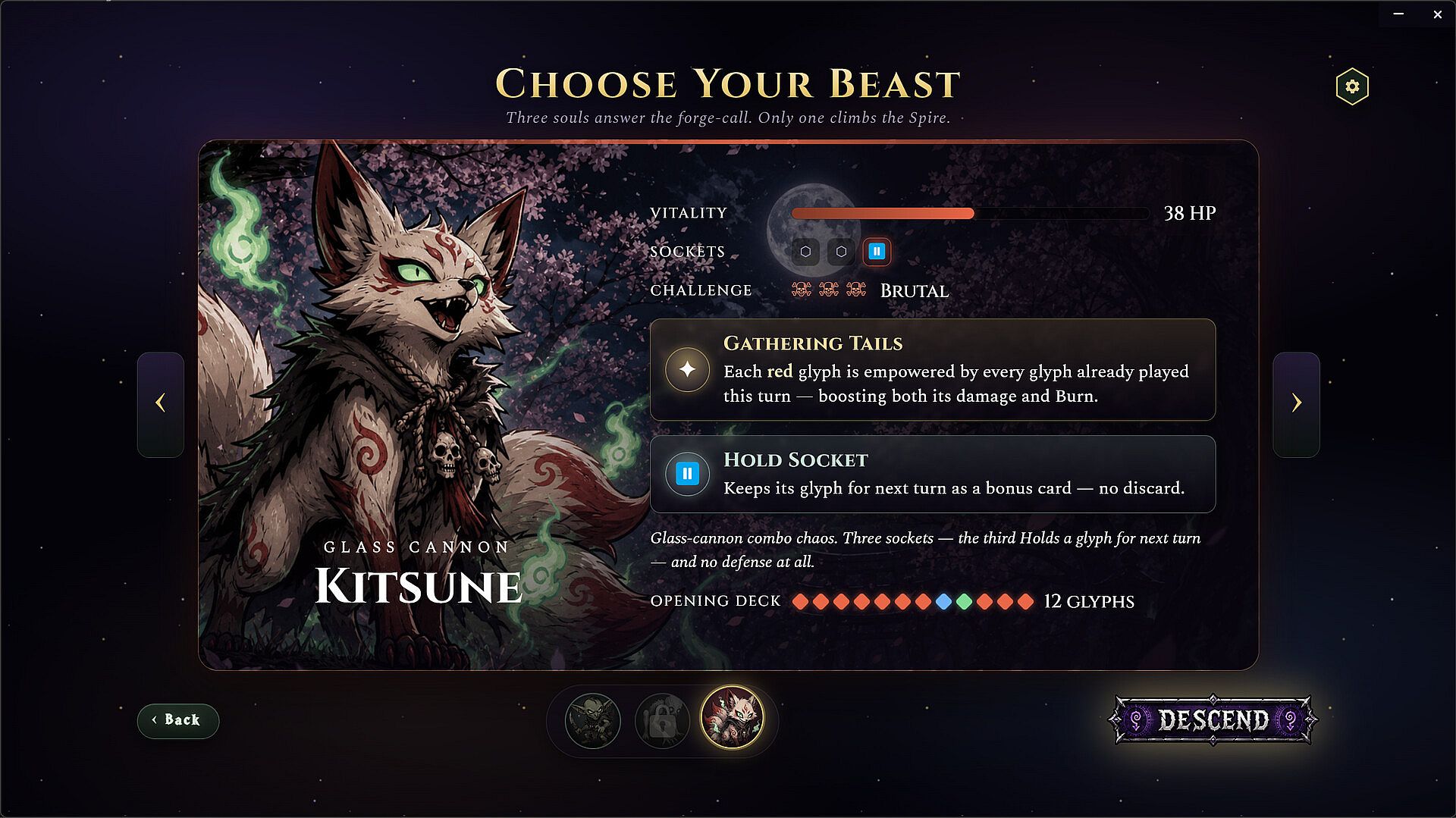
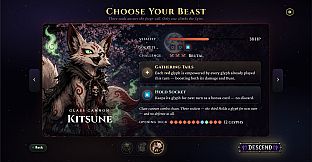
Potwory różnią się stylami gry, które ewoluują przez nieodwracalne wybory dokonywane w trakcie wyprawy. Kitsune specjalizuje się w tworzeniu i detonowaniu ścian ognia, oferując ryzykowną, ale potężną strategię. Goblin zamienia otrzymywane obrażenia w zmagazynowaną energię, którą później uwalnia w jednym uderzeniu. Ghoul skupia się na pochłanianiu ofiar, by zwiększać swoje możliwości i utrzymywać się przy życiu dzięki głodnym gniazdom. Każdy potwór ma rozgałęzione ścieżki ewolucji prowadzące do jednej z czterech form ostatecznych po dwóch przemianach, co sprawia, że każde podejście rozwija się inaczej w zależności od podjętych decyzji.
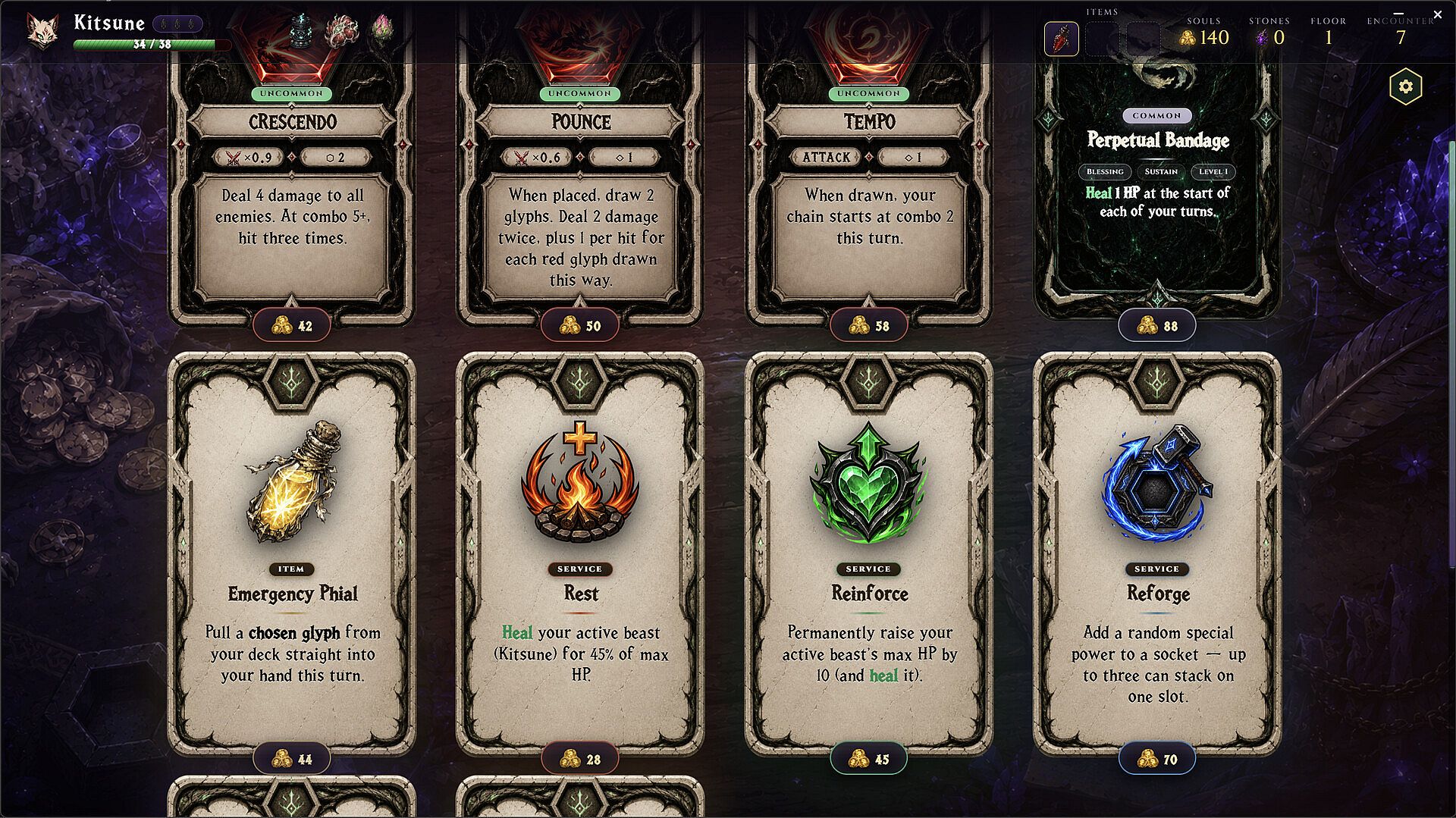
System gniazd rozwija się w trakcie gry - ich liczba może wzrosnąć do sześciu, a każde z nich oferuje trzy sloty na ulepszenia. Siedem specjalnych typów glifów pozwala dodatkowo dostosować sposób działania łańcuchów, umożliwiając dopasowanie strategii do mocnych stron wybranego potwora. Podczas wypraw gracz schodzi coraz głębiej w las, zarządzając zasobami i dostosowując się do skutków wcześniejszych wyborów ewolucyjnych.
Tryby gry
Podstawowa rozgrywka składa się z podejść w stylu roguelike, w których śmierć resetuje postępy, ale zachowuje wiedzę o skutecznych sekwencjach glifów i ścieżkach ewolucji. Na początku gracz wybiera jednego z dostępnych potworów i pokonuje kolejne starcia, rozwiązując zagadki łańcuchów gniazd w każdej turze. Nie ma osobnych trybów - zróżnicowanie wynika wyłącznie z wyboru potwora oraz rozgałęzień, które napotka podczas kolejnych prób.
Postęp zależy od tego, jak skutecznie układane są łańcuchy i jak ewolucje zmieniają dostępne opcje. Jedno podejście może całkowicie zmienić swój przebieg w zależności od momentu przemian, co zachęca do testowania różnych ścieżek w kolejnych próbach. Struktura nagradza precyzyjne planowanie w obrębie tury, jednocześnie akceptując fakt, że żadne dwa udane podejścia nie przebiegają identycznie.
Ewolucje potworów i strategie
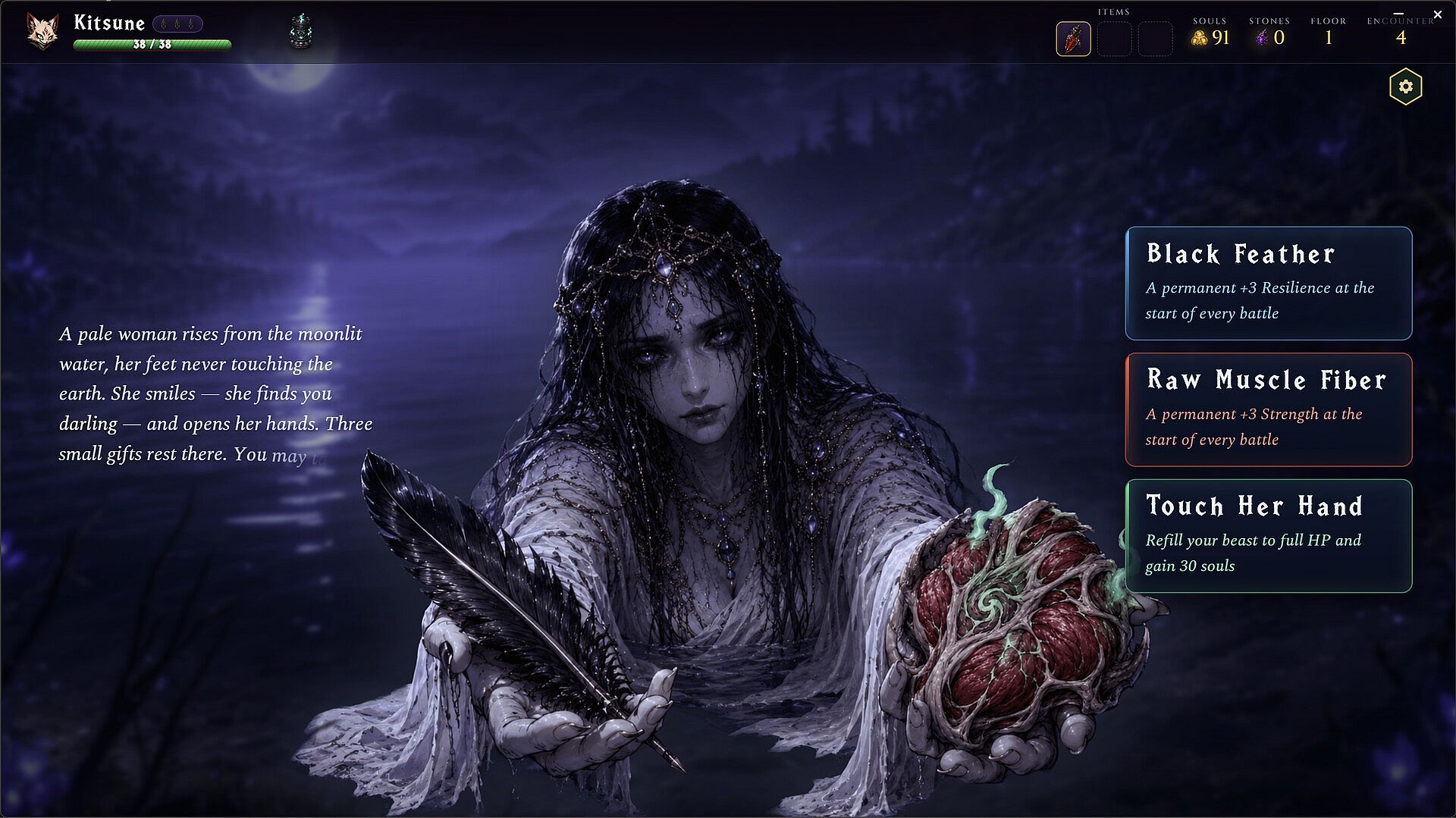
Wybory ewolucyjne pojawiają się w kluczowych momentach i wprowadzają nowe zdolności lub modyfikatory, które pozostają aktywne do końca wyprawy. Każde rozgałęzienie prowadzi do jednej z czterech możliwych form końcowych, zmieniając sposób interakcji glifów w łańcuchu. Gracz musi balansować między natychmiastową siłą a długoterminową synergią przy wyborze ścieżki.
System zachęca do dostosowywania strategii wokół tożsamości wybranego potwora. Detonacje oparte na ogniu u Kitsune wymagają precyzyjnego wyczucia czasu, by uniknąć obrażeń własnych, natomiast Goblin potrzebuje przetrwać ataki, by zgromadzić wystarczającą ilość energii do potężnego uderzenia. Zarządzanie zasobami poprzez gniazda i ulepszenia nabiera kluczowego znaczenia w miarę wydłużania się wypraw i wzrostu trudności starć.
Czy warto zagrać?
Severwood przypadnie do gustu osobom, które cenią roguelikowe deckbuildery skupione na sekwencjonowaniu i nieodwracalnych decyzjach, a nie na prostym dobieraniu kart. Nacisk na kolejność efektów sprawia, że każda tura staje się aktywną zagadką, nagradzając eksperymentowanie z różnymi układami glifów i ścieżkami ewolucji. Gra jest dostępna na PC, co zapewnia bezpośredni dostęp do trybu jednoosobowego bez dodatkowych wymagań.
Osoby szukające różnorodności poprzez mechaniki specyficzne dla każdego potwora i rozgałęzione przemiany znajdą w kolejnych podejściach wystarczającą ilość nowości. Gra pozostaje w fazie aktywnego rozwoju - w planach znajduje się między innymi dodanie Ghoul. Fani turowych strategii z elementami roguelite powinni wypróbować dostępną wersję demo, aby sprawdzić, czy styl budowania kombinacji i stałego rozwoju pasuje do ich preferencji.