

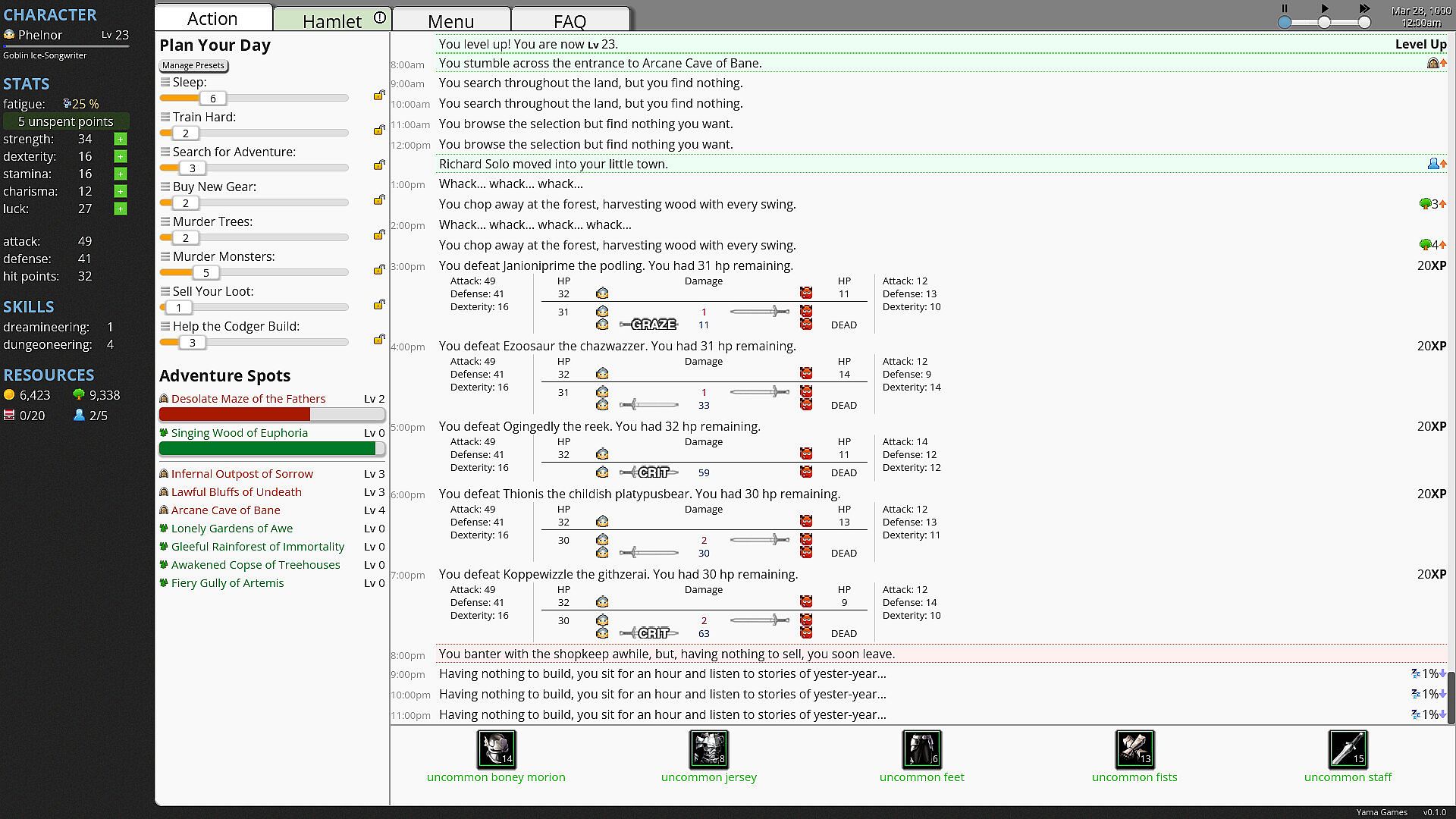
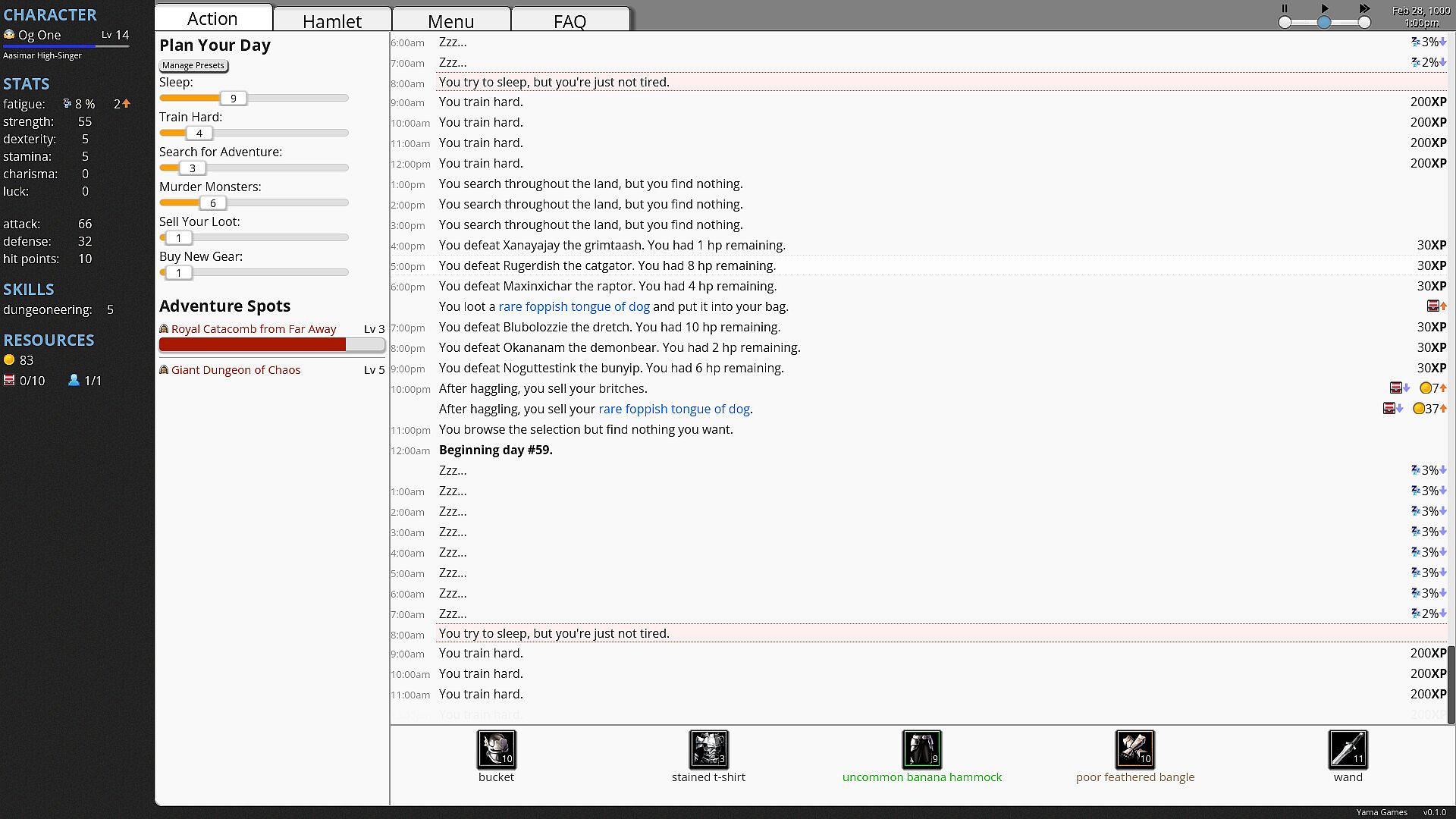
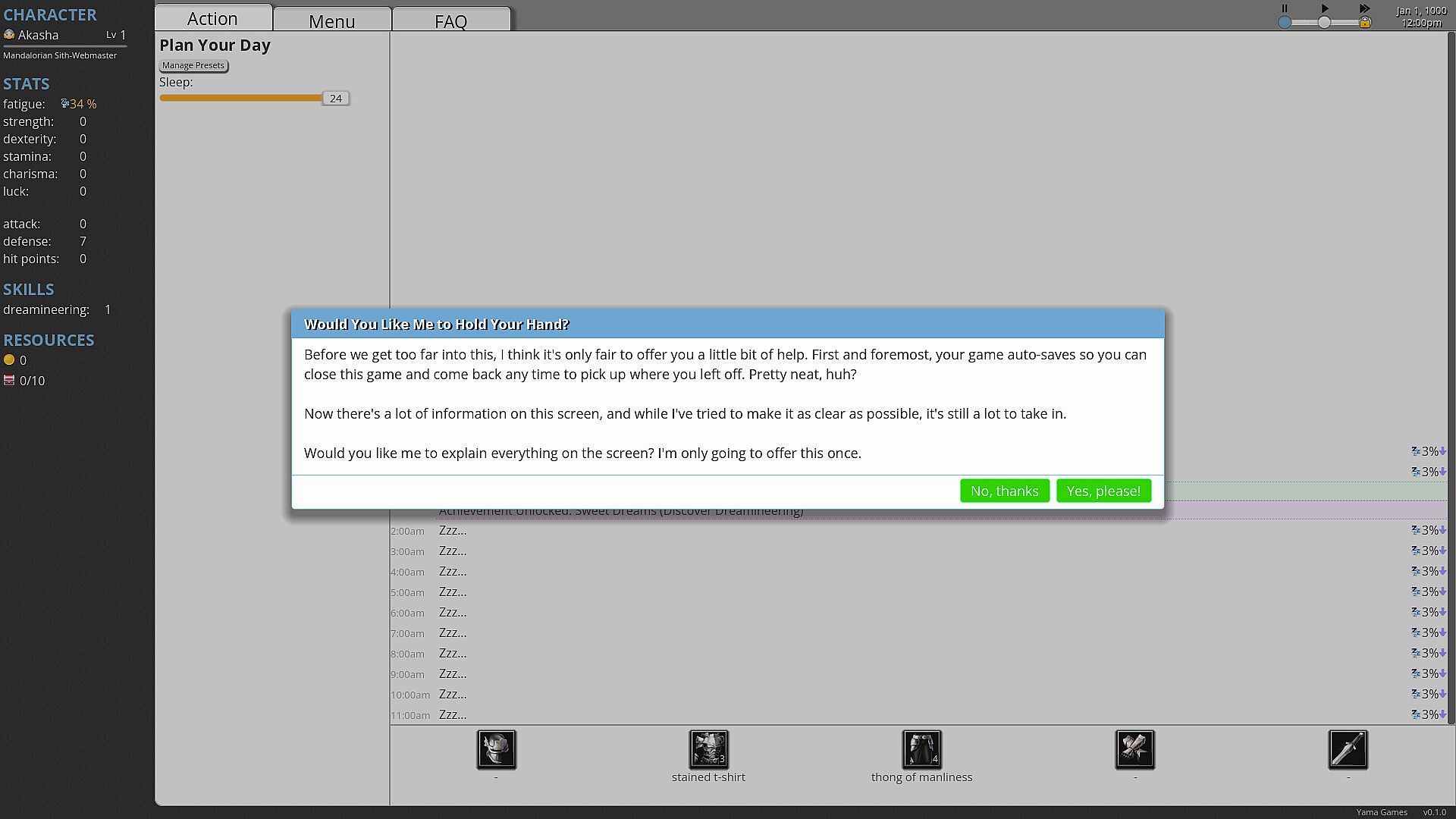
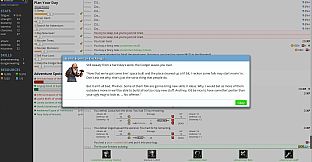
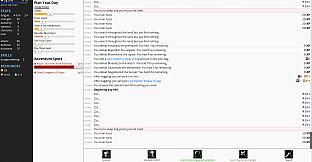
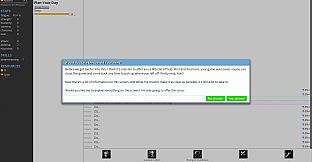
Slider Quest is an indie idle RPG for PC that puts players in charge of a hero who handles most of the work after a few simple decisions. The game centers on distributing a fixed 24 hours of daily time across ability sliders, after which the character follows those instructions with minimal further input. This setup creates a relaxed yet engaging loop where the hero explores, fights, gathers resources, and rests according to the plan set each day.
Gameplay
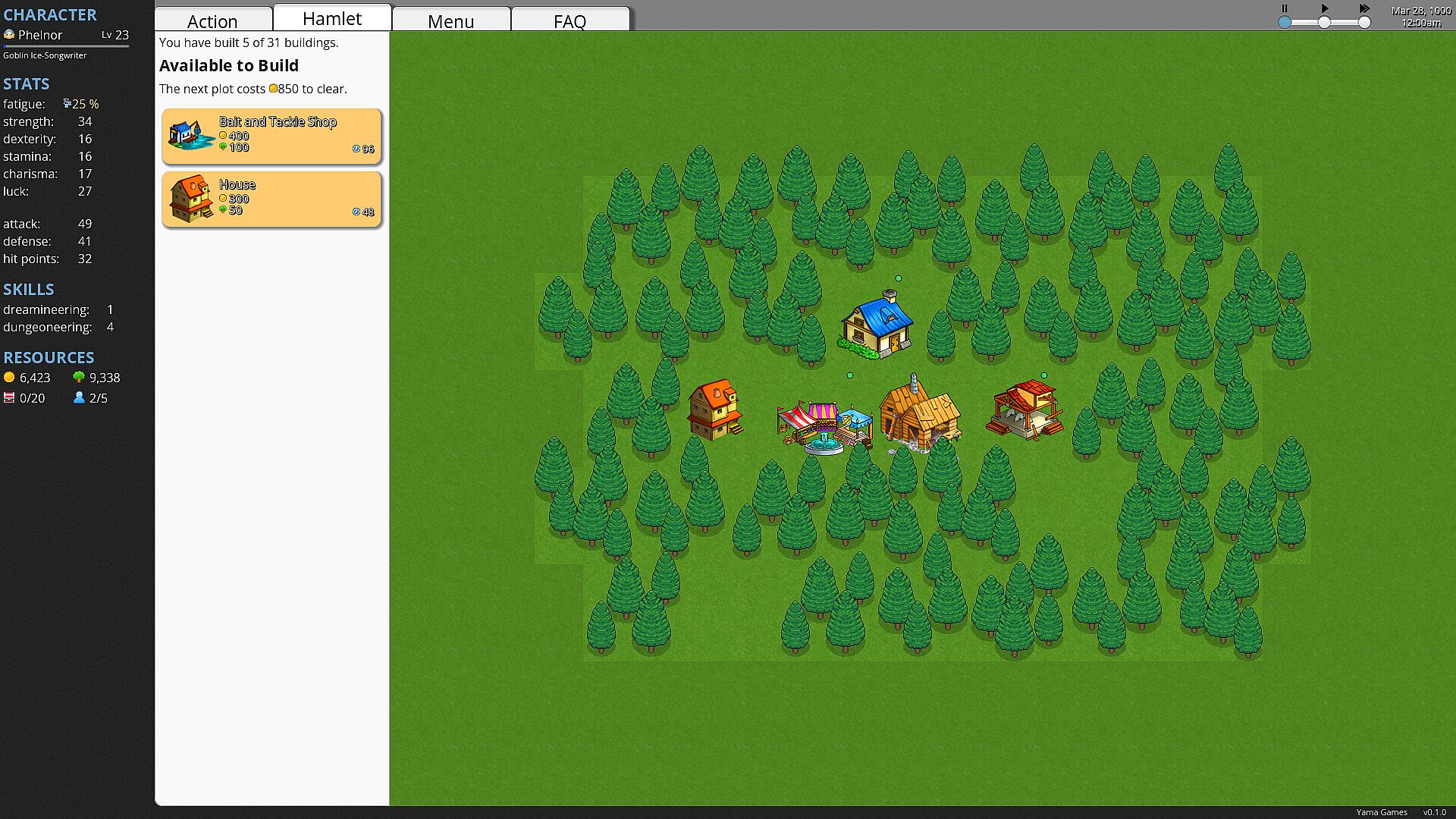
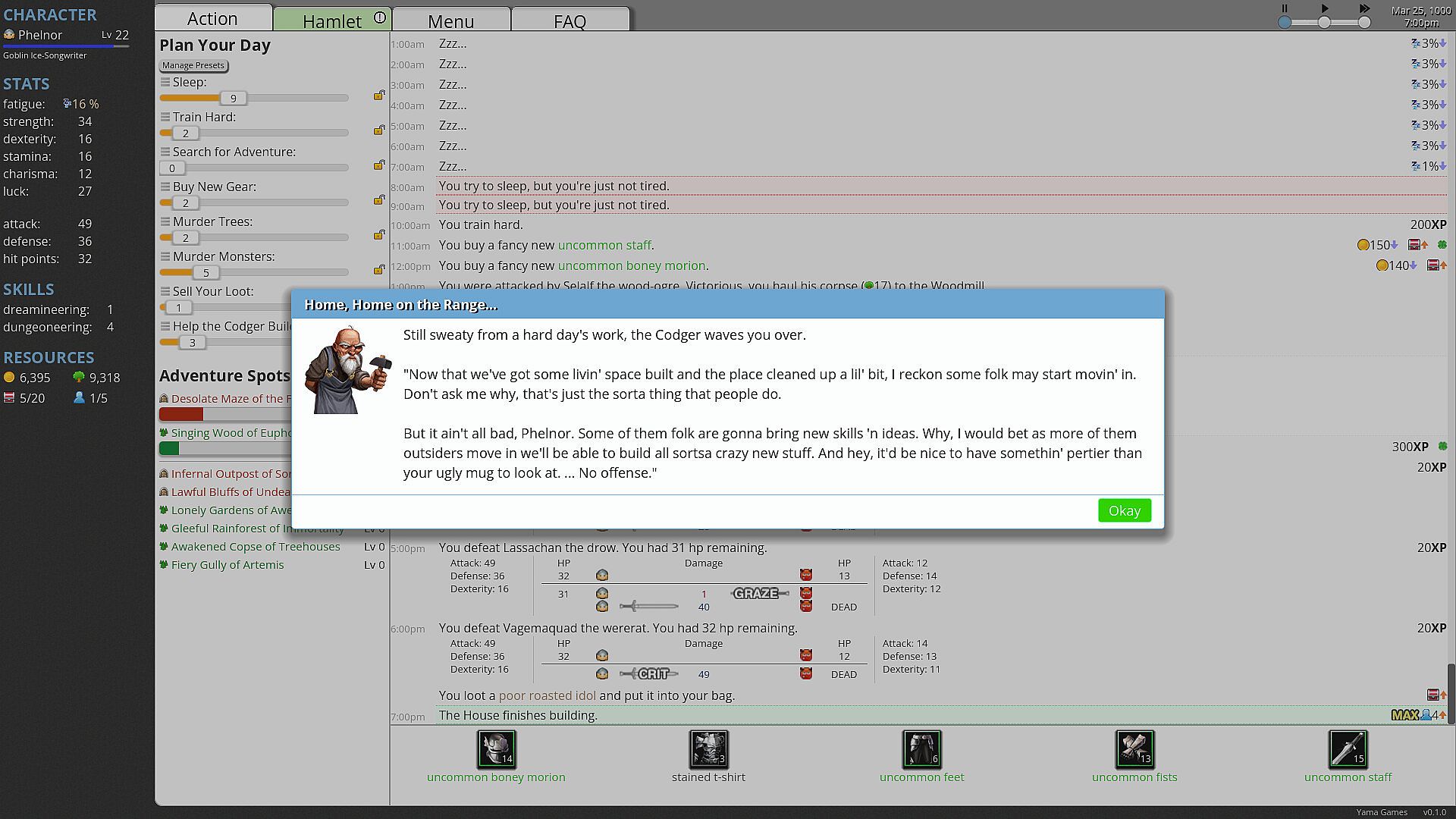
The core loop revolves around time management through sliders that allocate hours to different activities. Players adjust these sliders to balance combat, exploration, social interactions, crafting, and rest. The hero then carries out the schedule independently, returning results such as experience, loot, and town contributions. Sleep is a required element; insufficient rest leaves the character less effective the next day, forcing careful planning around recovery time. Progression involves leveling up, spending points on stats, equipping gear, and facing a large variety of enemies encountered during the hero's outings. Town building adds another layer, as contributions from the hero help expand the settlement and unlock further options over time.
Prestige mechanics allow players to reset certain progress for long-term gains, with the desktop version featuring an updated system compared to earlier releases. The experience emphasizes setting a daily plan rather than constant clicking or real-time control, making it suitable for background play while the player attends to other tasks.
Game Modes
Slider Quest operates primarily as a single-player idle experience with no separate multiplayer or competitive modes. The main activity involves daily time allocation and observing the results of those choices across multiple in-game days. Town growth and hero advancement serve as ongoing objectives that evolve naturally through repeated play sessions. Prestige runs provide a form of replayability by resetting elements while carrying forward permanent improvements. The structure supports both short check-ins to tweak sliders and longer periods of hands-off progression as the hero continues working through the allocated schedule.
Progression and Town Building
Hero development follows standard RPG patterns with stat allocation, equipment upgrades, and combat encounters against numerous enemy types. The large pool of unique foes keeps encounters varied as the character advances. Town expansion ties directly into hero activities, turning personal progress into community benefits that open new opportunities. Resource management and time balancing influence how quickly these systems advance, rewarding thoughtful slider setups over many cycles.
Humor and Tone
The writing delivers consistent dark, sarcastic, and irreverent humor throughout descriptions, events, and character interactions. This tone sets the game apart from more straightforward idle titles and appeals to players who enjoy self-aware commentary on RPG tropes. The overall presentation remains light and casual despite the underlying systems, encouraging relaxed engagement rather than intense optimization.
Is It Worth Playing?
Slider Quest suits players who enjoy idle or incremental games with a layer of control through daily planning. Those who appreciate sarcastic writing and do not mind a slower pace will find the time-management focus and town-building elements satisfying. The Steam version includes quality-of-life improvements and a reworked prestige system that address earlier limitations. Reception among its small audience highlights the unique idle-RPG blend and humor, though the niche style means it may not appeal to everyone seeking active combat or complex narratives. If the idea of setting sliders and letting a hero handle the rest sounds appealing, the game offers a distinctive take on the genre worth trying on PC.