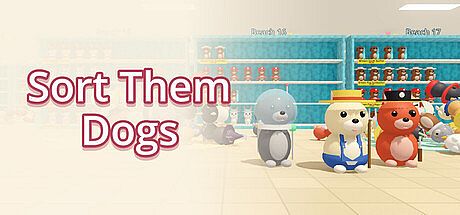


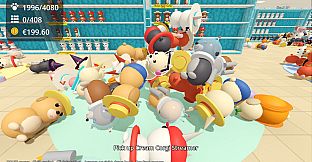
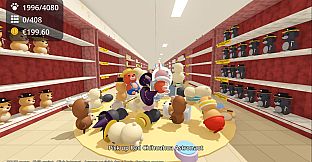
Sort Them Dogs is a casual indie sorting game for PC where players restore order to a sprawling doggy daycare filled with thousands of toy pups. The experience centers on methodically picking up each figurine and returning it to its proper place on the shelves, creating a satisfying progression from chaos to neat collections without any pressure or penalties.
Gameplay
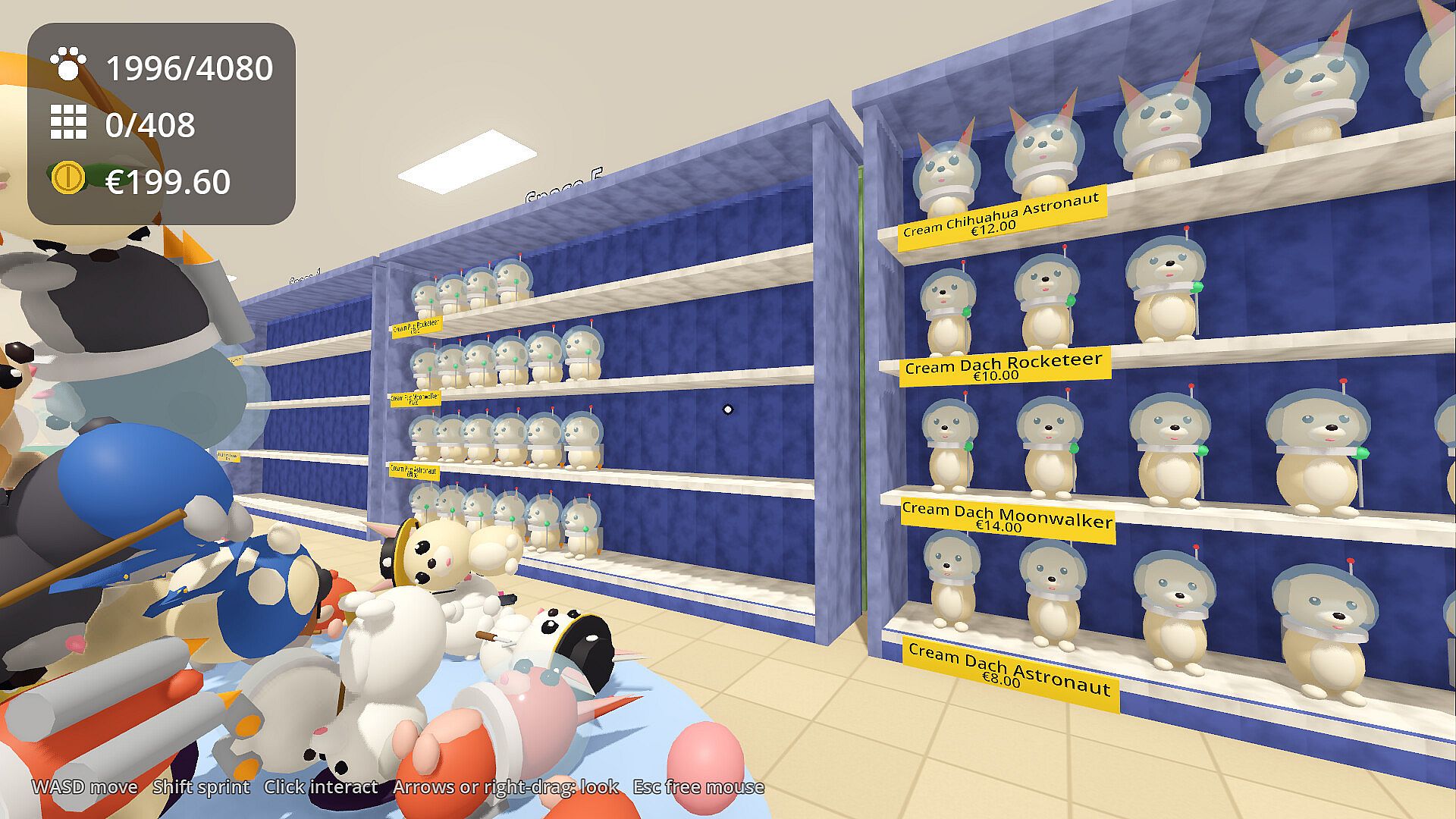
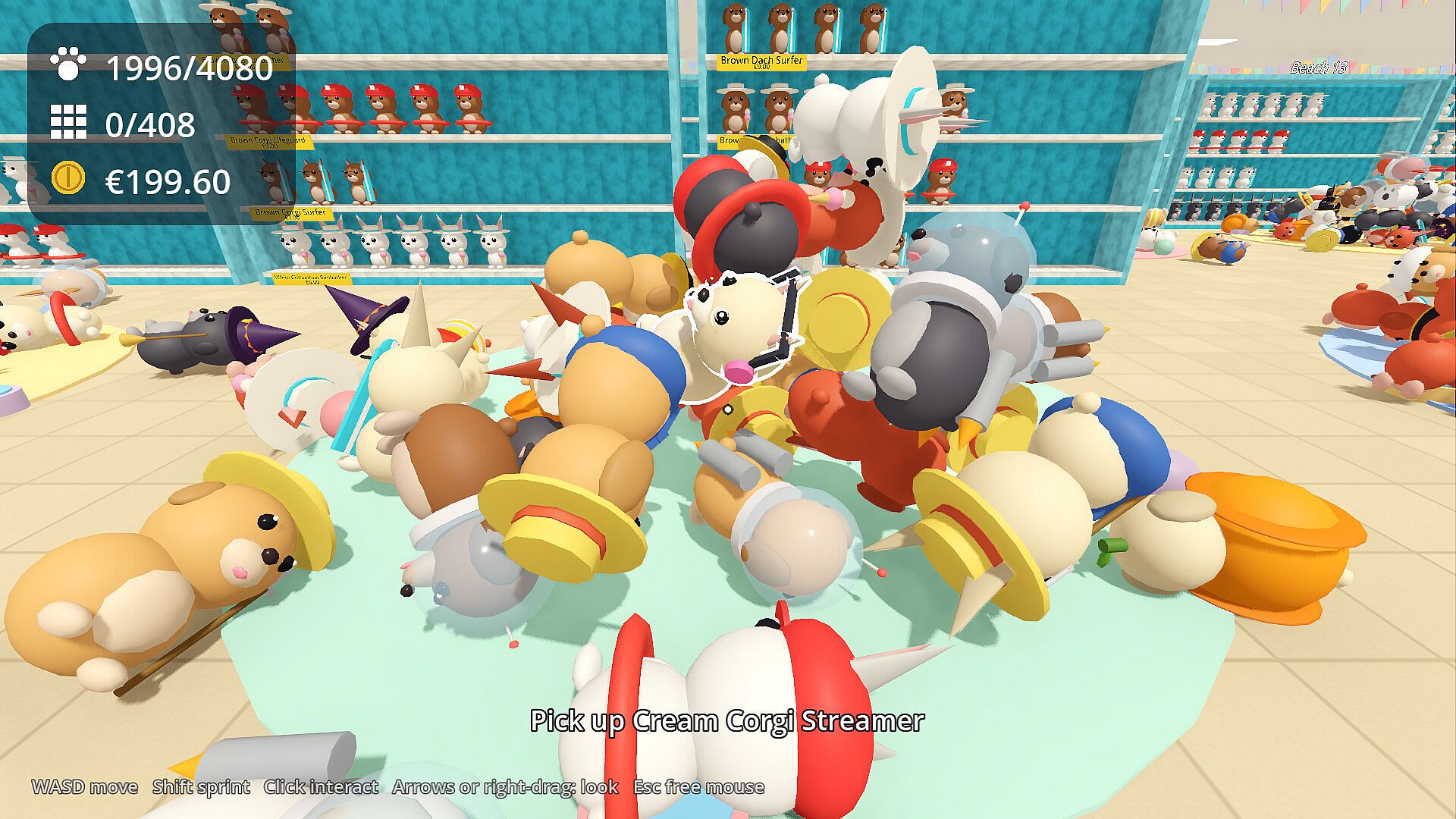
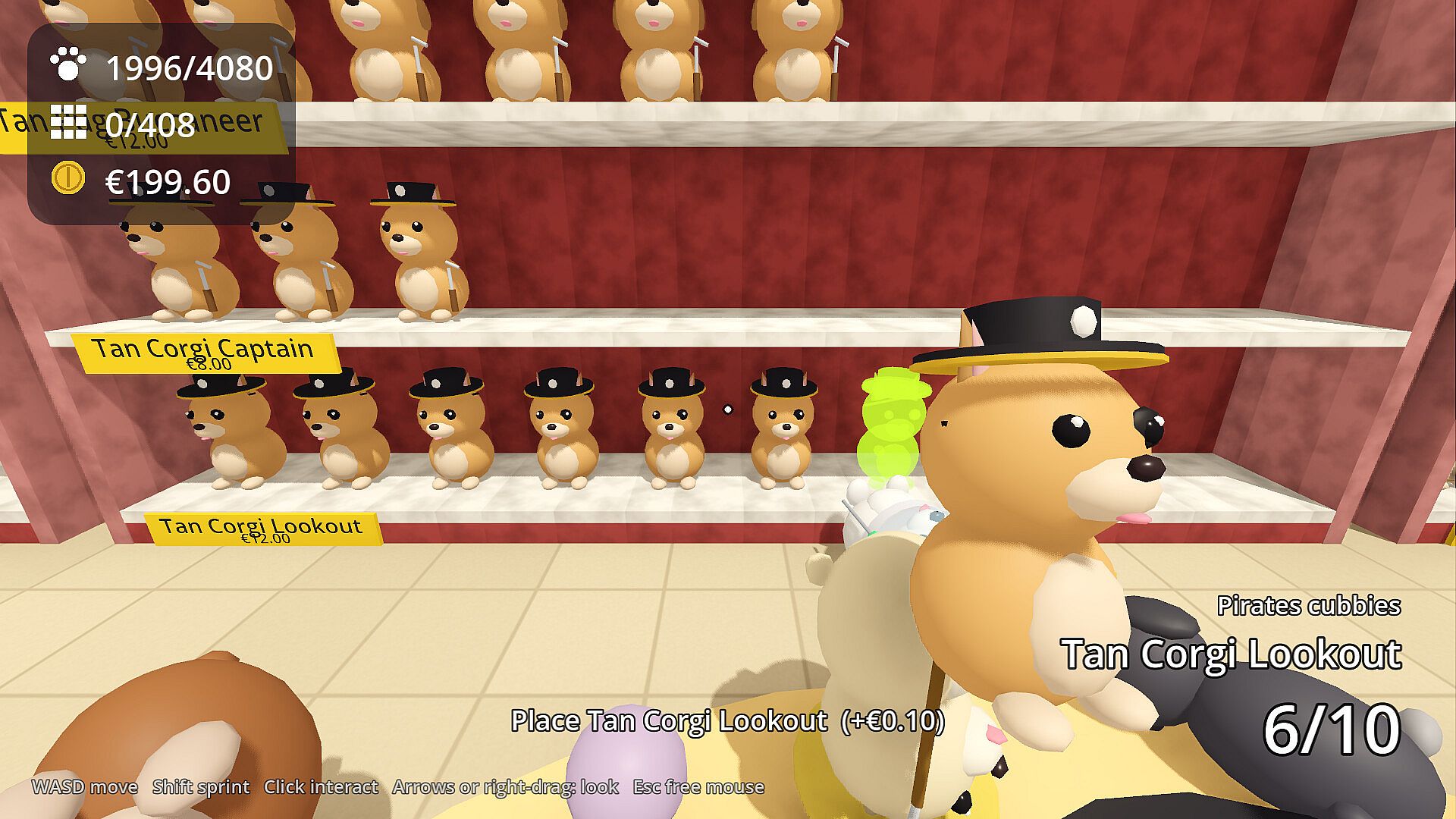
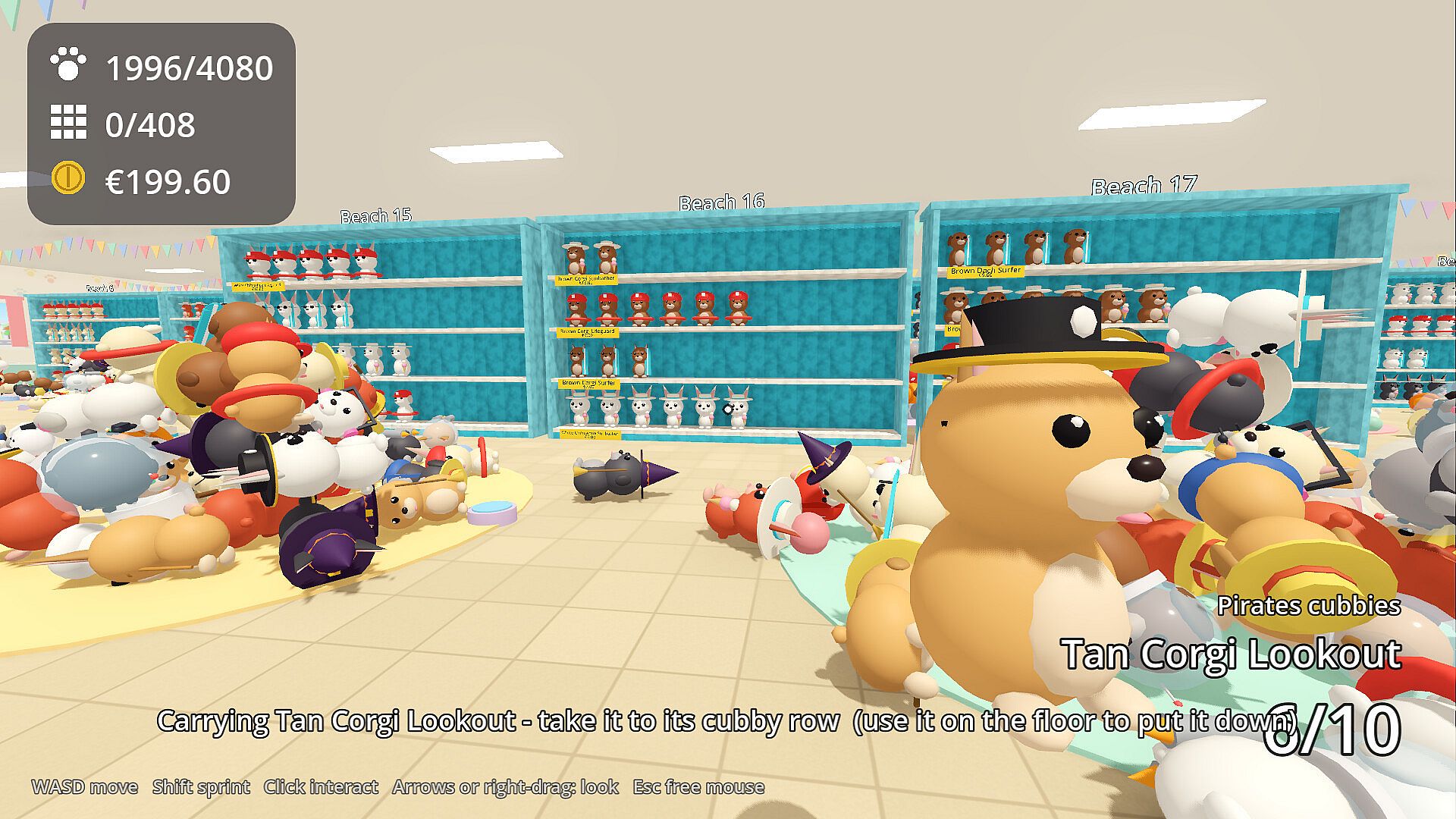
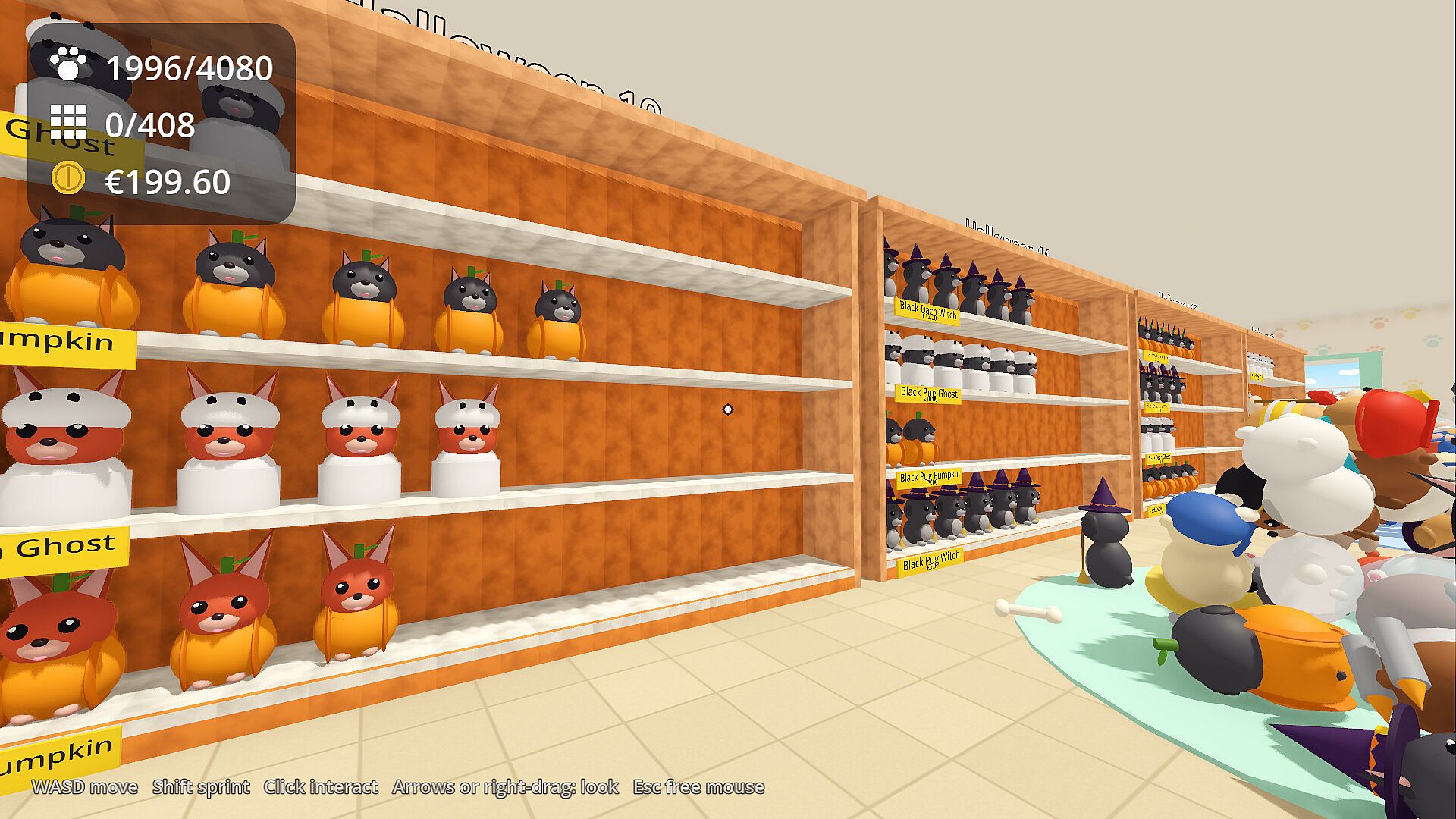
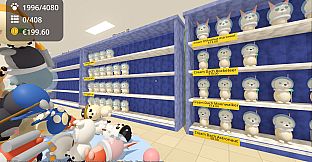
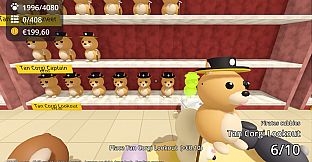
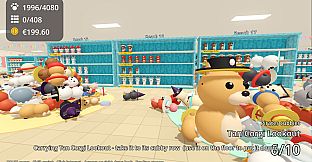
The core loop involves moving through the large hall in first person, selecting one pup at a time, examining its theme and breed details such as a Pirate Corgi or Rocket Dach, and carrying it to the matching row on one of the 102 cubby units. A green outline previews the exact placement before release, allowing precise positioning. Rows begin empty, and the first pup placed on a row establishes its category, letting players decide the overall shelf layout as they progress.
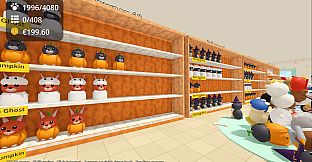
Each correctly placed pup on its row generates a small amount of money, with a full row of ten delivering a sense of completion. The hall contains 4,080 pups across 408 varieties, including corgis, pugs, dachshunds, and chihuahuas in multiple coat colors, grouped under six themes like Pirates, Farm, Space, Jobs, Halloween, and Beach. Outfits range from tricorn hats and jetpacks to pumpkin suits and surfboards, adding visual variety that aids recognition during sorting sessions.
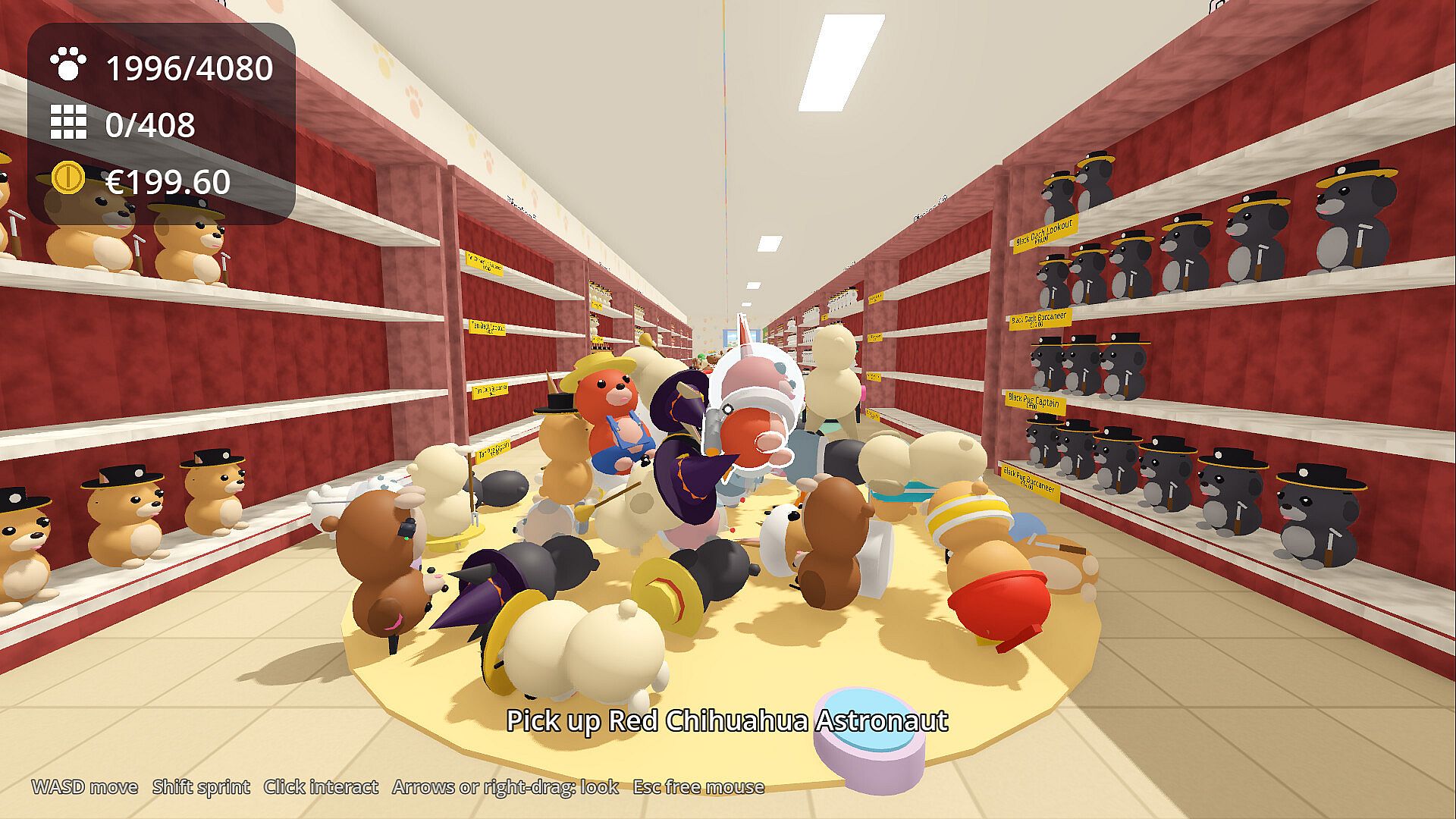
Controls support keyboard and mouse or gamepad, with full menu navigation available on either. The environment features town-view windows, dog beds, bunting, skylights, and a front desk, all contributing to a calm atmosphere enhanced by a gentle original soundtrack designed for extended, quiet play. Progress saves automatically after every placement, supporting flexible sessions that can pause and resume at any time, including cross-device continuation via Steam Cloud support.
Game Modes
Sort Them Dogs offers a single continuous sorting experience in the daycare hall rather than distinct named modes. Players engage in open-ended organization sessions where they decide the pace and order of placements, with no timers, fail states, or external threats. The focus remains on exploring the space, identifying pup types, and building out rows at a personal rhythm that suits short breaks or longer sessions alike.
Mistakes carry no consequences beyond the option to relocate a misplaced pup later, emphasizing relaxation over competition or precision challenges. This unified approach encourages repeated visits to refine the layout or simply enjoy the gradual transformation of scattered heaps into organized collections across the themed varieties.
Visuals and Atmosphere
The daycare setting provides a consistent, cozy backdrop with detailed cubby units that fill progressively as sorting advances. Each of the six themes brings distinct outfits and accessories that stand out against the shelves, making identification intuitive while maintaining visual appeal throughout the process. The absence of any time limits or hazards keeps the focus on the tactile satisfaction of placement and the emerging patterns in the collections.
Sound design complements the visual calm with a soundtrack tailored for background listening during focused sorting. The overall presentation supports extended play without fatigue, whether paired with a podcast or enjoyed in quiet solitude.
Is It Worth Playing?
Sort Them Dogs suits players seeking a low-pressure, methodical activity that rewards patience and attention to detail. Its straightforward mechanics and forgiving nature make it accessible for casual sessions, while the volume of unique pups and customizable row assignments provide depth for those who enjoy completing large organizational tasks. The game supports flexible playstyles through automatic saves and input options, appealing to anyone who appreciates relaxing singleplayer experiences without multiplayer elements or competitive pressure.
Reception for similar sorting titles highlights the appeal of the genre for short or extended play, though individual enjoyment depends on tolerance for repetitive yet satisfying actions. Those drawn to indie casual games centered on collection and arrangement will find the daycare hall a fitting environment for unhurried progress. The title stands as a self-contained experience best approached with an open schedule for sessions that often extend beyond initial plans.