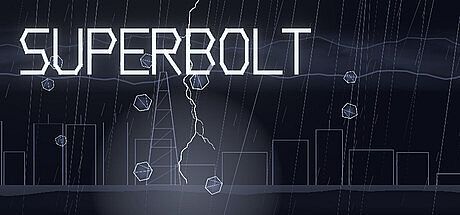



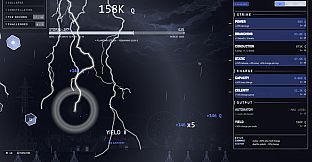
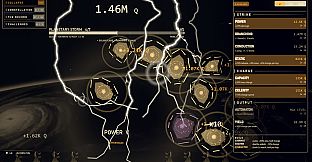
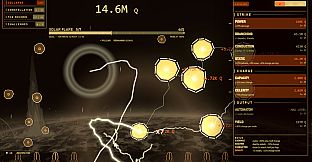
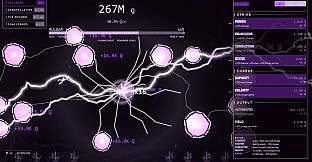
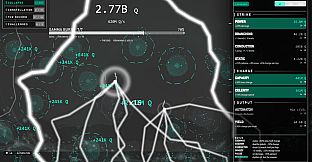
SUPERBOLT is an indie incremental simulation game for PC that centers on a single core action repeated across expanding scales. Players begin as a small spark and build toward cosmic events through repeated charge and release cycles that destroy nodes and structures in increasingly vast environments.
Gameplay
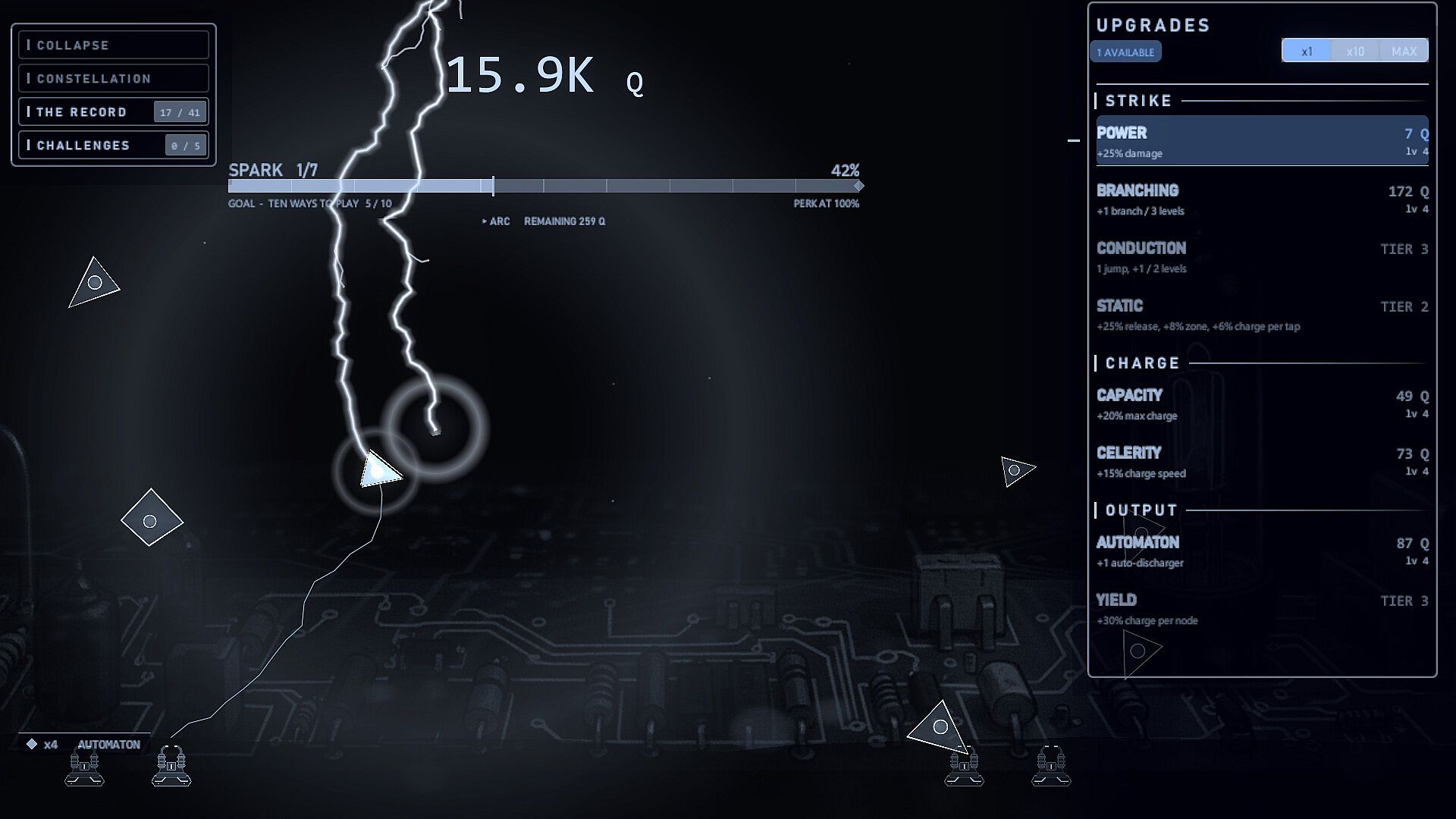
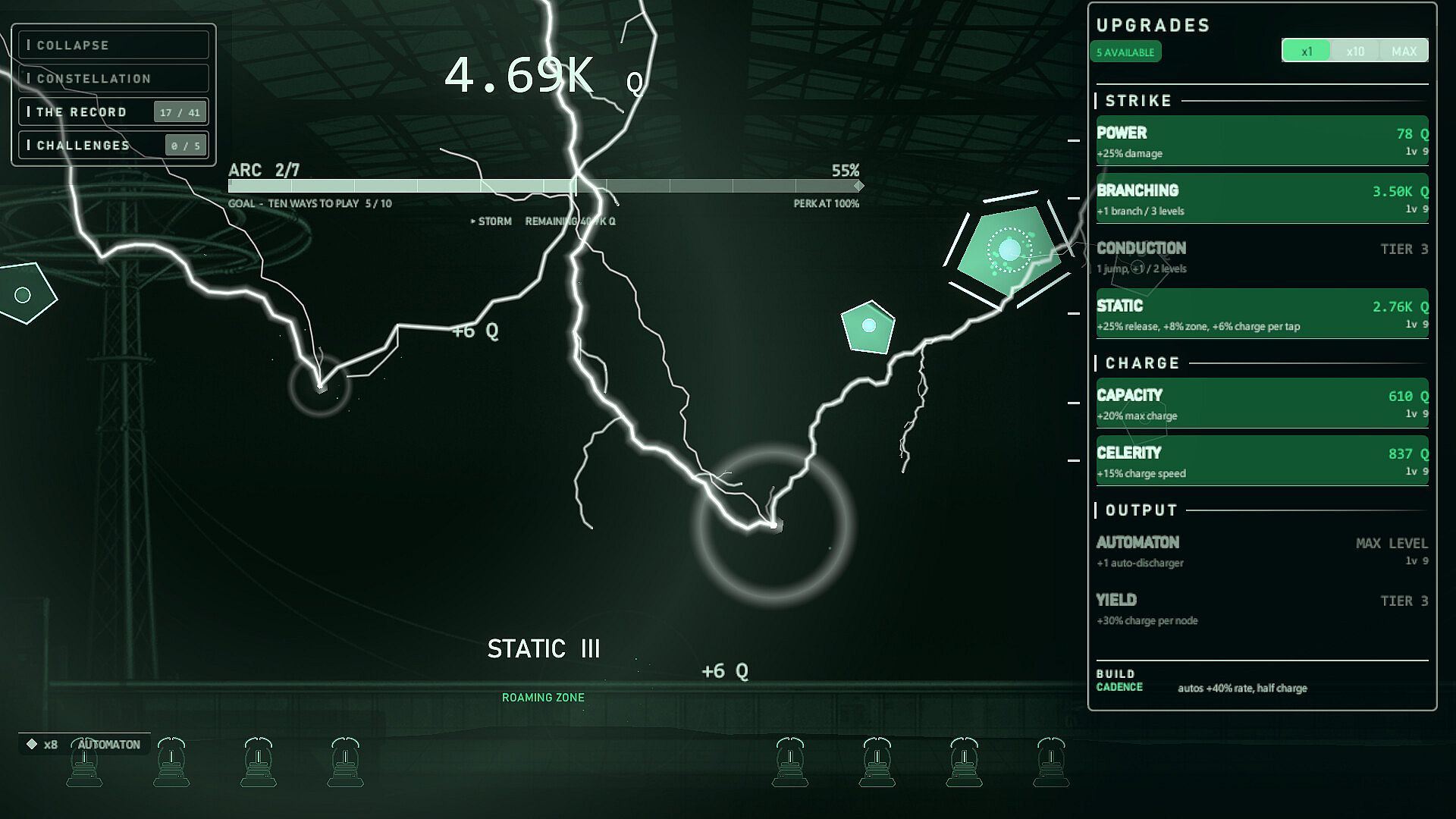
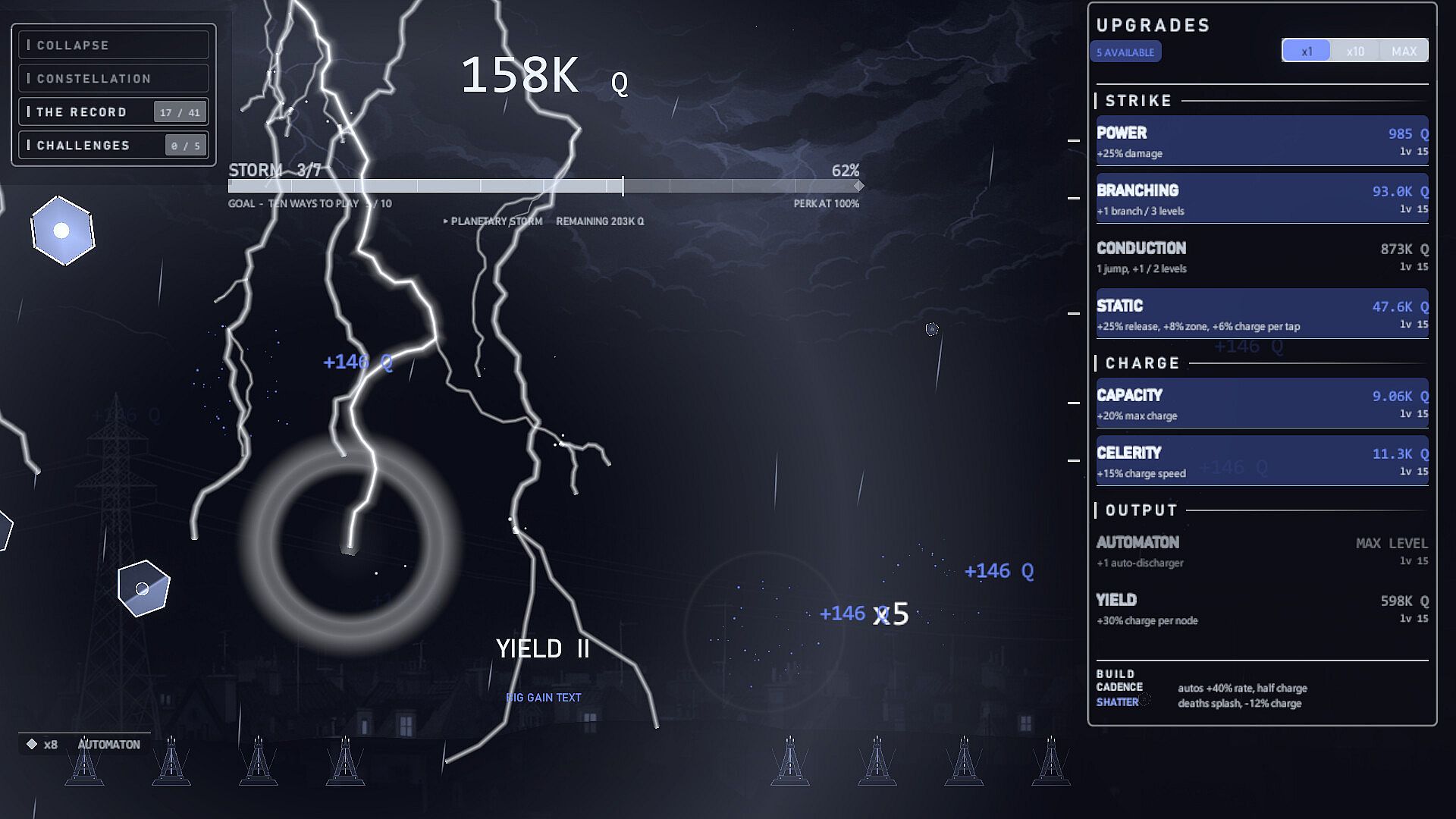
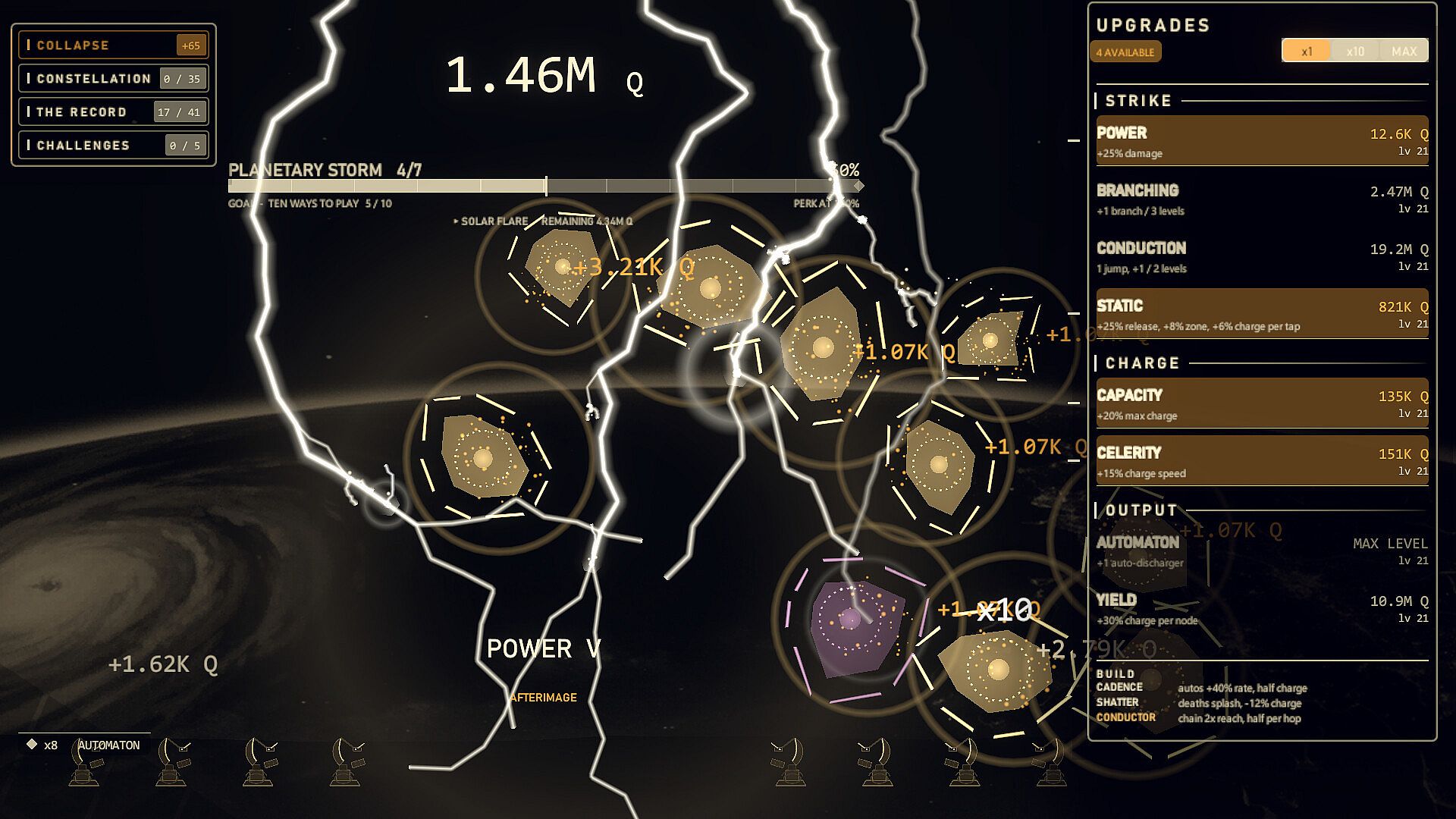
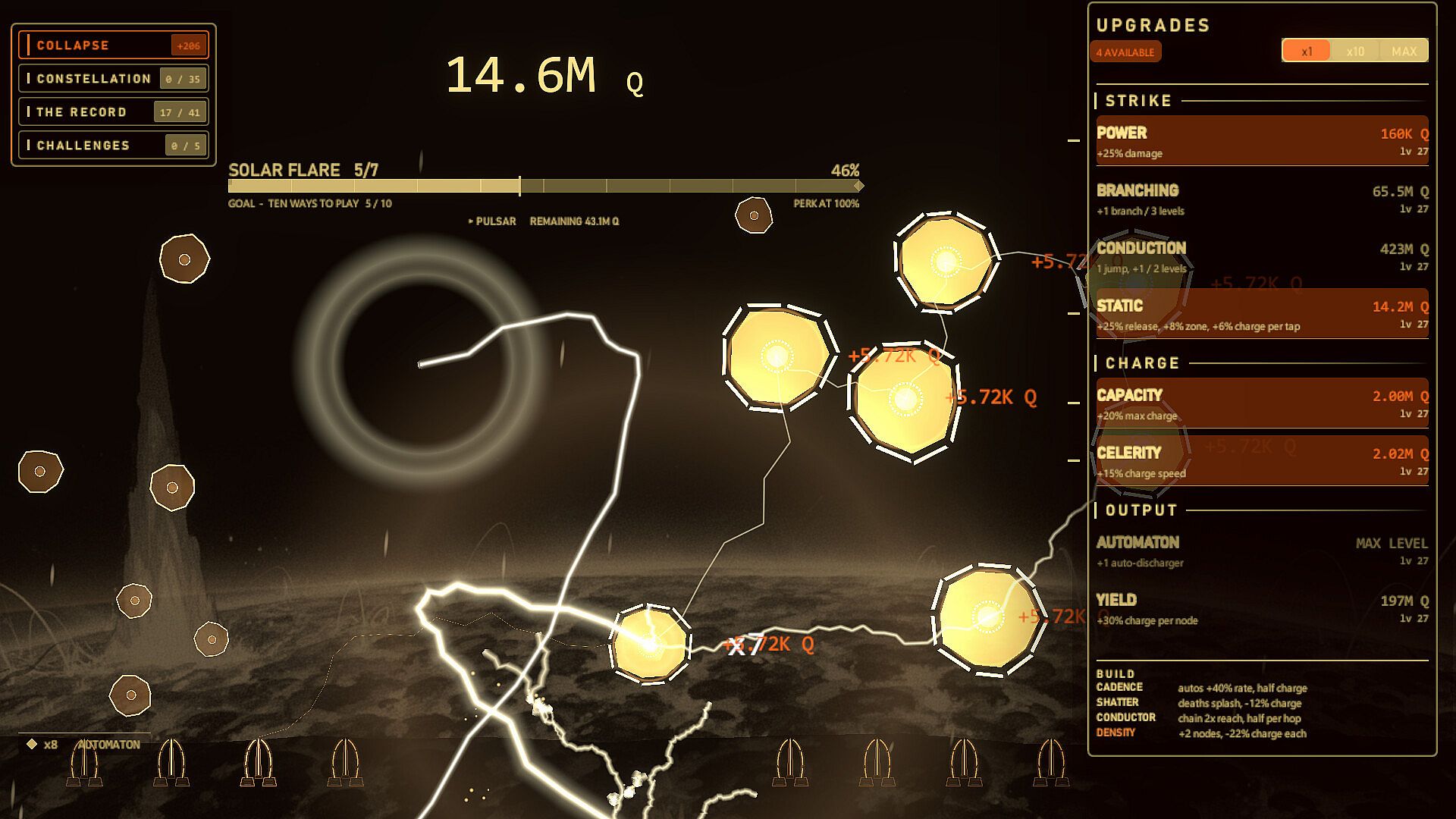
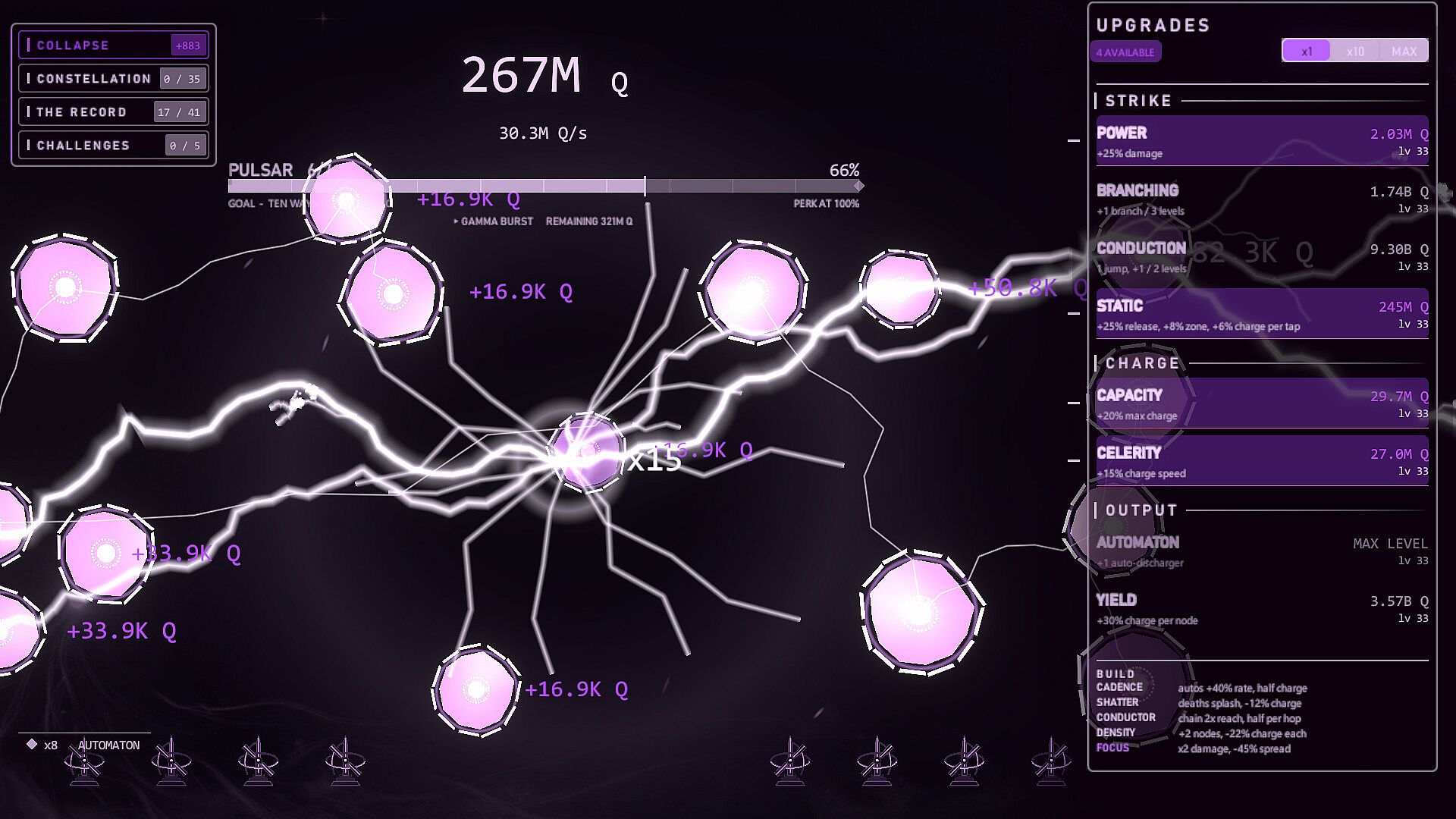
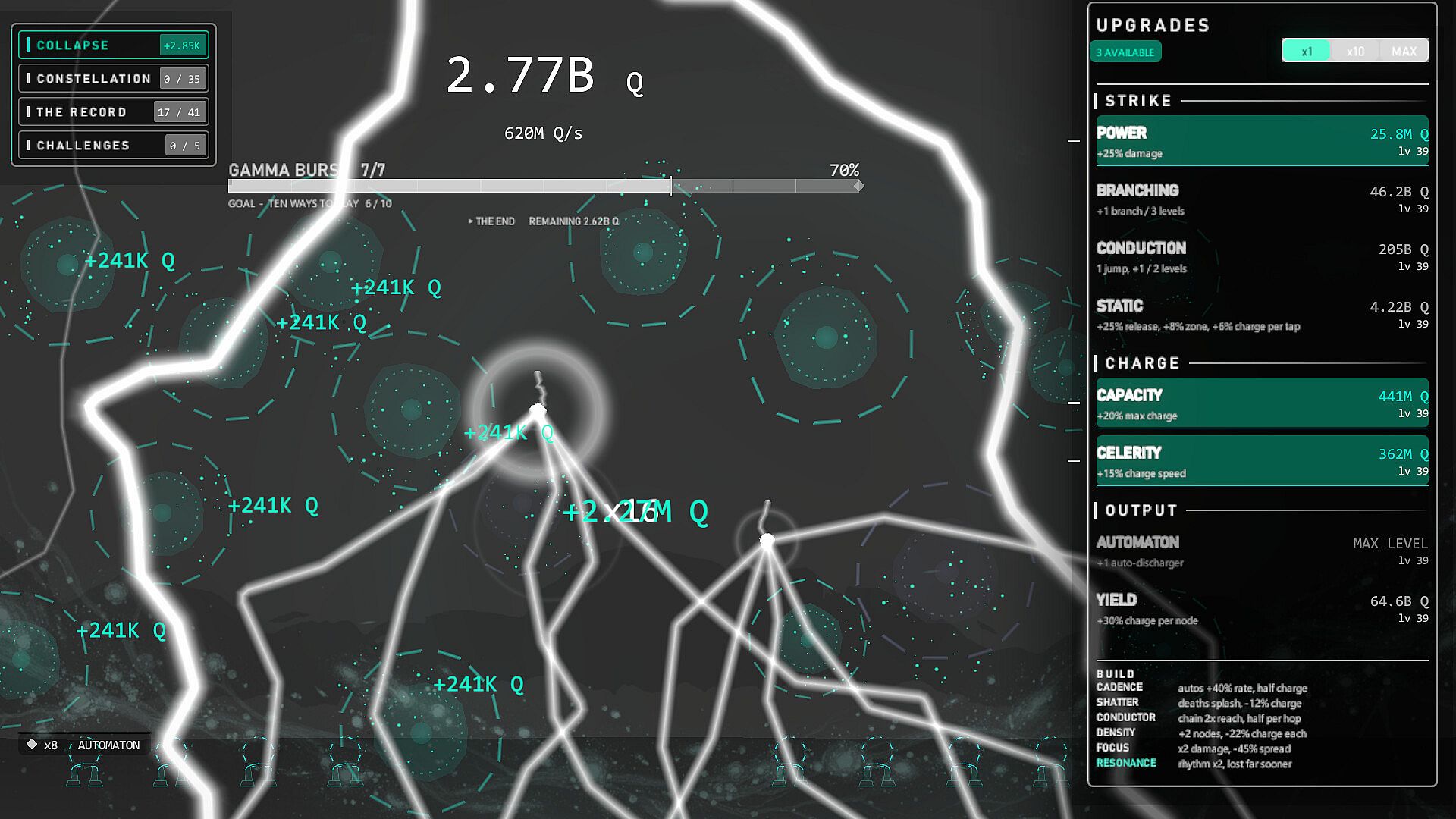
The central loop involves charging a bolt and releasing it to break objects, with each world introducing a new mechanical layer that builds on the previous one. Worlds progress from a small workbench setting measured in centimeters through an arc, a storm, a planetary tempest, a solar flare, a pulsar, and finally a gamma-ray burst spanning megaparsecs. Transitions between these scales occur naturally during play rather than through separate menus.
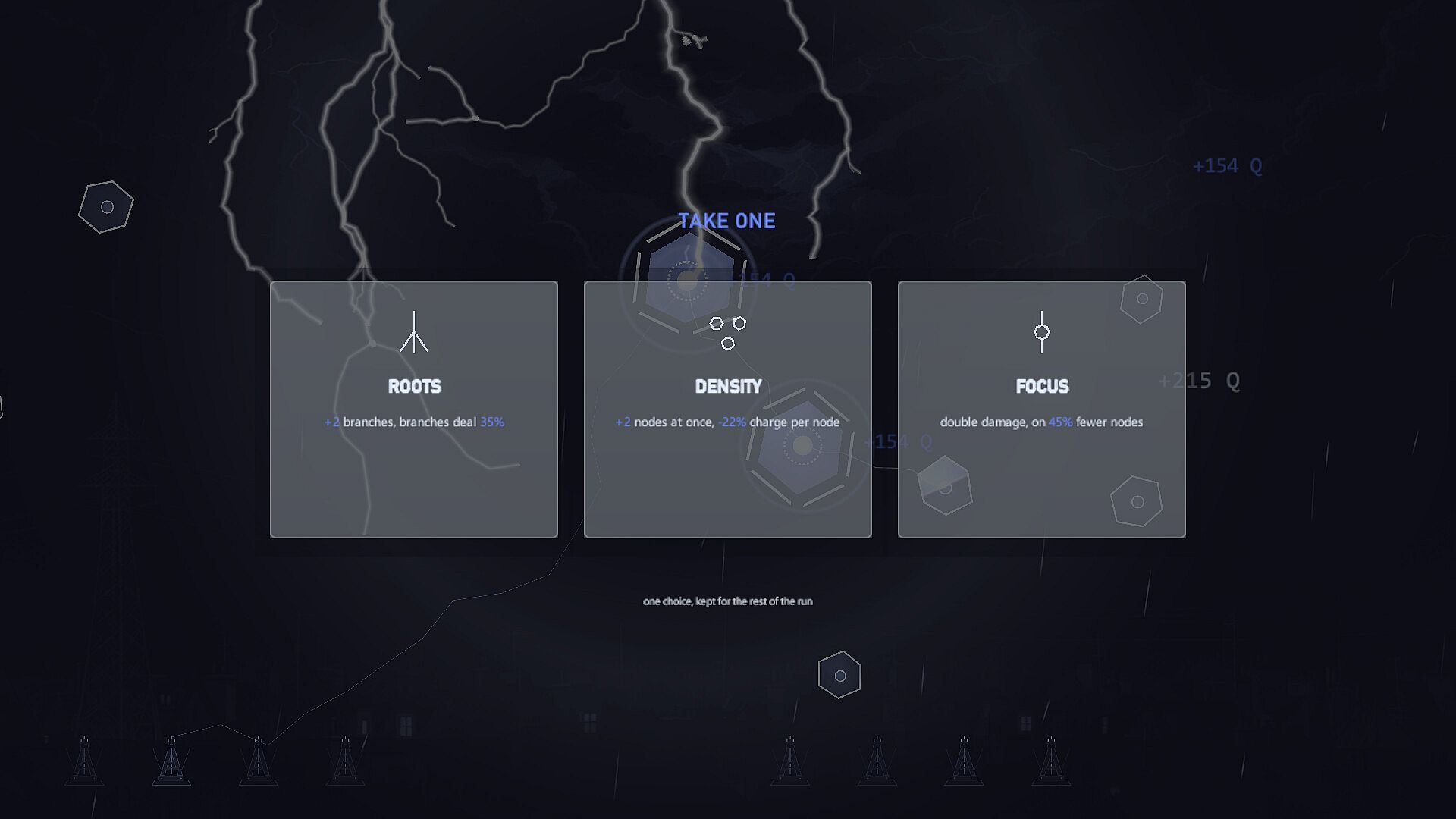
Each world adds a distinct rule. The first introduces striking cracked nodes by hand to cause bursts. Subsequent layers add chain reactions where the bolt jumps between nodes, timing releases at the peak of a gauge, striking in rhythm with audio cues, aligning strikes with a sweeping beam, and managing screen saturation effects as intensity peaks. These rules layer onto the base charge-and-release action without replacing it, creating cumulative complexity as scale increases.
Visual and audio feedback scales with the action, showing destruction that grows from localized sparks to galaxy-erasing events. The game runs entirely on generated effects for lightning, interfaces, and sound, with some supporting artwork prepared using generative tools during development but nothing created by AI during active play.
Game Modes
The primary experience consists of runs that advance through the seven worlds until collapse becomes necessary. Five named challenge runs add restrictions or twists with permanent rewards upon completion: SILENCE, GLASS, GREED, MONOCHORD, and NIGHT. These runs encourage repeated attempts with altered conditions while tracking progress in a journal that records every perk obtained across sessions.
A speedrun feature supports players interested in optimizing completion times. The structure supports both short sessions and longer play periods, with each collapse feeding into future runs through permanent upgrades.
The Progression System
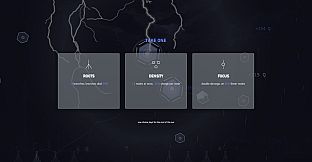
Collapse serves as the key advancement mechanic. When a run reaches its limit, the universe collapses and ions convert into permanent stars distributed across three upgrade branches: Lightning, Memory, and Storm. These stars carry over, making subsequent runs start with greater speed, power, and reach. The system creates a ladder of improvement without artificial timers or resource gates.
Forty-one achievements reward exploration of the mechanics and completion of specific tasks. A journal logs all perks encountered, providing a record of progression across multiple collapses and challenges.
Is It Worth Playing?
SUPERBOLT targets players who enjoy incremental games built around a focused, repeatable action that gains depth through layered rules and scale. The absence of advertisements, microtransactions, or waiting mechanics allows uninterrupted progress whether sessions last minutes or hours. An optional Reduced Flashes mode limits flash intensity and frequency, removes hitstop, and softens endgame visuals for those sensitive to bright effects, with an in-game notice appearing on first launch.
The design emphasizes 100 percent completion potential through achievements, challenge runs with lasting benefits, and a speedrun option. As a single-player experience on PC with Steam Cloud support and family sharing, it suits those seeking a self-contained incremental title that respects player time and offers clear mechanical growth without external dependencies. The upcoming release in September 2026 will determine broader reception, but the described systems align with preferences for deliberate, expanding gameplay loops in the casual and simulation genres.