

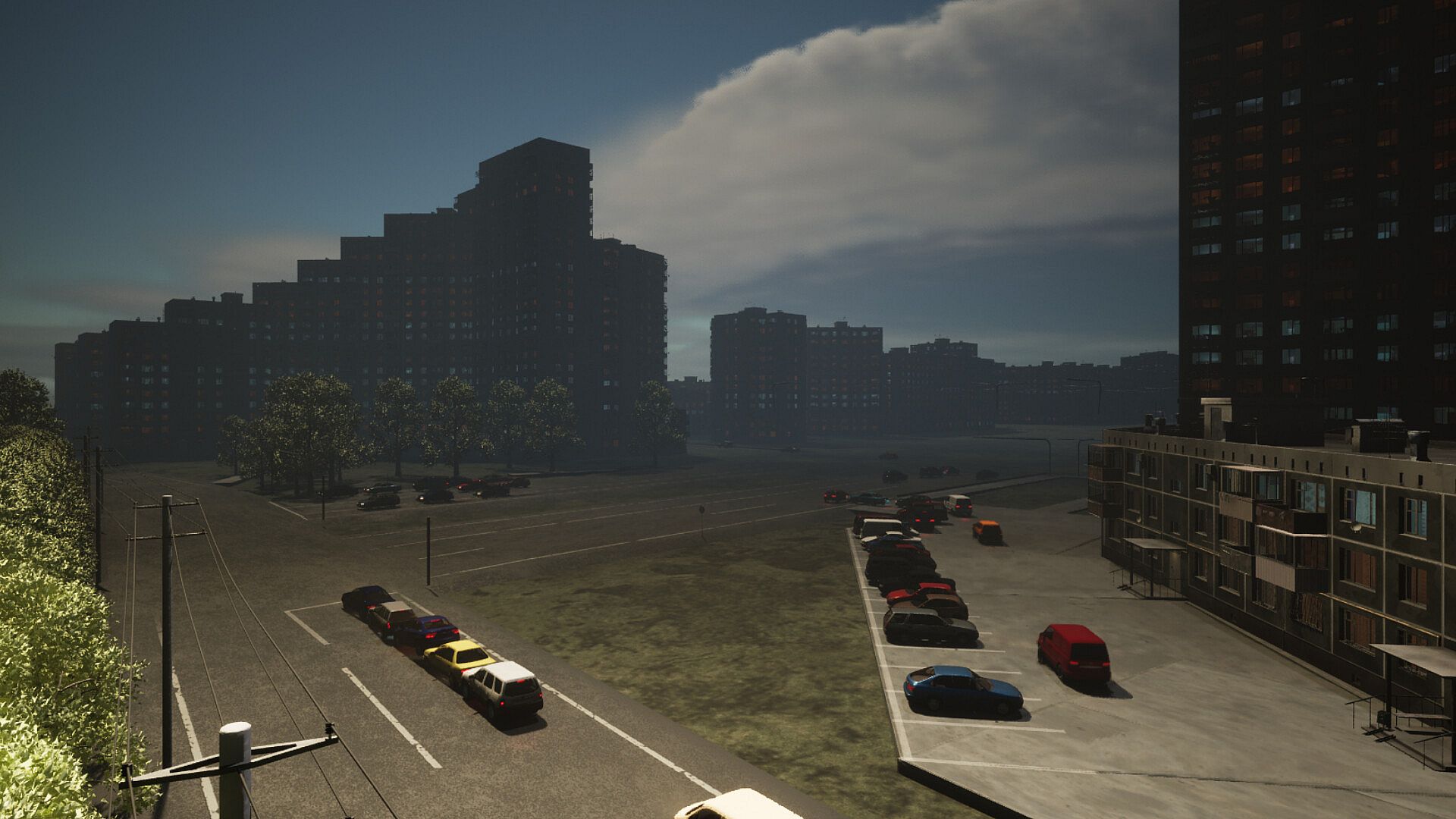
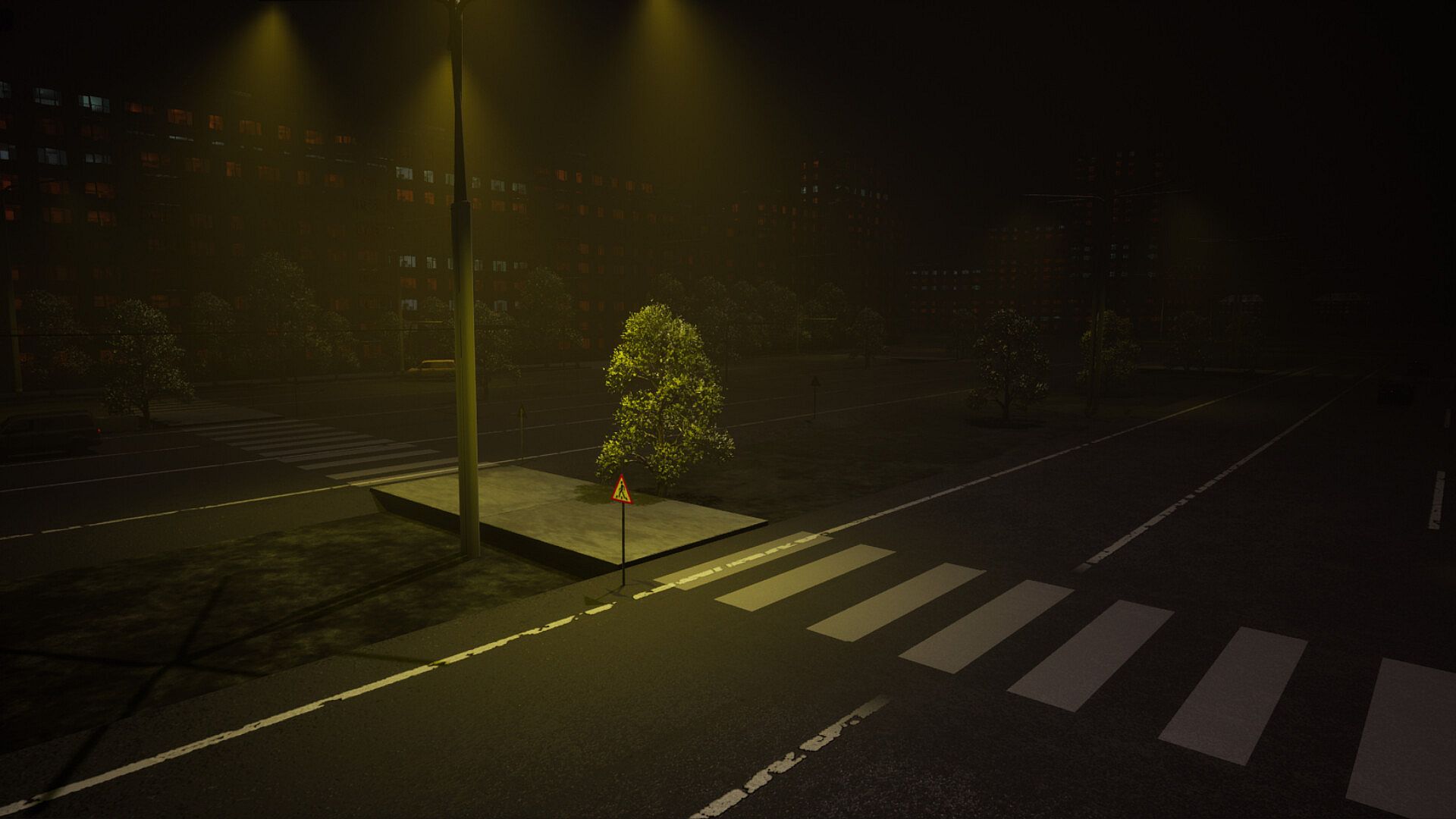
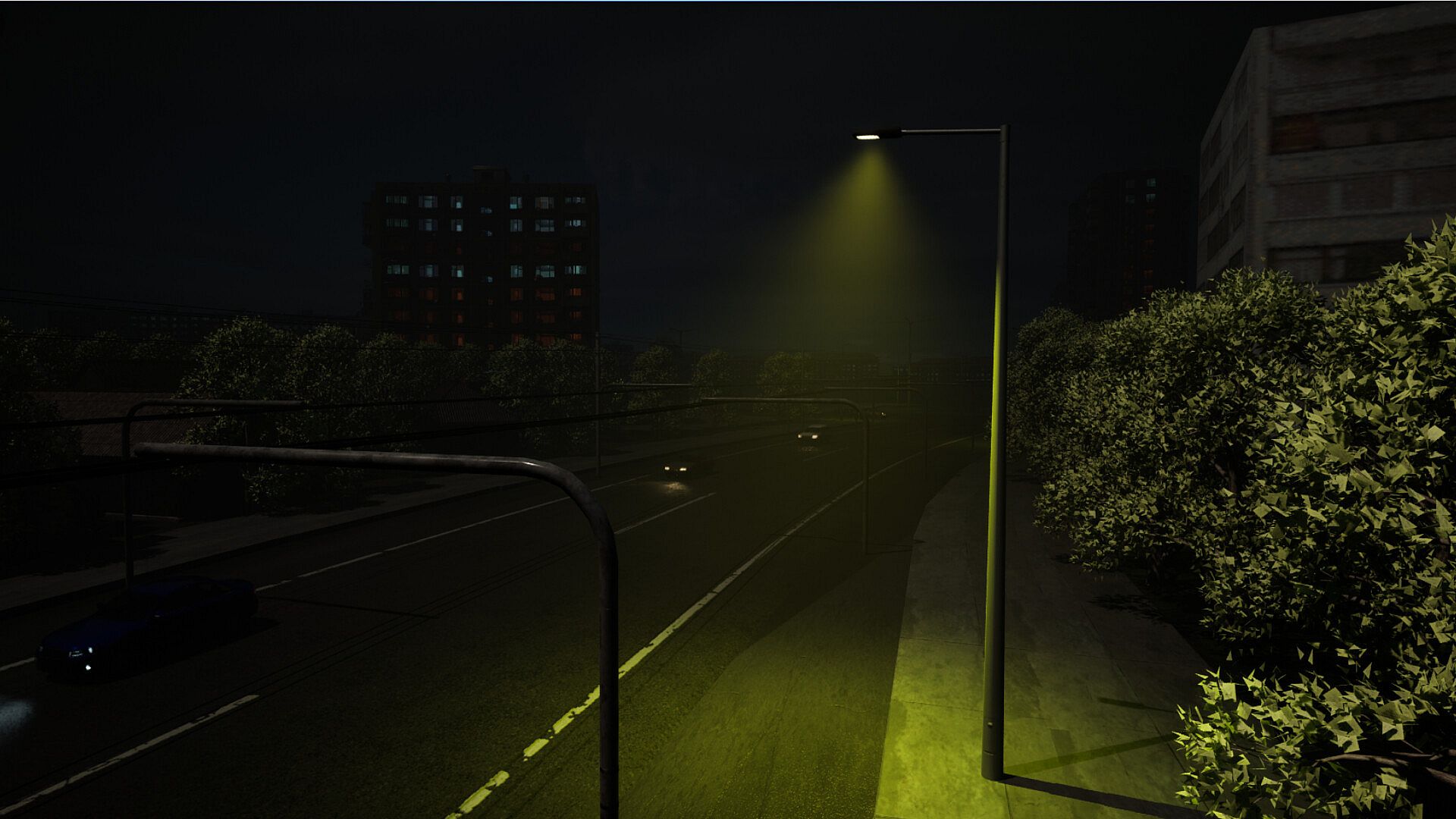
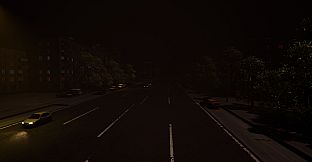
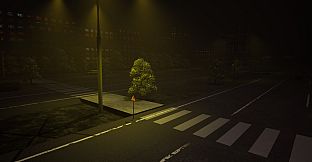
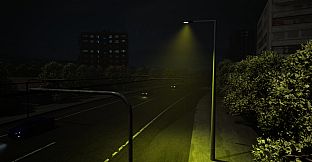
Tchenovstok is a casual simulation game centered on slow-paced driving through an empty urban landscape. Set in a fictionalized version of a 1980s Eastern European city under curfew, the title places players in control of vehicles with minimal intervention from the game itself. The experience emphasizes atmosphere over objectives, drawing from Soviet-era architecture to create a sense of isolation in a concrete grid of streets and intersections.
Gameplay
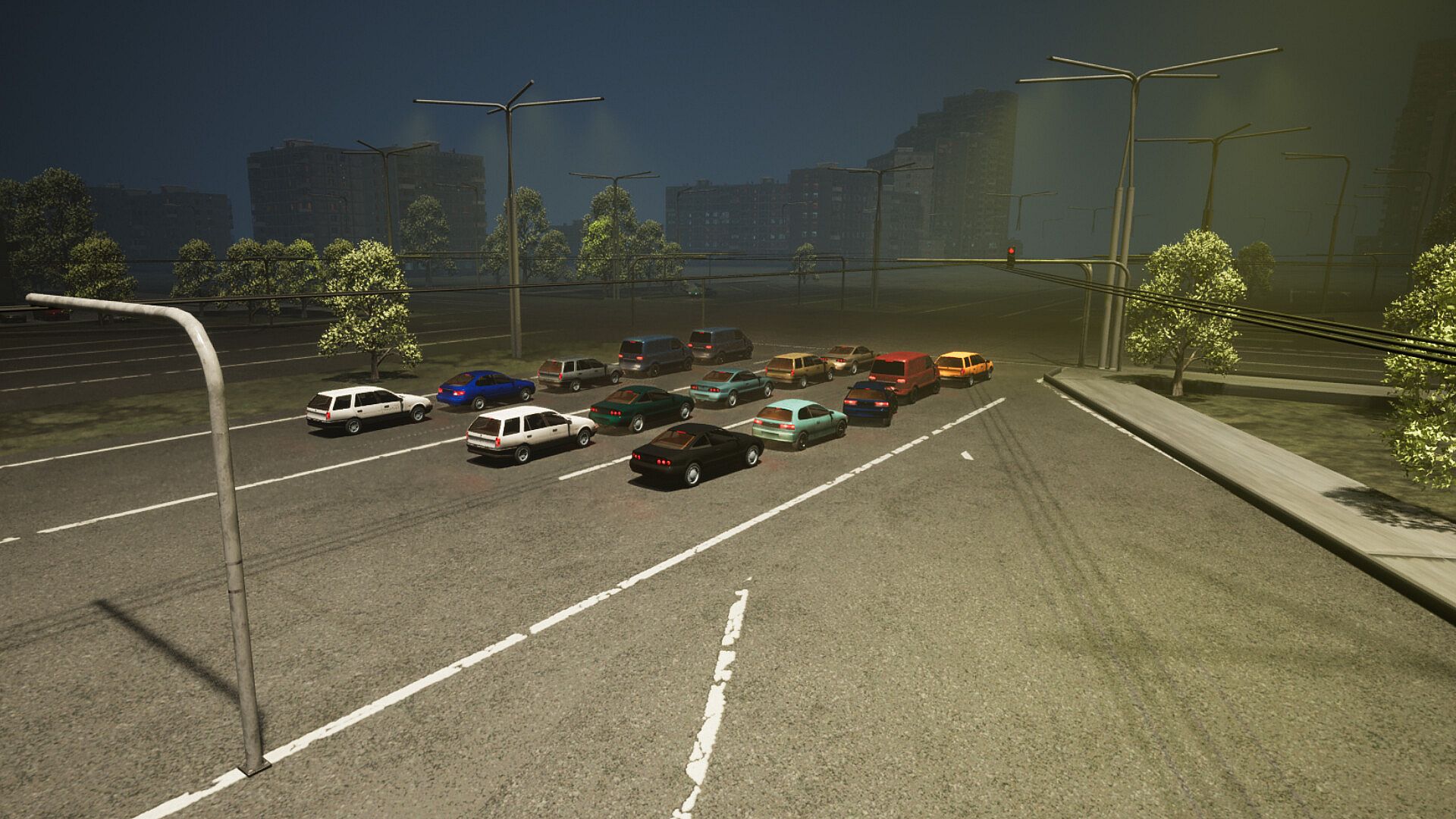
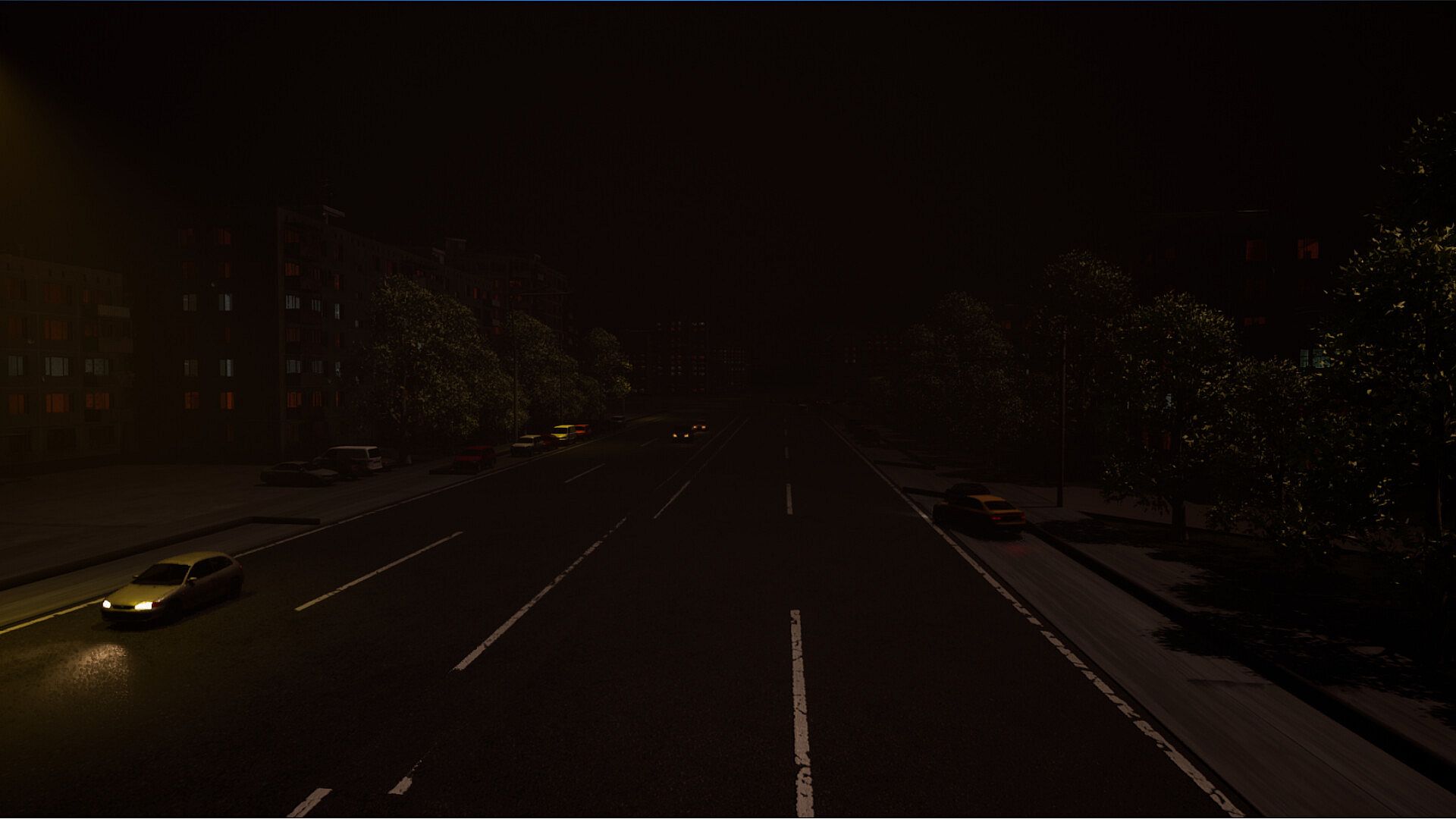
The core loop involves entering one of the scattered cars on the streets and driving along damp asphalt roads lit by automated traffic signals. Movement relies on standard keyboard inputs for steering and acceleration, with a dedicated command to reverse. Players can switch between vehicles at any time by exiting one and entering another. The environment operates on its own fixed schedule, cycling through periods of darkness without player input or guidance. A radio broadcast plays in the background, delivering a mix of vintage Soviet-era music filtered through static and distortion. No on-screen elements interrupt the view, and the city remains devoid of other activity or interactive objects beyond the roads and buildings.
Controls stay deliberately simple to maintain focus on the solitary drive. The absence of any interface means players must rely entirely on the visual and audio cues of the surroundings. This setup creates a repetitive yet deliberate rhythm where the act of navigating empty crossroads forms the entire session. The developer has confirmed the game runs as a single-player title with support for Steam Workshop, though no specific workshop content has been detailed yet.
Game Modes
Tchenovstok does not feature traditional game modes or structured progression systems. There are no quests, missions, competitive elements, or cooperative options. The entire experience operates as a continuous, unguided simulation without menus or selectable scenarios. Players simply enter the world and drive, with the environment handling its own timeline independently. This design removes any layer of choice or objective, leaving only the act of movement through the locked-down streets. The single-player focus aligns with the minimal feature set, and no multiplayer components appear in the available information.
Atmosphere and Setting
The world draws inspiration from the architectural style of Soviet-era Chișinău, rendered in a concrete-heavy, sterile aesthetic under permanent nighttime conditions. Streetlights and traffic signals provide the only illumination against the dark backdrop. The radio audio adds a layer of historical texture through its low-fidelity mix of ballads and instrumentation. This combination produces an unsettling quiet where the city feels both abandoned and oppressive. The developer includes a clear disclaimer that all Soviet imagery serves fictional atmospheric purposes only and carries no political endorsement.
Technical requirements remain modest, supporting older Windows systems with basic graphics hardware. The small install size reflects the stripped-down nature of the simulation. As of the current pre-release period, the title lists single-player support alongside family sharing and workshop integration, though the exact scope of workshop tools remains unspecified.
Is It Worth Playing?
With no user reviews available ahead of its October 2026 release, reception cannot be assessed through player feedback. The game targets those seeking an extremely minimal driving experience focused on sensory isolation rather than action or goals. Individuals interested in atmospheric simulations without menus, objectives, or external guidance may find the approach distinctive. Others expecting conventional gameplay loops or variety will likely encounter the intentional emptiness as a limitation. Availability will begin as a paid single-player title on PC, with the developer providing no information on trials, updates, or additional content at this stage. The decision hinges on tolerance for a deliberately sparse driving simulation set in a bleak urban environment.