




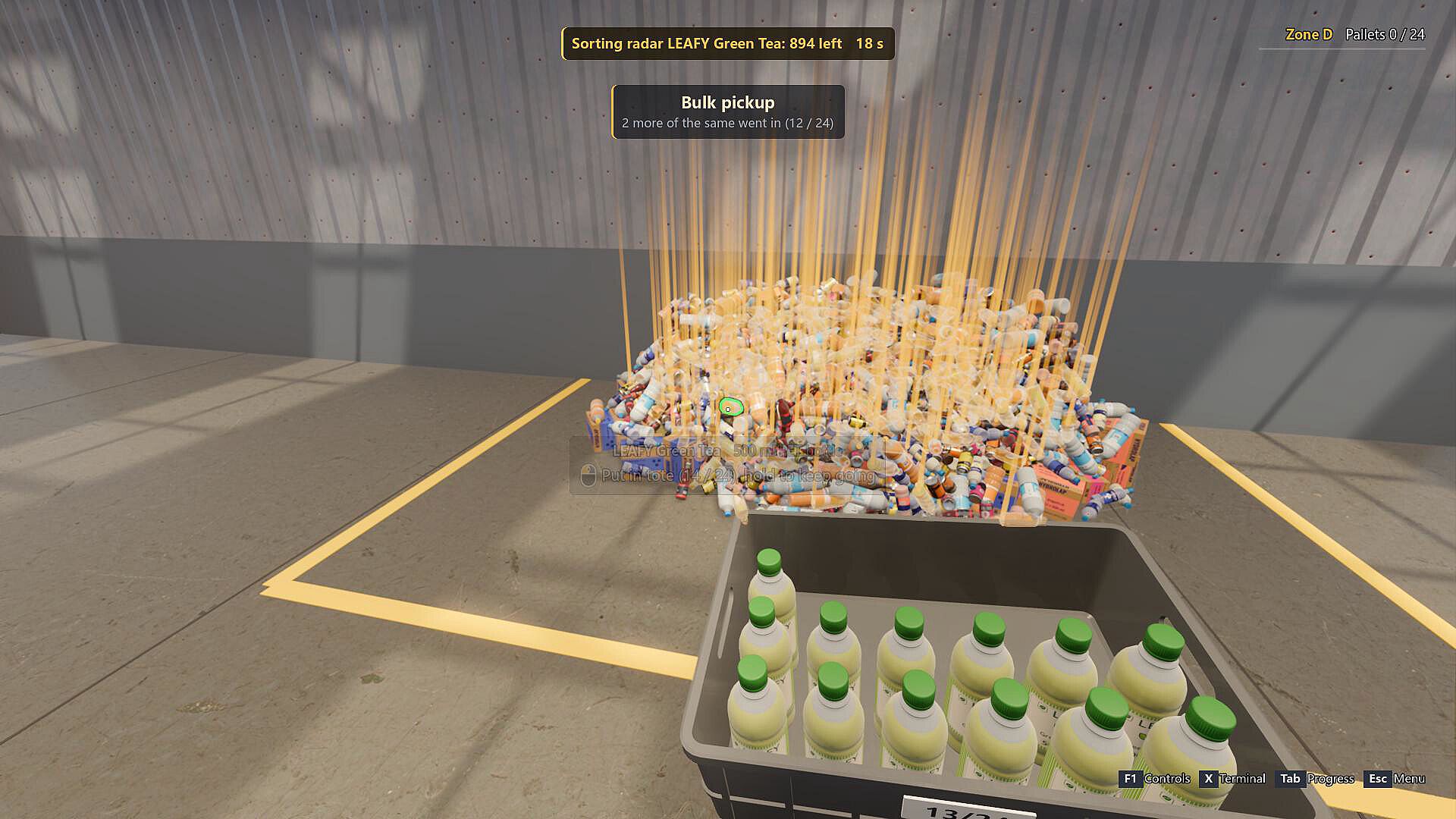
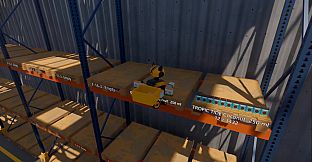
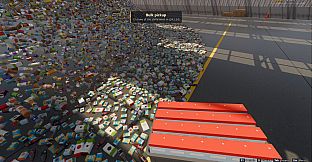
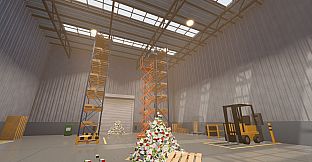
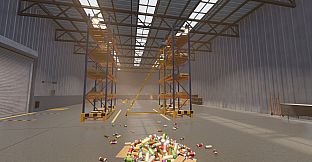
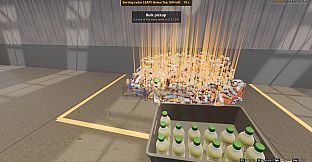
Warehouse Drink Sorting Simulator is a first-person casual simulation game focused on organizing a massive collection of beverages in a warehouse setting. Players sort nearly 300,000 individual cans, bottles, and cartons scattered across six distinct halls after an earthquake disrupts the facility. The experience emphasizes methodical collection, categorization by brand and flavor, and precise placement on racks without any timers or failure conditions.
Gameplay
The core loop centers on picking up drinks by hand at first, then scaling up with better equipment as progress unlocks upgrades. Each shelved item generates money and experience points that fund improvements to personal carrying capacity and specialized tools. Early stages involve carrying small handfuls while navigating the halls, but later phases introduce carts with multiple totes and larger scoops for efficient bulk handling of matching items.
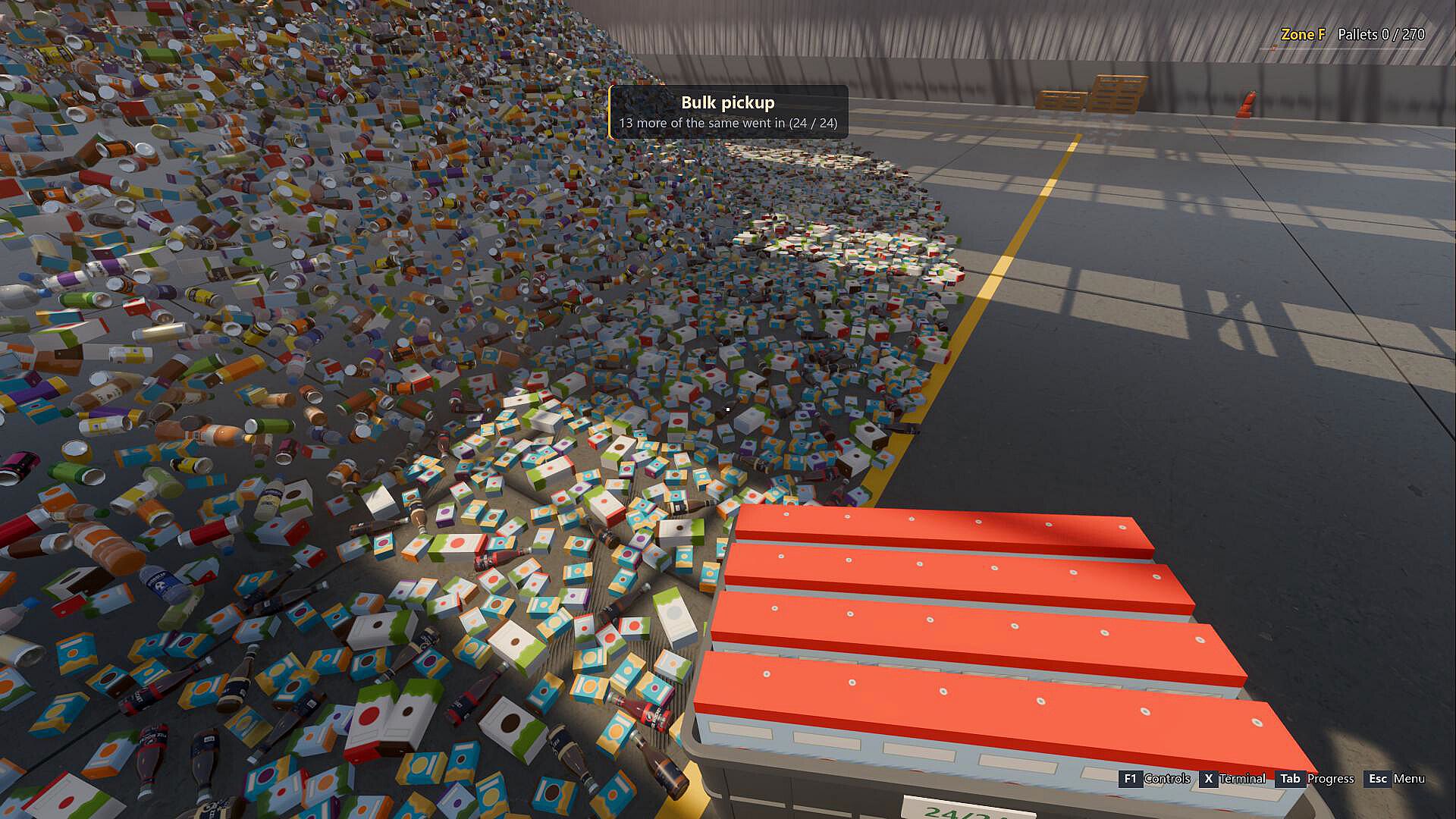
Tools expand options significantly. The brand scanner identifies matching drinks, the sorting radar highlights them temporarily, bulk pickup gathers nearby matches, and the reach grabber extends reach. Flavor colors and symbols aid quick differentiation during sorting. Pallets accept only one kind once the first drink sets the type, encouraging grouped organization across available positions.
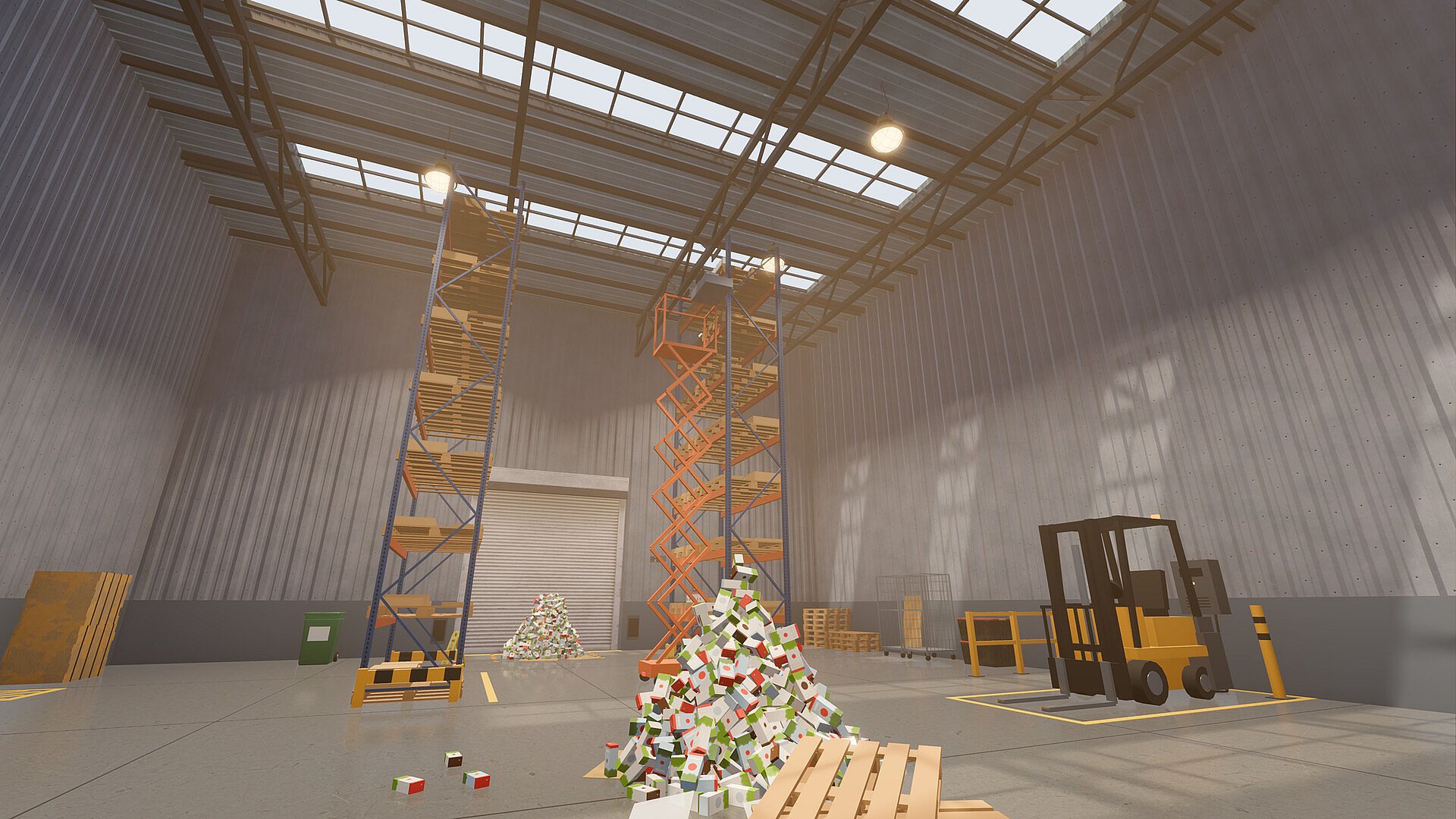
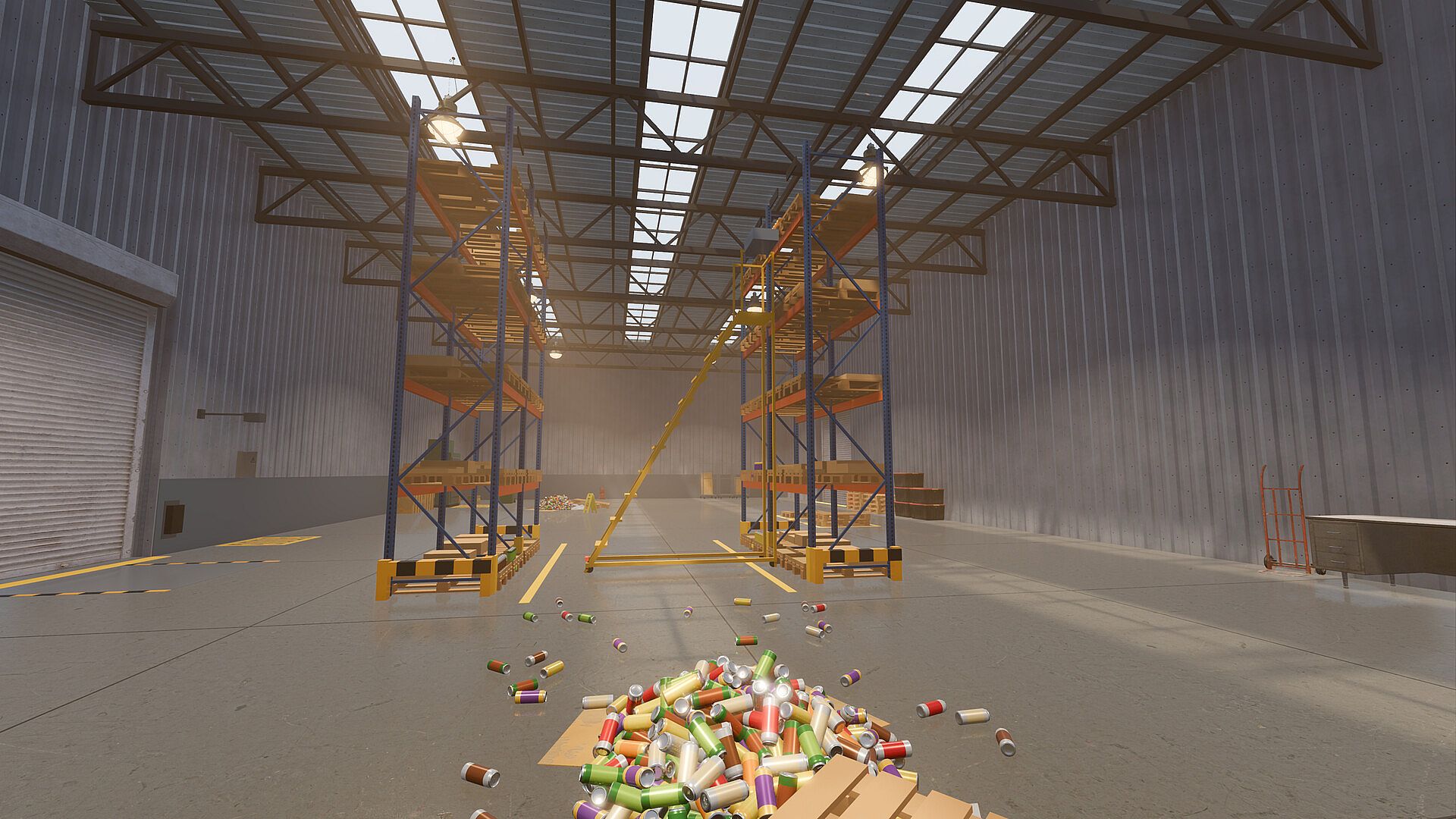
Vertical movement adds depth through ladders and lifts. The rolling ladder supports basket loading and climbing for upper racks, while the pro ladder and scissor lift reach higher levels in taller rack structures. Zone F introduces bulk pallet positions that reward efficient stacking and recycling of damaged items.
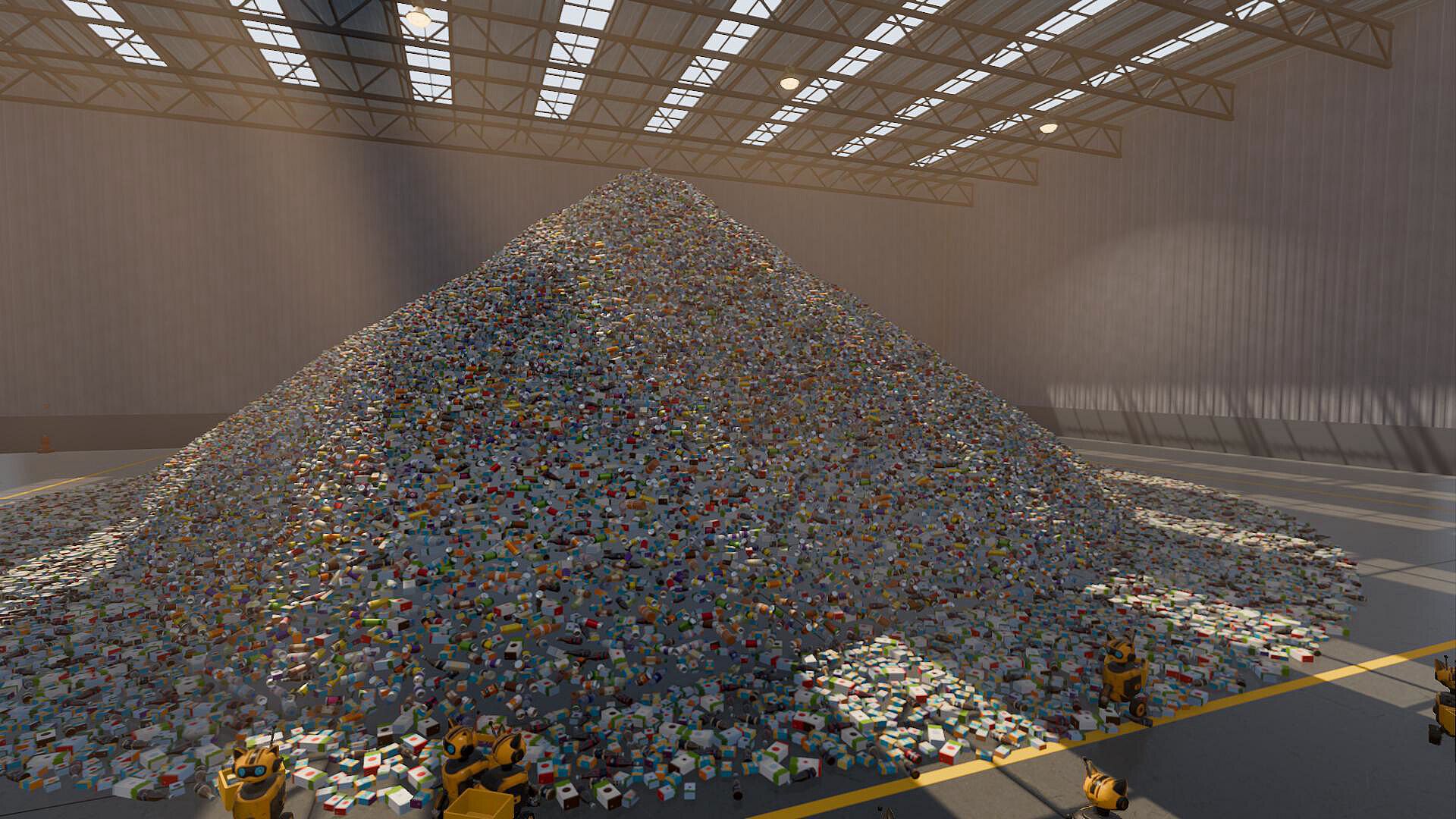
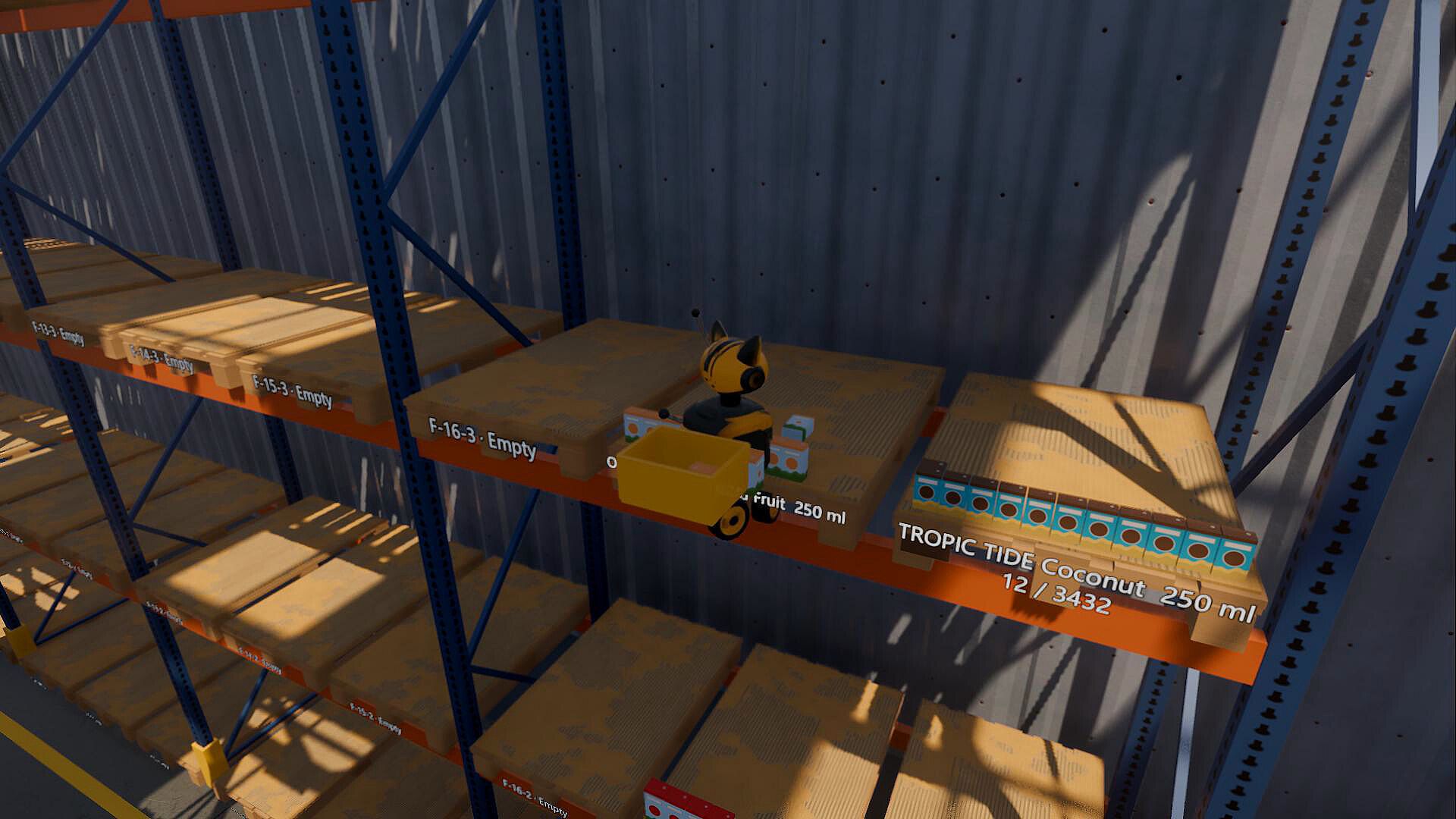
Robot cats serve as autonomous helpers once hired and upgraded. They collect drinks independently, climb beams to stack pallets, and handle damaged goods for recycling. Crew size grows from one to a maximum of 48, with each cat's capacity increasing through upgrades for greater productivity.
Game Modes
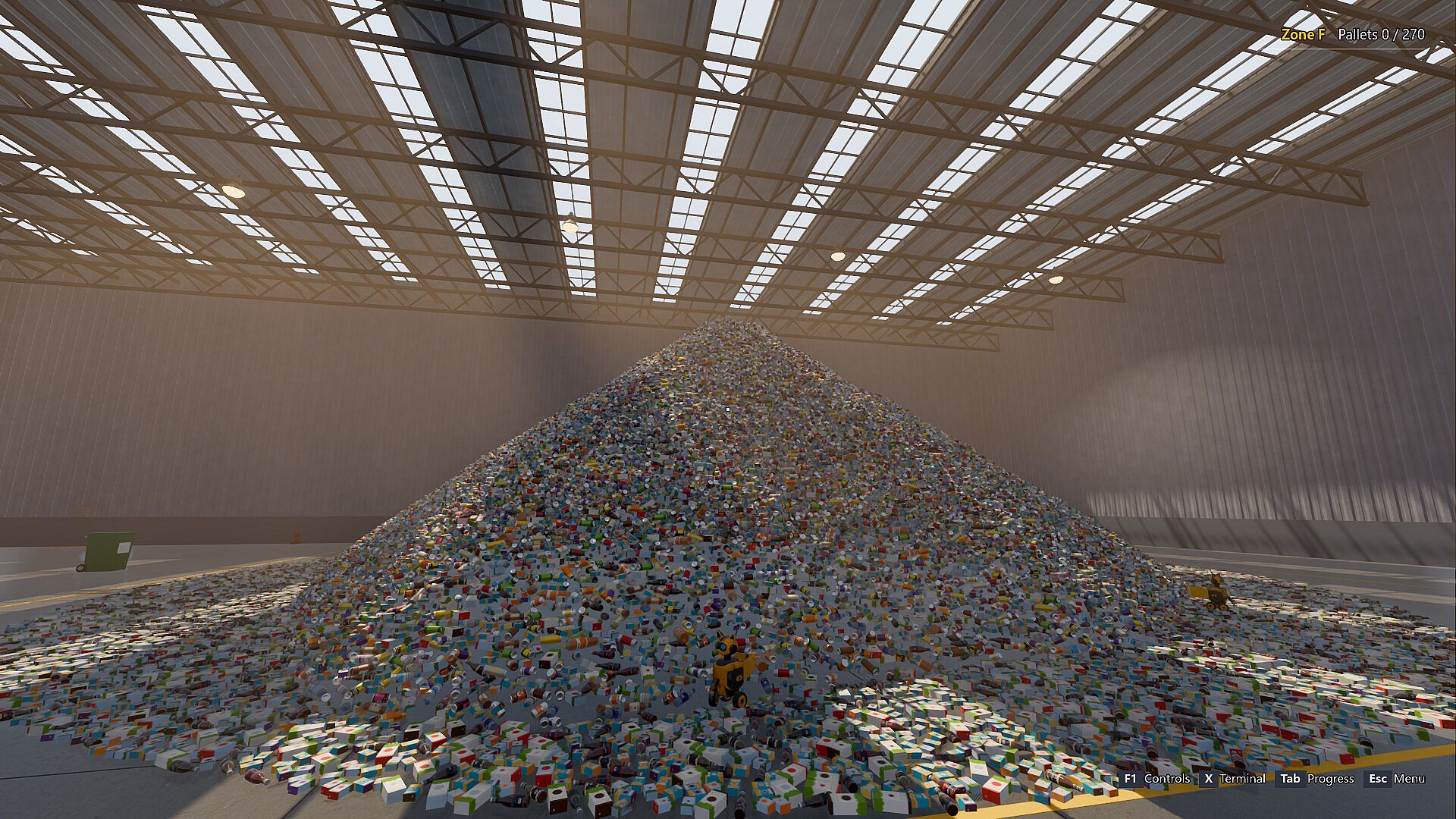
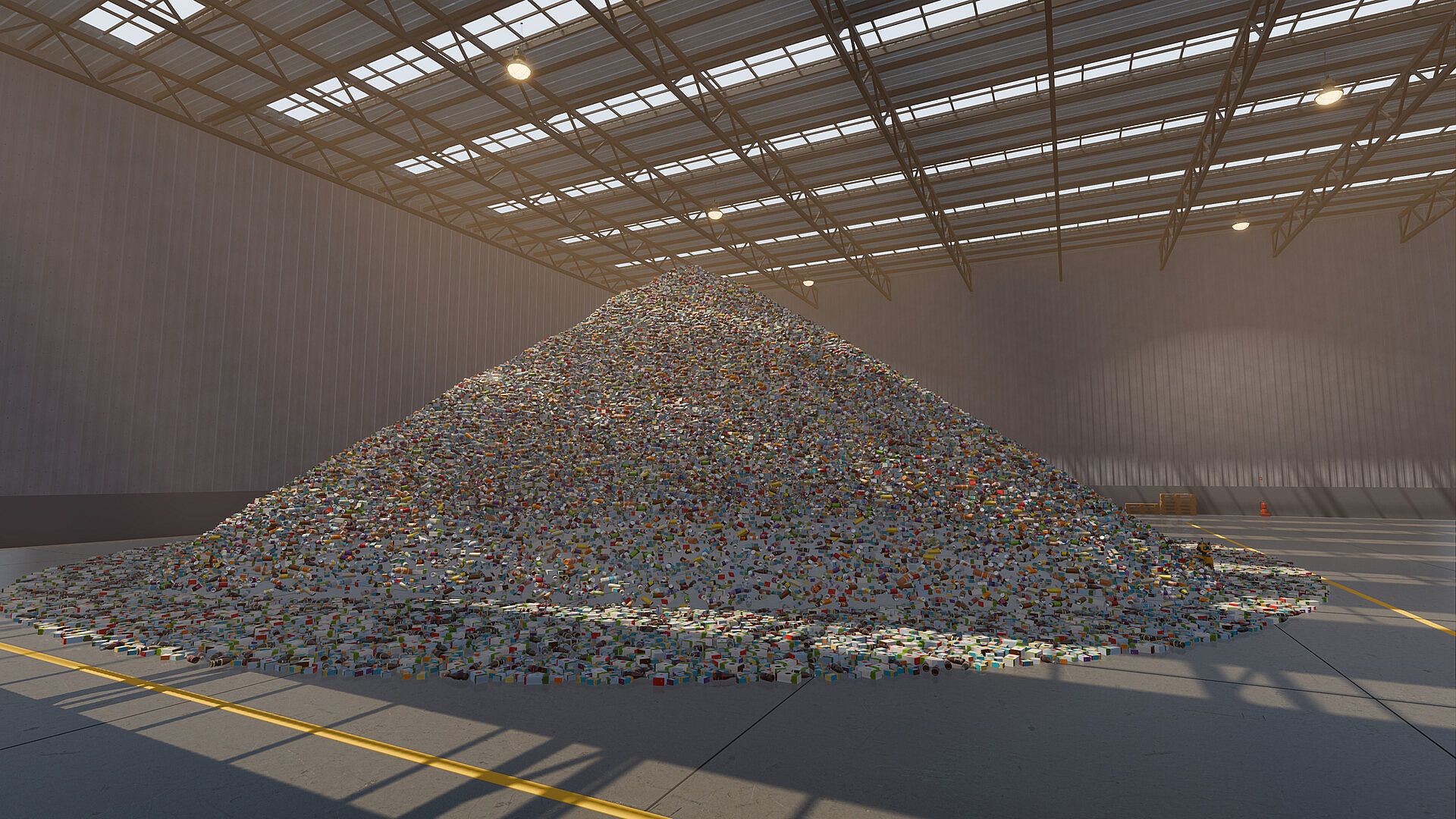
The game operates as a single continuous progression mode across six halls labeled A through F. Reaching 95 percent completion in one hall unlocks the next, advancing from smaller racks in early zones to carton piles, rack canyons, drink piles, high-bay racks, and finally the massive mountain and bulk pallet area in Zone F. No separate competitive or timed modes exist; the structure supports extended sessions at an individual pace.
A free demo provides access to Zone A with around 250 items across 12 drink kinds and the rolling ladder. The demo includes a partial view of a smaller drink pile from Zone D but excludes the full mountain and later content reserved for the complete version.
Progression and Upgrades
Personal inventory expands through six tote sizes up to 48 slots, with carts offering 48 or 72 drink capacity depending on configuration. Experience from shelving drives tool acquisitions and cat recruitment. The real mountain in Zone F stands 7.4 meters high and consists entirely of collectible drinks with exposed items ready for pickup. Players can walk the slope and push aside surface drinks to access buried ones.
Exploration rewards include golden prize caps and hidden collectibles scattered throughout the halls. Damaged drinks go into a dedicated recycling bin to maintain order. Autosave ensures progress carries over between sessions, and key bindings remain fully rebindable with support for English and Simplified Chinese.
Is It Worth Playing?
This title suits players seeking a low-pressure organizing experience in the indie casual simulation genre. The absence of timers or fail states allows focus on methodical sorting and gradual upgrades without external demands. The free demo lets anyone test the foundational mechanics in Zone A before committing to the full six-hall campaign with its robot cat crew and vertical storage challenges.
Those who enjoy first-person collection and categorization tasks will find consistent depth through tool progression and helper management. The game runs on PC and emphasizes steady advancement over repeated playthroughs, making it a fit for relaxed sessions where the satisfaction comes from turning scattered inventory into ordered racks.












