


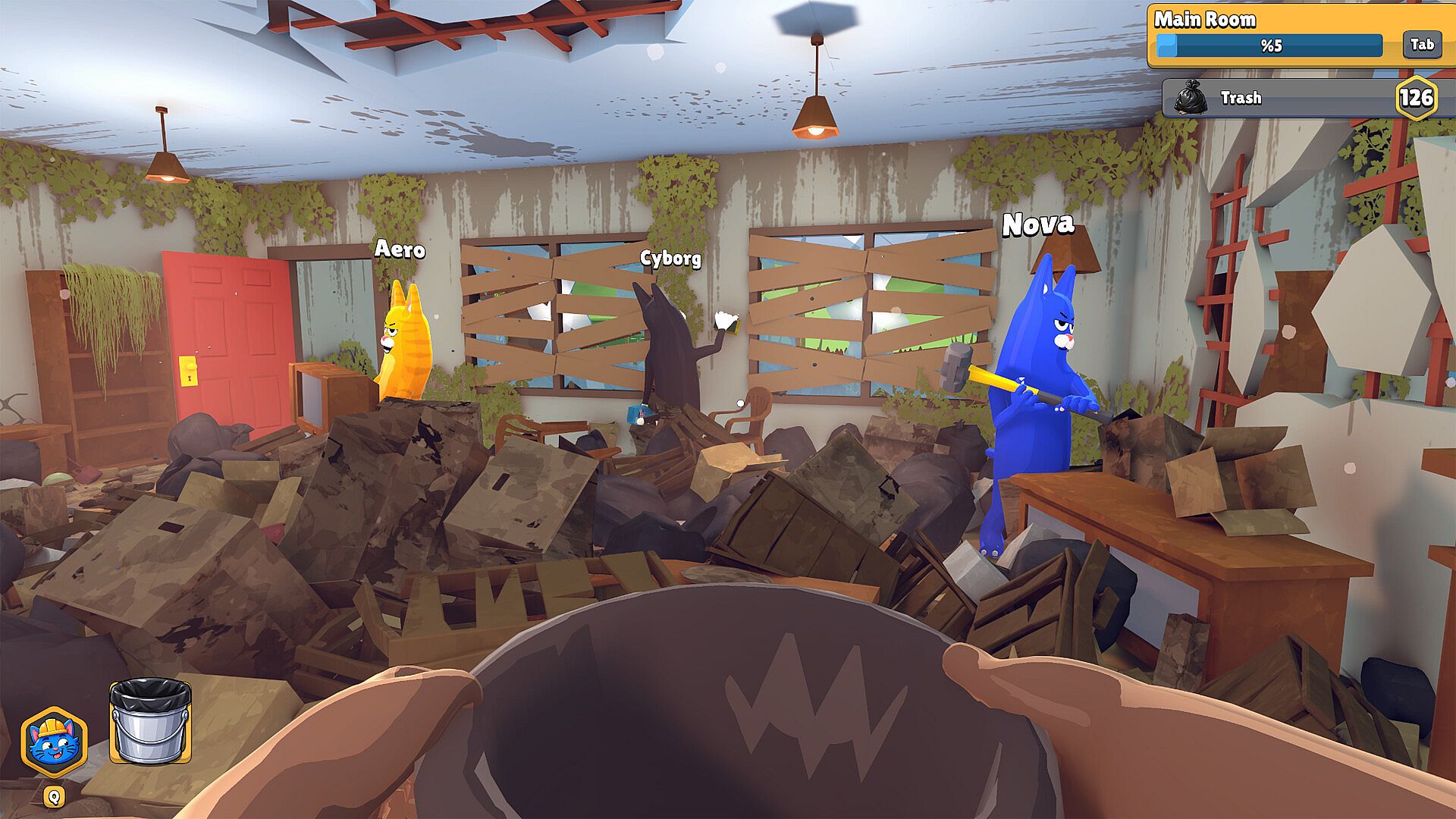
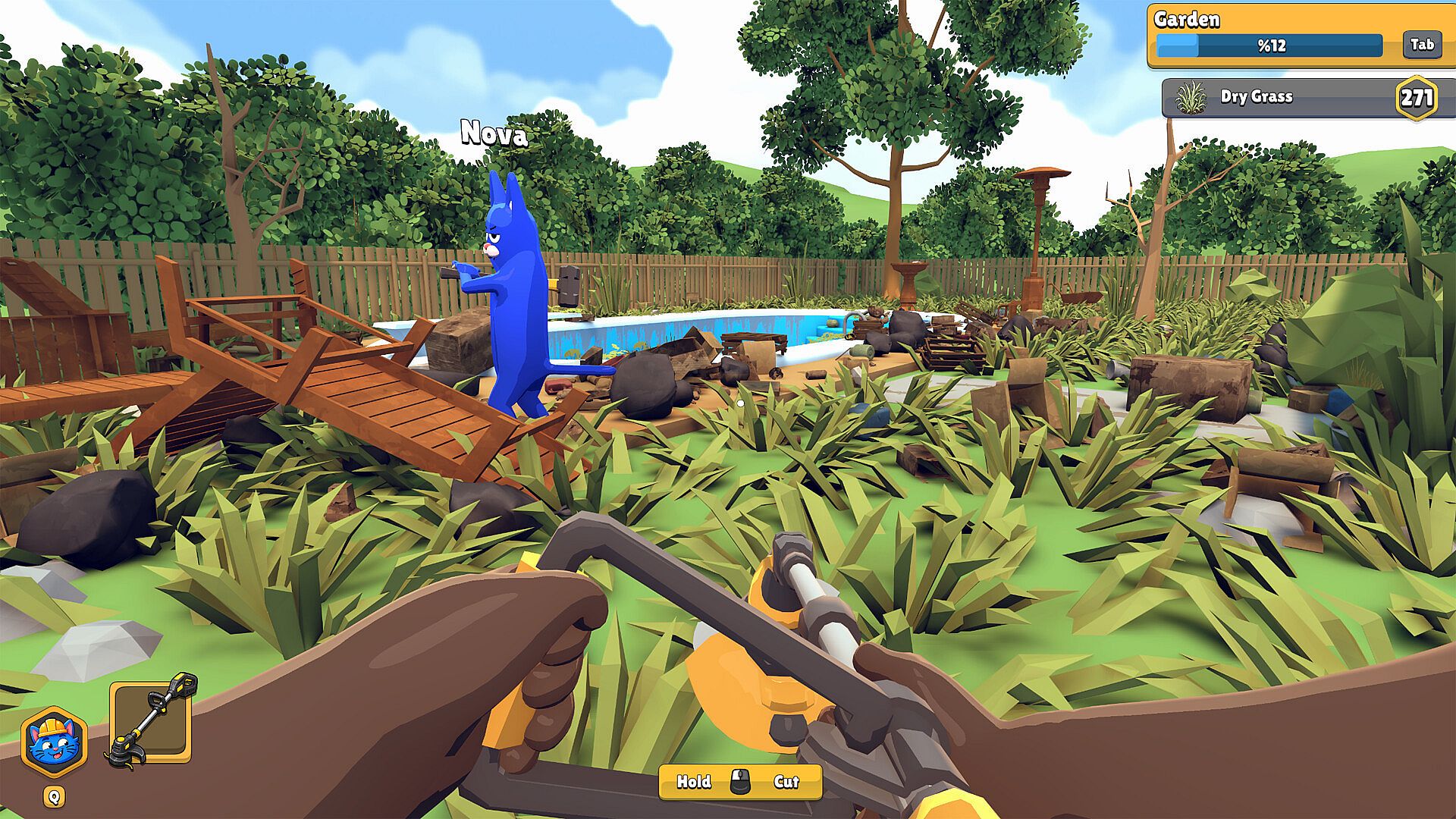
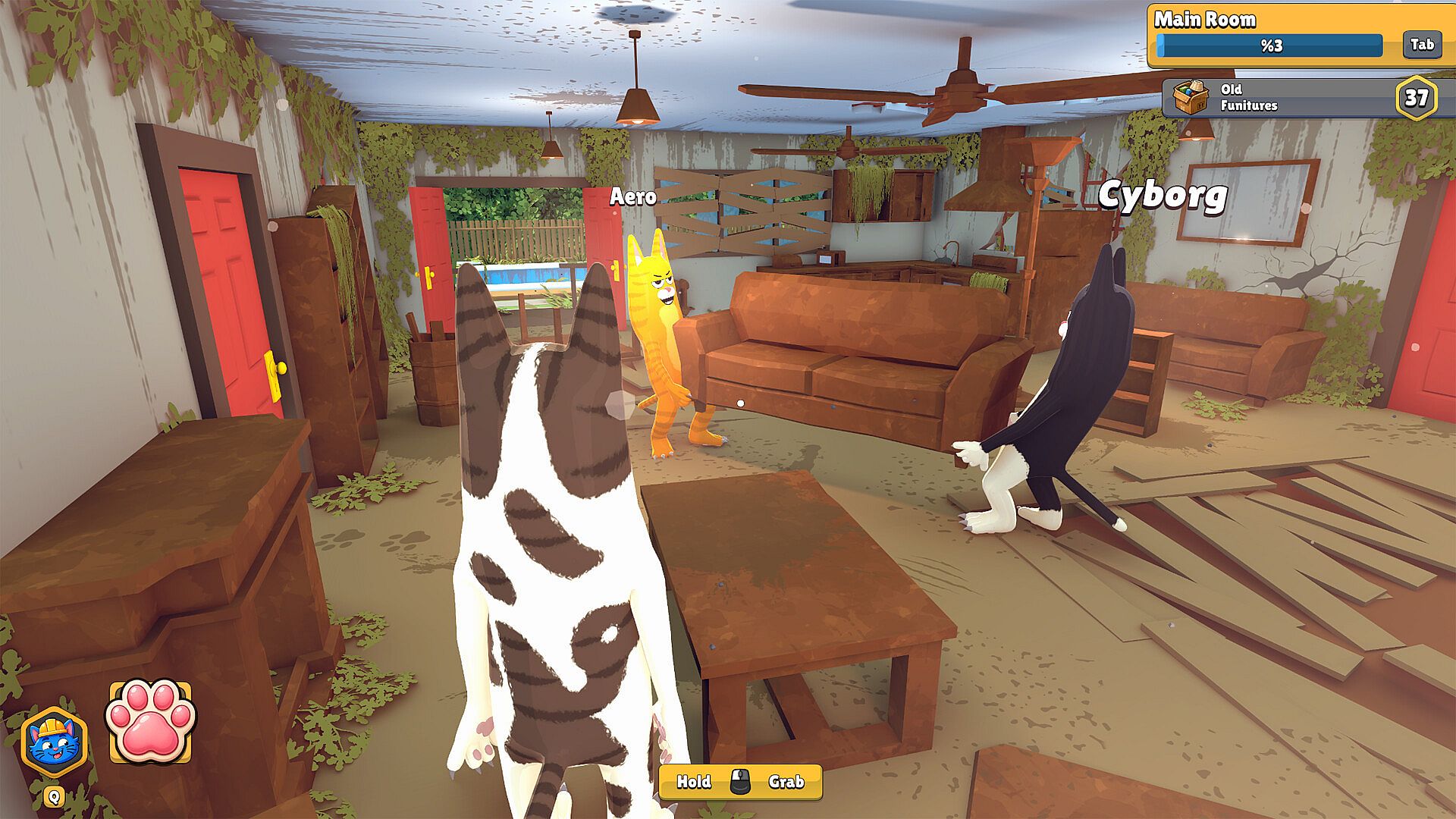
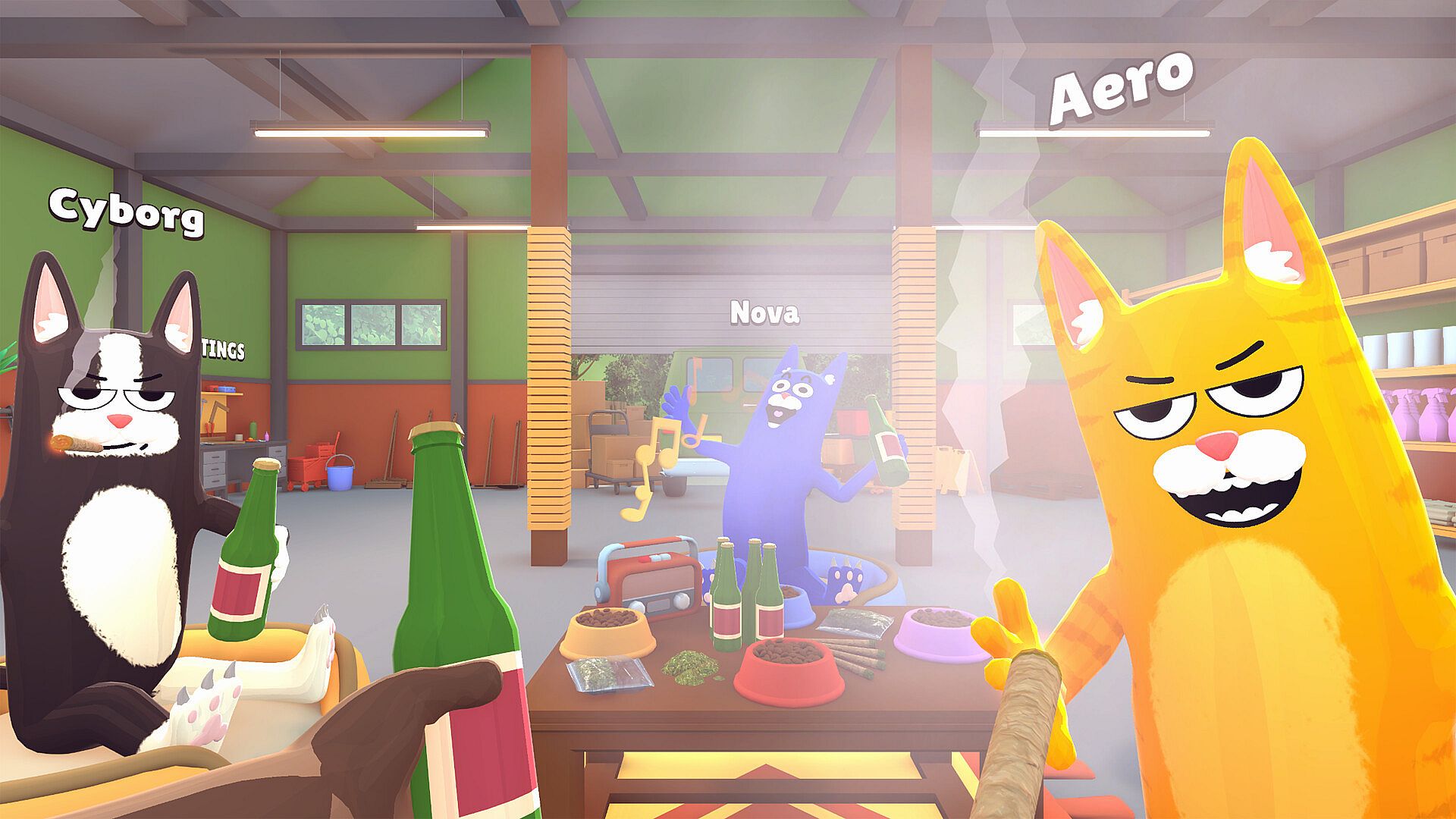
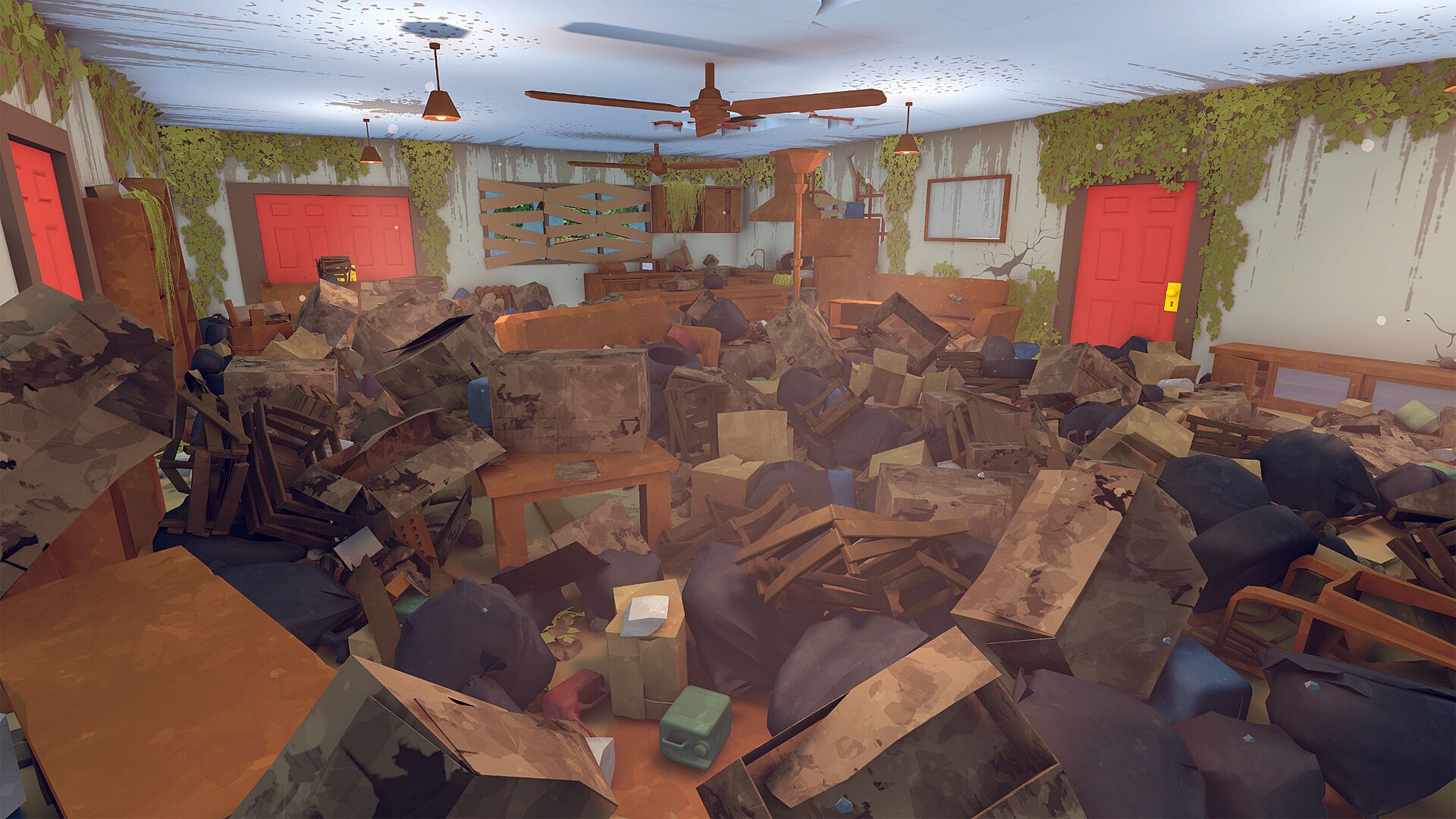

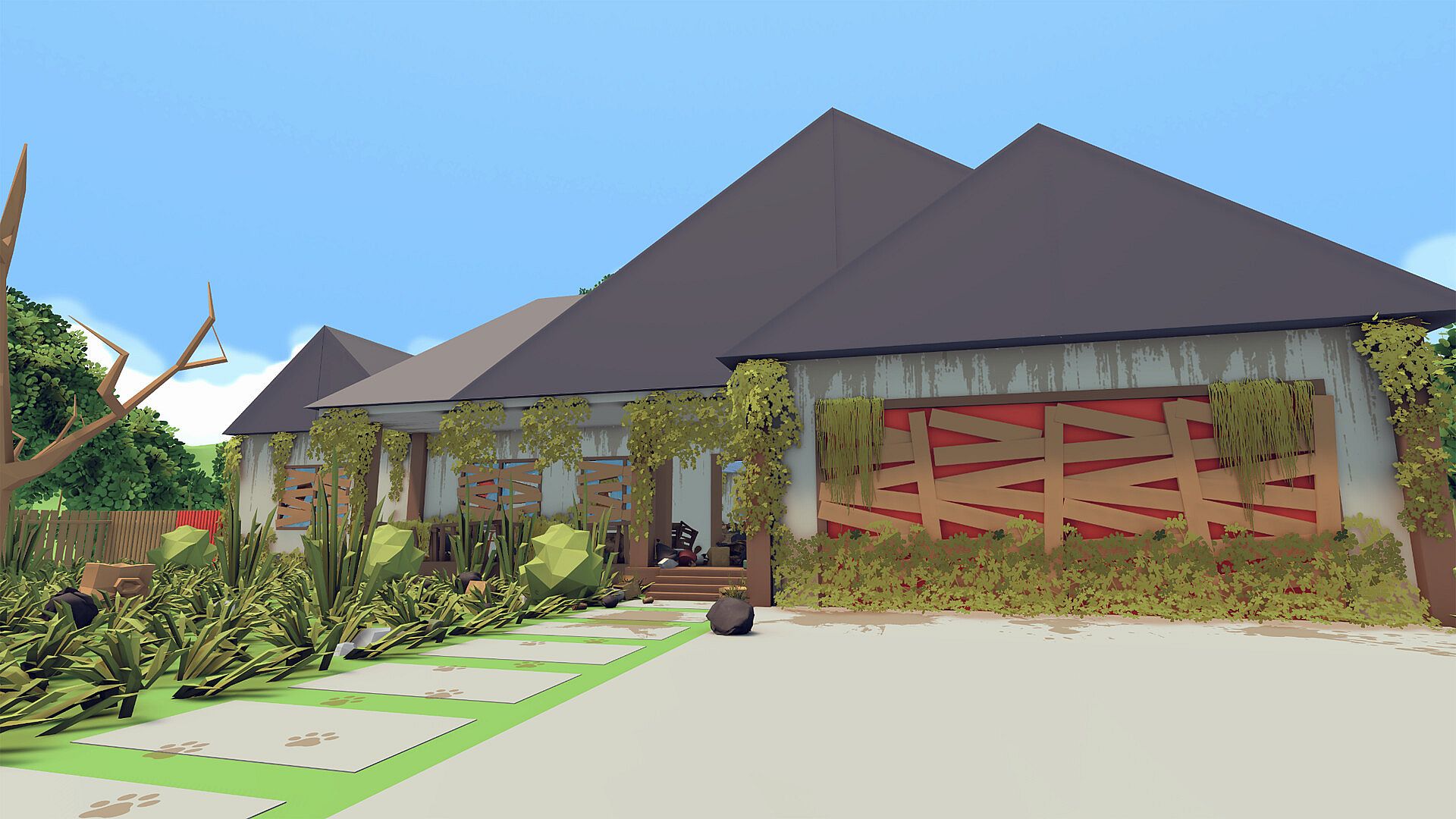
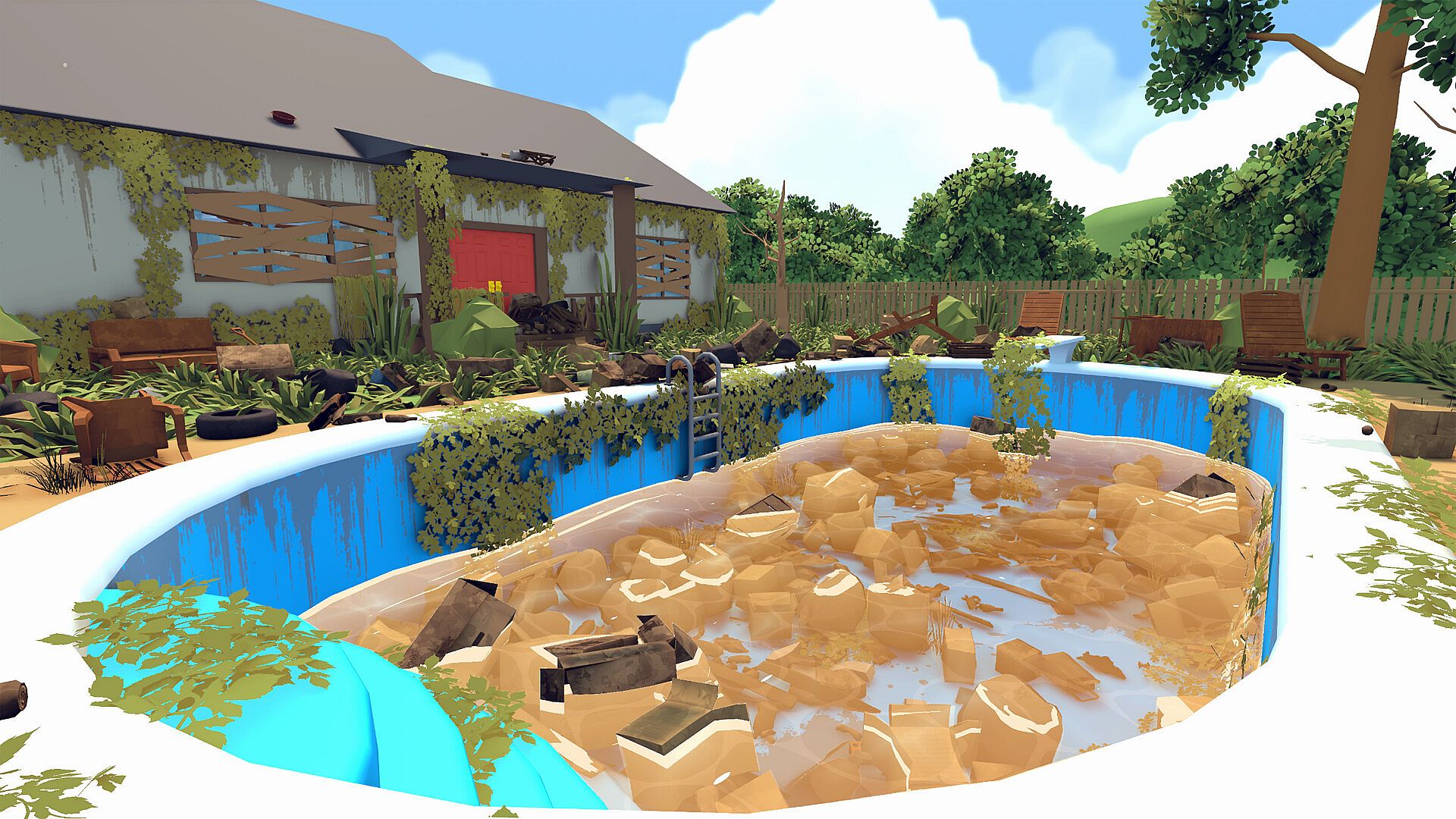
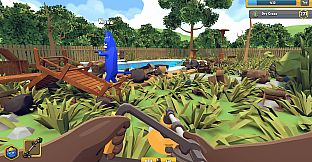


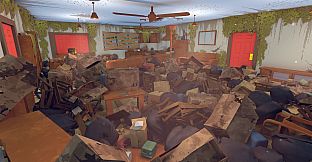


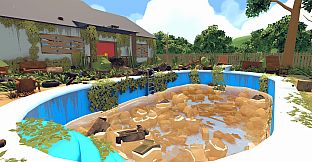
Whisker Works is a casual indie physics-based renovation game developed for PC. Players take on the role of cats tasked with restoring dilapidated spaces through cleaning, repairs, and strategic demolition. The core experience revolves around transforming neglected environments into functional and appealing areas using hands-on mechanics that emphasize physical interactions with objects.
Gameplay
The gameplay loop centers on practical renovation tasks. Players scrub away dirt, gather scattered garbage, clear out overgrown vegetation, and address damaged infrastructure. Objects that cannot be salvaged receive a direct approach with tools like a sledgehammer to clear space for new work. This process blends straightforward cleaning with moments where breaking elements apart becomes necessary before proper fixes can begin.
Physics simulation drives most interactions. Items can be carried, thrown, dropped, or manipulated in ways that react realistically to the environment and player actions. A routine job might stay organized when handled carefully, yet a single misstep or playful interference can send objects tumbling in unexpected directions, requiring quick adjustments to regain control.
Renovation extends beyond basic tidying. Players haul away outdated furniture, repair functional systems where possible, and rebuild sections to improve overall condition. The emphasis stays on leaving each location noticeably improved compared to its starting state, with progress measured through visible changes in cleanliness and structure.
Game Modes
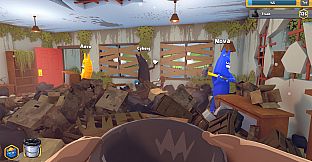
Whisker Works supports both solo play and cooperative sessions for up to four participants. In single-player mode, one person handles the full range of tasks independently, managing time and effort across cleaning, demolition, and repair phases without external assistance.
Multiplayer allows teams to divide responsibilities or combine efforts on heavier items that benefit from shared carrying. Sessions can proceed with clear coordination or incorporate light-hearted disruptions that test group dynamics. The flexible structure accommodates different approaches to completing the same renovation goals.
No additional specialized modes appear in current development information. All activity focuses on the shared renovation objectives, whether pursued alone or with others present.
Multiplayer Dynamics and Physics Interactions
Cooperative elements highlight teamwork variations. Participants might split jobs efficiently to speed progress or intentionally complicate situations through playful object handling. The physics system amplifies these possibilities, turning simple throws or drops into chain reactions that affect the entire workspace.
Object manipulation remains central regardless of player count. Heavy furniture requires coordinated movement in groups, while smaller items lend themselves to individual or chaotic handling. These interactions create variability in how each renovation unfolds from one session to the next.
Is It Worth Playing?
Whisker Works targets players who enjoy casual renovation experiences combined with physics-driven chaos and light multiplayer cooperation. The game suits those interested in methodical cleaning tasks that occasionally veer into unpredictable territory due to object behavior and group play.
At its current stage, the title remains in active development with a planned release in Q4 2026. Visuals and features may continue to evolve based on the work-in-progress builds shown so far. Individuals drawn to short-session casual gameplay or cooperative renovation themes may find the described mechanics appealing once the full version arrives.
Potential appeal lies in the straightforward loop of improvement through physical effort, without reliance on complex progression systems or competitive structures. Those seeking relaxed single-player renovation or flexible group sessions with friends could consider it upon release, particularly if physics-based object handling aligns with their preferences.