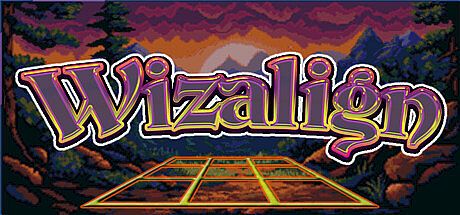


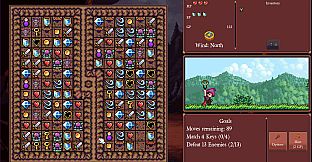
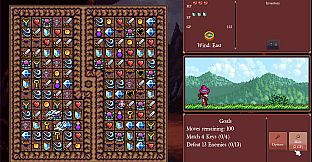
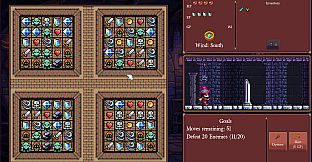
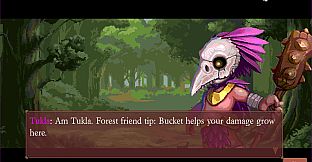
Wizalign is a single-player match-3 puzzle adventure game that blends classic tile-matching mechanics with retro-style RPG progression on PC. Players navigate a fantasy setting by solving match-3 boards that double as combat arenas and exploration tools, where every decision affects health, resources, and forward movement.
Gameplay
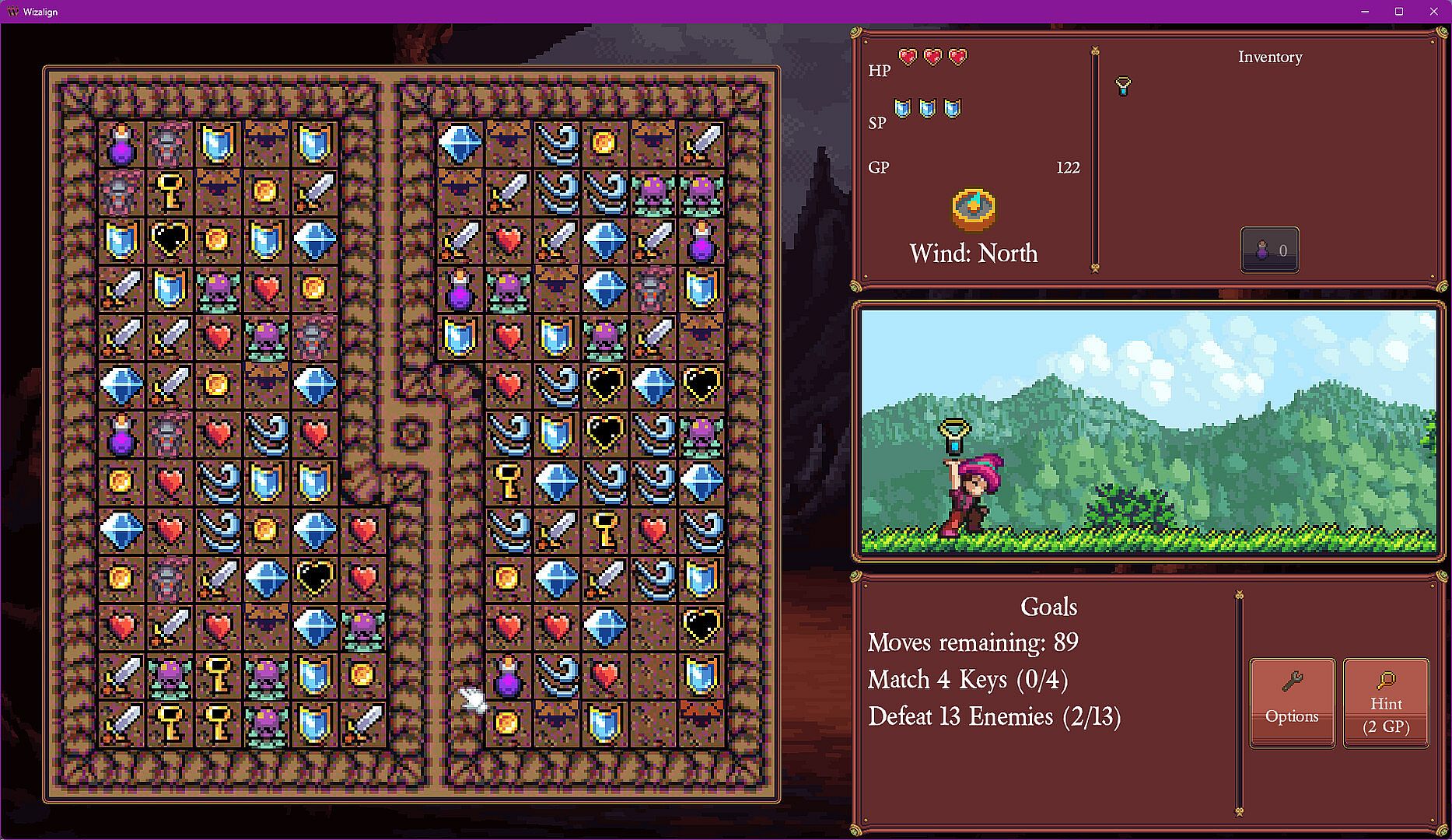
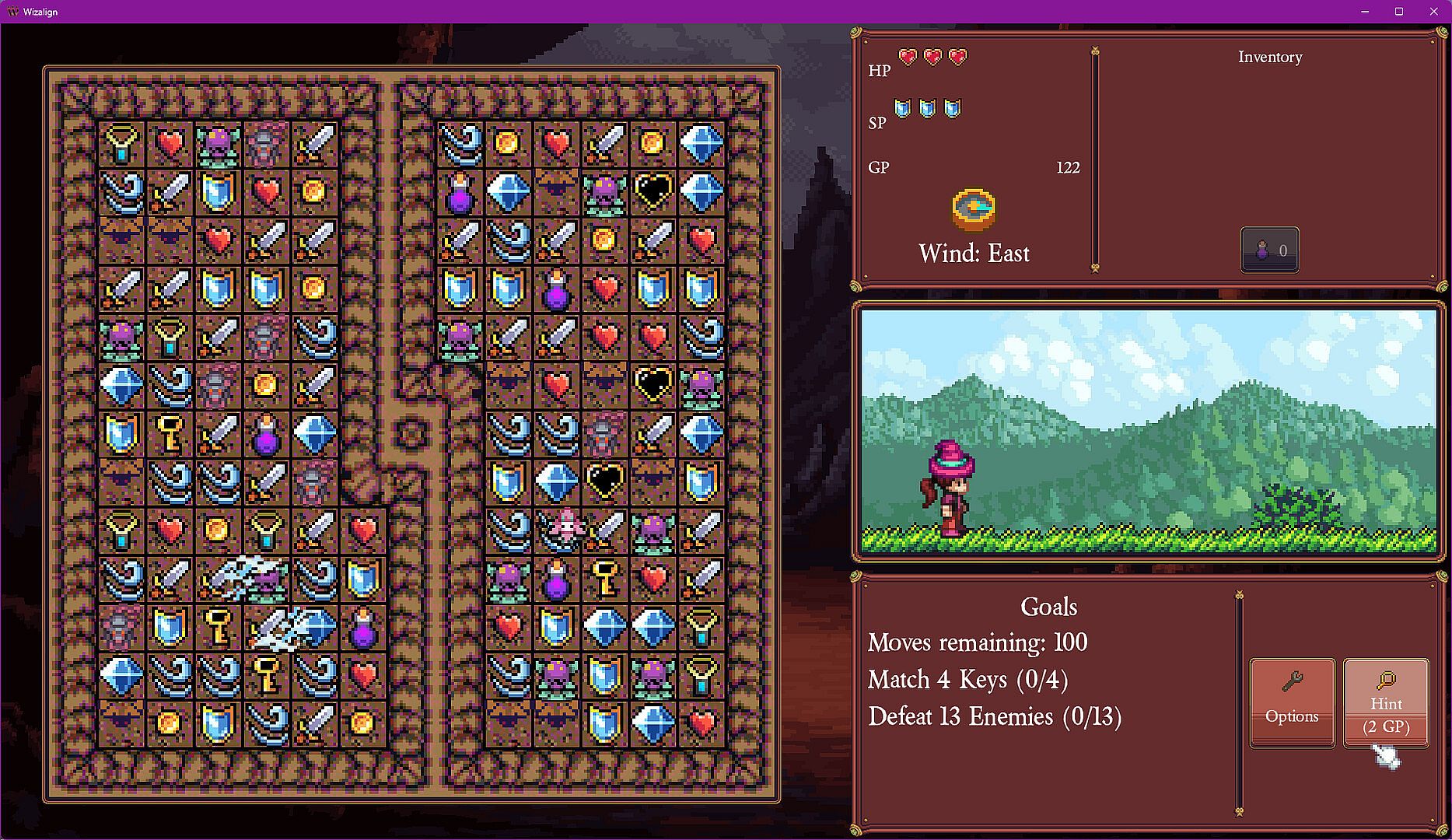
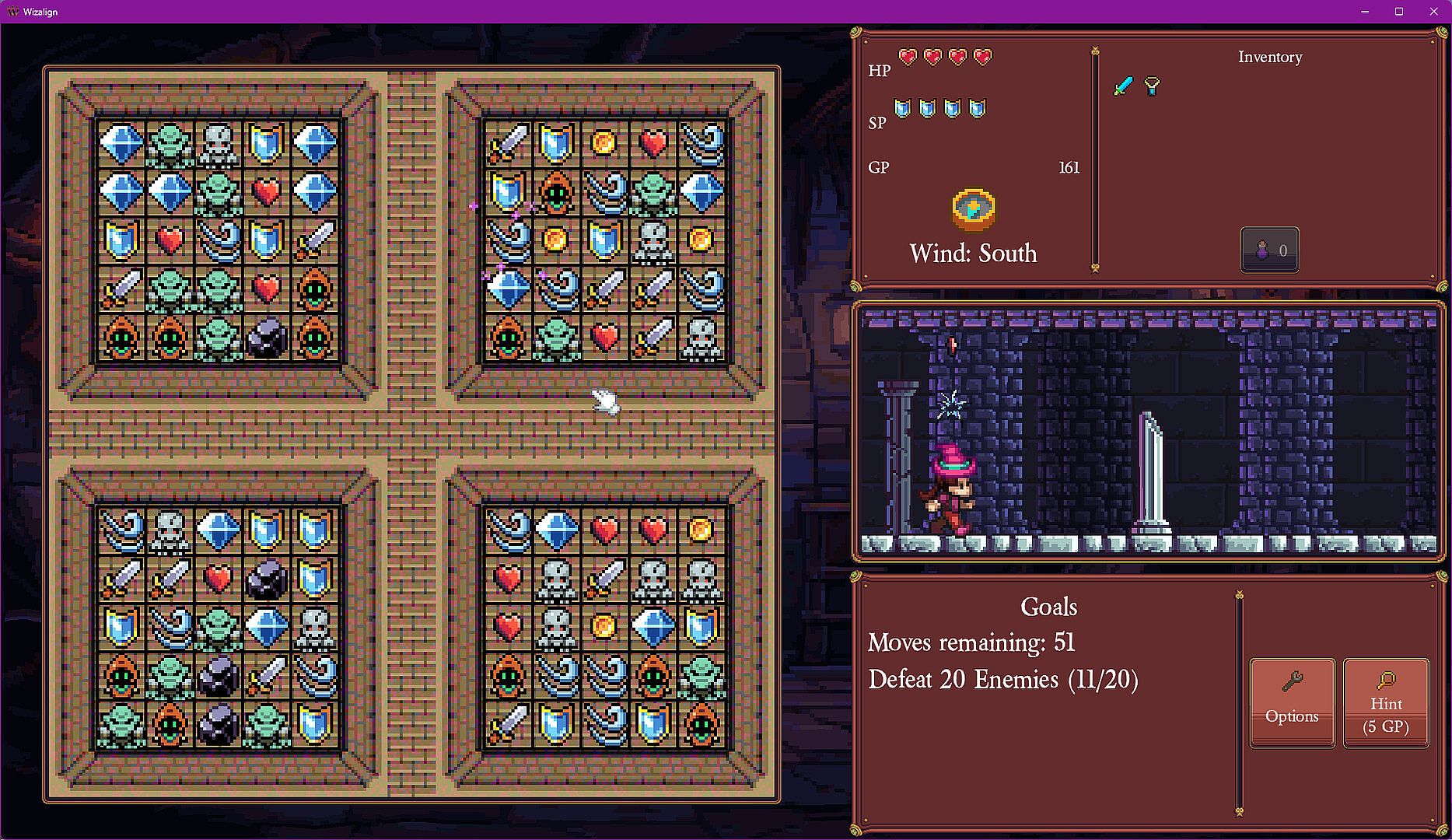
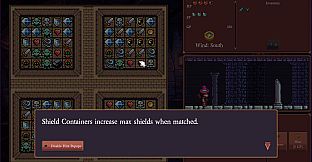
The core loop centers on match-3 puzzles that handle all major actions. Players align tiles to attack enemies, heal damage, activate shields, gather keys, and claim treasures or gold. Limited resources force constant trade-offs between aggressive clears and defensive plays. Each board represents a battlefield where combos build power while environmental elements and enemy behaviors alter available moves.
Exploration takes place across overworld regions that connect to individual dungeons. Safe zones allow recovery between runs, while dungeons introduce layered objectives such as collecting specific keys to unlock paths or completing challenges tied to unique enemy types. Items found deep in these areas grant permanent abilities that change how future boards are handled, including new ways to rearrange tiles or bypass obstacles. Progression comes from repeated expeditions that yield upgrades and collectibles, gradually expanding strategic options without altering the fundamental match-3 foundation.
Balance remains central at every stage. Focusing solely on damage can leave the player short on keys or health, while chasing every reward risks running out of moves. The system rewards planning several turns ahead, as one strong match can set up larger cascades that fulfill multiple goals at once.
Game Modes
Wizalign operates entirely in single-player format with no multiplayer components. The experience unfolds through a sequence of connected areas that function as distinct challenges rather than separate modes. Overworld travel emphasizes navigation and light combat, while dungeons shift focus toward resource management and boss preparation. Expeditions between safe zones provide downtime for planning the next push, and boss encounters demand precise resource allocation across longer boards.
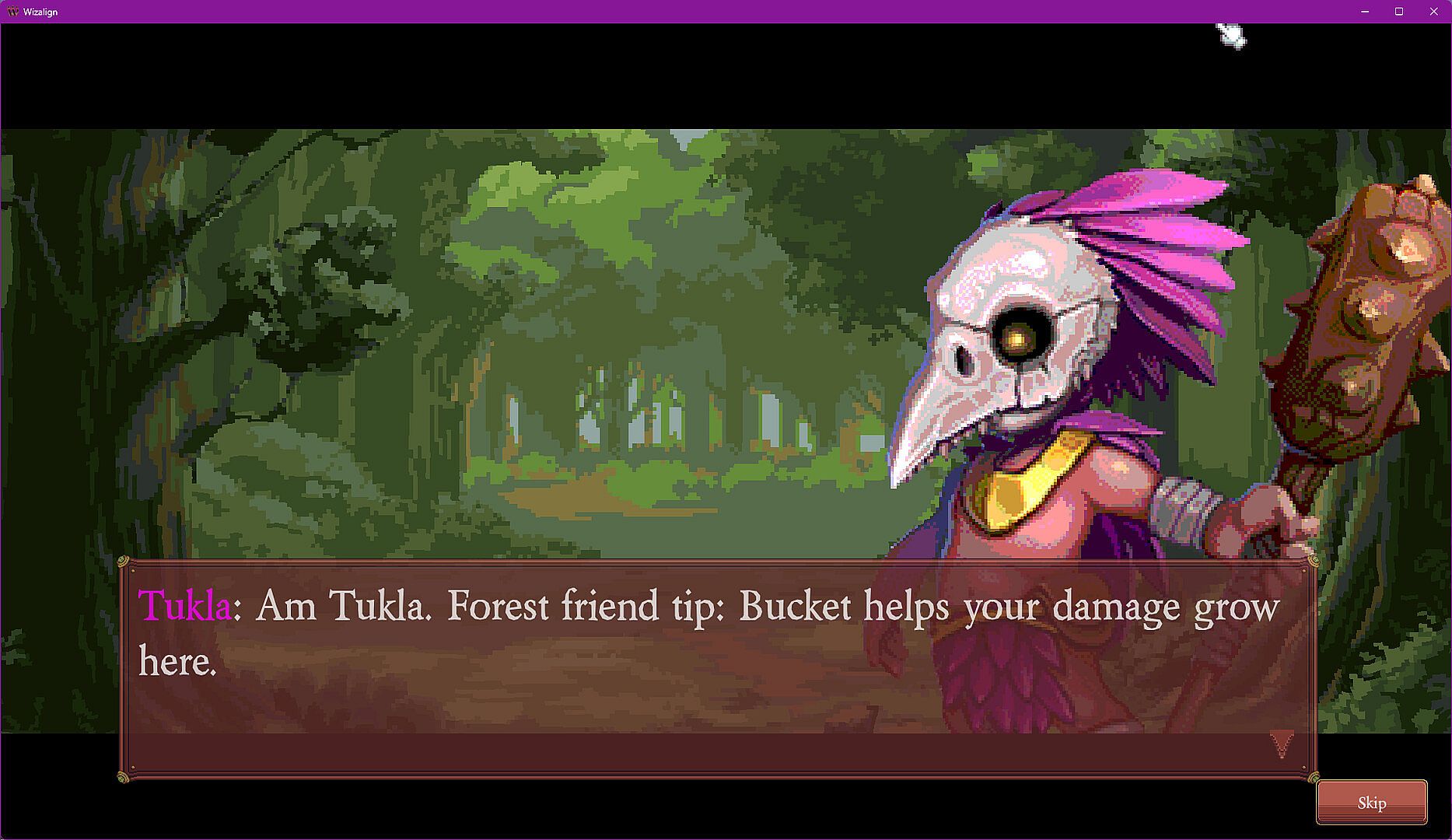
Each region adds new enemy behaviors and objective layers that modify the same match-3 rules. Players decide the order of priorities on every board, whether clearing threats first, securing keys for advancement, or pursuing high-value items. This structure creates a continuous campaign where success in one area opens options for later ones through acquired artifacts and upgrades.
Key Mechanics and Progression
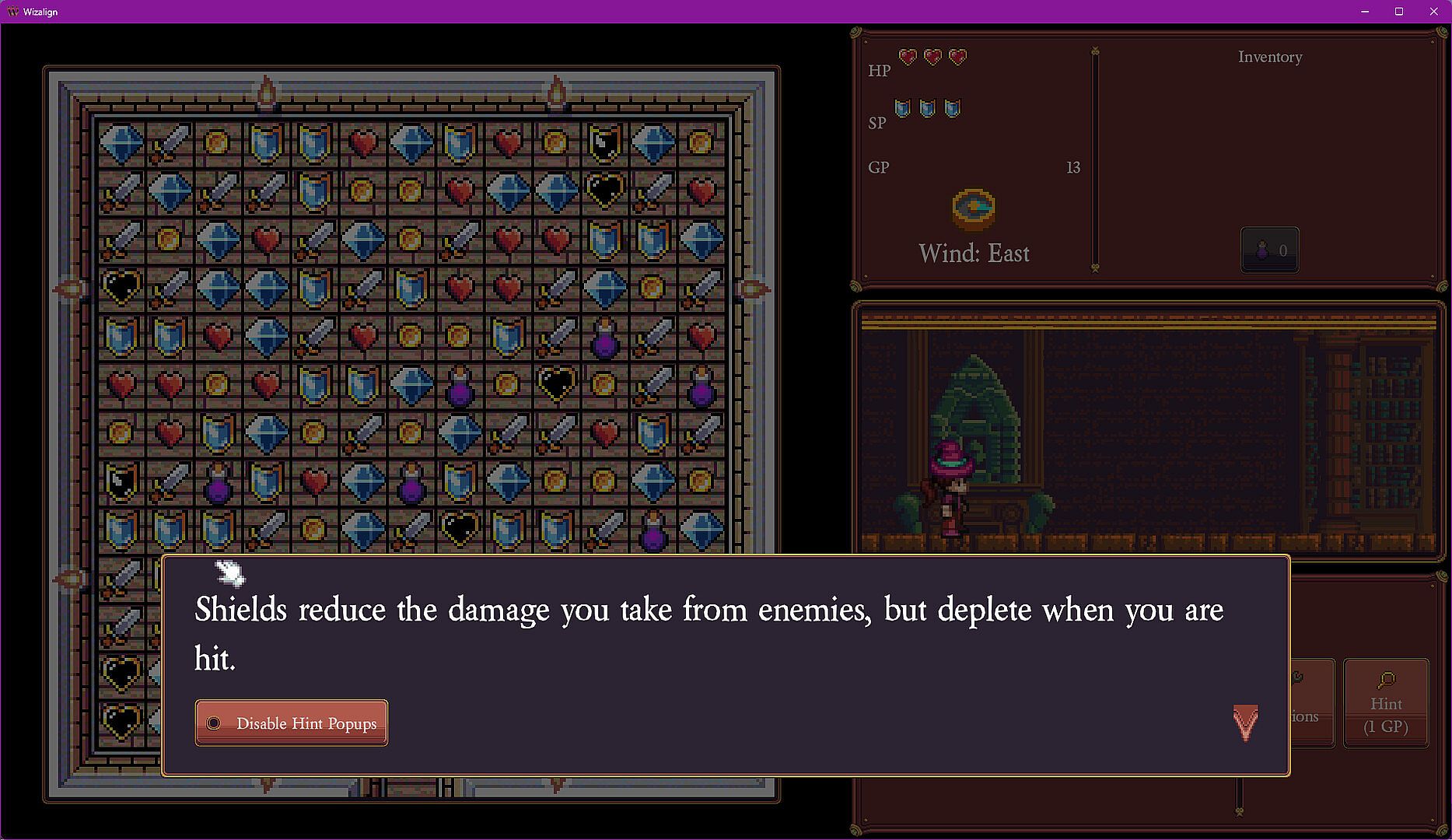
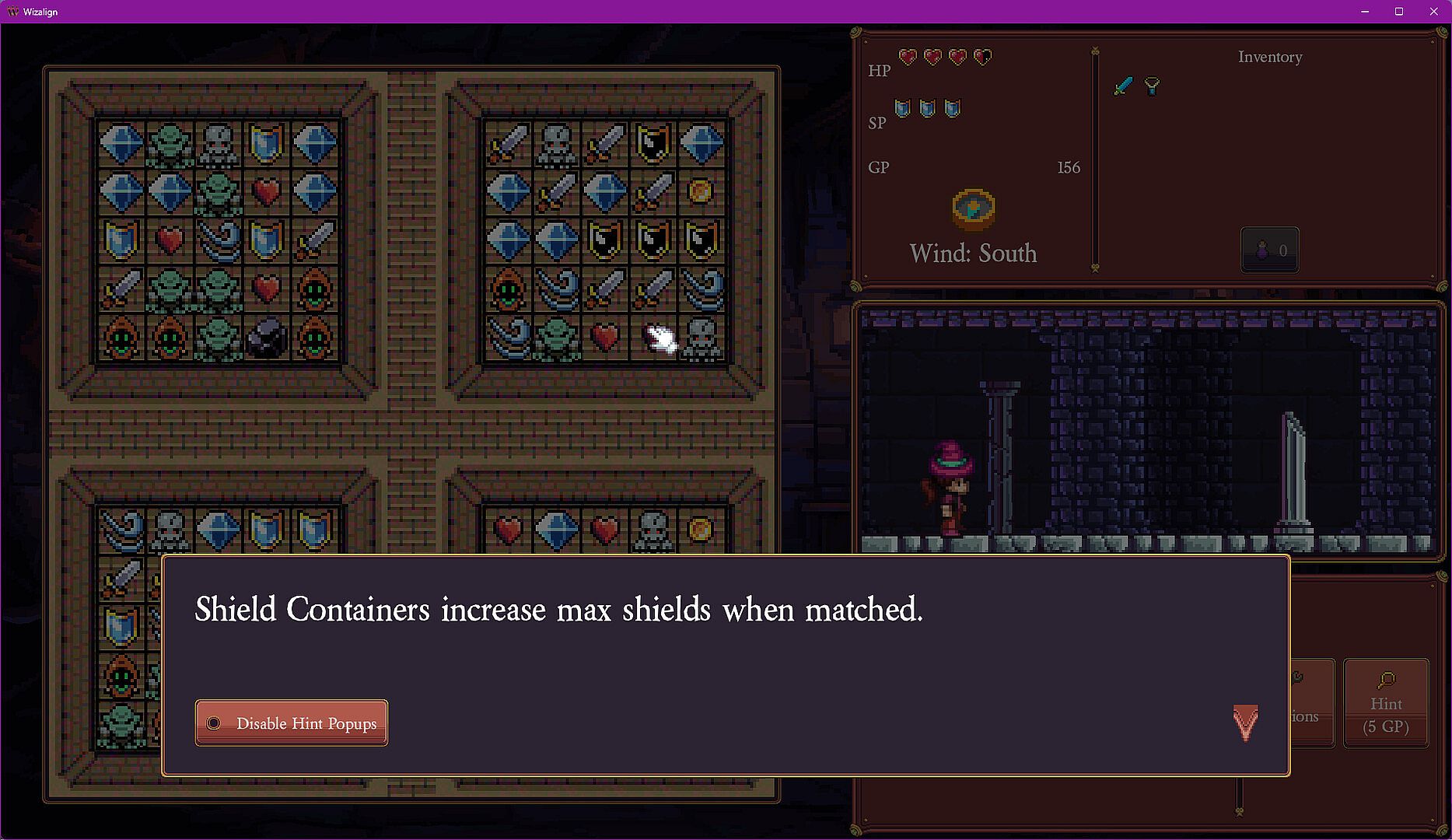
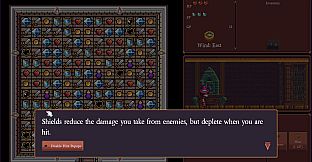
Tile matching drives every system. Basic matches deal damage or restore health, while larger groups or chains unlock extra effects. Shields absorb incoming attacks until depleted, and keys serve as the primary gate for map advancement. Treasures and gold accumulate as secondary rewards that support long-term growth.
Dungeon artifacts stand out as the main progression hook. These permanent unlocks add board-manipulation tools that let players clear obstacles or gain advantages in repeated playthroughs. Experimentation with different item combinations encourages multiple runs through the same regions to test new approaches.
Enemy variety introduces fresh constraints without changing core rules. Some foes require specific match types to defeat efficiently, while others punish certain strategies by altering the board state. Layered objectives ensure that pure high-score chasing rarely aligns with the fastest path forward.
Is It Worth Playing?
Wizalign suits players who enjoy deliberate puzzle games that reward careful resource tracking over rapid reflexes. The match-3 foundation stays accessible, yet the added layers of health management, key collection, and item experimentation create meaningful decisions on every board. Those seeking a pure endless matcher may find the structure too directed, while fans of short-session RPGs will appreciate how each expedition builds toward larger goals.
The game remains in a pre-release state with no user reviews or completed campaigns available. Its single-player focus and PC-only availability limit it to those comfortable with upcoming titles. Individuals drawn to hybrid puzzle-adventure experiences that emphasize strategic balance over action or narrative depth will find the described systems align closely with that preference. Early access to the mechanics through wishlisting provides the clearest path to evaluating fit once the title launches.