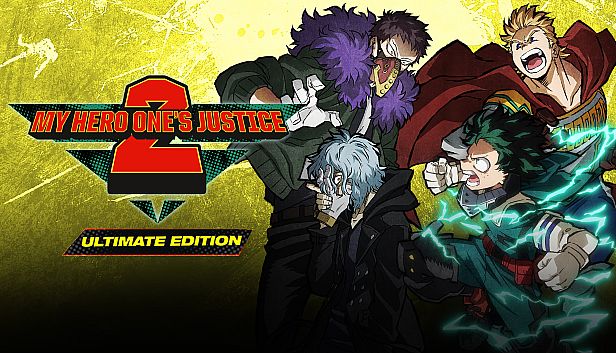




















My Hero One's Justice 2 Ultimate Edition is a 3D arena fighting game set in the My Hero Academia universe. Players control characters who use signature quirks to battle across destructible environments in fast-paced matches. The game emphasizes combo strings, meter management, and team-based elements drawn directly from the anime series.
Gameplay
Combat revolves around building and spending a Plus Ultra meter to unleash powerful quirk attacks and special combos. Each character has unique movesets based on their abilities, such as explosive blasts or rapid strikes, which players chain together in arena-style fights. Matches feature environmental destruction that alters the battlefield as the battle progresses. The core loop involves learning character-specific timings, managing resources during exchanges, and adapting to opponent patterns in both single and group encounters.
Controls support precise inputs for light and heavy attacks, guards, and quirk activations. Players can switch between team members in certain scenarios to maintain momentum. The system rewards aggressive play while punishing overextensions, creating a rhythm of offense and defense that mirrors the source material's high-energy confrontations.
Game Modes
Story Mode follows key events from the series and can be experienced from both hero and villain perspectives. This mode guides players through narrative sequences with set battles that highlight character development and rivalries.
Mission Mode focuses on player-versus-CPU challenges where participants recruit characters to form an agency team. Up to three members, including a main fighter and sidekicks, tackle mission maps for rewards. Team composition affects compatibility and performance on the matchup diagram, encouraging experimentation with different combinations to clear objectives efficiently.
Characters and Progression
The roster includes major figures from the My Hero Academia series, such as Izuku Midoriya, Katsuki Bakugo, All Might, and Tomura Shigaraki. Each brings distinct quirk mechanics that shape playstyles, from close-range brawling to area control. Progression involves unlocking and customizing these fighters through repeated play, with symbols and stats that enhance team viability in Mission Mode.
Players build familiarity with individual quirks and synergies rather than relying on broad upgrades. This approach keeps focus on mechanical mastery and matchup knowledge across the available cast.
Is It Worth Playing?
The game suits fans of anime fighters who enjoy My Hero Academia and want to engage with its characters in direct combat. Its 3D arena format delivers accessible yet layered fights that reward practice in training tools and repeated matches. Mission Mode adds a layer of team management for those who prefer structured challenges over pure versus play.
Reception includes positive notes on its faithful adaptation of source material and combat feel, with one review scoring it 83 out of 100. The title remains available on PC with ongoing accessibility through platforms that feature it periodically. Those drawn to quirk-based action and series lore will find the most value, while players seeking deep single-player campaigns or frequent new content may find the scope more limited after initial completion.