




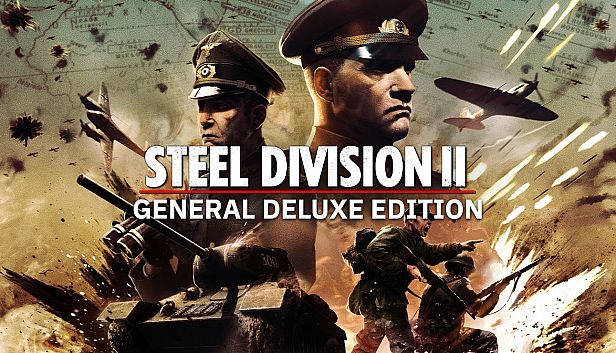


















Steel Division 2 is a real-time strategy game set in World War II that emphasizes large-scale tactical battles and historical accuracy. Players command forces drawn from authentic divisions rather than generic units, with combat unfolding across detailed maps that represent real European terrain from the 1944 campaigns.
Gameplay
The core loop revolves around selecting a historical division as the foundation for a battlegroup. This choice determines available units and their availability across three distinct battle phases. Early phases favor lighter reconnaissance and infantry elements, while later phases introduce heavier armor and artillery support through a points-based reinforcement system.
Combat demands careful positioning and timing because units arrive on a schedule rather than through continuous production. Reconnaissance plays a key role in revealing enemy positions, and terrain features such as forests, villages, and roads influence line-of-sight and movement. Tank engagements require attention to flanking angles and armor thickness, while infantry fights hinge on suppression and close-range firepower.
Deployment includes options for fortifications in certain scenarios, allowing players to prepare defensive lines with trenches and bunkers before the first phase begins. The absence of base building shifts focus entirely to unit coordination and phase management across expansive battlefields.
Game Modes
Skirmish provides standalone battles against artificial intelligence on maps of varying sizes. Multiplayer supports head-to-head matches that scale from small engagements to larger coordinated fights. Historical battles recreate specific clashes with fixed objectives and restricted force compositions.
Breakthrough pits an attacking force against a defender who holds most of the map and can pre-place defensive structures. Army General serves as the strategic campaign layer, where players manage a larger front on a turn-based map before committing divisions to real-time tactical battles.
These modes support both solo play against the computer and online competition, with the campaign structure linking multiple tactical engagements into coherent operations across different sectors.
Divisions and Historical Detail
Each division carries unique strengths and limitations based on its real-world composition. Allied and Axis options span infantry-heavy formations, armored spearheads, and specialized units such as airborne or mountain troops. Balance adjustments in ongoing patches refine unit statistics and availability to reflect historical performance more closely.
Players build decks by choosing which units enter during each phase, creating variety within the same division across repeated matches. This system rewards study of equipment capabilities, from machine-gun teams to self-propelled guns, without introducing fictional elements.
Updates and Ongoing Development
The game receives regular patches that introduce new units, refine balance, and expand campaign content. Recent additions include fresh operations set in specific 1944 battles along with adjustments to existing divisions. Community discussions continue around optimal deck compositions and map strategies years after the initial release.
Support has extended into 2025 with new historical scenarios and quality-of-life improvements that address long-standing feedback on reconnaissance and infantry mechanics.
Is It Worth Playing?
Steel Division 2 suits players who value precise control over large formations and appreciate the constraints of historical equipment. The combination of phase-based reinforcements and division-specific rosters creates depth that rewards repeated play and tactical experimentation.
Those interested in campaign progression will find the Army General mode provides structure beyond isolated skirmishes, while competitive players can engage in multiplayer matches that emphasize coordination. Active patching ensures the experience remains current with new content and balance changes.
The game appeals most to enthusiasts of detailed World War II strategy who prefer methodical planning over fast-paced action. Its focus on authentic divisions and large maps distinguishes it for anyone seeking a simulation-oriented approach to RTS combat.


