




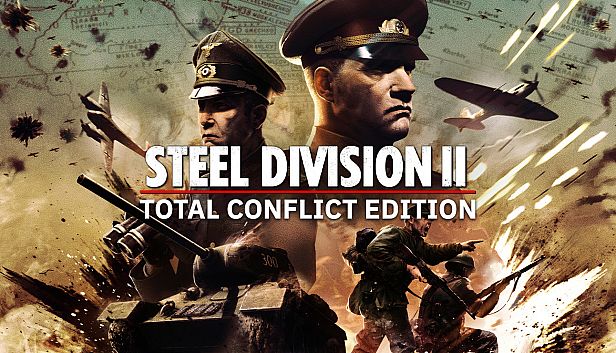

















Steel Division 2 - Total Conflict Edition is a real-time strategy game set during World War II. Players command divisions across large battlefields in detailed tactical engagements that emphasize unit positioning, phase-based reinforcements, and territorial control.
Gameplay
The core loop revolves around selecting a division deck before each match and deploying units in three distinct phases labeled A, B, and C. Each phase unlocks stronger or more specialized units while income rates adjust based on map control. Battles unfold on expansive maps that can reach 150 by 100 kilometers, requiring careful management of supply lines, flanking maneuvers, and combined arms tactics involving infantry, armor, artillery, and air support.
Deck building forms a central mechanic. Players choose from historical divisions representing various nations and unit compositions, balancing reconnaissance, combat effectiveness, and support roles. Real-time command involves issuing orders to individual battalions or companies while monitoring morale, ammunition, and line-of-sight mechanics that affect accuracy and spotting. The system rewards precise timing of reinforcements and adaptation to shifting front lines rather than simple rush strategies.
Game Modes
Multiplayer supports several competitive formats. Conquest awards victory points for holding the majority of the map, with scoring accelerating as control percentages rise. Close Combat modifies this approach by starting forces nearer to each other, leading to quicker engagements and different deployment options. Destruction focuses on eliminating enemy units, granting points equal to their deployment cost while additional income rewards map dominance. Breakthrough introduces asymmetry, with one side attacking to capture and hold an objective for five minutes while the defender aims to inflict heavy losses or survive the timer.
Singleplayer options include the Army General mode, which presents dynamic strategic campaigns across the Eastern Front. Players direct battalion movements over large operational maps, manage logistics, and fight tactical battles when forces clash. Skirmishes and scenarios allow practice against AI in any multiplayer format, while historical missions use pre-set divisions and objectives drawn from specific wartime events.
Division and Faction Systems
Divisions represent real historical formations with unique strengths and limitations. Infantry divisions emphasize holding ground and close-quarters fighting, while armored divisions prioritize breakthroughs and mobile operations. Players customize loadouts within each division to suit preferred playstyles, selecting from available unit cards that reflect authentic equipment and capabilities of the period. The game supports both Axis and Allied forces, with matchups often pitting contrasting doctrines against one another on varied terrain.
Is It Worth Playing?
Steel Division 2 maintains a Mostly Positive rating from thousands of reviews, reflecting steady interest in its scale and historical focus. The Total Conflict Edition bundles the base game with extensive additional content, providing access to multiple campaigns and expanded division options. Matches accommodate player counts from 1v1 to larger team formats, and the AI supports solo or cooperative play. Those who enjoy methodical real-time strategy with emphasis on planning, unit variety, and large-scale WWII operations will find substantial depth. The game continues to receive community attention years after release, making it a solid choice for players seeking tactical depth over fast-paced action.


