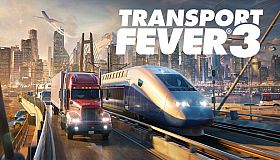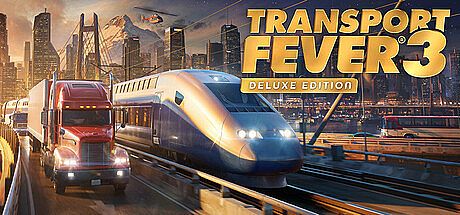



Transport Fever 3 is a single-player strategy and simulation game focused on building and managing extensive transport networks. Players design routes across land, sea, and air to move passengers and cargo while balancing costs, efficiency, and the evolving needs of towns and industries. The core loop centers on planning profitable connections that respond to dynamic economic demands over more than a century of technological progress.
Gameplay
The gameplay emphasizes route construction and optimization in a living world. Settlements and industries grow or shift based on deliveries, requiring constant adjustments to lines and infrastructure. Terrain plays a key role, with options to adapt paths to the landscape or reshape the ground itself. A day-night cycle introduces dynamic lighting that affects visibility and operations, while four distinct climate zones present unique challenges for network design.
Vehicle management forms another central system. More than 275 vehicles span eras from 1900 onward, covering trains, road vehicles, ships, aircraft, and helicopters. Each choice influences maintenance expenses, speed, and capacity, and players must monitor traffic patterns, station bottlenecks, and cargo priorities to maintain smooth operations. Contracts from towns or industries add targeted objectives that reward specific route improvements or expansions.
Additional layers include reputation tracking, pollution and noise control, and citizen satisfaction metrics. These systems influence long-term growth and company standing, with options to unlock landmarks as achievements. Difficulty settings allow customization of economic pressure, world reactivity, and other parameters to suit different play styles.
Game Modes
Three primary modes support varied approaches to the simulation. Campaign mode consists of eight missions set in historic contexts, each with defined objectives that introduce core mechanics progressively. Tycoon mode delivers the full business experience, where company progression, adjustable difficulty, and ongoing economic management drive the experience. Sandbox mode removes many restrictions for unrestricted creative building and experimentation.
A built-in map editor complements these options, enabling custom landscapes and scenarios. All modes operate in a single-player environment with no multiplayer components.
Key Mechanics and Features
Network building covers railways, roads, shipping, and aviation with modular stations and infrastructure that evolve across eras. Industries form production chains that players must link efficiently, while towns expand automatically in response to service quality. Environmental factors such as weather patterns in different biomes and emissions management add strategic depth without overwhelming the central transport focus.
Progression ties directly to financial performance and contract completion. Successful deliveries generate revenue that funds further expansion, vehicle upgrades, and company development. The simulation tracks detailed logistics data, allowing precise tweaks to schedules, priorities, and fleet composition.
Is It Worth Playing?
Transport Fever 3 suits players who enjoy methodical strategy simulations centered on logistics and long-term planning. Its single-player focus delivers a self-contained experience with substantial depth in route management and world simulation. Recent reviews highlight the polished mechanics, expanded vehicle options, and responsive economic systems as strengths for fans of the genre.
The game launched on September 29, 2026, across PC and other platforms, with ongoing support implied by developer statements about future updates. Those seeking a transport management title with historical progression, customizable difficulty, and creative freedom in sandbox play will find it aligns well with those interests. Casual players may appreciate the adjustable settings that reduce economic complexity, while dedicated strategists can engage the full range of interconnected systems.