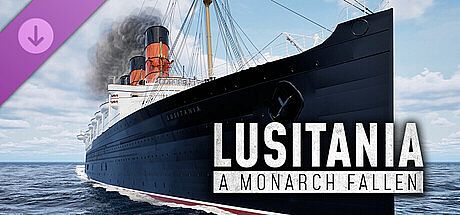


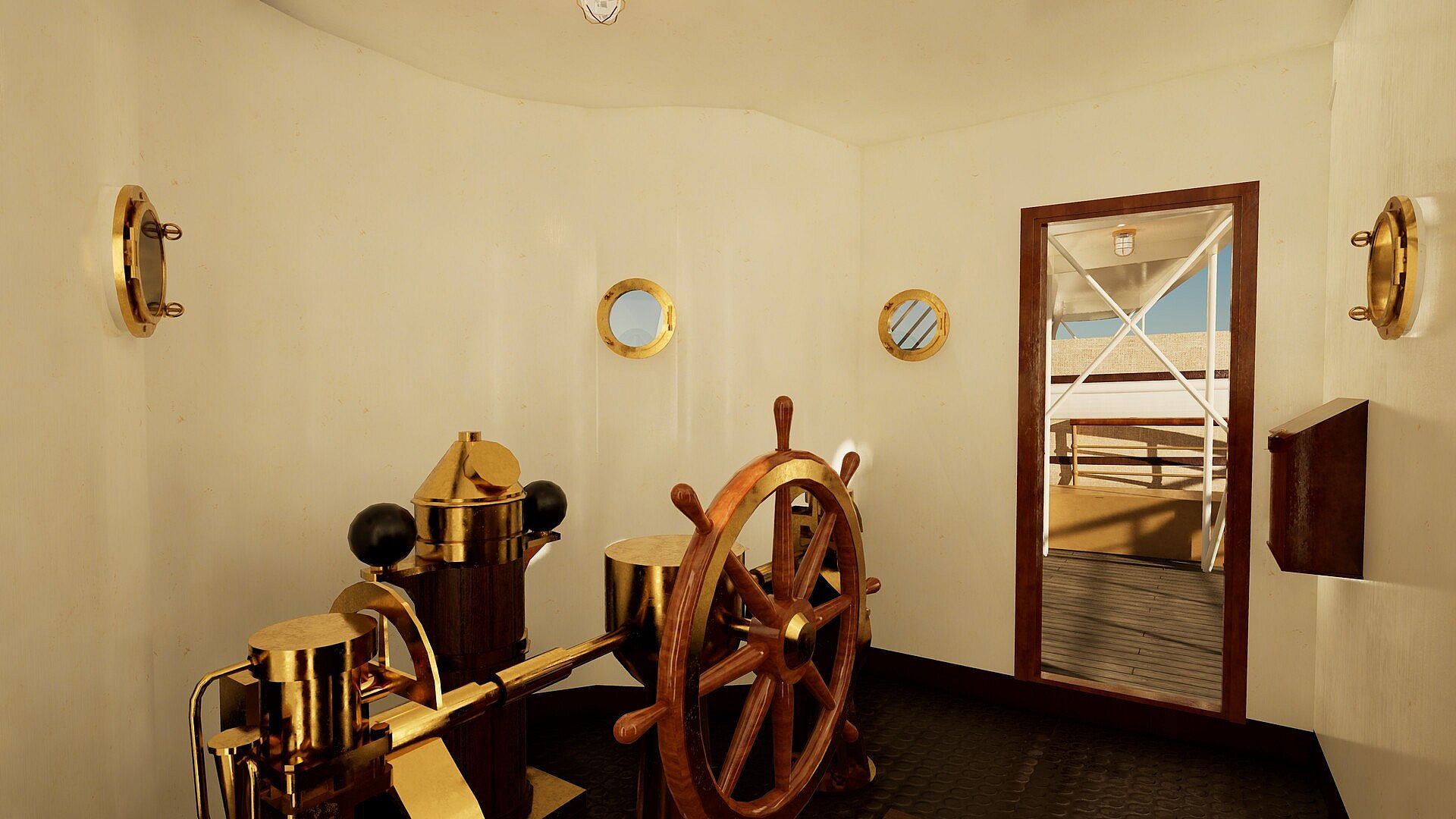
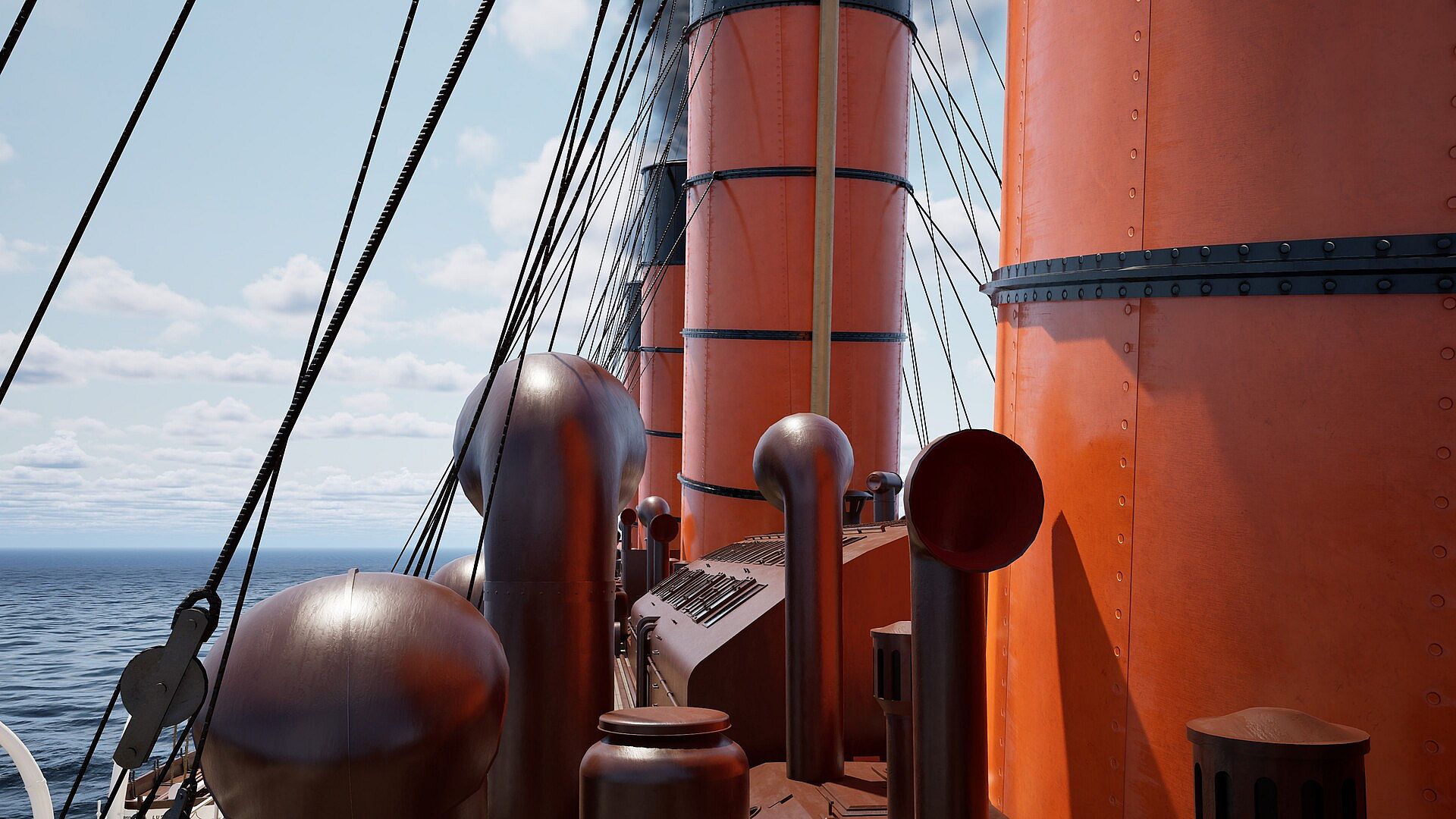
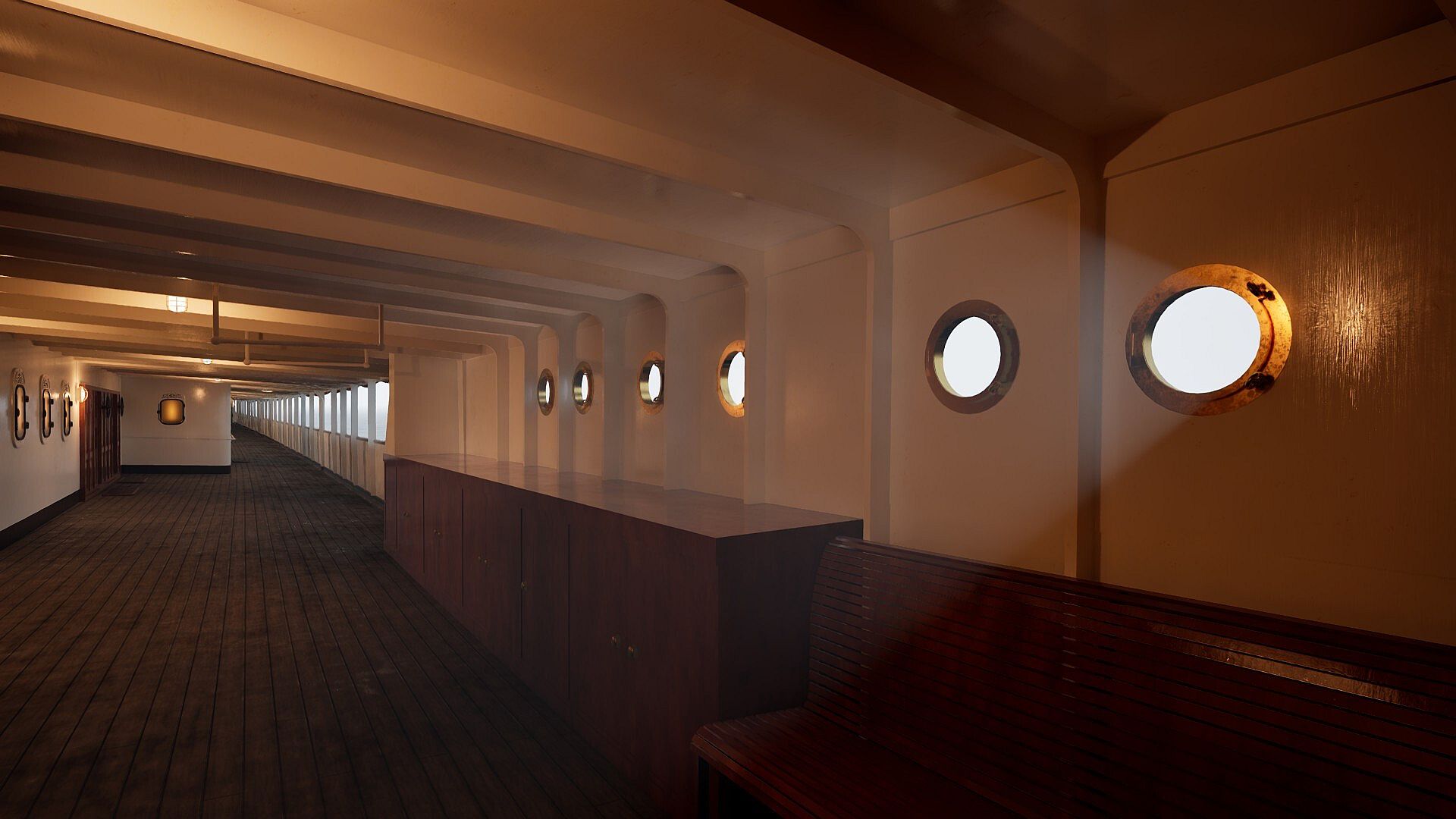
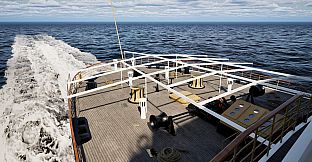
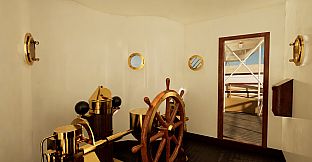
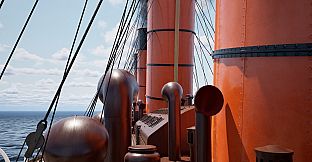
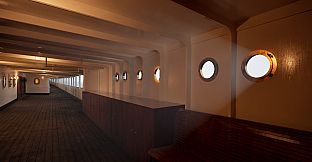
Lusitania: A Monarch Fallen is a simulation and adventure title for PC that places players inside a detailed digital recreation of the RMS Lusitania. The experience spans the liner's construction through its service years and into its final voyage, presenting the vessel as an interactive historical environment rather than a traditional narrative game.
Gameplay
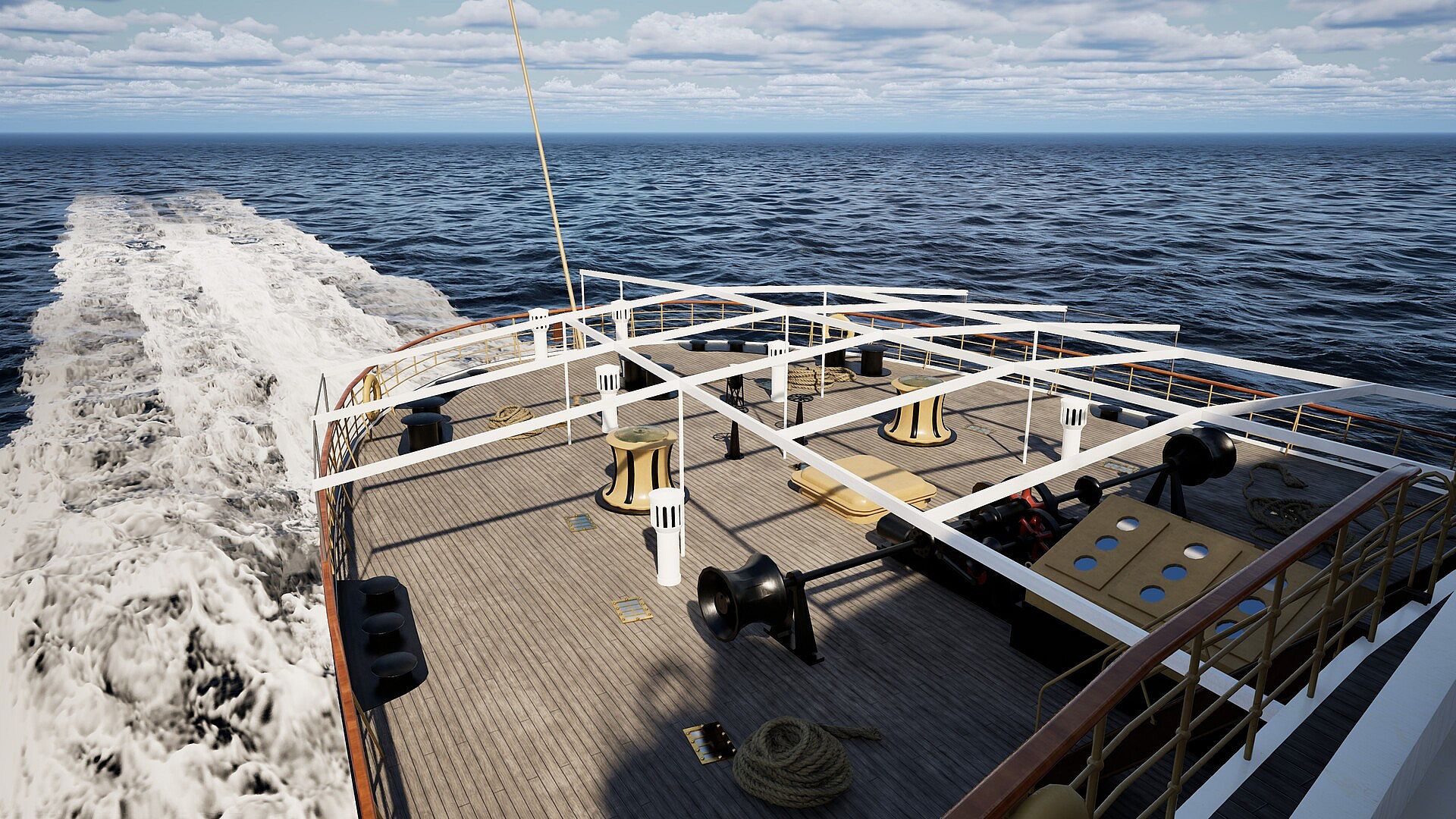
Core movement takes place across the ship's decks, interior public spaces, and drydock areas. Players navigate at their own pace, examining the hull from multiple angles during construction and later while the vessel travels the Atlantic. Interaction centers on dozens of information points scattered throughout accessible areas. These points deliver facts about the ship's speed records, passenger amenities, and engineering features drawn from authentic records.
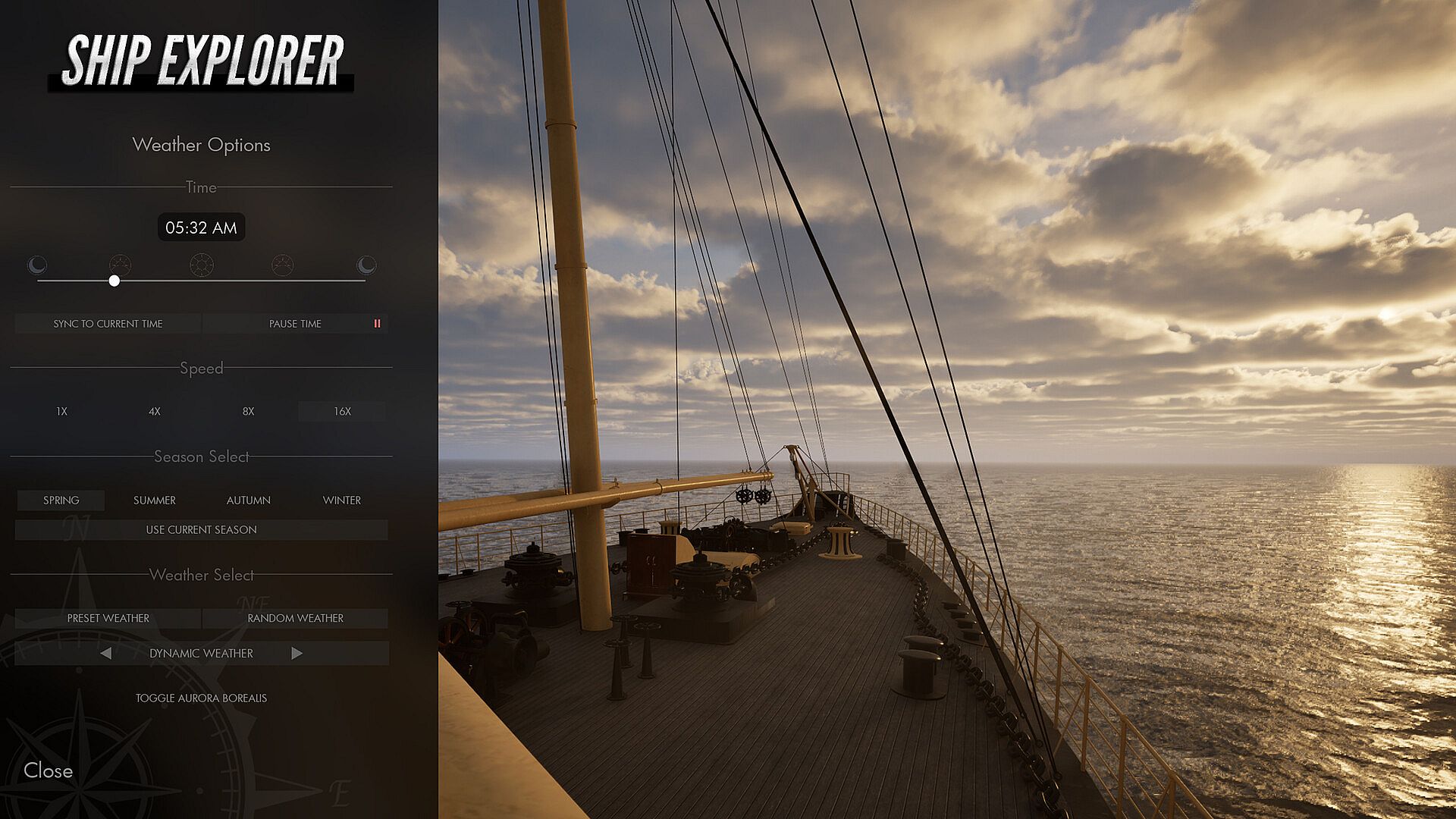
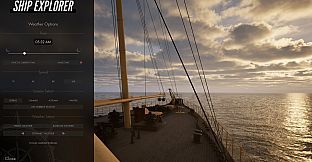
Time and weather controls allow adjustment of lighting and conditions to suit exploration or photography. A dedicated photo mode supports both first-person and third-person viewpoints, enabling capture of specific onboard scenes or external views. Interior access covers public rooms from all three passenger classes, revealing layout differences and period details preserved in the model.
The sinking sequence forms a distinct phase. Players witness the sequence of events in real time through scripted occurrences that follow the historical timeline of the torpedo impact and subsequent foundering. This section emphasizes observation of structural changes and compartment flooding rather than direct control of the vessel.
Game Modes
Two primary approaches structure the content. Free exploration mode lets players move through the ship at any stage of its history, from drydock construction to peacetime crossings and wartime service. This mode supports unrestricted access to decks, interiors, and information points without time pressure.
The sinking mode isolates the final voyage. It presents a guided timeline of the vessel's last hours, allowing observation of the progression from initial damage through the plunge. Players can pause or revisit segments to examine specific moments, combining factual narration with visual reconstruction of the event.
Historical Context and Features
Documents and materials from the Lusitania and Old Head Signal Tower collections appear at key locations. These provide primary-source context on the ship's record-breaking transatlantic runs and its role as a favored liner. The model includes accurate representations of hull construction, propulsion systems, and class-specific accommodations based on surviving plans and photographs.
Exploration extends below the waterline in drydock views, highlighting structural elements not visible during normal operation. Weather and time adjustments further support detailed study of the ship under varying conditions, from calm daylight passages to nighttime or stormy settings.
Is It Worth Playing?
The title suits players interested in maritime history and methodical exploration rather than fast-paced action or competitive elements. Its strength lies in the combination of accurate spatial recreation with interactive historical references. The sinking sequence offers a focused recreation of documented events that rewards repeated viewing for closer examination of the timeline.
Availability as an addition to the Ship Explorer platform means access depends on ownership of the base application. Positive reception for the core experience indicates consistent quality in ship modeling and information presentation. Those seeking a quiet, educational simulation of a single historic vessel will find the most direct value here, while players preferring combat systems or multiplayer will encounter limited options.
Technical Presentation
Visual fidelity emphasizes color-accurate interiors and exterior details across construction, service, and loss phases. The model supports close inspection of furnishings, deck layouts, and engineering spaces. Controls remain straightforward, centered on walking, camera adjustment, and interaction prompts at information locations.
Photo mode integrates directly with exploration, allowing composition of shots that replicate known historical images or create new perspectives. The overall design prioritizes clarity and accessibility for study or casual viewing of the liner's story.