


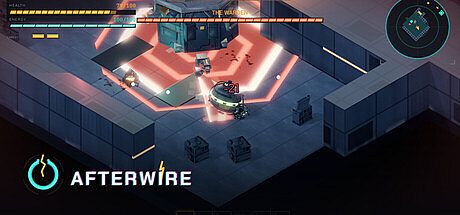


Afterwire is an isometric horde-survivor action RPG set on PC in Early Access. Players control machines in a derelict station adrift in the void, the first of several worlds that expand through ongoing updates. The experience centers on survival against waves of hostile machines in enclosed sectors, with progression tied to combat, upgrades, and extraction rather than any persistent loop or repeated runs.
Gameplay
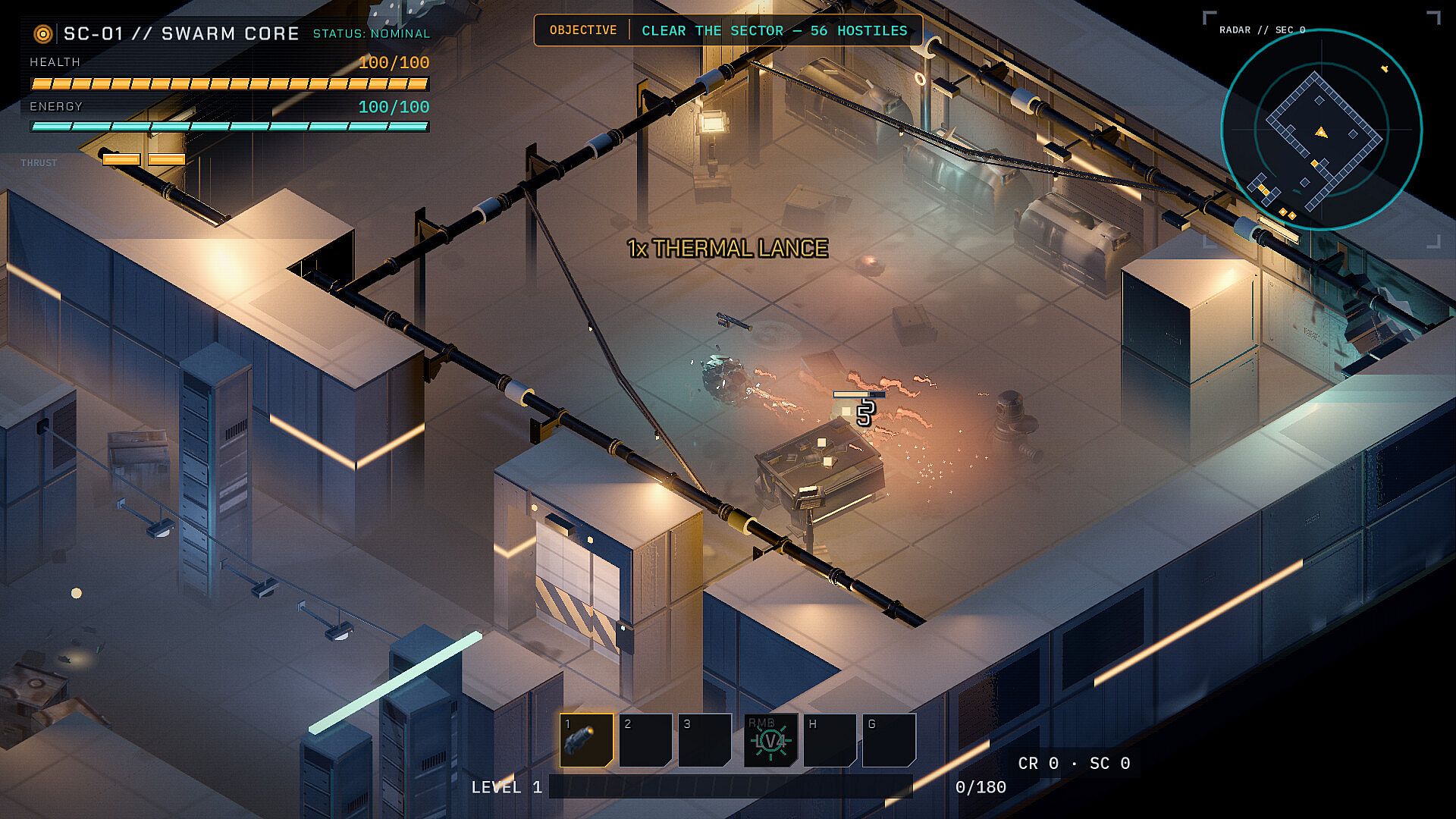
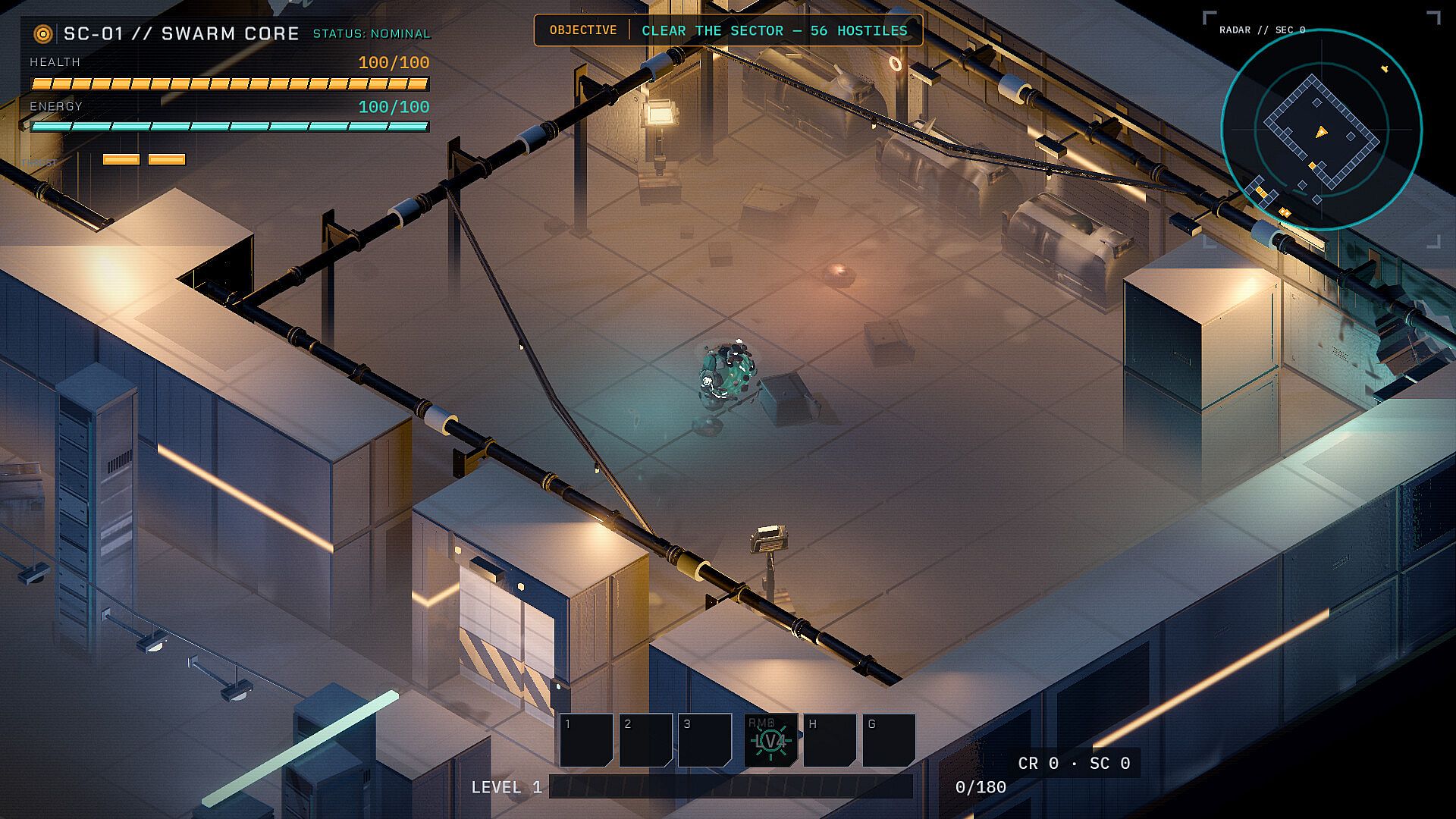
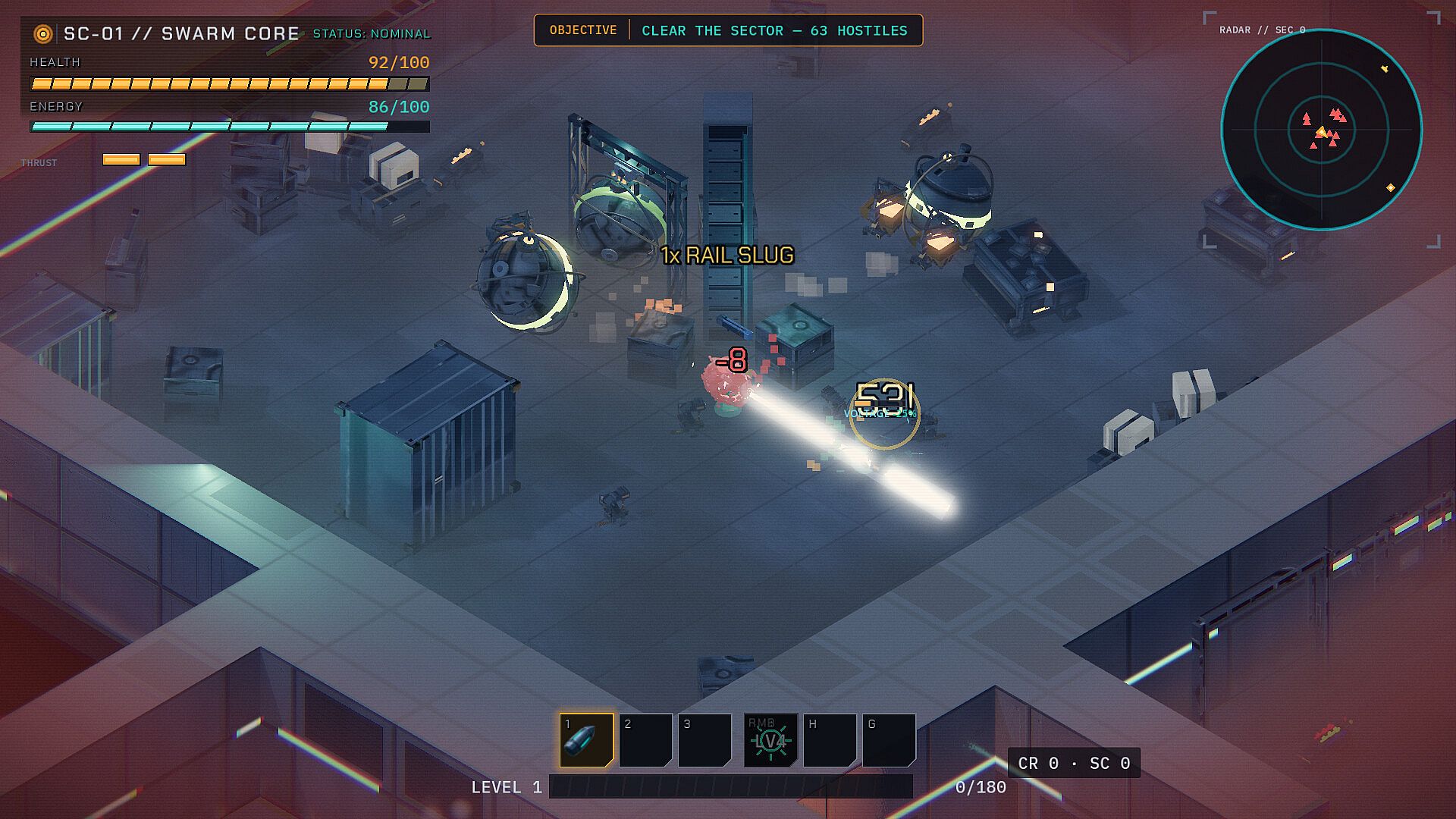
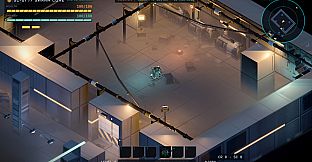
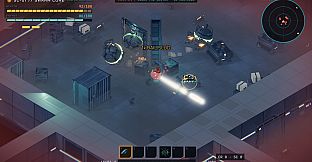
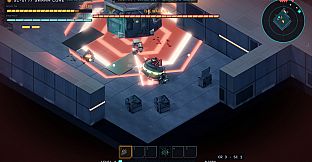
The core loop places players in true-3D environments viewed through an orthographic isometric camera. A fog-of-war system reveals the space gradually, while self-emissive anchors keep the controlled machine visible amid the action. The Sodium Derelict visual style uses amber and teal practical lighting against blue steel surfaces for clear readability during fights.
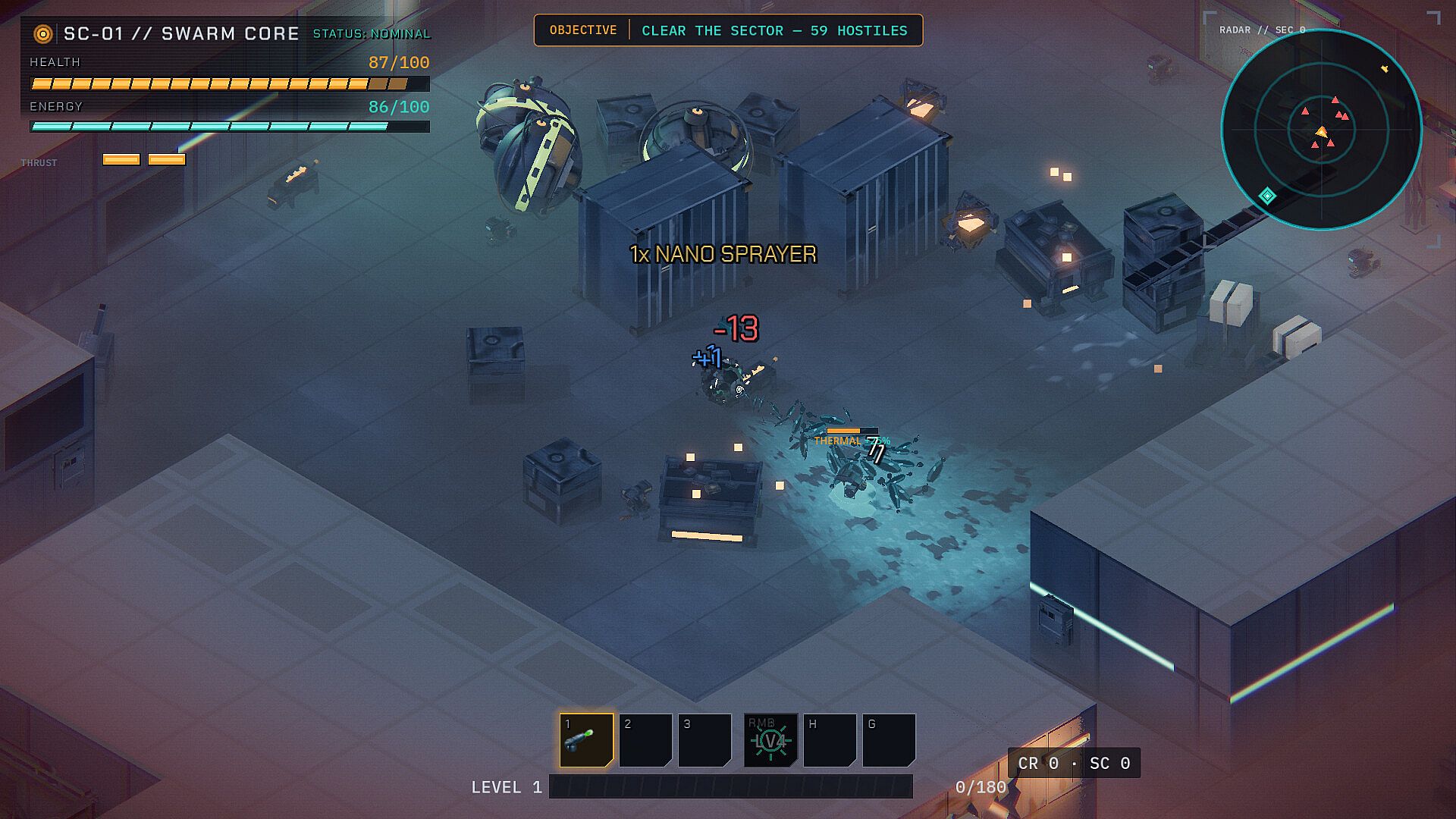
Two distinct machines are available from the start. The SWARM-CORE operates as a nanite hive suited to close-range shredding of groups, supported by its own passive skill canopy and the Nova active ability. The GLITCH IMP functions as a flickering saboteur that blinks through threats, with matching passives and the Blink active. Switching between them changes how rooms are cleared and how incoming damage is handled.
Six weapons channel one of five damage sources: kinetic, thermal, voltage, nanite, or glitch. Examples include shard volleys, darts, nano sprayers, arc coils, thermal lances, and rail slugs. Enemy machines display weakness chips on their health bars, so loadout choices matter against specific resistances. A threat director populates sectors with up to 120 machines that scale in difficulty, including weldlings that merge, murmurs that carve crescents, censers that sweep fire, slagbellies, and Torque sentry-balls, plus elite and champion variants.
Progression happens inside each sector through leveling, selection of overclocks, and spending credits and scrap at requisition terminals. Full controller support includes physical rumble feedback on hits and impacts. The game launches with support for English, Polish, German, Spanish, Portuguese-Brazil, and French.
Game Modes
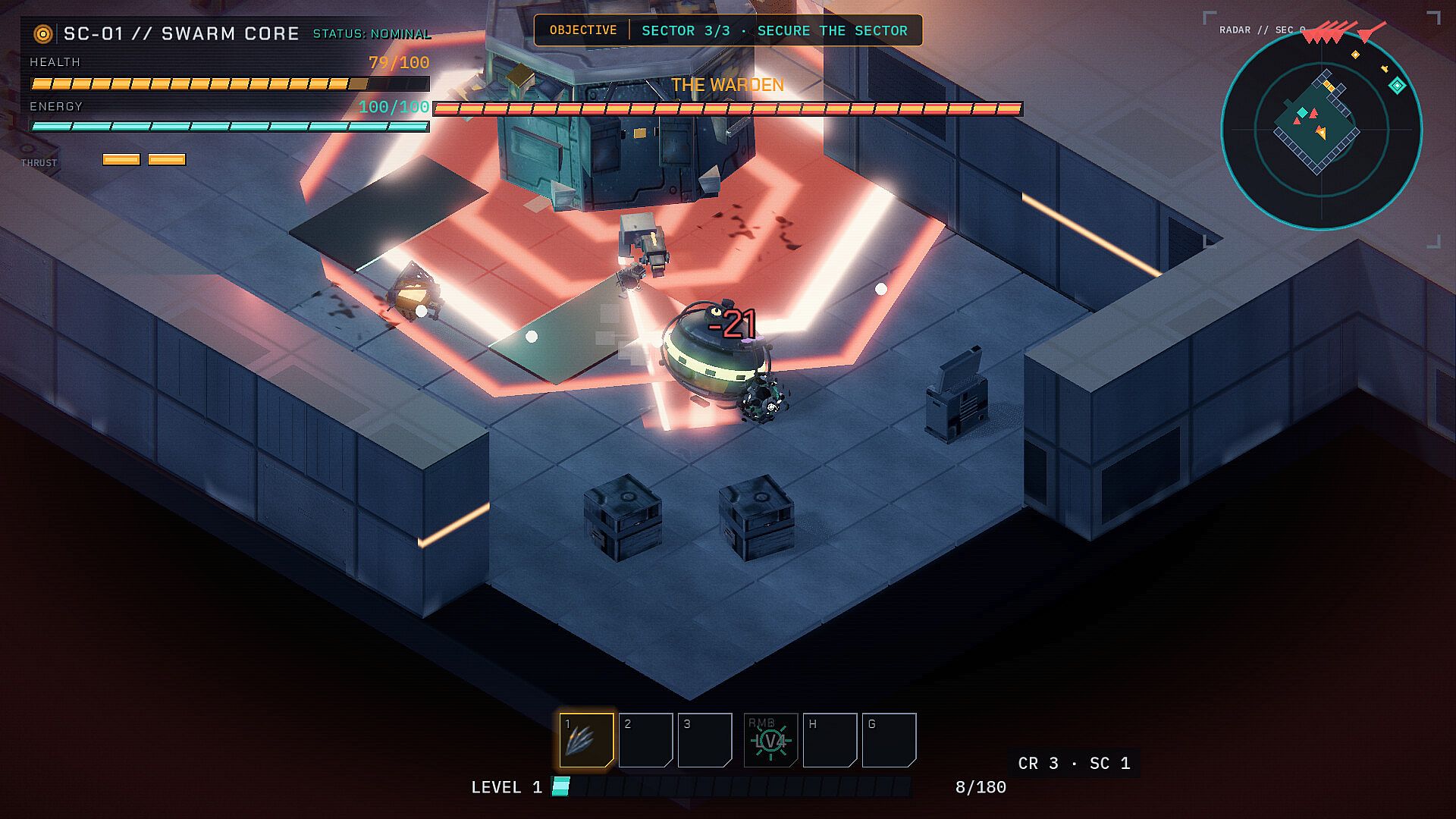
Afterwire structures play around escalating sectors rather than named separate modes. Each sector begins sealed and fills with machines directed by the threat system. Players fight through the horde, manage resources, and reach a boss door that seals the area once cleared. An arc concludes after three such sectors plus the final Warden encounter, a Walking Autoclave Dreadnought.
There is no meta-loop or repeated run structure. The focus stays on fighting through the current sector, leveling the machine, choosing upgrades, using terminals for purchases, extracting when ready, and advancing to the next area. Early Access adds new sectors over time according to the public roadmap.
Visuals and Controls
The orthographic camera and practical lighting palette keep combat readable even when dozens of machines fill the screen. Fog-of-war disclosure prevents the environment from feeling empty while still maintaining tension in unexplored space. A first-deploy tutorial uses beacons to guide new players through the pod, camera controls, and the initial sluice without interrupting the flow.
Controller support extends to rumble that matches hit-stop and impact moments, making the physical feedback part of the combat rhythm. The six supported languages are available from launch, allowing broader accessibility without additional setup.
Is It Worth Playing?
Afterwire suits players who enjoy isometric horde-survivor action RPGs built around deliberate loadout decisions and escalating enemy waves. The two starting machines, five damage sources, and visible enemy weaknesses create meaningful choices during each sector. The absence of a meta-loop keeps sessions focused on direct combat and extraction.
Early Access means the station serves as the starting point, with additional sectors arriving through updates. Those interested in machine-vs-machine combat in confined industrial spaces, combined with controller-friendly controls and clear visual feedback, will find the current build matches the described systems. The public roadmap provides transparency on future content additions.












