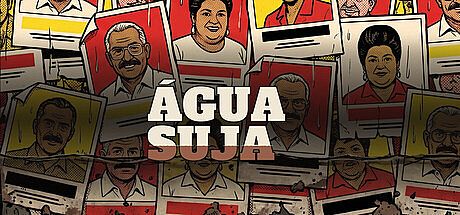


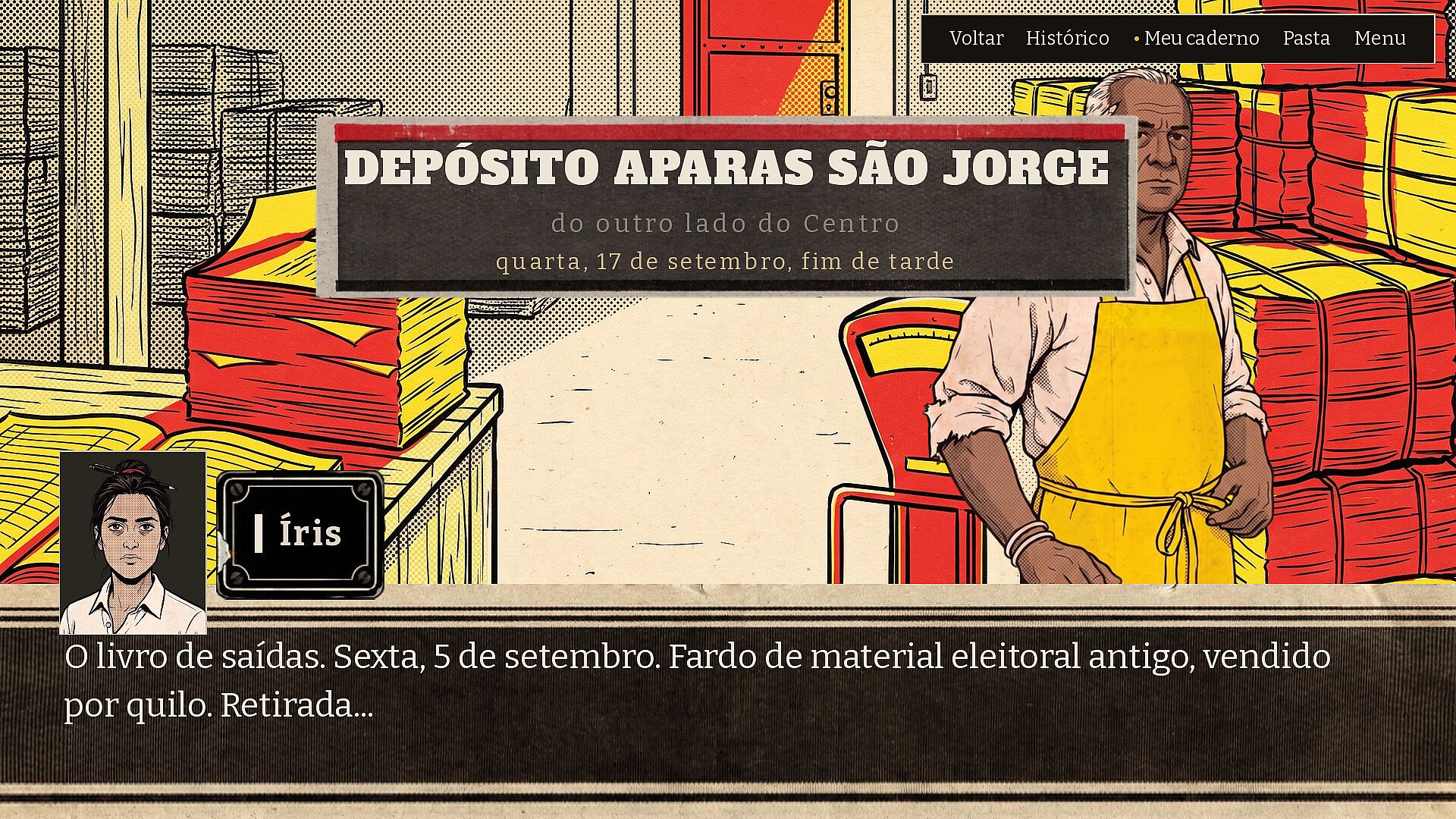


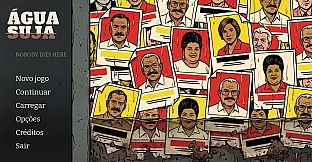
Água Suja is an investigation and courtroom visual novel set in the fictional Brazilian town of Belo Porto during a rainy election season. The story follows lawyer Íris Vasconcelos as she takes on what begins as a minor case involving a doctored campaign flyer and grows into a deeper examination of documents, testimonies, and contradictions within the local electoral system. Players read through a prologue and six acts that unfold across locations such as the night-shift courthouse, a flyer print shop, a community radio station, the registry office, and a corner bar. The experience relies entirely on text, with no voice acting or minigames, and the full story is available only in Brazilian Portuguese.
Gameplay
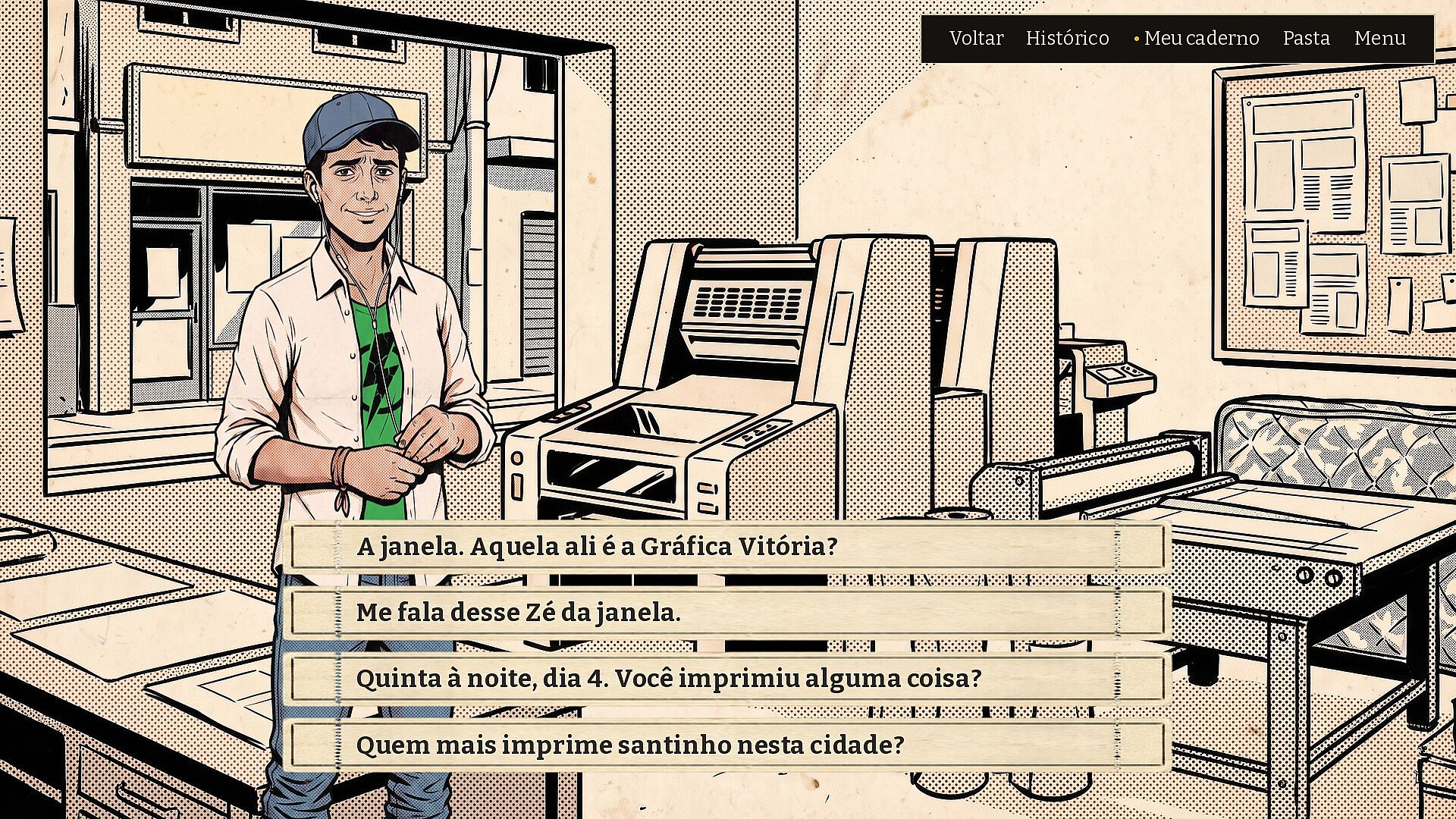
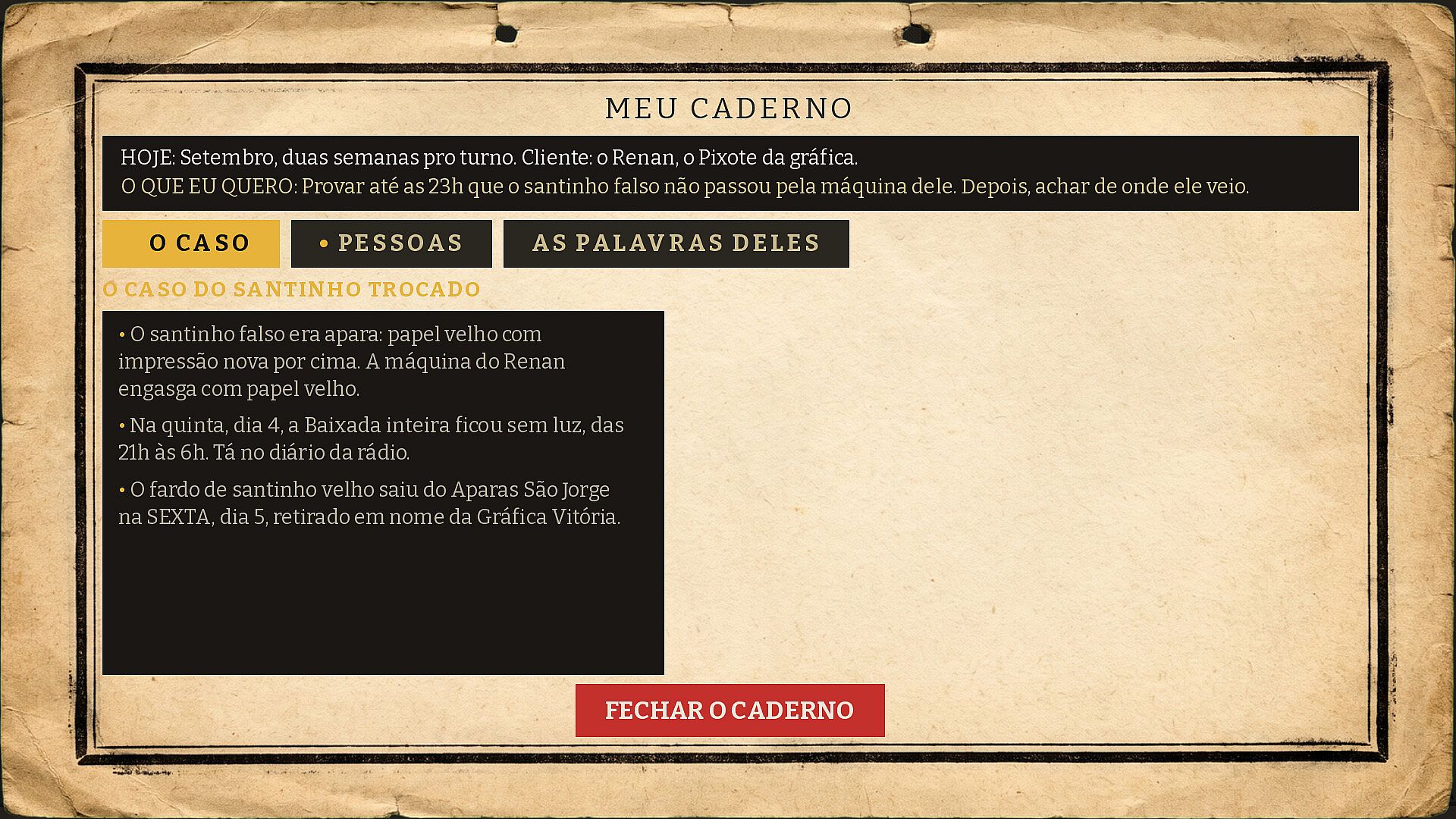
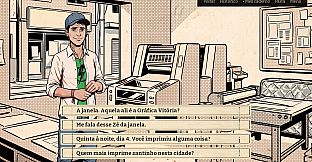
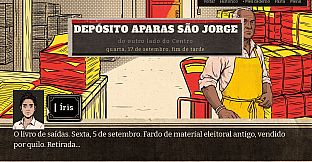
The core loop centers on exploration, conversation, and evidence management inside a single-player narrative structure. Players move through key town locations and click on examination spots to reveal lines of description or dialogue. These details feed into a case folder that holds twenty-five pieces of evidence, each tied to an animal from the traditional jogo do bicho lottery system used locally for reference. Conversations occur by selecting topics with characters who often resist sharing information, and relevant statements are recorded verbatim in Íris's notebook. The notebook serves as a personal record of events, identities, and timelines without offering automatic deductions.
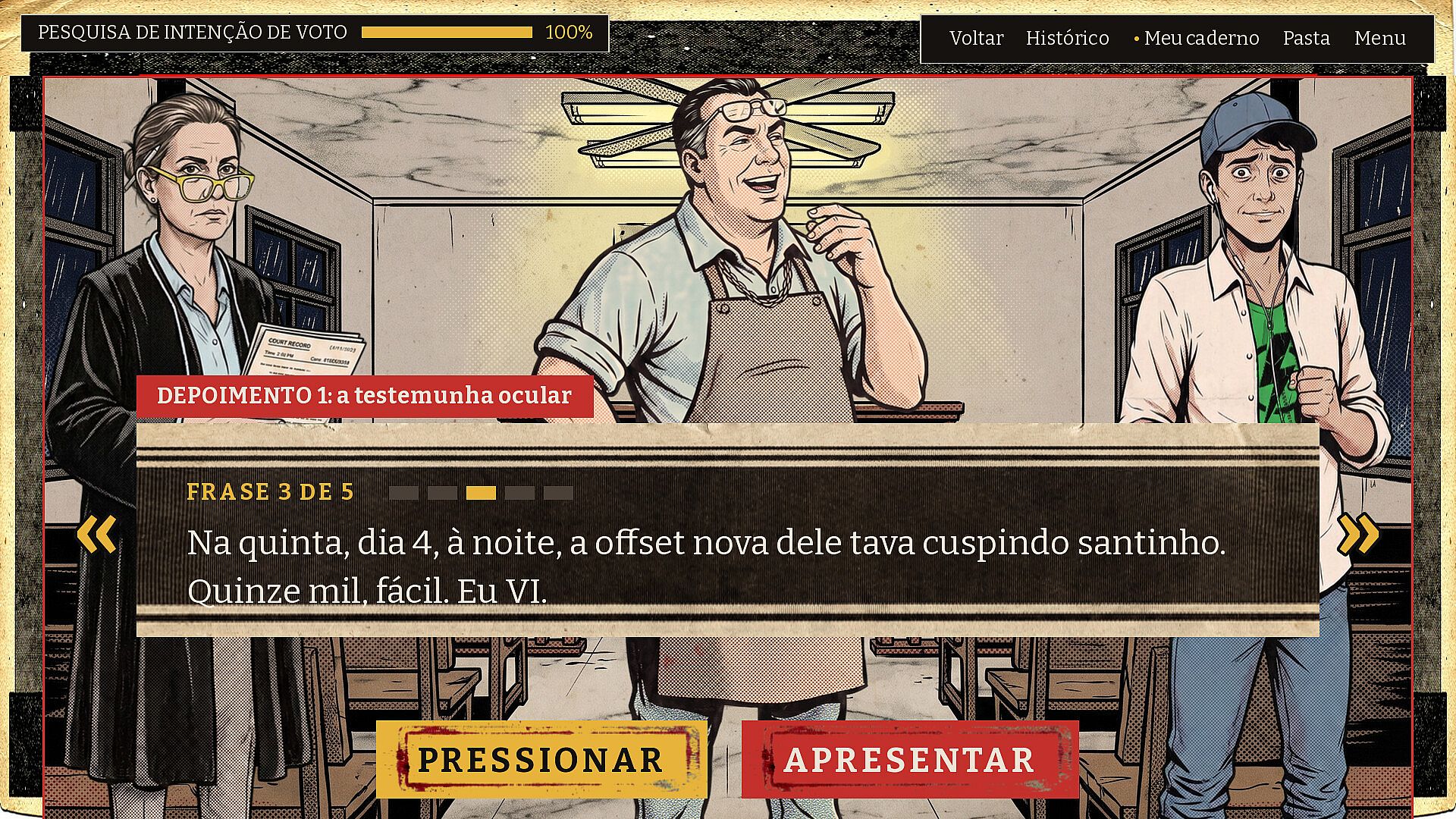
Hearings take place late at night before a judge and proceed one sentence at a time. Players can revisit any line to press a contradiction using a note from the notebook or to present a specific piece of evidence. A visible voting intention bar tracks how the town perceives the case rather than what has been proven, so errors or withheld evidence carry lasting consequences that affect later scenes. Two distinct routes open from Act 2 onward, each presenting different evidence and requiring separate playthroughs of roughly eight hours depending on reading speed. A final act becomes available after both routes are completed, using the full notebook to address unresolved elements and lead to one of six endings.
Game Modes
Água Suja offers a single-player experience built around sequential acts and branching routes rather than traditional multiplayer or competitive modes. The primary structure consists of a prologue followed by six acts that players advance by reading, examining, and making choices during hearings. From the second act forward the narrative splits into two parallel routes that do not share the same evidence pool, encouraging at least two full playthroughs to see the complete picture. Each route concludes with choices that influence one of six possible endings, none of which resolve every thread cleanly. The final act then opens with the accumulated notebook contents and provides closure based on what the two routes left open. No additional modes such as free play, challenges, or alternate scenarios exist beyond this core progression.
Story and Setting
The narrative unfolds in an invented mid-sized Brazilian town where election material, registry documents, and community spaces hold the clues to a case that refuses to close quickly. Locations reflect everyday civic infrastructure rather than stylized or folkloric elements, and characters range from a market vendor who knows more than she reveals to a young printer with red ink on his hands. The text-only format and in-game glossary of courthouse and election terms support focused reading without external aids. Because the story is delivered entirely in Brazilian Portuguese, players must engage directly with the language and terminology to follow the investigation and courtroom confrontations.
Is It Worth Playing?
Água Suja suits readers who prefer deliberate, text-heavy visual novels centered on investigation and legal procedure. The mechanics of collecting evidence, maintaining a notebook, and weighing presentation choices during hearings create meaningful consequences through the voting intention bar and route splits. With two eight-hour routes leading to six endings and a concluding act that draws on the complete record, the game rewards multiple playthroughs for those interested in seeing how different evidence selections alter outcomes. The absence of voice acting and minigames keeps the focus on reading and decision-making, making it a strong match for fans of narrative-driven experiences that emphasize careful observation over action or puzzle-solving. No updates or additional content have been confirmed beyond the described structure.