


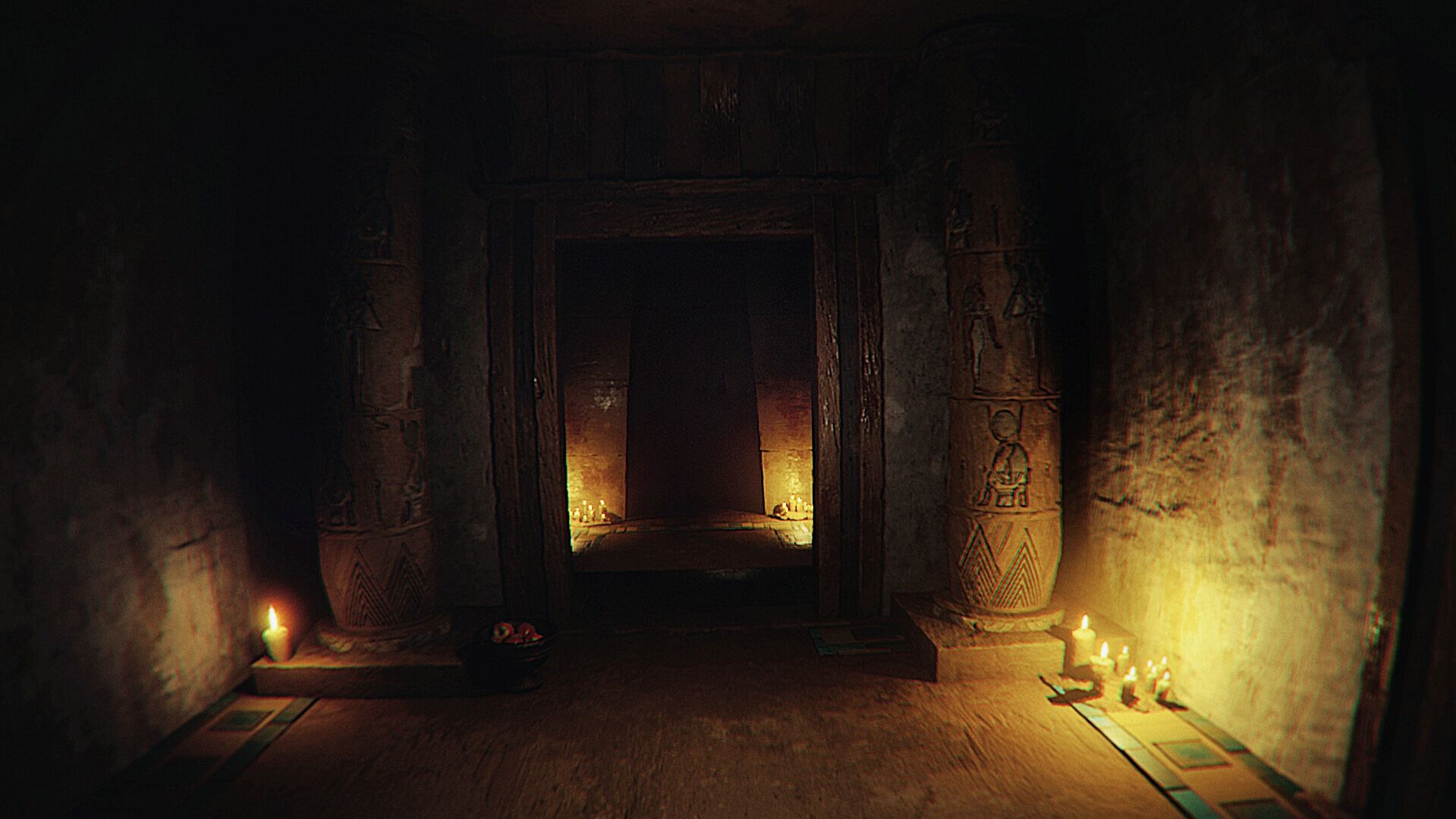
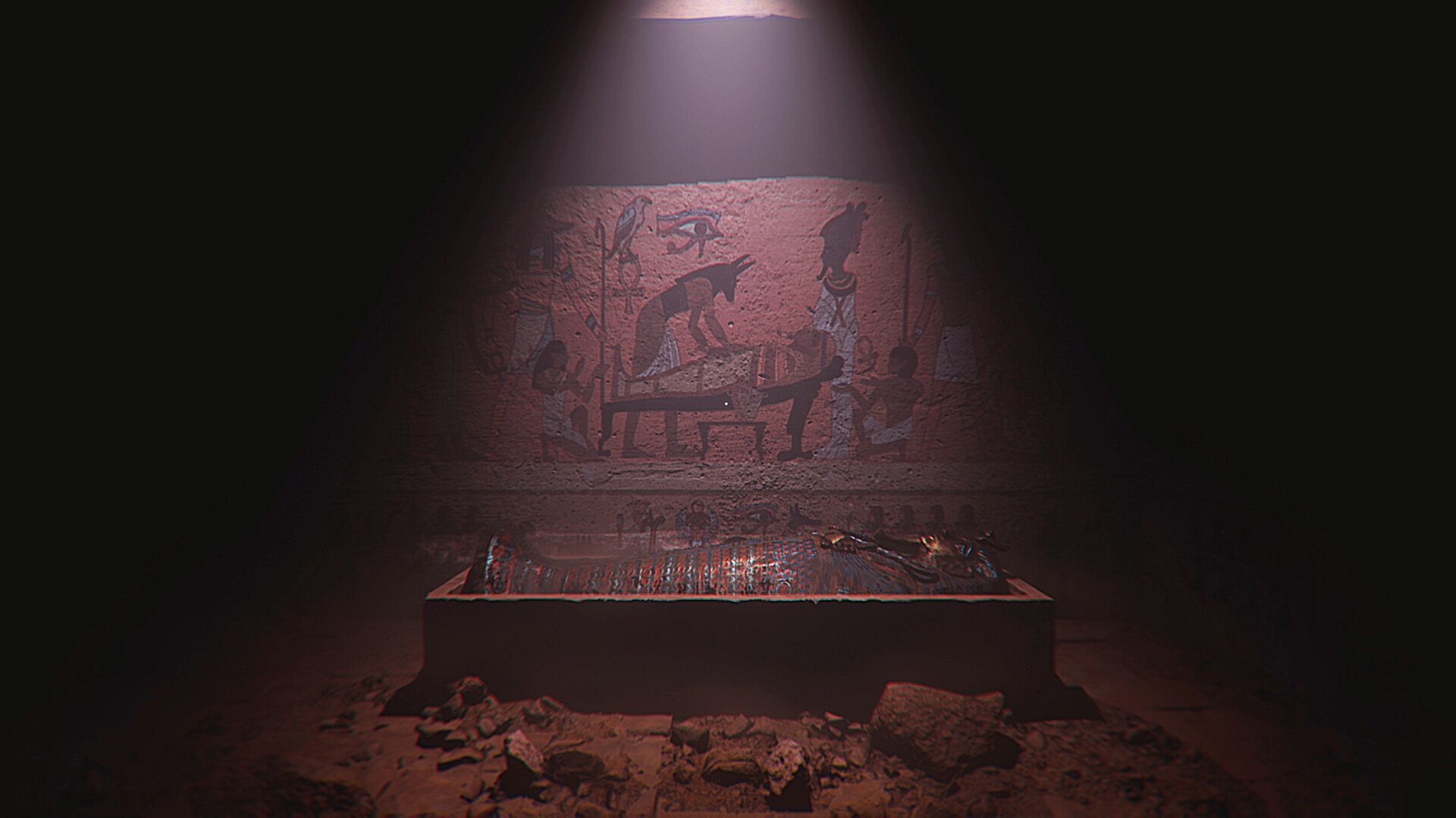
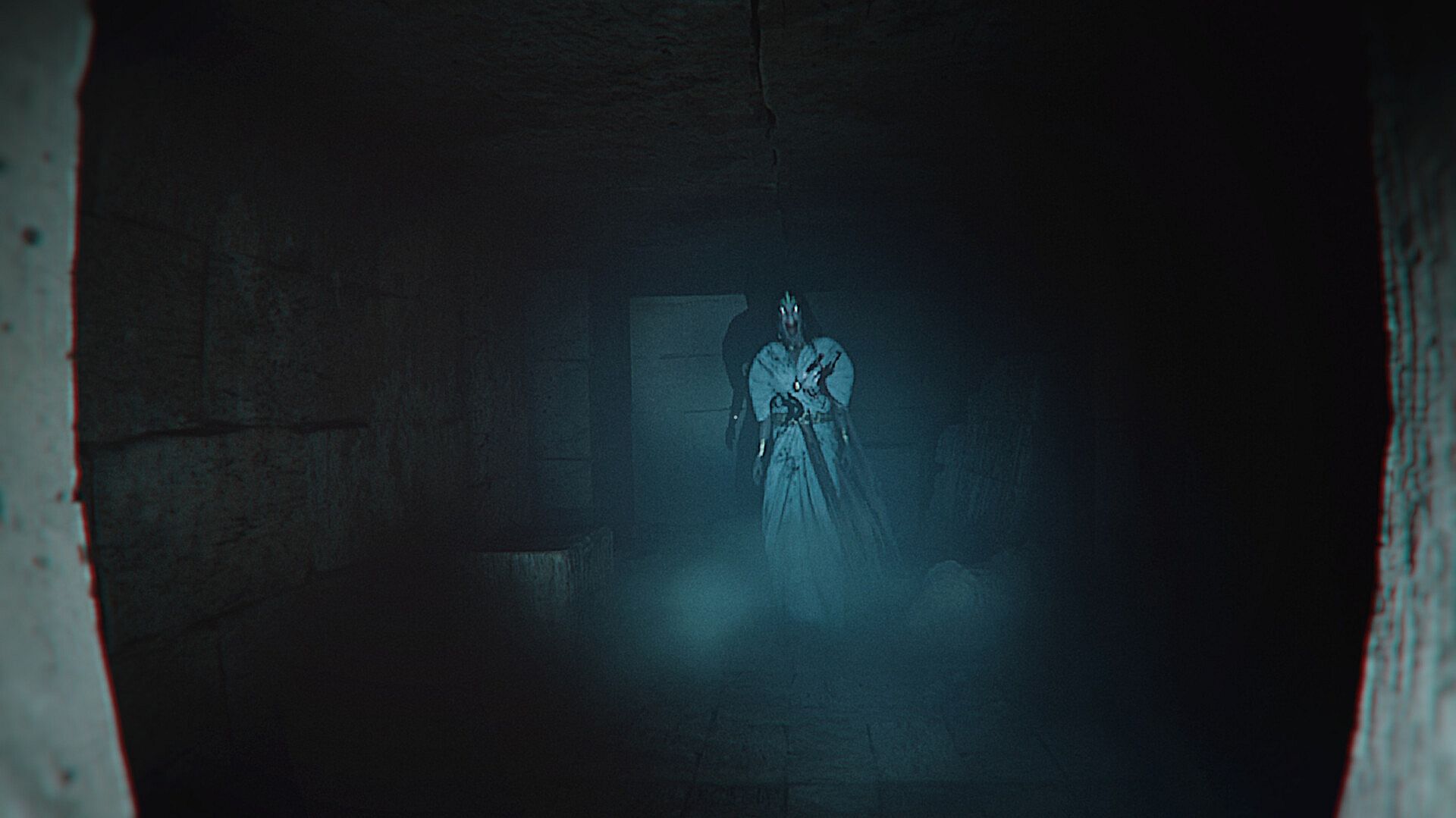
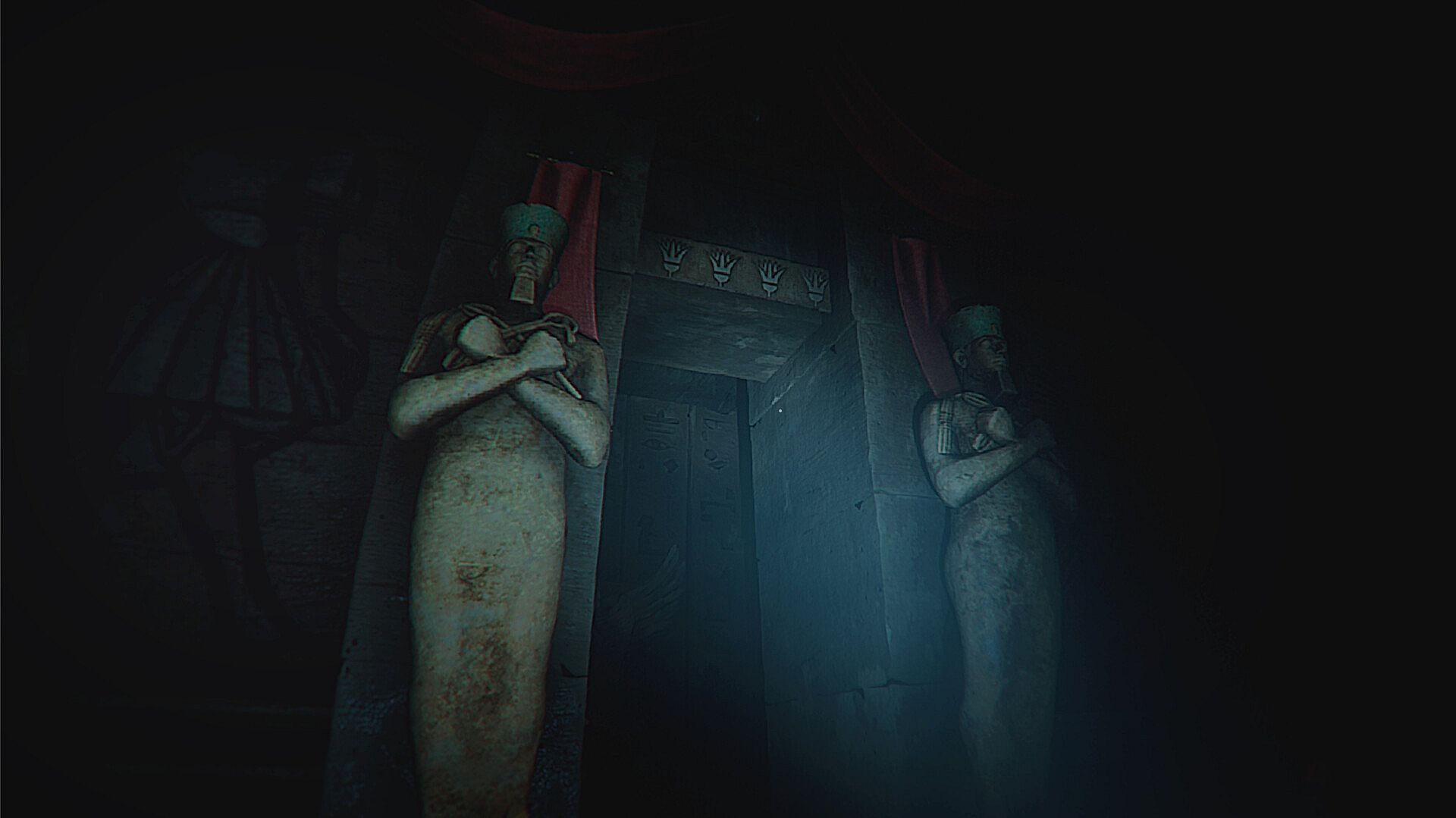
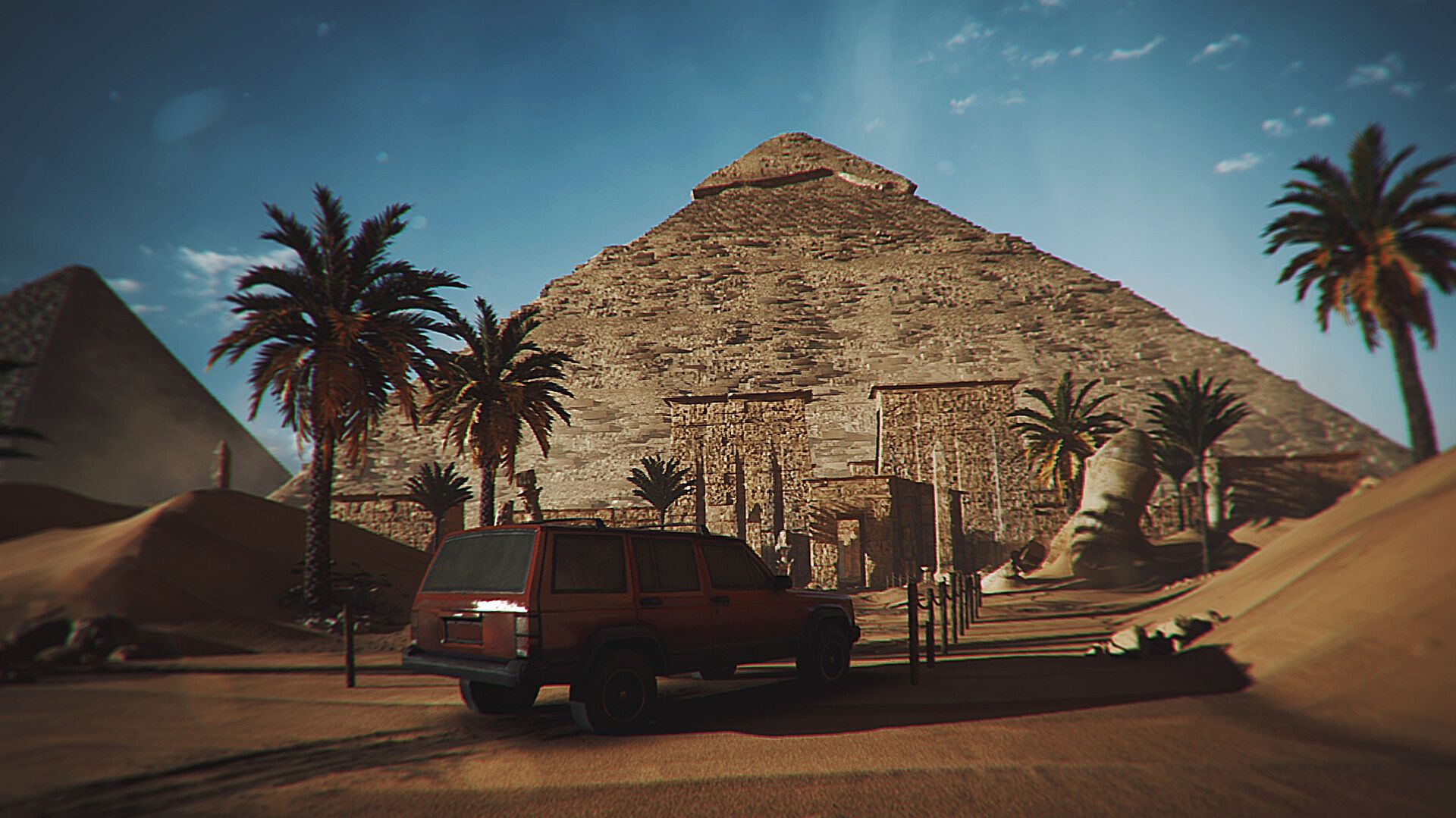
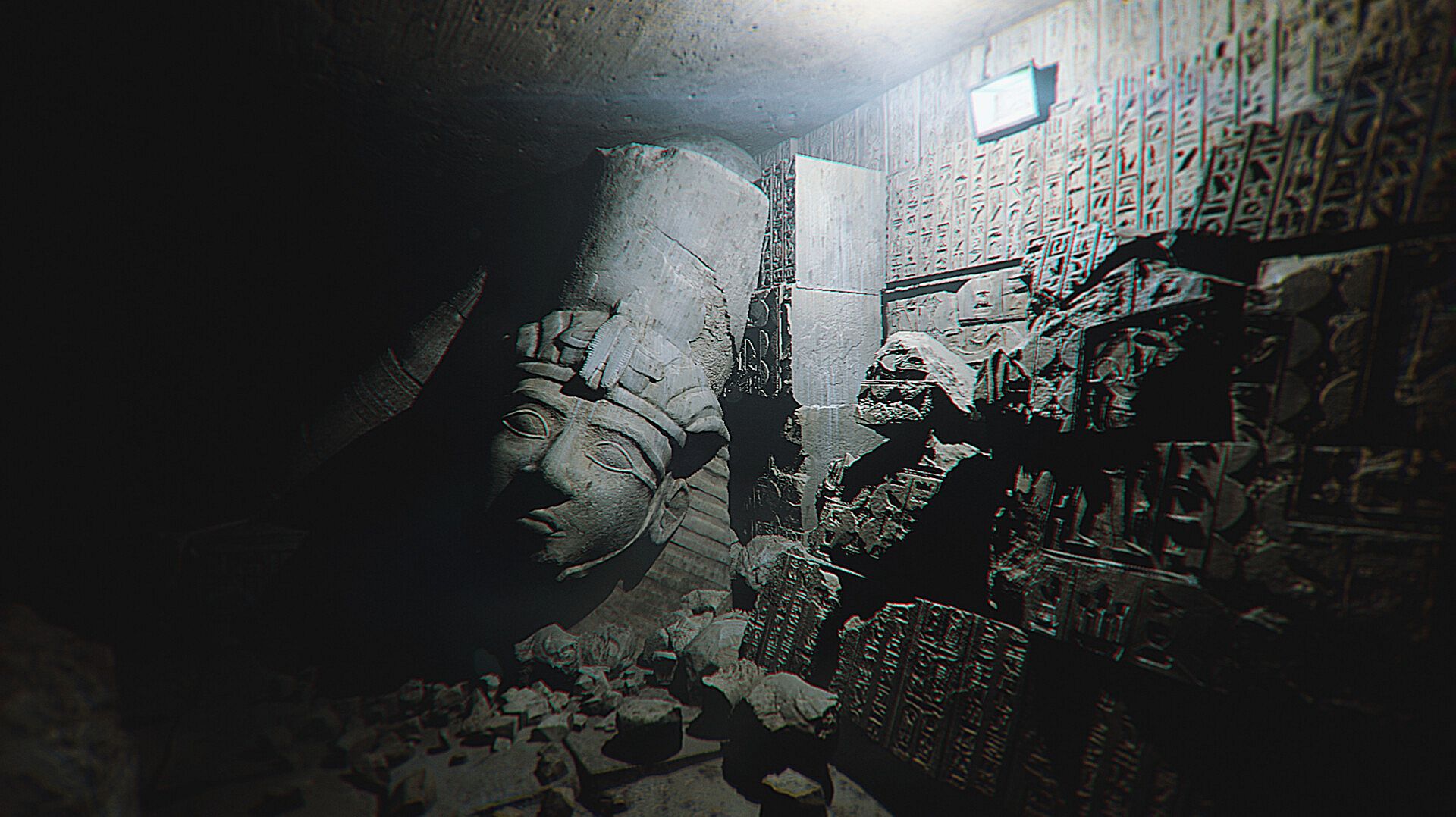
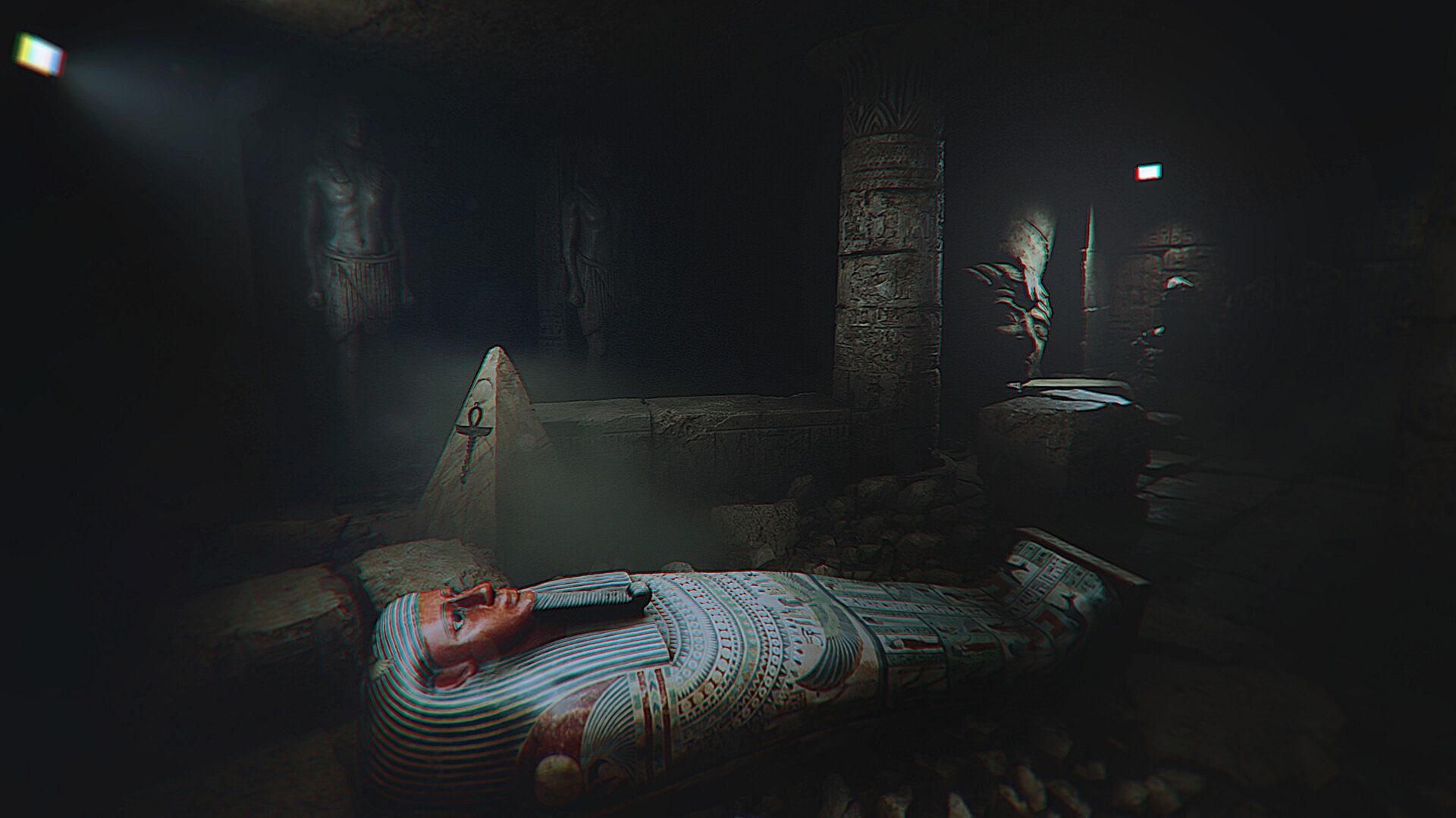
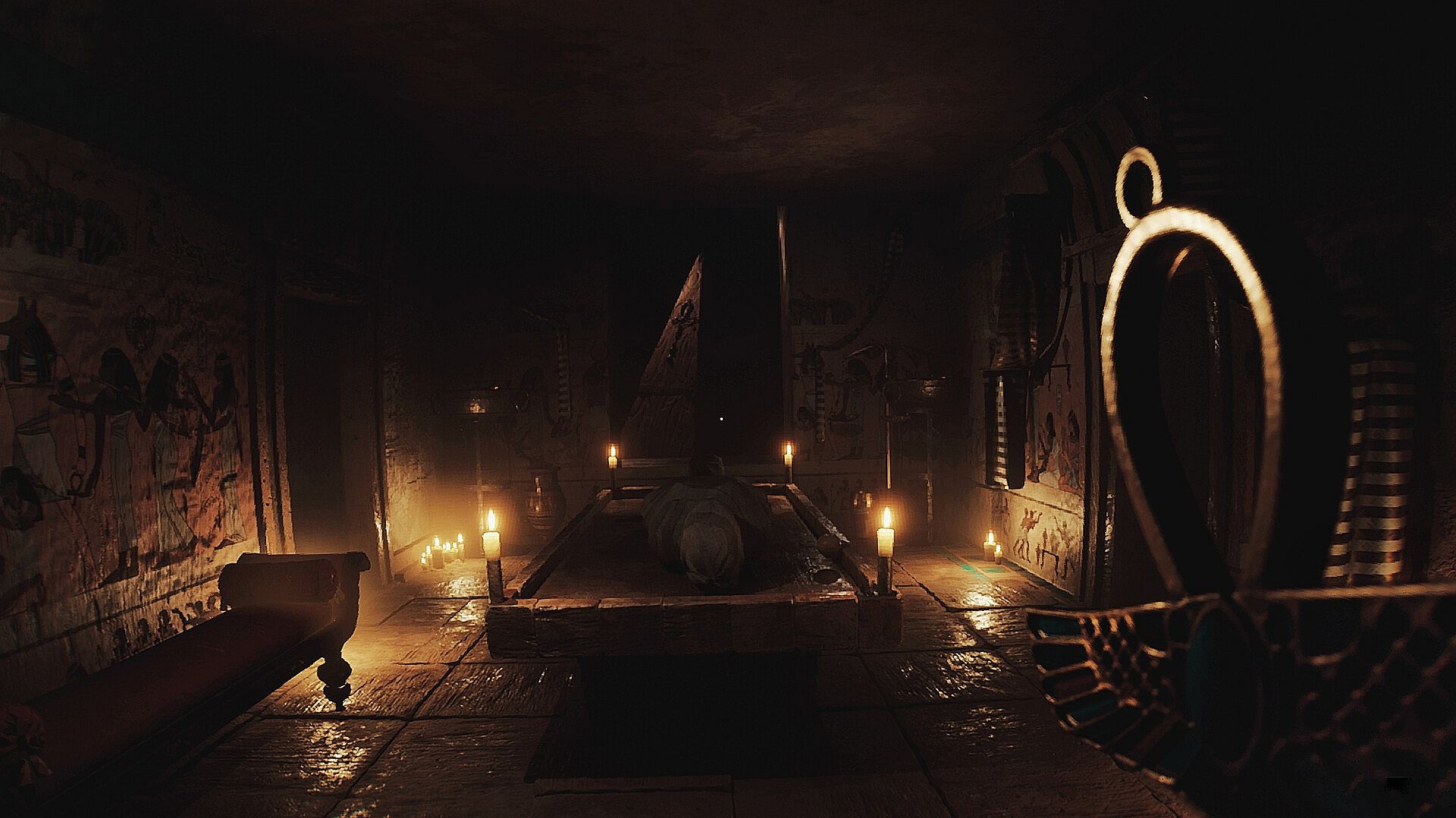
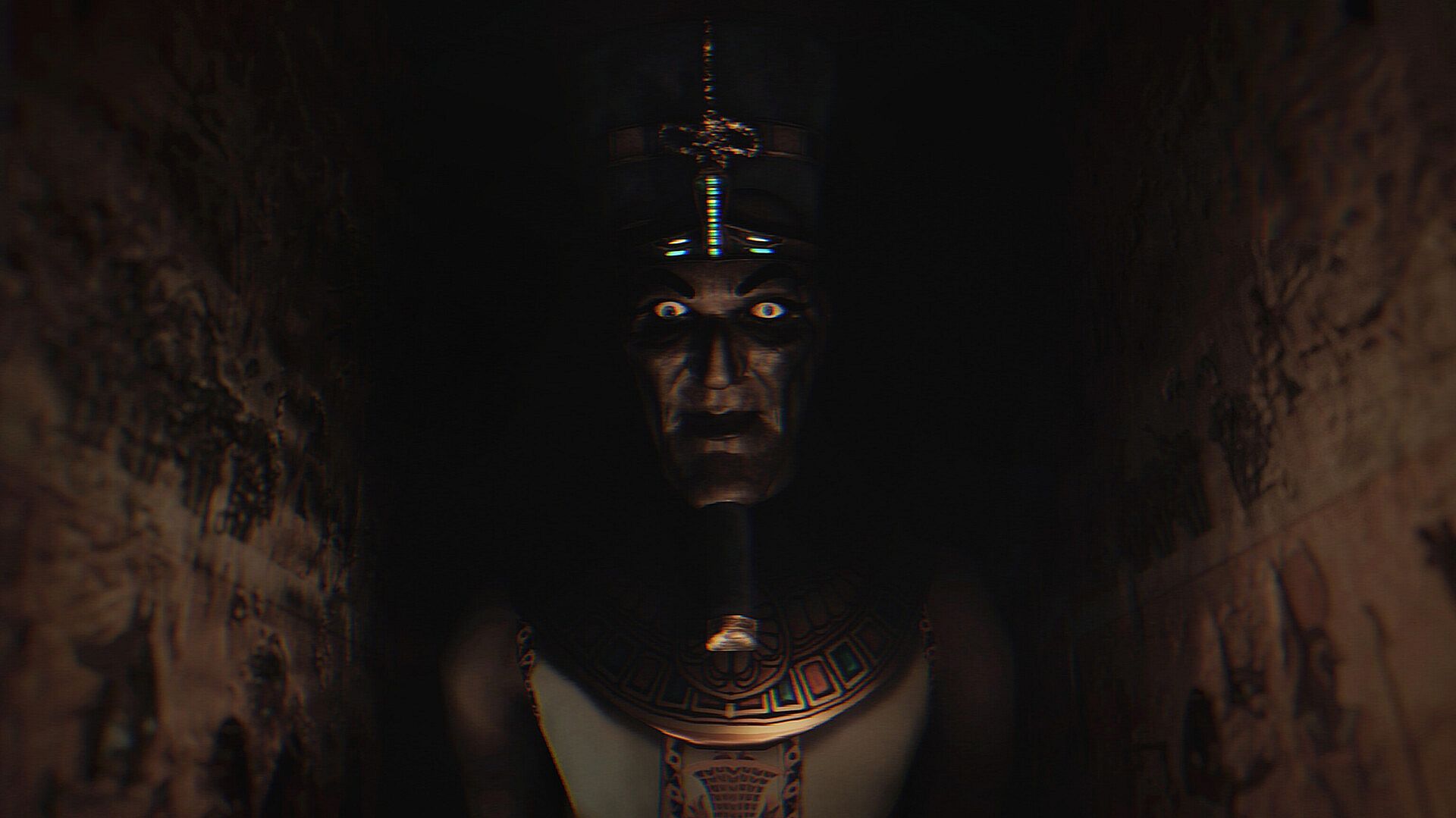
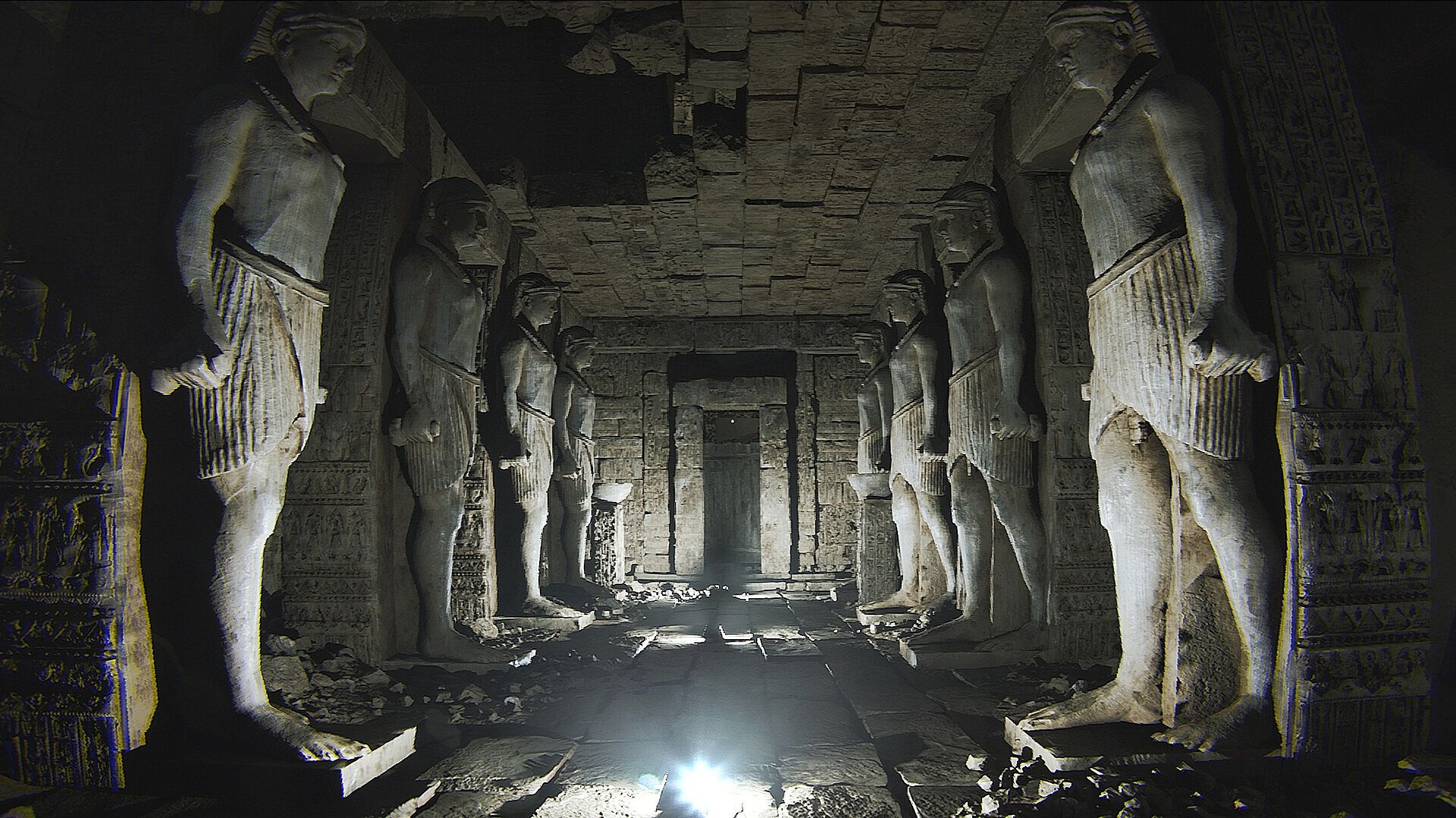
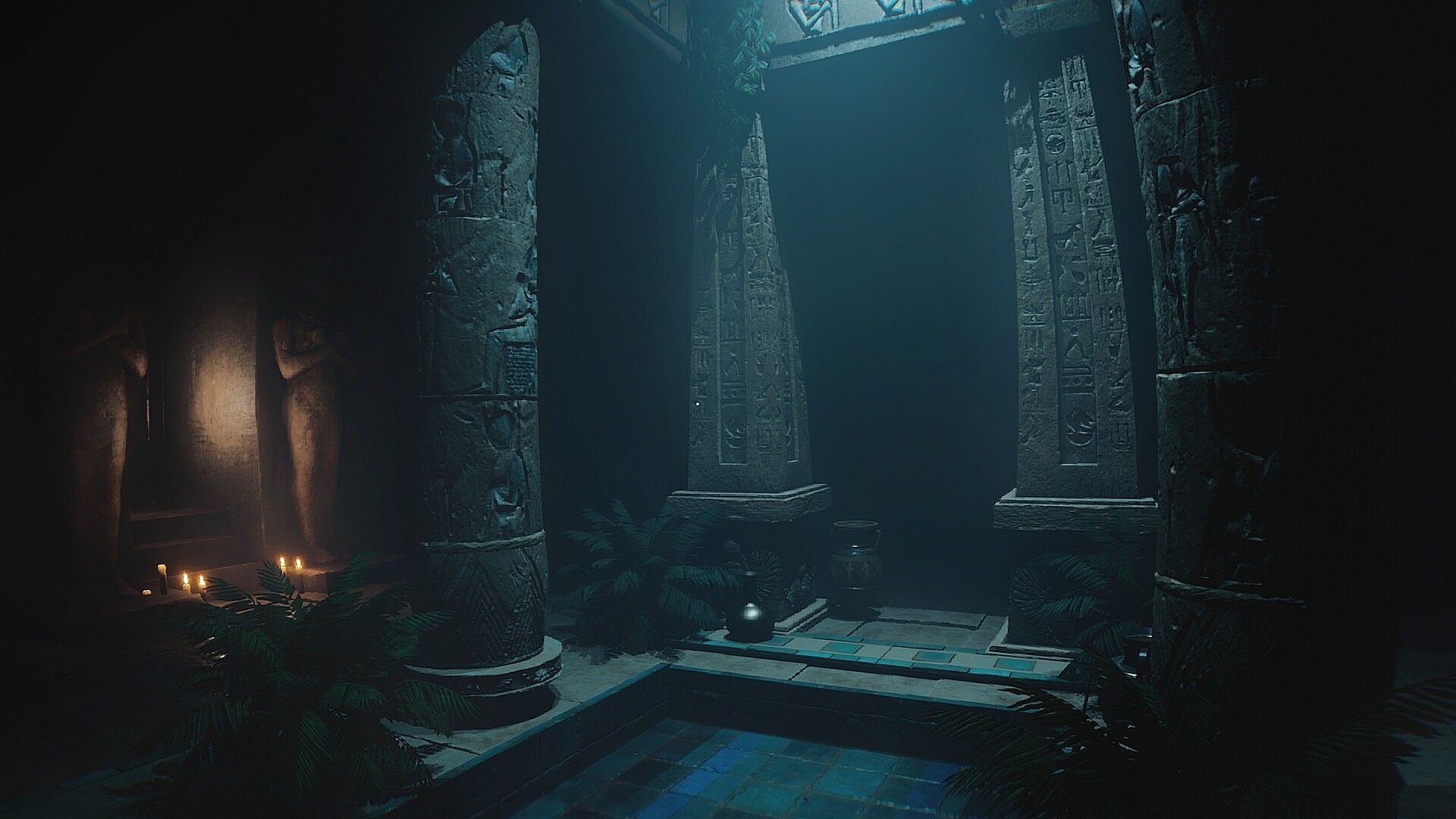
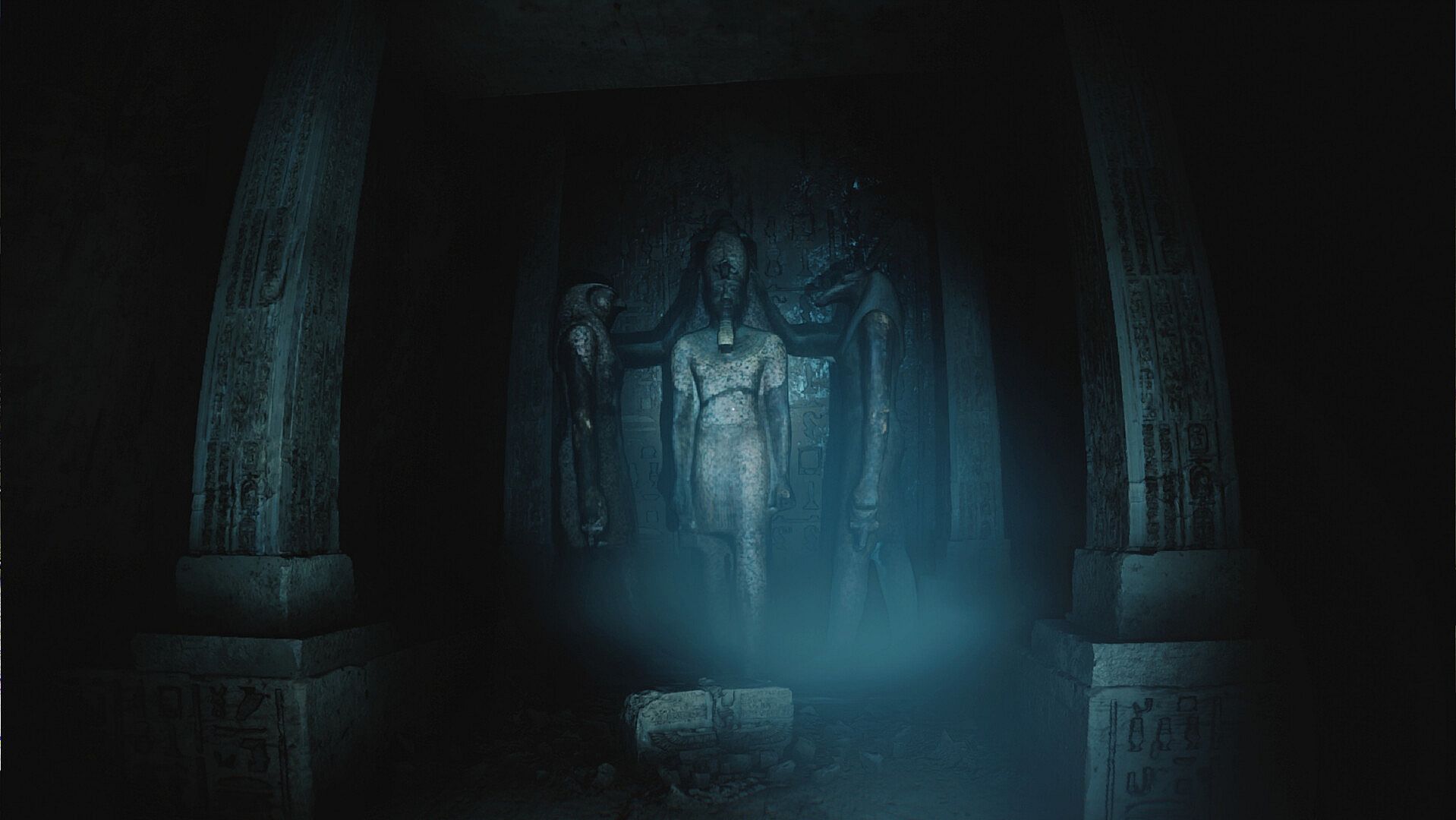
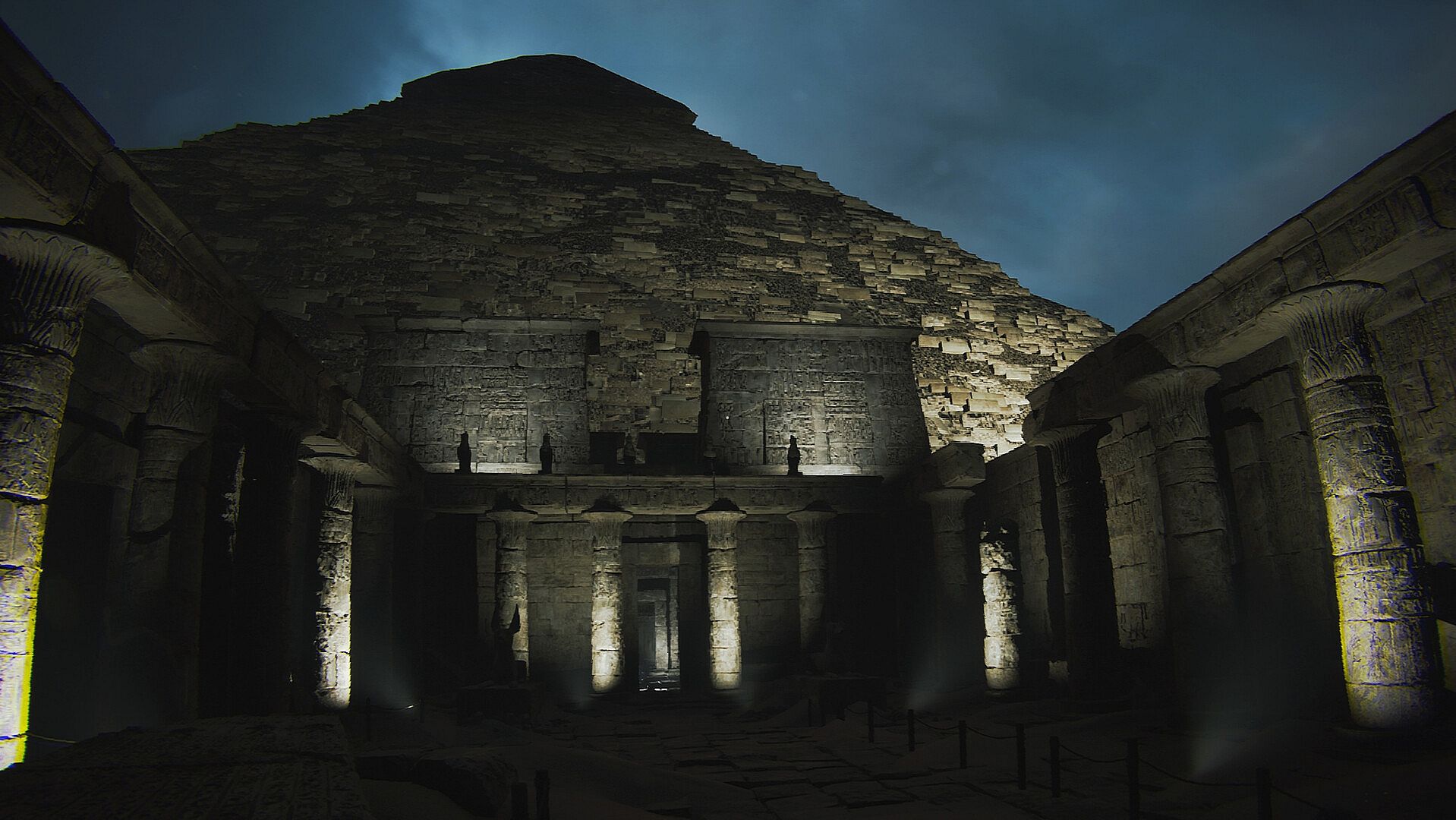
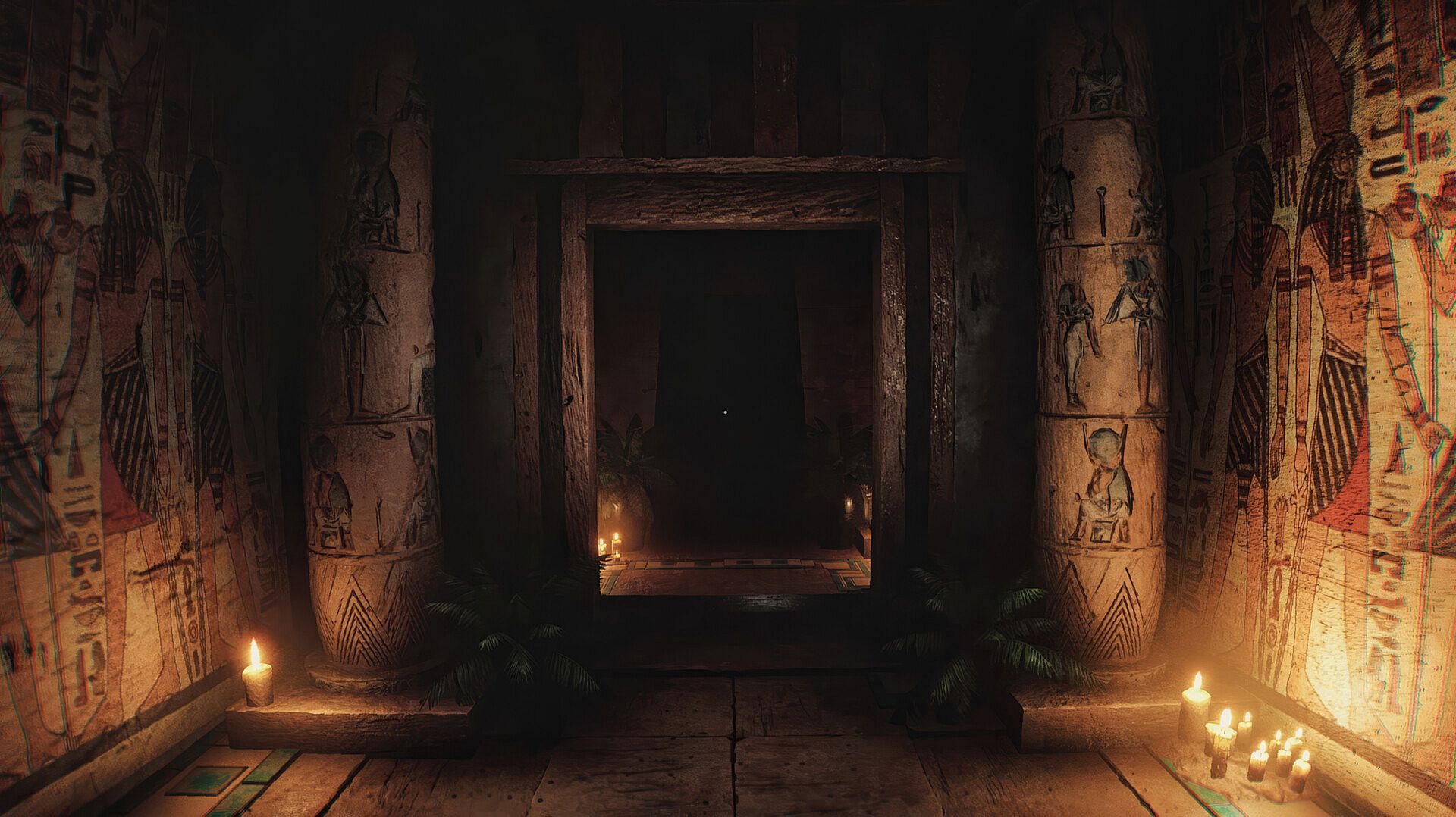
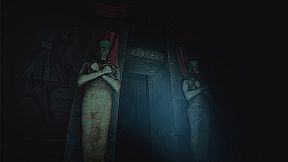
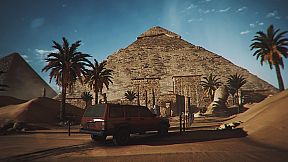
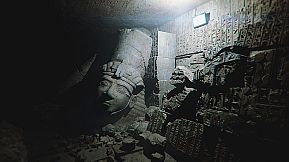
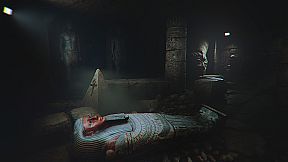
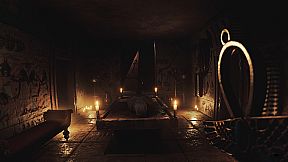
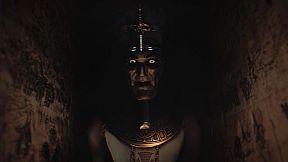
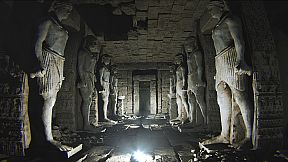
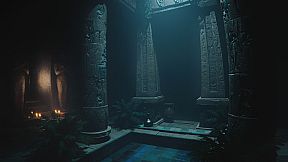
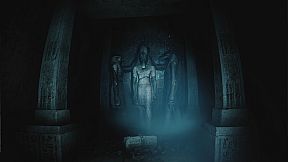
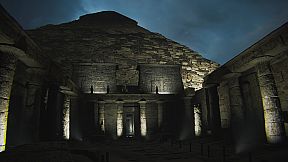
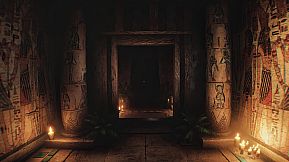
Amenti to przygodowa gra grozy z perspektywy pierwszej osoby, której akcja rozgrywa się w głębi starożytnego egipskiego grobowca. Wcielasz się w historyka i fotografa, który trafia do niedawno odkrytego miejsca pochówku faraona Rudamona, by zbadać legendy o pozaziemskich powiązaniach z początkami cywilizacji egipskiej. Główny nacisk położono na eksplorację, badanie artefaktów oraz unikalny system fotografii, który stopniowo ujawnia nadprzyrodzone zagrożenia.
Rozgrywka
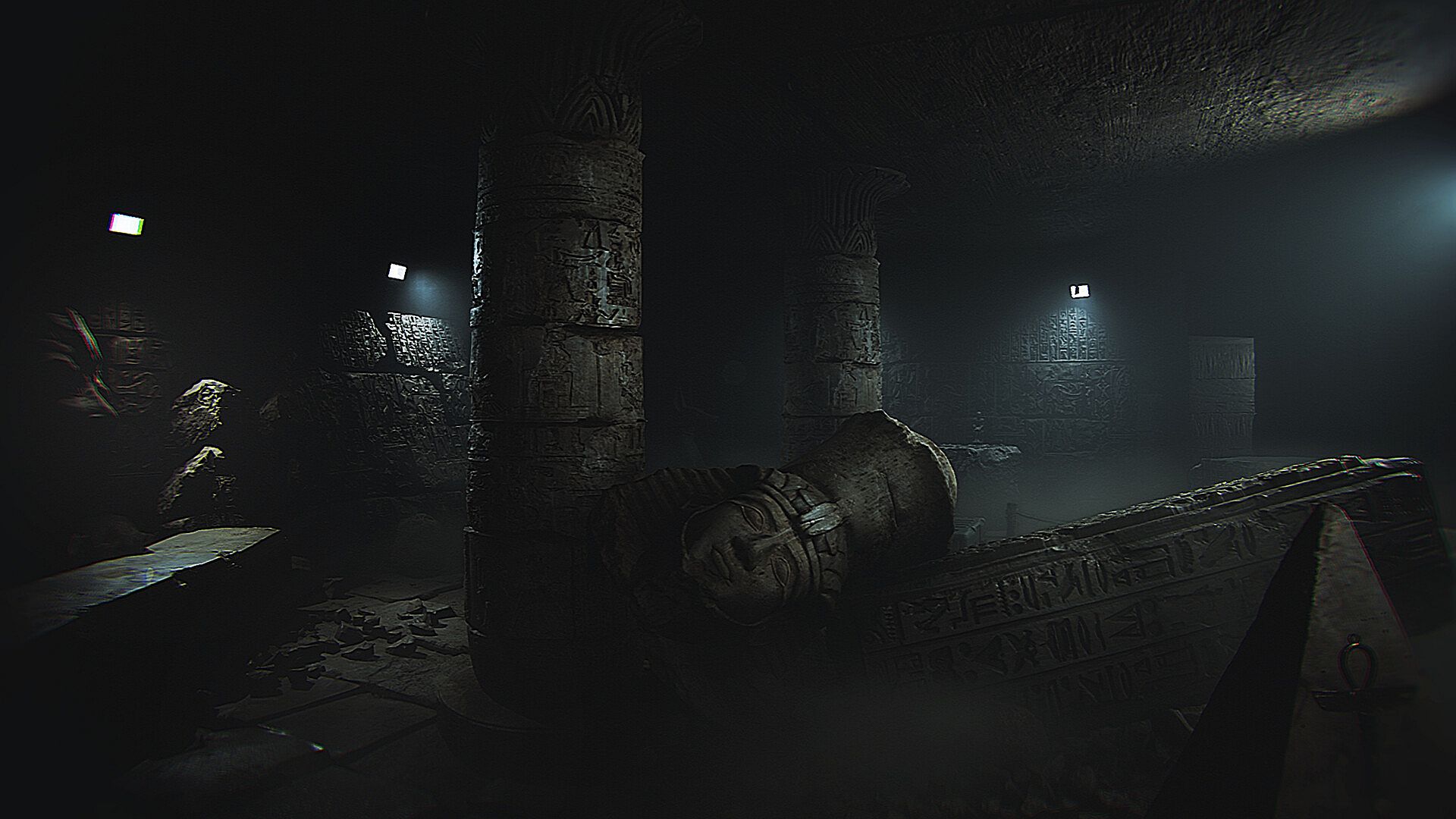
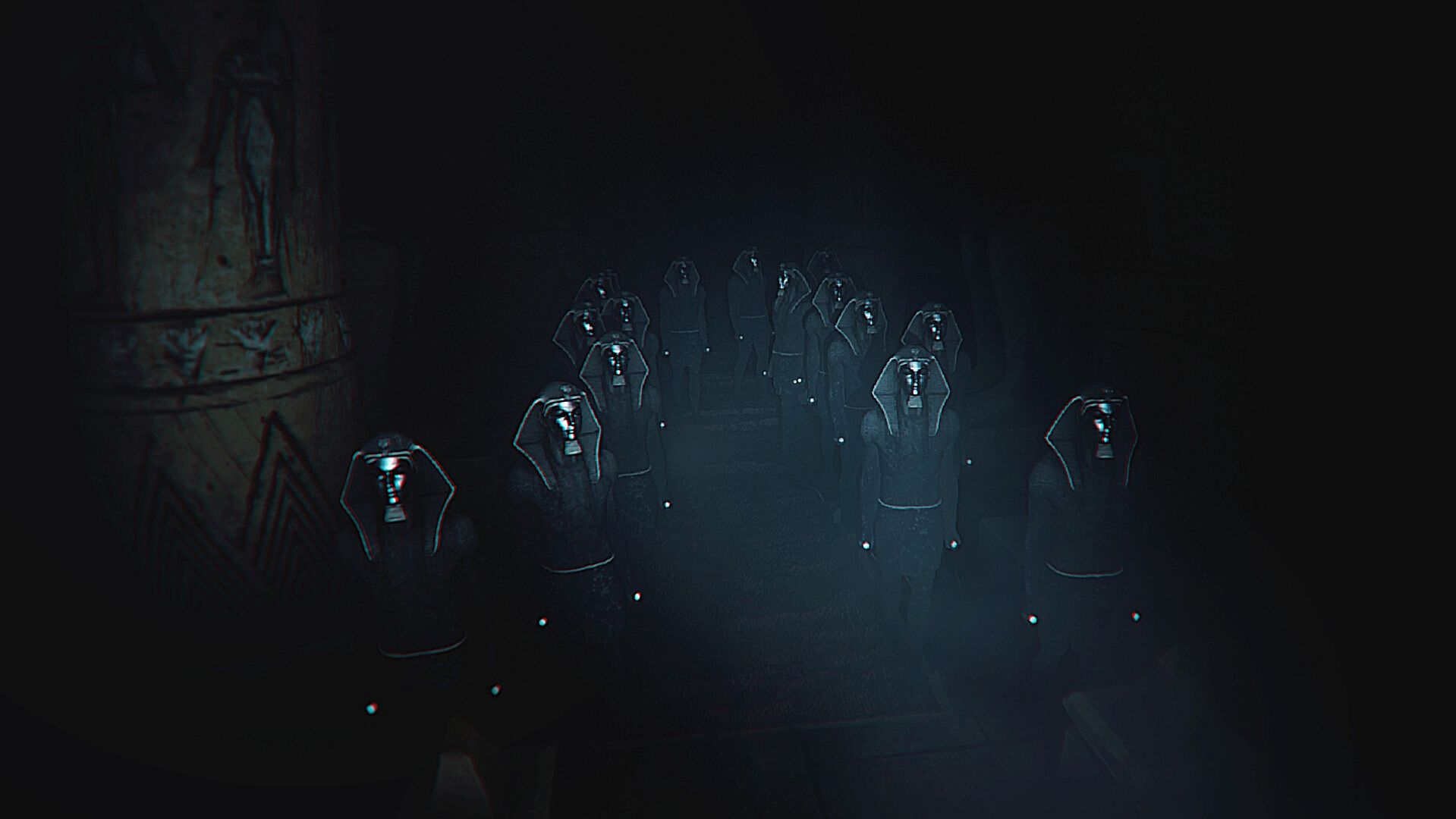
Podstawę mechaniki stanowi przemierzanie wąskich, słabo oświetlonych korytarzy głęboko pod ziemią i dokumentowanie otoczenia za pomocą aparatu. Gracz analizuje relikty oraz inskrypcje rozsiane po całym kompleksie, a mechanika fotografii pozwala uchwycić detale, które początkowo wyglądają jak drobne anomalie na wywołanych zdjęciach. Z czasem te uchwycone elementy zaczynają pojawiać się w rzeczywistości, zmieniając spokojne śledztwo w bezpośrednią konfrontację z niepokojącymi siłami. Poruszanie się wymaga ostrożnego tempa w ciasnych przestrzeniach, a okazjonalne, proste zagadki polegają na interakcji z elementami grobowca. Gra buduje napięcie przede wszystkim za pomocą warstwy dźwiękowej i zmian w otoczeniu, rezygnując z walki i zarządzania zasobami.
Tryby gry
Amenti to wyłącznie gra jednoosobowa - bez elementów multiplayer ani alternatywnych trybów. Cała historia rozgrywa się w jednej, nieprzerwanej kampanii, która prowadzi gracza przez kolejne poziomy grobowca. Nie ma możliwości wyboru poziomu trudności, opcji kooperacji ani elementów rywalizacji - wszystko skupia się na samotnej wędrówce po przeklętym miejscu.
Fabuła i świat
Historia czerpie z historycznych tajemnic wokół piramid oraz mitycznego królestwa Amenti. W miarę jak bohater schodzi pięćdziesiąt metrów pod ziemię, ujawniają się powiązania między duchem faraona, jego rodziną królewską a możliwymi wpływami z innego świata. Notatki i artefakty dostarczają kolejnych informacji o budowie grobowca i konsekwencjach zakłócenia spokoju jego mieszkańców. Akcja pozostaje ograniczona do podziemnych korytarzy i komnat, podkreślając poczucie izolacji oraz ciężar starożytnych sekretów, bez wychodzenia na powierzchnię czy wprowadzania wielu linii czasowych.
Oprawa wizualna i atmosfera
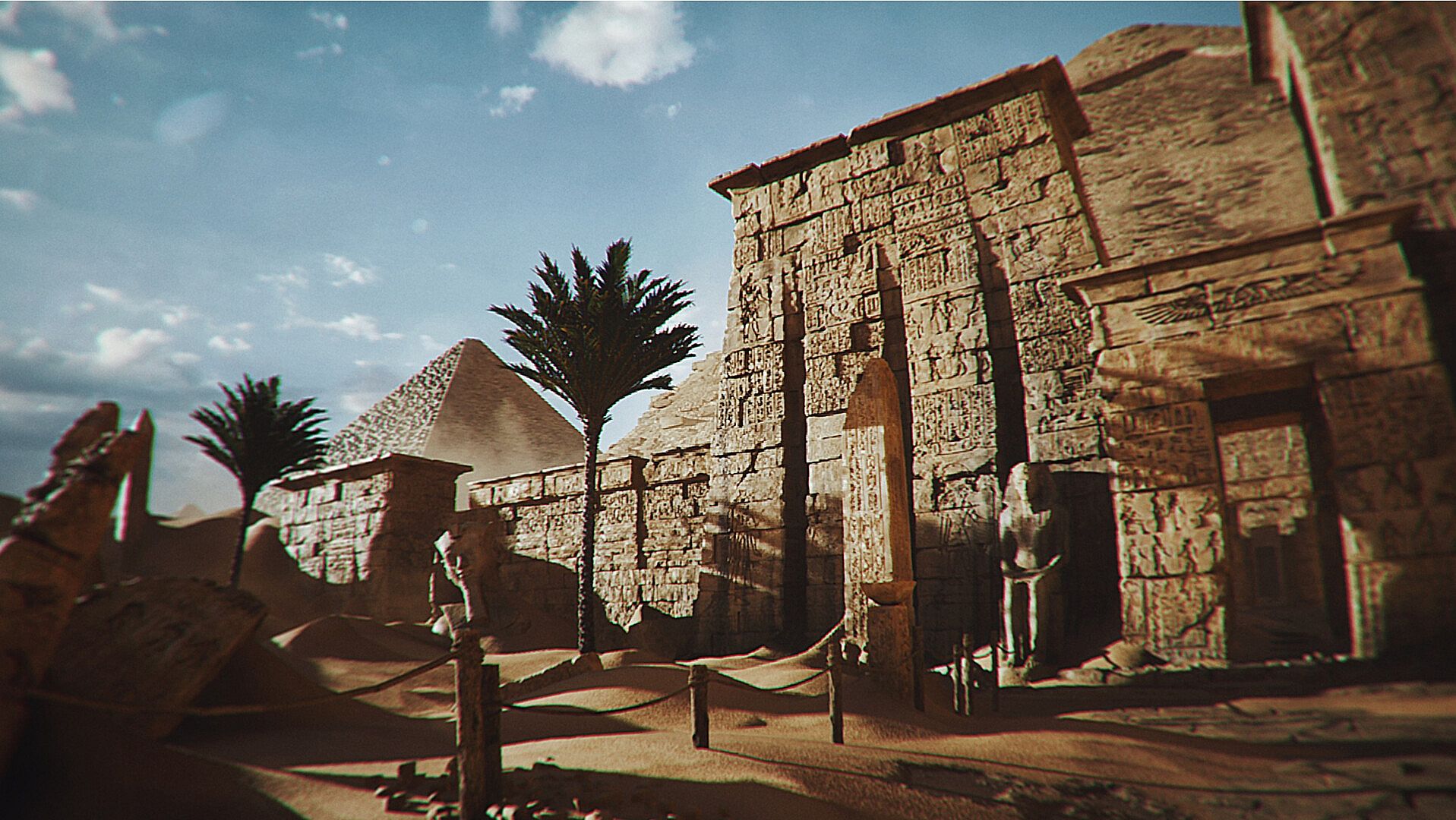
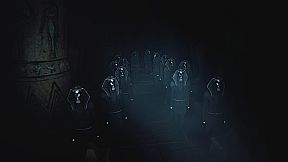
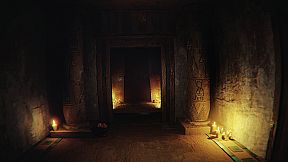
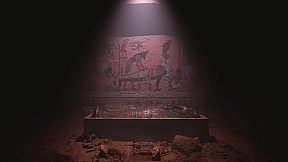
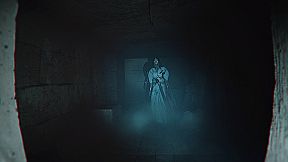
Realistyczne renderowanie 3D oddaje fakturę kamienia, migotanie źródeł światła oraz unoszący się w powietrzu pył w budowli liczącej kilka tysięcy lat. Wysokiej jakości dźwięk przestrzenny podkreśla odległe echa, przesuwające się kamienie i nagłe odgłosy budujące niepokój. System fotografii pełni podwójną rolę - służy zarówno do dokumentacji, jak i do ujawniania elementów grozy, pozwalając przeglądać zdjęcia w poszukiwaniu wskazówek, podczas gdy samo otoczenie zaczyna reagować. Wszystkie te elementy tworzą spójne poczucie grozy, które narasta równomiernie przez krótki czas rozgrywki.
Czy warto zagrać?
Opinie graczy na Steamie są w większości bardzo pozytywne - recenzenci chwalą przede wszystkim skuteczną atmosferę i dobrze wymierzone momenty strachu w zwartej formie. Gra przypadnie do gustu osobom, które szukają krótkich, skoncentrowanych horrorów opartych na eksploracji i subtelnych mechanikach, a nie na akcji czy długich kampaniach. Przy długości około godziny stanowi idealną propozycję na jedno posiedzenie, a element fotografii dodaje ciekawego wymiaru procesowi śledztwa. Osoby oczekujące intensywnego, długiego horroru lub rozbudowanych systemów mogą uznać doświadczenie za zbyt uproszczone, natomiast fani klimatycznych tytułów jednoosobowych docenią spójny ton i wysoką jakość wizualną. Gra jest dostępna jako samodzielny, kompletny tytuł bez dodatkowych sezonowych treści czy rozszerzeń wymaganych do poznania głównej historii.