






Another World: Guild Master I is a strategy game in early access on PC that centers on constructing spells through ordered combinations of base effects and verbs, then deploying a guild of customizable characters on missions where preparation and synergy determine outcomes.
Gameplay
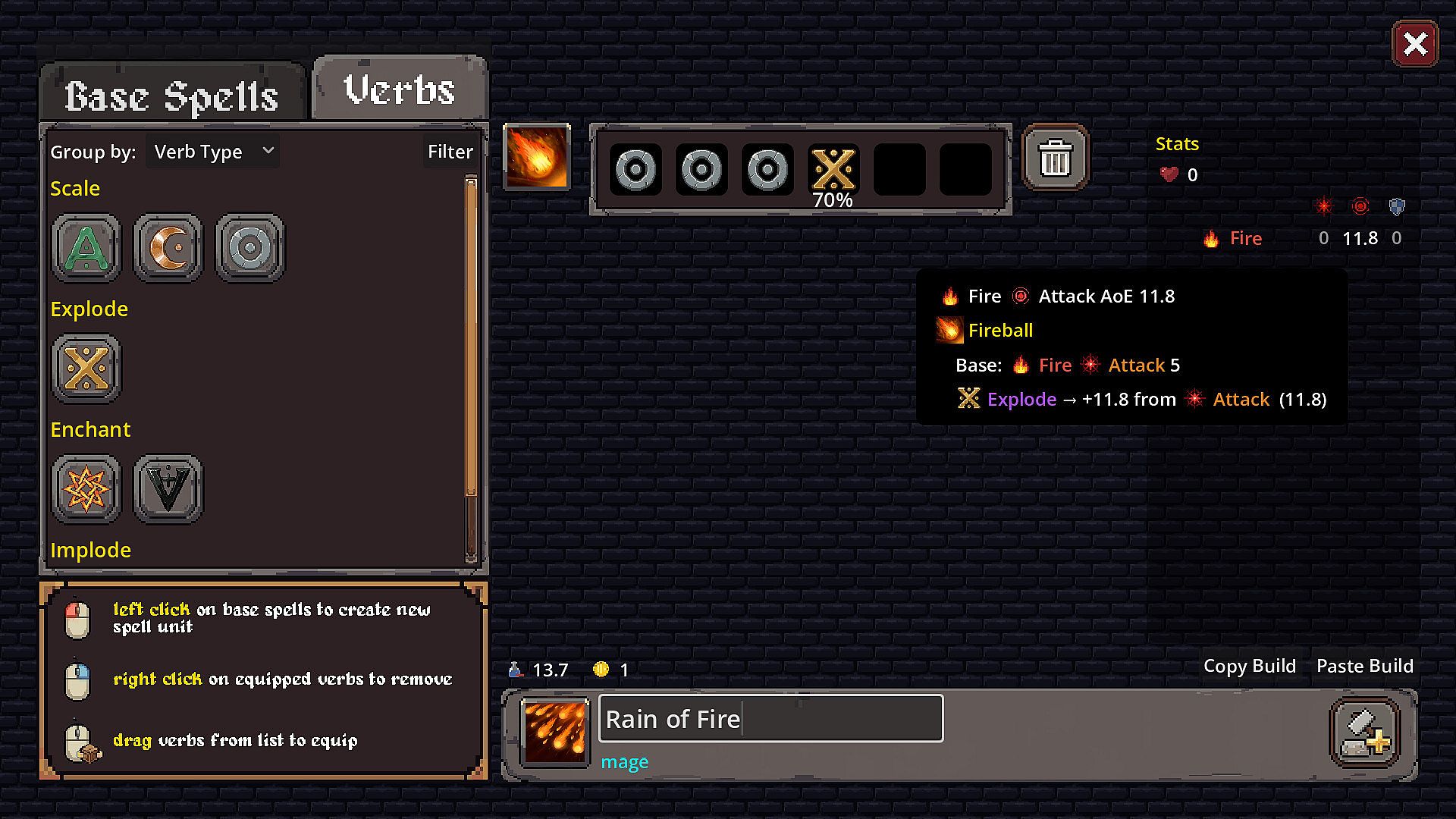
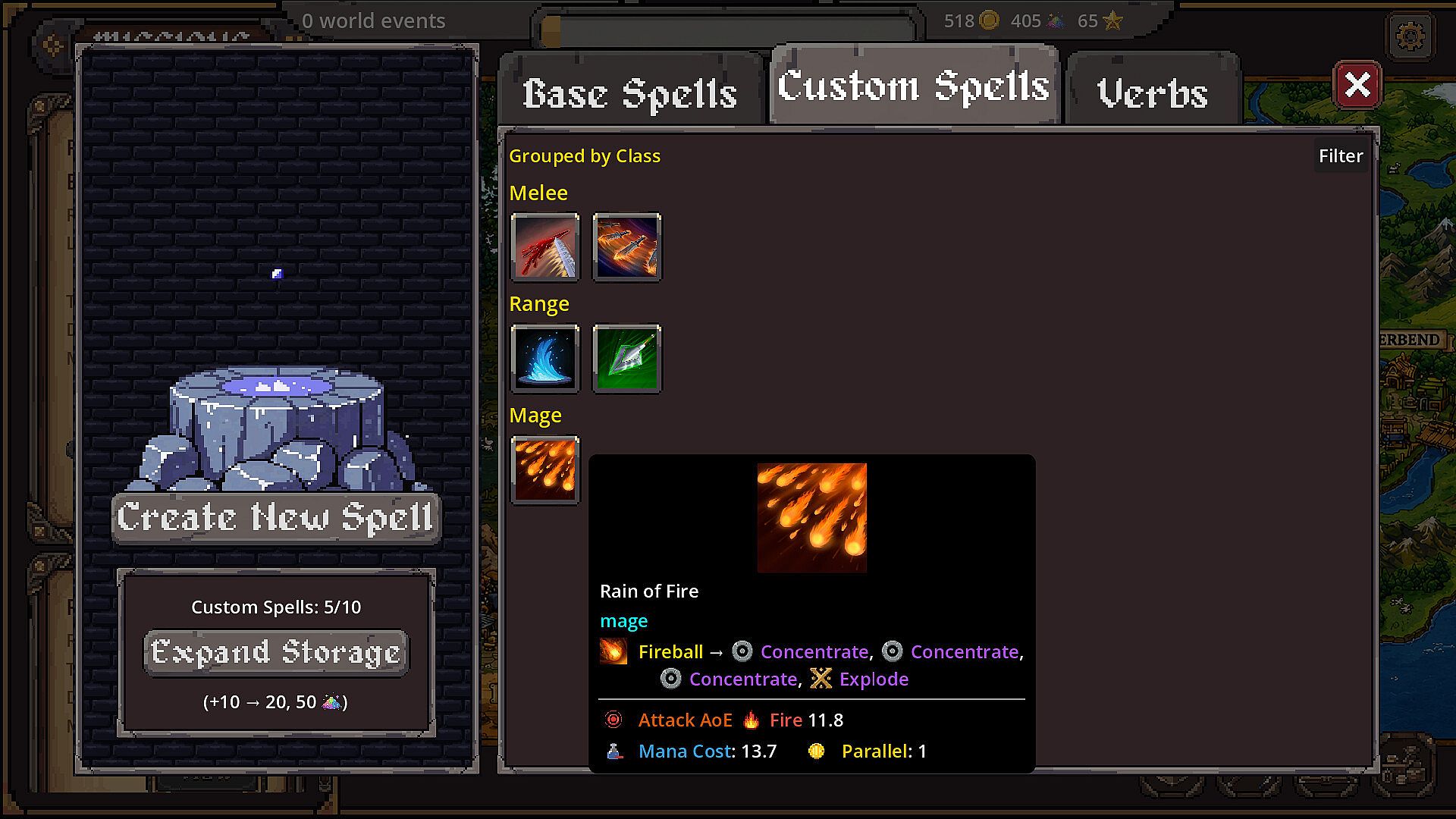
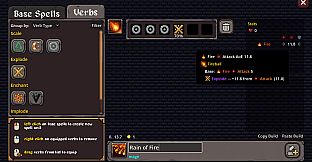
The core loop revolves around assembling spells from 15 base spells and 21 verbs. The sequence of components alters the final effect in meaningful ways, turning the same ingredients into distinct results depending on placement. A fireball followed by concentration and then explosion behaves differently from the reverse order, rewarding careful chain design over simple stacking.
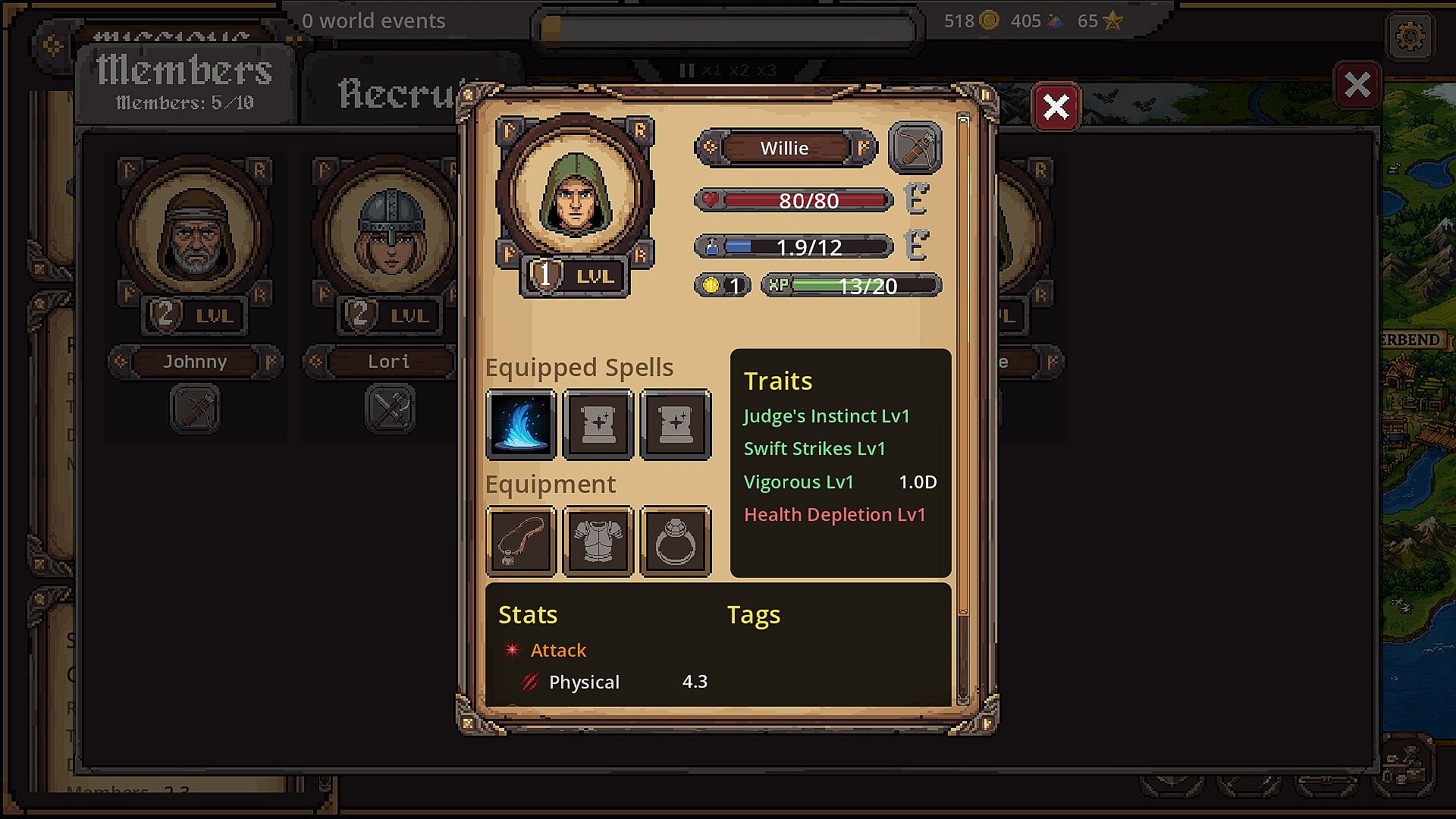
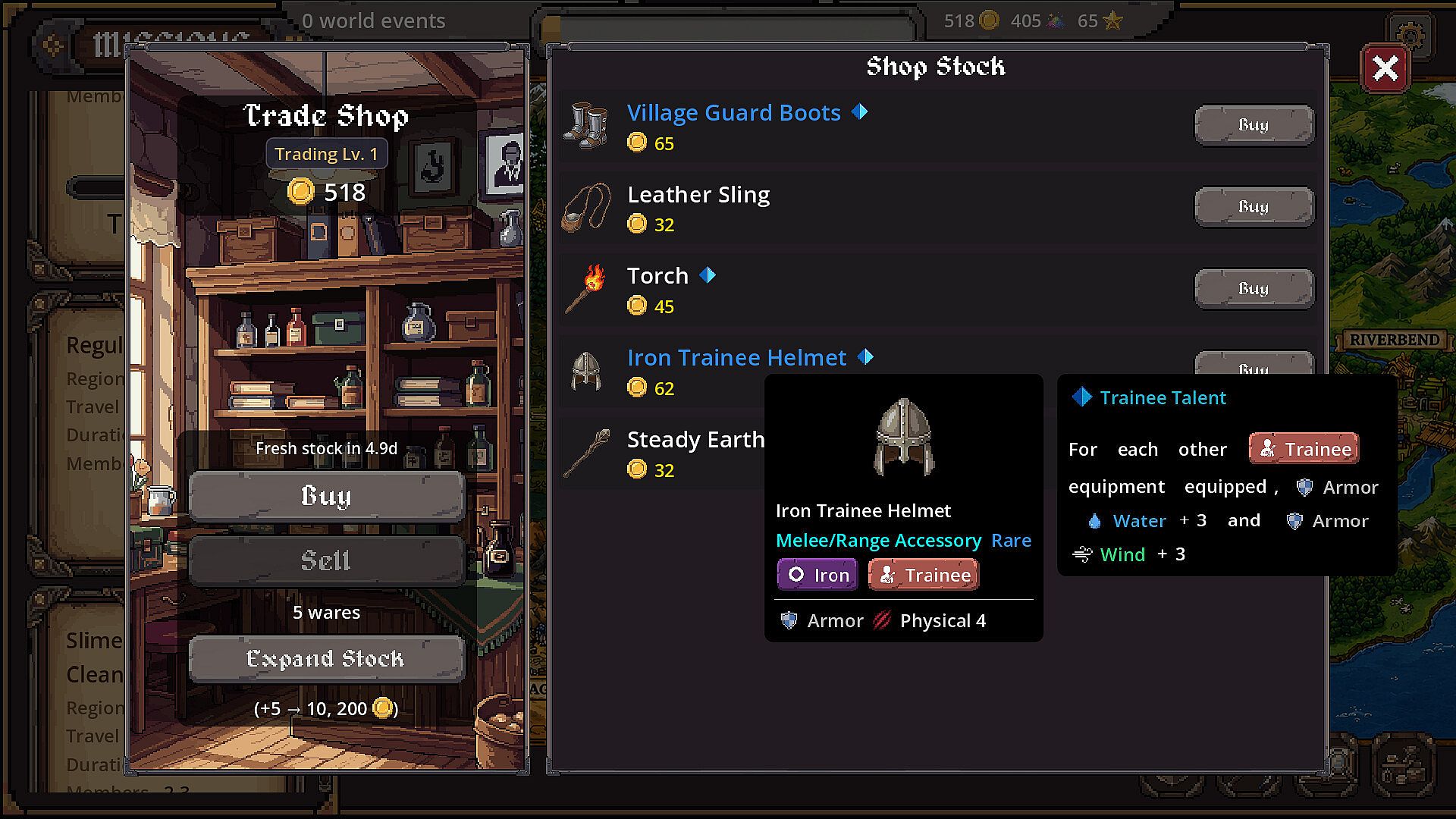
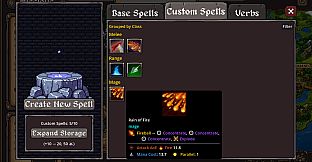
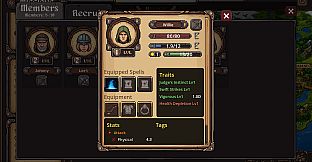
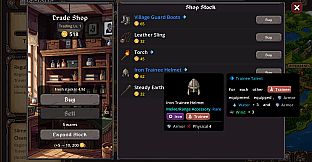
Three classes provide the foundation for guild members: melee, range, and mage. These characters receive equipment from a pool of more than 100 pieces that interact with spell tags, traits, and mission demands. Traits themselves carry conditions, durations, or regional restrictions that influence performance across different assignments.
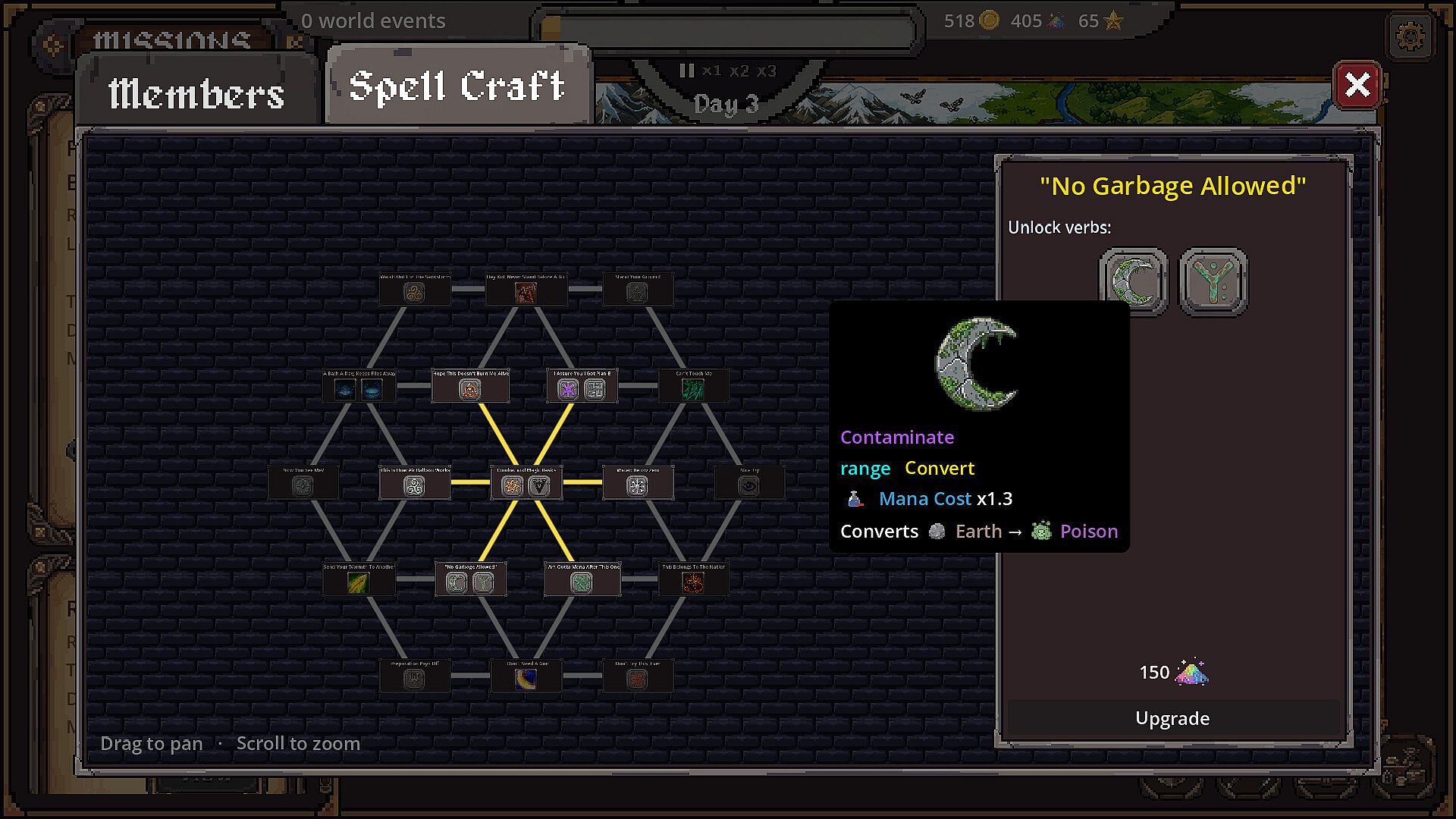
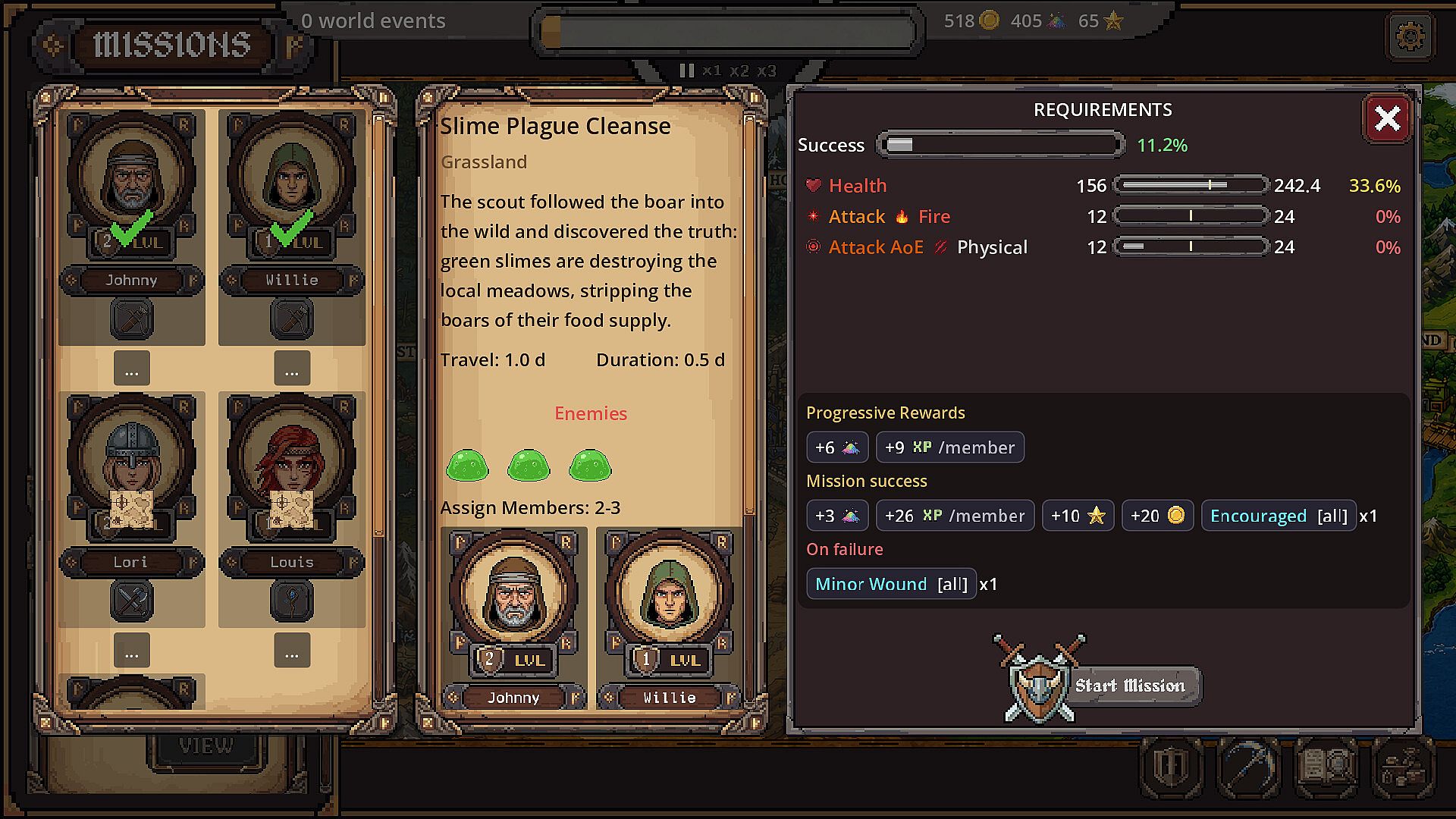
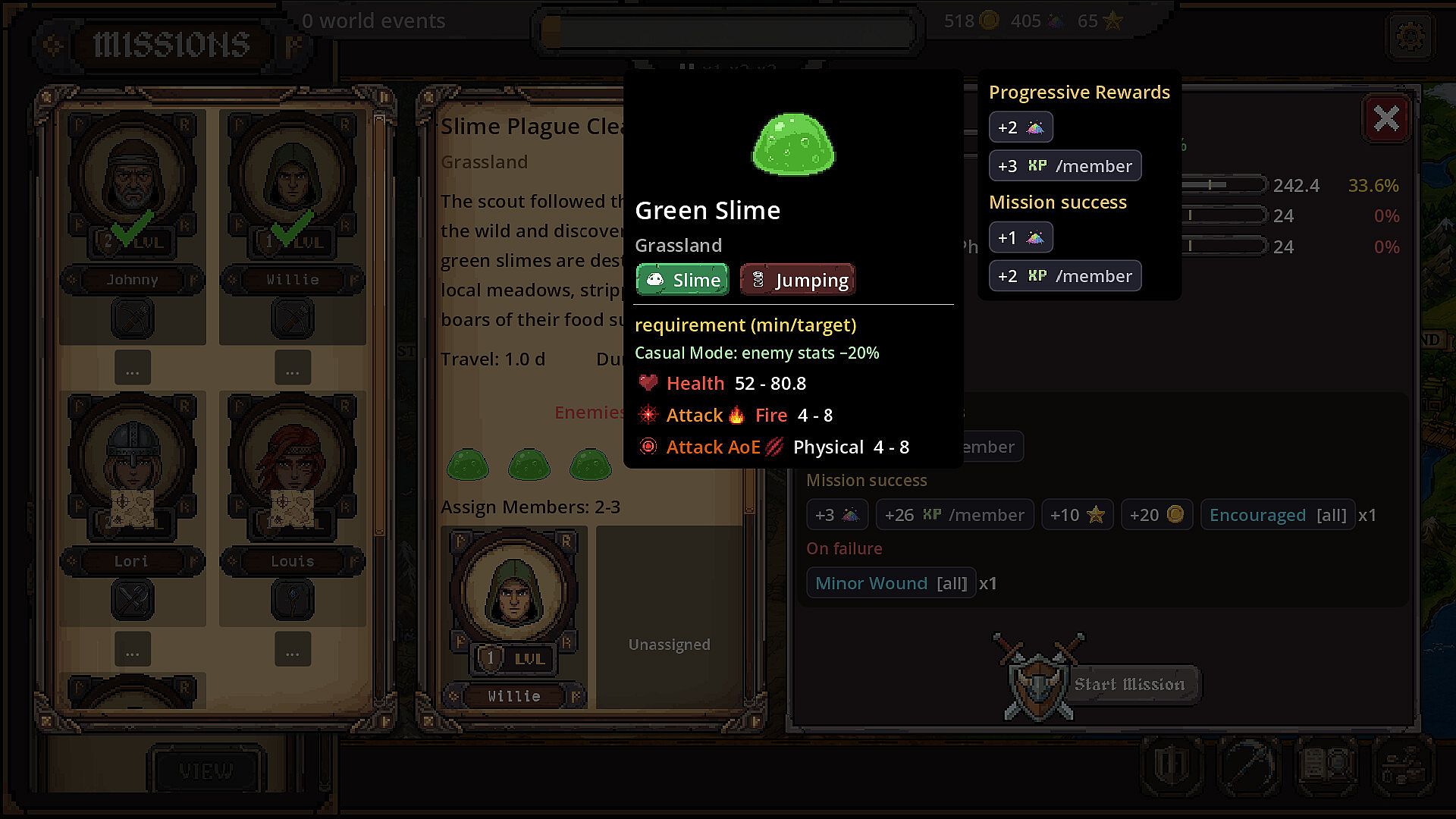
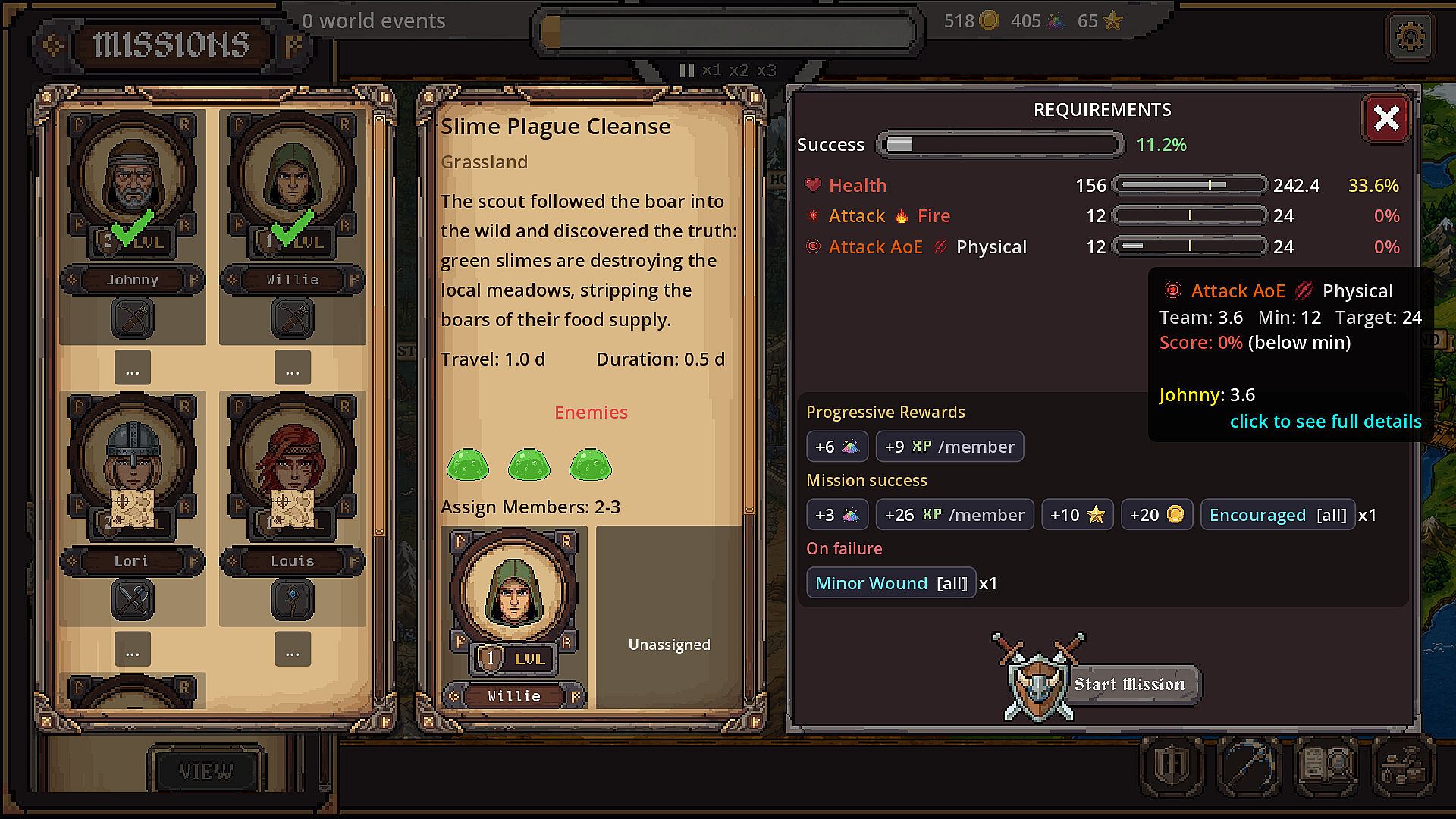
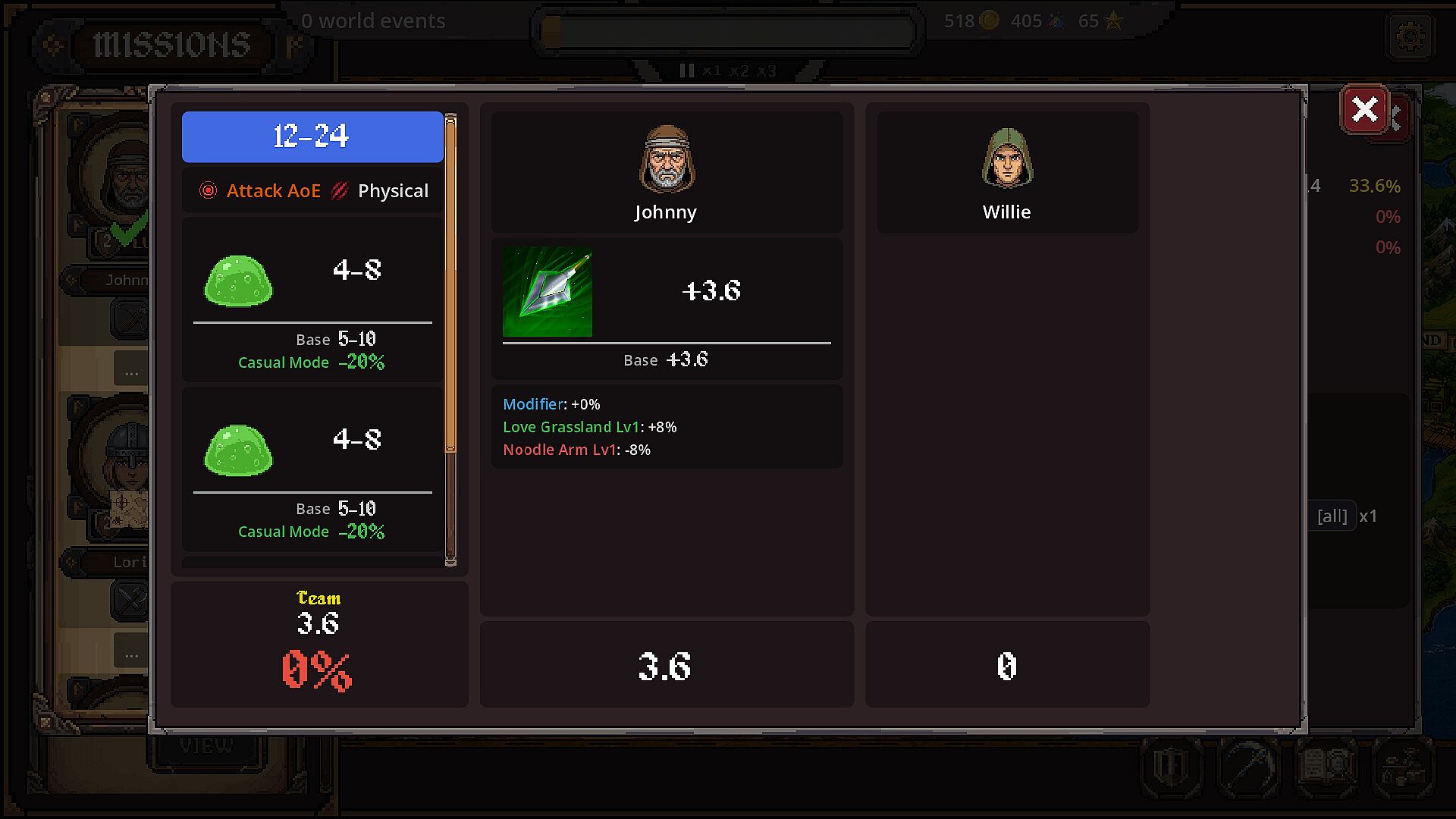
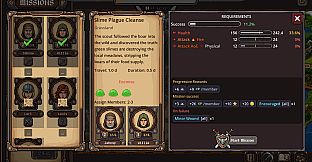
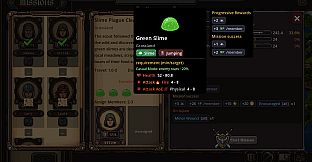
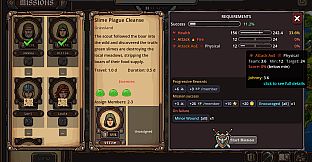
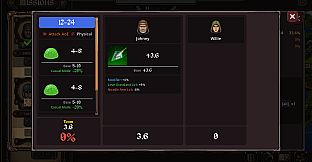
An 80-node research tree unlocks new base spells, verbs, and related systems. Progression here expands options rather than simply increasing numbers, allowing players to access previously unavailable mechanics as they advance. Missions display exact requirements for health, attack types, area effects, armor, and tags, along with a breakdown of how each team member and item contributes to the total score. Players can attempt missions below 100 percent preparation, accepting adjusted odds, and receive partial rewards even on failure.
Game Modes
Casual mode removes stricter penalties to let players experiment with the spell system and guild building without immediate setbacks. Challenge runs introduce randomized classes and use shareable seeds that recreate specific rule sets for repeated attempts or comparison with others.
These modes support different approaches to the same underlying mechanics. Casual play emphasizes learning verb interactions and gear synergies, while challenge runs test optimization under constraints.
Spell Construction and Research
Verb types include explode, which converts single-target attacks into area effects; convert, which swaps damage types; enchant, which applies mission-specific tags; and momentum, which scales based on position in the chain. Additional verbs follow the same principle of positional impact. New spells and verbs appear through the research tree, each introducing capabilities that were previously inaccessible.
Players mix and match freely once unlocked. The emphasis remains on order and context rather than raw quantity, so experimentation produces varied mission results even with limited resources.
Customization and Sharing
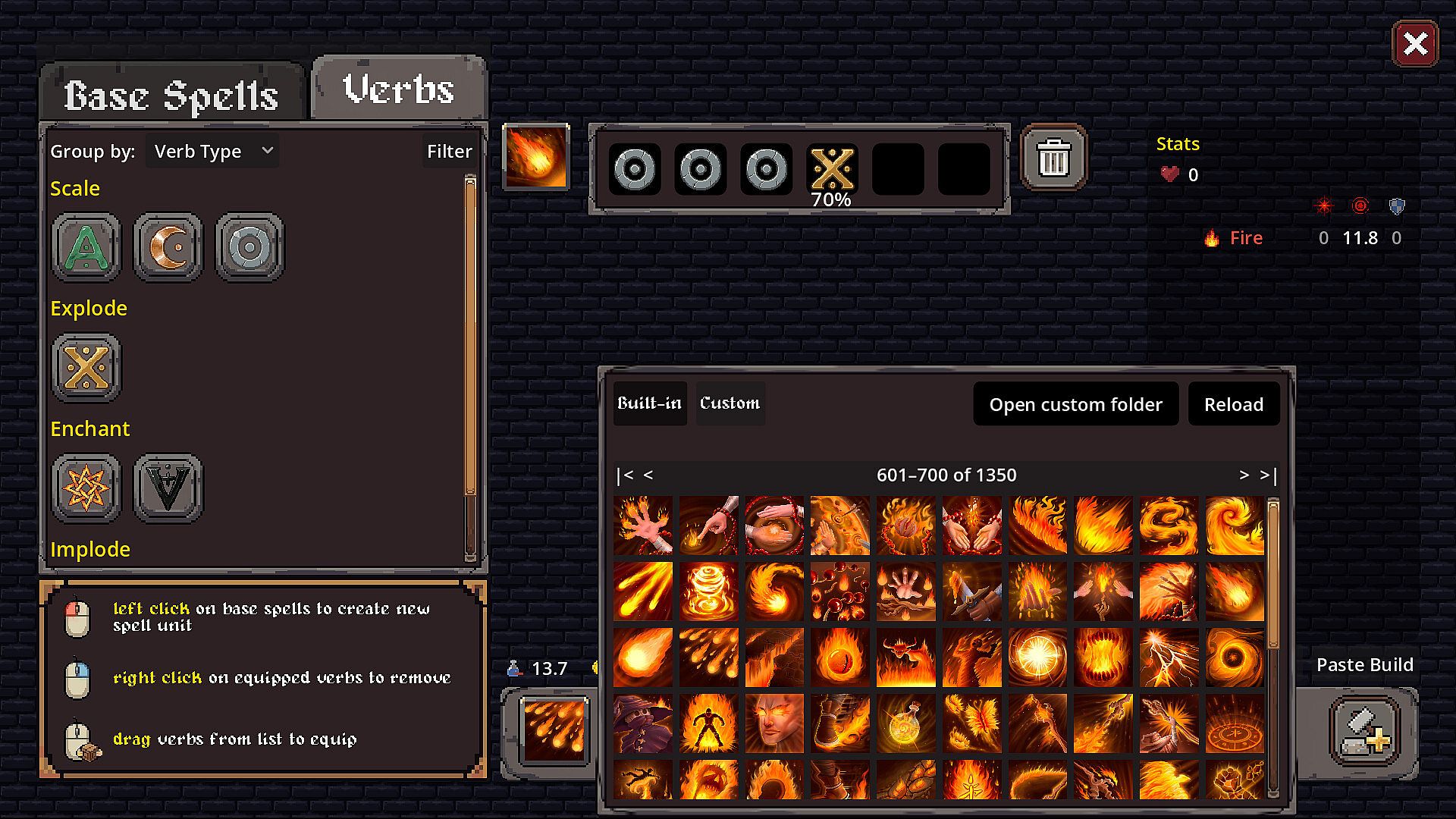
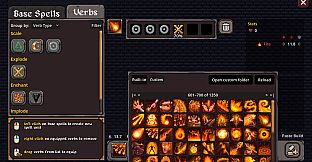
Headshots and spell icons accept imported PNG or GIF files alongside more than 1,000 built-in options. Completed spells can be copied as text for pasting elsewhere or sharing directly. These tools extend to challenge runs, where seeds allow others to experience the same randomized setup.
Gear and trait interactions add another layer of personalization. Items that align with specific spell tags or class strengths create builds that feel distinct across different guild compositions.
Is It Worth Playing?
The game suits players who enjoy iterative strategy and system experimentation in a single-player context. Its transparent mission scoring and partial-reward structure reduce frustration from imperfect preparations, while the spell-order mechanic provides consistent depth without relying on numerical inflation.
Early access status means the listed features represent the current scope, with room for further expansion. Those drawn to guild management through spell crafting and visible cause-and-effect mechanics will find the systems rewarding to explore at their own pace.











