

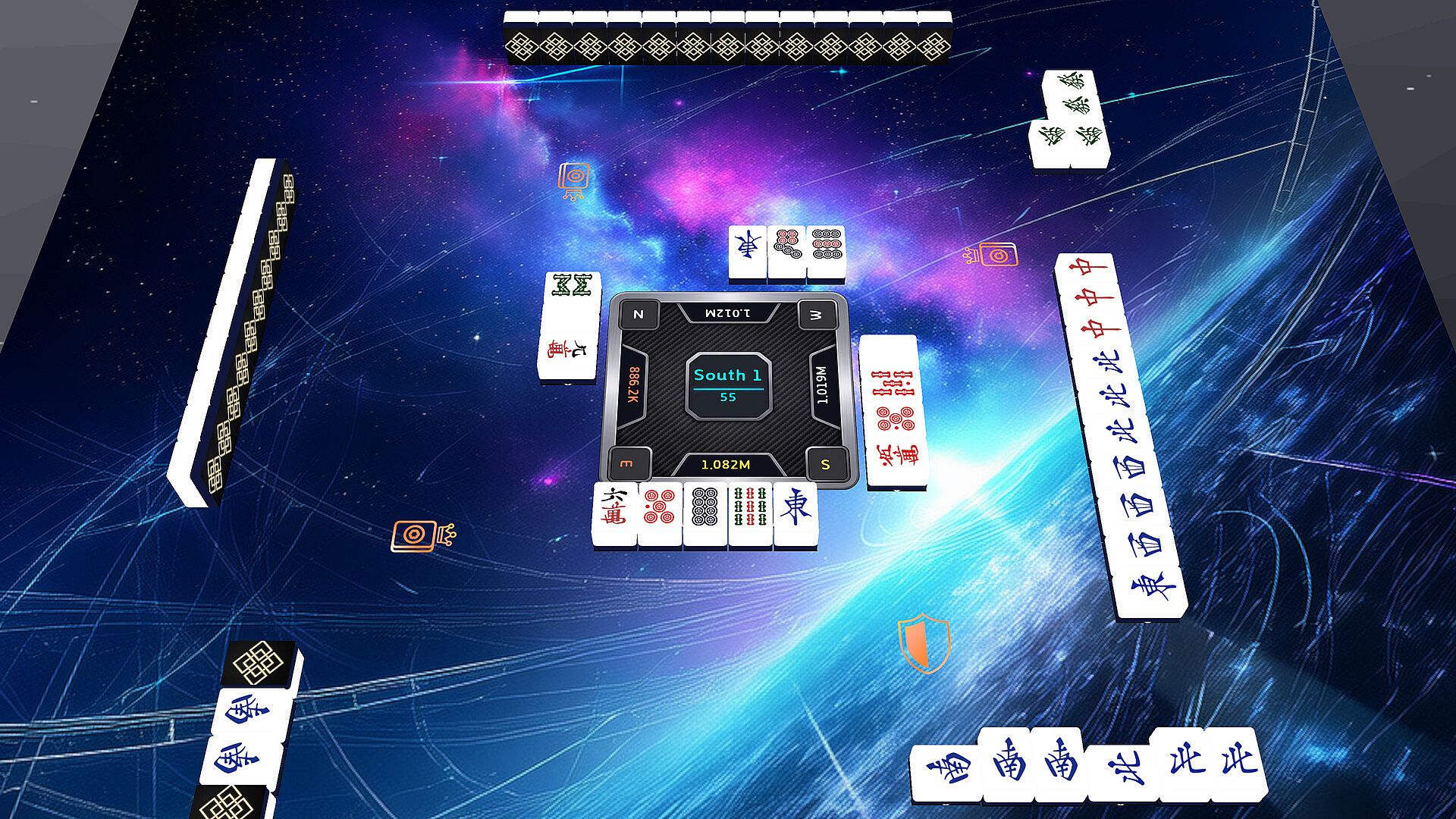
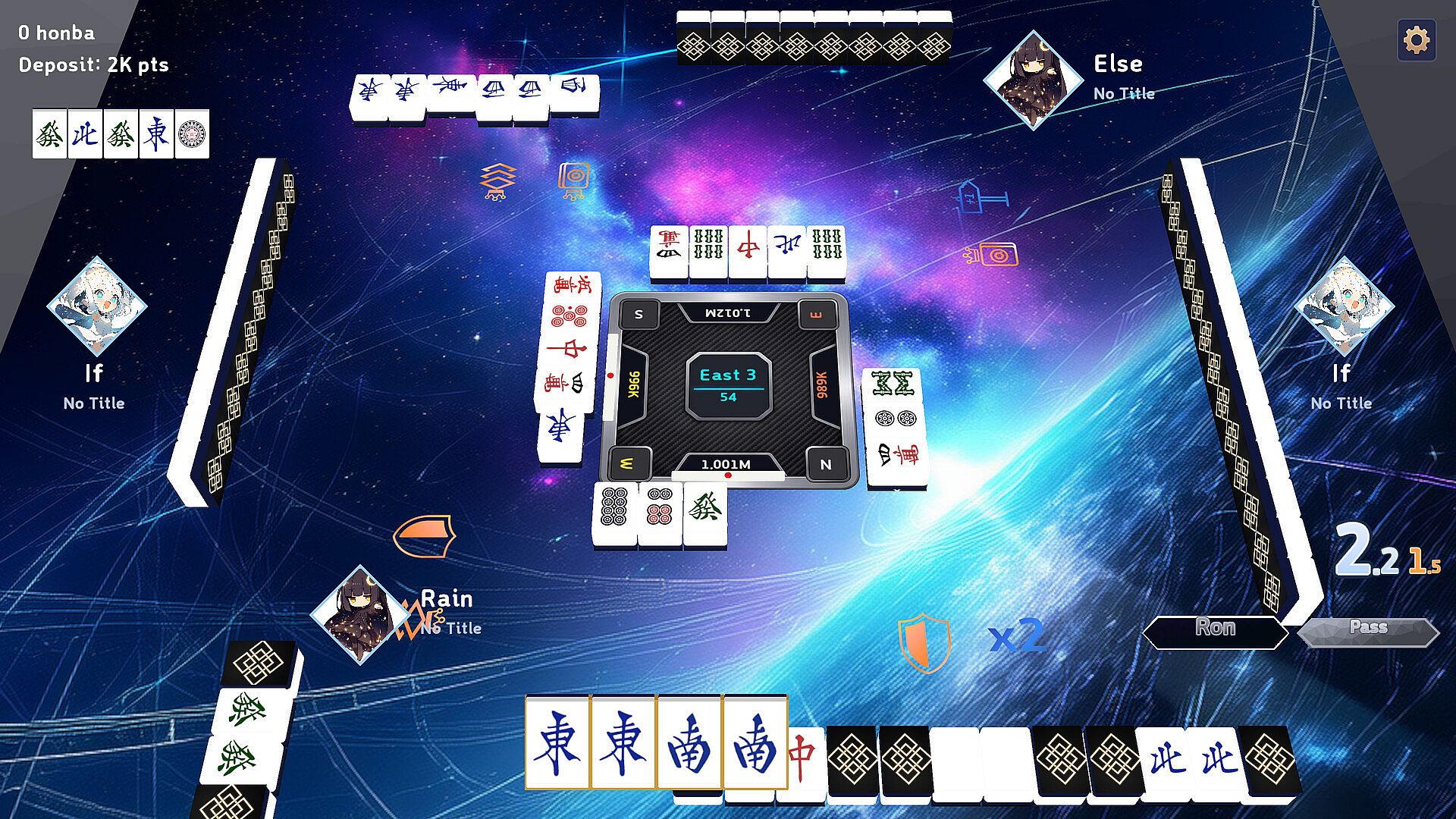
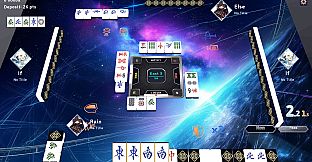
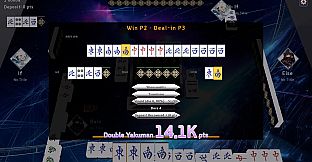
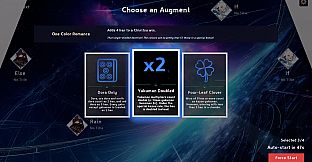
Augment Mahjong is a strategy indie game that combines the core rules of Riichi Mahjong with a system of customizable rule changes. Players compete on a digital table set in a cyberspace observatory filled with flowing starlight, where standard tile draws and discards share space with powerful modifications that can shift scoring, tile availability, or even win conditions mid-match. The experience suits casual sessions for those familiar with the basics as well as deeper strategic play, all on PC.
Gameplay
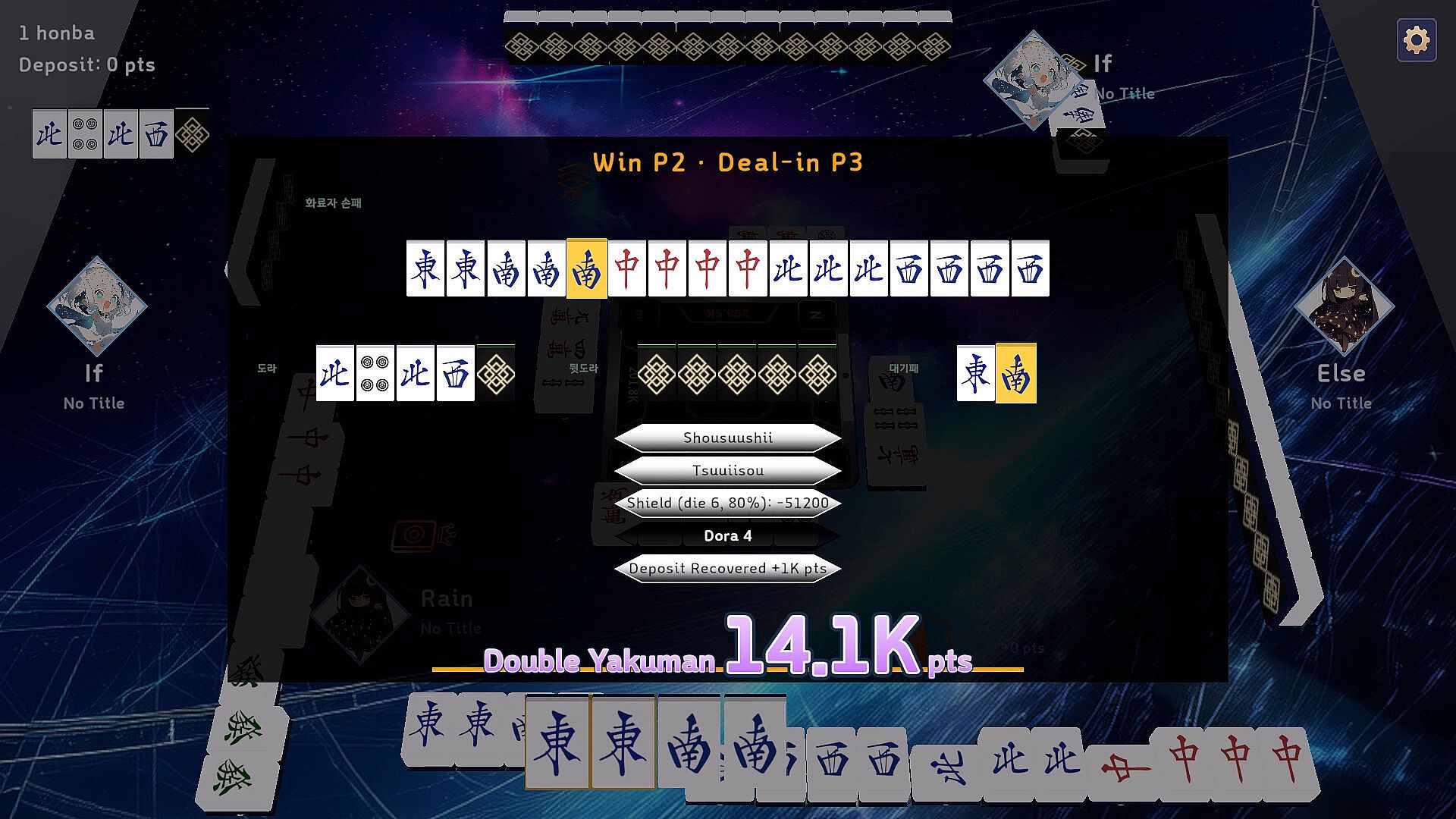
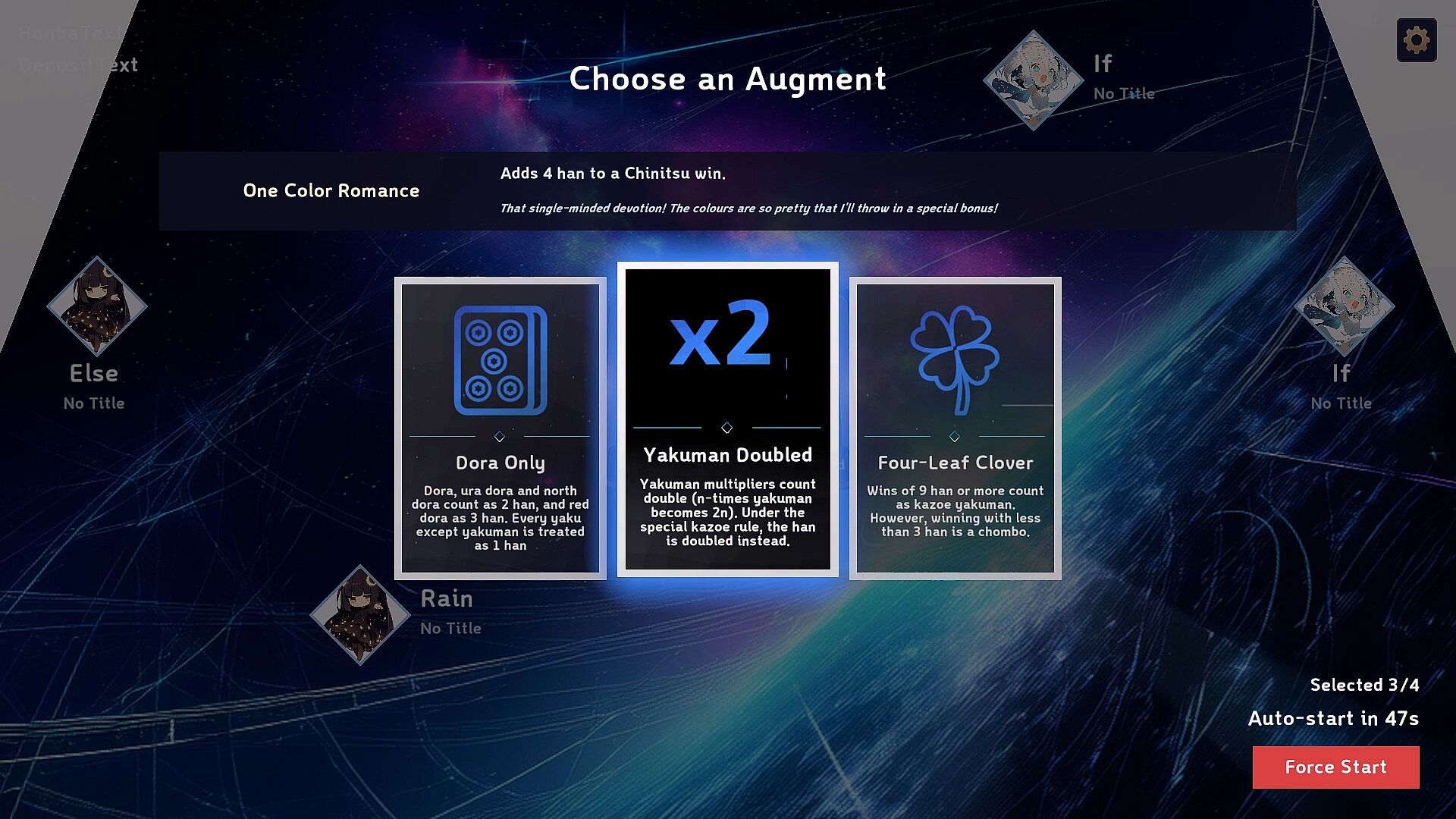
Each hand begins with players selecting an Augment card that applies only to their own position. These cards alter personal rules such as tile values, meld requirements, or defensive options, creating unique advantages that stack across rounds. A shared pool supplies common choices, while exclusive options tied to chosen Guides expand the possibilities further. System Overrides function as global effects that impact every participant equally, introducing shared challenges like restricted suits or altered point multipliers that force adaptation from all sides.
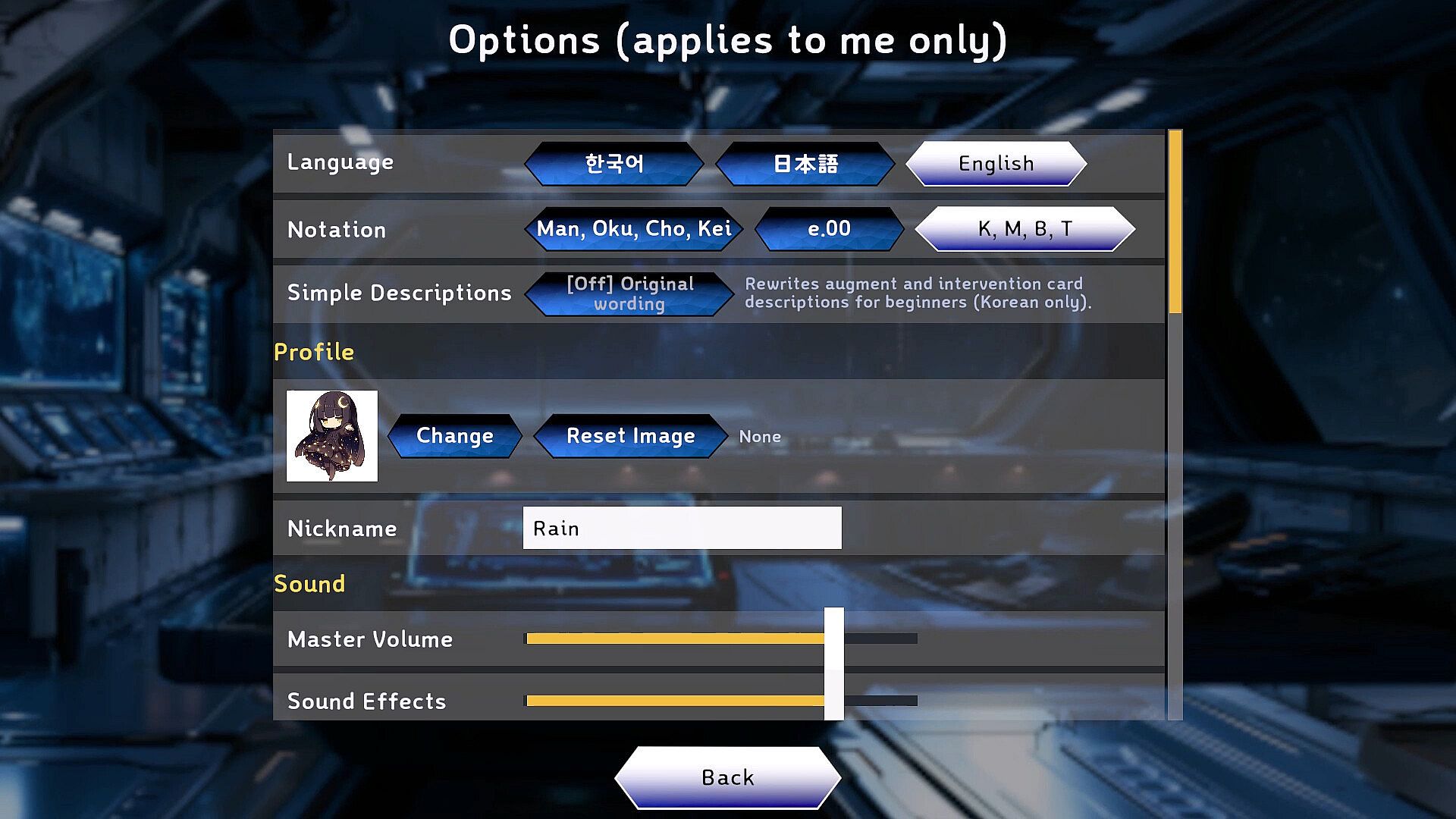
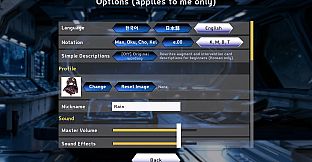
Guide selection determines access to specialized Augments. Pairing with the chaotic If opens aggressive, unpredictable options, while the orderly Else provides more controlled and consistent modifications. The interface supports different experience levels through an Easy Explanation Mode that converts technical terms into plain descriptions of what each card or rule actually does in practice. Four tiers of AI opponents range from simple aggressive play focused on quick progress toward a win to advanced bots that weigh expected values, defensive discards, and the impact of active Augments and Overrides together.
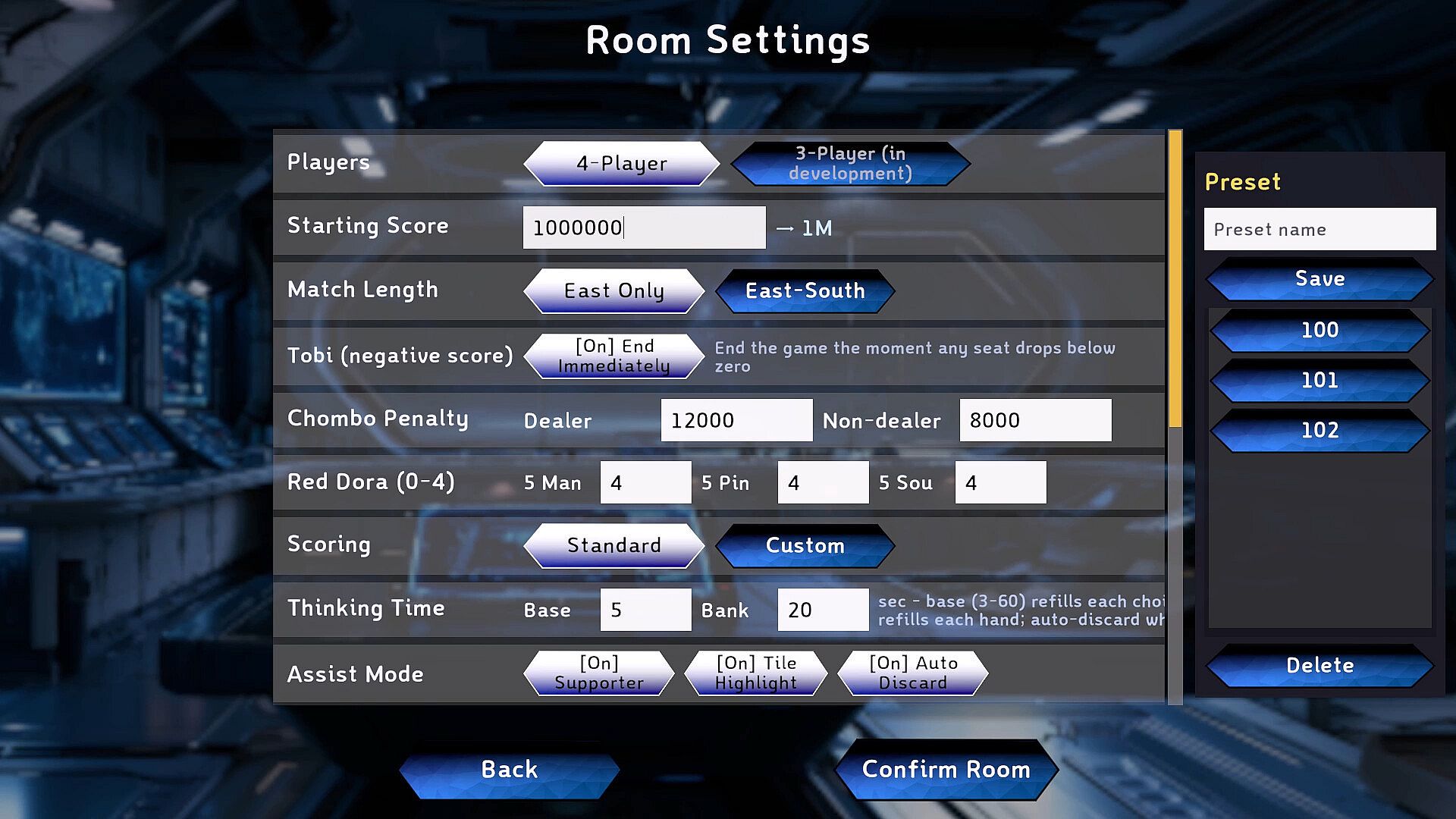
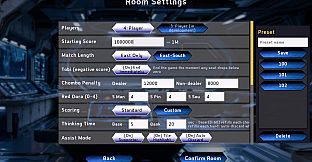
Custom rooms let hosts fine-tune the environment. Appearance rates for Normal, Rare, and Legendary Augments can be adjusted, System Overrides can be enabled or disabled, and time limits including banked thinking time are configurable. Bankruptcy conditions, the number of Red Fives, and individual AI personalities per seat are also adjustable, allowing the match to emphasize different strategic depths depending on the group.
Game Modes
Standard play occurs in custom or quick matches against AI or online opponents, with full control over rulesets and Augment pools. The roguelite Campaign Mode presents a different structure where players align with either If or Else and progress through collapsing sectors toward a central core. A persistent timer runs continuously, pressuring decisions between continuing matches, visiting shops for upgrades, or risking anomalies for stronger Augments. Team cooperation appears in 2v2 formats where partners view each other's hands to exchange needed tiles or protect winning waits, and accumulated team scores carry forward without resetting between hands.
Inventory limits on carried Augments add resource management, as discarding options to make room for new ones shapes long-term strategy. The route through sectors branches, offering choices that trade time for power or safety, and the overall run rewards consistent performance across multiple hands rather than isolated victories.
Key Mechanics and Customization
Augments serve as the primary tools for rewriting match dynamics on a per-player basis, while Overrides create table-wide variables that everyone must navigate. The combination encourages experimentation with synergies, such as pairing a personal tile multiplier with a global restriction that disadvantages opponents more severely. Custom settings extend to match-ending conditions and visual or timing preferences, making each session adaptable to group skill levels or preferred pacing.
The absence of a built-in tutorial for basic Riichi Mahjong rules means the game focuses entirely on its variant systems. Players who already understand standard tile sets, yaku, and scoring can immediately engage with the Augment and Override layers without interruption.
Is It Worth Playing?
Augment Mahjong targets players who already know Riichi Mahjong and want to explore rule modifications in both competitive and cooperative formats. The custom room tools and AI options provide flexibility for solo practice or group sessions, while the Campaign Mode introduces progression and time pressure that changes how hands are valued over a longer run. Because the game assumes prior knowledge of core Mahjong, newcomers should first learn the fundamentals elsewhere before attempting the advanced variants here. Those comfortable with the base game will find meaningful depth in selecting and combining Augments with Overrides, especially in team play where hand visibility enables direct support between partners. The upcoming release in Q1 2027 will determine final reception, but the described systems emphasize strategic choice and adaptation over luck alone.