

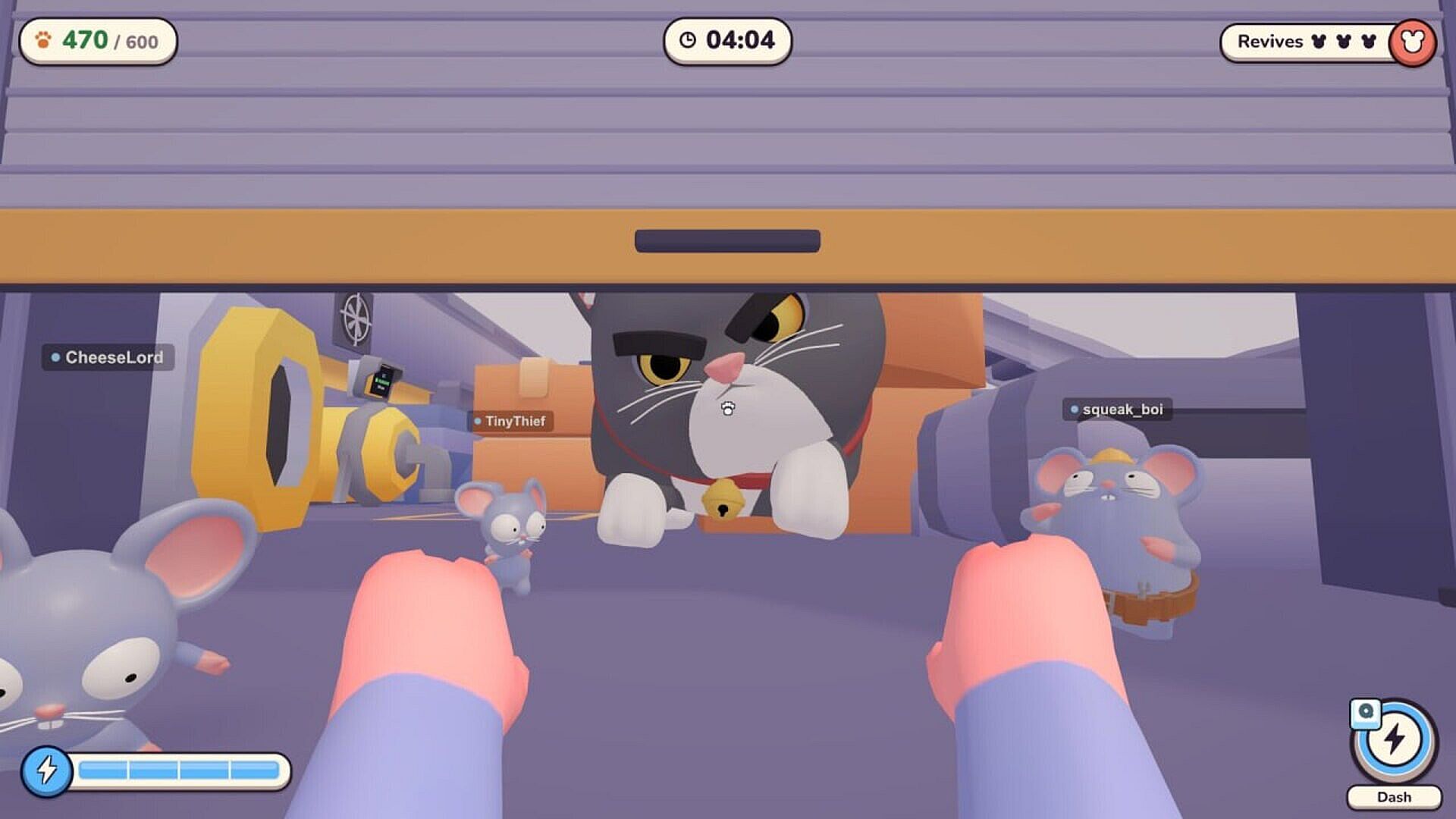
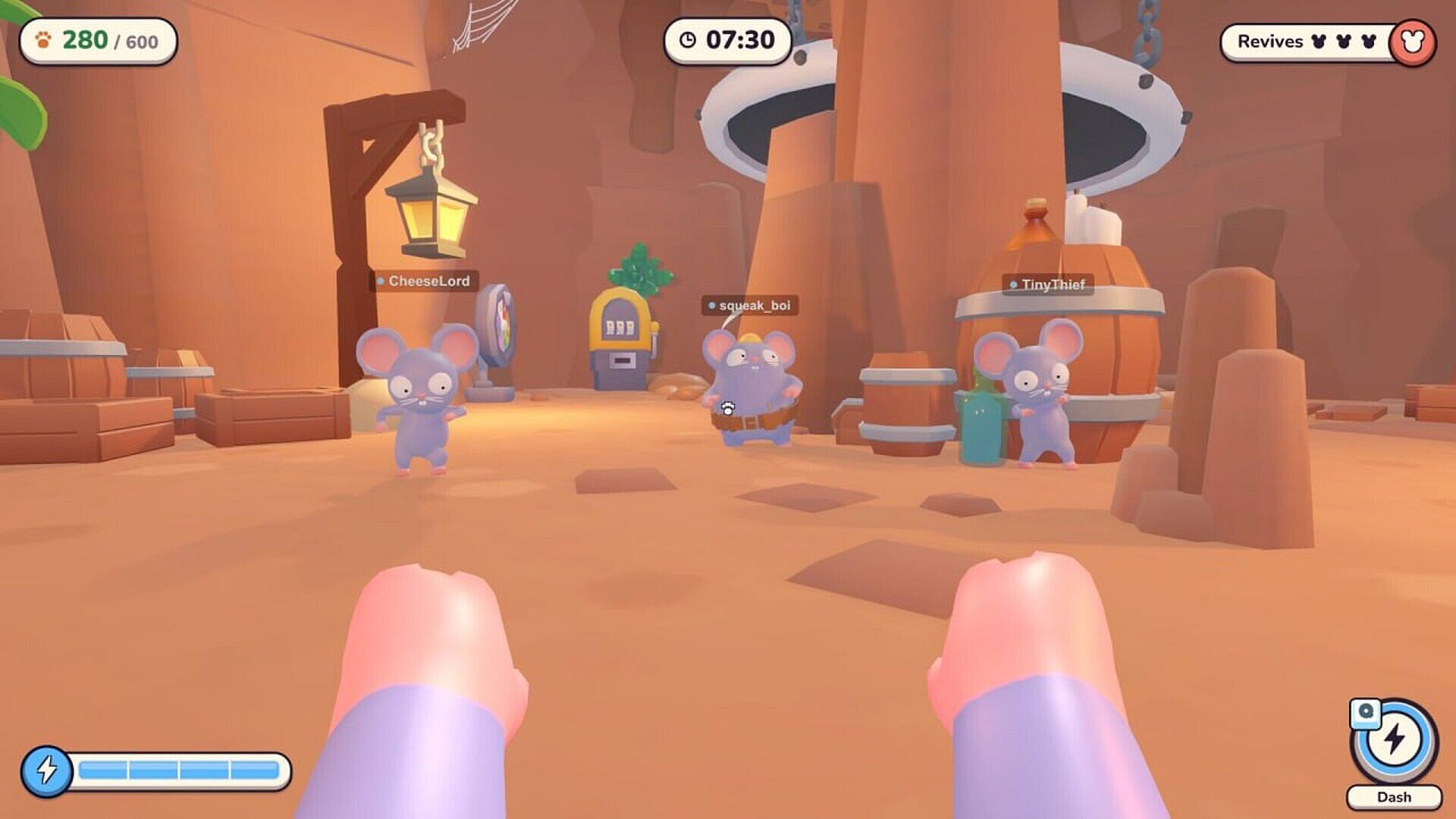
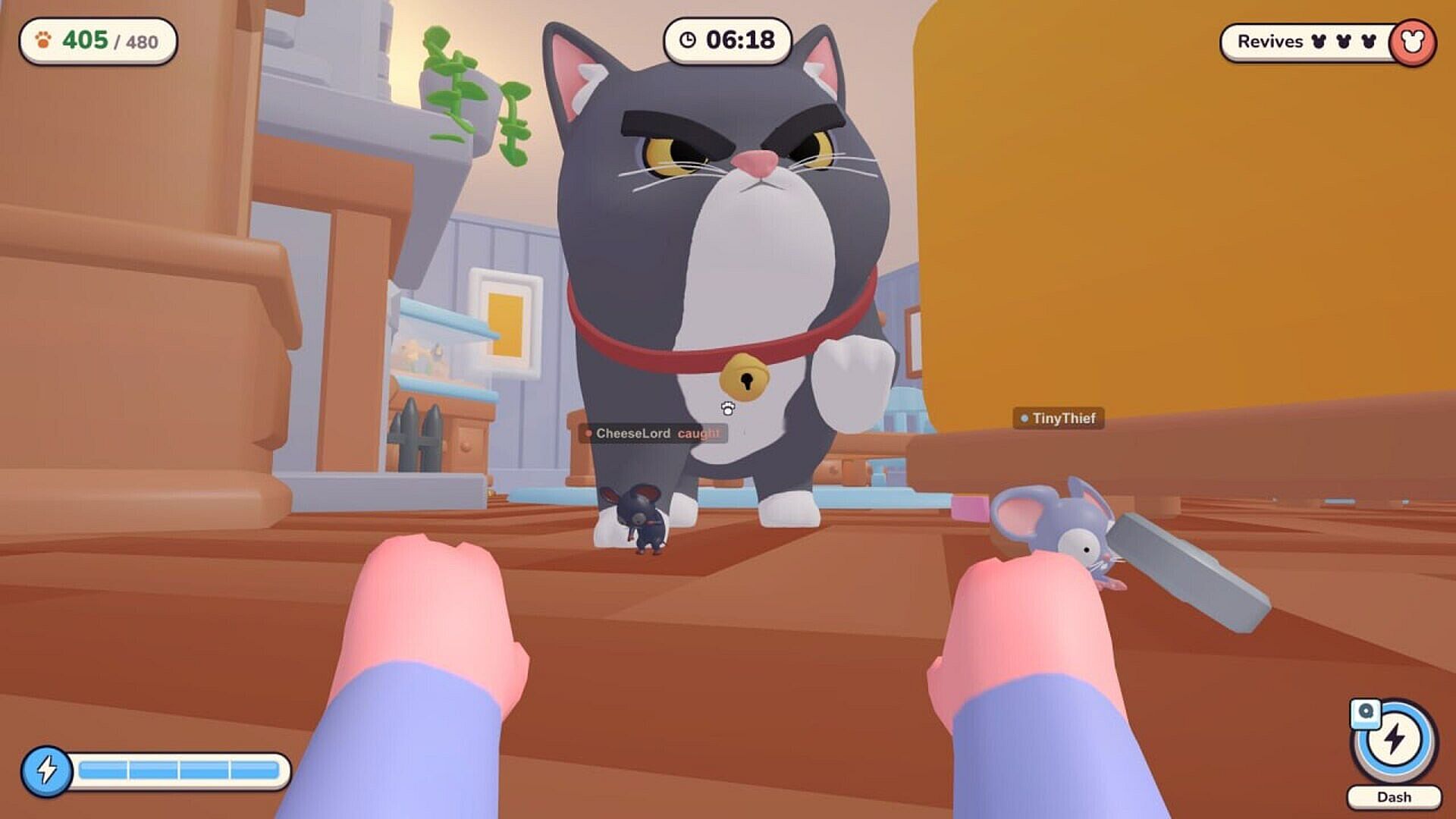
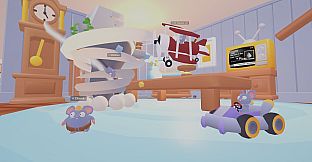
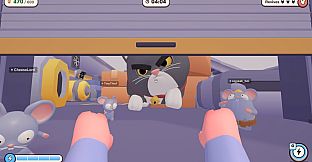
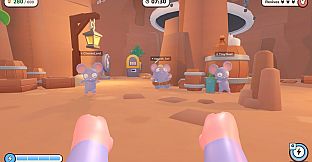
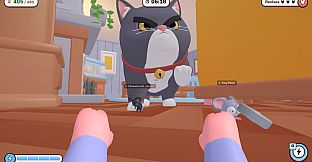
Cheese Panic is an asymmetric action game that pits a team of four mice against a single cat in tense house-robbing scenarios. Players on the PC platform work together or compete in short, chaotic rounds where stealth, teamwork, and quick thinking determine the outcome. The indie title blends casual accessibility with precise physics interactions, creating matches that reward coordination without requiring complex controls.
Gameplay
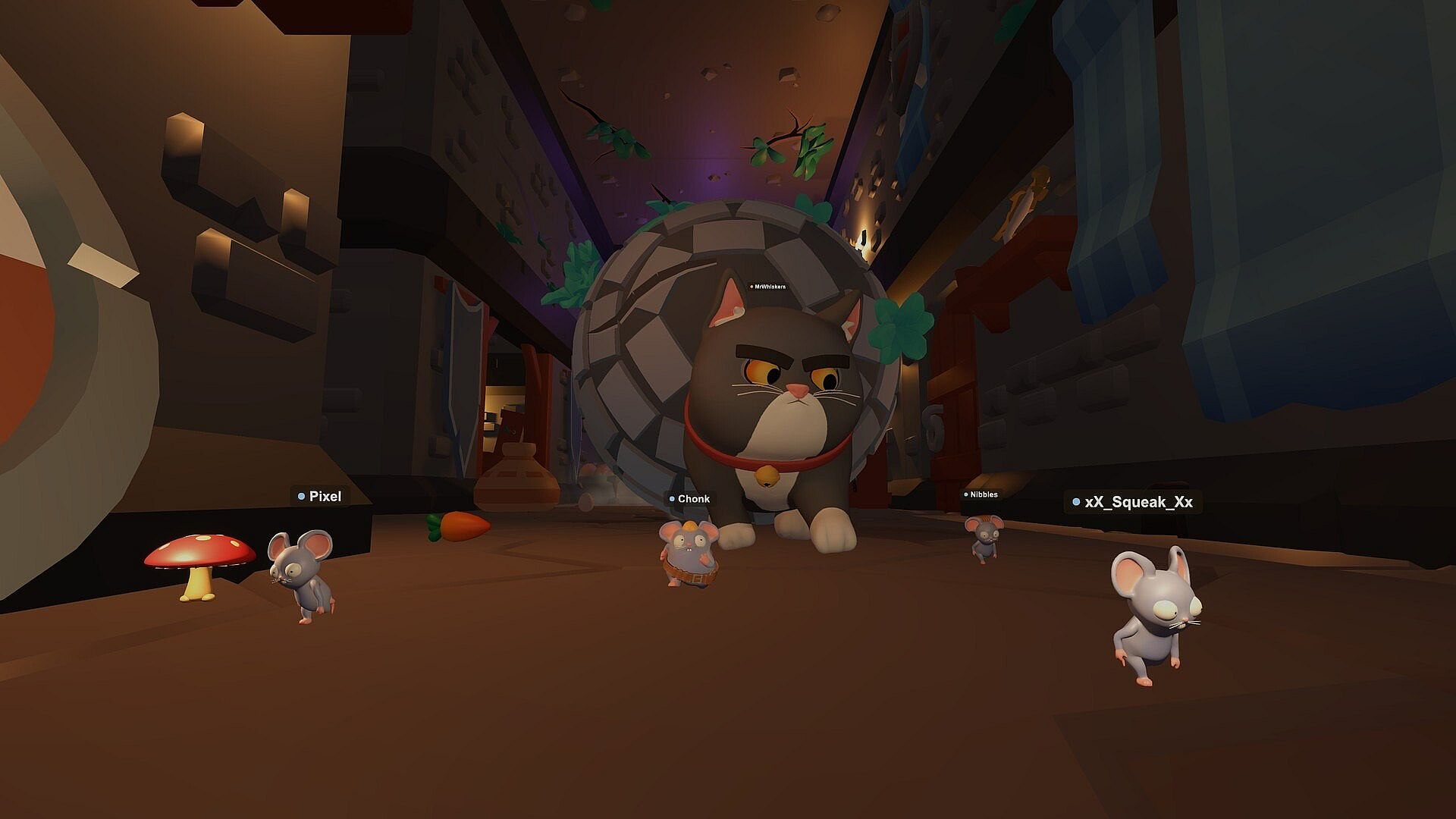
The core loop centers on mice attempting to transport food items such as cheese, cakes, and watermelons from various rooms back to their nest while avoiding detection. Every sound made by dropped plates or heavy movement alerts the cat, which then moves to investigate. Mice must balance speed with caution, using the environment to their advantage through real physics that affect doors, furniture, dishes, and loose food items.
Each mouse belongs to one of four distinct classes that shape team strategy. The Scout moves quickly and quietly while running along walls to reach hard-to-access areas. The Hauler manages heavy loot and can carry fallen teammates but creates more noise with its stomping gait. The Trickster deploys decoys to mislead the cat's path. The Pest jumps directly onto the cat's face to disrupt hunts temporarily. These roles carry trade-offs, so effective teams combine all four for success on larger hauls.
Players can also take control of the cat. In this role, the focus shifts to listening for audio cues, searching hiding spots, and intercepting mice before they deliver enough food. The cat selects abilities to suit different playstyles and checks likely mouse routes throughout the house. Matches end when the mice collect sufficient food or when time expires with the cat still in control.
Game Modes
Matches follow an asymmetric structure where one side defends the house and the other attempts repeated thefts. Teams coordinate plans through voice chat, though proximity limits who can hear conversations, adding another layer of risk. Three distinct maps provide variety: a standard house layout, an industrial factory setting, and a more confined dungeon environment.
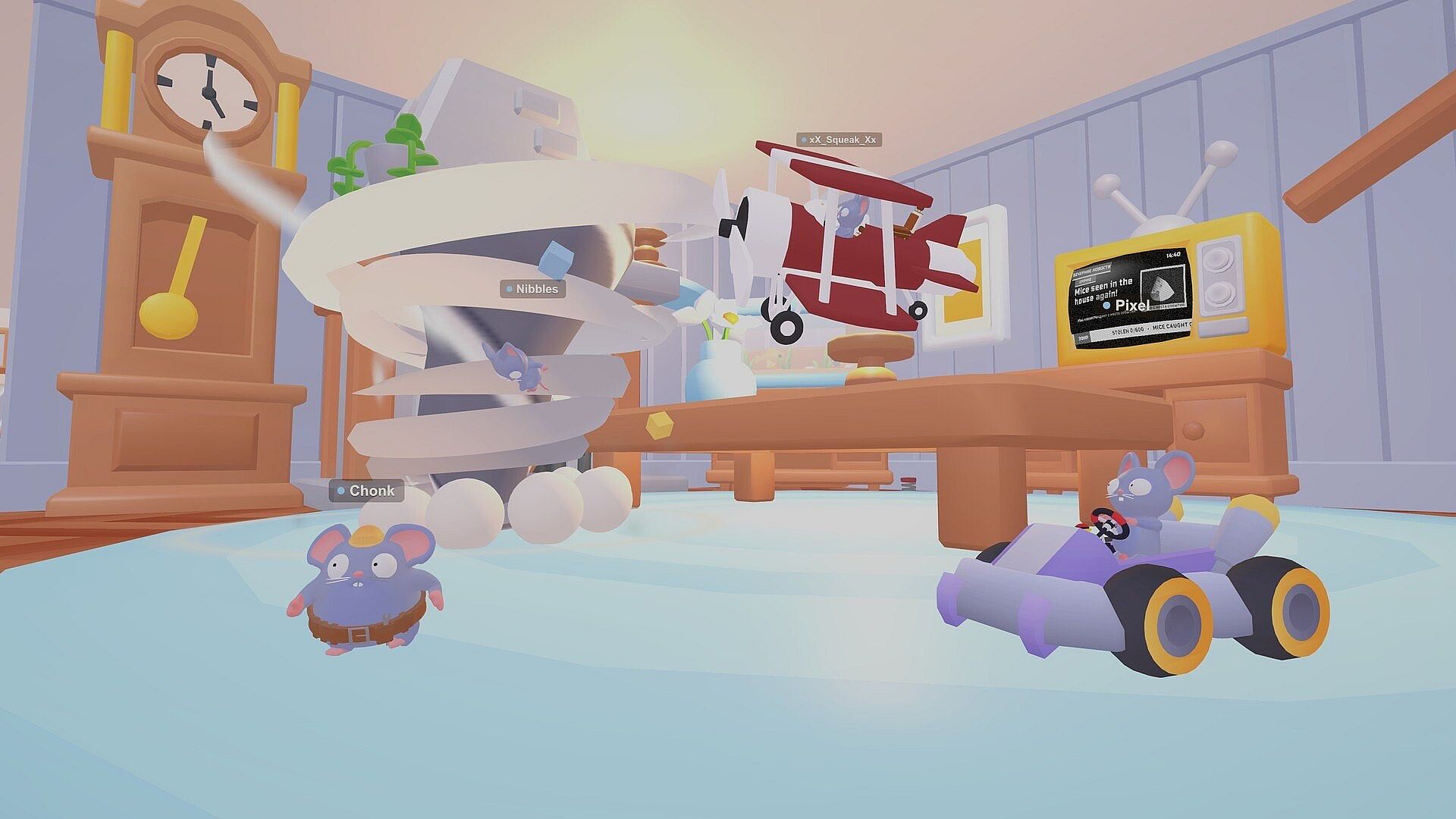
Modifiers alter core rules for an entire match, while random events such as power cuts, burst pipes, or a roaming vacuum introduce sudden changes. Additional escape tools like toy cars and a plane allow for creative routes during high-pressure moments. These elements ensure no two rounds play out identically, encouraging repeated play to adapt to new combinations.
Maps and Environmental Features
The house map offers familiar domestic spaces with multiple floors and tight corridors ideal for quick dashes. The factory introduces machinery and open areas that favor longer carries but expose mice to greater visibility. The dungeon emphasizes verticality and tight passages where wall-running and decoys prove especially useful.
Physics simulation extends to nearly every interactable object. Furniture can be pushed or toppled to create barriers, dishes shatter loudly when mishandled, and food items roll or slide realistically when dropped. These interactions turn the environment into an active participant rather than static background.
Customization and Options
Players personalize their experience with skins, accessories, and avatars for both mice and the cat. A photo album feature lets teams capture and store standout moments from successful runs or narrow escapes. For groups without a willing cat player, an optional bot fills the role, allowing full teams of mice or even solo sessions against the AI-controlled opponent.
Is It Worth Playing?
Cheese Panic suits players who enjoy short, replayable sessions built around teamwork and asymmetric tension. The class system encourages experimentation with different roles, while map variety and random events keep rounds fresh across multiple playthroughs. Those who prefer deliberate planning over fast reflexes will find value in coordinating thefts and using voice proximity mechanics effectively. The option for bot opponents broadens accessibility for smaller groups or practice. Overall, the game delivers focused casual action centered on clever movement and sound management rather than lengthy campaigns or complex progression systems.