






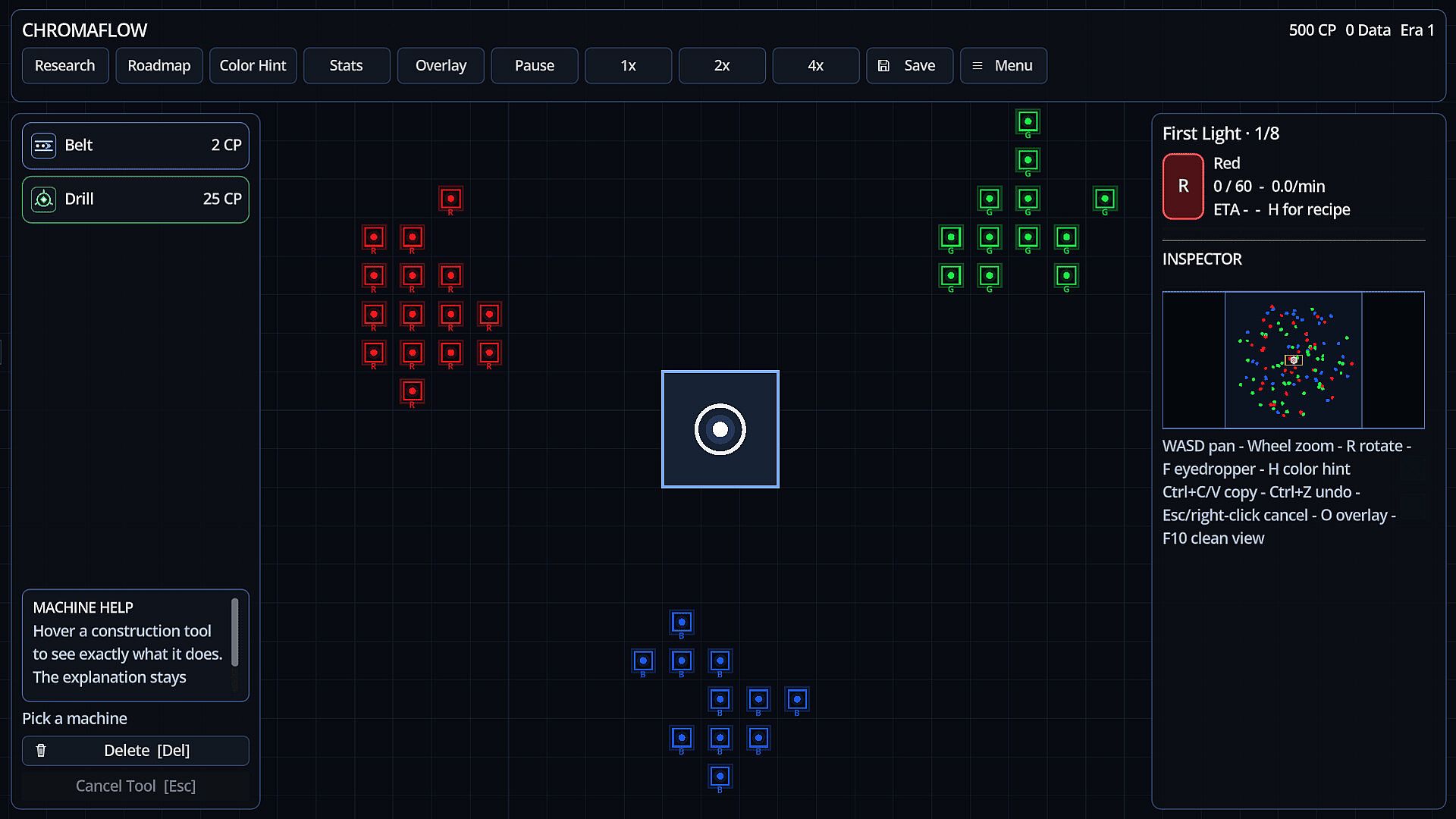
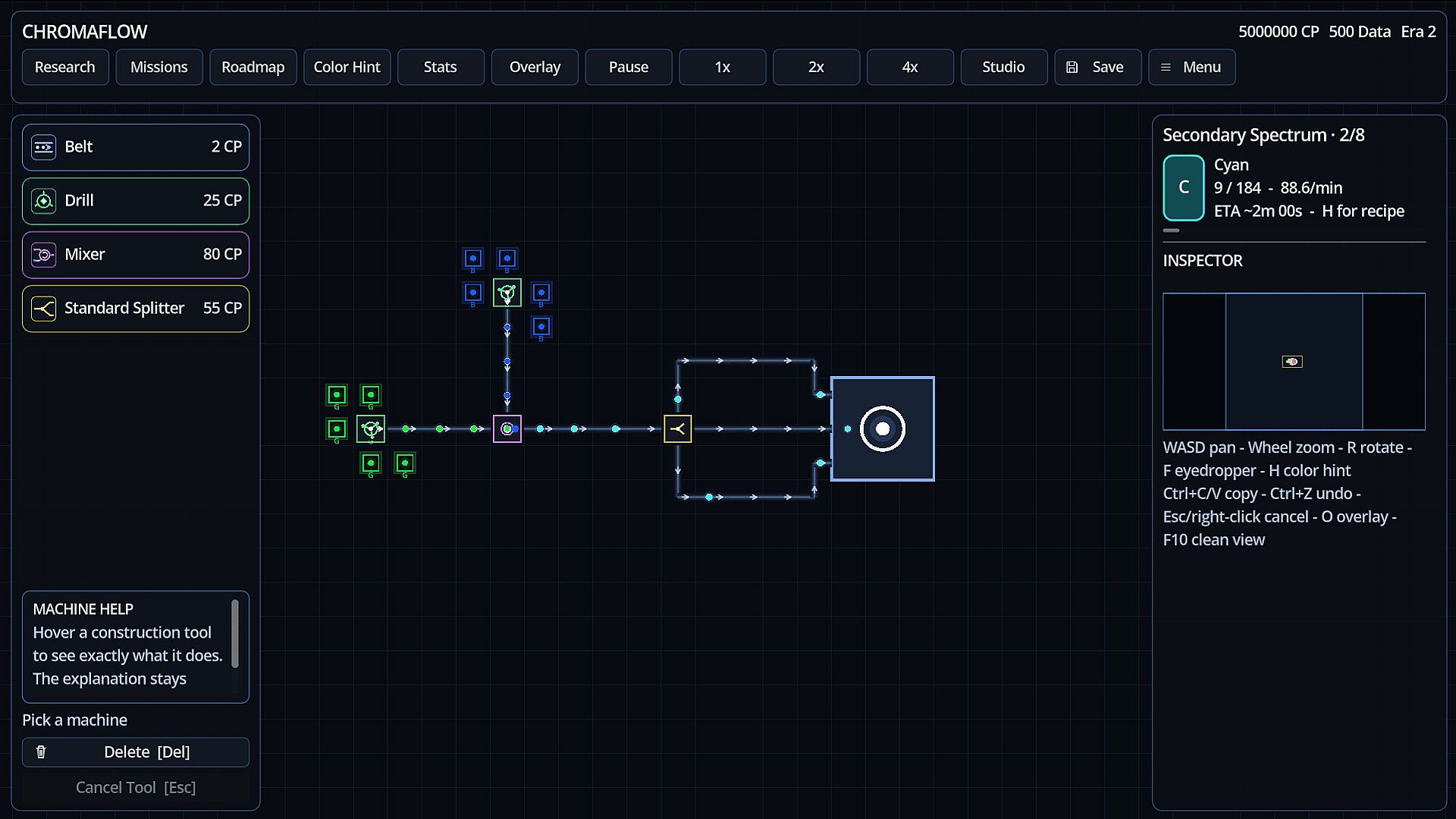
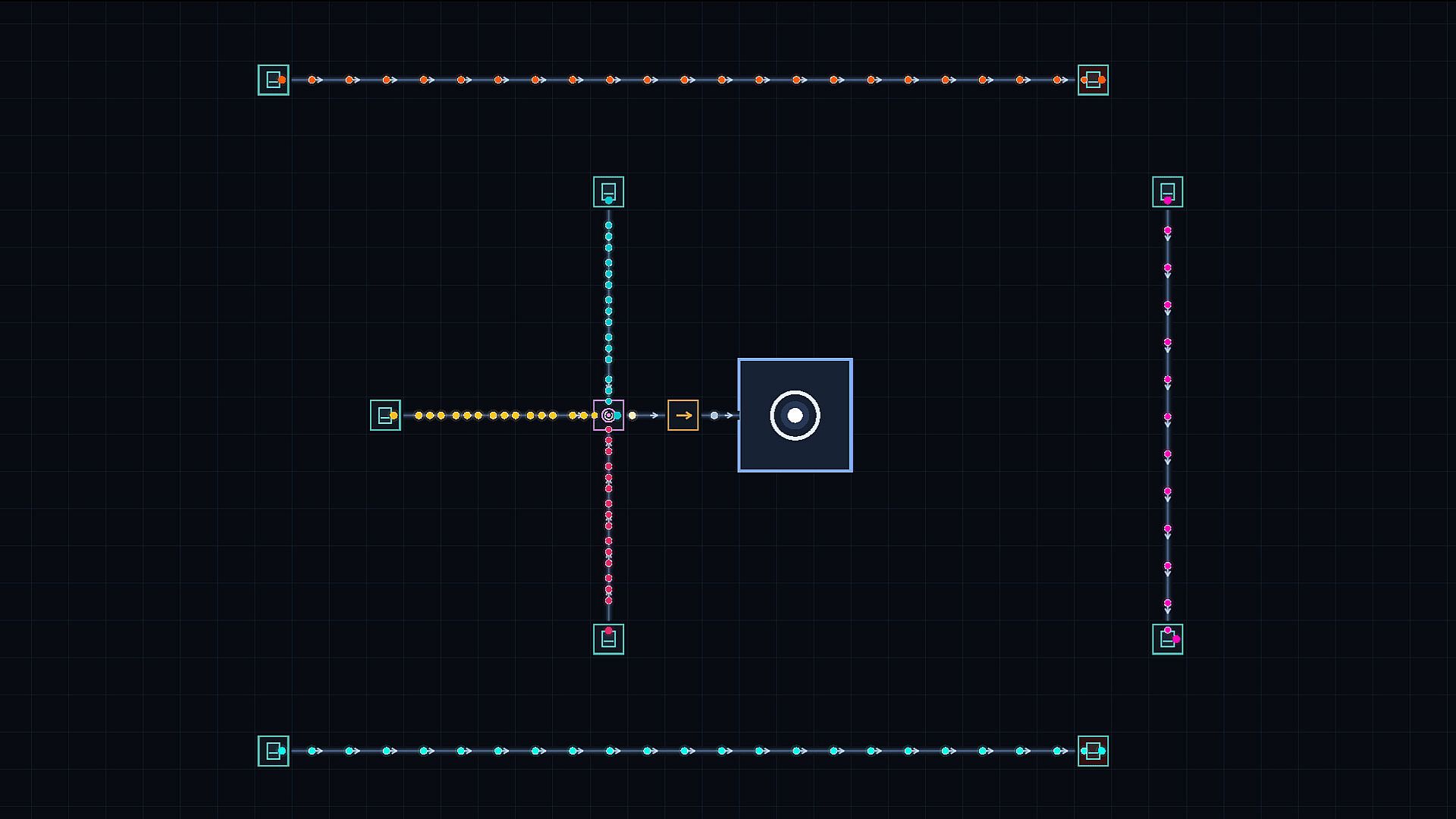
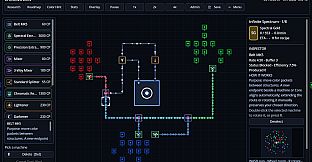
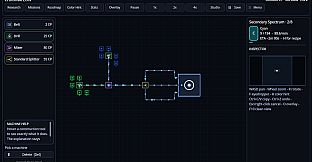
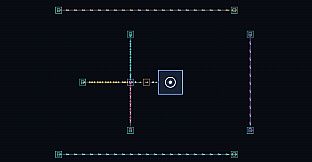
ChromaFlow is a 2D factory automation strategy game that places color at the center of every production decision. Players extract red, green, and blue from glowing deposits, route these primary resources through conveyor networks, and combine them into dozens of increasingly complex hues. The single-player experience focuses on building efficient factories that meet escalating demands while expanding across multiple technological stages.
Gameplay
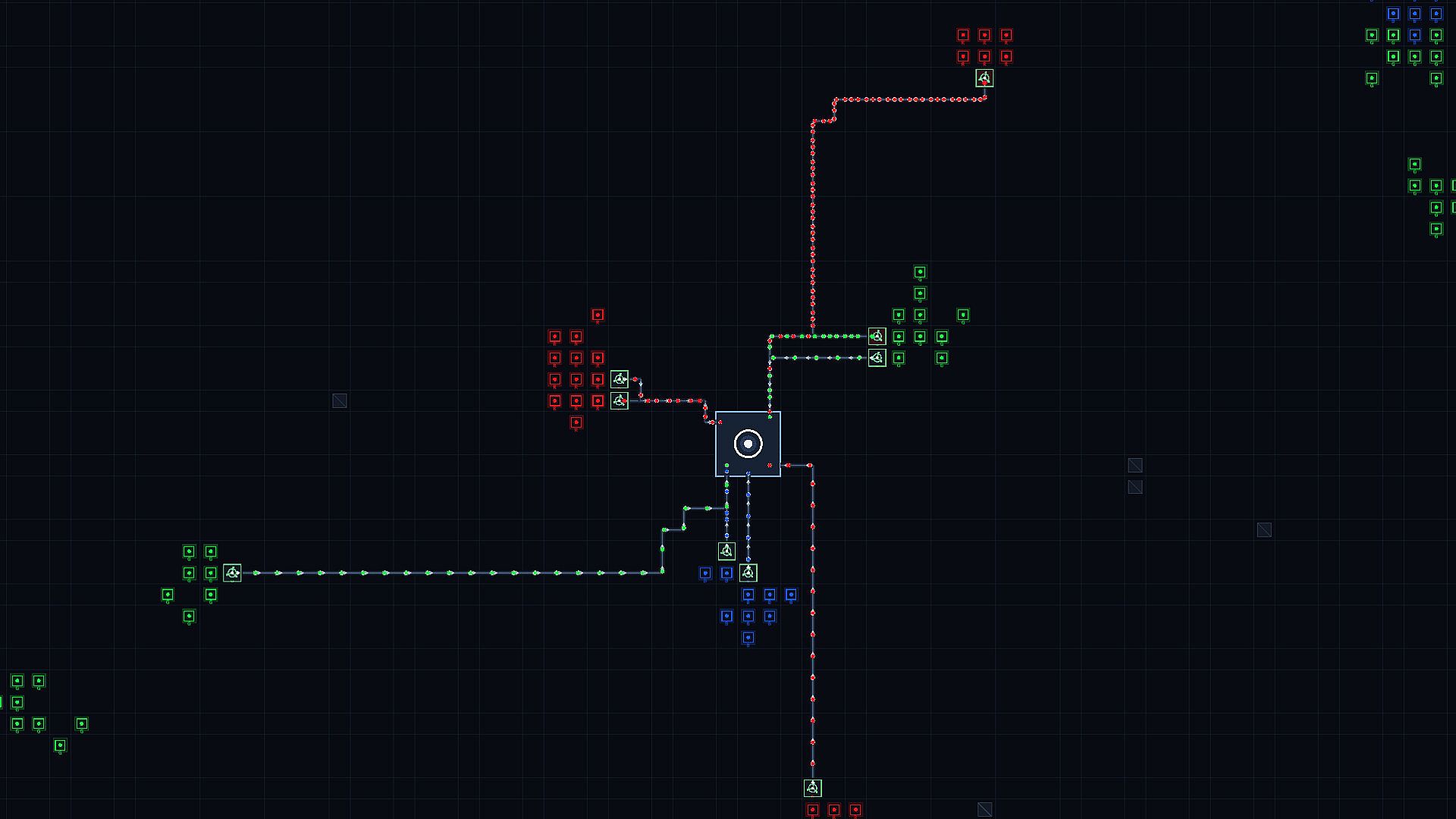
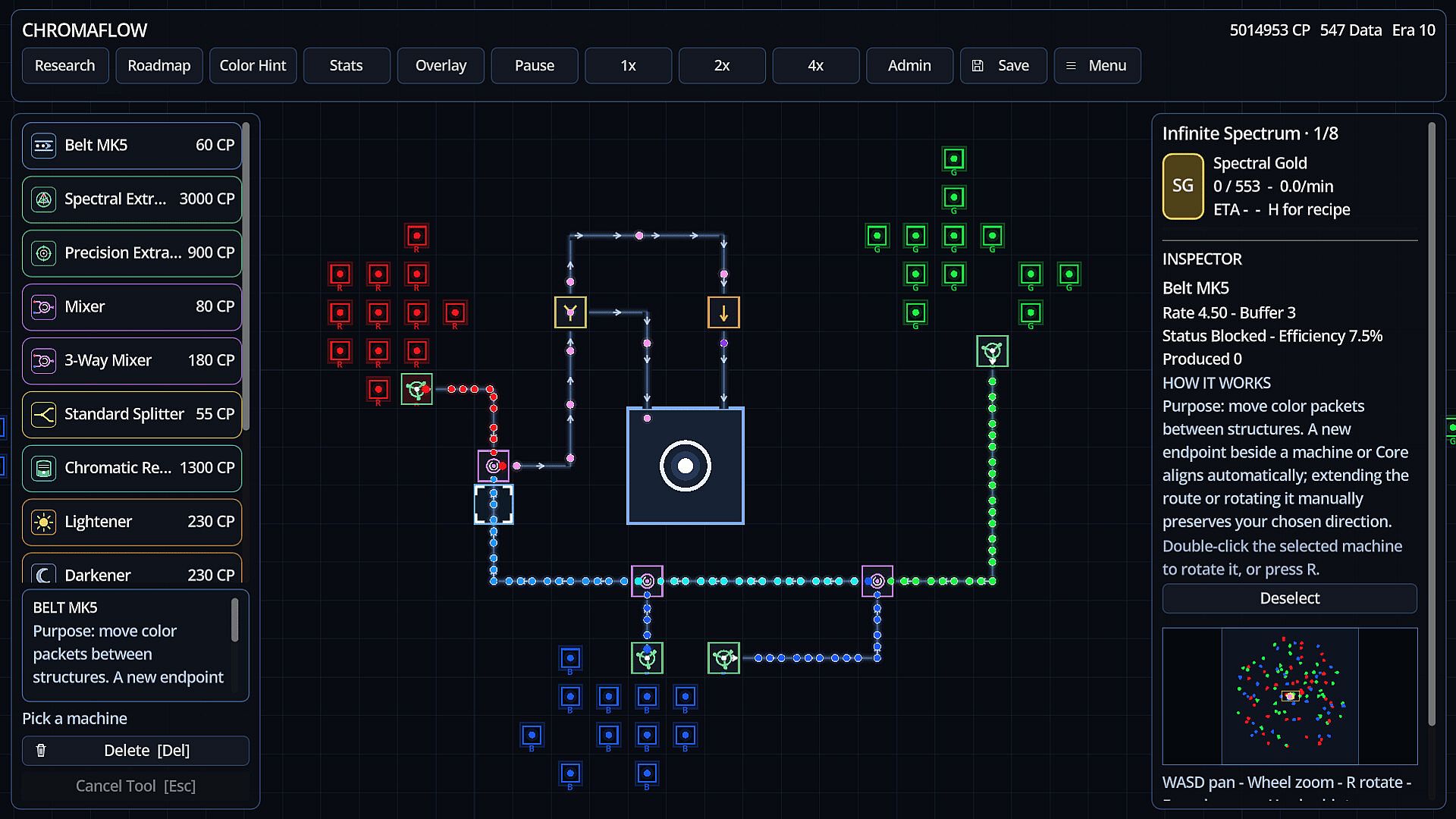
The core loop revolves around resource extraction, transportation, mixing, and delivery. Extractors pull the three base colors from visible deposits on deterministic seeded maps. Conveyor belts carry these materials to mixers that create secondary and tertiary colors such as yellow, cyan, and magenta. Further processing steps include purification, tone deepening, and refinement through multi-stage chains where the output of one machine feeds directly into the next.
Factory design requires careful planning of routes, splitter placement for dividing flows, and storage buffers to maintain steady supply. As technology advances, entire families of machines receive automatic upgrades, allowing players to expand existing layouts rather than rebuild from scratch. Diagnostic overlays display real-time data on throughput, congestion points, and overall efficiency, helping identify bottlenecks and improve output rates.
Production chains grow in complexity, with later stages demanding precise balancing of multiple inputs and outputs. Research unlocks permanent improvements that affect the entire factory, while automatic routing assistance and multiple transport tiers simplify network management without removing the need for strategic layout choices.
Game Modes
The primary experience unfolds through a structured campaign divided into ten technological eras. This campaign contains eighty distinct color requests from the Chroma Core, each presenting a new production challenge that introduces fresh machines, recipes, and capabilities at the right moment. Progress builds naturally from basic RGB extraction lines into elaborate industrial networks.
Completing the campaign unlocks Infinite Spectrum, a post-campaign mode that generates ongoing procedural contracts. These allow continued expansion and optimization of the established factory without the constraints of the main storyline. Difficulty options include Relaxed, Standard, and Engineer presets, along with fully customizable settings that adjust production demands, resource availability, and other parameters to suit different play styles.
Progression and Factory Expansion
Advancement occurs through a Research Tree that grants factory-wide upgrades. These improvements integrate seamlessly as new eras begin, supporting larger and more intricate production setups. Players discover and manufacture a total of sixty-one named colors, each tied to specific mixing sequences and processing steps.
World exploration reveals color deposits in advance, enabling informed site selection for extractors. Conveyor networks benefit from tiered transport options and routing tools that maintain flow across growing facilities. The emphasis remains on iterative refinement, where statistics and visual diagnostics guide adjustments to increase overall throughput.
Is It Worth Playing?
ChromaFlow targets players who enjoy methodical factory-building and optimization in single-player strategy and simulation games. Its color-based resource system offers a fresh twist on automation mechanics, supported by a clear progression path through the campaign and extended play via Infinite Spectrum contracts. Accessibility features such as color names, symbols, pattern cues, color-vision palettes, interface scaling, and reduced-motion options broaden its appeal.
The game runs on PC with modest system requirements and includes Steam Achievements, Cloud saves, and Family Sharing. With no user reviews available at this stage and a planned release in late 2026, interested players can evaluate the demo to determine fit. Those drawn to careful planning, multi-stage production chains, and long-term factory improvement will find substantial depth in its systems.











