


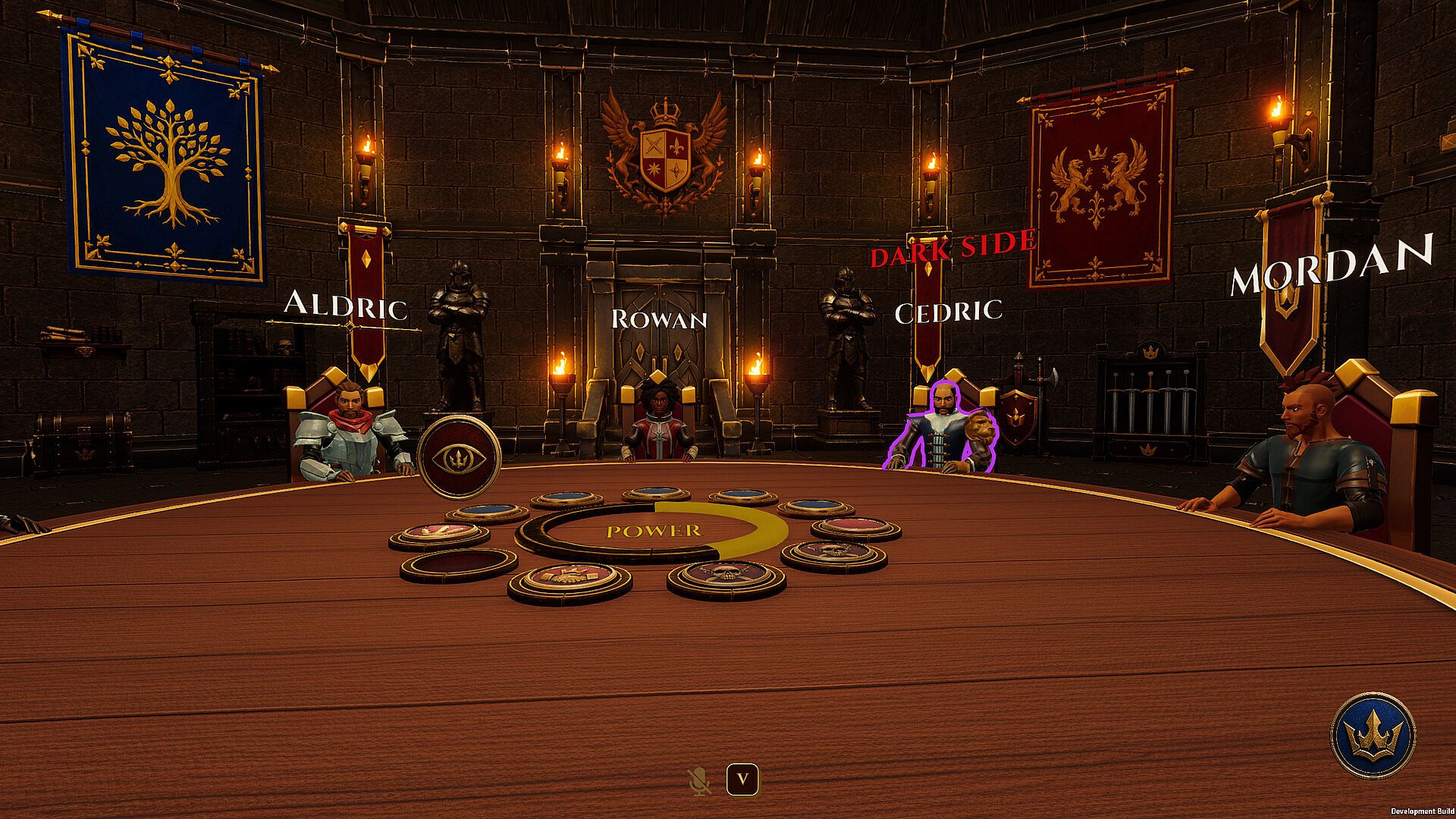


You're seated at a table in a medieval court. The crown passes from hand to hand, decrees are sealed, and no one knows who anyone truly is.
Loyal knights are trying to hold the kingdom together. Traitors are quietly rotting it from within — and among them is one who only needs to be patient for the crown to fall.
There is no interface telling you who is who. There are only voices, hands, and suspicion.
Join an open room or create your own.
Lies are read from the body
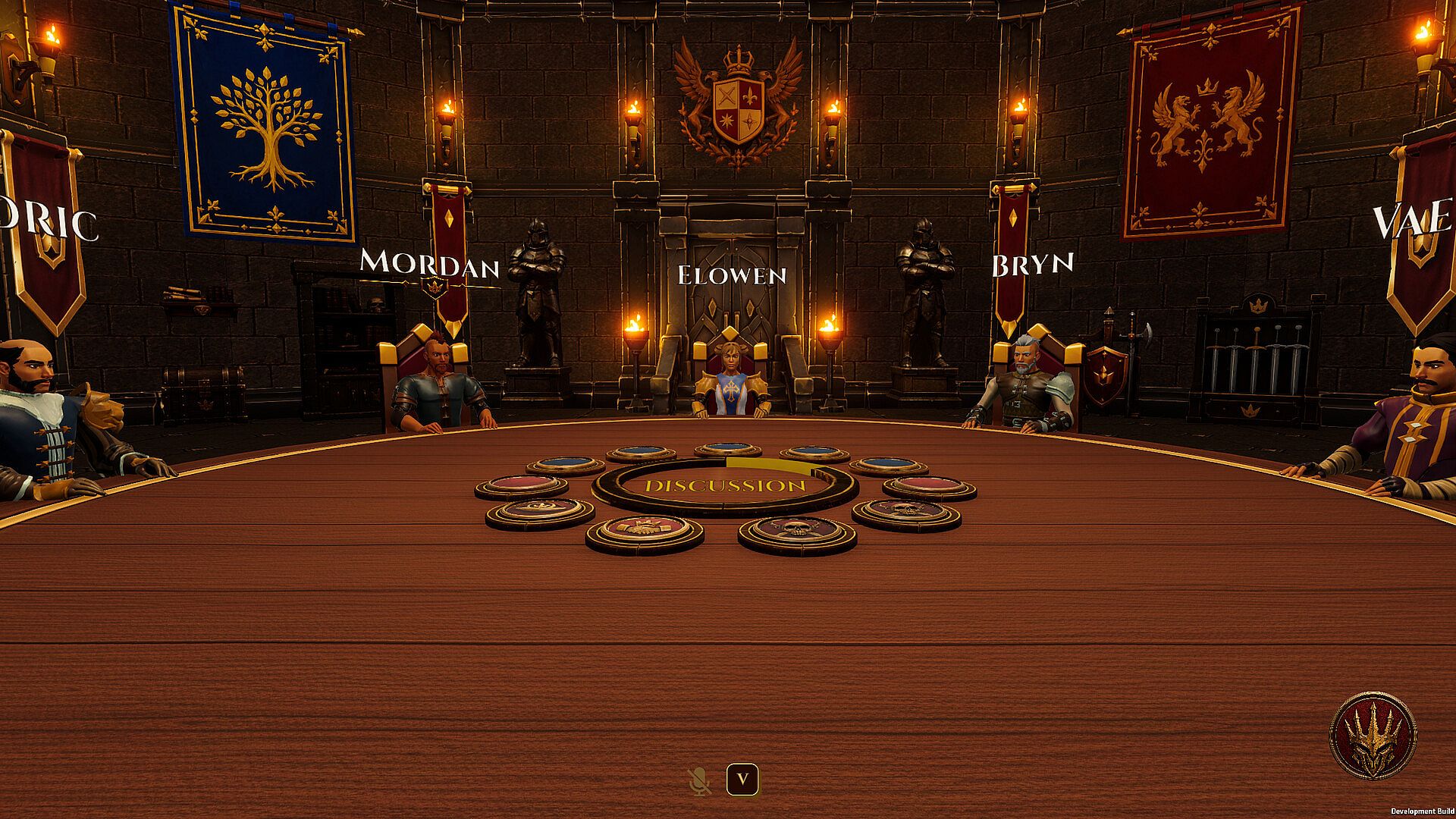
In Court of Lies you don't play cards — you sit at the table.
Voice chat is inside the game. Nobody waits their turn. When you speak, everyone at the table hears you. When you stay quiet, your silence says something too.
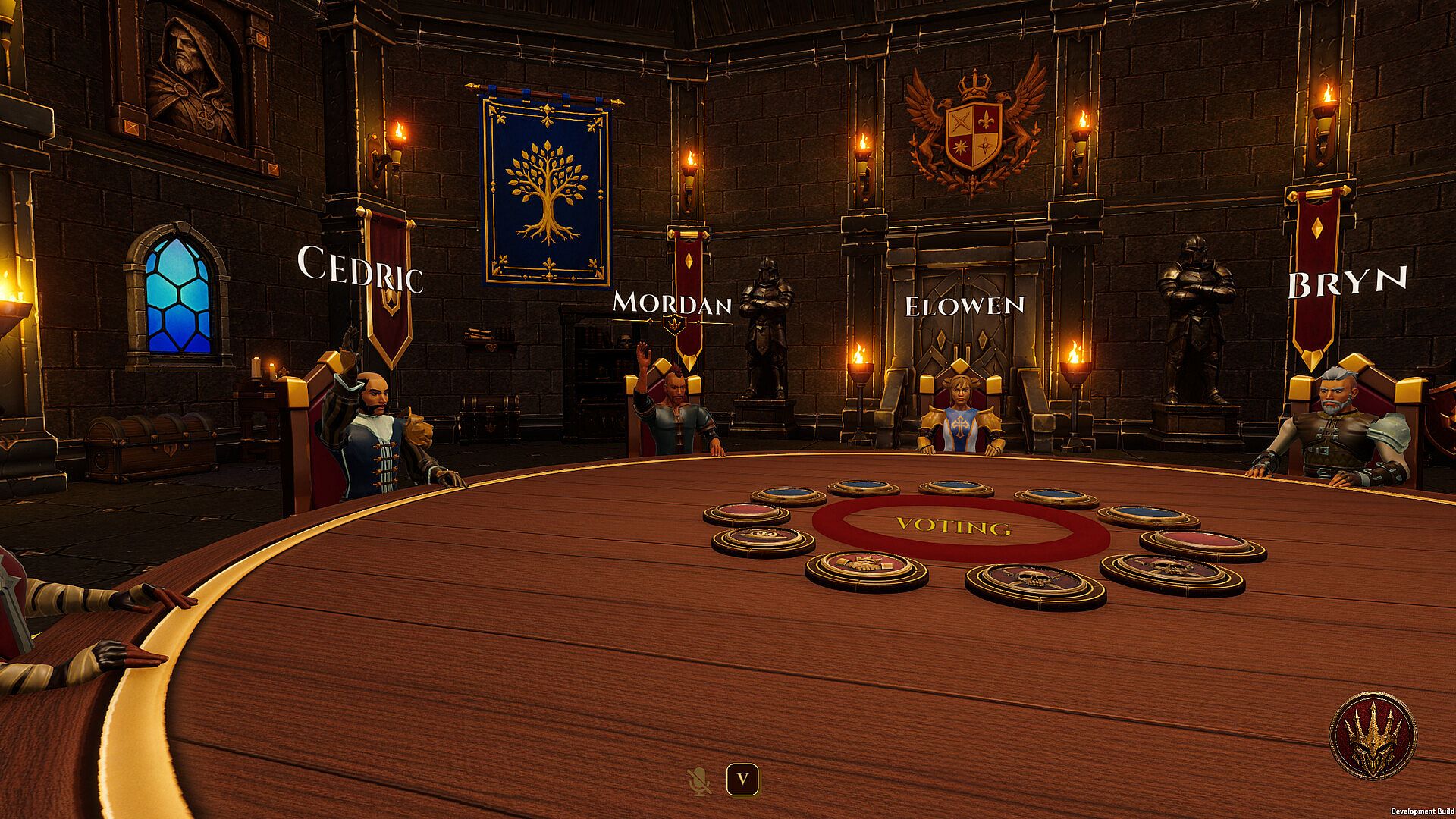
Which scroll did the man across from you hold his seal over? Who did he look at? Did his hand go up in the vote, or didn't it?
The dead keep listening but cannot speak. The silence of a body slumped over the table is part of the game as well.
Three roles, three kinds of loneliness
Loyal Knight — To protect the kingdom you must pass five royal decrees, or find and execute the Dark Heir. You don't know who your allies are. Neither does the man beside you.
Traitor — You know your comrades. You only need to pass six dark edicts, or seat the Dark Heir in the Vizier's chair. The hard part isn't winning — it's looking loyal.
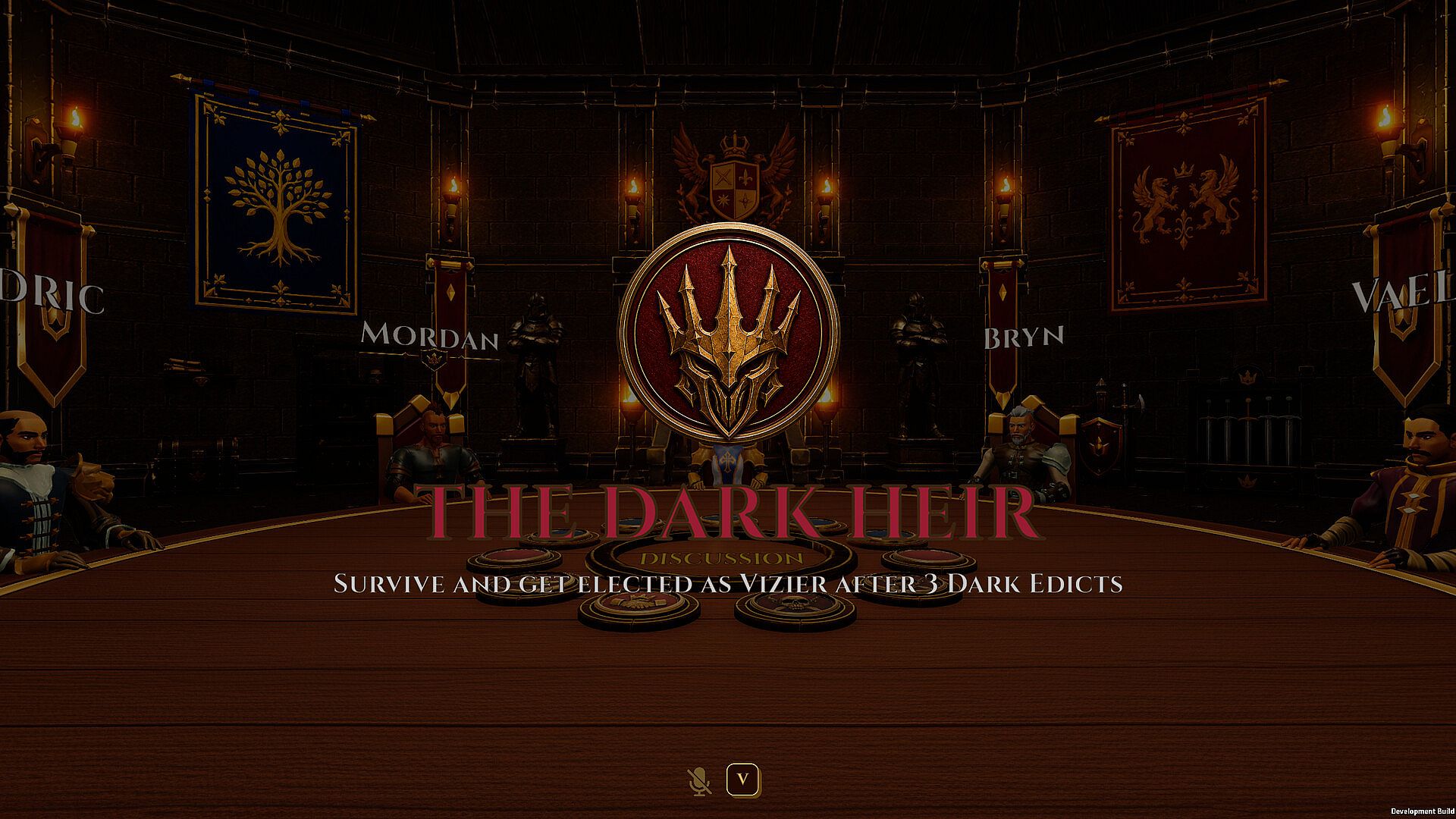
The Dark Heir — Your goal is to survive. At small tables the traitors know you; but as the table grows you're left alone — they know you, and you don't know them.
(insert role emblems)
The crown circles, the decree passes
Each round one player wears the crown. They nominate a Vizier to the table — and from that moment, the discussion begins.
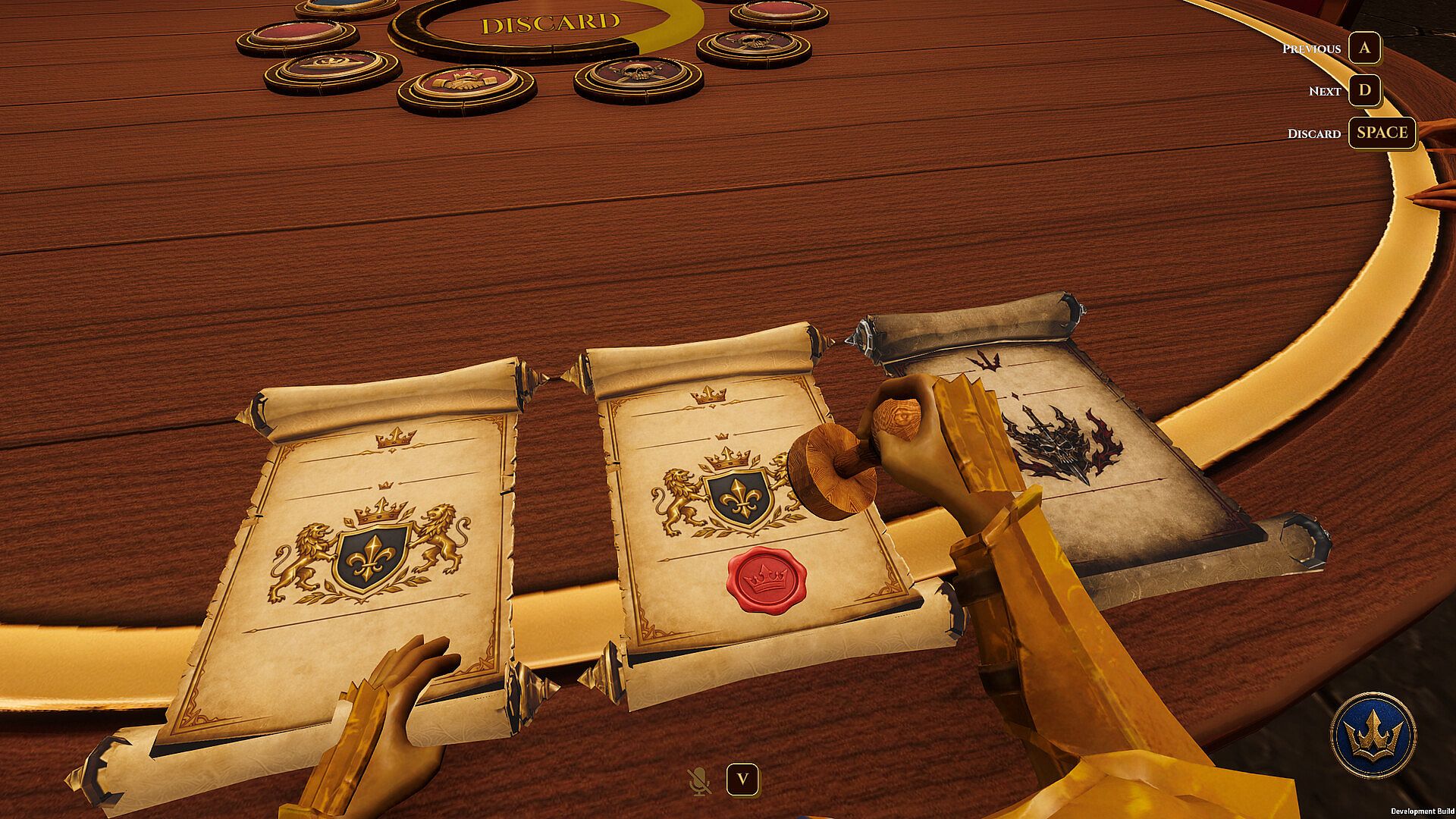
The table votes on the pair. If approved, the King draws three decrees, secretly discards one, and hands the remaining two to the Vizier. The Vizier seals one of them.
No one knows which decree was discarded. Only those two know — and both of them can lie.
As dark edicts pile up, power falls into the King's hands: he can inspect a player's role, choose the next King himself, or execute someone at the table.
Silence is consent
At this table you don't have to do anything to say "yes." Anyone who does nothing is counted as having approved.
Whoever wants to object signals quietly. For the whole duration, no one can see who objected — you can't calculate who will raise their hand at the last second.
When time runs out, the objections are revealed at once and the hands go up together. In that moment everyone at the table learns the same thing: who stayed silent, and who resisted.
Features
5–10 players — with real people, real voices
Built-in voice chat — you're talking the moment you enter the game
Character customization — outfit, skin, eye and hair color
Open or password-protected rooms — play with strangers or lock the room to your friends
6 languages — Turkish, English, German, Spanish, Russian, Simplified Chinese