


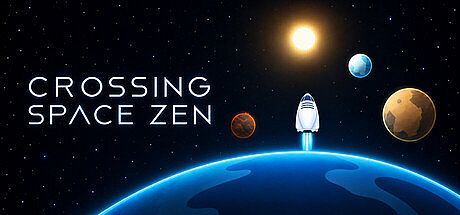


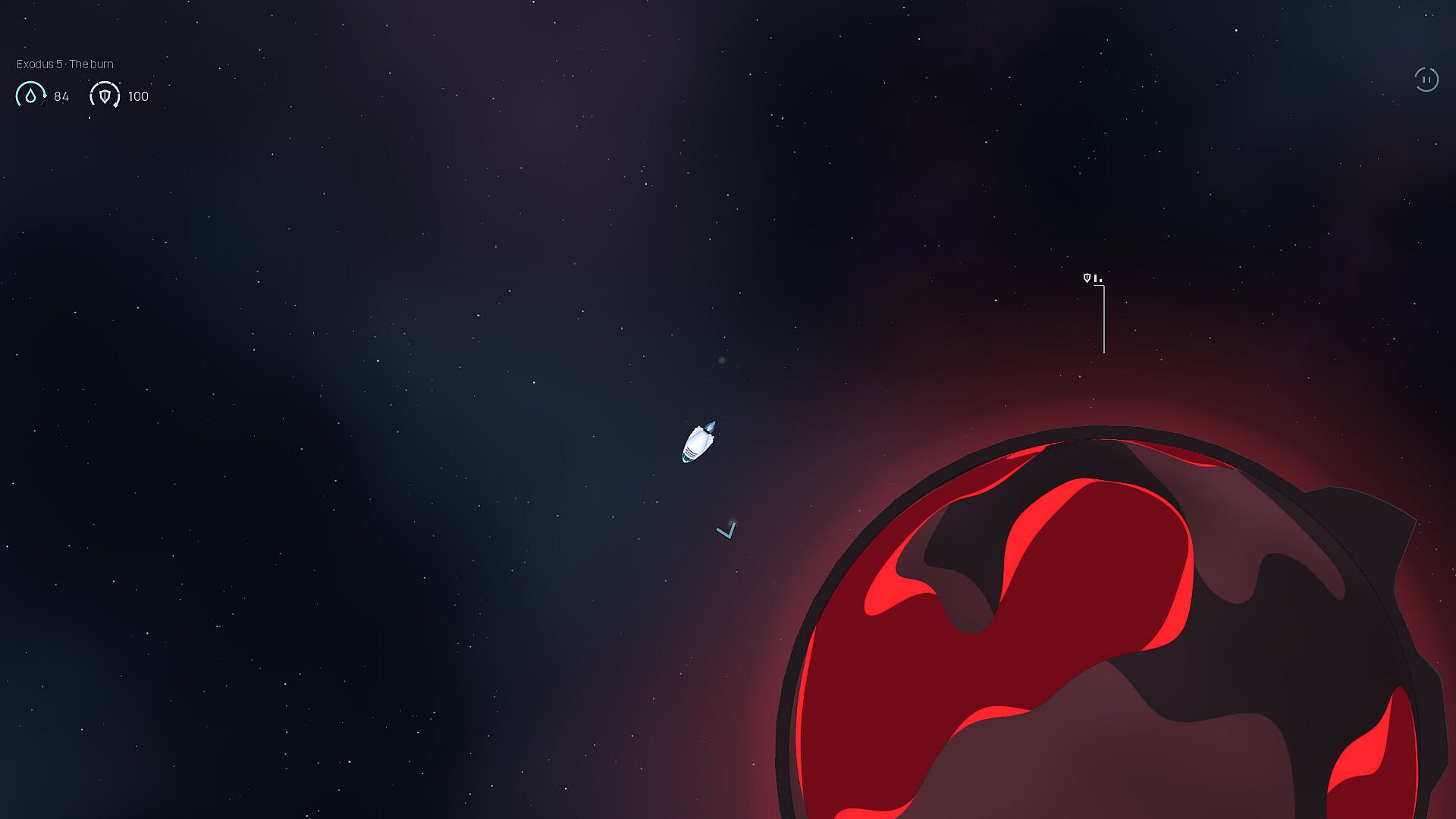
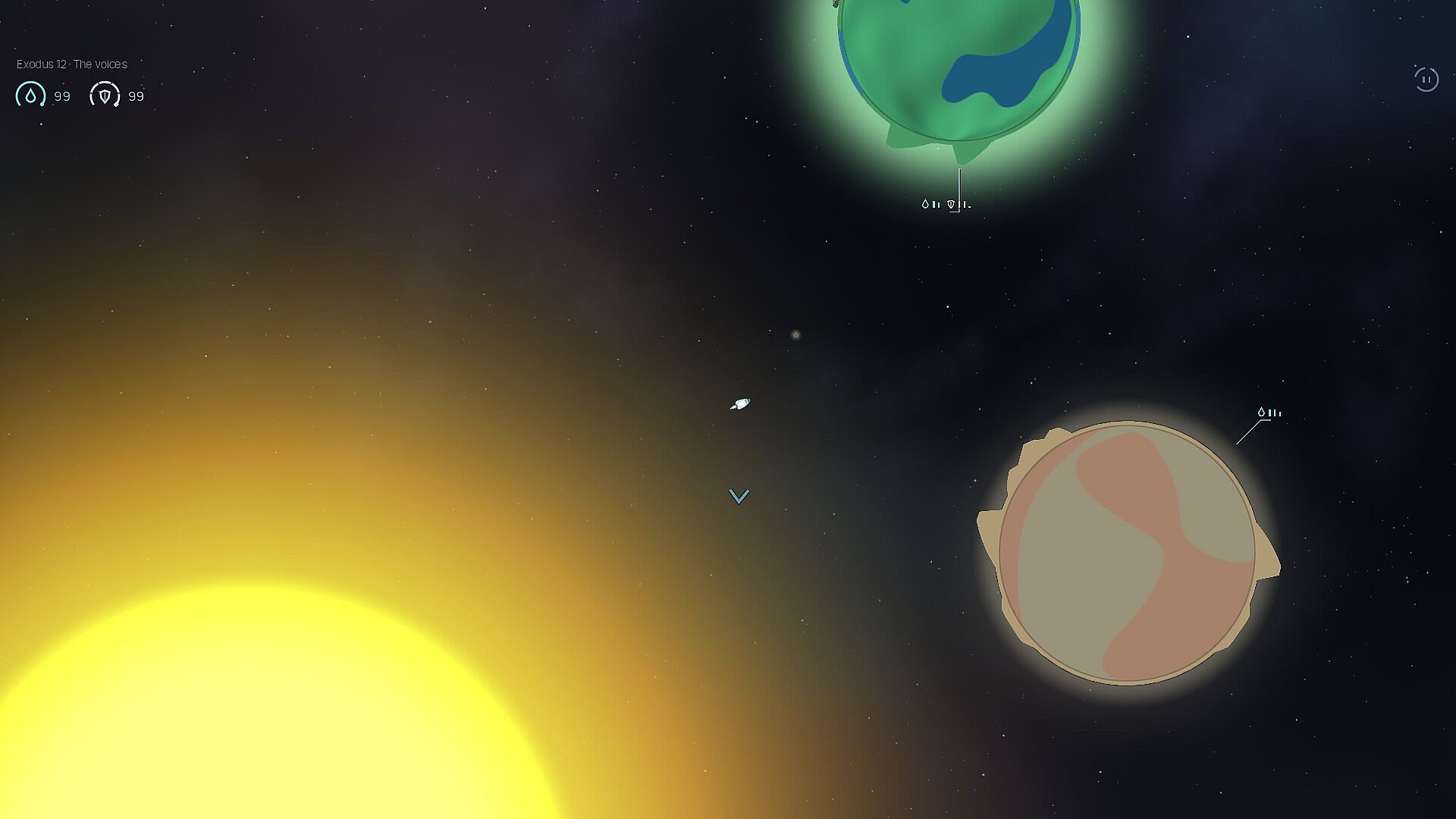
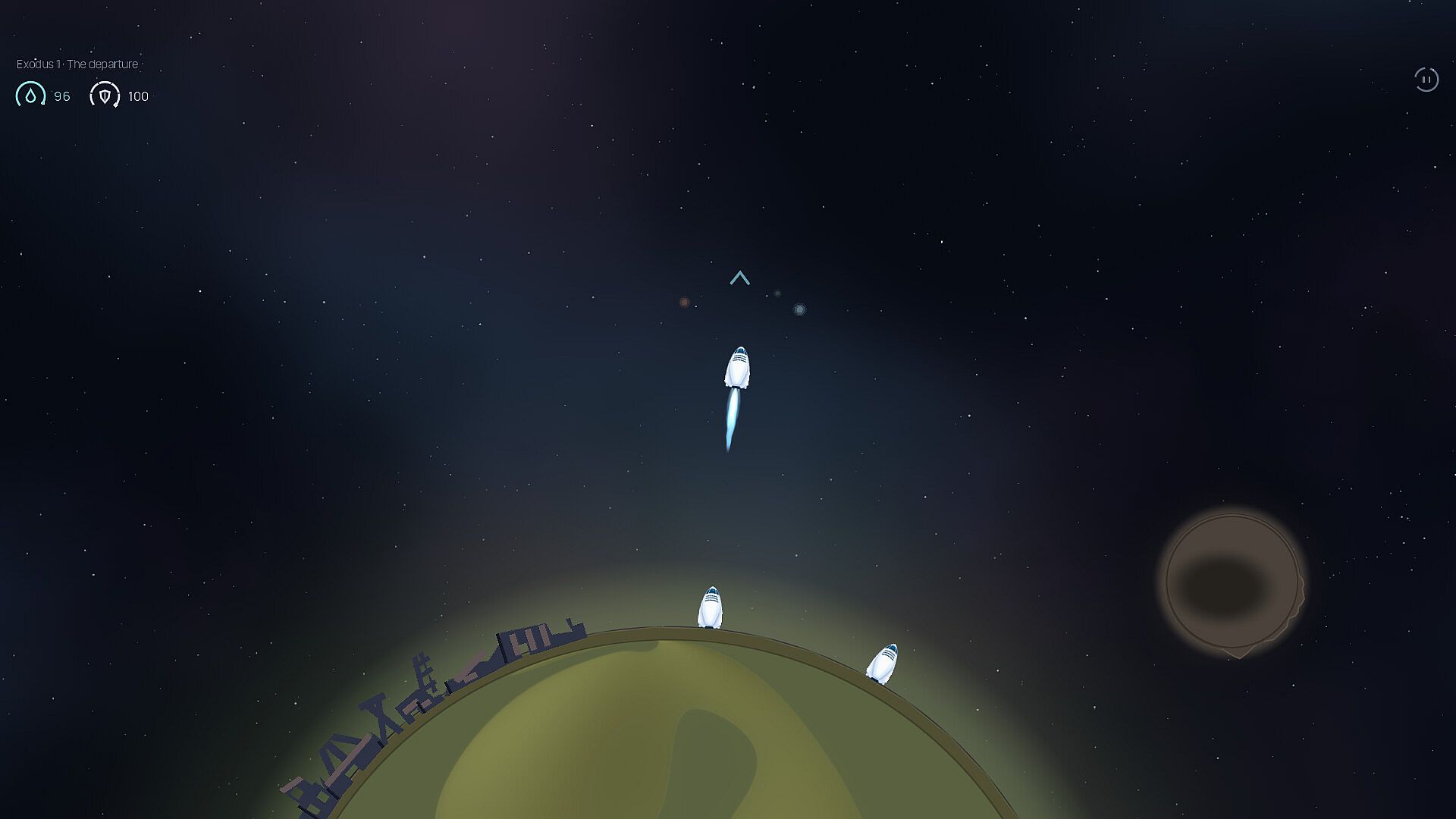
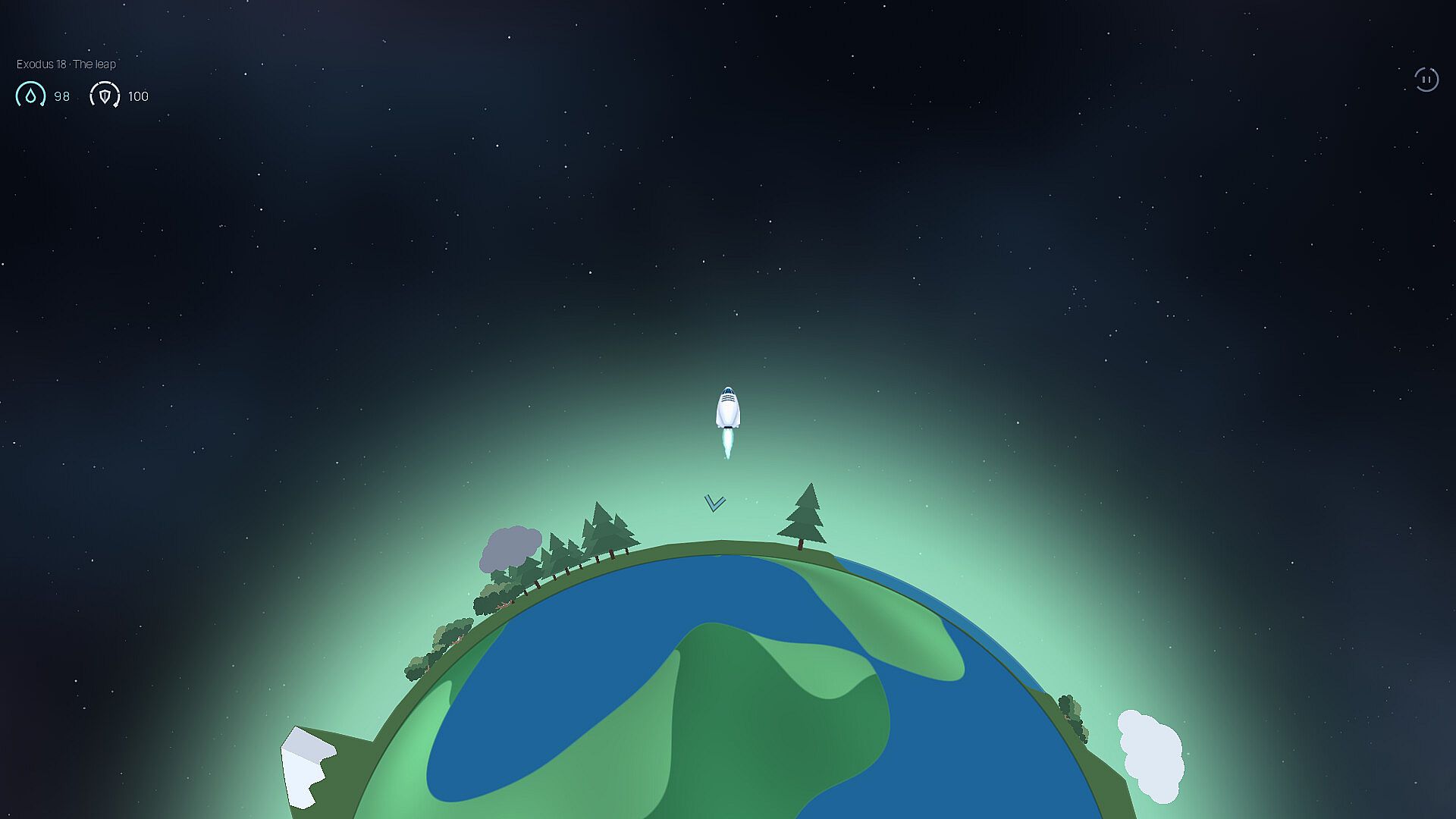
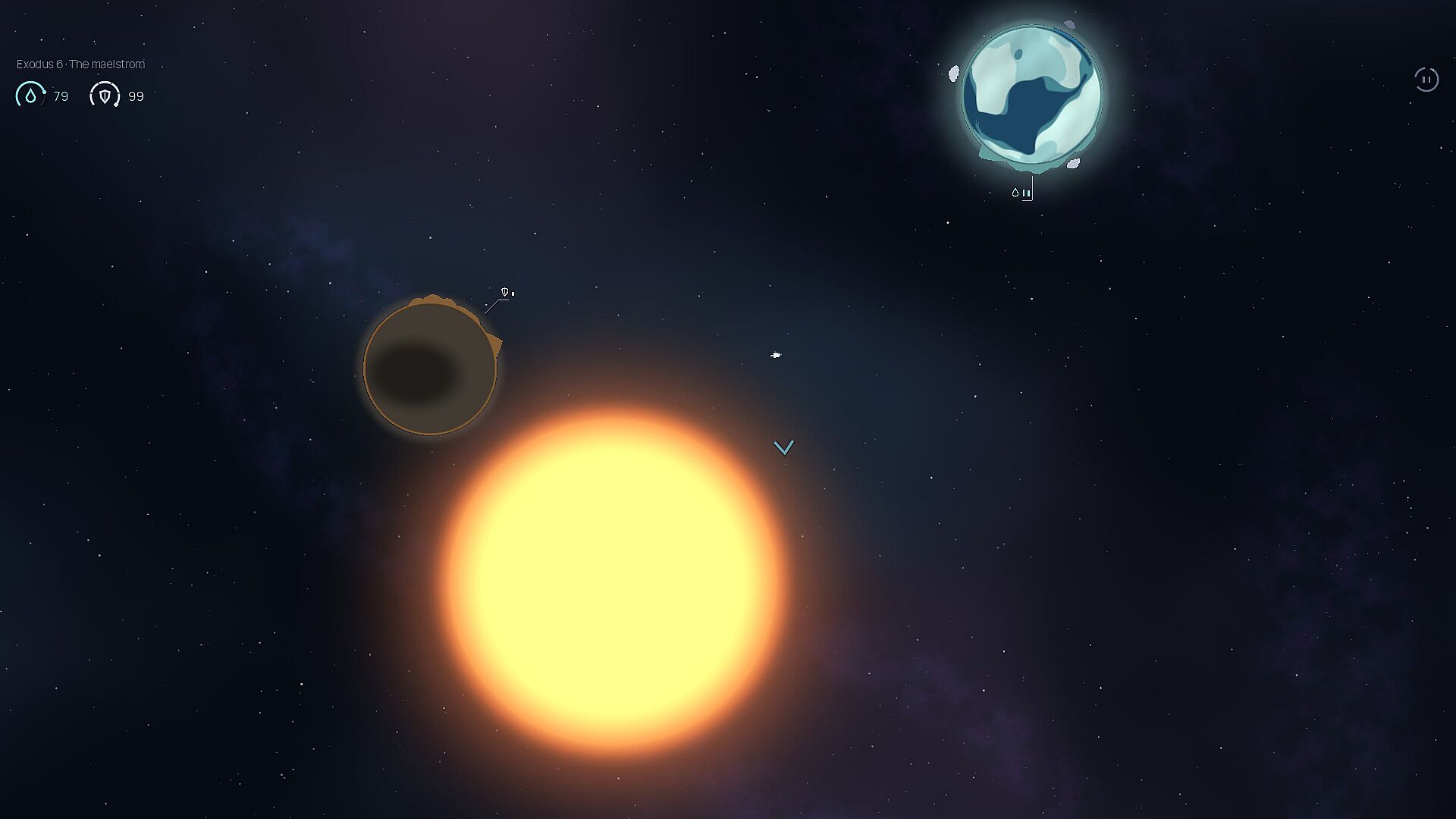
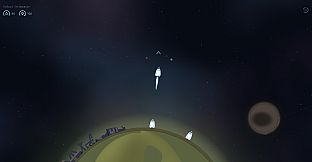

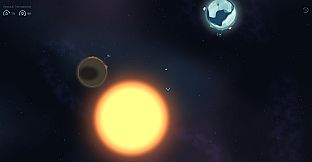
Crossing Space Zen is a singleplayer 2D space exploration adventure that puts players in control of a small ship navigating realistic gravitational forces across planetary systems. The core experience centers on precise flight mechanics where inertia and gravity dictate movement rather than direct speed or power. Players manage limited resources like water while protecting the hull during approaches to varied celestial bodies including suns, frozen worlds, rings, and black holes.
Gameplay
Flight relies on short bursts of thrust combined with orbital paths created by gravity. A gentle push sets the ship on a curving trajectory that can become a stable orbit around a planet or moon. Additional thrust adjustments allow course corrections or safe landings on surfaces that differ in size, composition, and hazards. Without any weapons, survival depends entirely on positioning and timing to avoid collisions or environmental threats. Resource management adds another layer, as collecting water becomes essential for sustaining the journey while hull integrity must be monitored during close passes or landings.
Each approach to a new location presents unique challenges based on the surrounding objects and their gravitational pulls. Moons and rings create tighter orbital windows, while black holes demand careful distance management. The absence of combat shifts focus to observation and planning, rewarding players who learn to read trajectories and anticipate gravitational influences over multiple attempts at the same route.
Game Modes
Exodus mode structures the main campaign around 18 handcrafted crossings. These segments follow the narrative of a people seeking a new settlement, with each crossing presenting a self-contained challenge. Players can take side paths to gather water or perform repairs before committing to the primary route. Completed crossings remain accessible, allowing repeated practice on earlier sections if a ship is lost later in the sequence.
Drift mode opens the experience into a freeform environment. Here players select their own paths through procedurally connected areas, discovering planets and deciding landing sites without a fixed sequence. The open structure supports relaxed exploration where shutting off the engine lets the ship coast while the player observes the surroundings and chooses the next destination based on visible landmarks or resources.
Exploration and Mechanics
Landing requires matching velocity and angle to the target surface while accounting for local gravity. Different planet types demand distinct techniques, from low-gravity moons that allow longer glides to denser worlds that pull the ship harder during descent. Hazards such as asteroid fields or intense radiation zones around stars force route adjustments that test the same inertia-based controls used for travel.
The game emphasizes patience and repetition over rapid progression. Players refine their understanding of orbital mechanics through trial and error, with each successful landing or water collection reinforcing the core loop of thrust, coast, and adjust. Desktop release ensures the full experience runs without interruptions from advertisements or additional purchases.
Is It Worth Playing?
Crossing Space Zen suits players drawn to physics-driven singleplayer adventures that prioritize thoughtful navigation over action or combat. Its focused mechanics reward those who enjoy mastering orbital paths and resource decisions in a quiet setting. With two distinct modes offering structured progression alongside open exploration, the game provides clear variety for different play styles. Availability on PC with no extra costs makes it accessible for anyone interested in deliberate spaceflight simulation without external pressures.











