


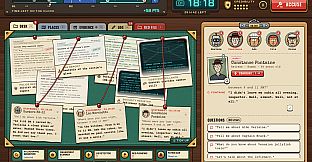
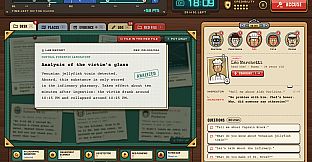
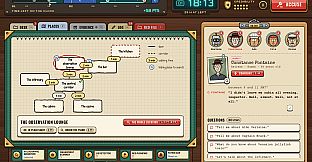



Deadline Detective is an investigation and deduction game in the indie casual adventure genre for PC. Players step into the role of an inspector tackling cases in a retrofuturistic setting filled with robots, eccentric suspects, and space liners. The core loop revolves around examining case files, searching locations, questioning suspects, and piecing together evidence under a strict time limit.
Gameplay
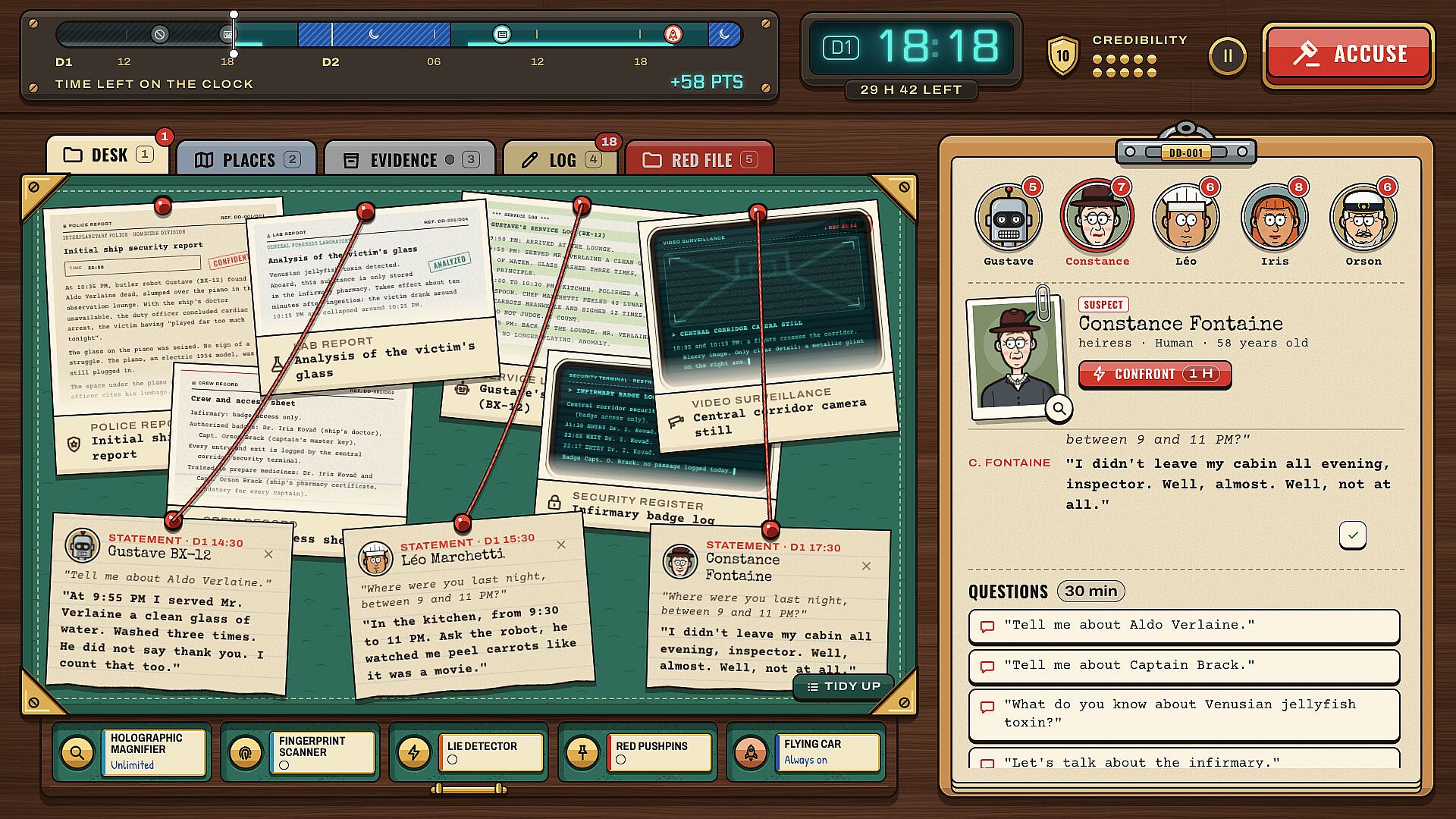
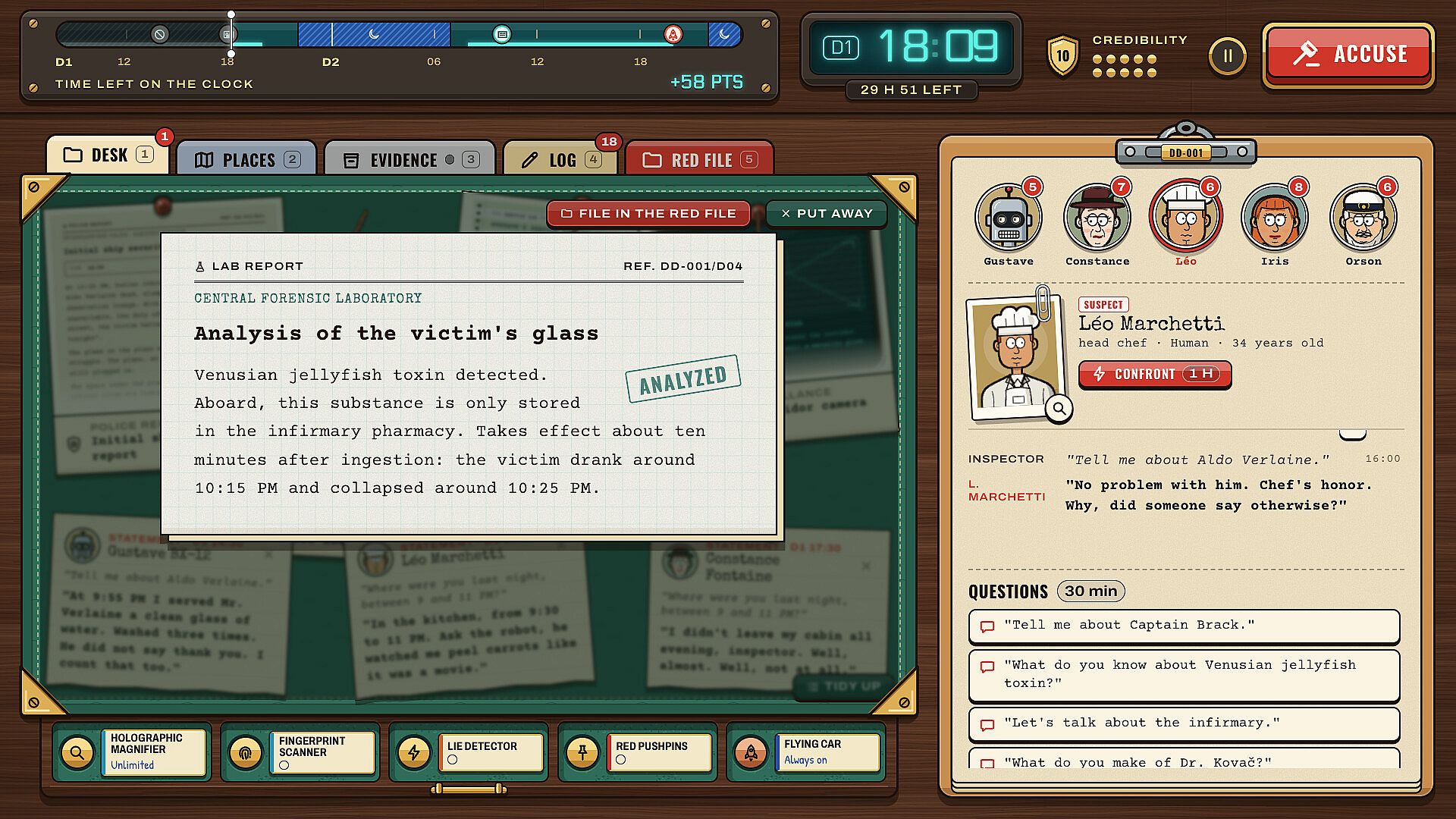
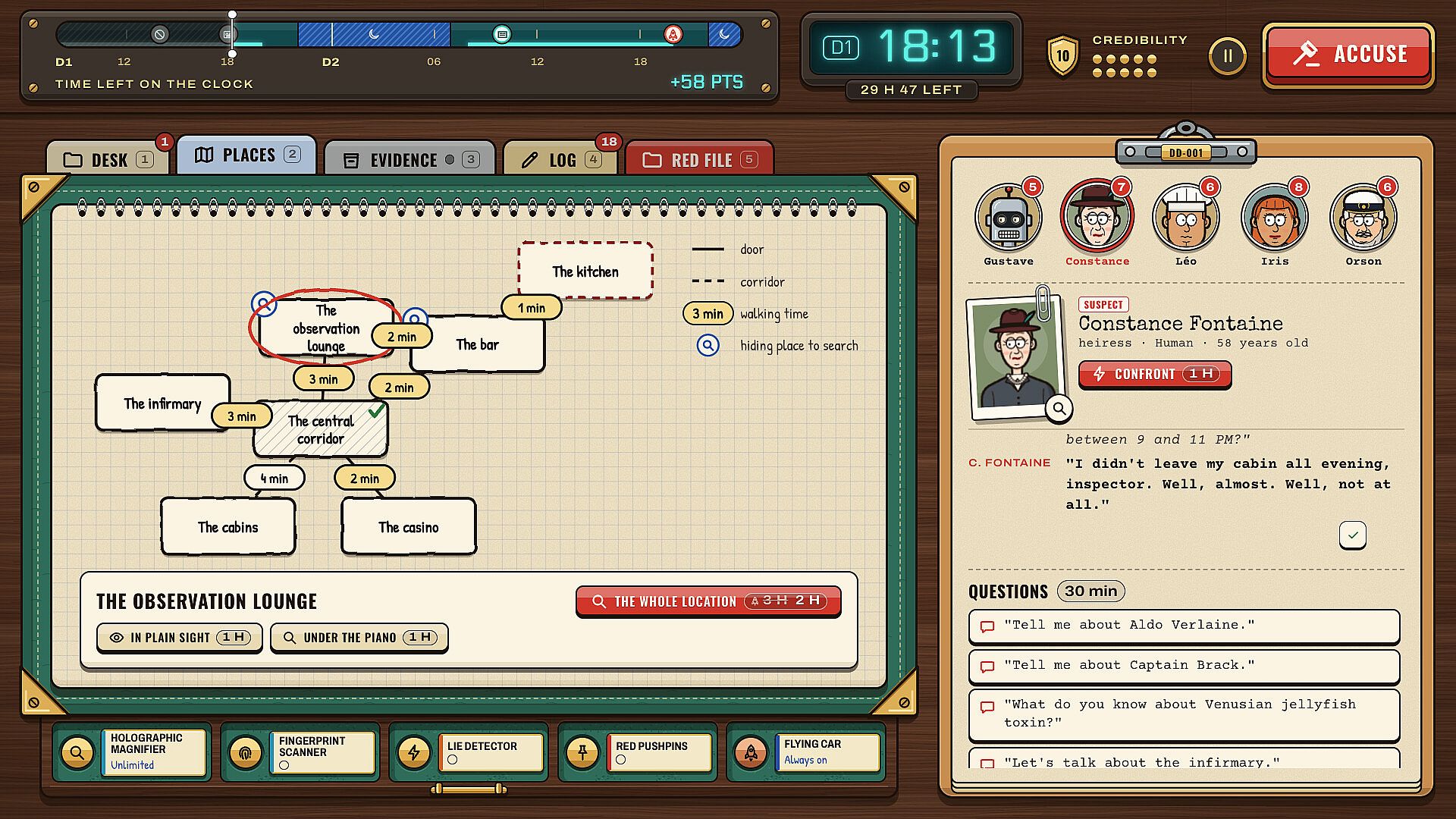
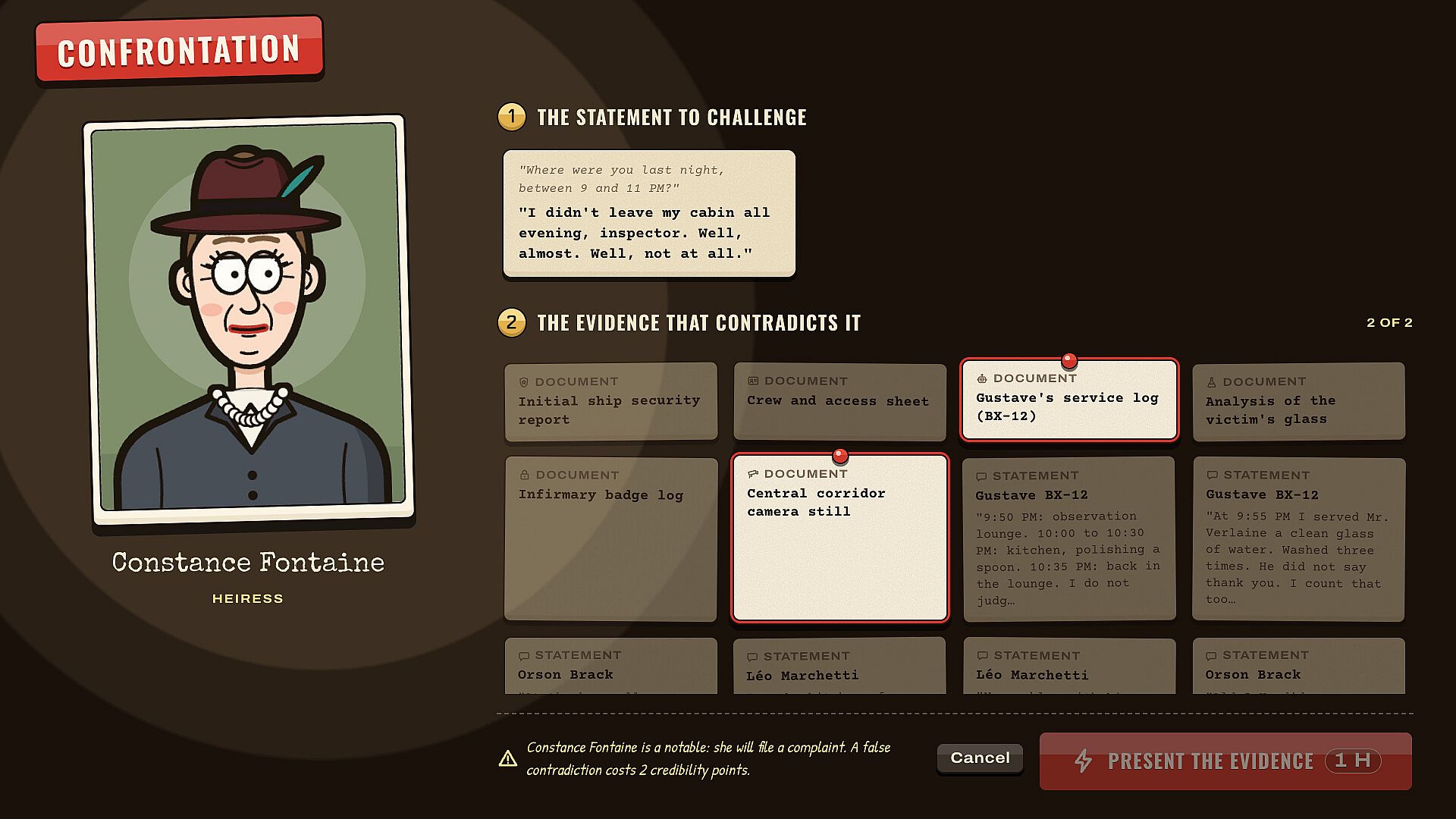
Each investigation begins with a desk full of reports, witness statements, and seized evidence. Players read documents, visit locations to search for clues, and question suspects about emerging leads. Not every statement proves truthful, even from innocent parties. Documents can be arranged on the desk, with contradictions linked using red string to build connections. Confronting suspects with these links can expose lies and unlock new leads, though errors reduce credibility.
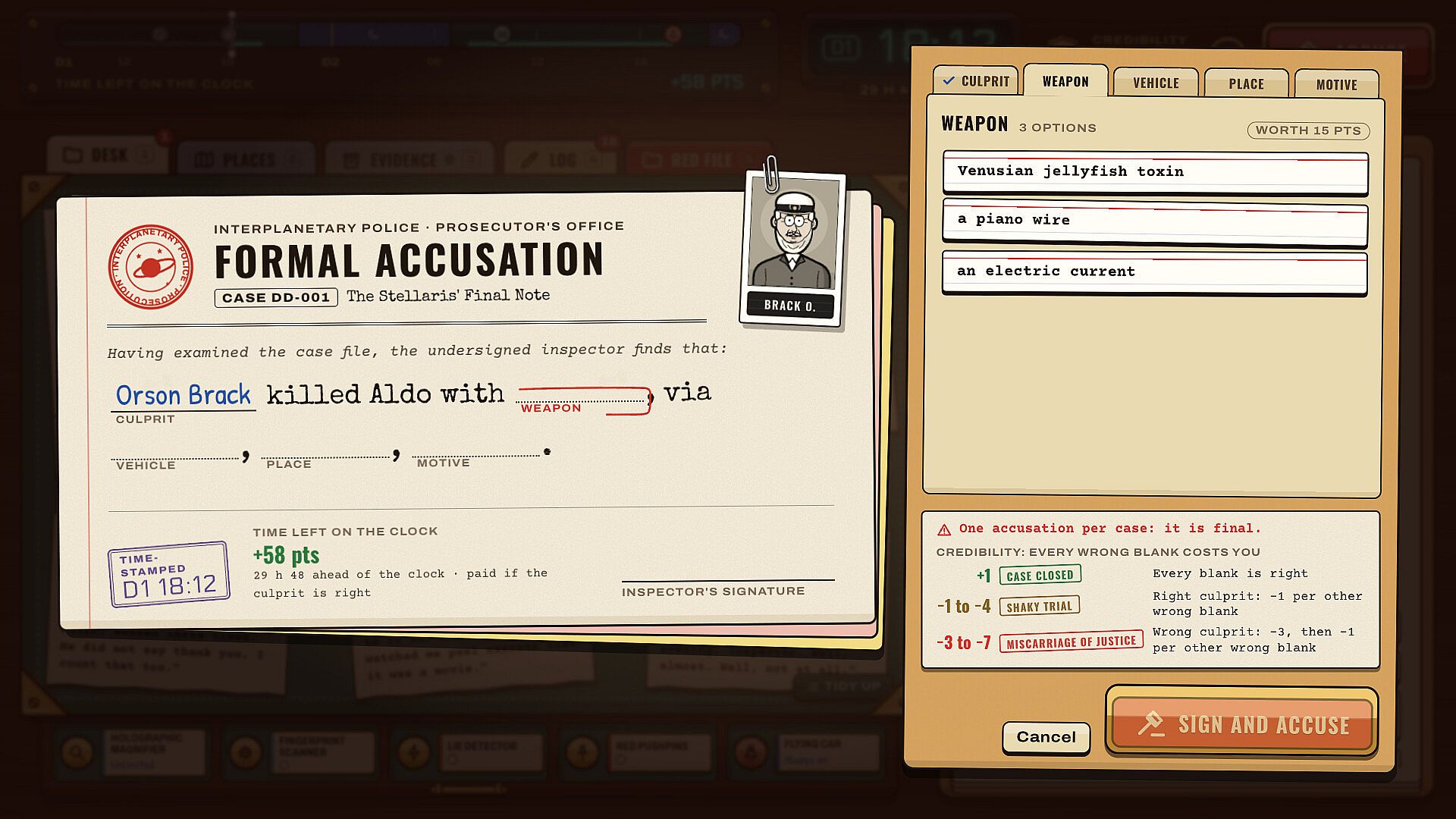
Time pressure shapes every decision. Each investigation allows 48 hours, and actions such as questions, searches, or lab requests advance the clock. The lab eventually closes, suspects retire for the night, and certain leads expire. Players may submit an accusation once they feel ready, but only one attempt is permitted to identify the culprit and reconstruct events. Deciding whether to act on current evidence or await further reports adds tension to the process.
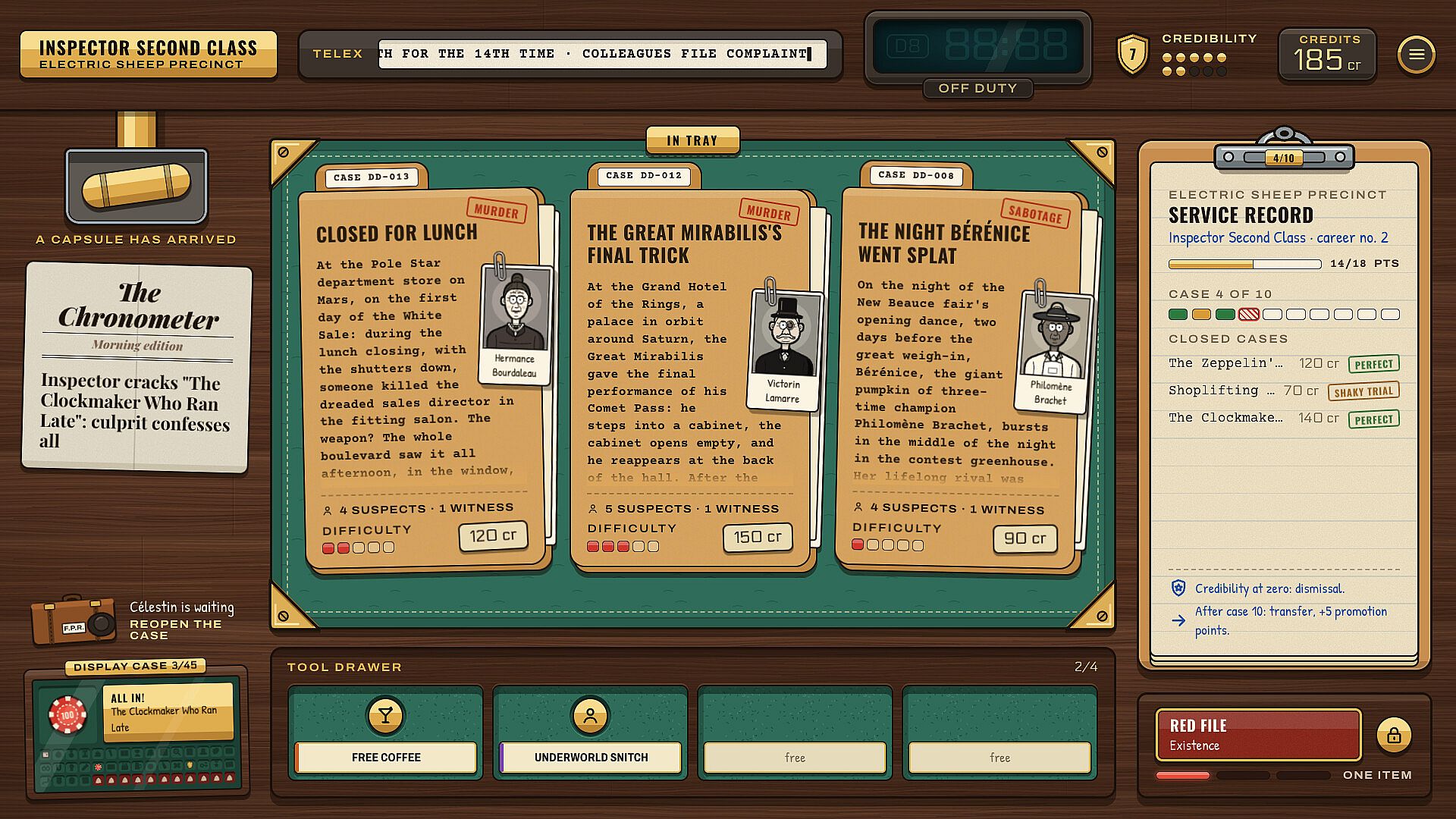
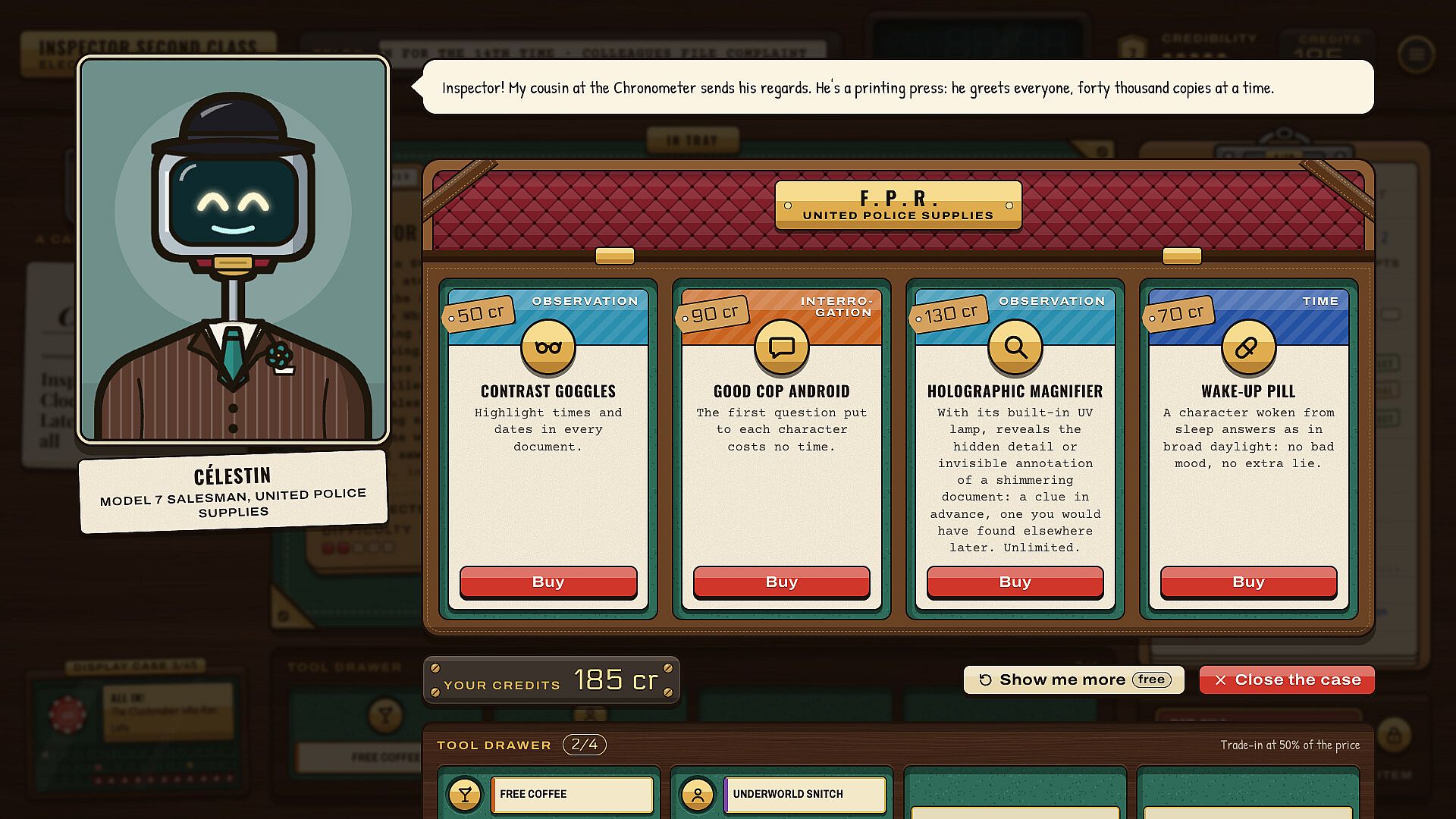
Career progression influences available options. Strong results across cases improve rank and unlock choices for future investigations. Between cases, the traveling robot salesman Célestin sells tools such as a lie detector, fingerprint scanner, or flying car. These items expand search methods, lead testing, or time-saving options, yet drawer space remains limited, forcing players to curate their kit carefully. No tool provides automatic solutions.
Game Modes
Singleplayer centers on building a career through sequential investigations. Results carry forward, affecting credibility and access to new cases. The mysterious Archivist leaves traces across files, including a recurring signature and catalogue cards. Collecting these in a Red File triggers letters and reveals involvement in certain crimes. The narrative unfolds in three acts, culminating in direct communication from the Archivist and special investigations that test prior discoveries.
Multiplayer supports shared lobbies where the host owns the game and others join freely via browser or in-game. All participants receive the same investigation simultaneously. Each follows independent leads, questions suspects, and chooses when to submit an accusation. The shared clock runs continuously without pauses, and accusations stay hidden until a collective reveal. Post-case results display the solution alongside individual choices and a leaderboard.
Story and Progression
Seemingly unrelated crimes gradually connect through the Archivist's signature. Early details like misplaced catalogue cards evolve into a personal correspondence. The Red File preserves findings even if a career ends in dismissal. Special investigations marked by the Archivist lead toward a final confrontation where the player's accusation shapes the story's conclusion. This thread rewards consistent play across multiple careers.
Is It Worth Playing?
Deadline Detective suits players who enjoy methodical deduction, time management, and narrative discovery in a compact indie package. The singleplayer career offers steady progression with meaningful tool choices and an overarching mystery. Multiplayer adds competition through independent investigations and shared reveals without requiring additional purchases from participants. The 48-hour limit and single-accusation rule create consistent pressure that rewards careful planning over haste. Those drawn to retrofuturistic settings, evidence organization, and branching story outcomes will find the systems rewarding. The game remains available on PC with its described features intact.