






Dream Broadcast Simulator to strategiczna gra symulacyjna dla jednego gracza, łącząca spokojne zarządzanie z elementami surrealistycznymi. Gracz wciela się w rolę nocnego operatora stacji radiowej w świecie, w którym wszyscy śpią. Wybiera i układa taśmy snów, wypełniając trzy sloty nadawania, a także dostraja sygnał, by uzyskać najlepszą reakcję słuchaczy. Rozgrywka stawia na przemyślane decyzje, a nie na szybkie reakcje. Krótkie sesje zachęcają do wielokrotnego powrotu dzięki mechanikom proceduralnym i kolekcjonerskim.
Rozgrywka
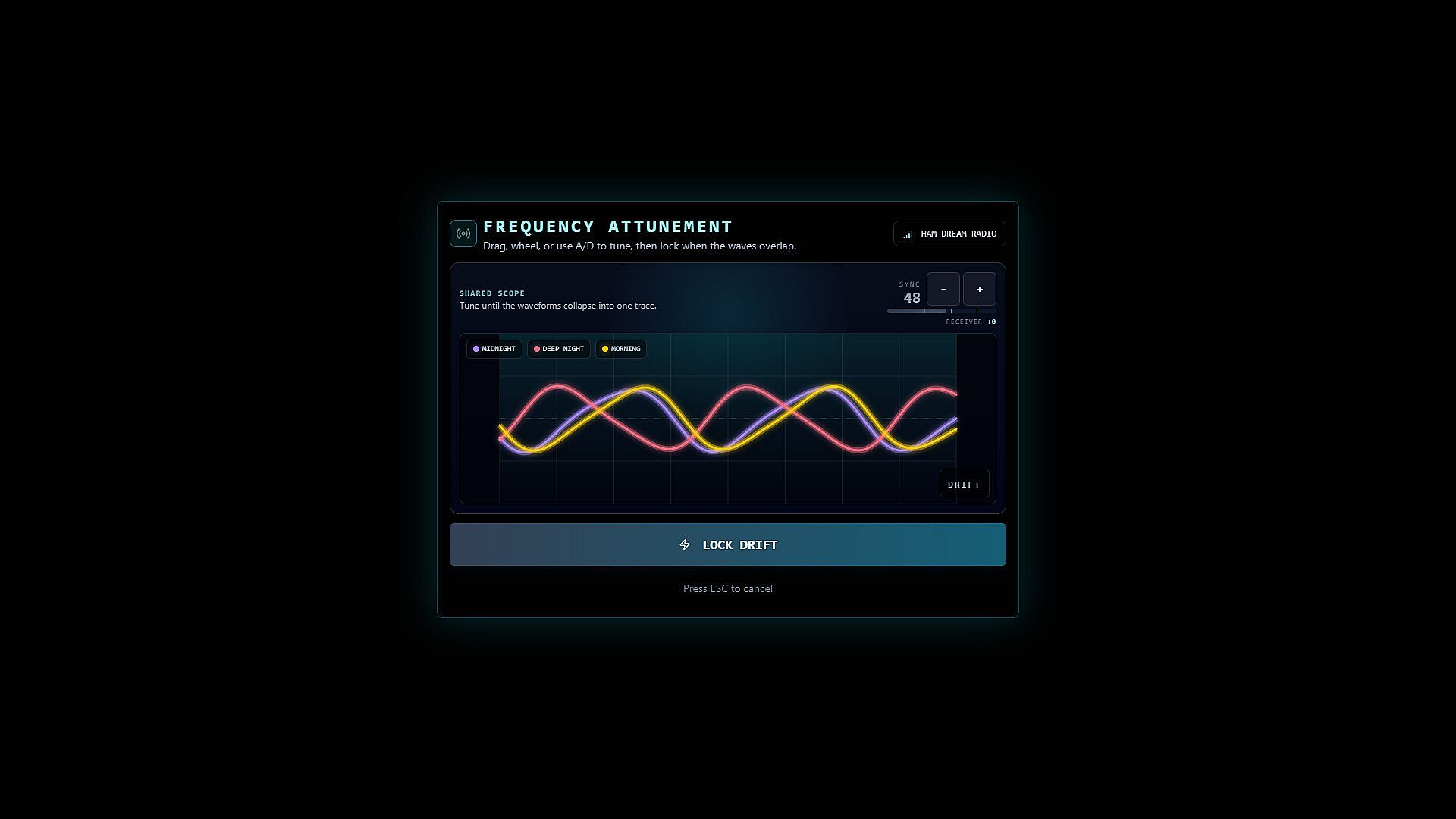
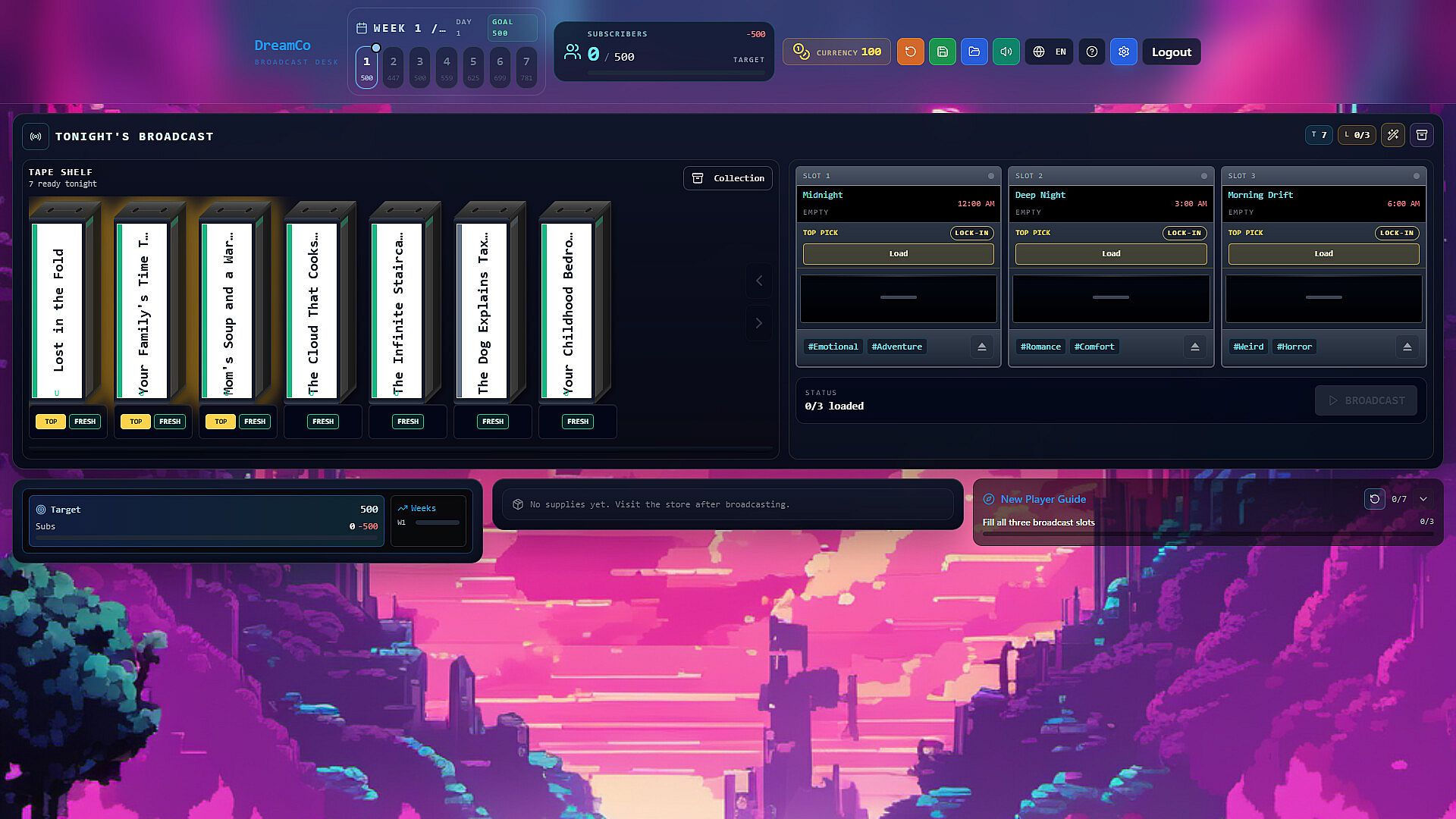
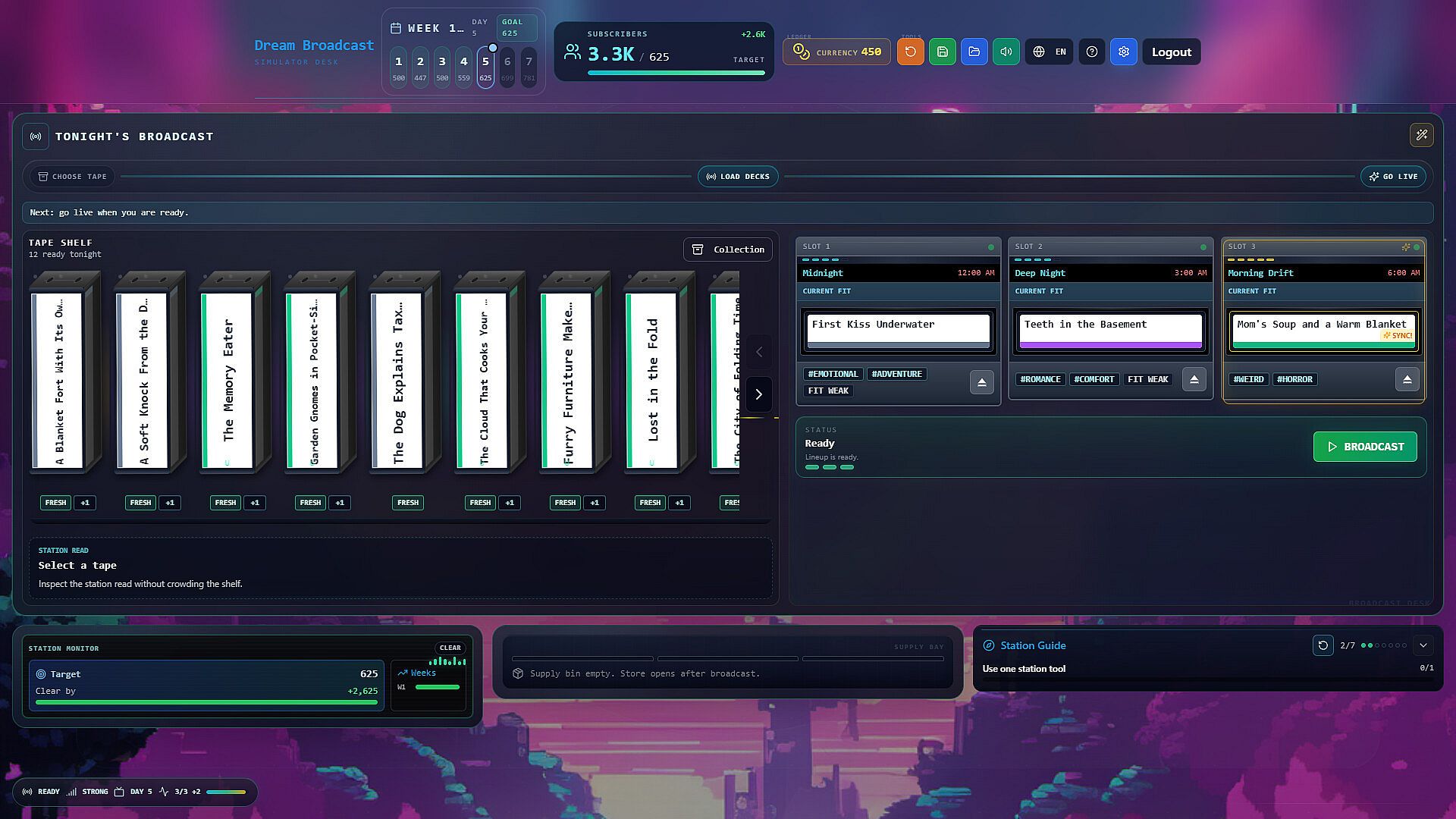
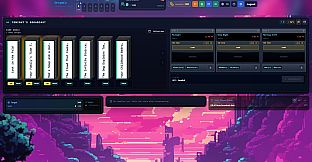
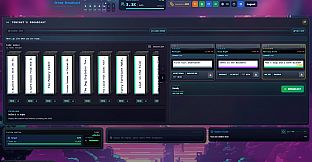
Podstawowa pętla polega na przygotowaniu nocnej audycji z dwunastu dostępnych taśm. Gracz czyta opisy, oceniając nastrój, dopasowanie do slotu oraz ukryte częstotliwości, a następnie wybiera trzy taśmy i przypisuje je do slotów: Północ, Głęboka Noc lub Poranny Dryf. Każdy slot wymaga innej strategii - ostatni potrzebuje kojących treści, a środkowy intensywniejszego materiału. Po ułożeniu audycji następuje faza dostrajania, w której trzeba zgrać trzy falujące przebiegi, by osiągnąć harmoniczną blokadę i poprawić wynik.
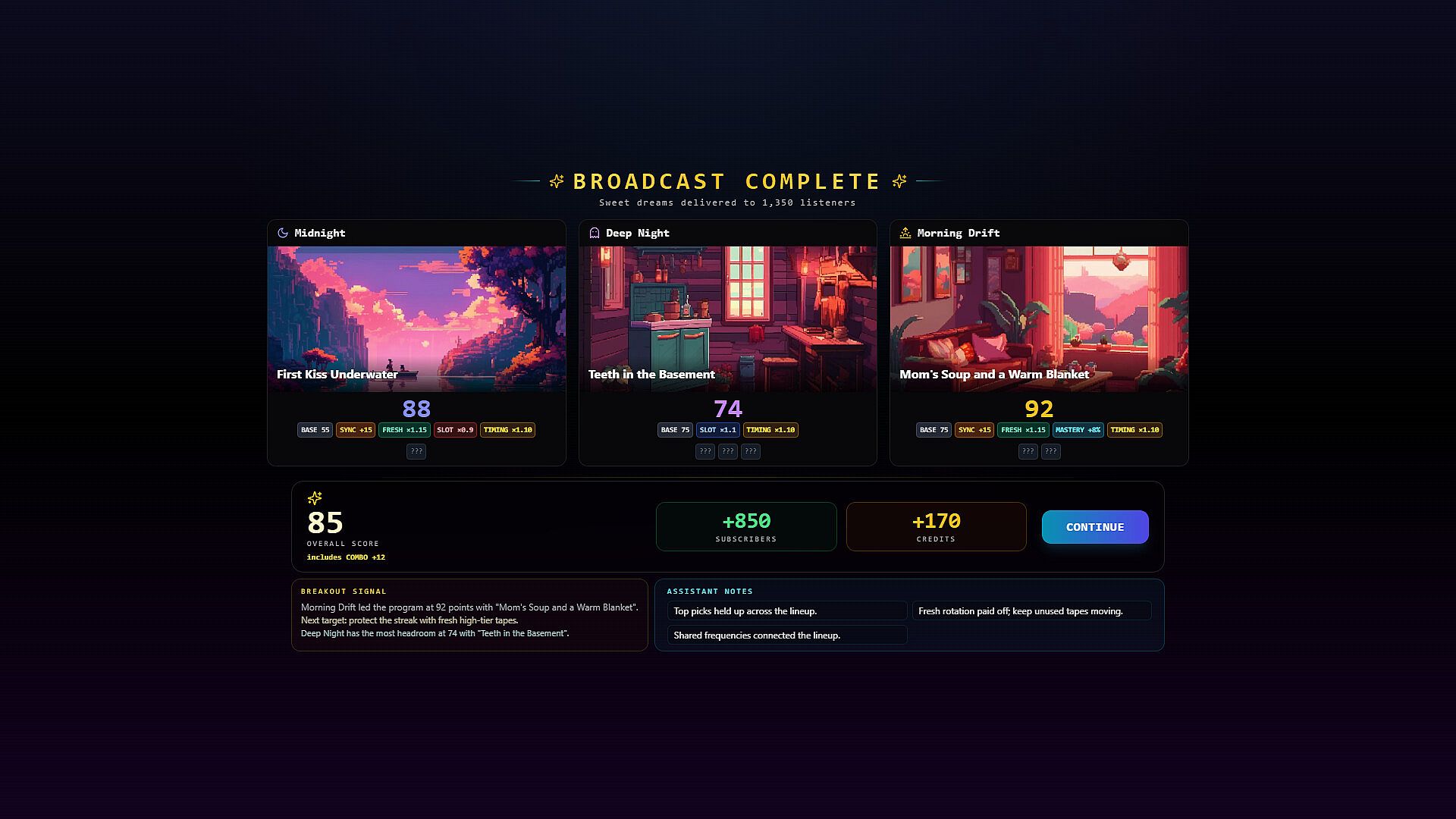
Po emisji pojawia się szczegółowa analiza: wyniki slotów, jakość timingu, przyrost słuchaczy, zarobione środki oraz efekty combo. Te dane pomagają planować kolejne audycje i dostrzegać własne nawyki programowania. Zebrane kredyty pozwalają ulepszać narzędzia sygnału, funkcje dla słuchaczy oraz sprzęt odkrywczy, odblokowując nowe taśmy i mutacje snów. Proces powtarza się w zwartych cyklach, sprzyjających skupionej grze bez nadmiernej długości.
Tryby gry
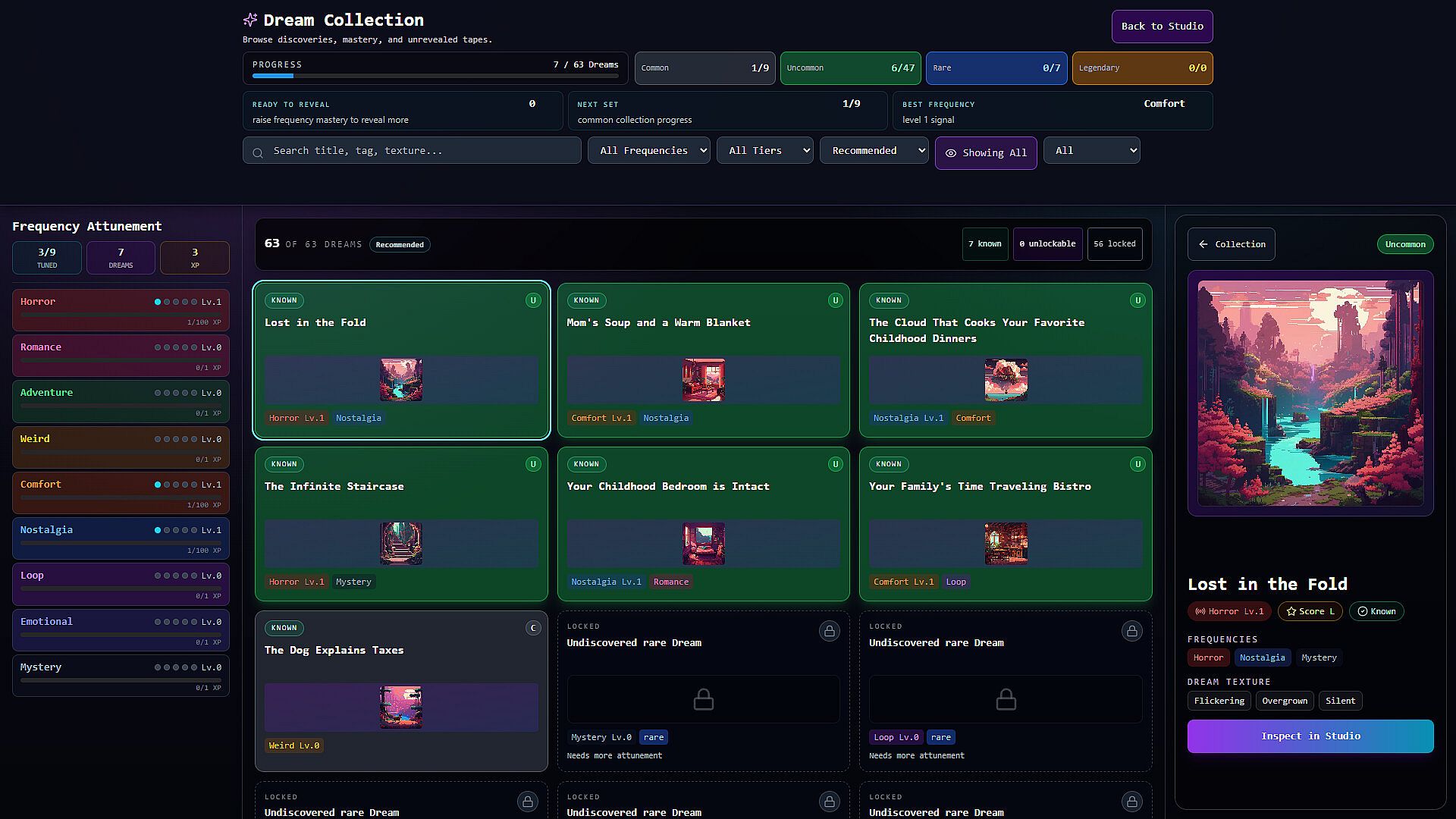
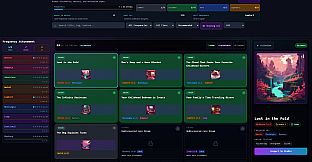
Główna rozgrywka opiera się na standardowej sekwencji nocnych audycji - budowaniu listy, dostrajaniu sygnału i analizie wyników przez kolejne noce. Dziennik Snów pełni rolę trwałego archiwum, zapisując każdą odkrytą taśmę wraz z nastrojami, częstotliwościami, historią i wnioskami strategicznymi. Dzięki temu przeszłe audycje stają się praktyczną wiedzą na przyszłość.
Laboratorium Fuzji umożliwia łączenie dwóch odkrytych taśm w nową wersję hybrydową. Powstałe taśmy dziedziczą cechy źródeł, ale tworzą odrębny, grywalny egzemplarz, który wraca do kolekcji. Osobny tryb szybkich audycji wymaga ukończenia dziesięciu pełnych emisji w pięciominutowym limicie czasu, kładąc nacisk na szybkie, lecz przemyślane decyzje programistyczne.
Rozwój stacji i progresja
Rozwój stacji odbywa się poprzez stopniowe ulepszenia kupowane za zarobione środki. Dzięki nim uzyskuje się dostęp do głębszych częstotliwości, dodatkowych taśm oraz zmutowanych wariantów snów, które urozmaicają listy audycji. Rozbudowa kolekcji jest ściśle powiązana z Dziennikiem Snów - regularna gra nagradza nowymi opcjami i lepszymi strategiami dopasowywania taśm do slotów.
Oprawa wizualna i dźwiękowa łączy surrealistyczną sztukę pikselową z proceduralną, atmosferyczną muzyką, która dostosowuje się do wybranego materiału. Menu obsługuje kontrolery, klawiaturę, mysz oraz ekran dotykowy. Dostępność obejmuje narrację, regulację rozmiaru tekstu oraz ustawienia kontrastu.
Czy warto zagrać?
Dream Broadcast Simulator przypadnie do gustu graczom lubiącym przemyślane strategie z krótkimi, powtarzalnymi sesjami i elementami kolekcjonerskimi. Skupienie na optymalizacji listy, dostrajaniu sygnału i analizie po audycji tworzy satysfakcjonującą pętlę informacji dla fanów symulacji i zarządzania. Mechaniki fuzji oraz dedykowany tryb wyzwania dodają głębi kolekcjonerom, nie wydłużając nadmiernie sesji. Jako samodzielne doświadczenie indie z natywnym wsparciem dla Windows i Linux, Steam Cloud oraz osiągnięciami, gra przyciąga miłośników spokojnej, ale refleksyjnej rozgrywki, którzy wolą samodzielne tempo od rywalizacji czy trybów wieloosobowych. Gra znajduje się w fazie przedpremierowej przed planowaną premierą - na razie nie ma recenzji graczy.











