







Event Horizon Research is an indie simulation and adventure game for PC that places players in the role of a solitary researcher aboard an orbital station circling a black hole. The core experience centers on scientific study, capsule construction, and a high-stakes descent into the unknown, all presented in a first-person perspective with instrument-based piloting.
Gameplay
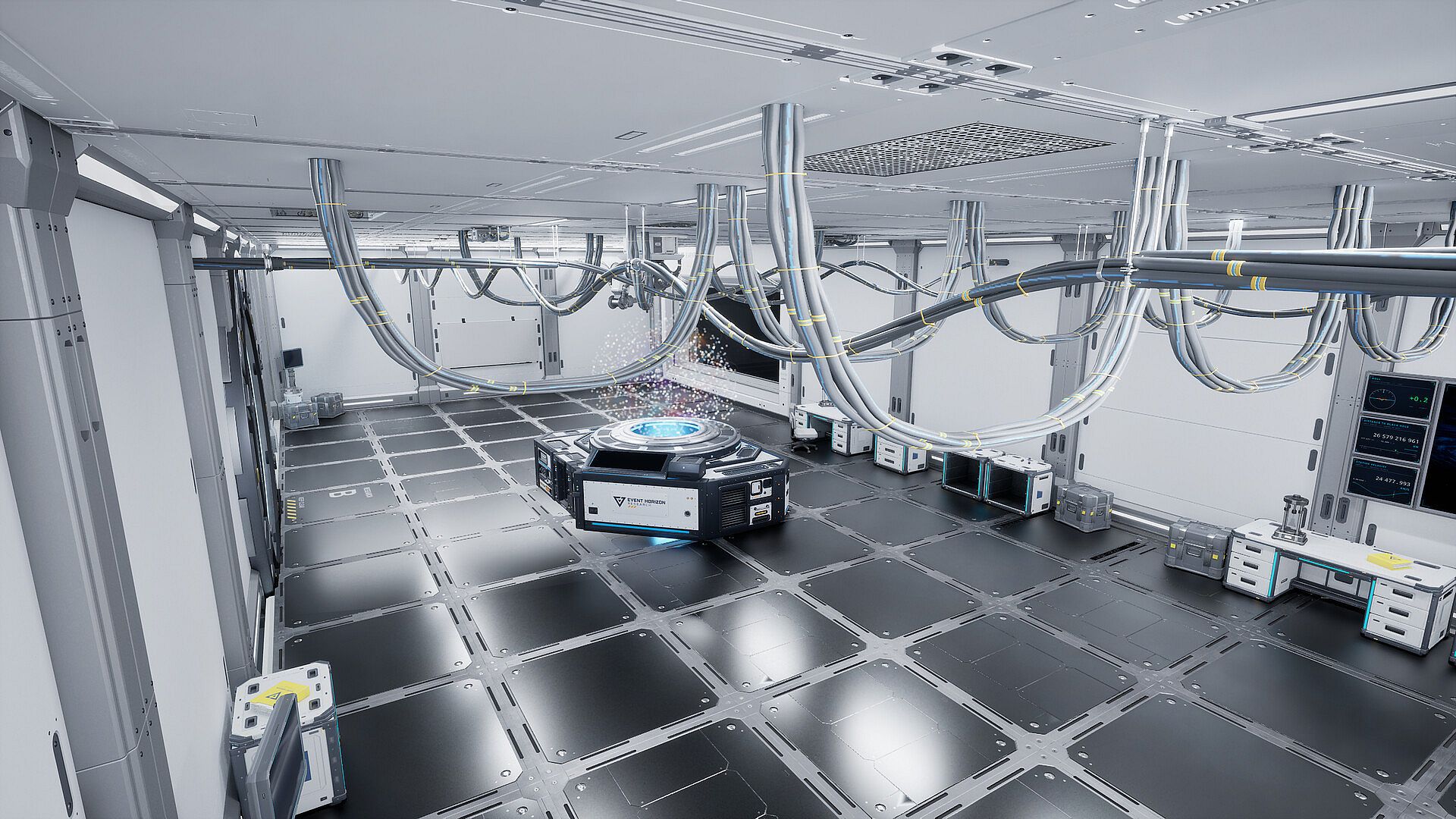
The session begins with awakening alone on the HELIOS research station. The station remains operational despite the absence of the original crew, and the assistant drone VESSEL provides guidance through exploration of the bridge and laboratory areas. Players examine equipment and records left behind to understand prior missions and gather context for the current objective.
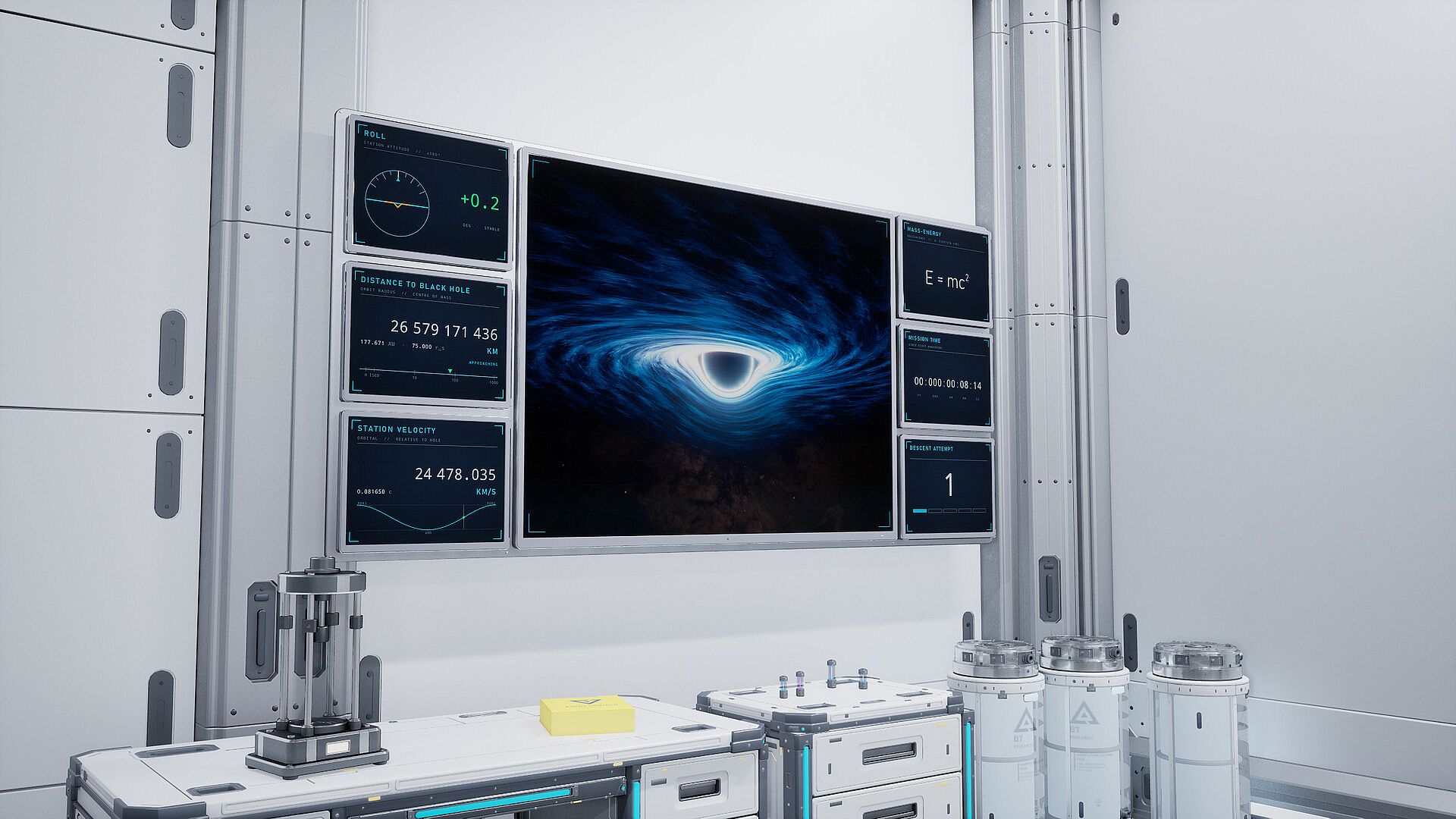
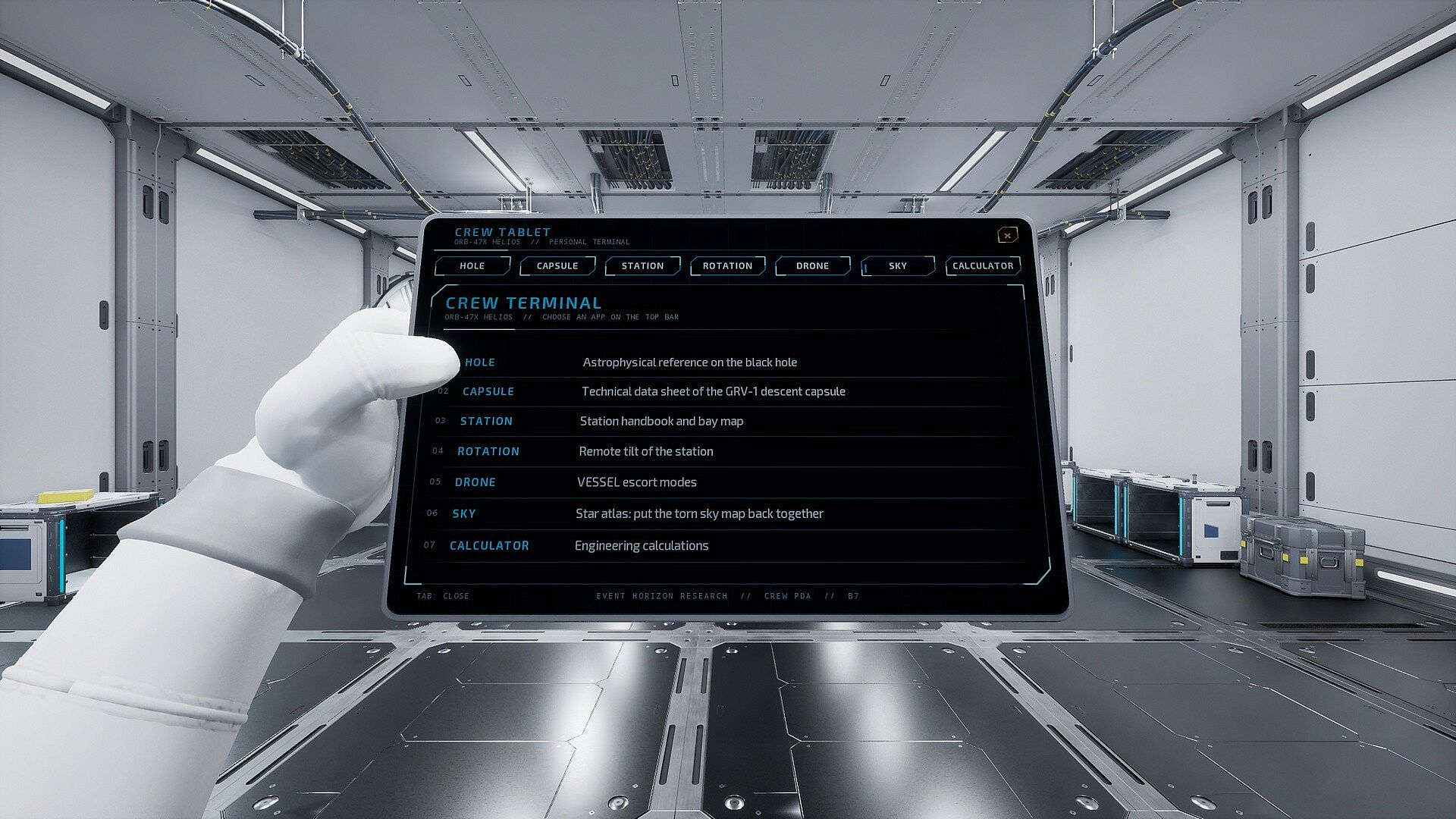
Progress involves direct interaction with station systems to collect data on the black hole. Measurements cover mass, spin, accretion disk density, and magnetic field strength. Each piece of information gathered reduces risks during the later descent phase by informing design choices and flight parameters.
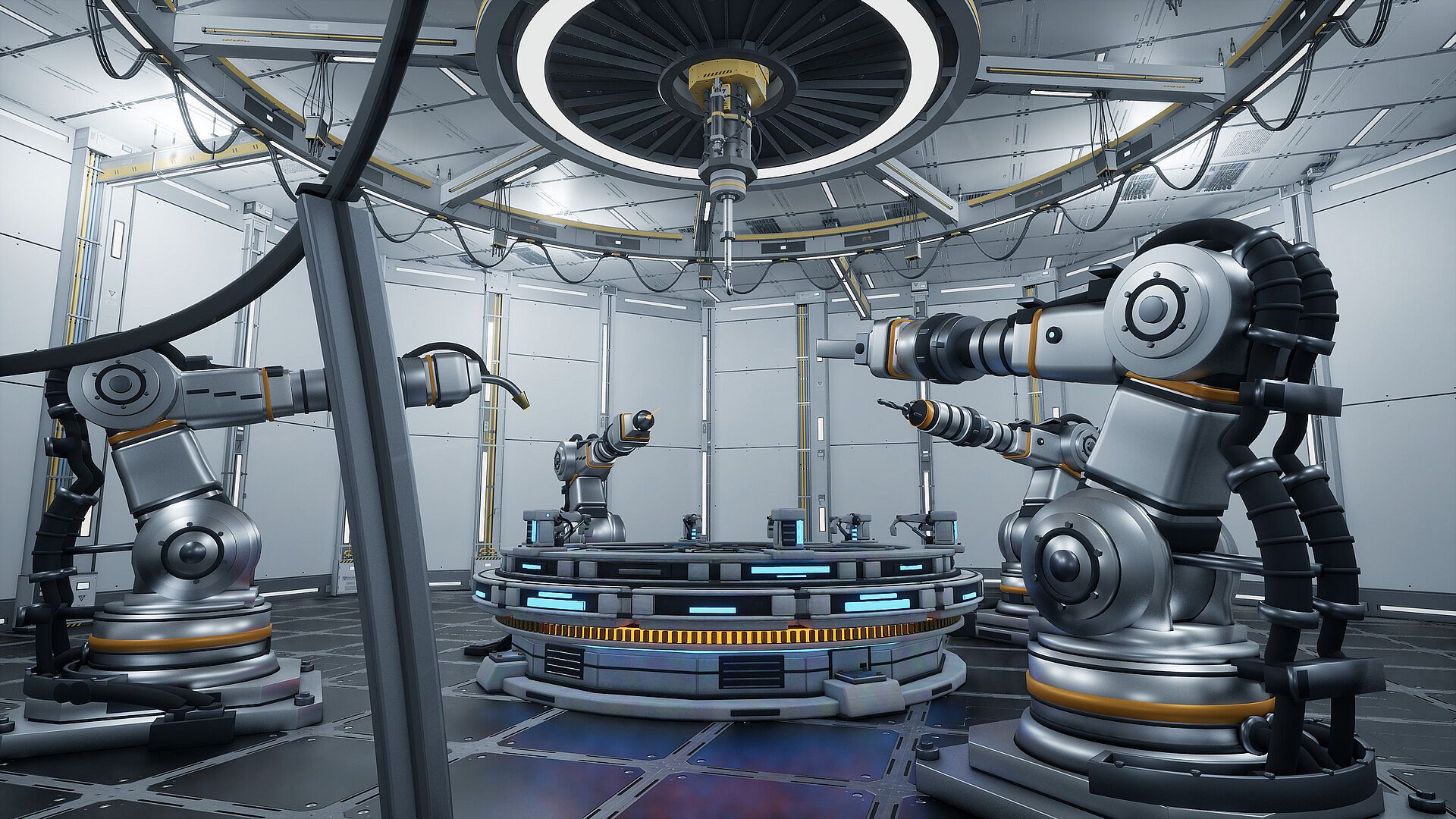
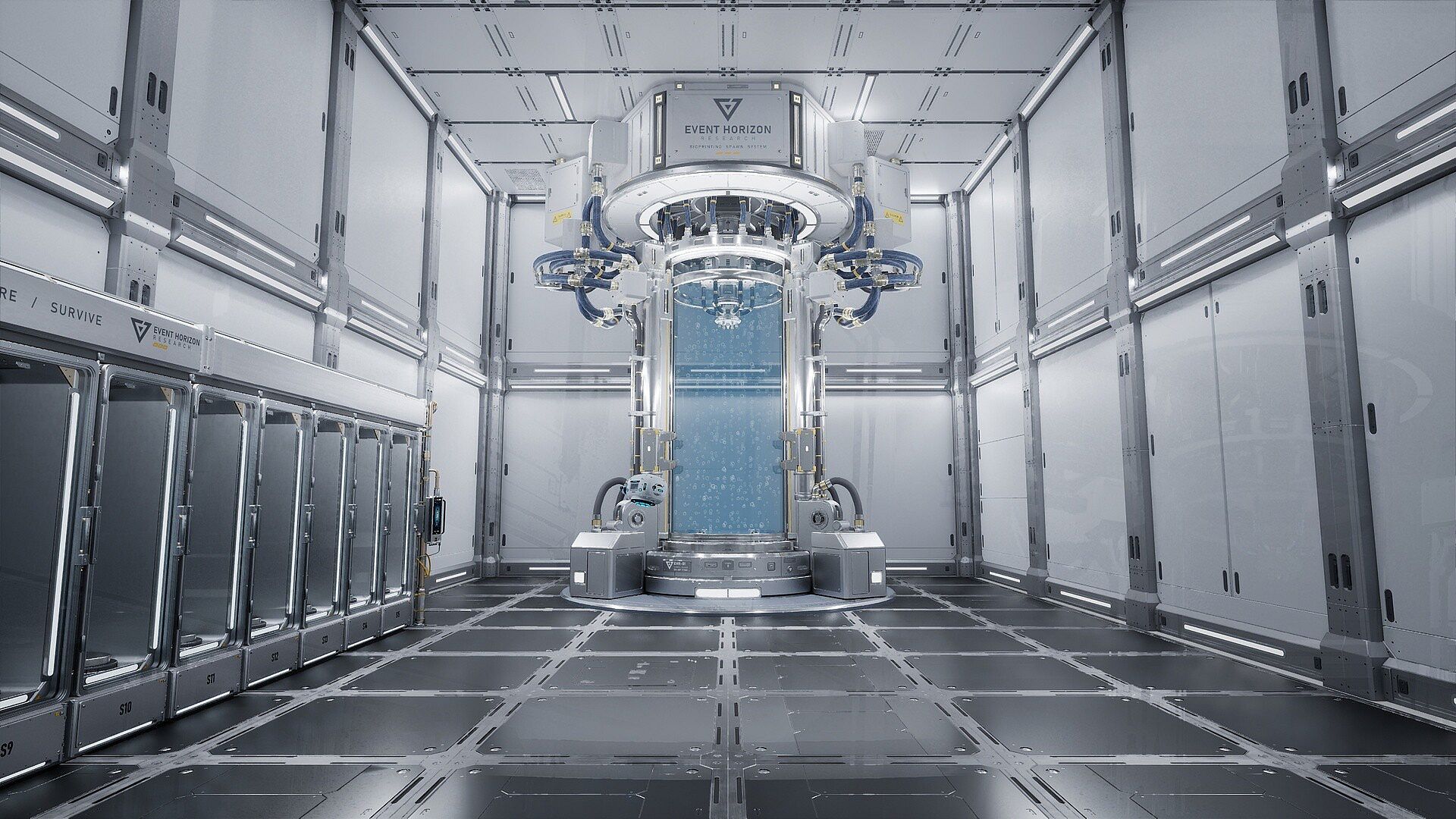
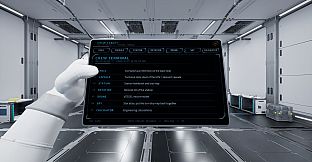
Construction takes place in the assembly bay, where new engines are invented and hull materials are selected and printed to withstand extreme heat, radiation, and gravitational forces. The resulting capsule is assembled on site and must endure only long enough to complete its mission.
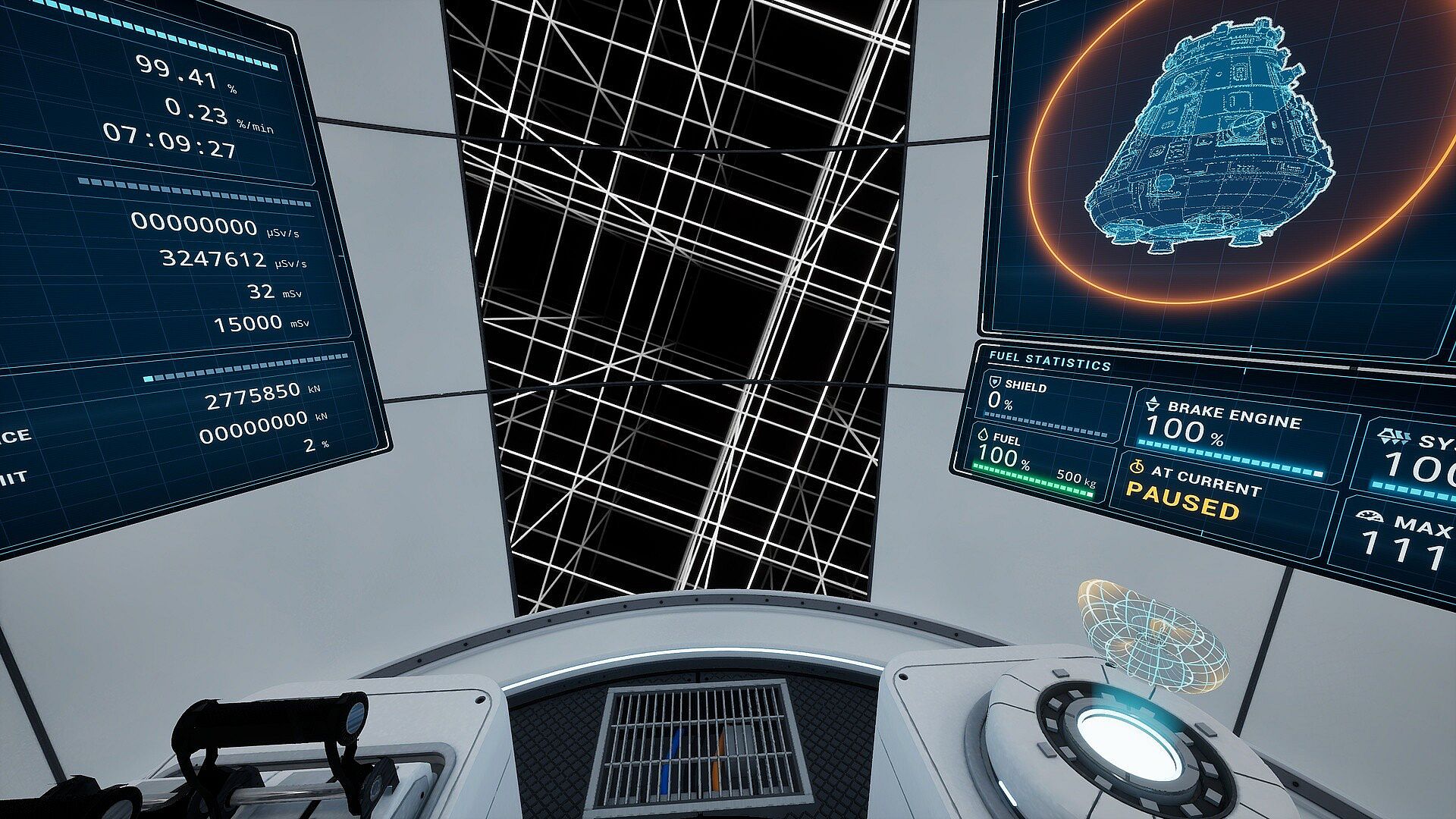
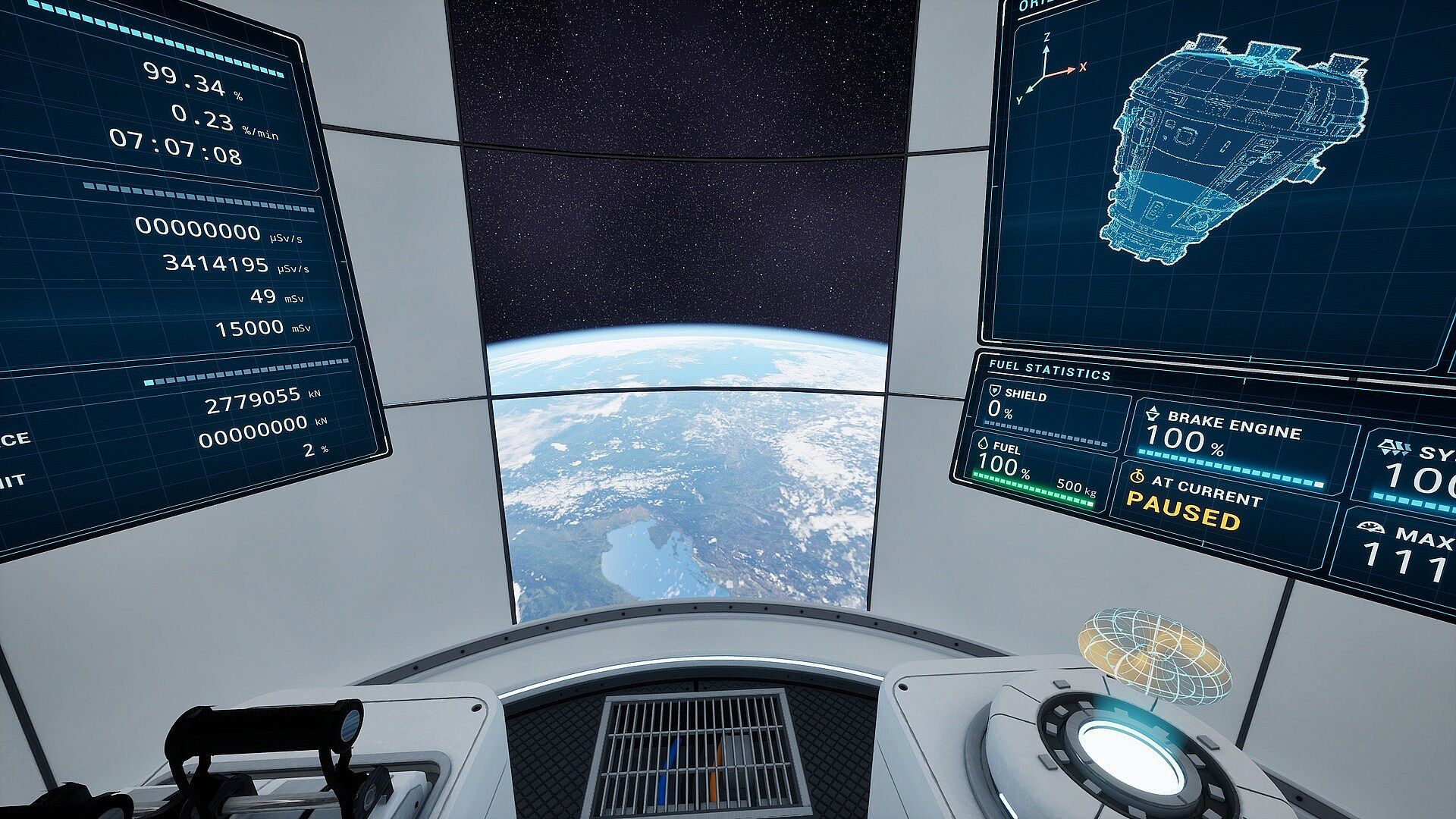
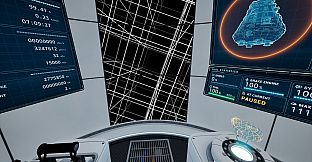
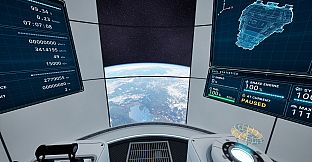
The final phase shifts to cockpit control during the fall. Piloting relies entirely on instruments while maintaining attitude, monitoring temperature, and addressing any system failures as the accretion disk passes outside the windows. Limited lives mean each attempt carries weight, and actions taken after crossing the horizon determine the conclusion.
Game Modes
Event Horizon Research operates as a single-player experience without separate multiplayer or competitive modes. The structure revolves around repeated attempts at the descent, where prior research and construction choices carry over in influence but each run uses one of the limited lives available.
Replayability stems from variations in data collection, material selections, and in-flight adjustments that lead to different outcomes once past the event horizon. No additional game modes such as endless survival or sandbox editors are present beyond this core loop of study, build, and descent.
The Research Process
Station exploration forms the foundation of preparation. Walking the bridge and activating laboratory equipment reveals details about previous expeditions and the black hole itself. These findings directly feed into measurement tools that quantify key properties, creating a feedback loop where knowledge improves survival odds on subsequent attempts.
Every verified measurement contributes to safer capsule parameters. The process emphasizes careful observation and incremental learning rather than combat or resource gathering from external sources.
Surviving the Descent
Once assembled, the capsule launches into the black hole environment. Instrument flying requires constant attention to attitude control and thermal management while the disk rushes by. Repairs must be performed manually when systems fail under stress.
The limited lives mechanic encourages thoughtful preparation on the station before each launch. What occurs after the horizon crossing branches based on collected data and in-flight decisions, producing varied endings without requiring external progression systems.
Is It Worth Playing?
Event Horizon Research suits players drawn to simulation and adventure titles that combine scientific measurement with hands-on construction and precise piloting. The single-player focus and limited-lives structure reward methodical research and careful capsule design over fast reflexes or multiplayer coordination.
With a planned release in November 2026 and no user reviews available yet, the game appeals most to those interested in astrophysics-inspired mechanics and narrative outcomes shaped by player choices during the descent. Its indie scale keeps the experience contained and focused on the station-to-horizon journey.