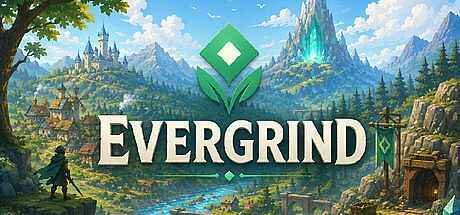


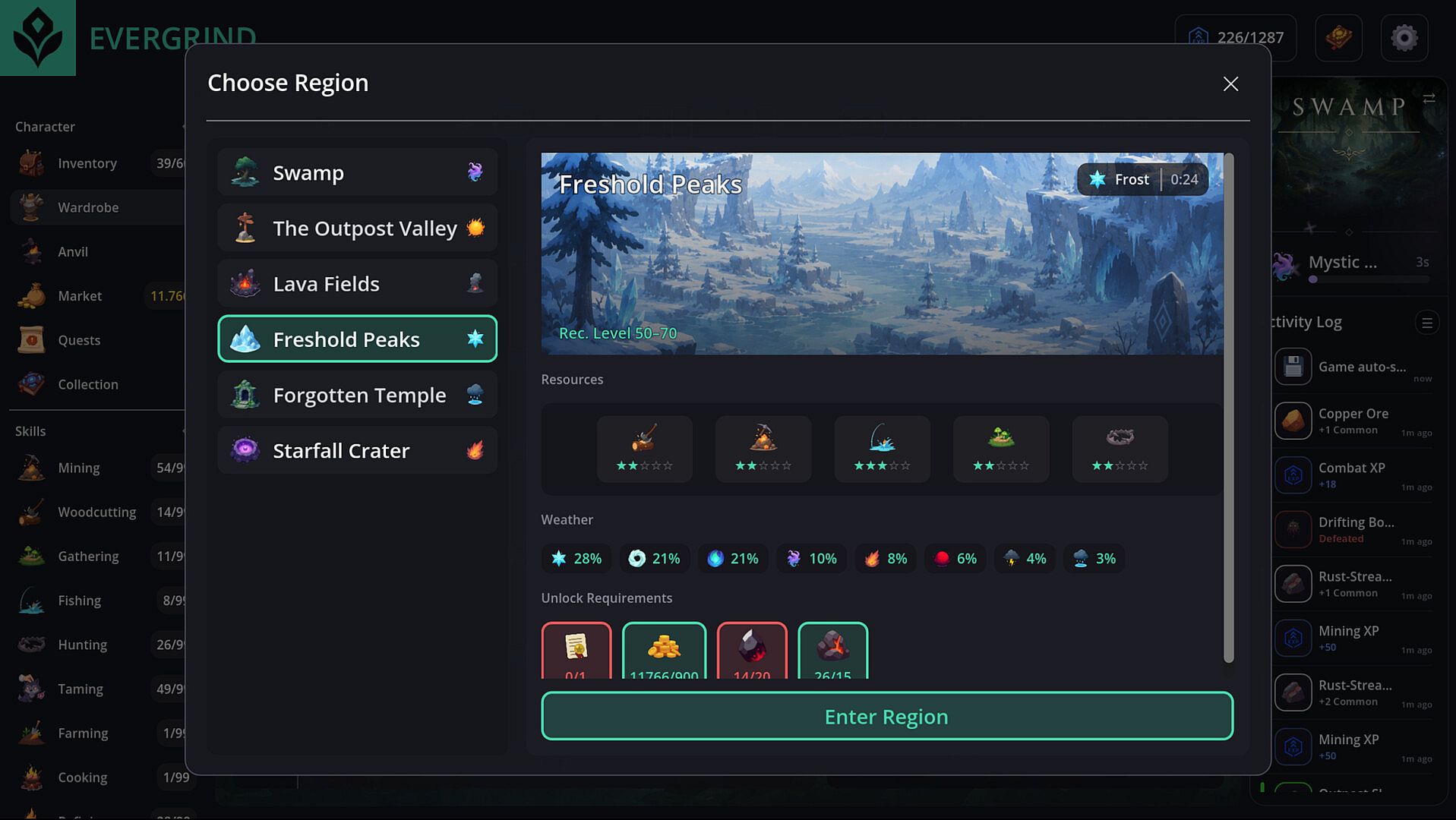
Evergrind is a menu-driven idle RPG that emphasizes steady character growth through skill mastery, resource gathering, and strategic crafting on PC. Players begin in The Outpost Valley and build their character through repeated cycles of collection, refinement, and combat preparation. The game supports both focused sessions and background running, making it suitable for single-player experiences where progression continues even when attention shifts elsewhere.
Gameplay
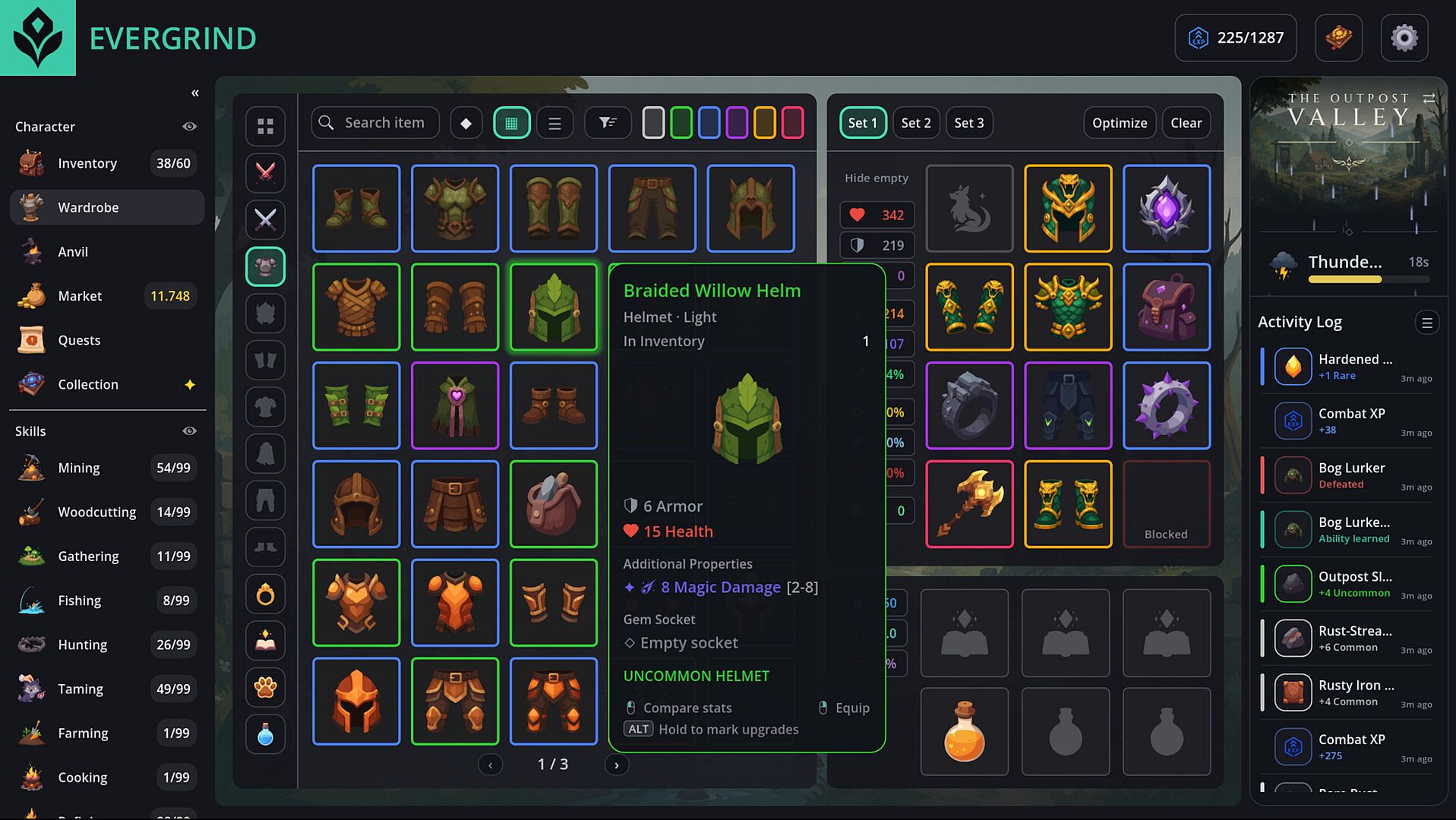
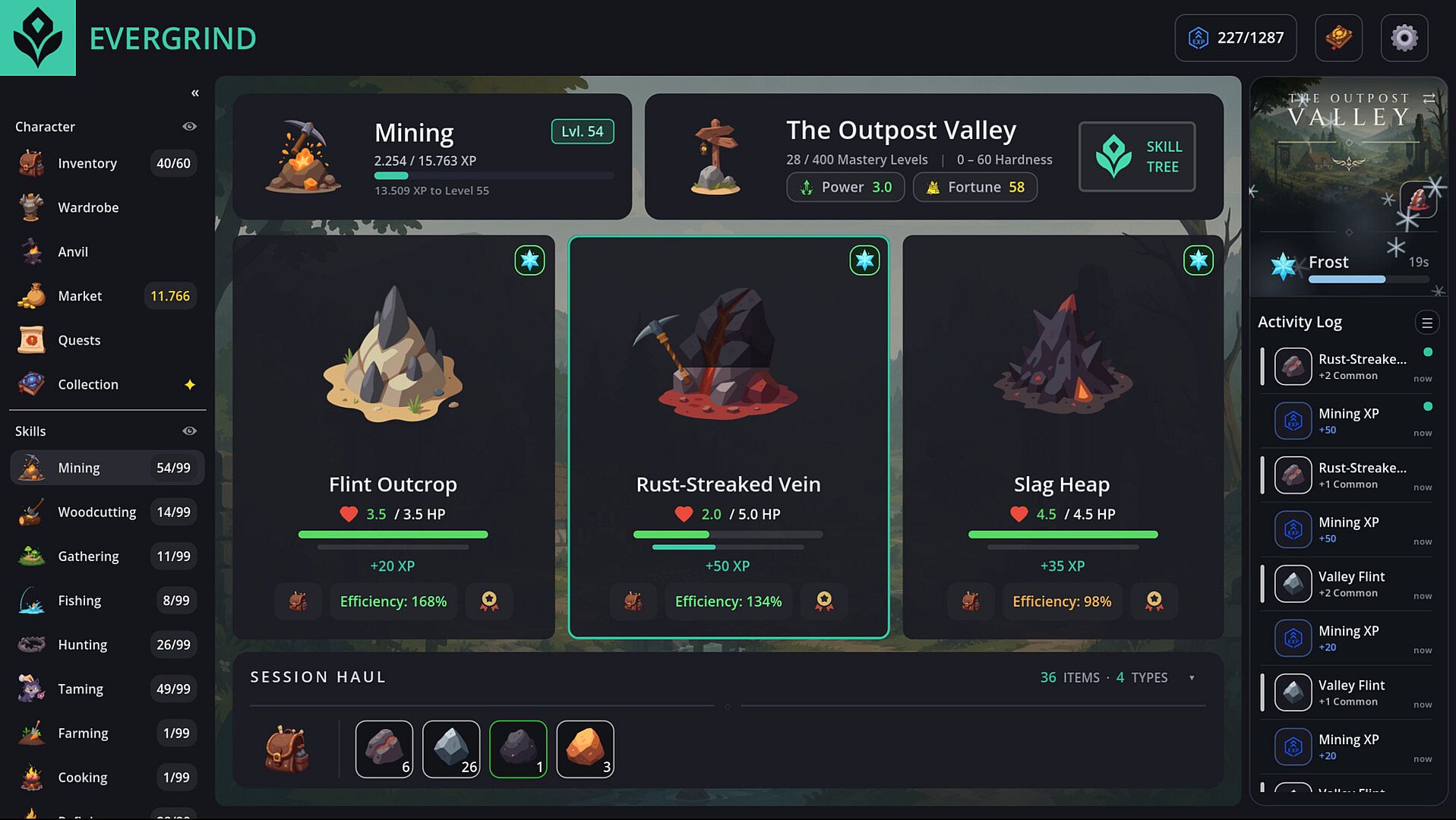
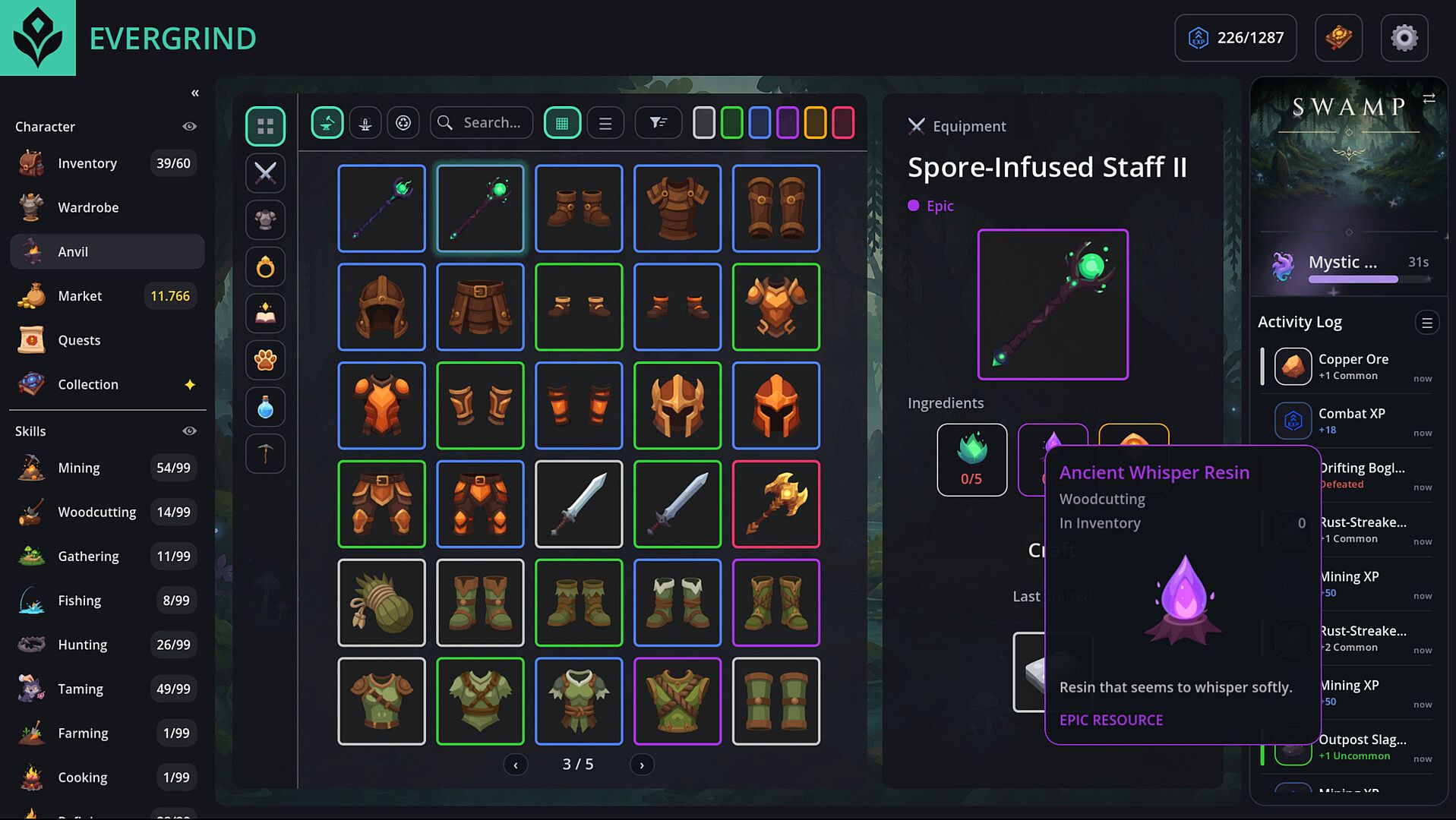
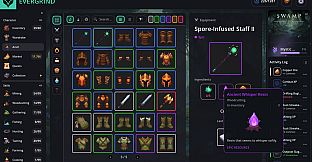
The core loop centers on developing a range of skills that directly influence efficiency and output. Mining, Woodcutting, Fishing, and Taming each come with dedicated talent trees. Choices in these trees create synergies that improve resource yields and reduce time spent on repetitive tasks. Materials gathered through these skills feed into crafting at the anvil, where rare ores and components are refined into armor sets and other equipment.
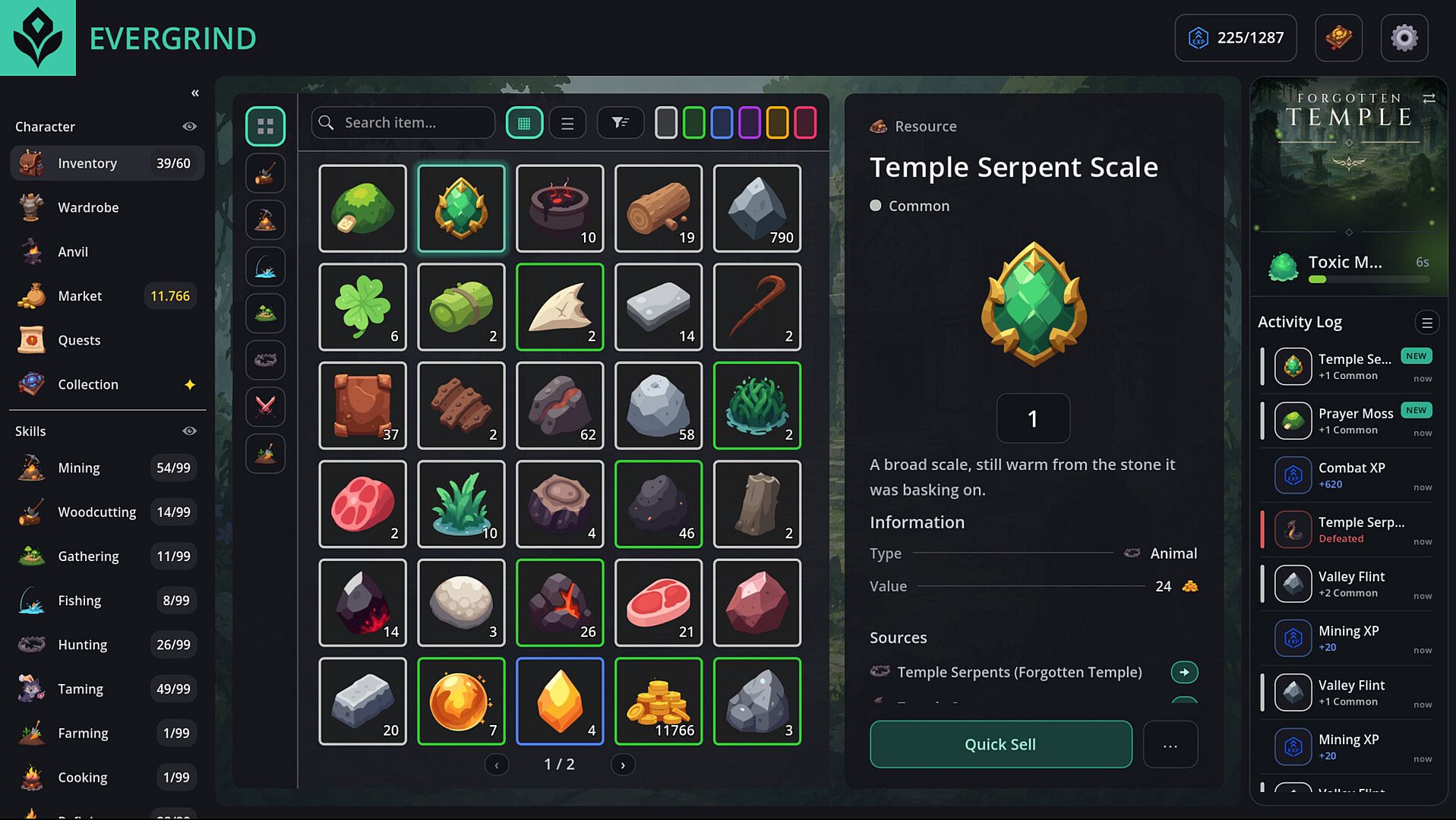
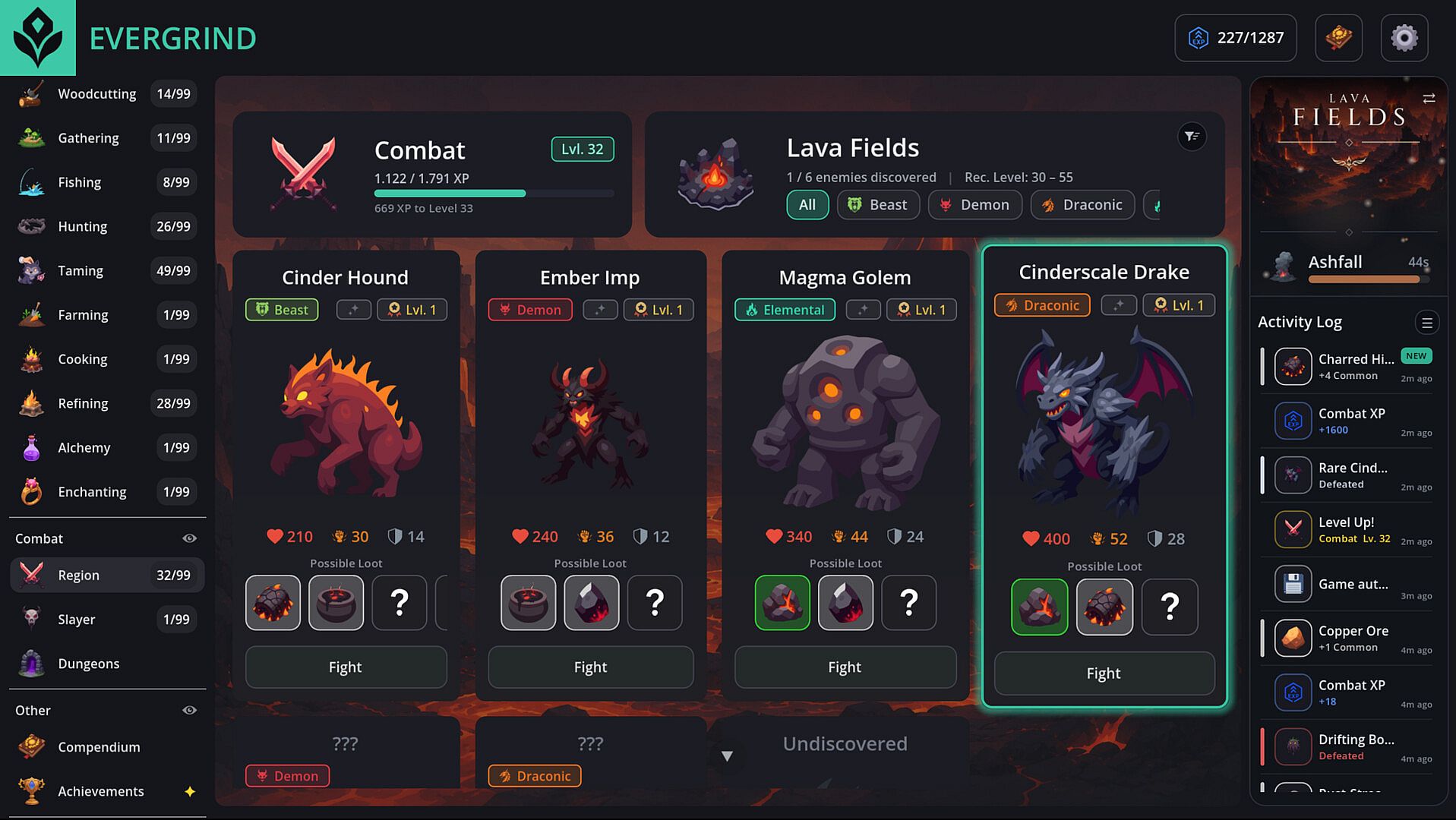
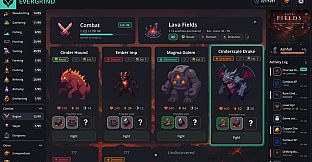
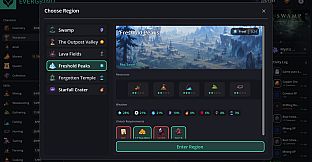
Combat takes place in tactical encounters against monsters. Success depends on the gear forged and the synergies built across skills. Resource management extends to a market system for trading excess items, which helps optimize the daily collection cycle. New regions open gradually, each containing additional secrets that reward further exploration and skill investment.
Progression remains constant whether the game runs in the foreground or minimized. Strategic build decisions compound over time, allowing players to refine approaches to individual skills until each reaches a high level of optimization.
Game Modes
Evergrind operates as a single-player title with two primary approaches to engagement. Active play involves direct management of skills, crafting, and combat decisions during dedicated sessions. The idle approach lets the game continue advancing in the background, with results available upon return. Both styles draw from the same underlying systems of talent trees, material processing, and region discovery, so players can switch between them without losing momentum.
No separate competitive or cooperative modes exist. All activity stays within the single-player framework, focused on personal optimization of the loot and progression cycle.
Progression and Crafting Systems
Skill development forms the backbone of long-term advancement. Each talent tree offers specific upgrades that interact with others, creating noticeable improvements in speed and quantity of gathered resources. These gains carry forward into crafting, where refined materials become armor and tools that enhance combat effectiveness.
The market trading element adds another layer to resource management. Excess items can be exchanged for needed components, supporting a balanced daily routine of collection and refinement. Region expansion reveals new opportunities for skill application and secret discovery, extending the overall progression path.
Is It Worth Playing?
Evergrind targets players who enjoy methodical, menu-based progression in an idle RPG format. The emphasis on talent synergies, crafting depth, and flexible play styles suits those who appreciate steady advancement without constant active input. As the title enters Early Access in October 2026, the initial version includes core skills, multiple regions, and a stable progression loop, with plans for additional content based on player input.
Those seeking immediate action or multiplayer elements may prefer other titles, while fans of resource-driven single-player RPGs with background-running options will find the systems align closely with the described focus on rewarding choices and build experimentation. The game remains in active development, so the experience will continue to expand after launch.