




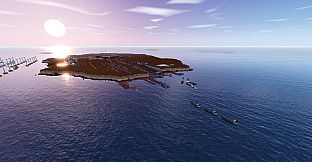
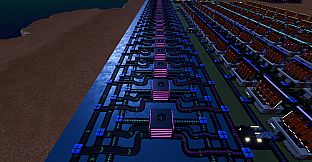
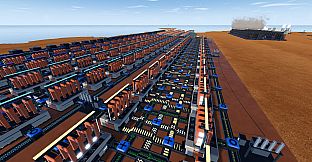
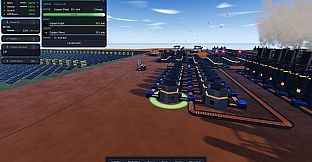
Fill the Sky is a strategy and simulation game built around factory automation on PC. Players take control of a self-replicating interstellar probe that lands on barren islands and gradually expands production chains to launch copies of itself into orbit. The experience centers on deliberate construction, resource management, and long-term planning without combat or time pressure.
Gameplay
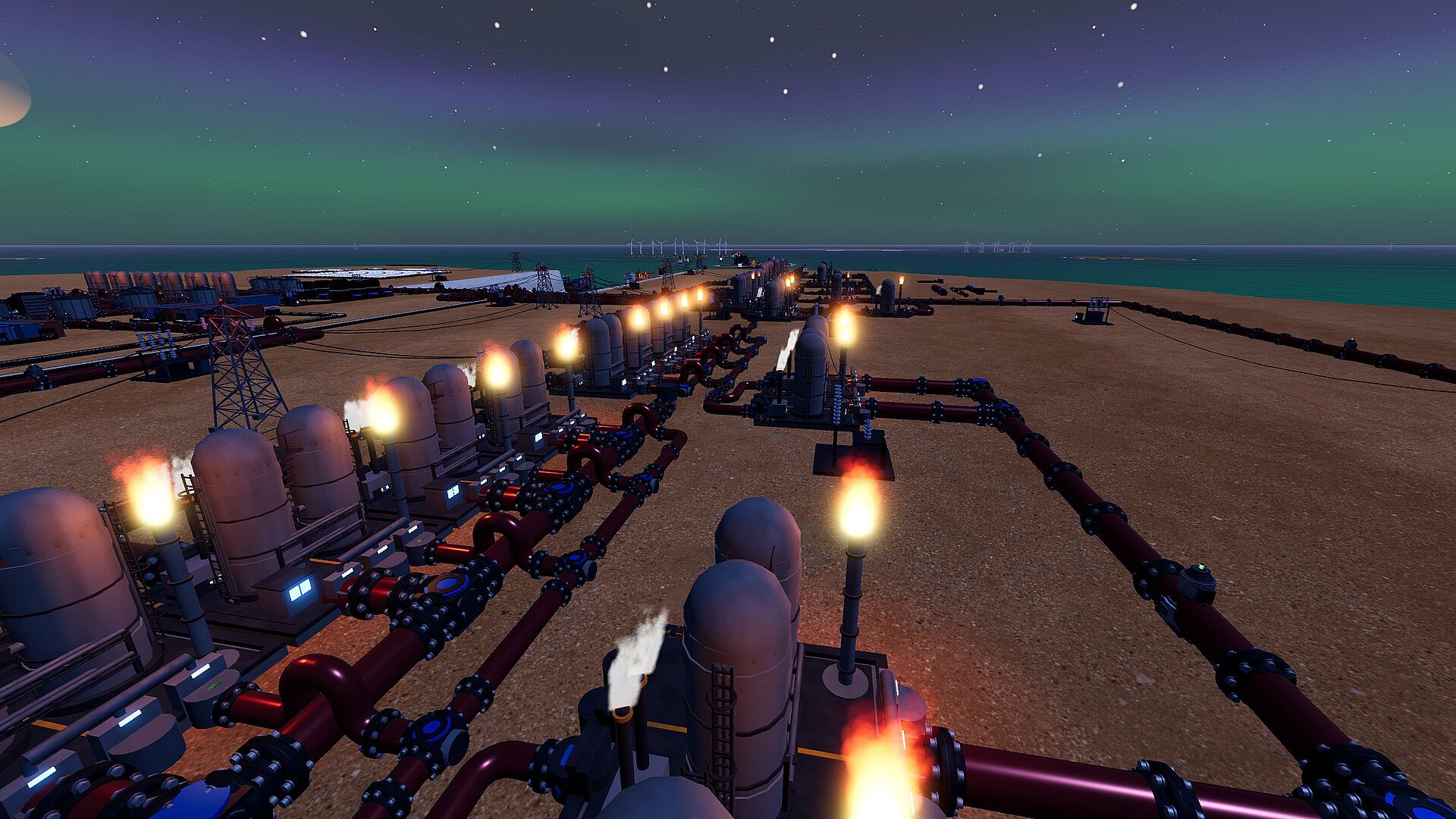
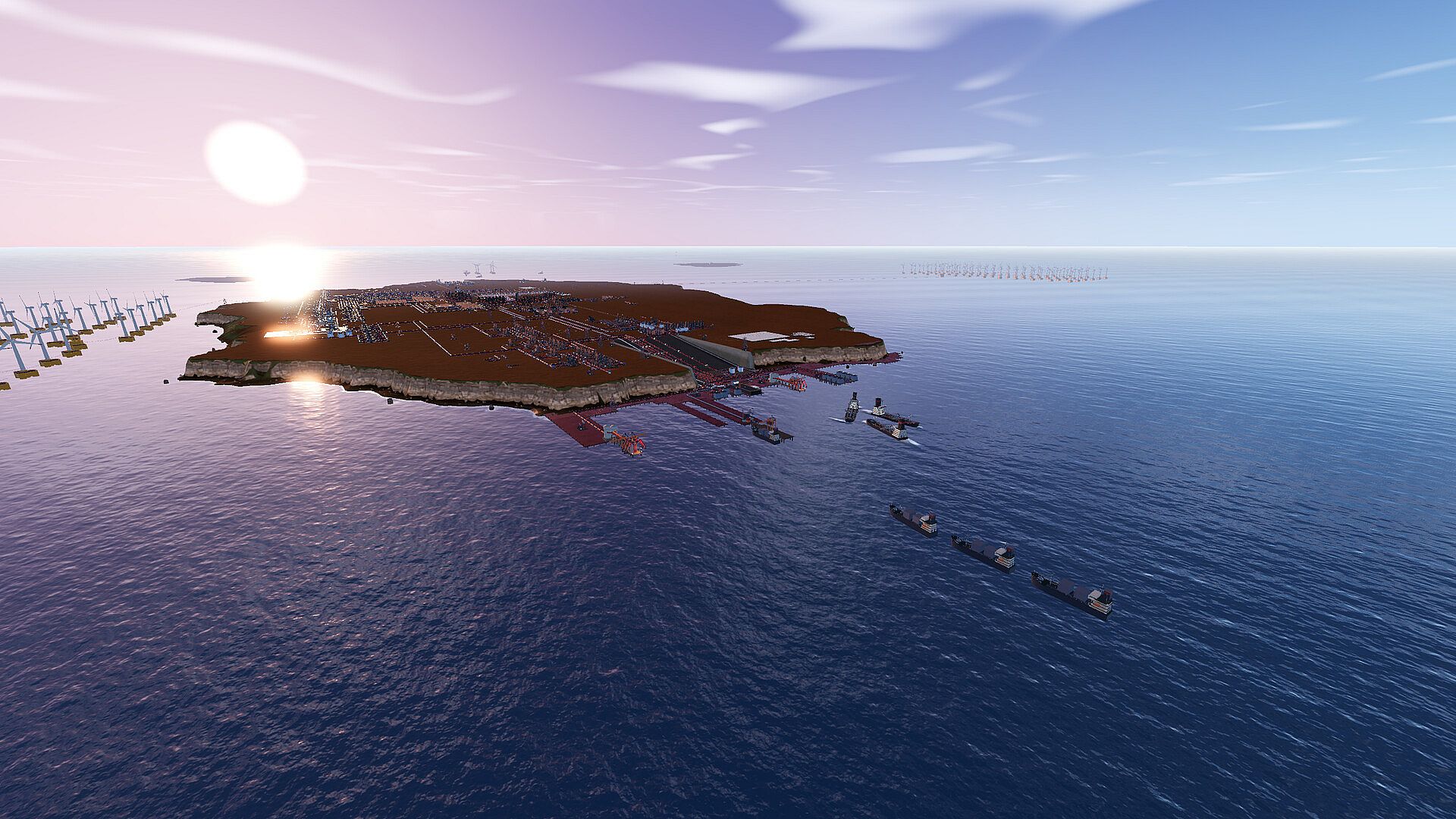
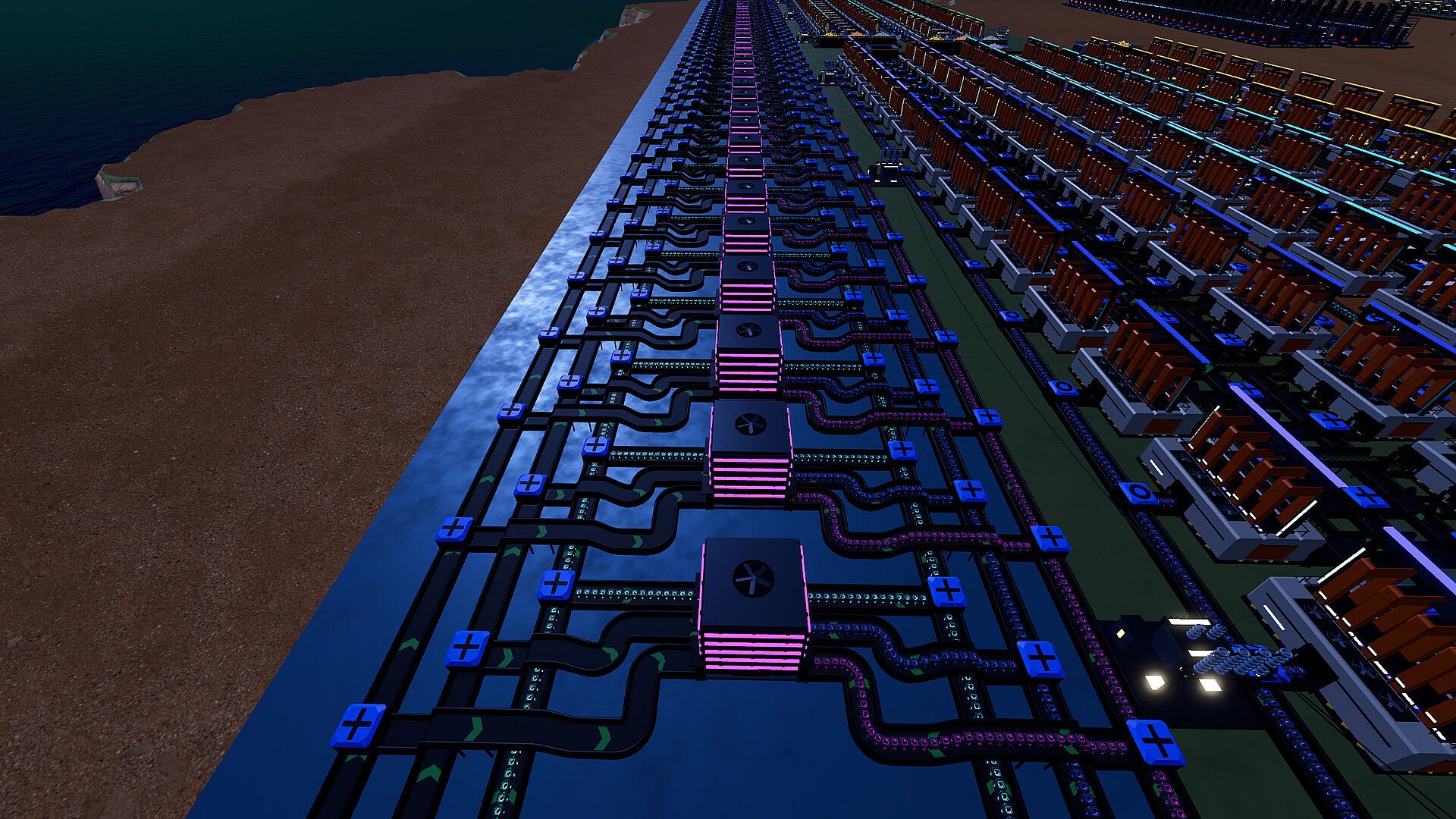
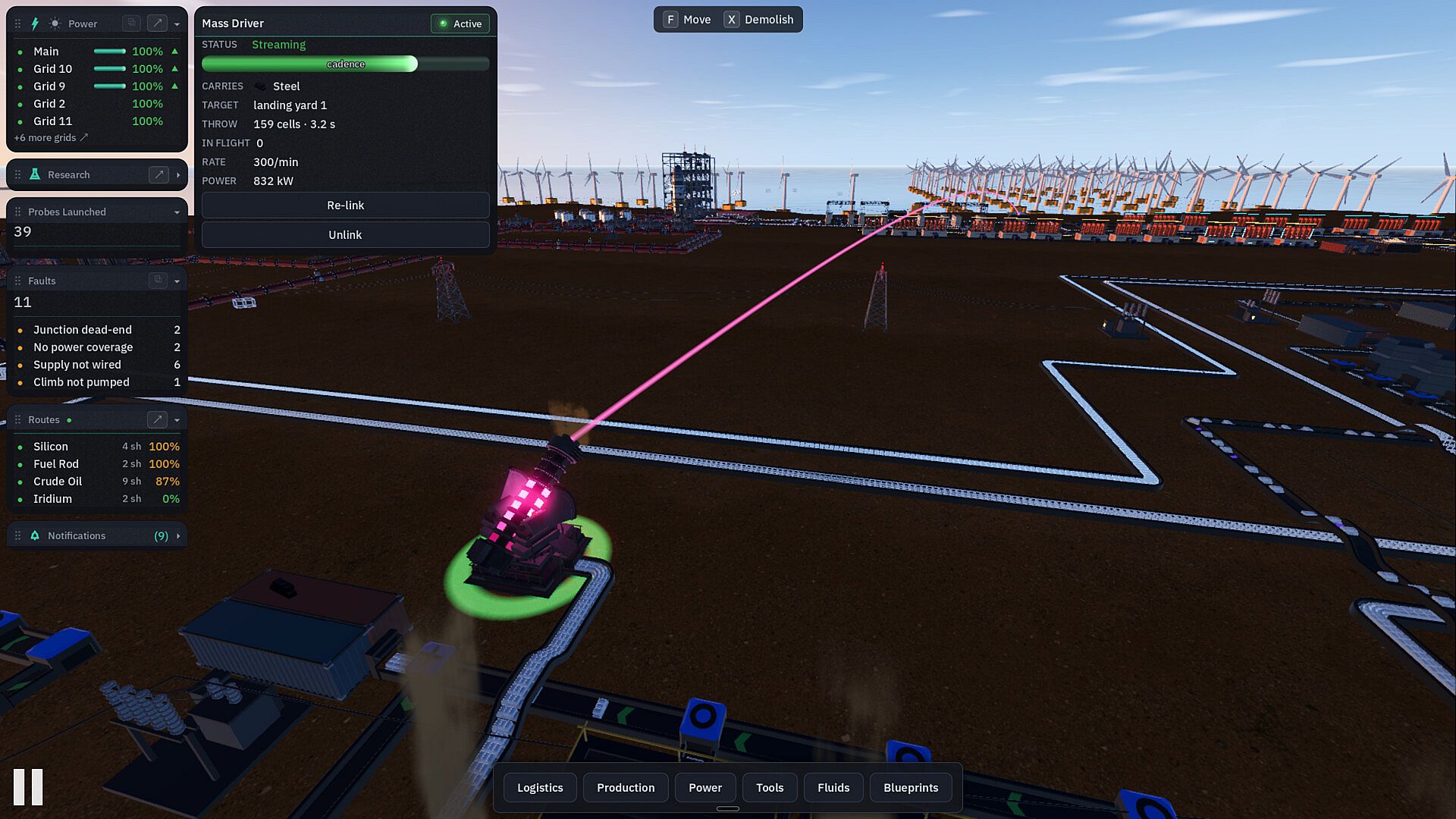
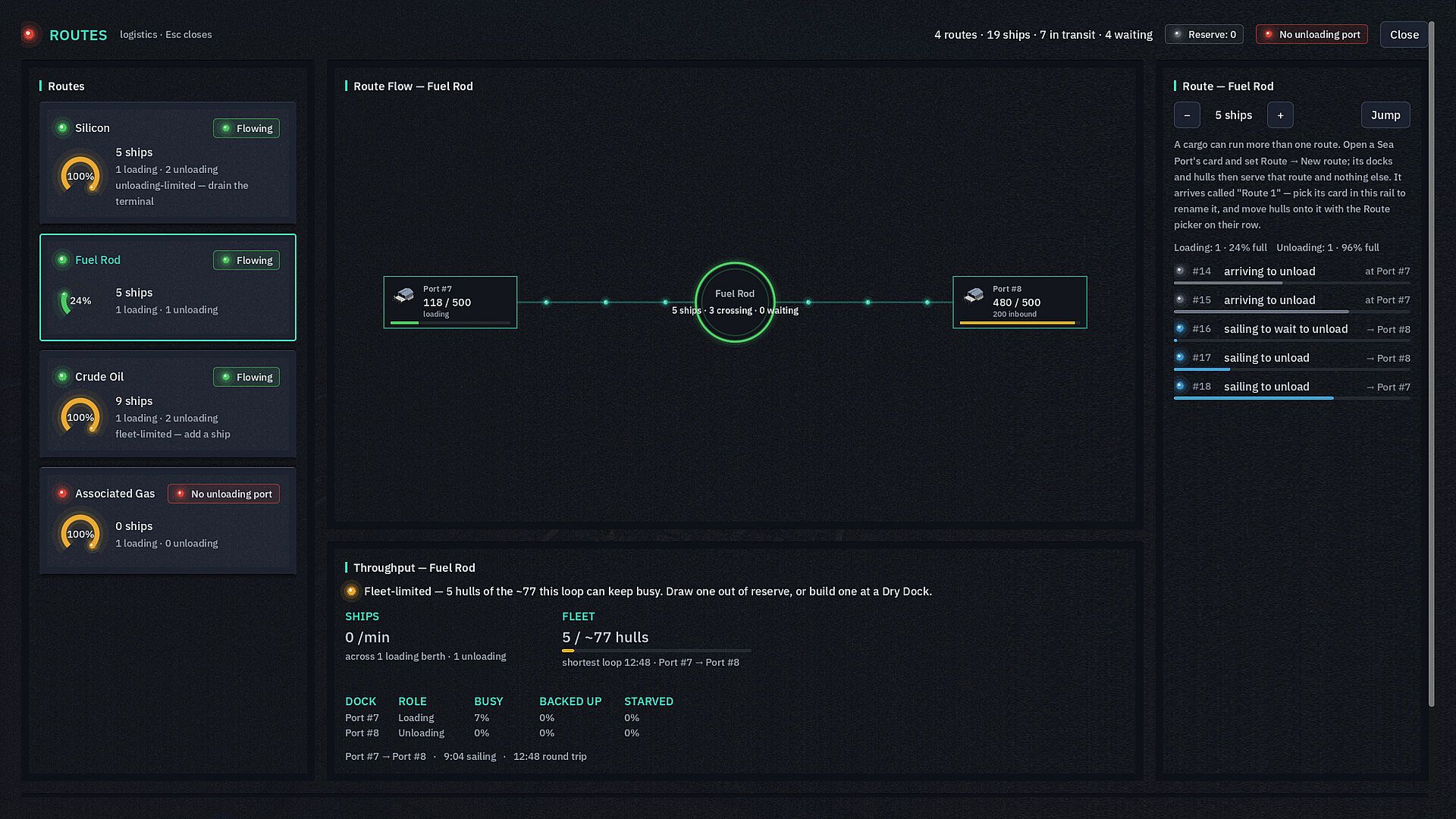
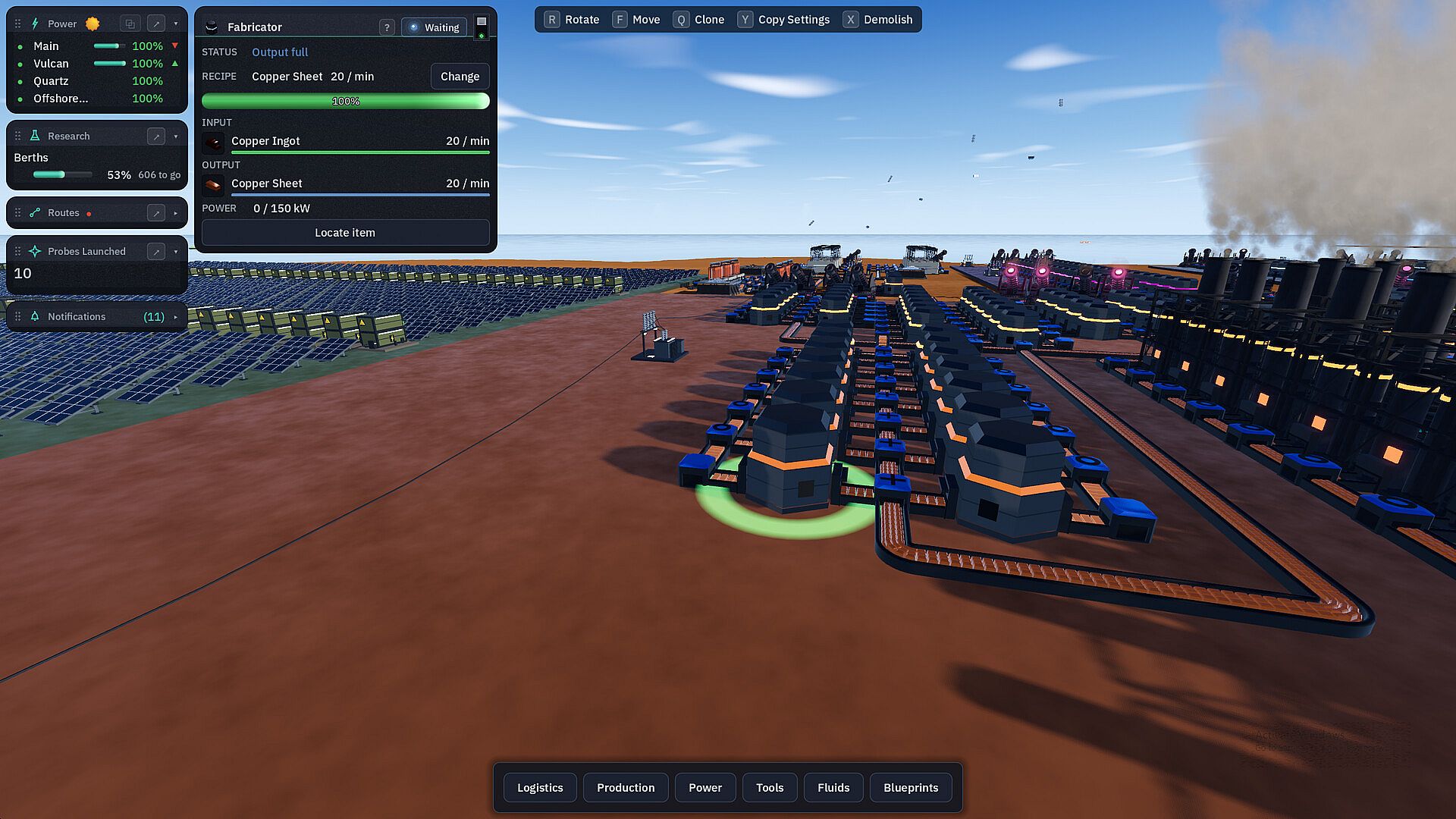
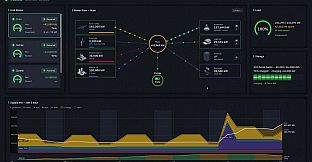
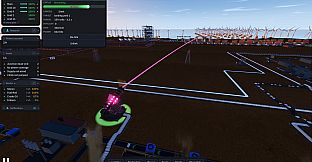
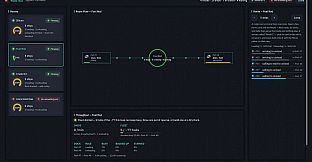
The core loop begins with basic mining, smelting, and assembly on a single island. Players expand by unlocking new production methods that connect additional landmasses across the ocean. Belts handle initial transport, while later disciplines introduce harbors and ships for water crossings, pipelines for chemical goods, and mass drivers for airborne freight. Power comes from wind, coal, oil, or nuclear sources, and shortages affect the entire network at once.
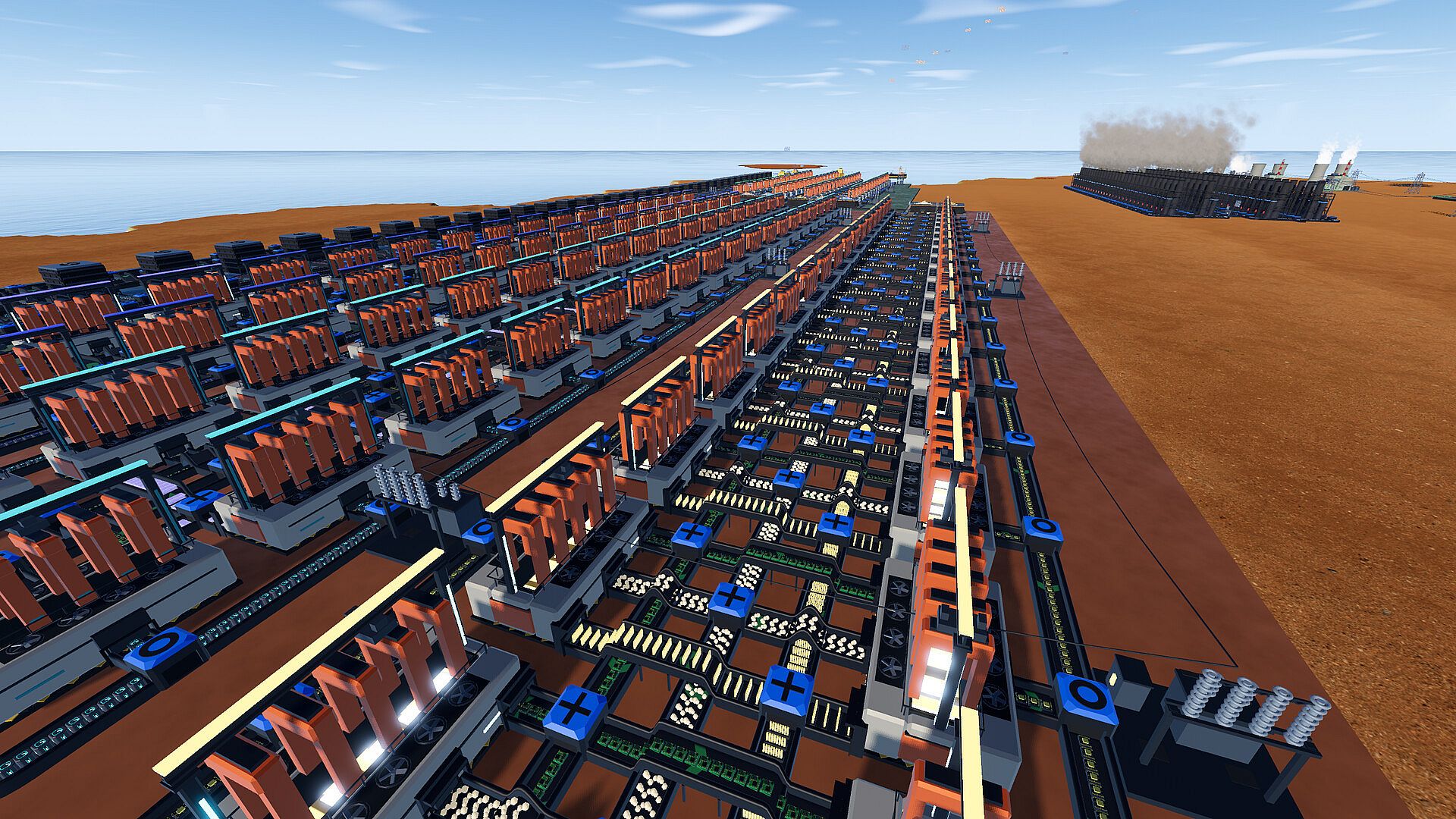
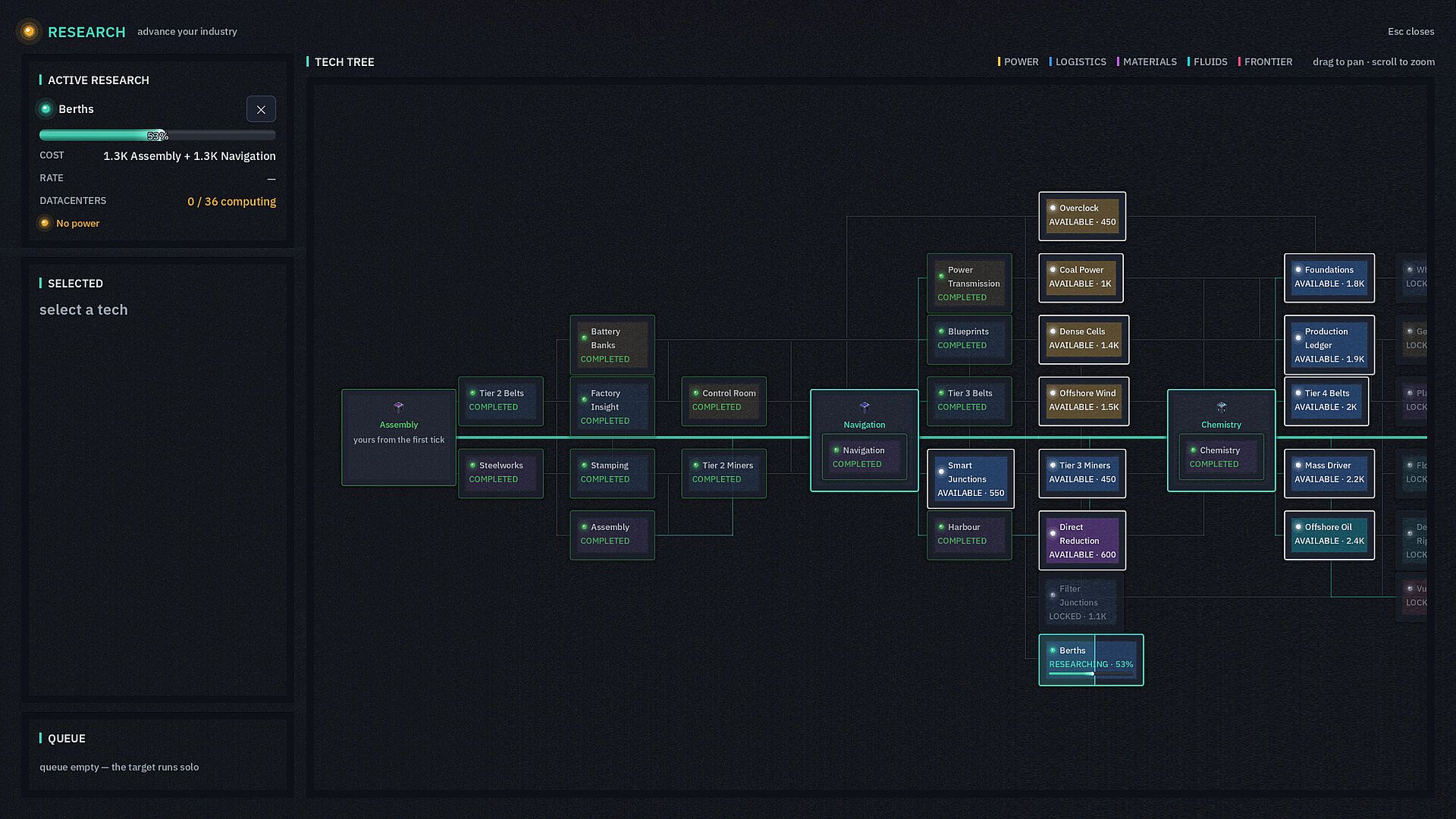
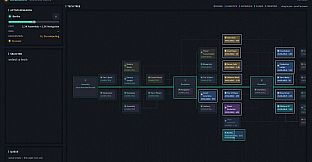
Research follows five disciplines: assembly, navigation, chemistry, flight, and replication. Each one branches into further options that reshape logistics and open new goods. A branching research tree lets players choose their path through these systems. Tools highlight belt flow, machine starvation, and power distribution so bottlenecks become visible with a single key press. Mistakes can be undone, and successful layouts saved as blueprints for reuse.
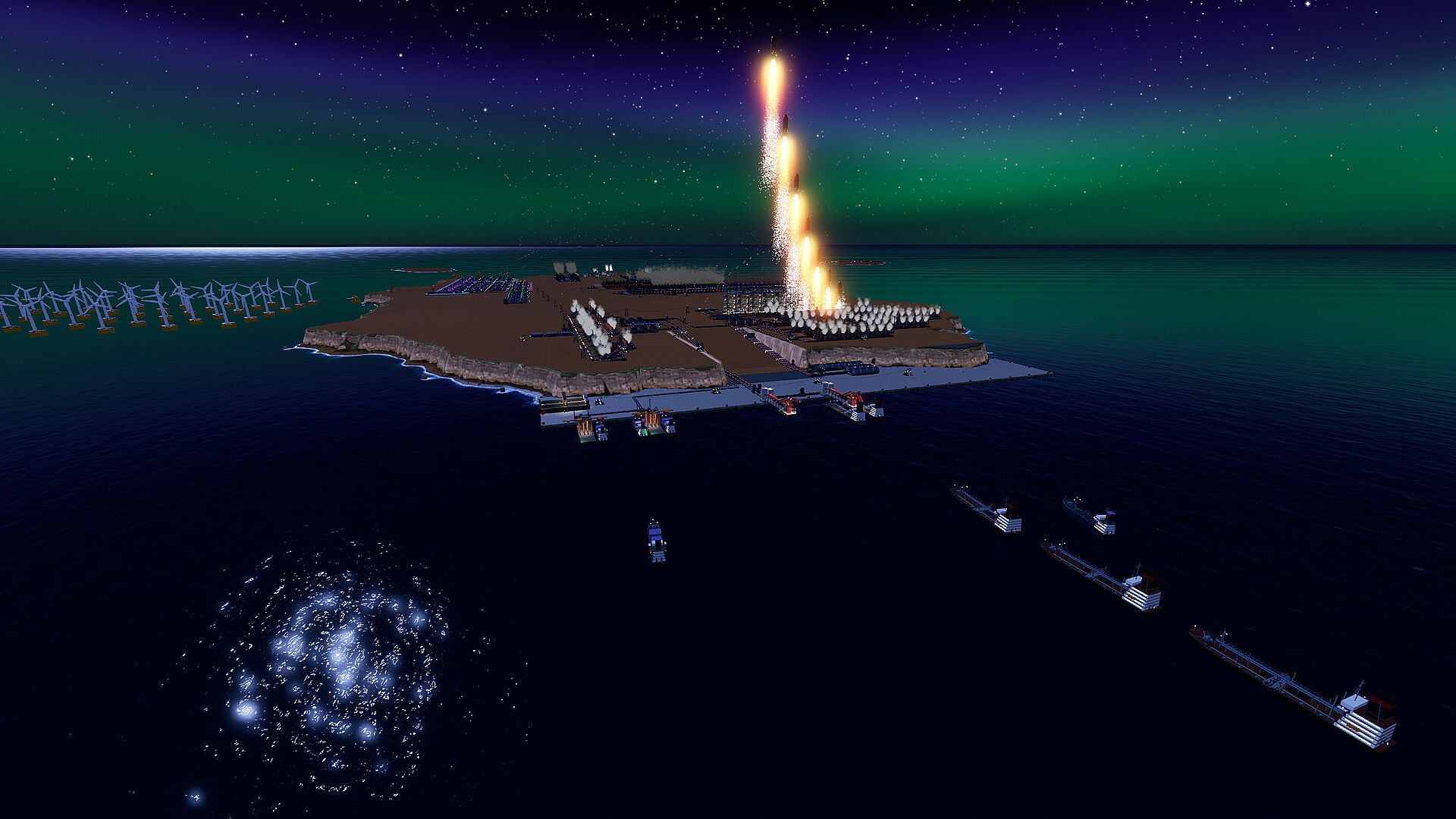
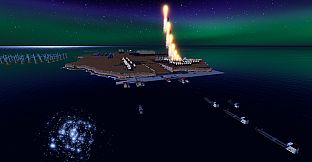
The world runs in real time with day-night cycles and auroras visible from the launch site. A free orbit camera supports detailed inspection, and a dedicated photo mode captures finished factories. Ore deposits remain infinite, removing any pressure to rush extraction.
Game Modes
Fill the Sky offers only single-player peaceful engineering. There are no competitive or cooperative modes, no factions, and no enemy encounters. The entire session stays focused on personal factory growth at whatever speed the player prefers. Every run records automatically, allowing later review through the Rewind system that replays the full build sequence at accelerated speed with free camera control. Players can scrub through the timeline, assume control at any point, and continue from there while preserving the original future on a separate branch.
Research and Progression
Progression ties directly to the five disciplines. Assembly covers core manufacturing. Navigation adds water transport and connects distant islands. Chemistry introduces fluid handling and new product types. Flight enables long-range delivery without belts. Replication finally allows construction of additional probes. Each discipline expands the map and the range of available goods, encouraging players to revisit earlier islands with improved logistics.
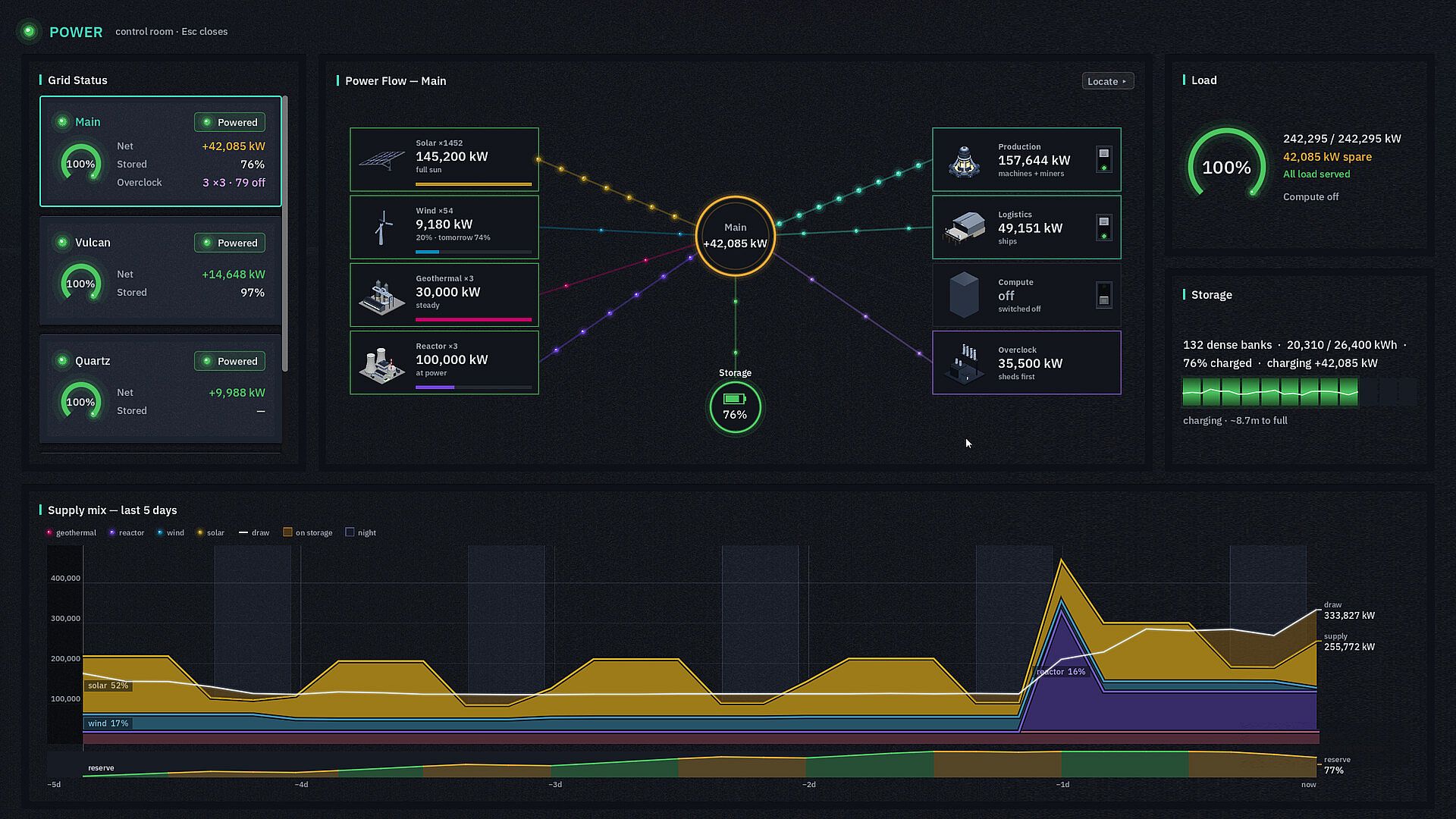
Power management remains a constant consideration. Different sources carry distinct trade-offs in output and infrastructure needs. Shortfalls slow every machine simultaneously, making balanced grids essential for smooth operation.
Is It Worth Playing?
Fill the Sky suits players who enjoy methodical factory building and long-term optimization in a calm setting. The absence of threats or timers lets builders focus entirely on efficiency and aesthetics. Features such as utilization overlays, unlimited undo, blueprints, and the Rewind timeline provide strong support for experimentation and refinement. The game remains in development with a planned release in Q1 2027, so current information reflects the listed mechanics and single-player focus. Those who appreciate peaceful automation titles will find a consistent emphasis on thoughtful expansion and visual feedback rather than external challenges.












