








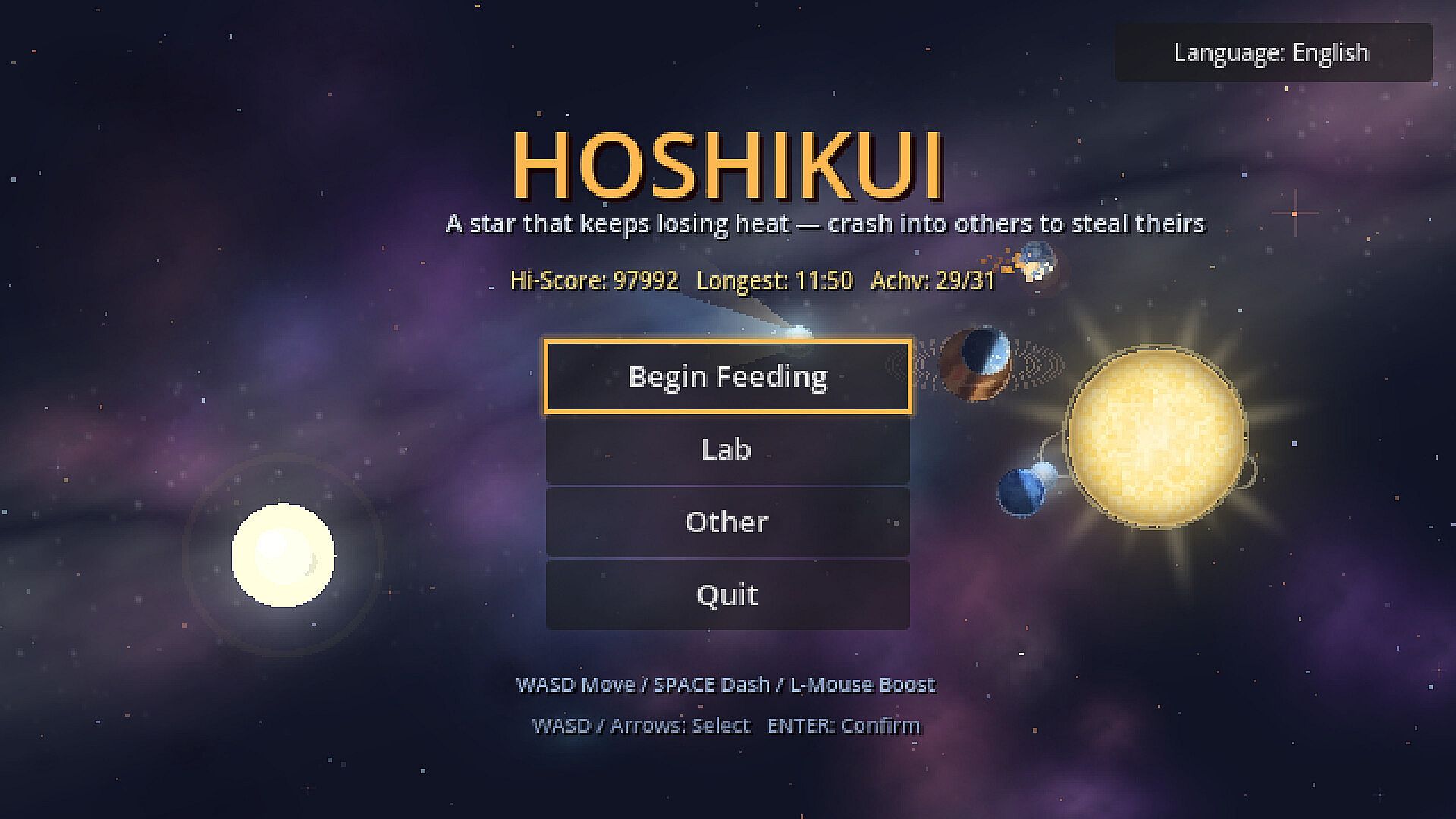
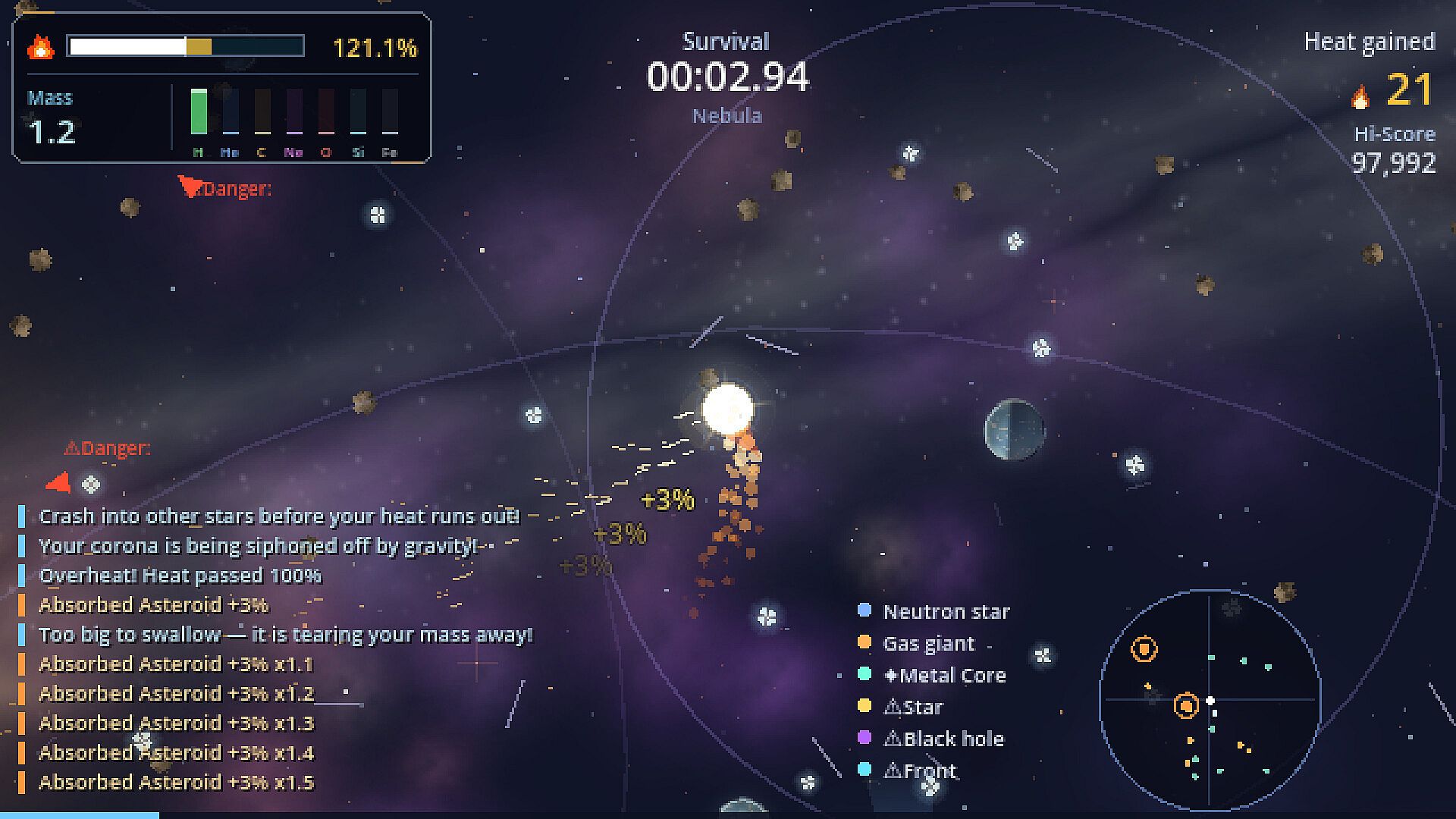
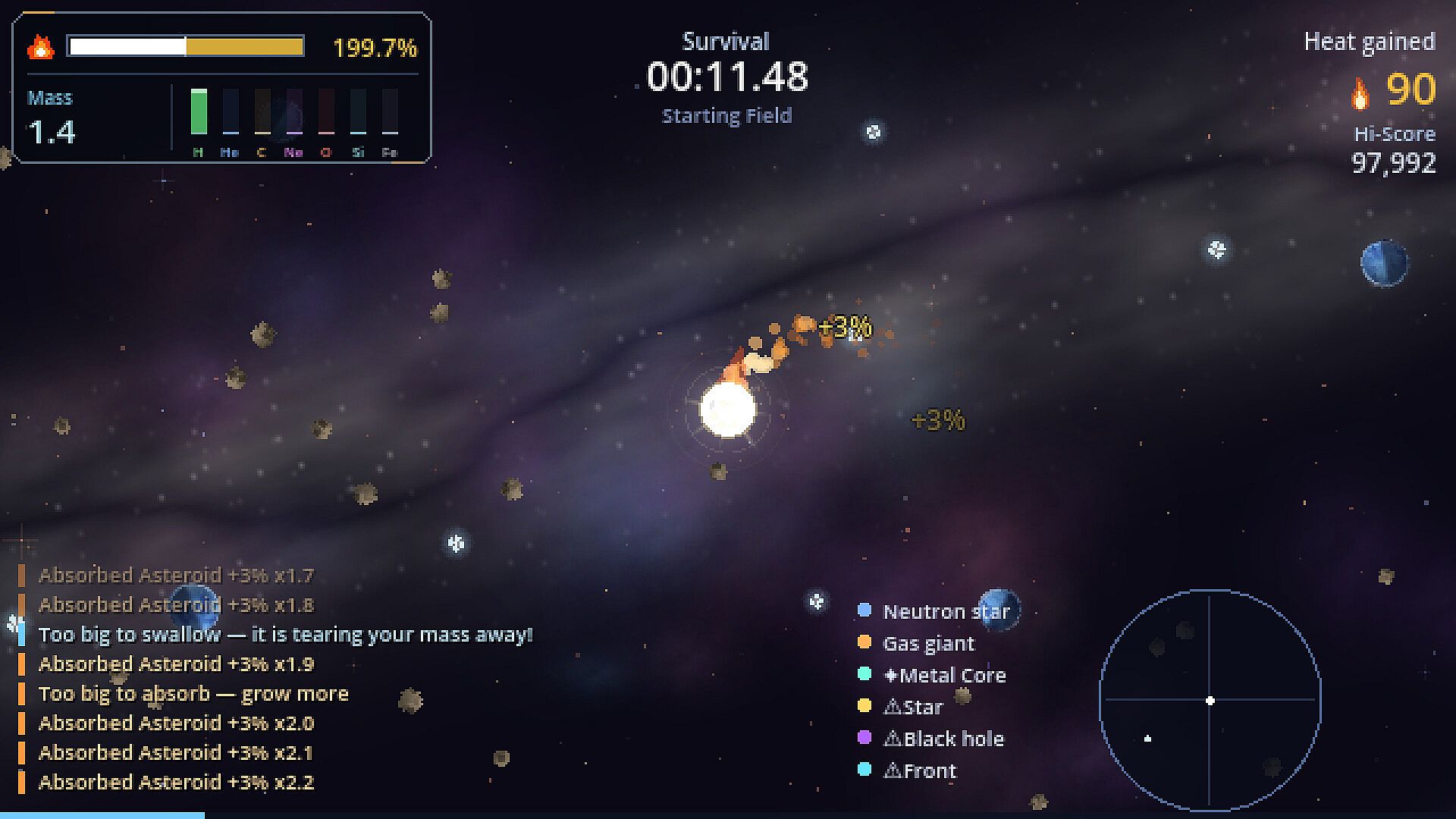
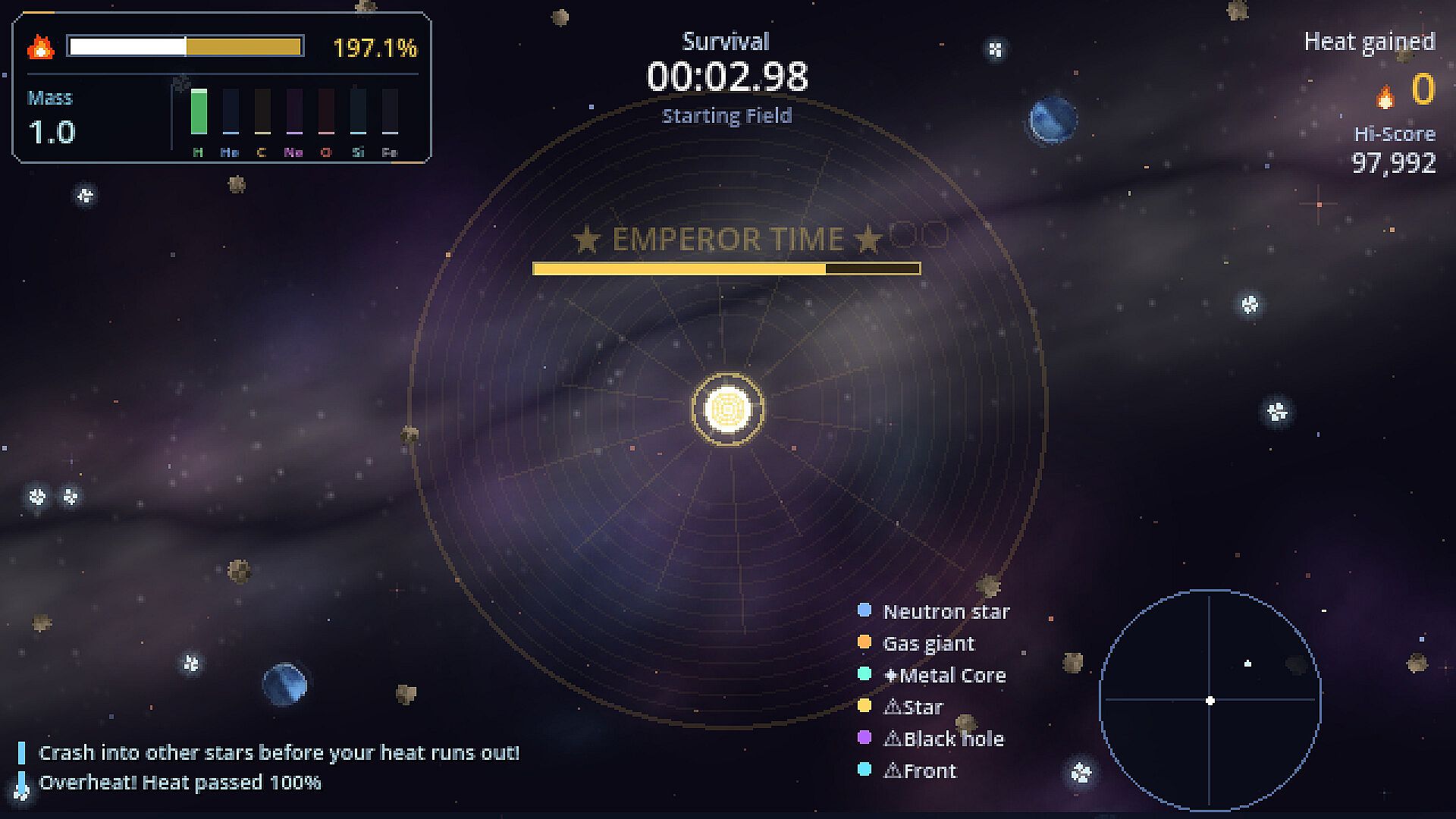

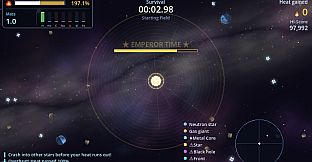
HOSHIKUI is a single-player action game built around survival mechanics in a hostile, ever-cooling universe. Players control a dying star that loses heat continuously, forcing constant movement and interaction with the environment to stay alive. The core loop revolves around collision-based gameplay where slamming into other celestial objects serves as the primary means of gaining resources, altering trajectory, and extending survival time.
Gameplay
Heat functions as health, fuel, and a countdown timer. Every moment spent without absorbing energy brings the player closer to extinction. Collision replaces traditional combat or shooting systems entirely. Impacts transfer heat, apply damage or healing depending on relative mass and composition, and provide propulsion for navigation through the galaxy.
Mass accumulation changes the star's capabilities over time. Larger mass allows the player to consume bigger targets but accelerates cooling and increases vulnerability to gravitational pulls from massive bodies. Elemental composition evolves automatically as heat depletes, progressing through stages from hydrogen to iron. Each stage modifies movement, collision effects, and overall durability, giving players a visible indicator of remaining lifespan through the star's appearance.
The expanding heat death front creates persistent pressure to advance outward. Remaining stationary leads to rapid failure. Players must navigate around hazards such as gas giants for temporary shelter, ice grains that exchange heat for mass gains, pulsars, white dwarfs, and black holes that destroy the star instantly upon contact with their event horizon.
Game Modes
The experience centers on a single-player roguelite structure. Each run takes place in a procedurally generated galaxy where survival depends on managing heat, mass, and elemental state while pushing against the advancing cooling front. Runs end when heat reaches zero or the star encounters a lethal body.
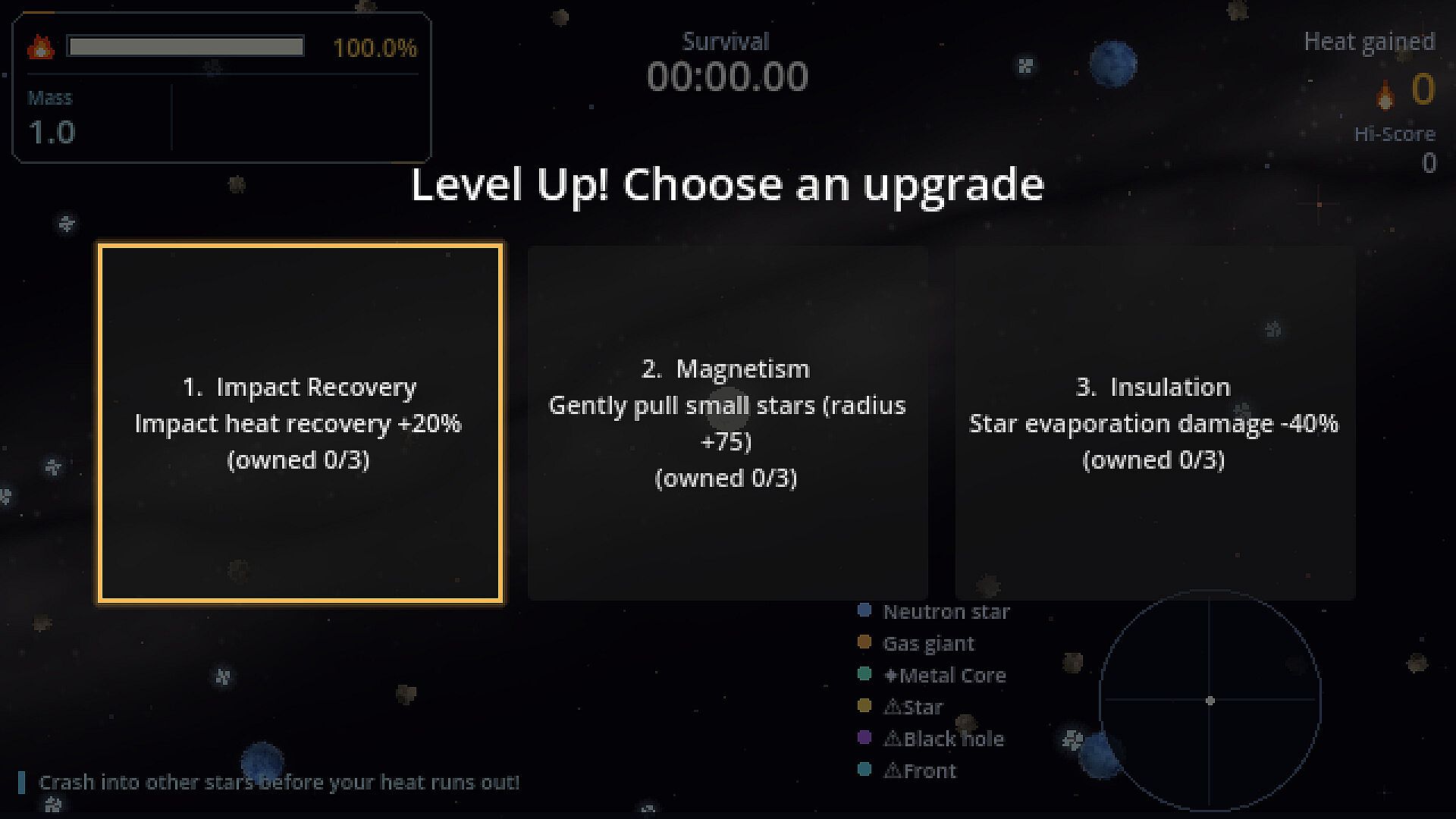
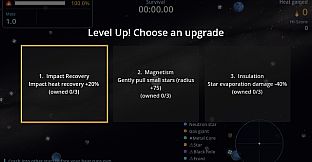
Progression includes ten in-run upgrades that alter collision outcomes, heat management, or movement traits during a single attempt. Between runs, a permanent research lab allows investment in lasting improvements that carry forward across multiple attempts. This setup encourages repeated play to refine strategies around mass thresholds, elemental timing, and route planning through dense clusters of stars and hazards.
Procedural Generation and Visuals
Every element of the galaxy, including star placements, celestial body types, and environmental interactions, generates through code rather than pre-made assets. Pixel art for the player star and all surrounding objects, along with sound effects, emerges dynamically from the same systems that drive gameplay rules. This approach ensures each run presents unique layouts and collision opportunities without repetition from fixed levels.
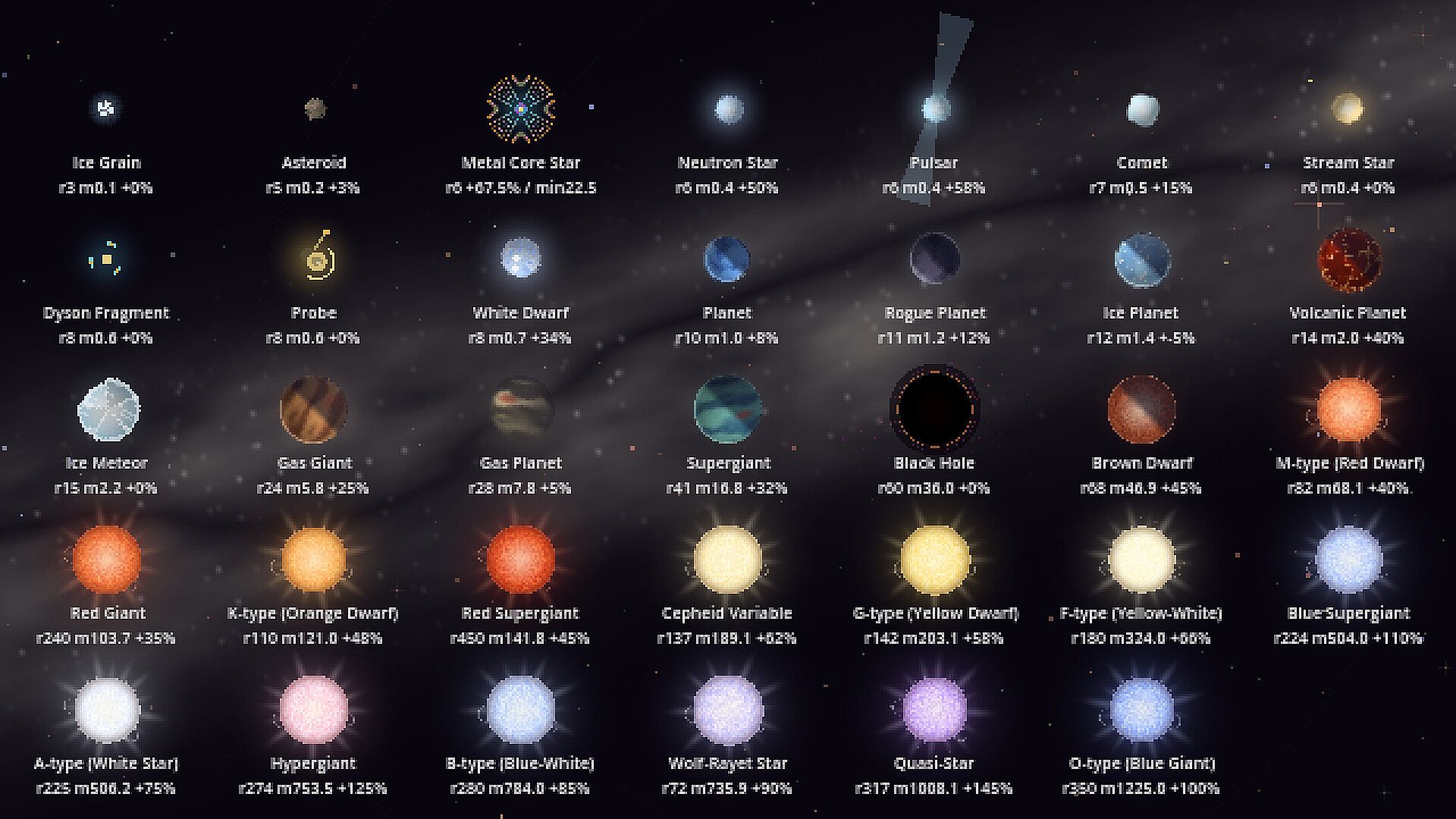
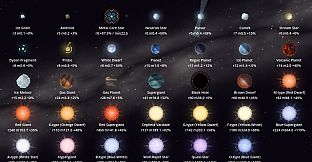
The thirty-four distinct celestial body types contribute specific behaviors. Gas giants offer protective interiors, ice grains provide mass trade-offs, and black holes enforce strict avoidance zones. These elements integrate directly into the heat and mass systems, creating layered decisions about when to engage, hide, or evade during outward travel.
Is It Worth Playing?
HOSHIKUI suits players who enjoy precise, systems-driven survival gameplay without direct combat inputs. The emphasis on collision physics, resource conversion through elemental decay, and constant outward pressure creates a focused loop that rewards planning around mass growth and heat thresholds. The roguelite structure with in-run upgrades and persistent lab progression adds replay value for those who appreciate refining builds across attempts.
As an upcoming title scheduled for release on August 24, 2026, the game currently has no player reviews or post-launch updates available. Its single-player focus and procedural systems position it for audiences interested in minimalist action experiences centered on physics and survival rather than narrative or multiplayer elements. Those drawn to the described mechanics of heat management and celestial navigation may find the core loop compelling once it launches.












