







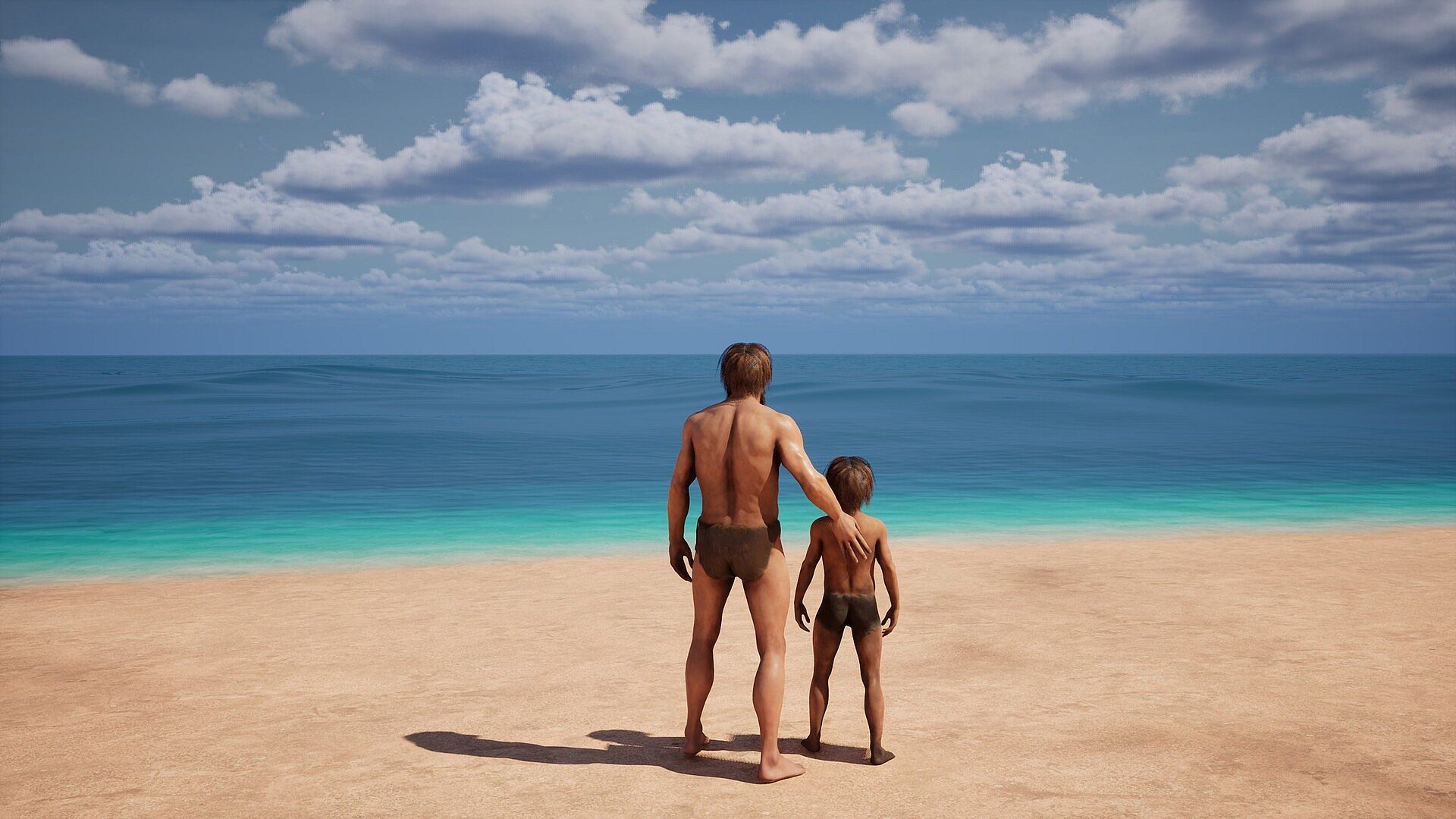
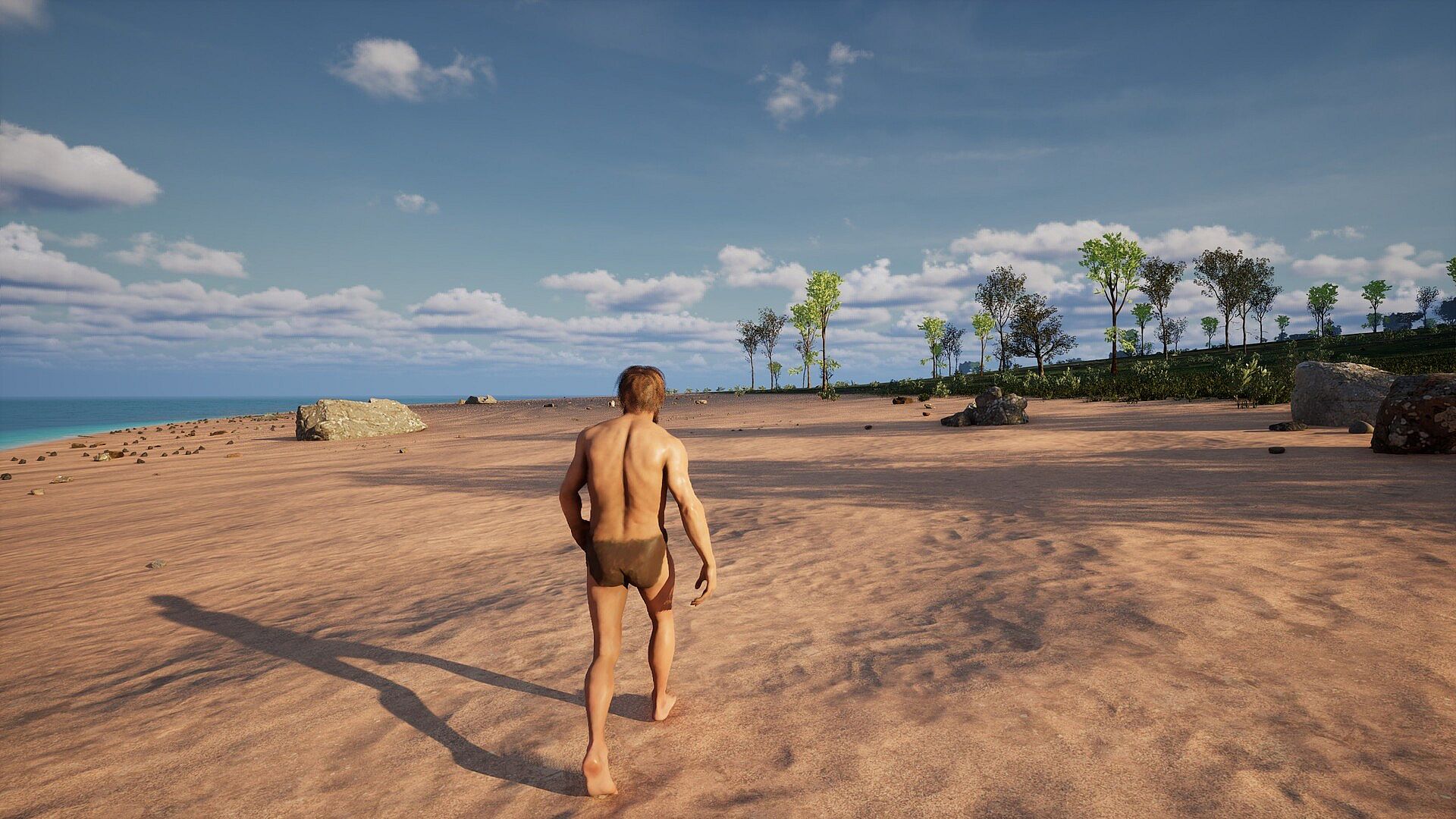

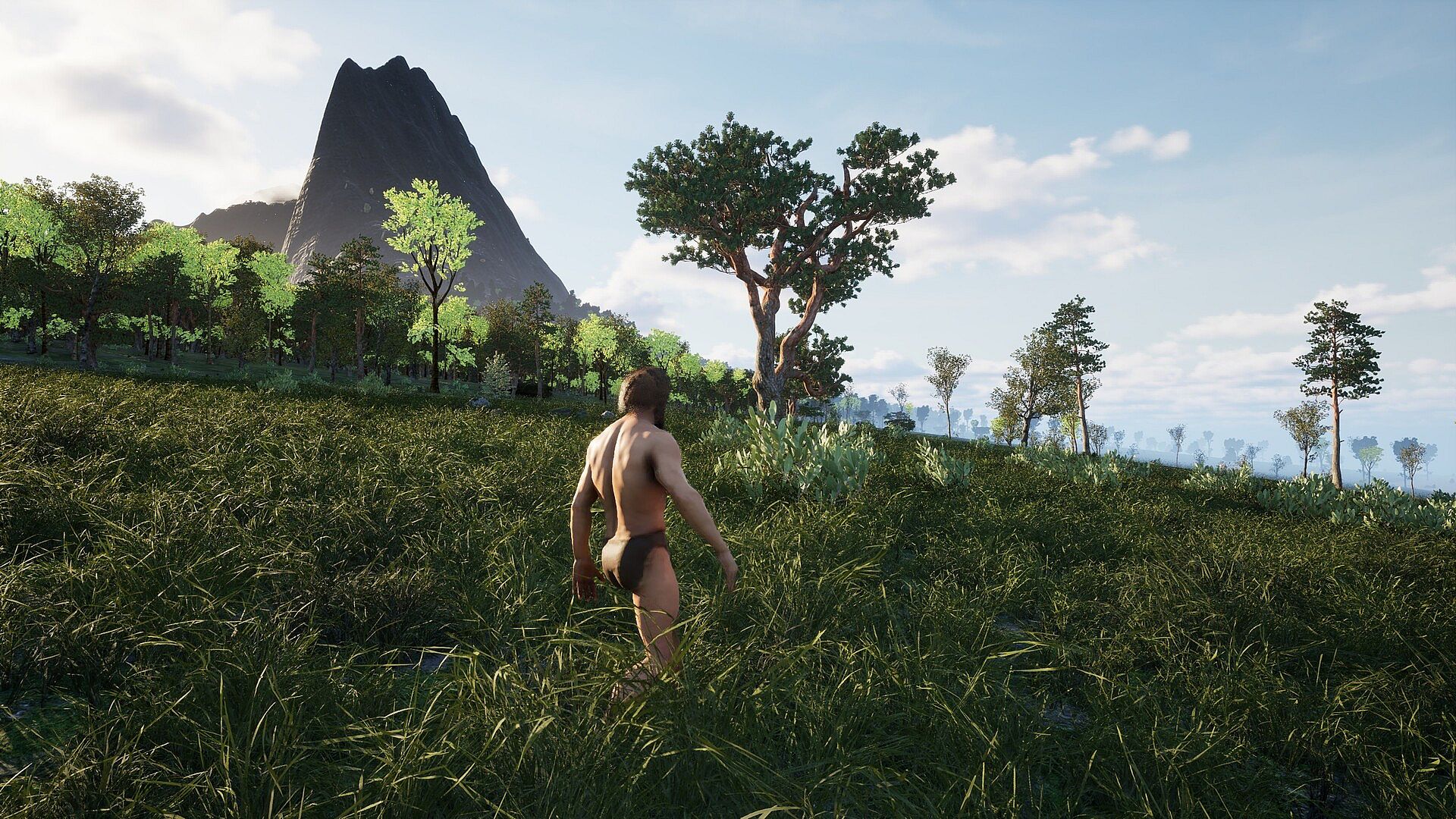


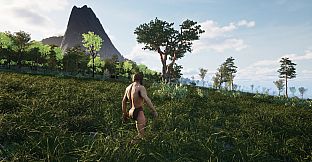
Kinhenge is a free to play massively multiplayer online survival game on PC where players guide a family bloodline across generations rather than controlling a single hero. The experience unfolds on persistent dedicated servers that begin in the Stone Age and advance through player-driven technological discovery toward future eras.
Gameplay
Each character lives for 18 real days before dying of old age or in conflict, after which the player continues as a child. Families pass down traits that strengthen with each surviving generation, turning long-lived bloodlines into dynasties with gifted offspring. All accumulated knowledge resides in one family book that can be hidden, defended, or lost to theft and destruction. A standing stone called the Kin marks each village, claims territory, and preserves memory of the bloodline even if it ends.
Core survival requires gathering resources and following extended crafting chains to produce tools from basic stones up to knives, axes, spears, and bows. Village planning uses a hammer tool to construct huts, walls, palisades, and workbenches that remain vulnerable to damage and collapse. Directional melee combat allows attacks and parries in eight directions plus thrusts, with every hit creating wounds that continue bleeding until bandaged. Players hunt deer and boars, spear fish, swim, dive, and climb using only their hands while managing hunger, thirst, cold, and injuries on a daily basis.
The setting is a fixed 4 by 4 kilometer island featuring beaches, a central lake, a ring of mountains, sea cliffs, and caves. A forest of more than 80,000 trees grows and spreads naturally, influenced by altitude and changing weather patterns. Servers start in the Stone Age, but players collectively unlock subsequent eras including the Copper, Bronze, and Iron Ages, antiquity, the Middle Ages, the modern age, the industrial age, and beyond by researching, building, and transmitting knowledge across generations.
Game Modes
Kinhenge operates entirely on persistent dedicated servers that support both cooperative and competitive play among multiple families. Participants can trade goods, form alliances, or engage in open conflict with neighboring groups. Global chat reaches the entire server while proximity chat limits conversation to those within roughly 20 meters. Every village includes a notice board for posting laws, contracts, and bounties that shape local interactions.
Progression remains shared across the server as families and non-player inhabitants advance technology together. A single bloodline can persist for many generations on one server, or players may start fresh bloodlines when previous ones end. The structure encourages long-term server communities where individual actions influence the shared technological and territorial landscape.
Progression Across Eras
Technology advances only through collective effort. Early generations focus on stone tools and basic shelters, while later ones introduce metalworking, agriculture, and industrial processes as knowledge passes forward. Each era unlocks new crafting options, building techniques, and survival challenges that build on prior discoveries. The oldest bloodlines carry the most inherited traits, giving established families advantages in combat, crafting efficiency, and resource management.
Loss of the family book resets accumulated wisdom for that line, forcing survivors to relearn or steal knowledge from others. Villages expand with player-built structures that can be raided or defended, and the living environment responds to player activity through forest growth and weather shifts.
Is It Worth Playing?
Kinhenge suits players who enjoy generational survival mechanics, persistent world building, and multiplayer interactions without pay-to-win elements. The free to play model keeps entry open while optional subscriptions and cosmetics remain cosmetic only. The core loop of raising a family, protecting knowledge, and pushing technology forward on shared servers creates a distinctive long-term experience for those drawn to deep crafting systems and territorial competition. Short sessions work for daily survival tasks, yet meaningful progress requires consistent server participation over real-world weeks or months. Those seeking quick matches or single-player campaigns may find the generational pace and server dependency less appealing.











