




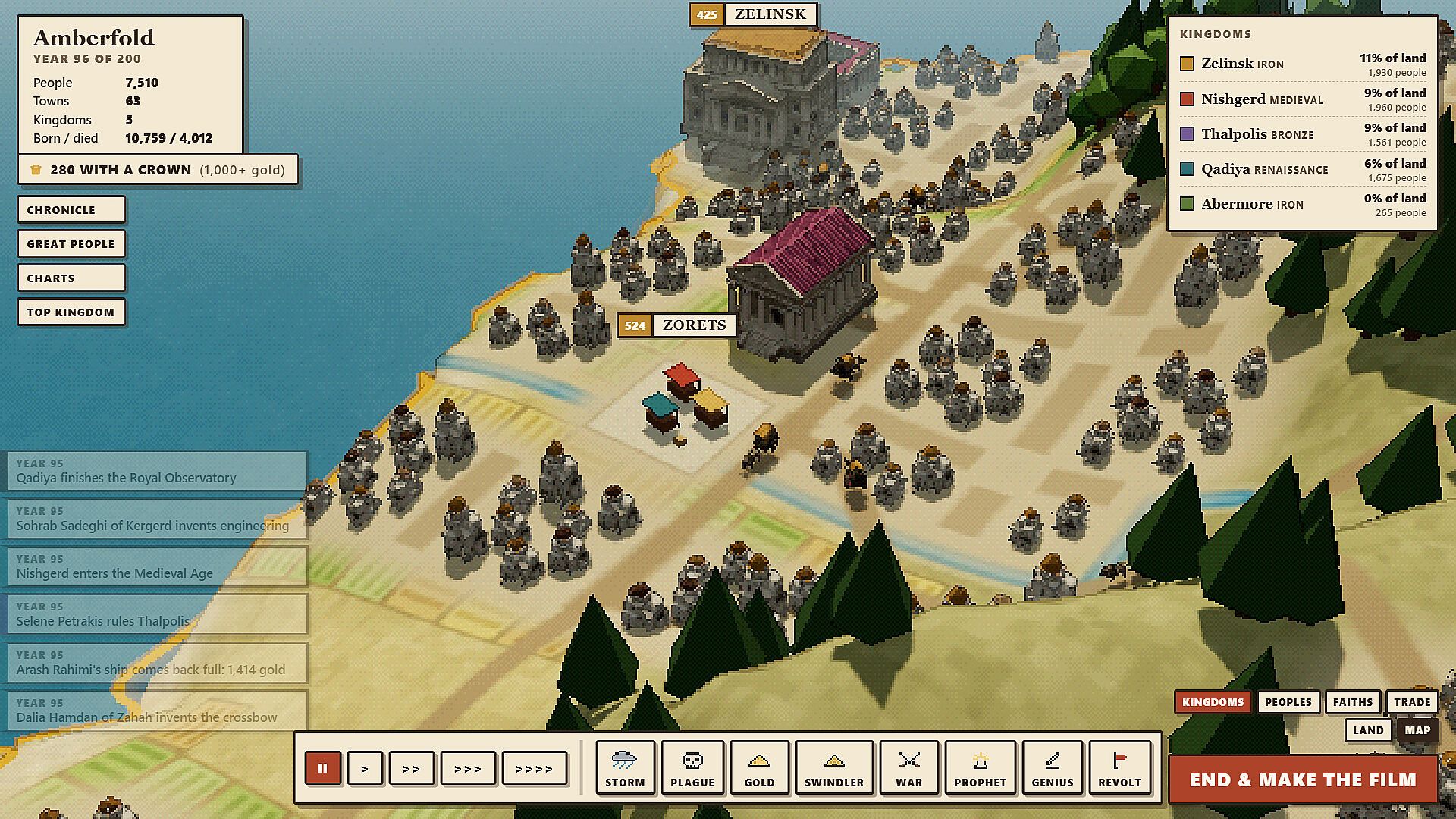
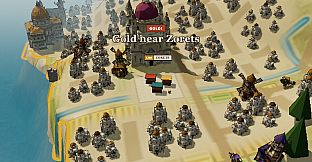
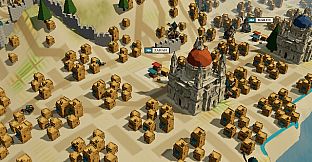
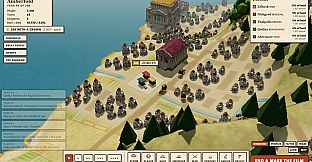
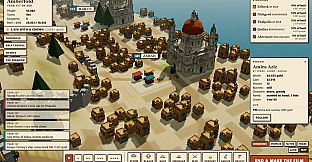
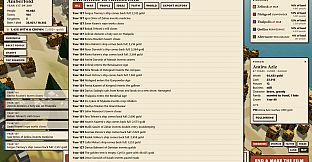
Ledger of Ages is a strategy simulation game for PC that lets players shape an entire world and observe how its history unfolds over centuries. Developed as an indie title, it combines elements of world building, population simulation, and historical progression across defined ages. Players set initial conditions and then watch events play out through thousands of individual lives, with options to intervene using special powers.
Gameplay
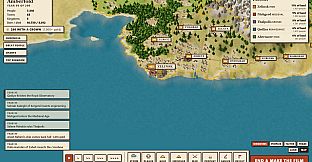
The core loop centers on creating a world seed and terrain shape such as continents, an archipelago, or a single landmass. Players position two to six peoples on the map or allow the simulation to place them automatically. Rules for events like wars, sea trade, plagues, swindlers, rebellions, gold finds, inflation, prophets, and diplomacy are selected before starting. History duration can be set to 100, 150, 200, or 300 years.
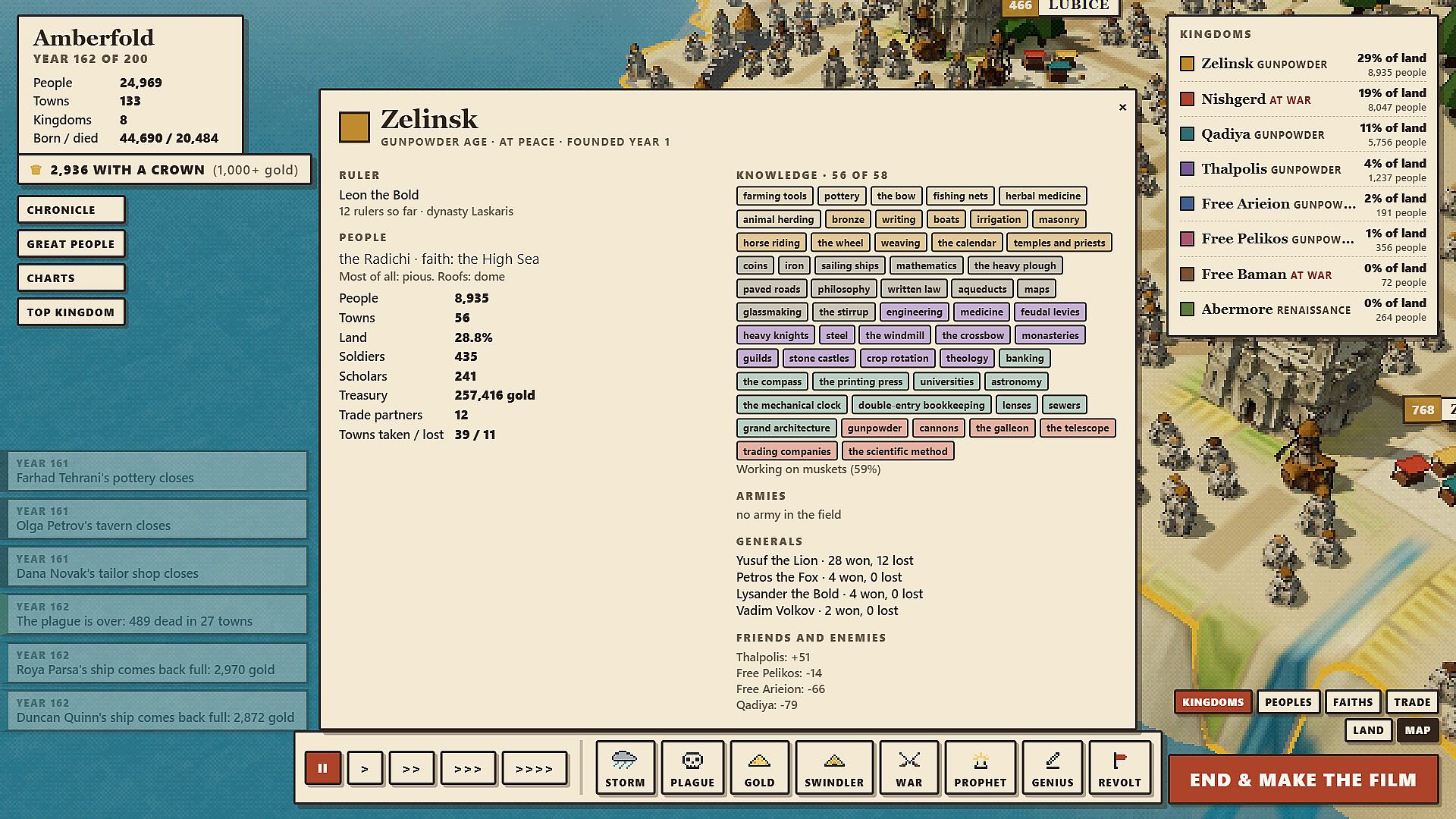
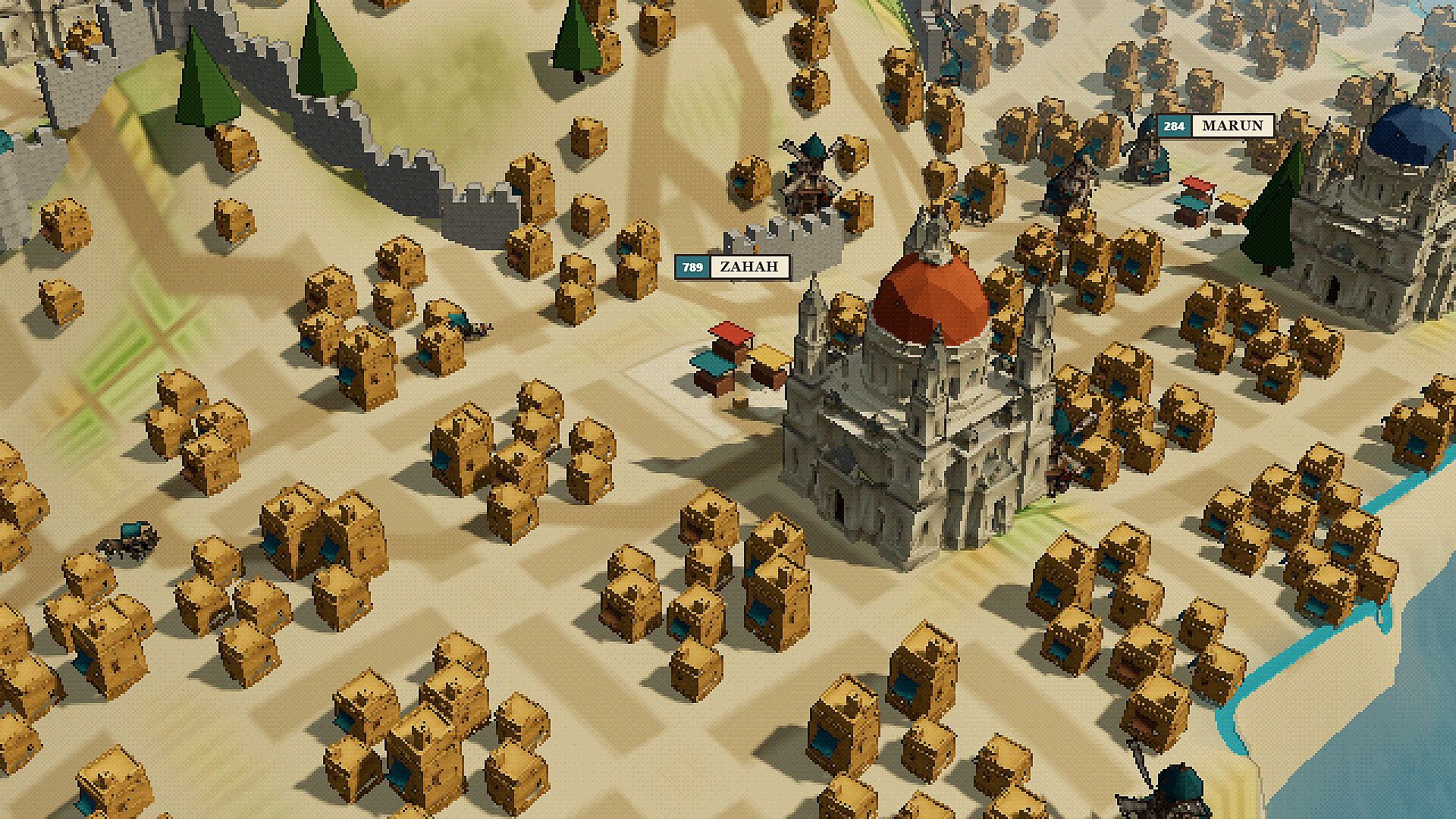
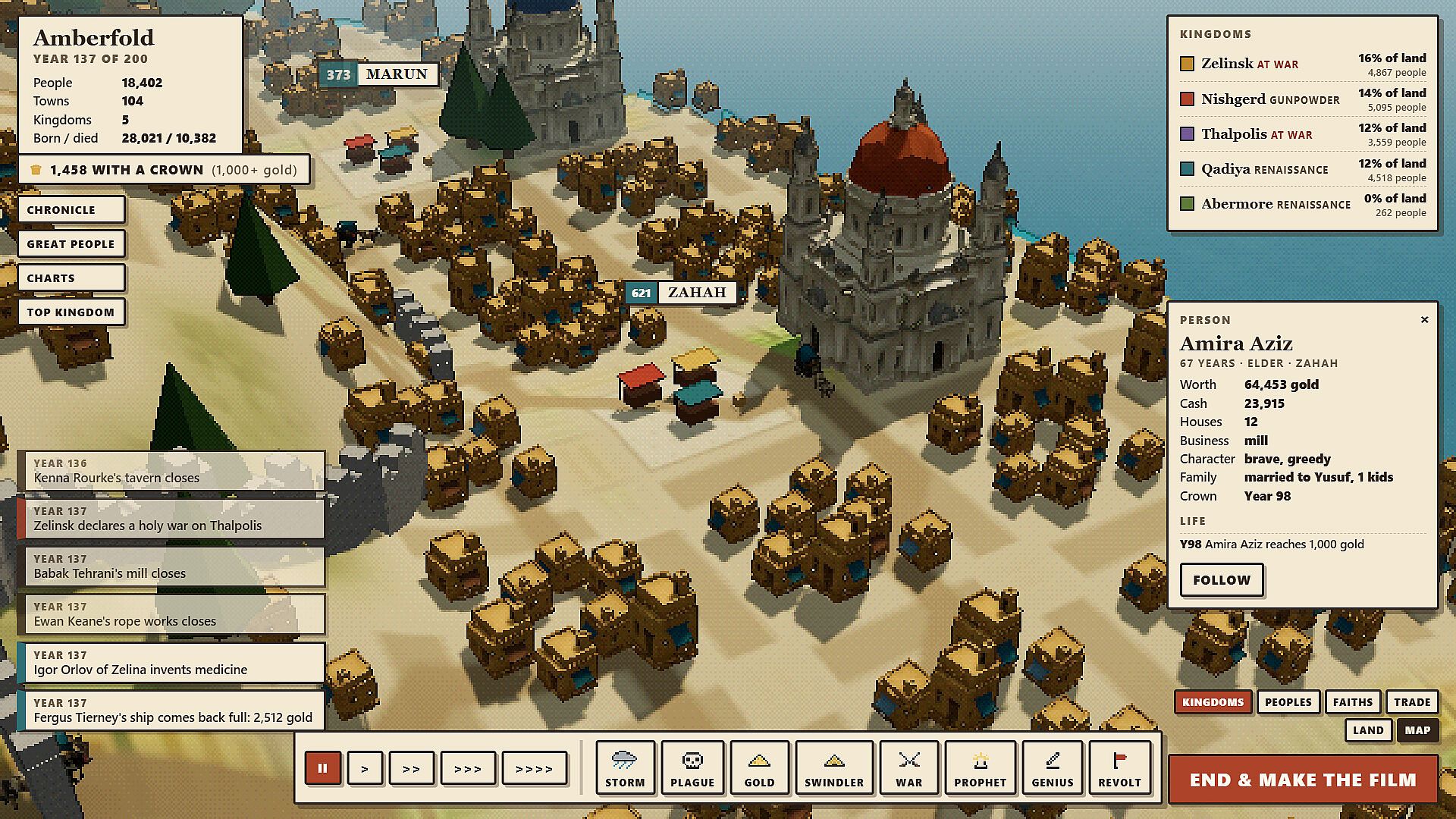
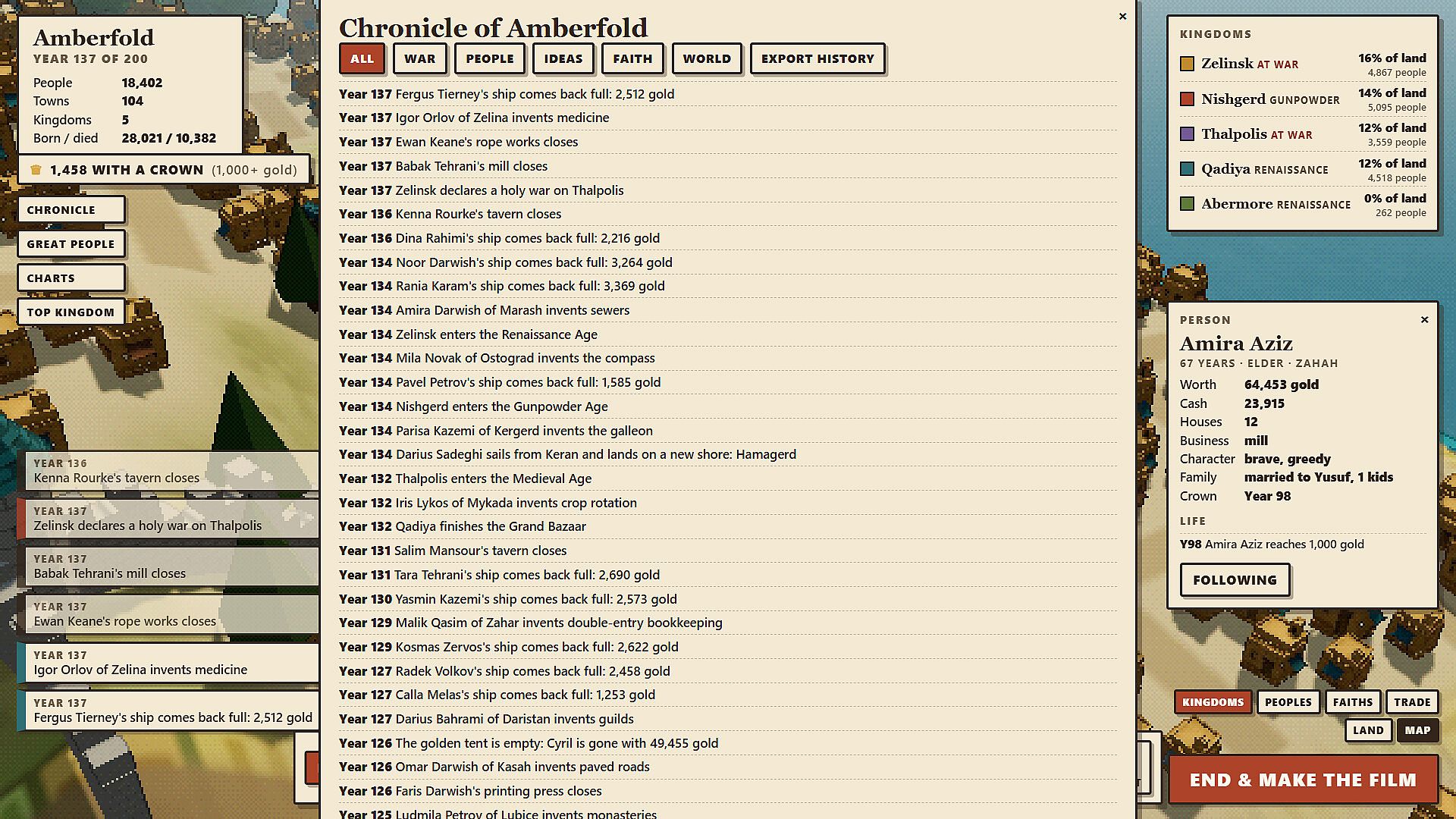
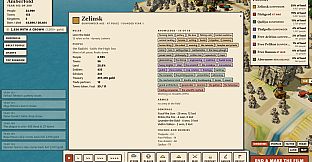
Every individual receives a name, character traits, job, money, home, family, and inheritance. Settlements expand from villages to towns and kingdoms, complete with rulers, splits, unions through marriages, and collapses. Any person can be followed through their full lifespan to see paths toward fortune or hardship. The simulation tracks 17 resources along with land and sea trade routes that develop roads and overseas colonies.
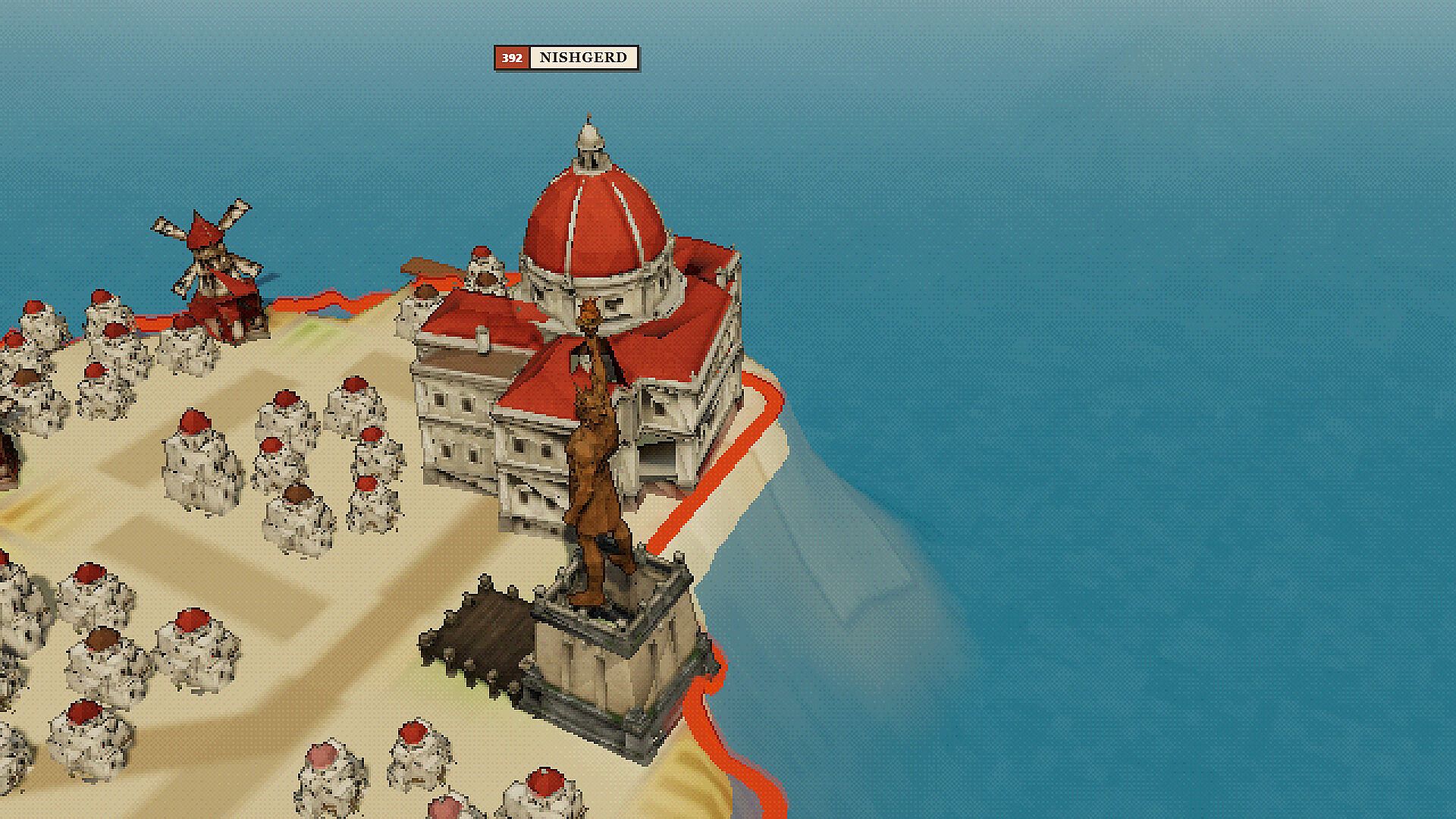
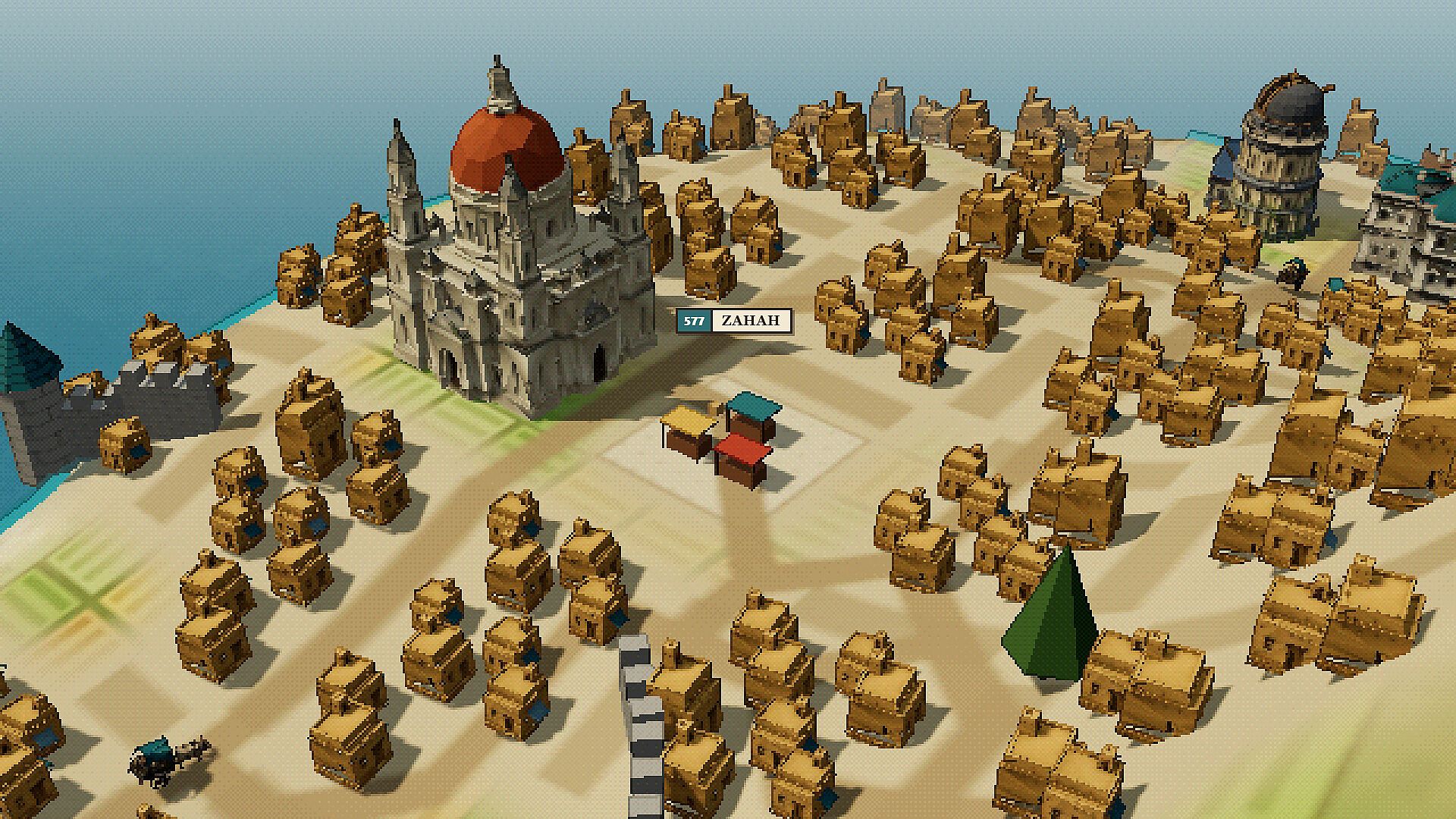
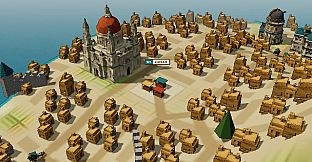
Progression moves through six ages: Tribal, Bronze, Iron, Medieval, Renaissance, and Gunpowder. Fifty-eight inventions appear, each tied to a named inventor. Seven unique wonders can emerge, including the Great Library, the Colossus, the Great Wall, the Hanging Gardens, the Grand Cathedral, the Grand Bazaar, and the Royal Observatory. Distinct cultures develop with their own names, values, and faiths, while prophets establish religions that spread along trade paths.
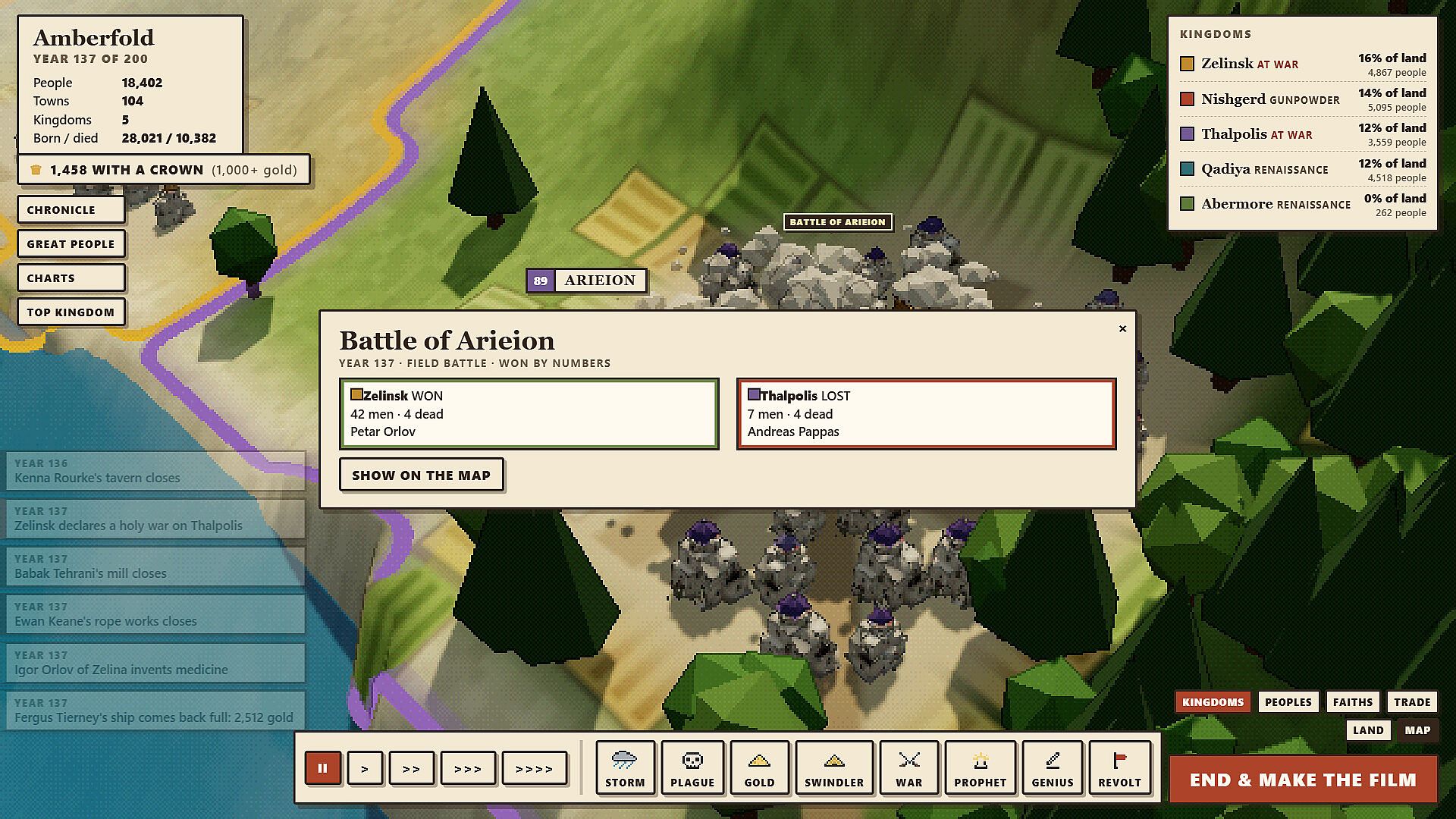
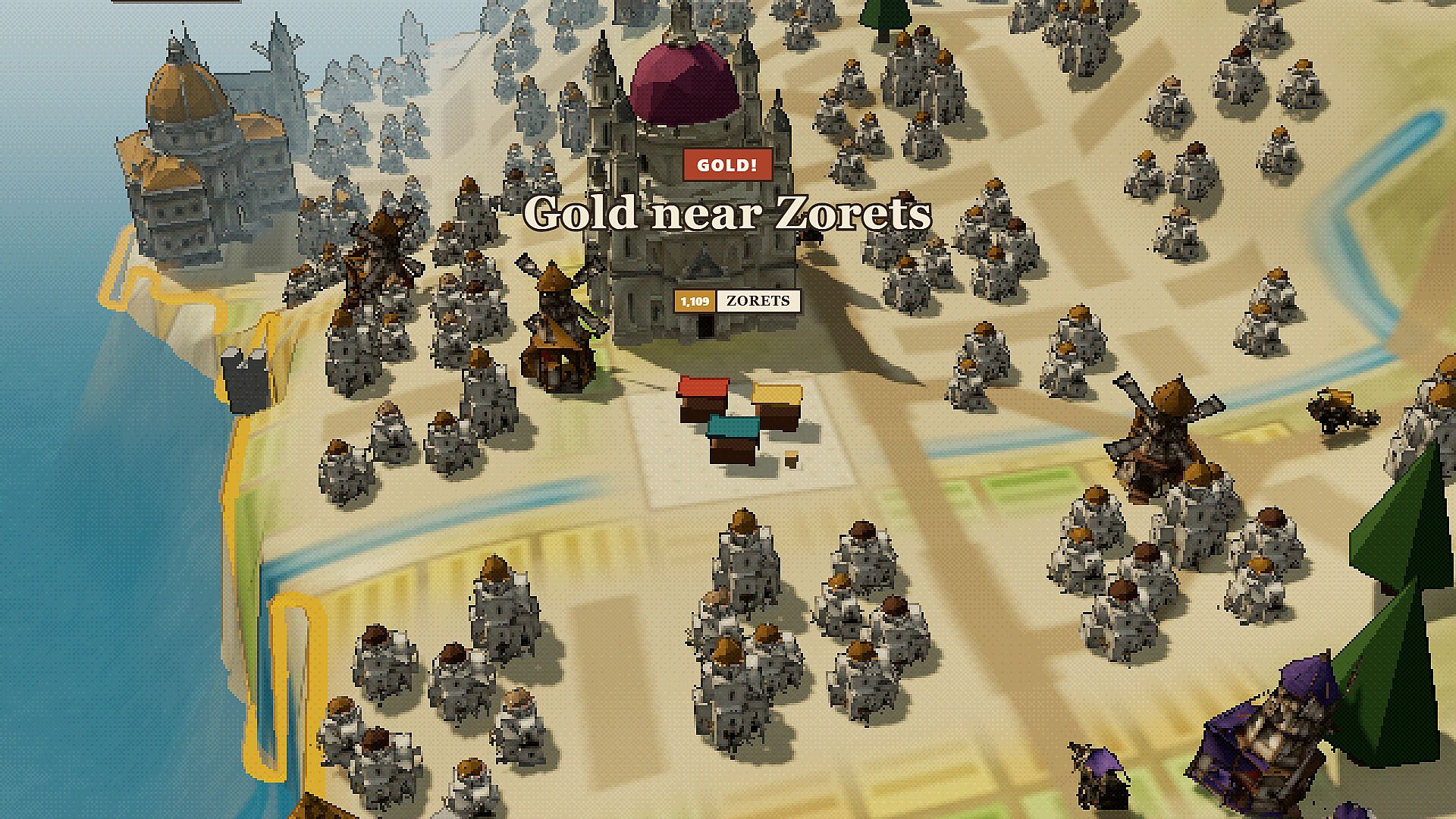
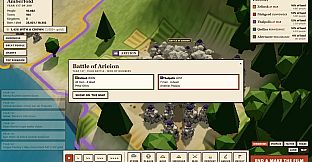
Armies advance under named generals, and battles receive names along with specific reasons for outcomes such as troop numbers, cavalry, archers, gunpowder, terrain advantages, or commander skill. Sieges, alliances, truces, coups, and royal inheritances alter borders and power. Plagues spread with traders, gold rushes occur, storms hit, rebellions rise, and swindlers operate with promises of high returns.
Game Modes
Configuration choices function as the primary ways to experience the simulation. Different world seeds, terrain shapes, and starting population placements create varied starting points. Rule sets can emphasize conflict, commerce, or internal stability, while history length controls the scope of events observed.
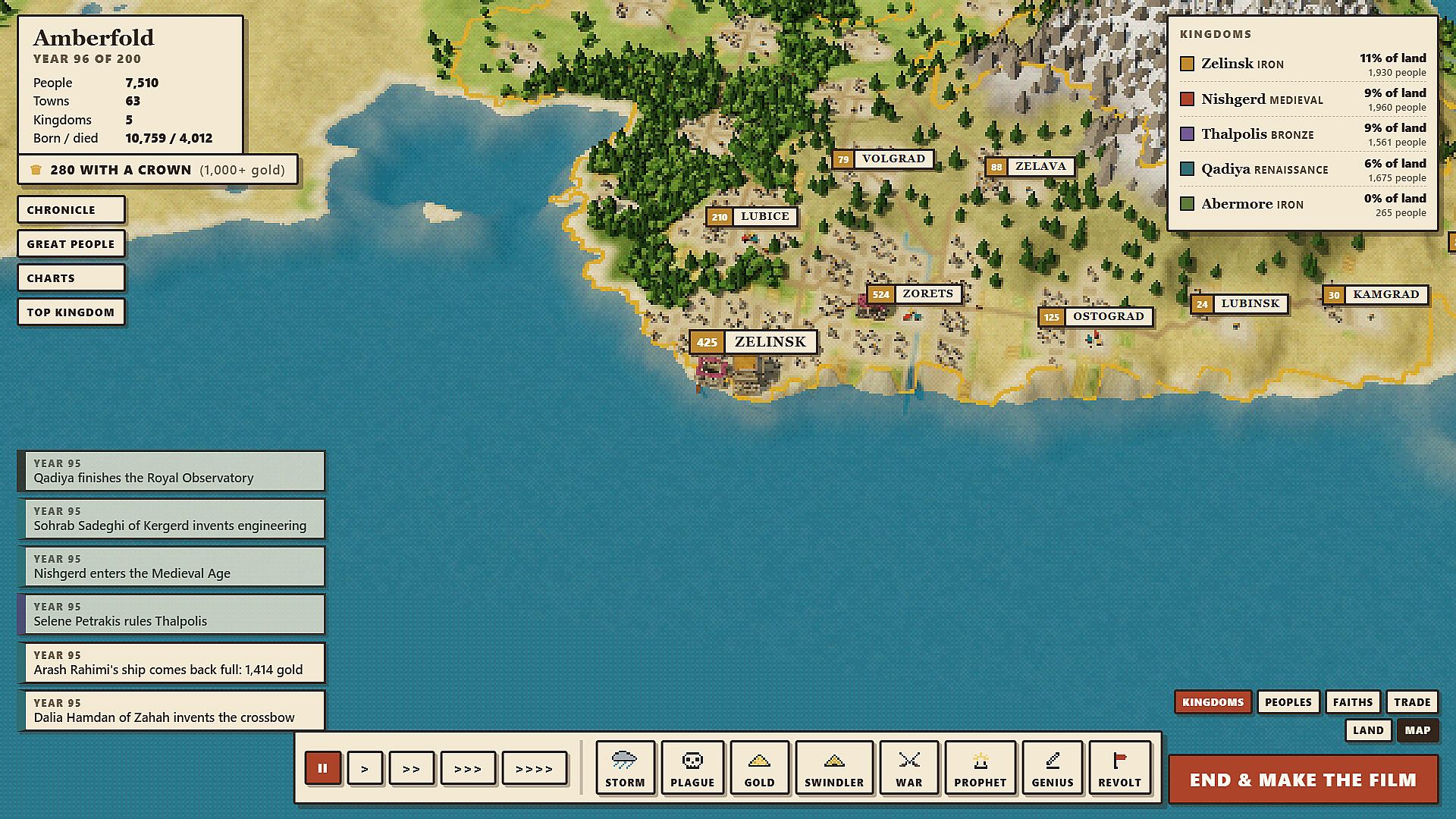
Intervention options provide another layer of variety. Eight powers allow direct influence: storm, plague, gold, swindler, war, prophet, genius, and revolt. These can be applied at any location and moment to alter the course of events. Time controls include pausing or adjusting speed, with the ability to inspect any town, kingdom, army, or battle for detailed records.
At the end of a run, the simulation generates a narrative summary focused on standout elements such as dominant empires, wealthy families, throne-seizing generals, or successful swindlers. This summary is presented as a narrated film with maps, subtitles, and music, available in short vertical format or longer versions, and can be saved as video.
Visuals and Presentation
The world renders in 3D, showing towns expanding street by street, structures and wonders rising, and armies or ships moving across the map. A pixel-art style can be applied, or players can switch to a parchment map view. Audio adapts to the current age and ongoing conflicts, with music and sound effects shifting accordingly.
Every run produces unique outcomes because events emerge from the interactions of simulated lives and rules rather than fixed scripts. The system generates names, relationships, and story threads dynamically during play.
Is It Worth Playing?
Ledger of Ages remains listed as coming soon with no user reviews available yet. Its single-player focus on detailed historical simulation and individual life tracking suits players interested in strategy and indie simulation experiences. Those who enjoy setting parameters and observing emergent stories from population growth, trade, conflict, and cultural shifts will find the described systems align closely with that preference. The option to generate and save narrated films of each world's outcome adds a reflective element after each session. Availability on PC supports straightforward access once released, though the current pre-release status means players should monitor official channels for updates on launch timing.











