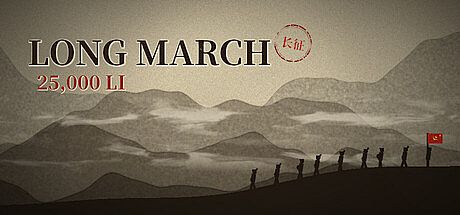


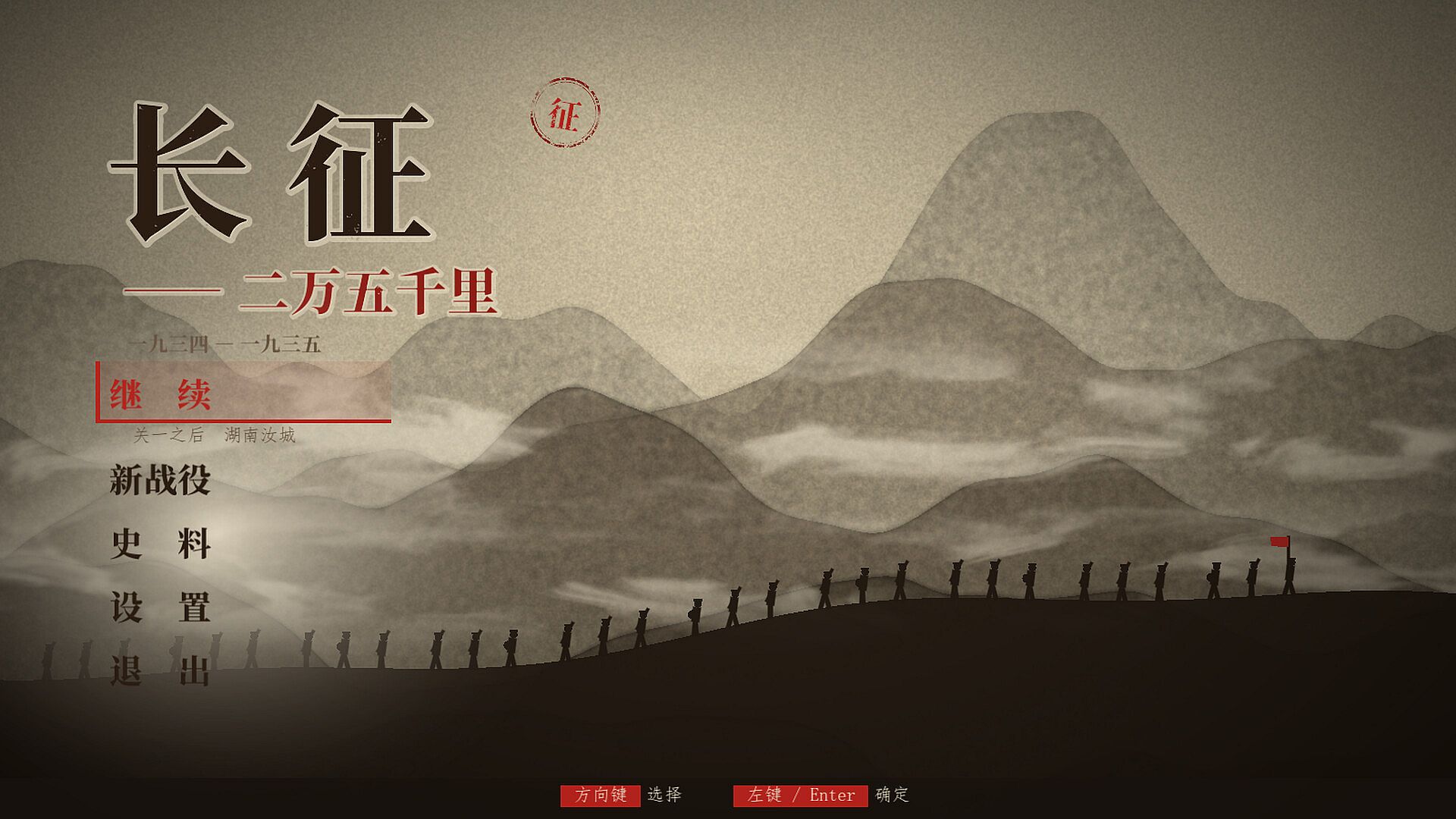
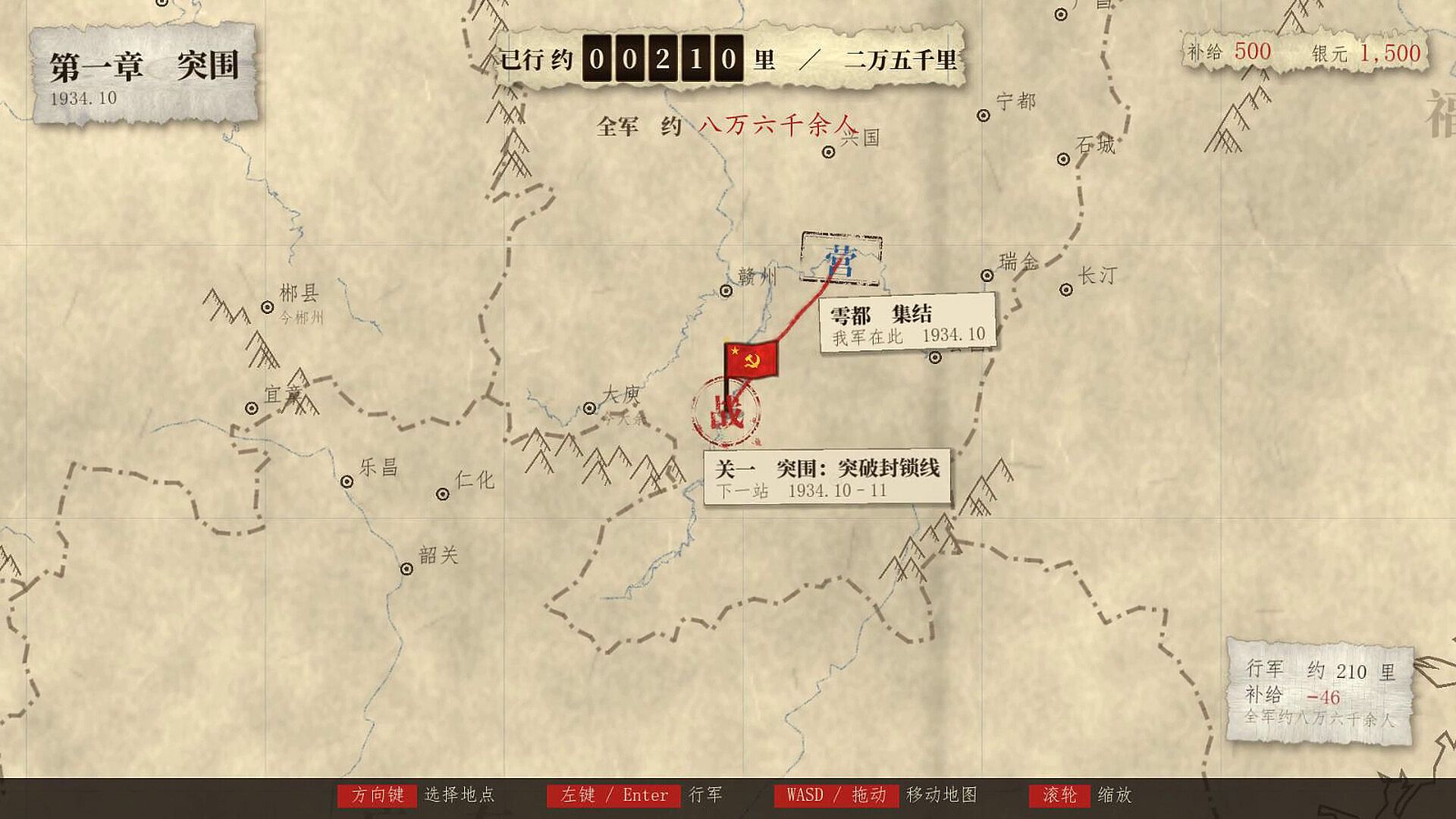
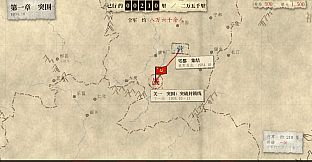
Long March: 25000 Li is a turn-based tactics strategy game set during the Central Red Army's historic Long March of 1934 to 1935. Players guide units across a campaign map that traces the route from Yudu in Jiangxi to Wuqi Town in northern Shaanxi, engaging in battles drawn directly from documented events of that period.
Gameplay
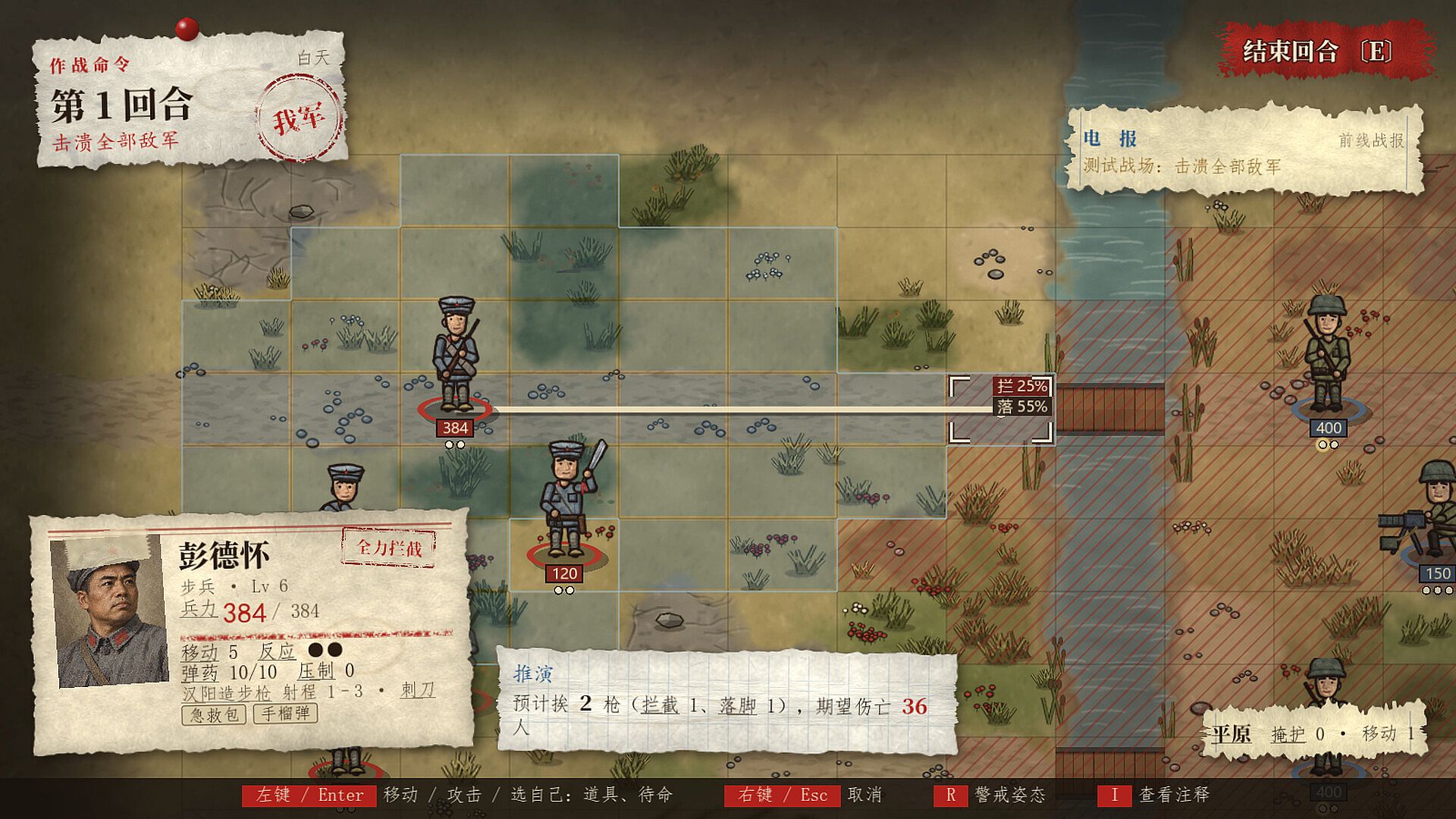
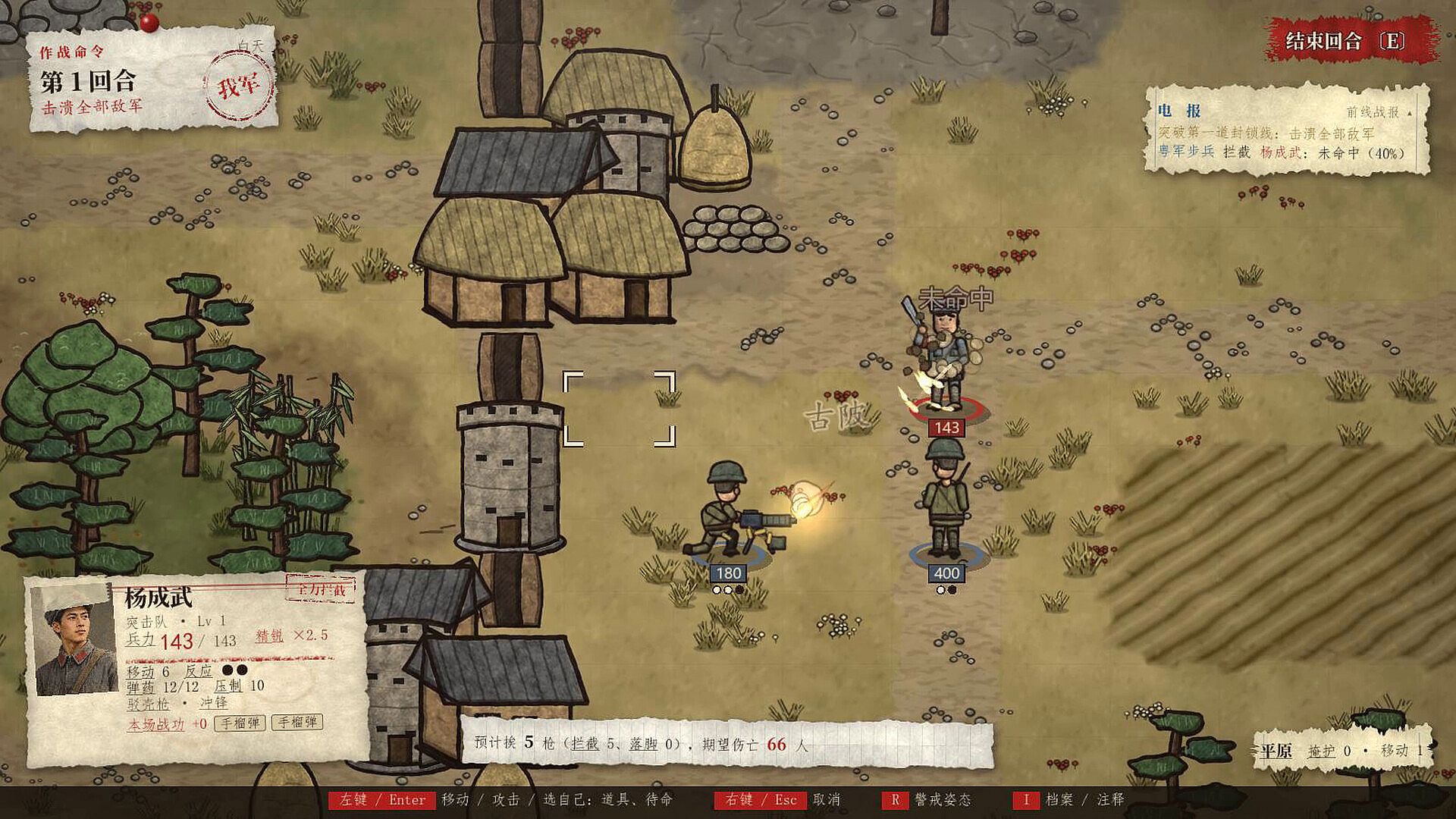
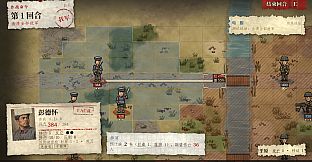
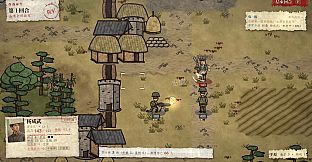
Combat unfolds on individual battle maps where each unit represents a body of troops under a specific commander. Strength tracks in personnel numbers, and losses reduce a unit's effectiveness in subsequent actions. Enemy positions create overlapping fields of fire that can trigger interception when units move through exposed areas. Players examine these coverage zones in advance to plot safer paths and sequence moves accordingly.
Cover options include woods, villages, and fortifications. Tactics combine suppression fire, return fire, overwatch positioning, and varied troop types to close on objectives. Once in range, units select between ranged attacks or close combat resolutions. The system emphasizes careful positioning and risk assessment over rapid reflexes.
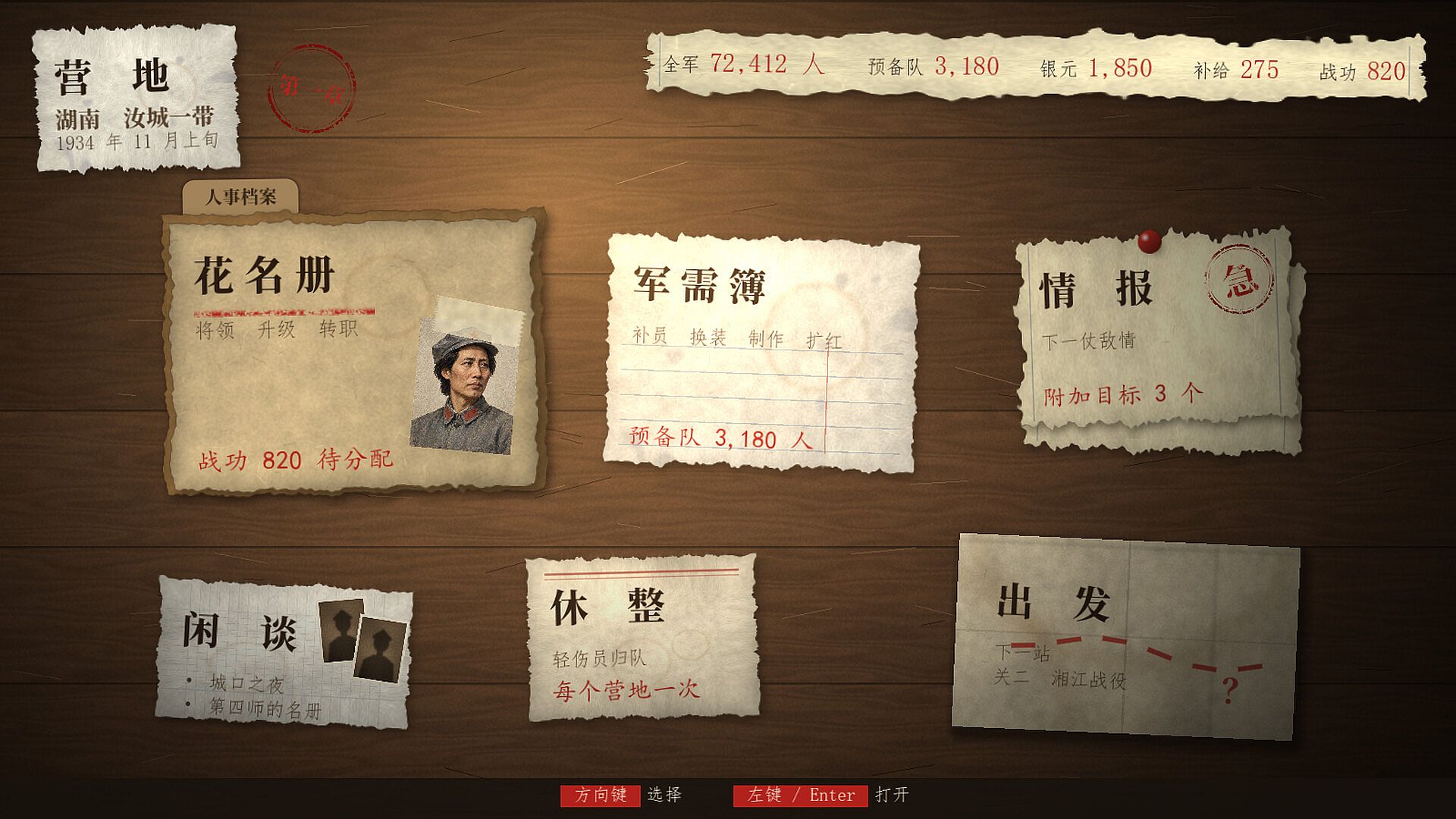
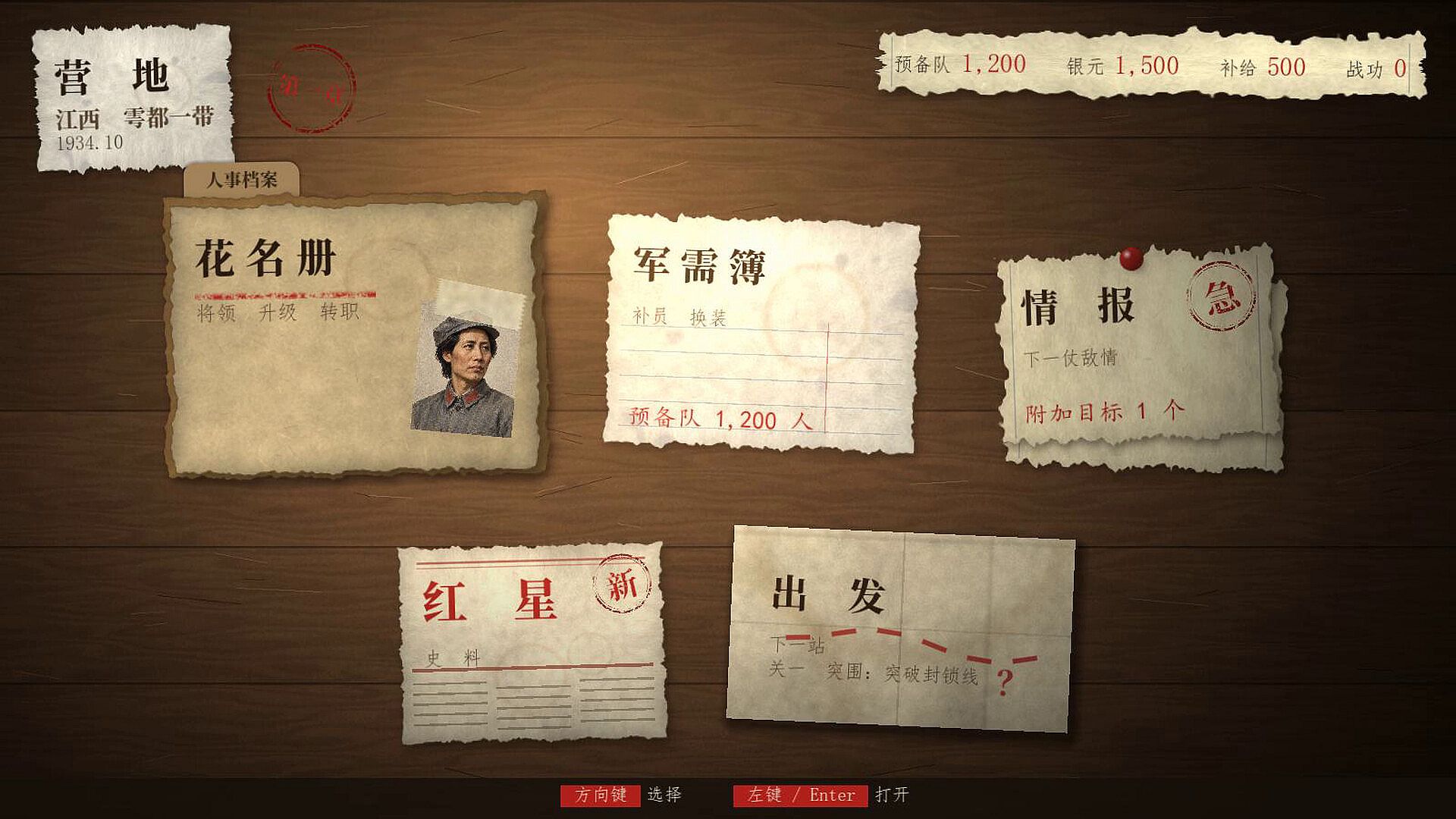
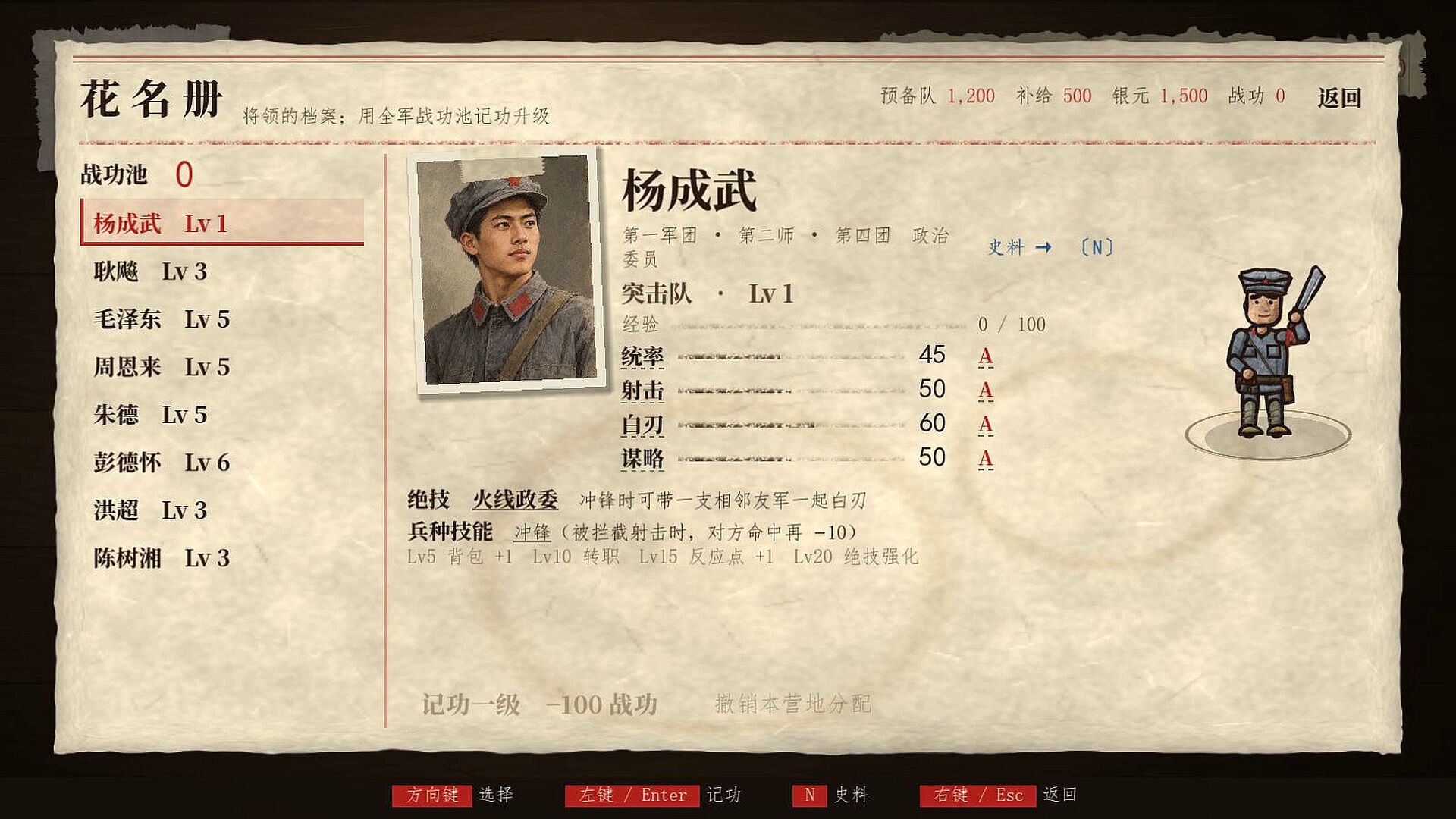
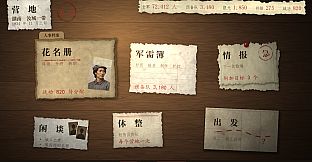
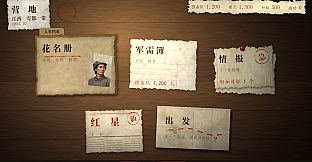
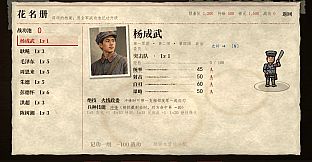
Between battles, the camp screen handles replenishment, recruitment, and equipment organization. Supplies must stretch across both travel segments and fights, requiring ongoing allocation decisions. More than twenty commanders appear over the course of the campaign. Each brings distinct attributes, skills, and formation options. Merit points earned in battle allow upgrades and class development. Personnel records and dialogue track their historical arcs, with some figures not reaching the end of the march.
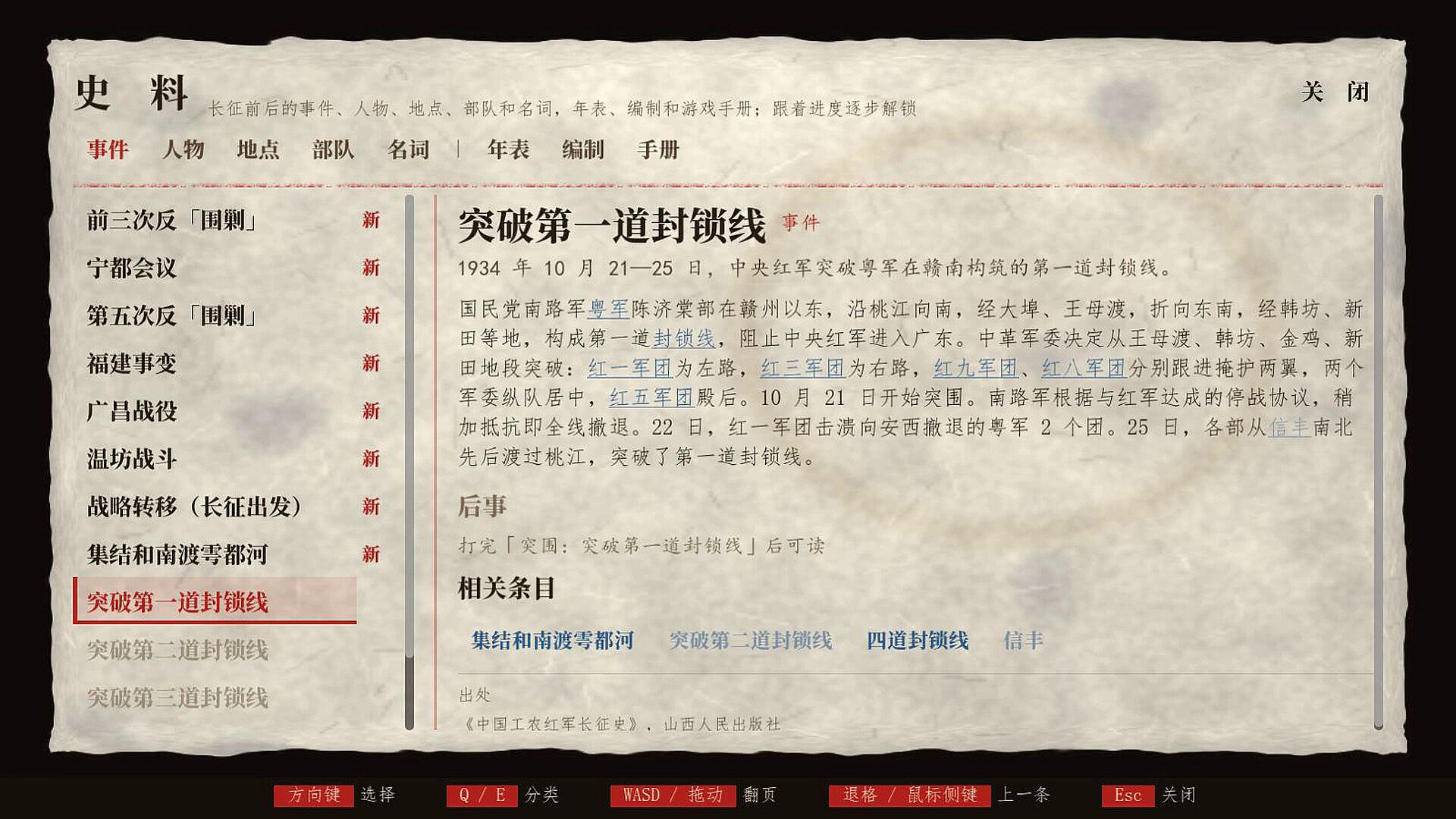
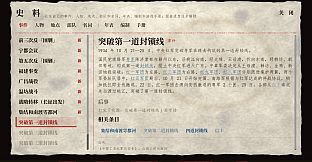
An in-game archive unlocks progressively and catalogs figures, battles, locations, formations, and terminology. Entries link to related topics, a timeline, and organizational charts that clarify command structures and event sequences. Some battle details receive dramatization to fit gameplay needs while drawing from historical records.
Game Modes
The title centers on a single-player campaign that follows the full historical route. Travel occurs on an overarching map that reveals successive stages and records distance covered. Missions adapt to the specific conditions of each historical operation, such as breaking blockades, holding defensive lines, forcing river crossings, or maneuvering around opposing forces.
The campaign opens with a prologue at Wenfang for control introduction and assembly at Yudu. It proceeds through the first, second, and third blockades, the Xiang River actions, crossings of the Wu and Chishui rivers, the Zunyi engagements, the Jinsha and Dadu river operations, the Luding Bridge assault, mountain and grassland passages, the Baozuo battle, Lazikou Pass, Liupan Mountain, and the finale at Zhiluozhen. No additional modes appear in the current design.
Campaign Structure and Historical Focus
Scenarios mirror real operational circumstances rather than abstract maps. Early missions stress breakthrough and rearguard actions. Mid-campaign segments highlight river crossings under fire and surprise maneuvers. Later stages incorporate supply shortages, mountain terrain, and coordination with other formations. The structure tracks the army's progress stage by stage while incorporating commander development and supply management as persistent elements.
Commanders join at historically appropriate points and carry forward their attributes and records. Some participate only in portions of the journey, reflecting documented outcomes. The archive supports deeper exploration of the timeline and relationships among units without interrupting the main sequence.
Is It Worth Playing?
The game targets players interested in deliberate turn-based tactics and historical military campaigns on PC. Its systems reward inspection of enemy fire zones, efficient use of cover, and long-term management of personnel and supplies across dozens of linked scenarios. The single-player focus and absence of multiplayer elements suit those seeking a contained, narrative-driven experience rather than competitive or co-operative play.
Because the title remains in development with a coming-soon release date and no user reviews available yet, any final judgment depends on the completed version. Those drawn to detailed historical recreations, commander progression, and archive-supported context will find the outlined mechanics align closely with that preference. The campaign's length and variety of mission types provide substantial content for the genre audience once released.