


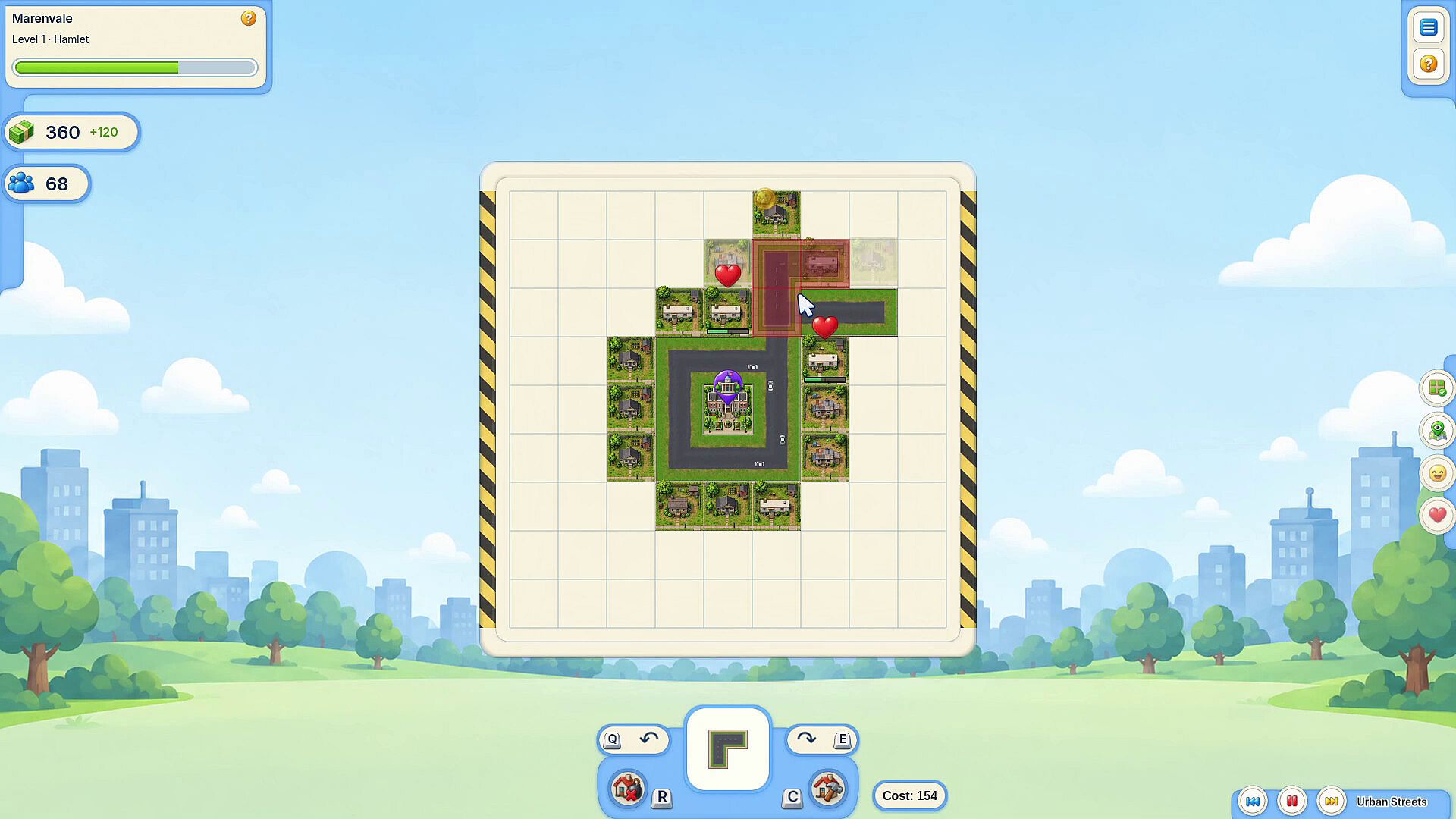
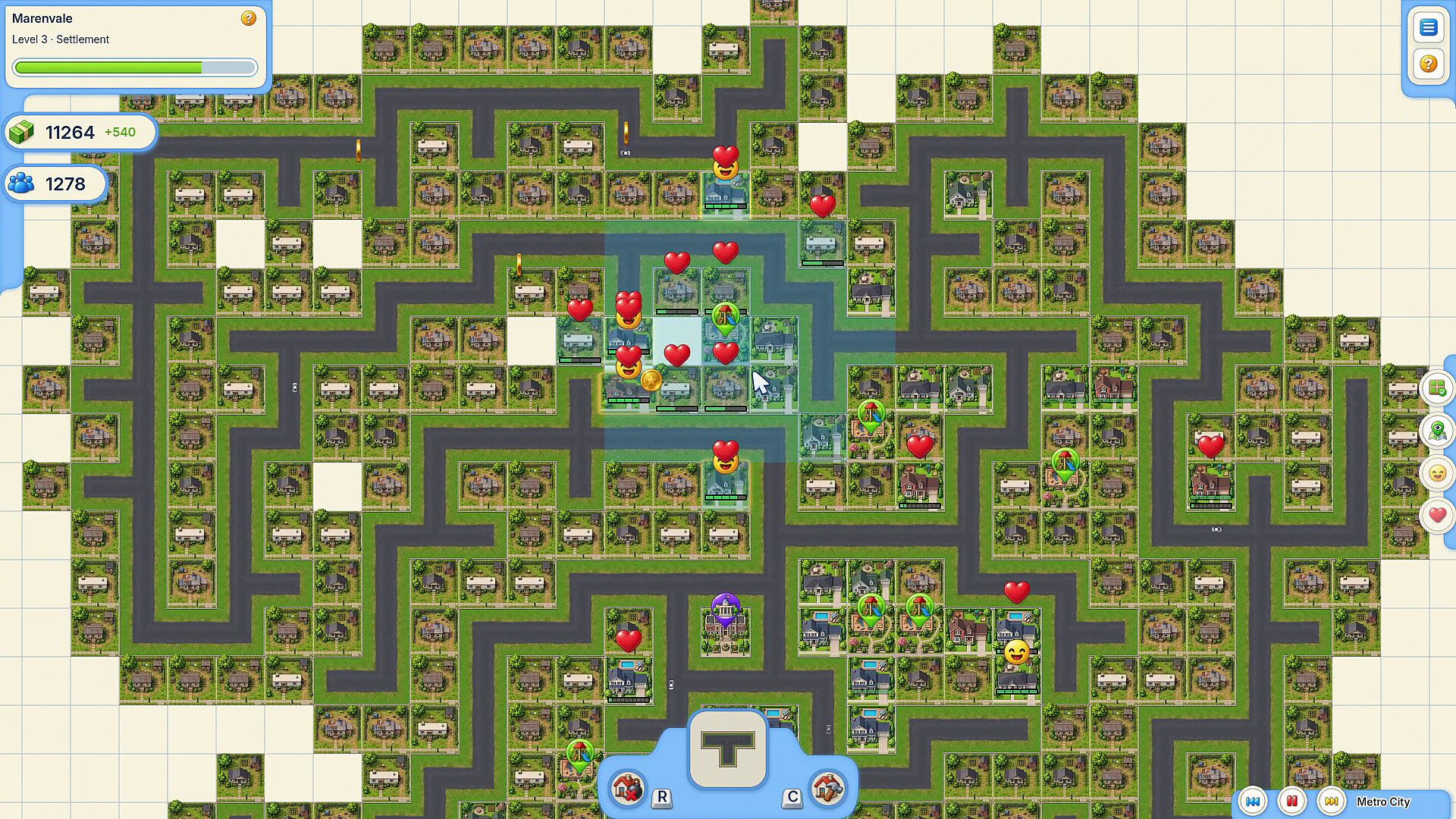
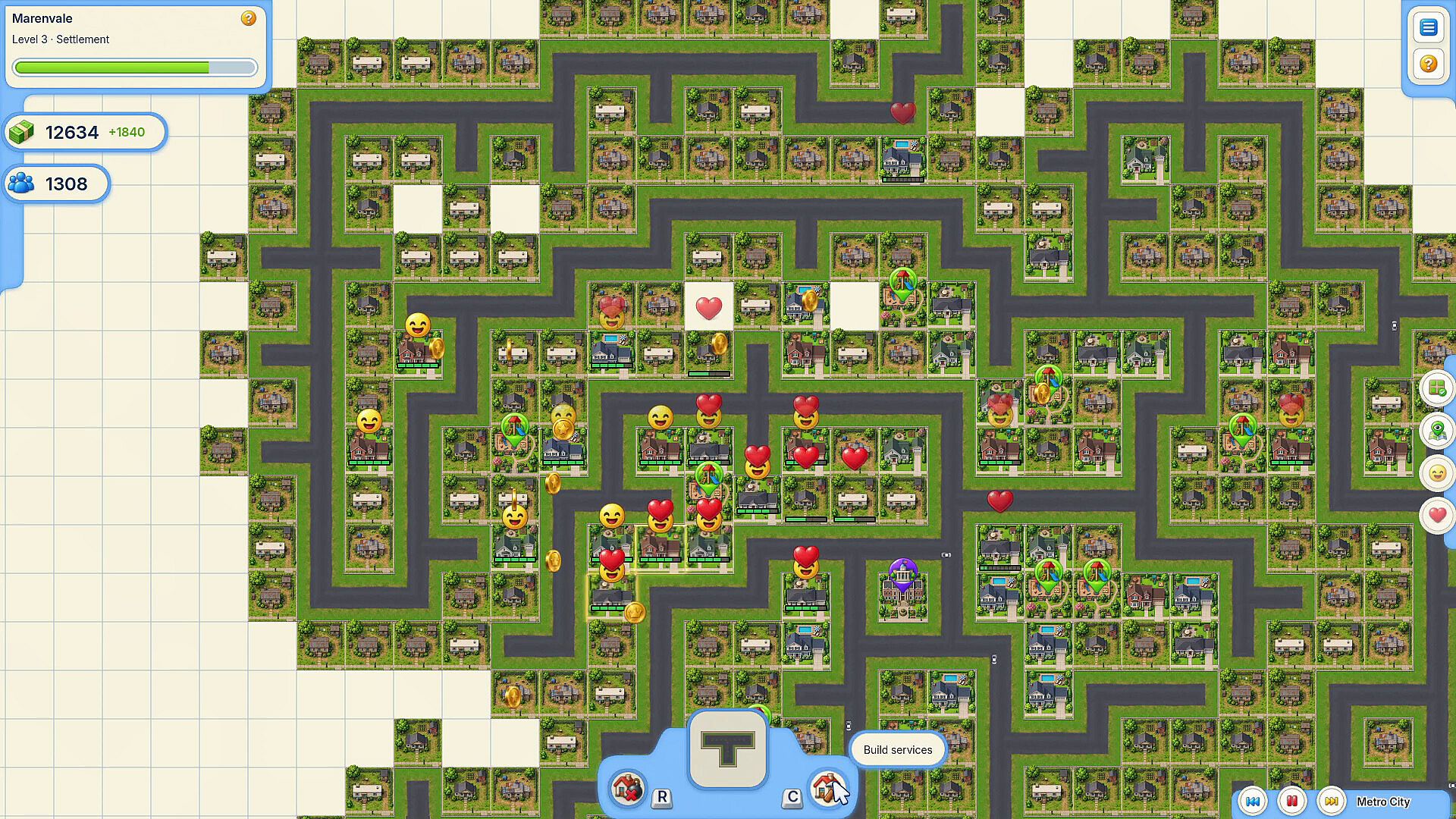
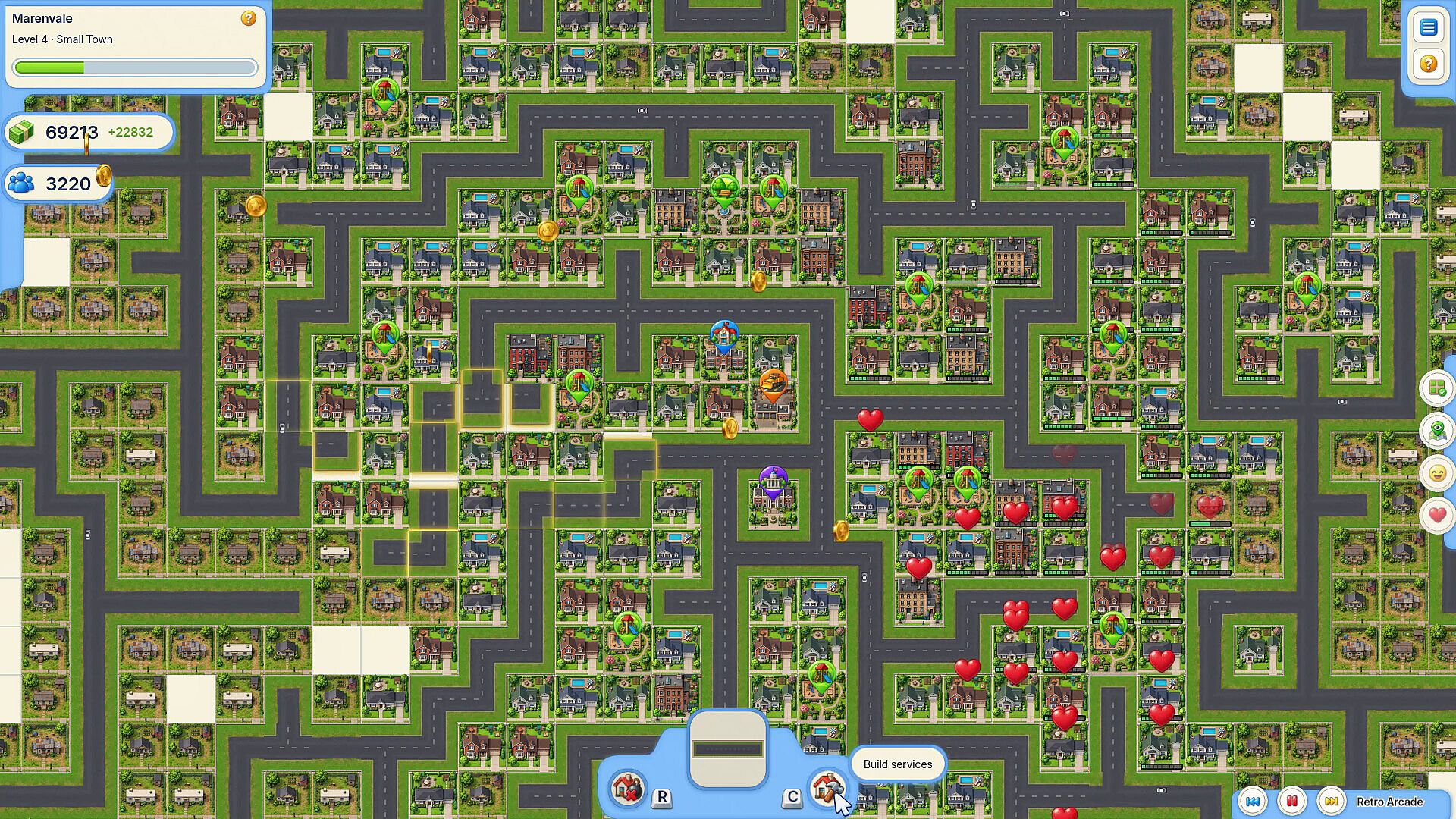
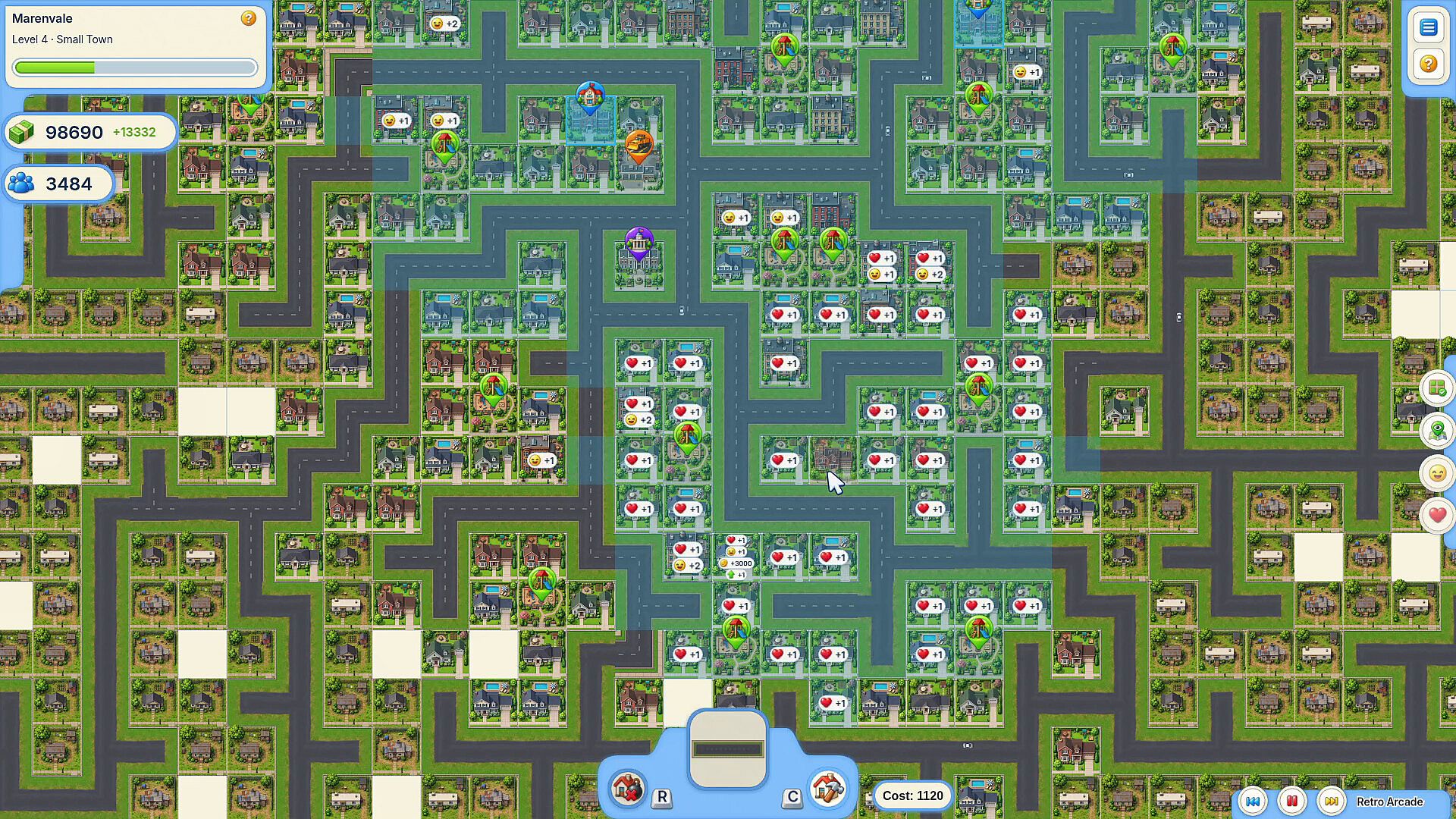
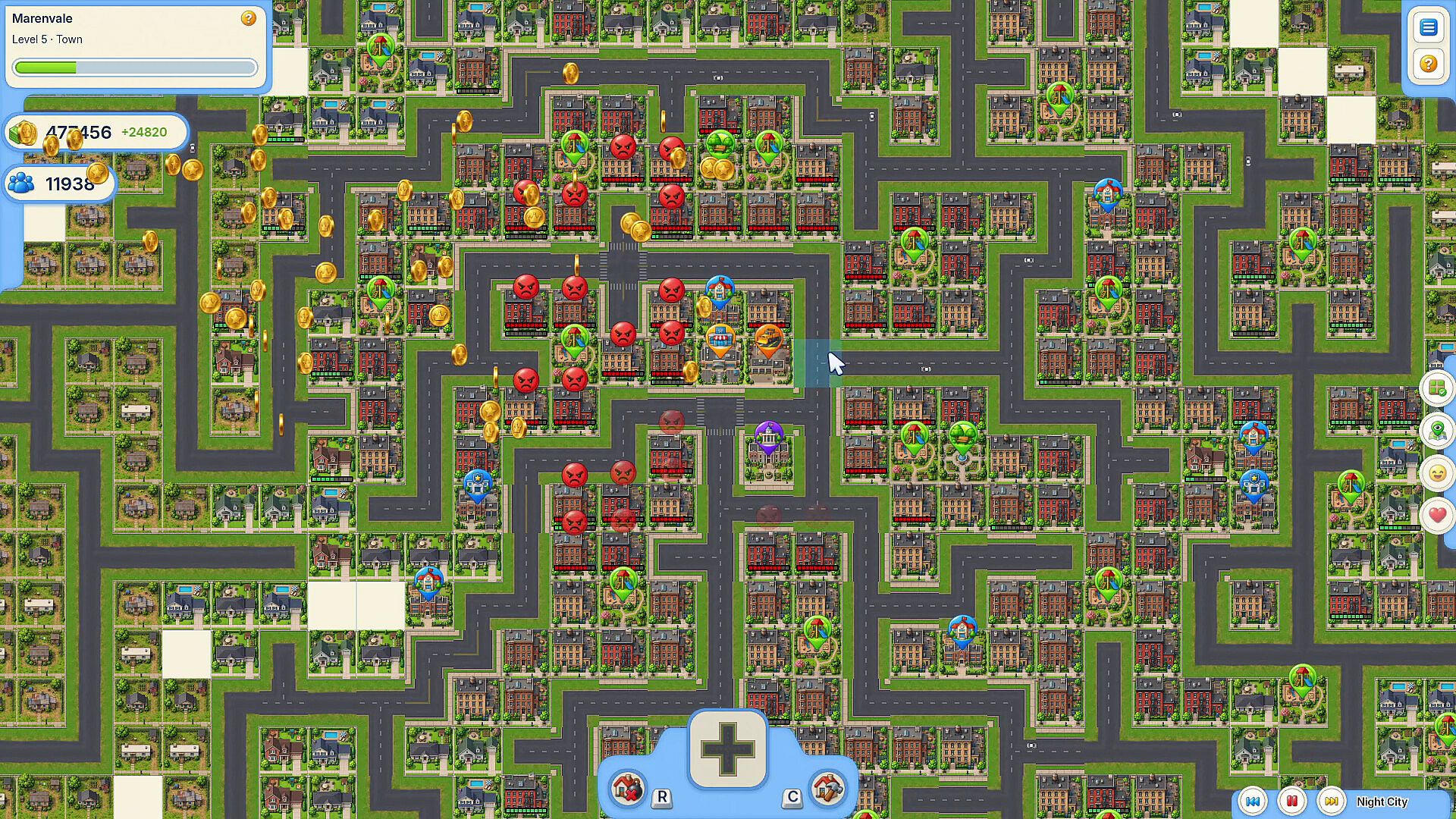




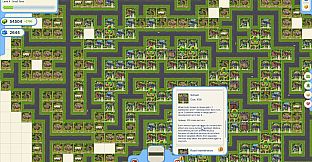
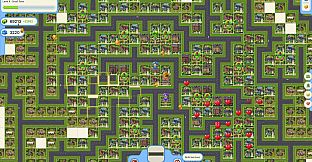
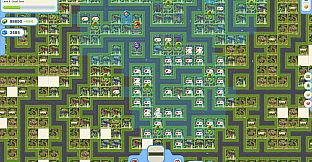
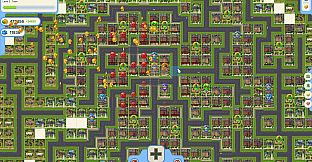
Metromino is a casual city-building strategy game for PC in which players place tetromino-shaped pieces to expand a small village into a large metropolis. The core loop centers on arranging these blocks to add residential zones, commercial buildings, and infrastructure while balancing resident satisfaction and revenue goals.
Gameplay
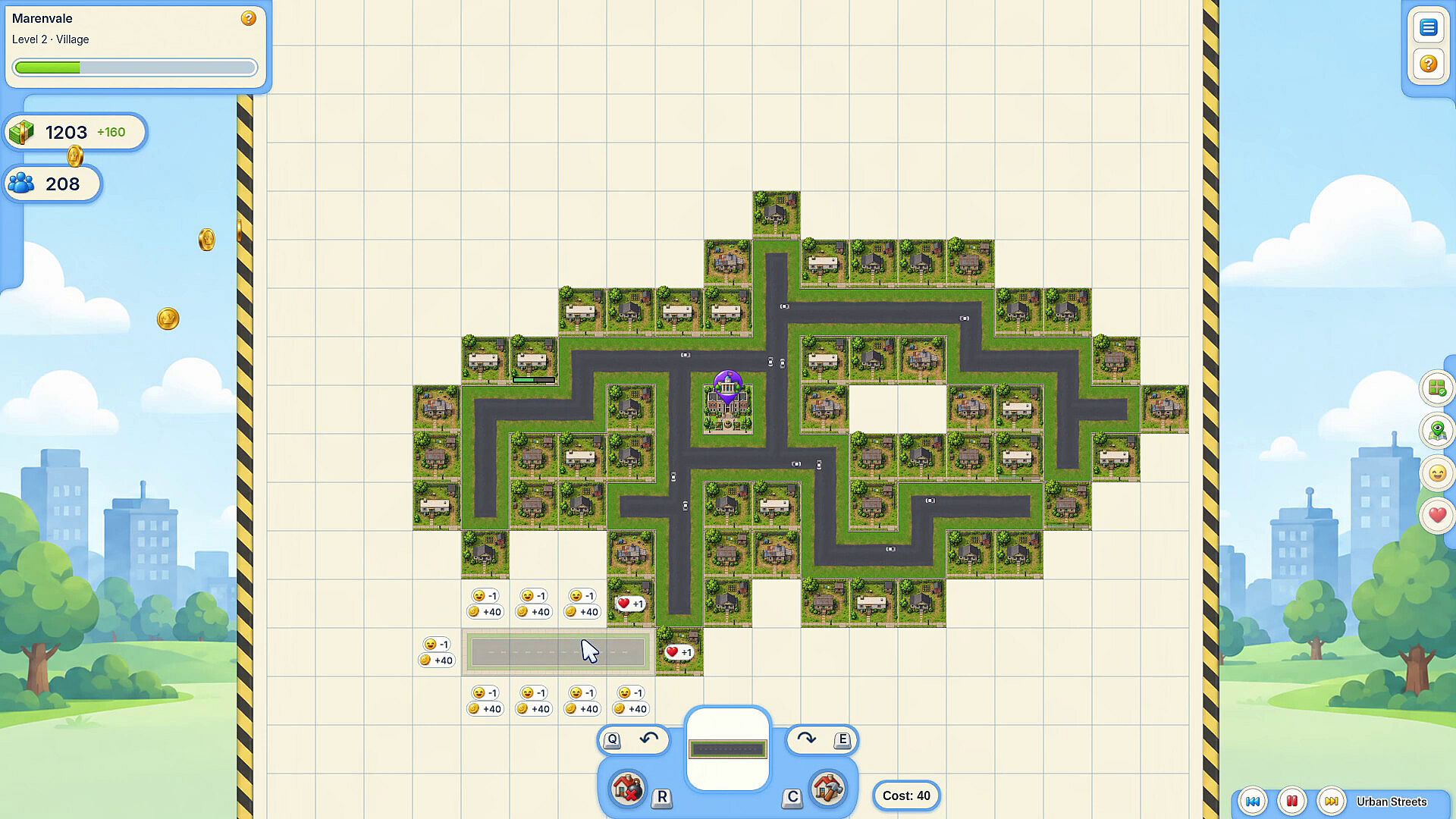
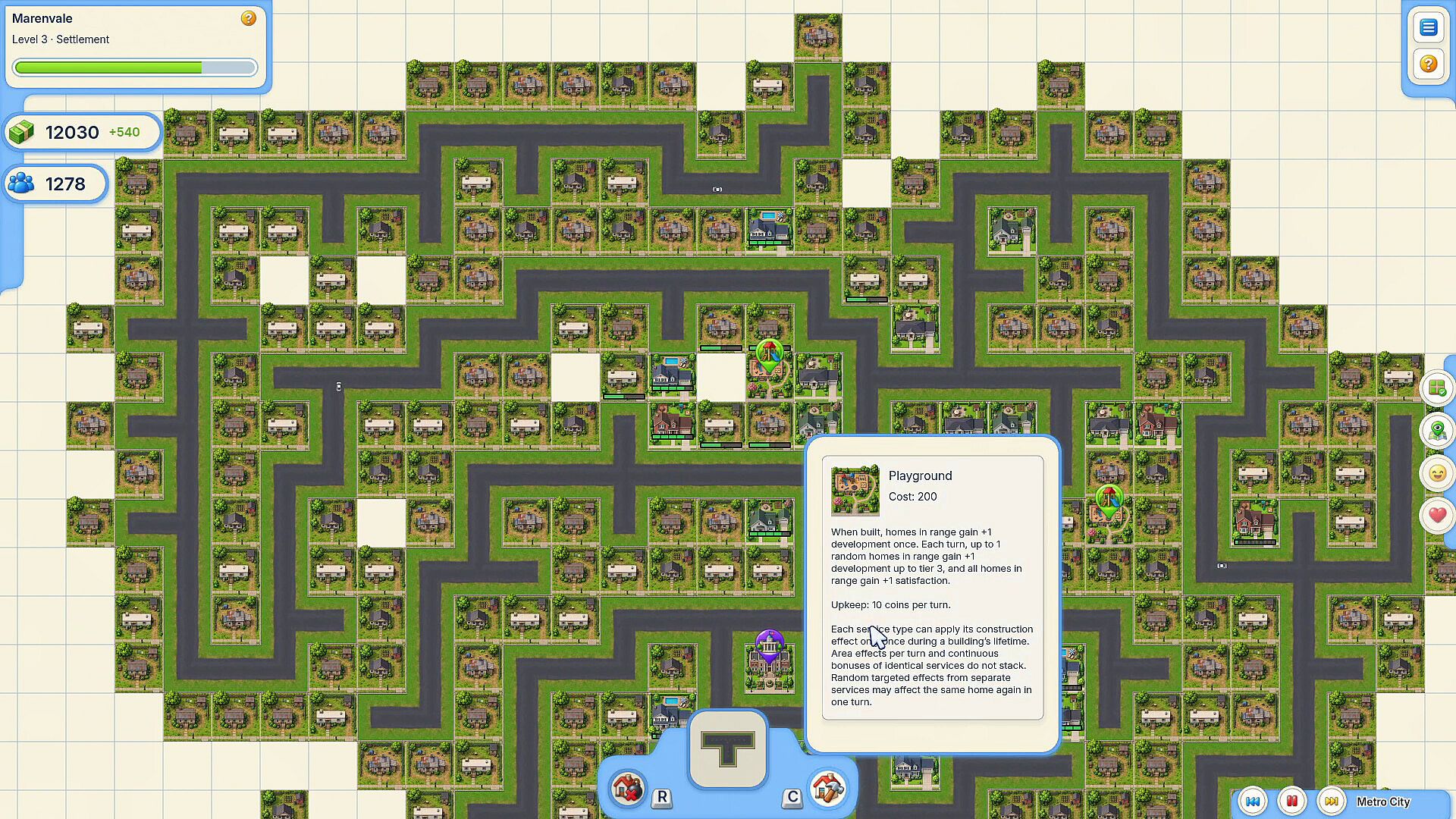
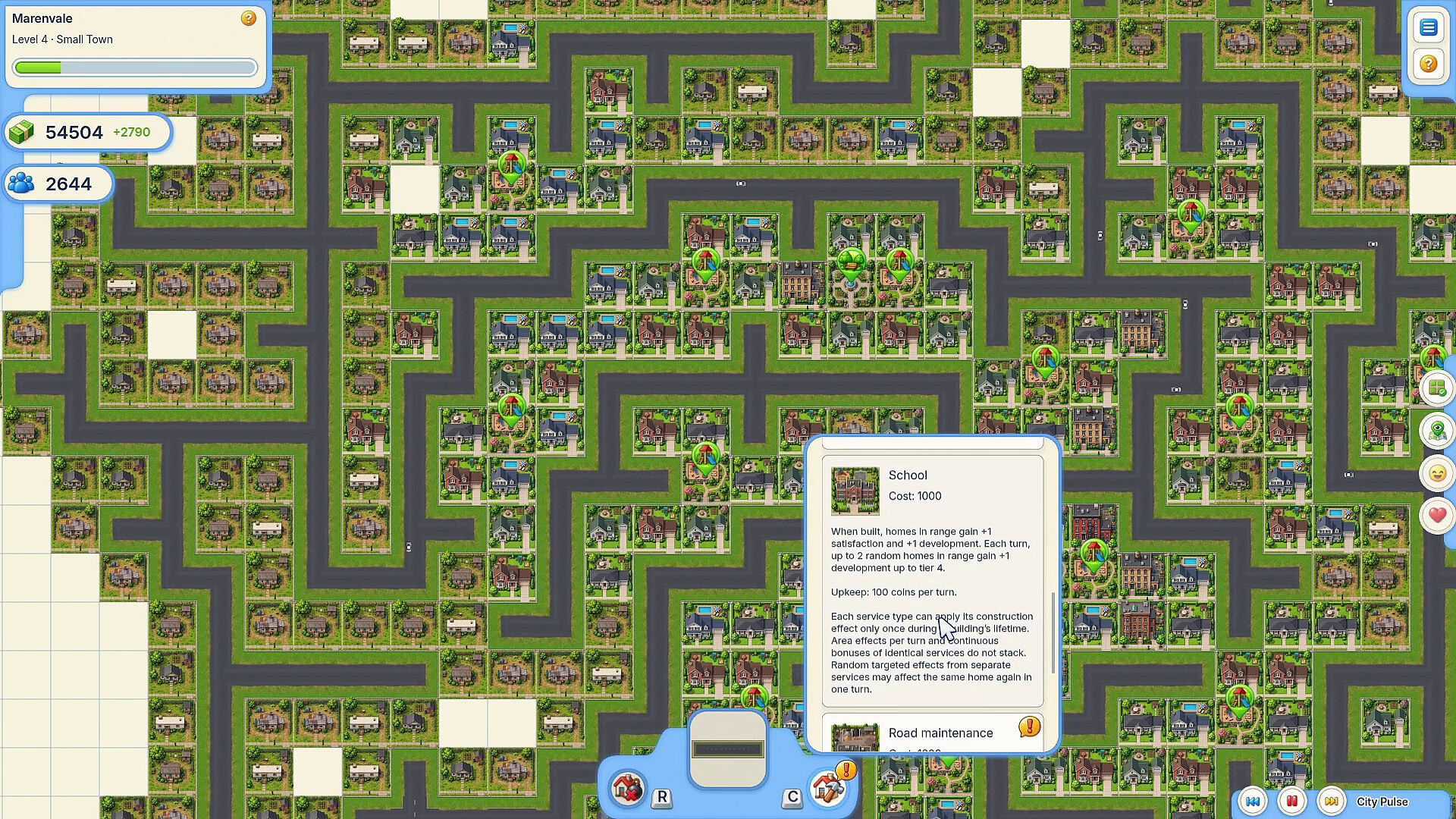
Players begin with a modest settlement and use tetromino forms to lay out streets, housing, and services. Positive structures such as parks and schools raise approval among residents, whereas facilities like power plants or landfills lower it. Shopping centers generate higher income but can reduce happiness in surrounding areas. Services can be constructed to handle routine tasks automatically, allowing the city to expand without constant manual input. The placement system encourages thoughtful positioning because each tetromino covers multiple tiles at once and influences neighboring zones.
Game Modes
The game supports single-player sessions focused on progressive city growth. No separate competitive or cooperative modes have been detailed at this stage. Progression occurs through a single campaign-style experience that rewards steady expansion and efficient automation.
Key Mechanics
Tetromino placement forms the foundation of every decision. Blocks must fit together without gaps while meeting the needs of expanding populations. Resident feedback appears through simple indicators that guide whether to prioritize green spaces or revenue-generating districts. Automation features let players set up supporting services that continue to produce income or maintain order as the map grows larger. The balance between short-term profits and long-term livability shapes each session.
Is It Worth Playing?
Metromino remains listed as coming soon on its primary distribution platform, so no player reviews or completed release data exist yet. The described systems appeal to those who enjoy relaxed city builders with a light puzzle element from the tetromino mechanic. Anyone interested in incremental growth, automation loops, and simple trade-offs between money and resident approval may find the approach engaging once the title launches. Early interest can be gauged by following development updates from the solo developer.