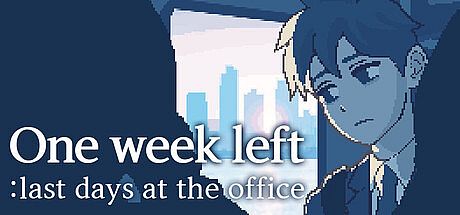


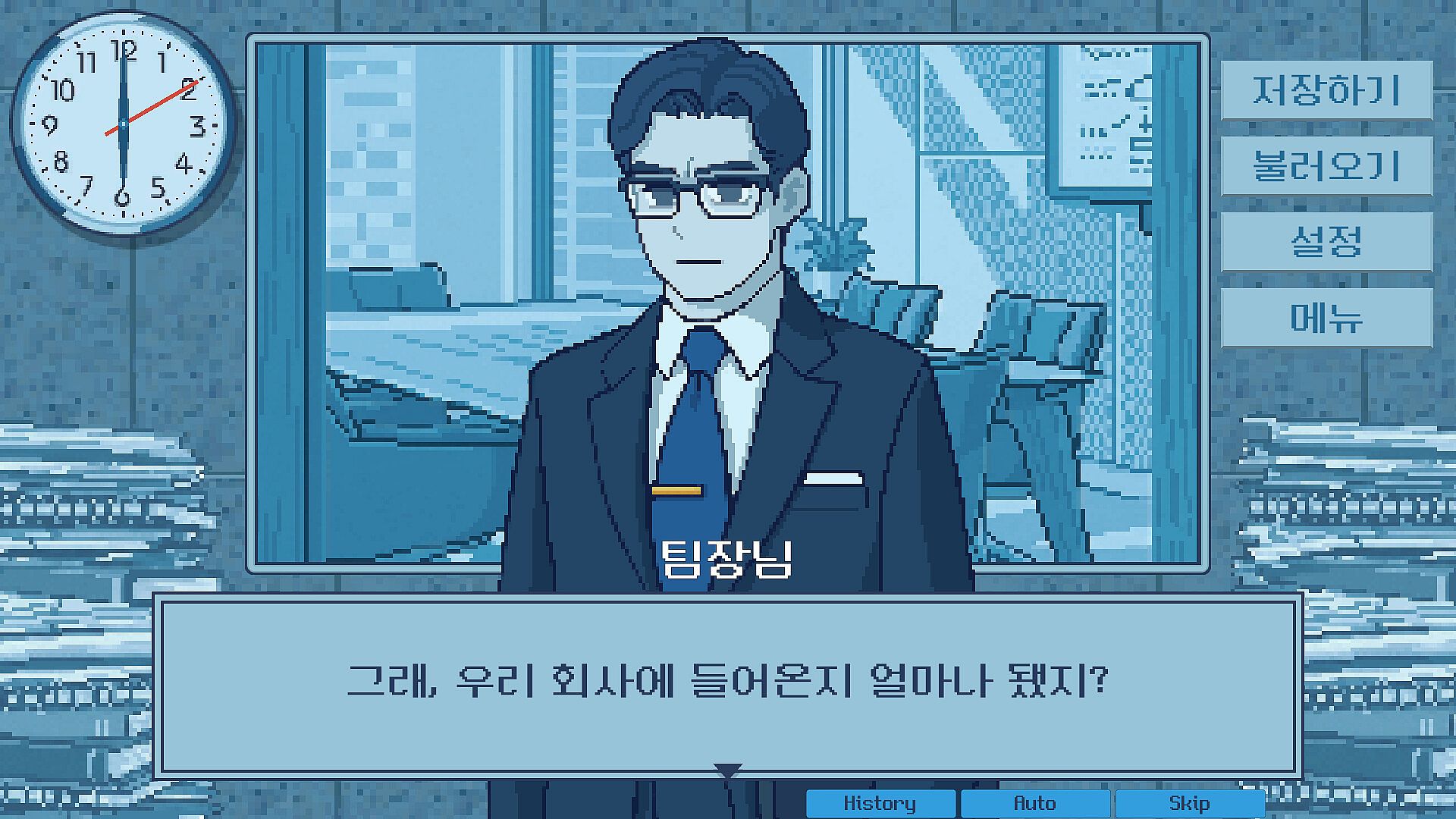
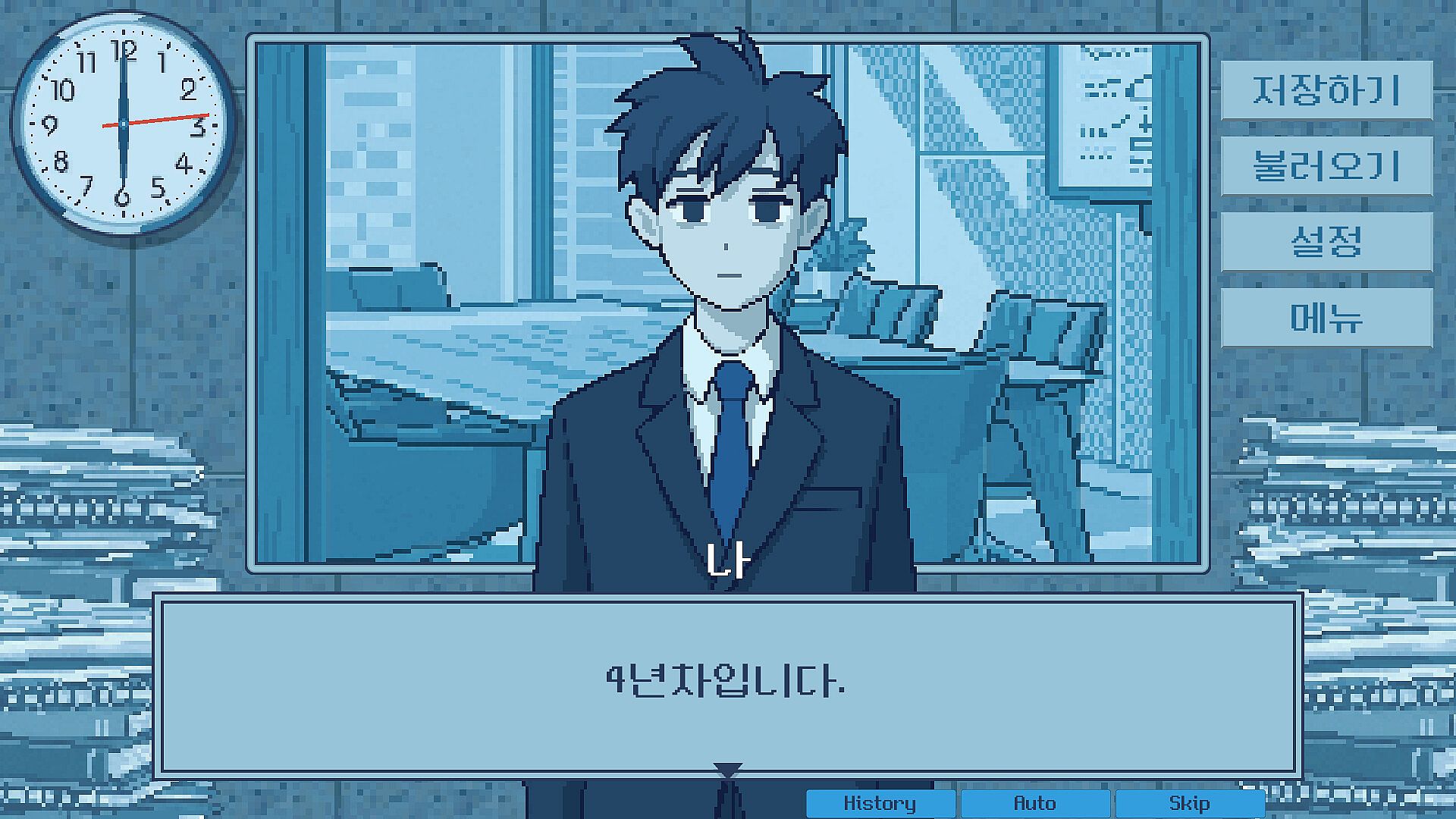
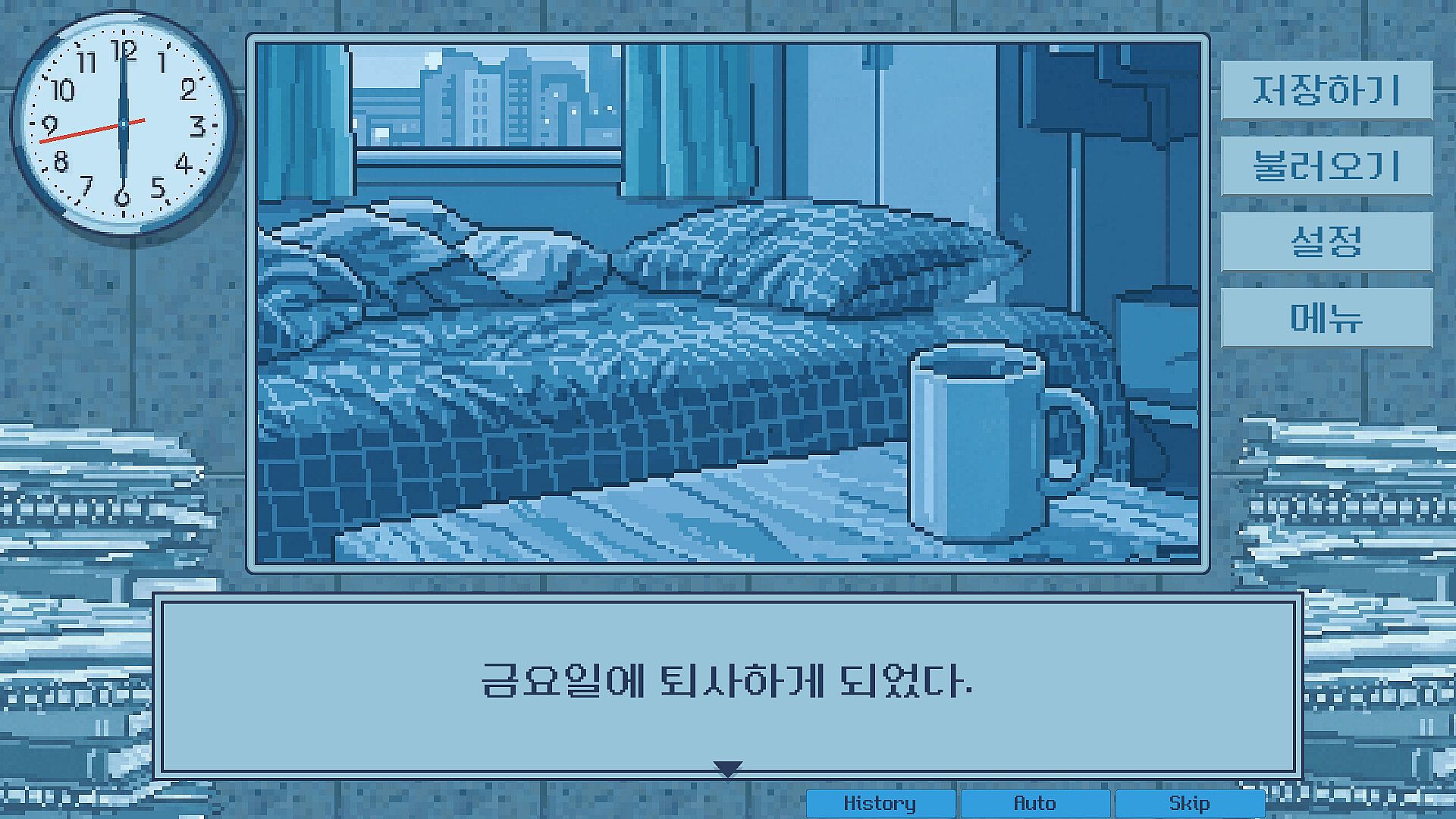

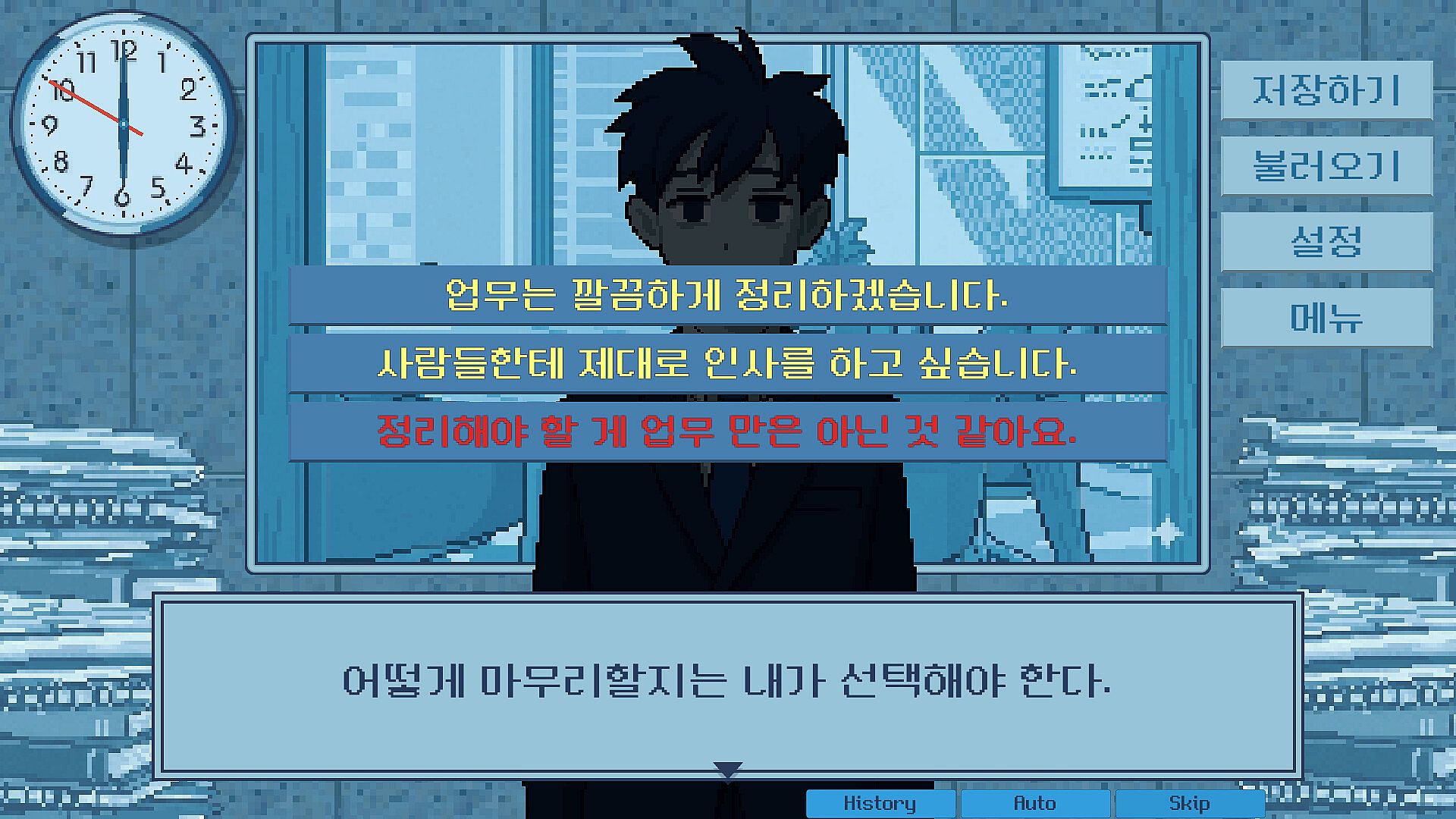






One Week Left : Last Days at the Office stands as an indie adventure title built around a hyper-realistic portrayal of Korean office life. Players step into the shoes of a worker navigating their final five days before resignation, where every decision shapes the tone of departure and the reactions of those left behind. The experience centers on single-player narrative choices rather than action or combat, letting participants decide whether to maintain professionalism or embrace complete detachment during the countdown to exit.
Gameplay
The core loop revolves around a five-day schedule management system that structures each workday. Participants allocate time across tasks such as completing handoff documents, engaging in conversations with colleagues, or simply passing hours without productivity. This framework creates a daily rhythm where small actions accumulate into larger outcomes by the end of the week.
Dialogue options and direct actions form the main interactive layer. Conversations allow players to promise future meetings or focus on thorough task transfers for remaining staff. Alternatively, time can be spent idly or through pointed remarks and unexpected behaviors aimed at the company and its people. These elements operate without any imposed moral framework, instead tracking how each selection influences colleague perceptions and the protagonist's overall demeanor.
Freedom remains high throughout. No system enforces correct or incorrect paths, only the straightforward results of chosen attitudes. Players might prioritize flawless documentation one day and shift to venting frustrations the next, with the narrative adapting accordingly to reflect those shifts in real time.
Game Modes
The title operates as a single-player narrative experience driven entirely by player choices across the five days. Branching conversations and actions lead to varied sequences of events, with no separate multiplayer components or competitive structures present. The system emphasizes personal decision-making over structured competitive or cooperative play.
Progression stays linear in schedule but highly variable in tone and detail. Each day presents opportunities to interact with familiar office archetypes, from demanding leads to detached newcomers, and the cumulative effect determines how the final moments unfold. This approach keeps focus on individual agency within the office setting.
Story and Narrative
The story unfolds as a record of the final week, highlighting the tension between professional obligations and personal release. Participants encounter everyday office dynamics through dialogue that mirrors real workplace absurdities and frustrations. The narrative avoids judgment, instead presenting the direct fallout from whatever stance the player adopts toward work and relationships.
Four endings emerge from the accumulated choices, including three primary conclusions and one hidden variant. These outcomes alter not only the protagonist's legacy among coworkers but also the personal reflection on the departure itself. The structure encourages replay to explore how different attitudes reshape the farewell process.
Key Features
Realistic depictions of office personalities drive much of the interaction, with dialogue that captures common employee experiences. High freedom allows any approach without penalty beyond natural consequences. The overall narrative prompts reflection on self-perception during transitional moments rather than external validation alone.
- Five-day structure with daily activity planning
- Choice systems affecting colleague reactions
- Multiple endings based on cumulative decisions
Is It Worth Playing?
This game suits players drawn to choice-heavy narrative adventures that explore workplace themes without prescriptive morality. Those who value freedom in how stories resolve and appreciate grounded, relatable scenarios will find the five-day framework engaging. The absence of traditional win conditions shifts emphasis toward personal experimentation with attitudes and their ripple effects.
Reception centers on the relatable office elements and the satisfaction of seeing direct results from player behavior. Availability on PC supports straightforward access for those interested in short, focused sessions that reward multiple playthroughs through different decision sets. It provides a clear fit for audiences seeking thoughtful single-player experiences over action or progression systems.