




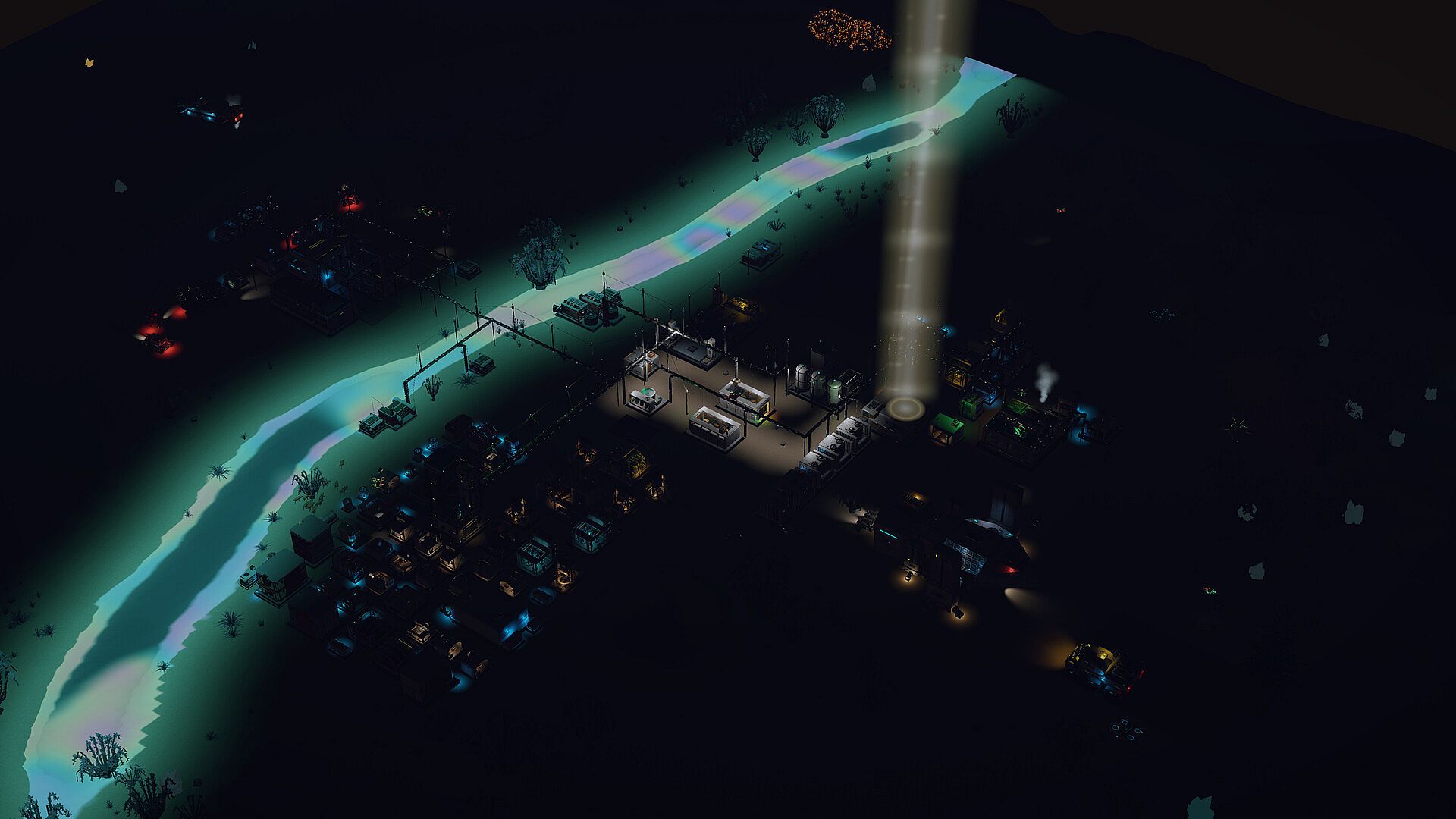
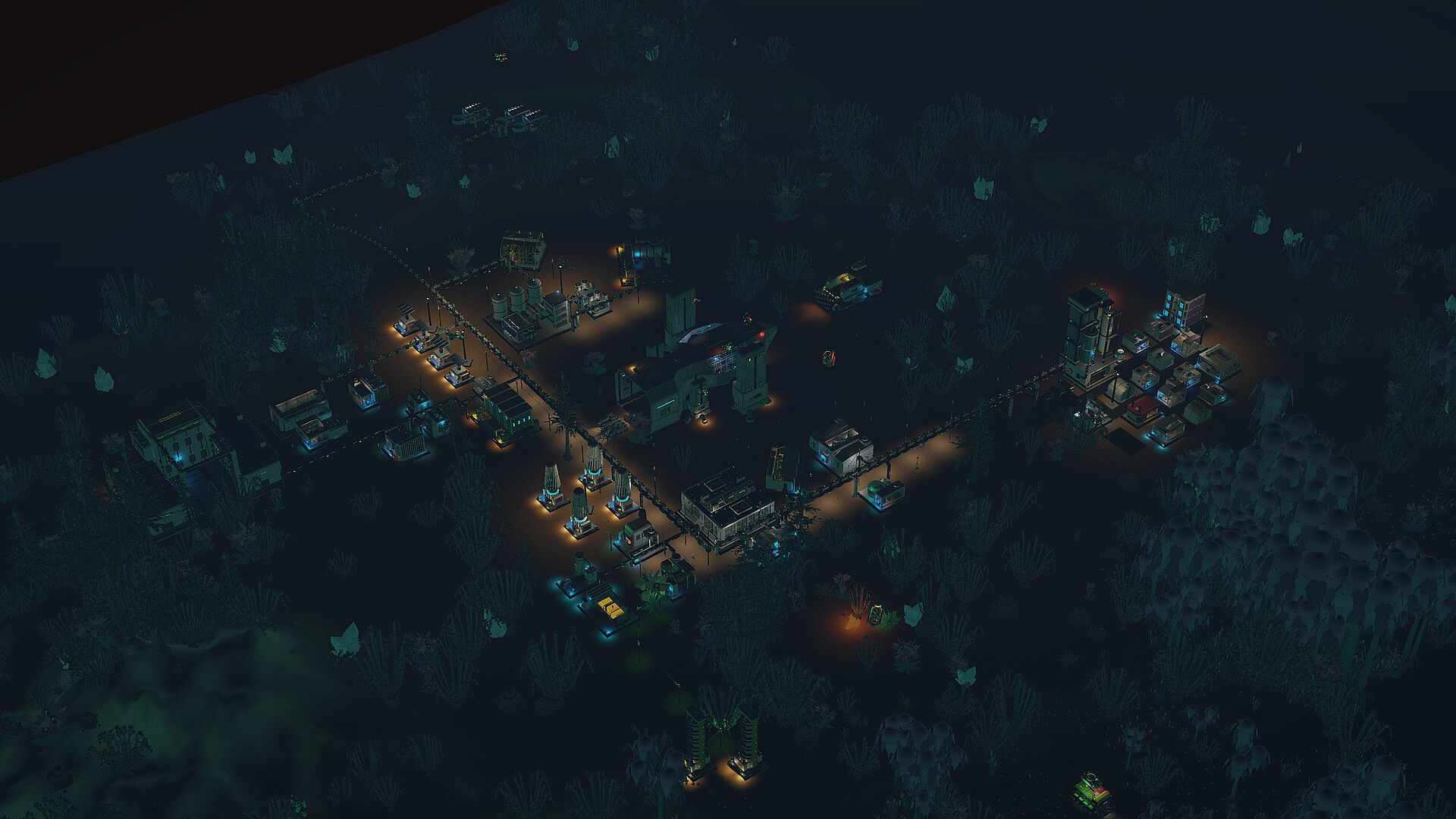
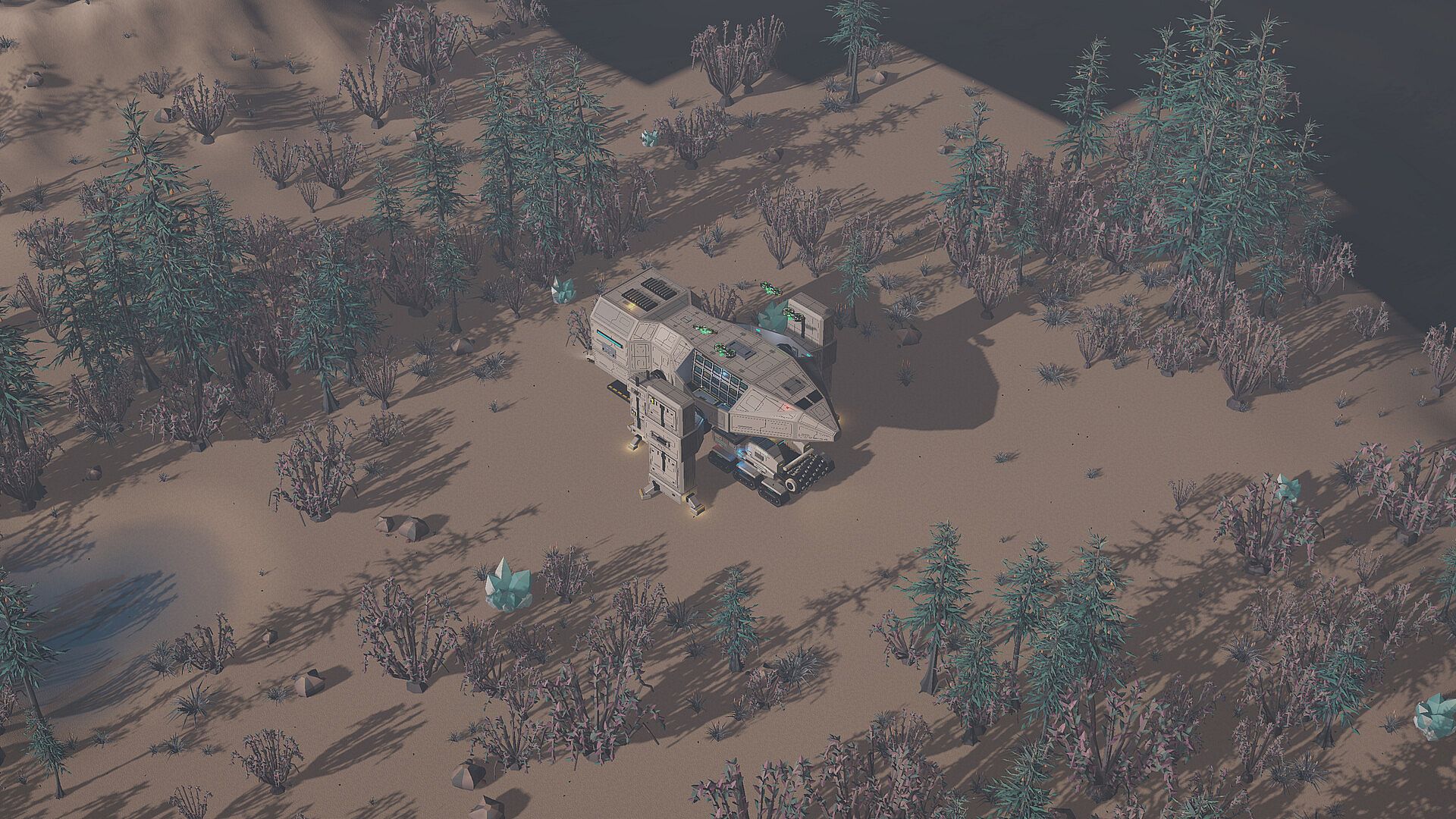
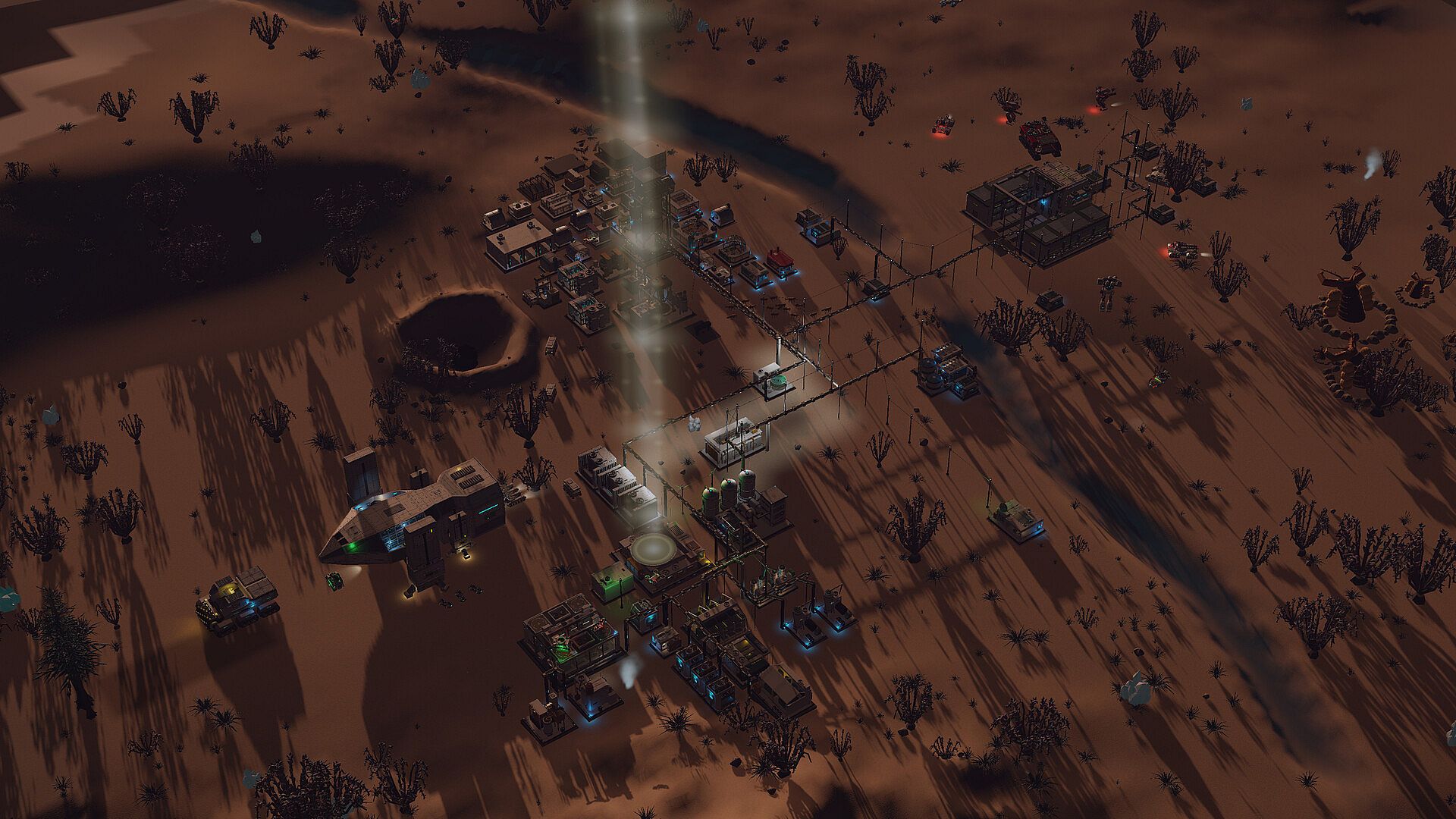
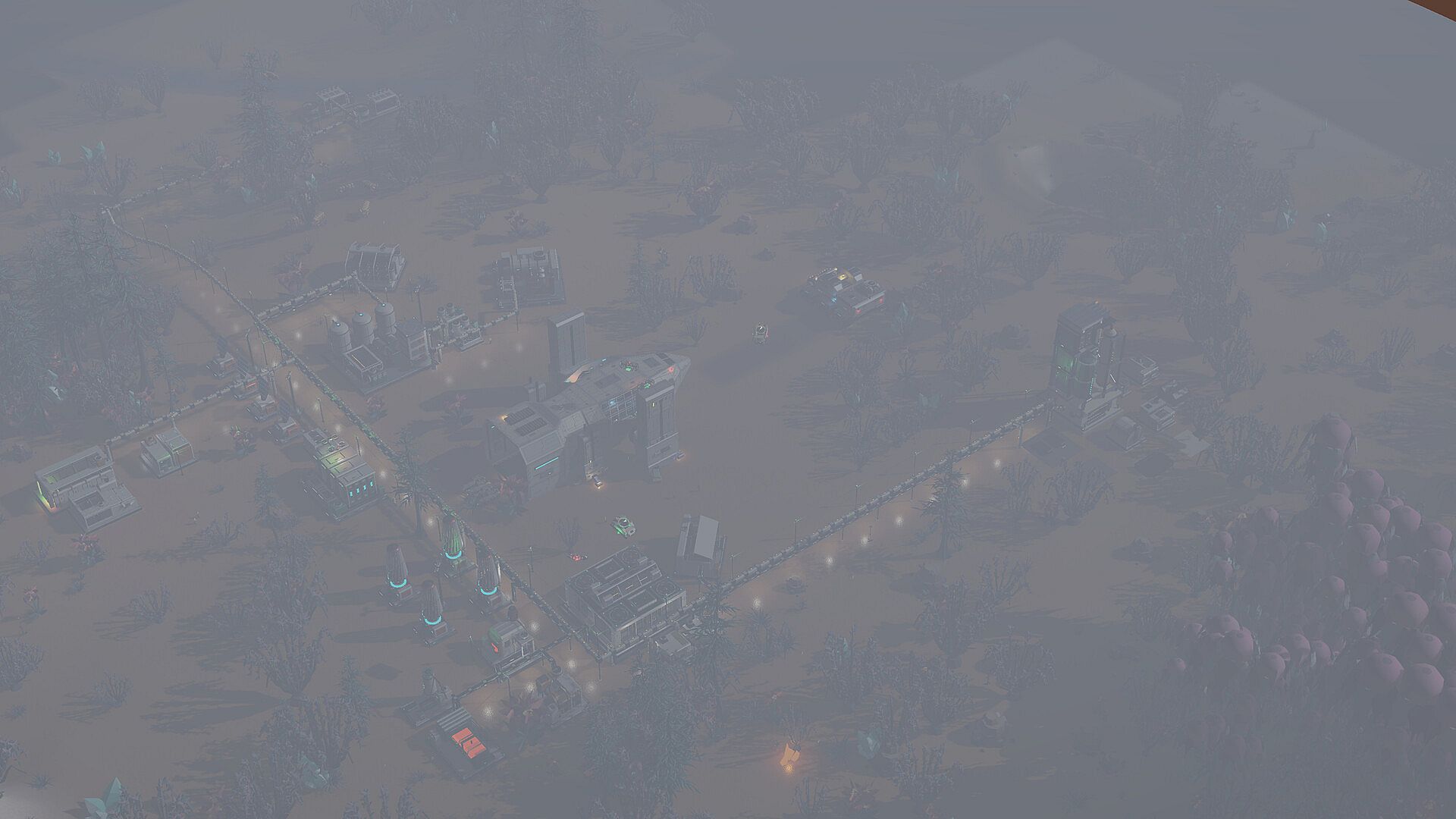
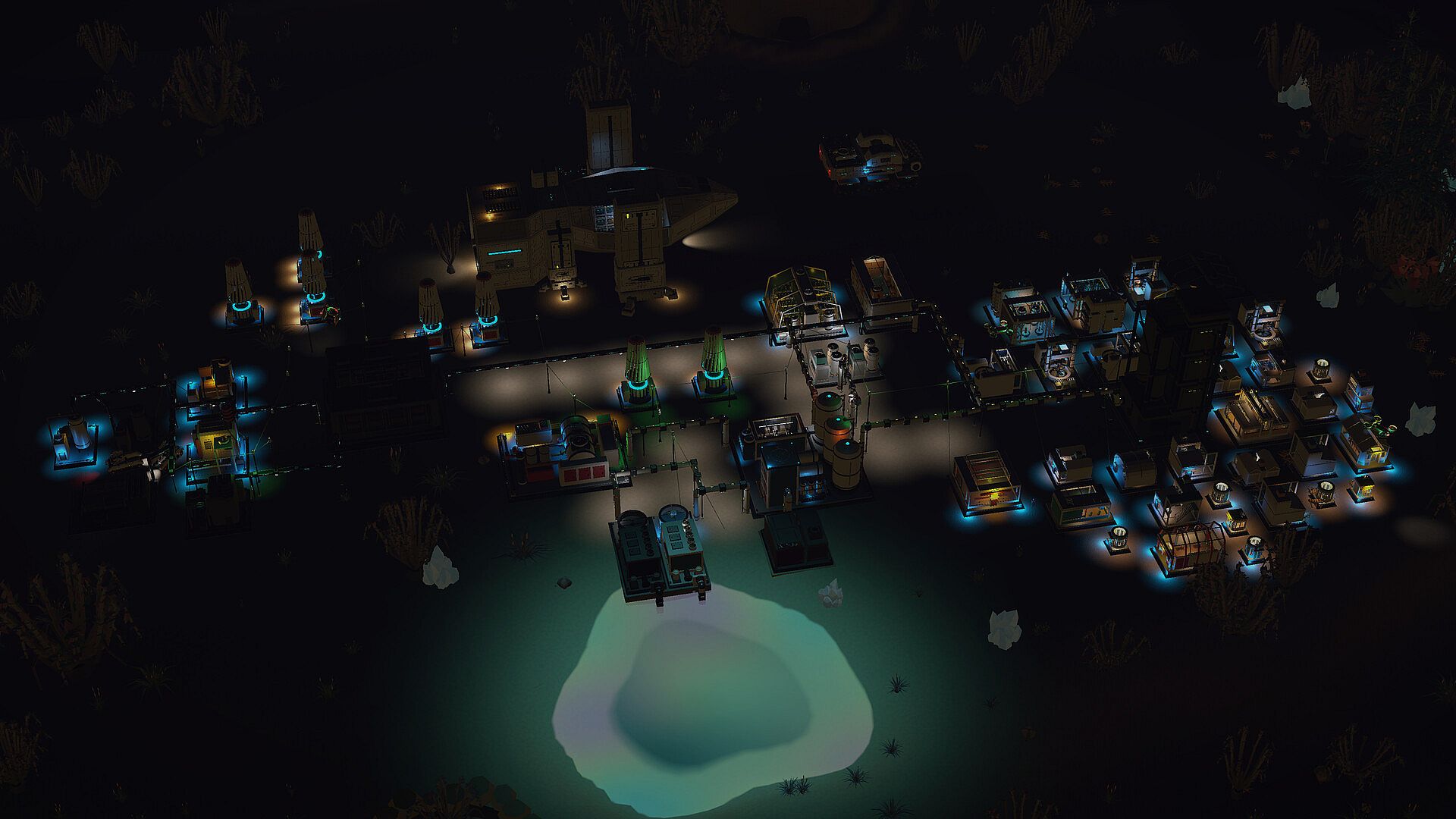
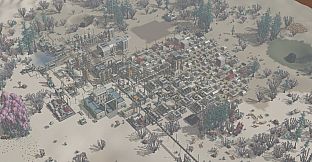
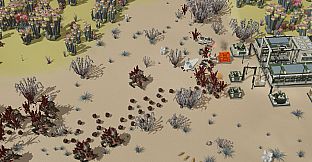
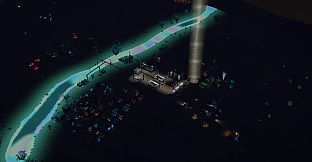
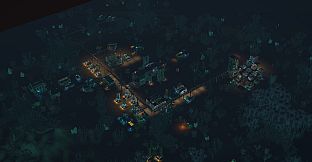
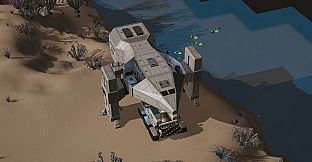
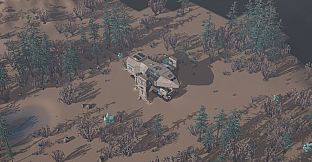
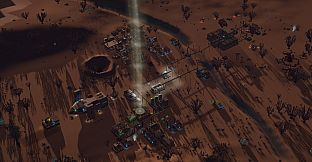
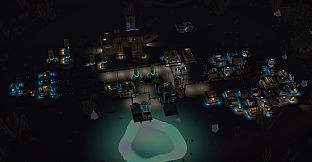
Red Sol is a single-player colony simulator that blends strategy, indie development, and simulation elements on PC. Players manage the growth of a settlement on an alien planet after a wormhole diverts their Mars-bound crew. The core experience centers on turning a basic landing site into a sustainable home through resource management, construction, and protection against environmental and hostile challenges.
Gameplay
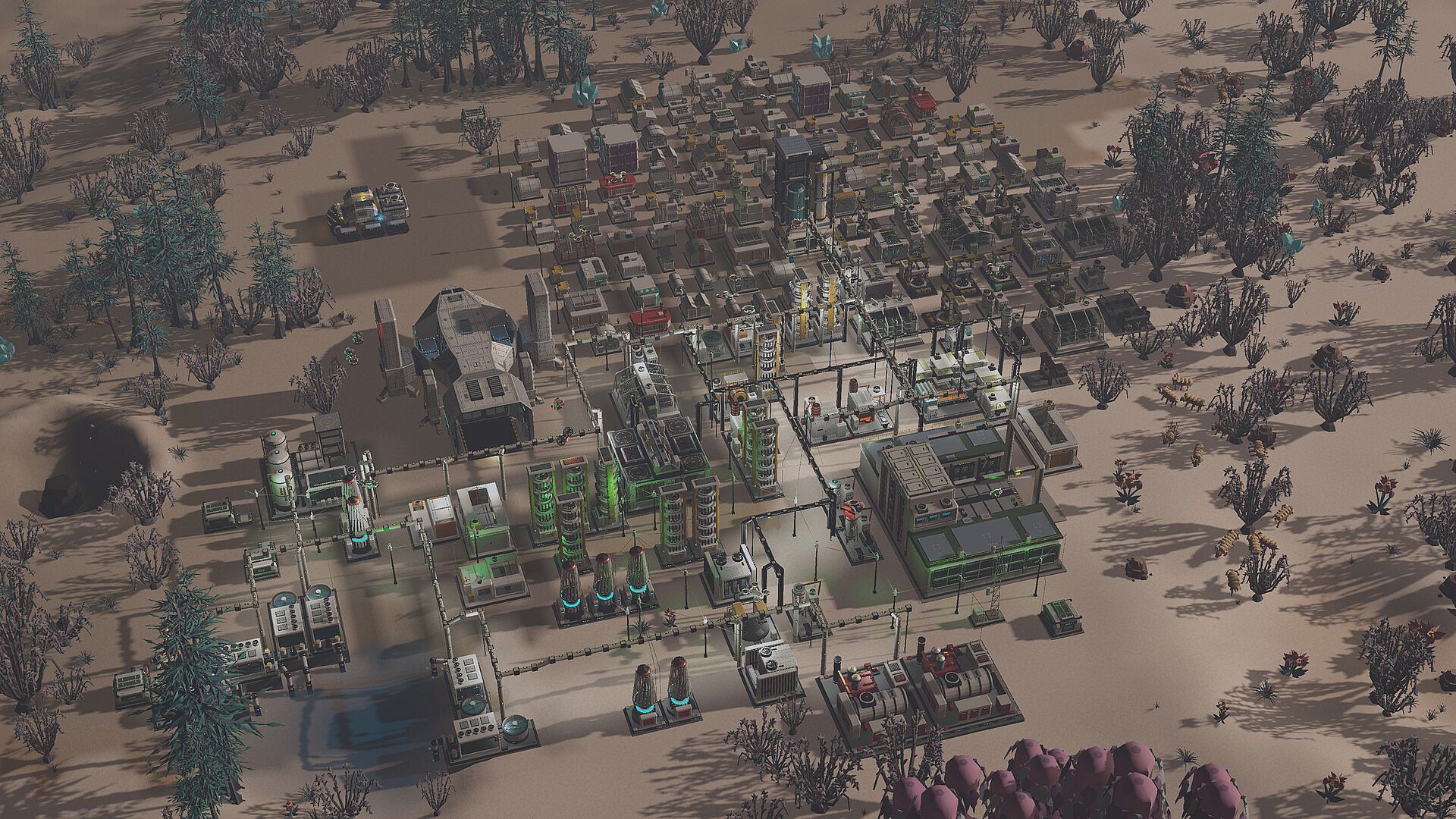
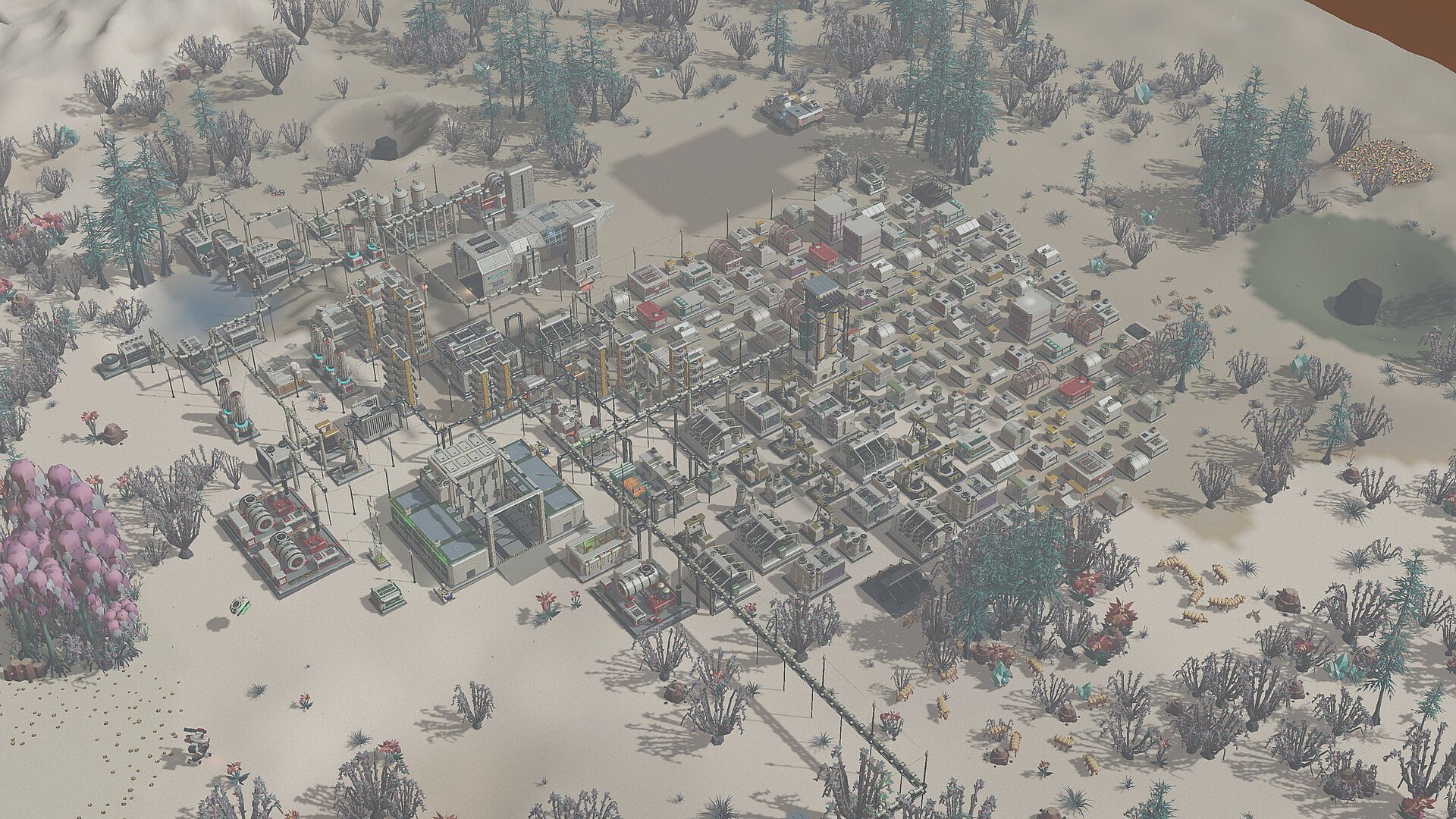
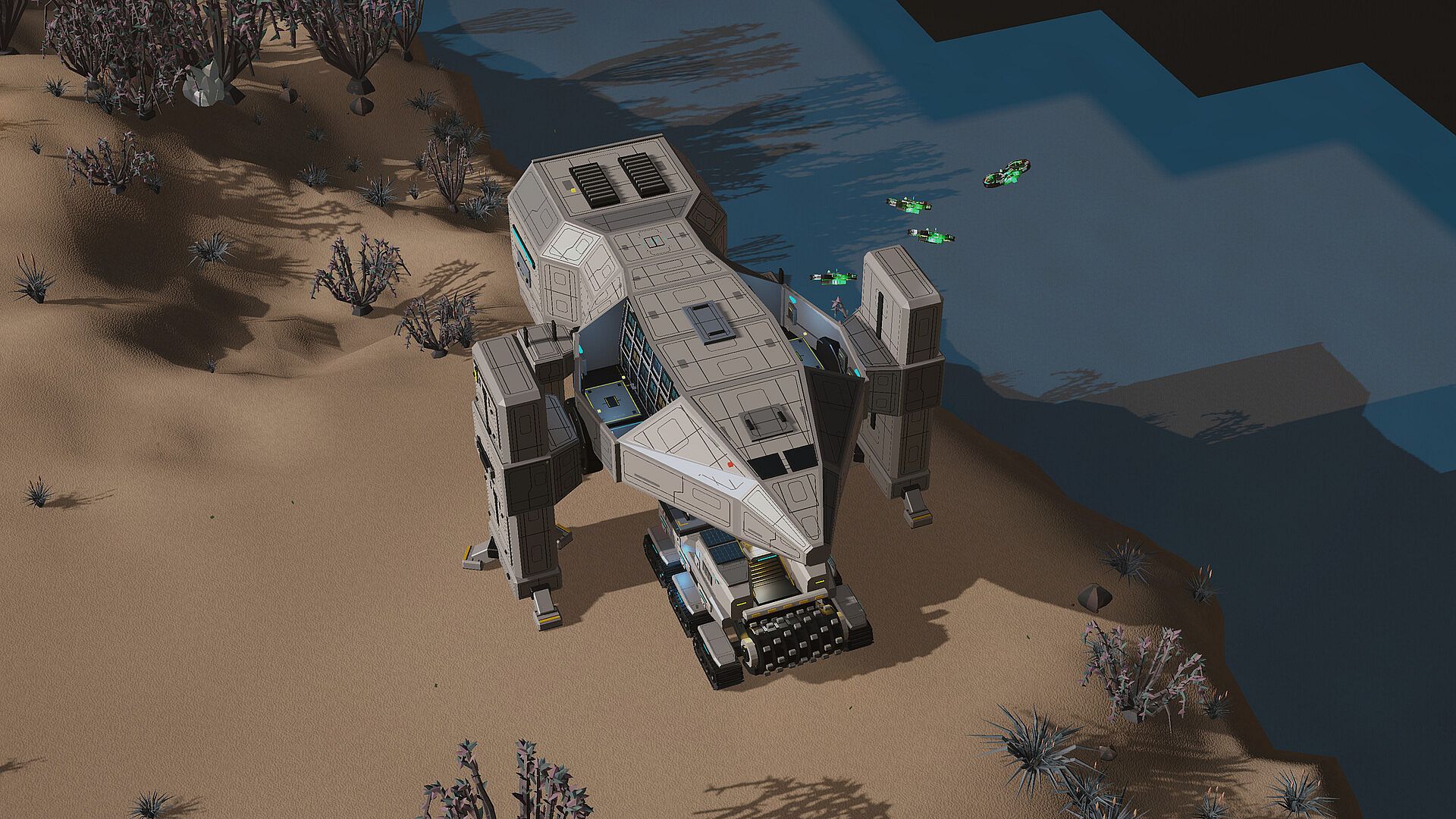
The gameplay loop revolves around establishing essential systems like power generation, water, oxygen, and food production while connecting buildings with conveyors, pipes, and freight networks. A mobile regolith miner and cargo drones form the starting industrial base, allowing players to extract surface resources and deliver materials to construction sites. Colonists occupy buildings, support production chains, and drive the local economy as the settlement expands.
The District Planner automates much of the building process once a hub is supplied and zones are designated, responding to rising demand for homes, commercial spaces, and industry. Research spans 133 nodes across industry, life support, medicine, logistics, defence, and orbital technology, unlocking new structures, upgrades, and equipment. Field discoveries further expand options, with an in-game encyclopedia detailing resources, buildings, and creatures.
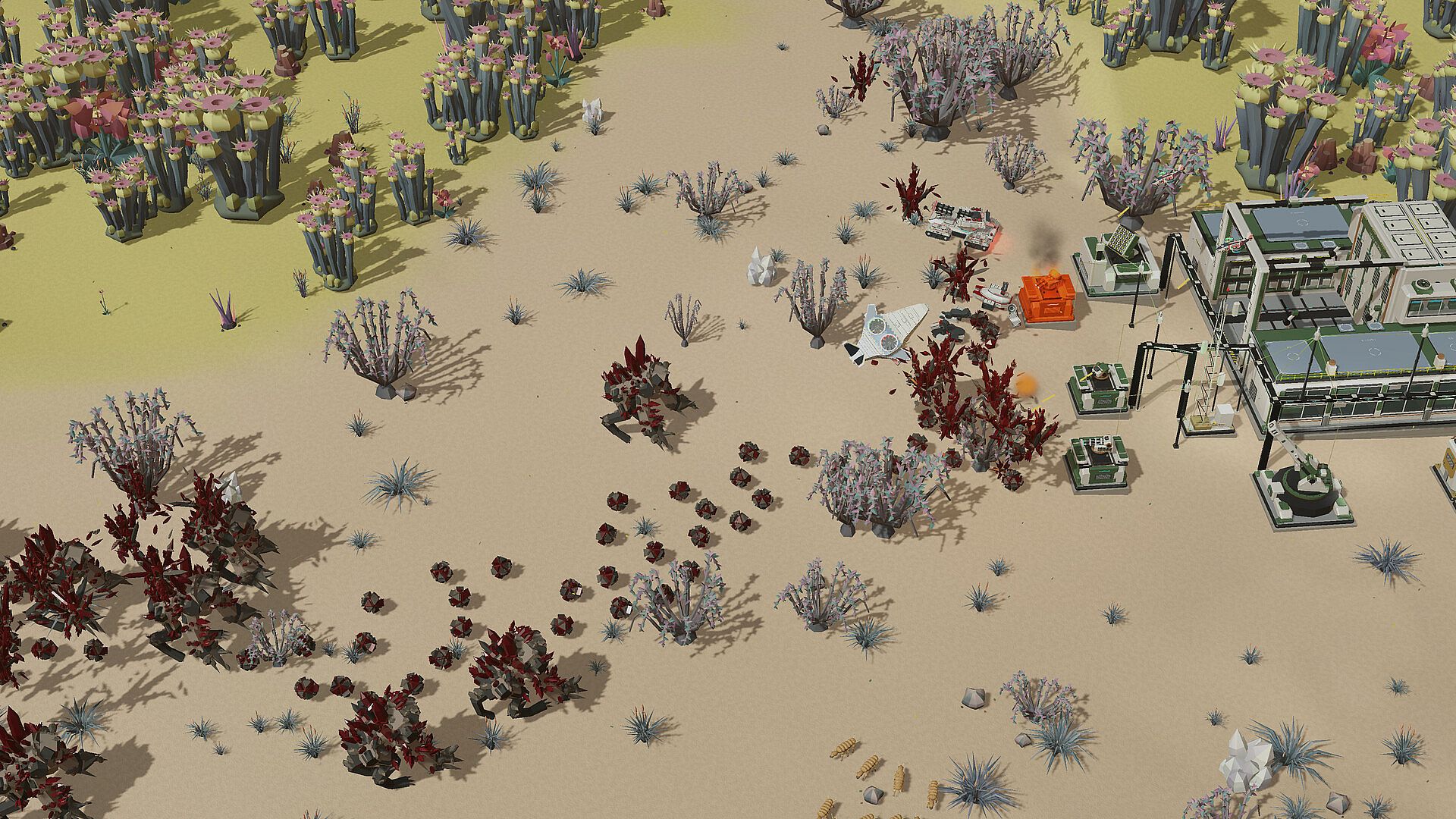
Defence integrates directly into expansion. Players position mobile units and fixed towers to protect growing perimeters, ensuring ammunition and power supplies reach defensive positions. Threats include rolling crystal swarms, floating shard launchers, armoured titans, and burrowing attackers that can appear inside the colony. Weather events and disasters add further variables across ten distinct biomes, each with unique terrain, flora, deposits, and wildlife.
Advanced projects like the Mega Dome, which houses up to 420 colonists under hardened glass, or arcologies such as the Obsidian, Verdant, and Granary variants provide large-scale housing solutions with integrated amenities or production benefits. A space elevator project extends ambitions beyond the surface by linking the colony to an orbital station.
Game Modes
Red Sol operates exclusively as a single-player experience. There are no multiplayer components or separate modes such as competitive or co-operative play. The entire game unfolds in one continuous colony-building campaign on procedurally generated maps, where players handle all aspects of establishment, expansion, research, and defence without external assistance or competing factions.
Custom map creation through the experimental Map Editor allows players to design their own scenarios and missions. Mod support further extends this flexibility by permitting changes to existing data or addition of new content, supported by included documentation for creators.
World and Systems
Ten biomes shape every playthrough, from Ferric Canyon and Rust Desert to Cryo Tundra, Salt Flats, and Frost Barrens. Each offers different starting resources, plant life, and hazards that influence early decisions. Wildlife and megafauna encounters, combined with nine weather events and eight disaster types, require adaptive planning.
Logistics form a critical layer. Solid resources move via conveyors while liquids and gases travel through pipes. Cargo drones handle construction deliveries, and rail or air freight scales up industrial connections as the colony grows. The total scope includes 181 buildings and structures along with 37 vehicles and robots, plus 42 flora species and 11 wildlife types alongside six megafauna varieties.
Hostile threats number nine distinct types, each demanding tailored responses. Early mobile defences include the Hornet gunship for rapid aerial response, the Quillback aerial platform with multiple turrets, and the Jackal Gun Walker. Heavier options such as the Siege Tank, Longbow Missile Launcher, and Sunlance Laser become available later, alongside fixed structures.
Is It Worth Playing?
Red Sol targets players who enjoy deep single-player colony management with integrated logistics, research progression, and defensive elements. Its focus on procedural worlds and layered systems offers substantial replay value through different landing sites and biome conditions. The game remains in active development with a planned release in December 2026, so prospective players can follow updates from the developer Forged Flow to assess final feature implementation and balance.
Those drawn to city-building simulations that emphasize industrial supply chains, colonist needs, and ongoing threat response will find the described mechanics align closely with that style. The absence of multiplayer keeps the experience self-contained and focused on long-term colony evolution from initial foothold to megaprojects like orbital connections.












