

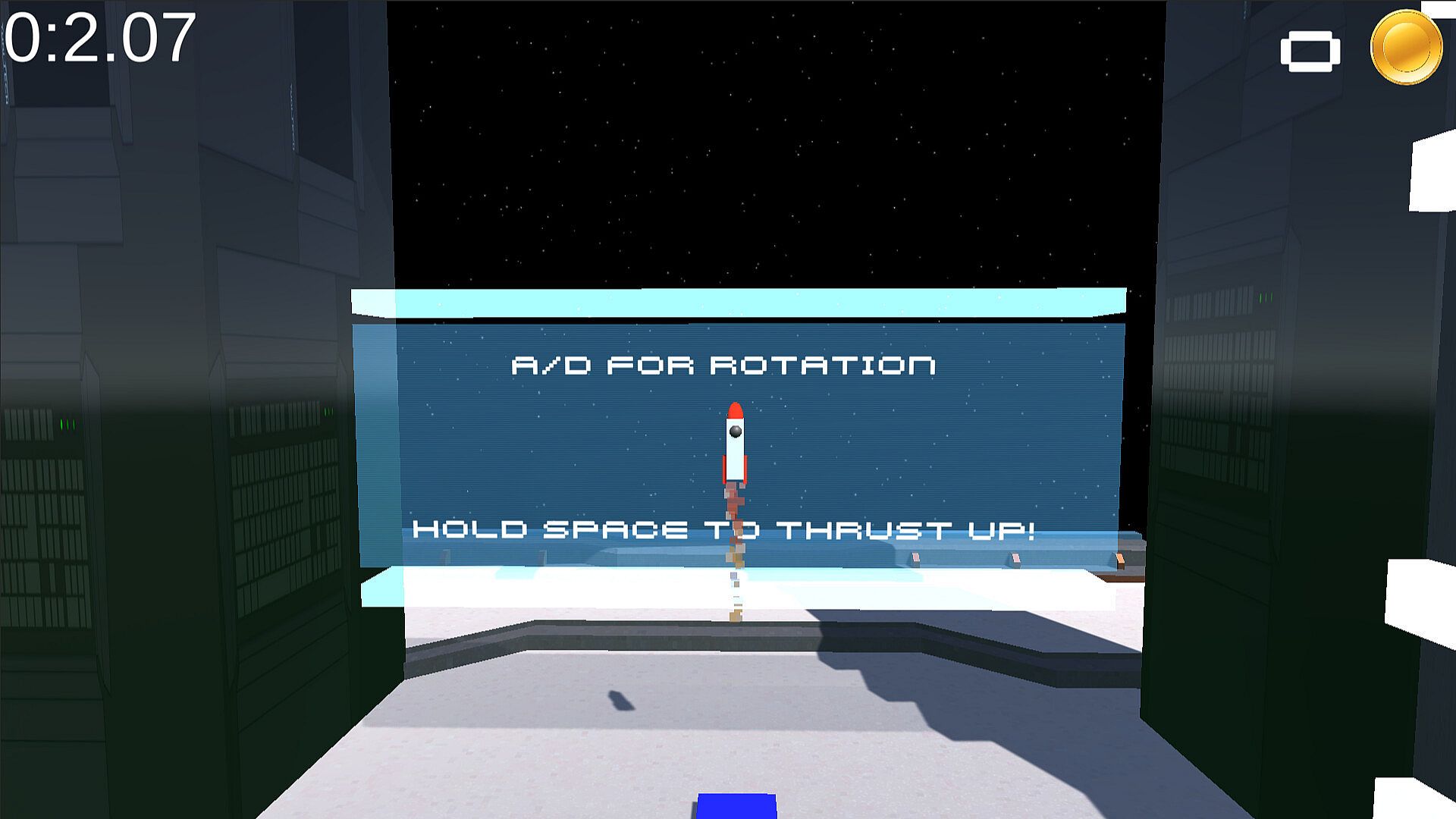
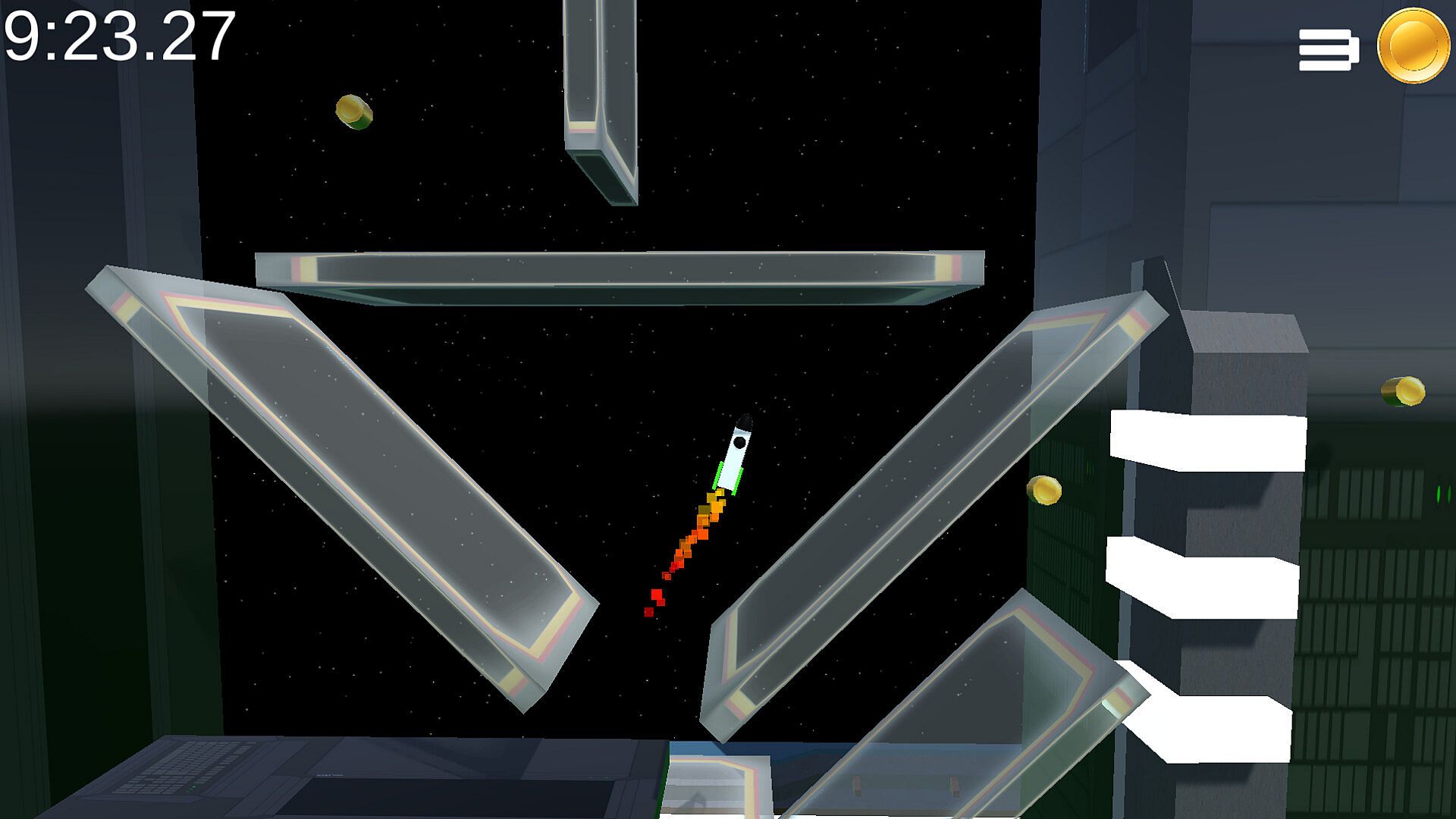
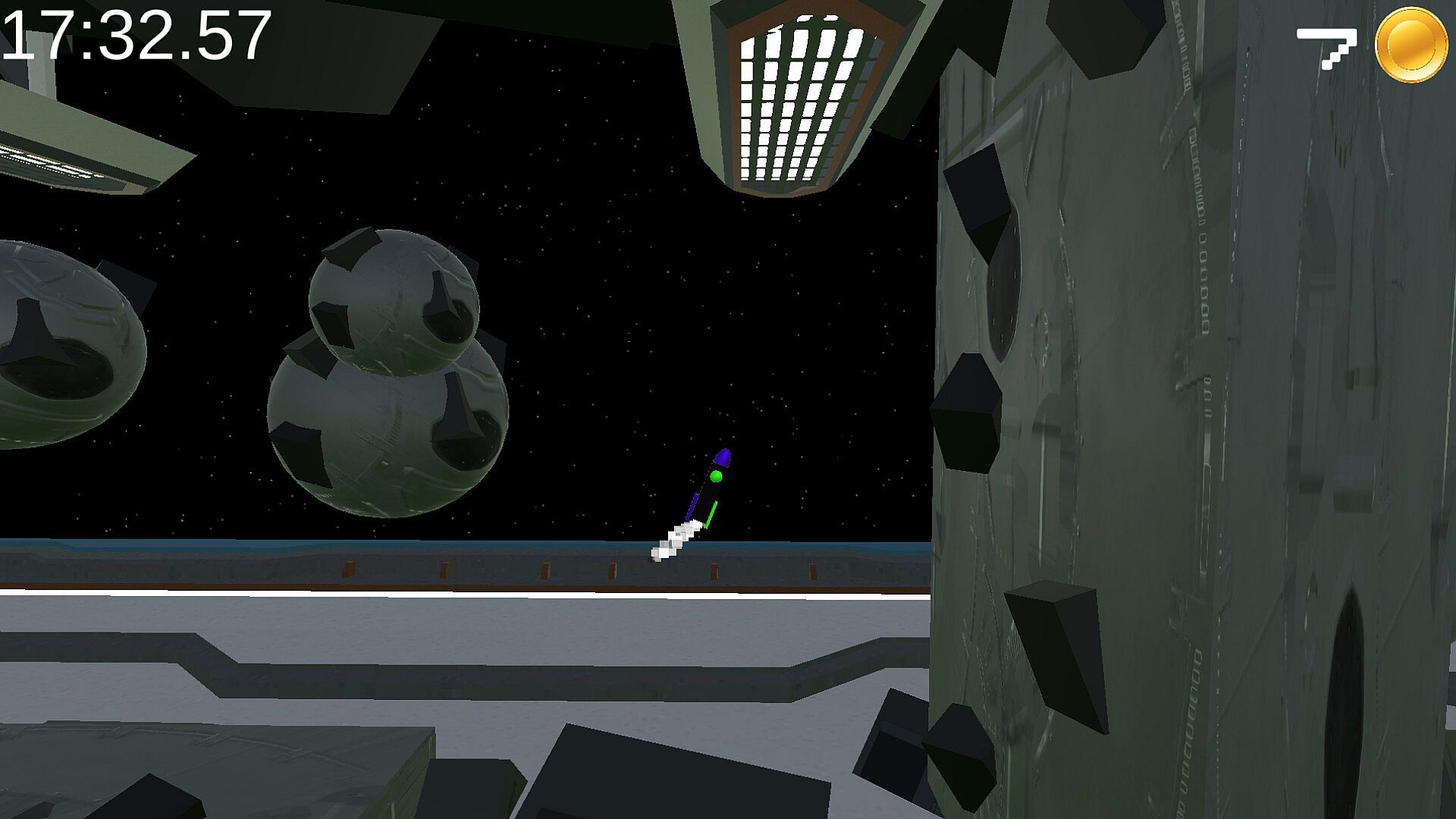
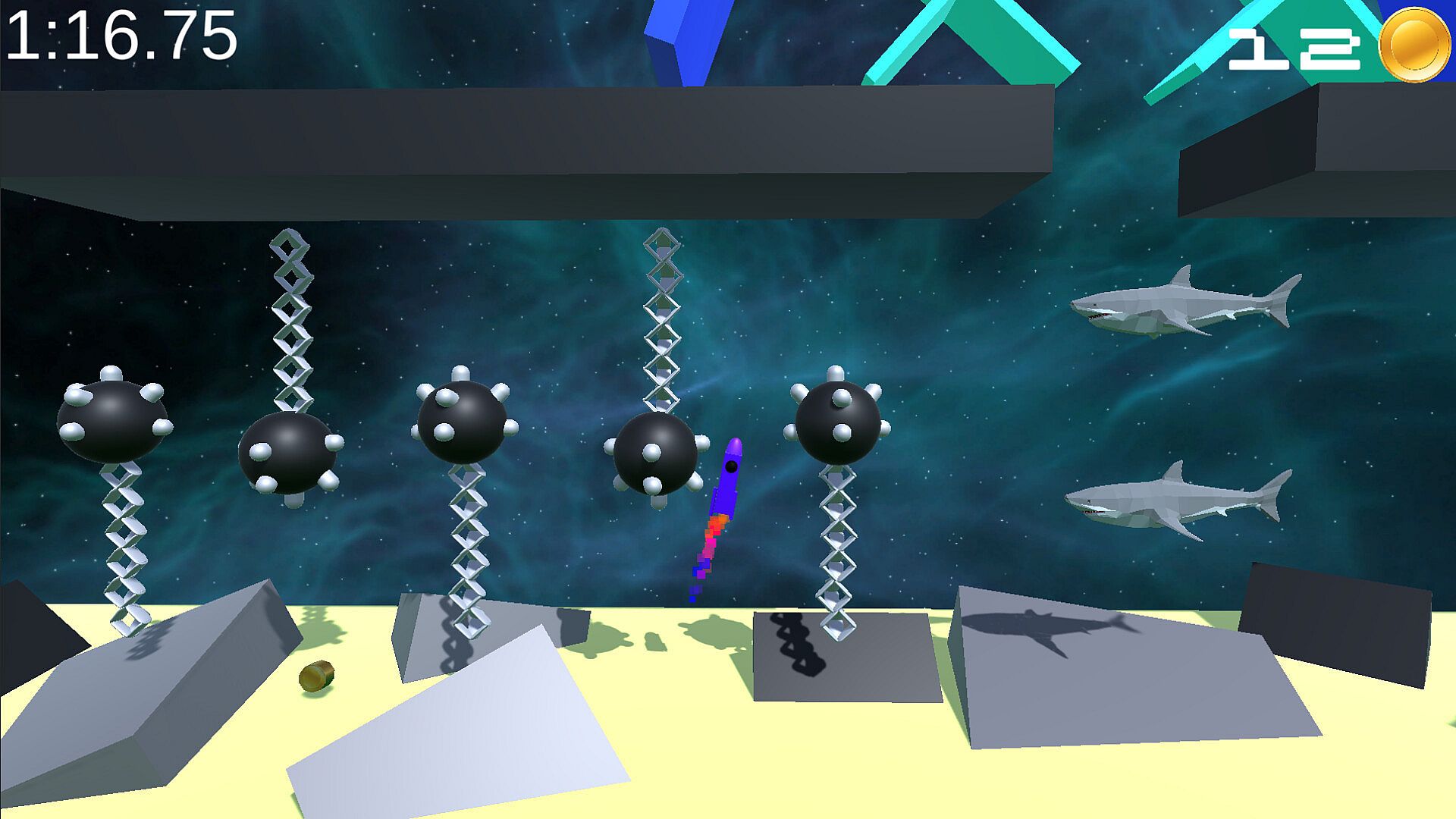
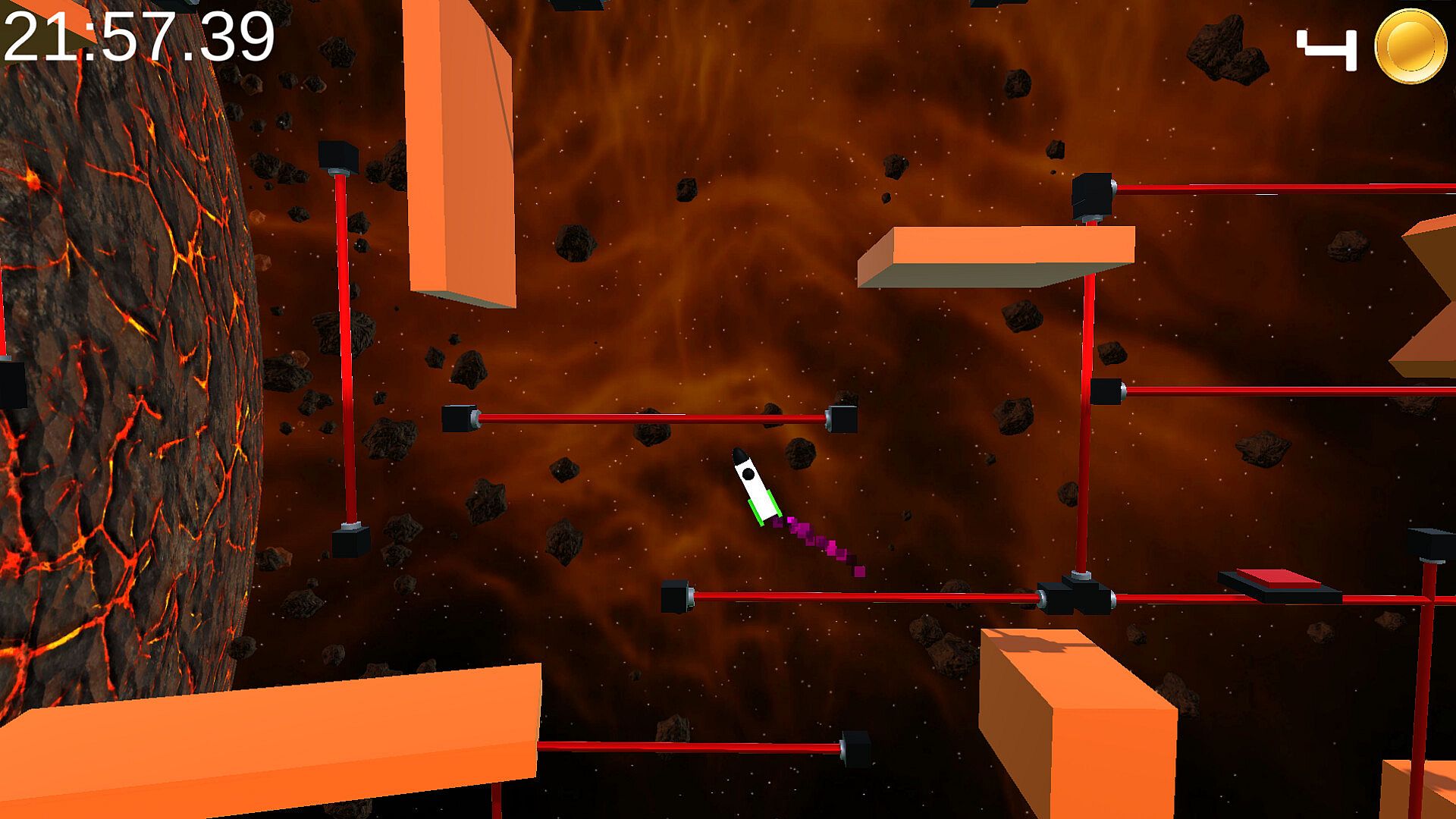
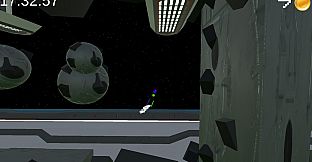
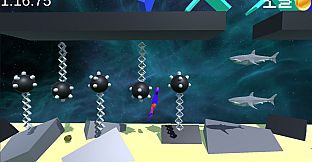
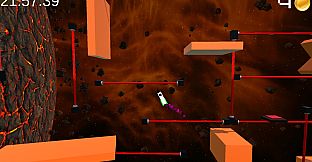
Rocket is a 2.5D action indie game developed for PC that puts players in control of a rocket navigating a series of punishing obstacle courses. The premise centers on precision movement through increasingly complex stages where a single mistake ends the attempt. Simple inputs handle thrust and direction, yet the levels demand exact timing and pathing to avoid crashes. New mechanics appear every few stages, shifting the challenge from basic dodging to layered interactions that test reaction and planning.
Gameplay
The core loop involves guiding the rocket from start to finish in each level without contact with walls or hazards. Controls remain minimal so players focus entirely on execution rather than learning complex button combinations. Levels build difficulty steadily, introducing elements that alter movement or require specific maneuvers. Two distinct worlds house fifteen levels each, creating thirty stages total before a concluding boss encounter. Progression feels deliberate because every section adds a fresh constraint or environmental twist that forces adaptation.
Customization options unlock as stages are cleared. Different rocket appearances, particle trails, and accessory items become available to equip, though these remain cosmetic and do not alter performance. The emphasis stays on skill rather than power-ups or upgrades. Leaderboards track completion times across the full run, encouraging repeated attempts to shave seconds off previous efforts. Achievements cover both standard completion milestones and stricter challenges that push players to test their limits within a single continuous playthrough.
Game Modes
The game offers a single primary experience built around sequential level completion. Players advance through the two worlds in order, facing every obstacle and mechanic in sequence. A final boss fight caps the campaign. Speedrun leaderboards function as an additional layer, allowing comparison of full-run times without changing the underlying structure. No separate competitive or cooperative modes exist, keeping the focus on individual mastery of the obstacle navigation.
Achievements serve as optional goals layered over the main campaign. Some require specific conditions during the one-run completion, such as avoiding certain mistakes or achieving particular timings. These elements extend replay value for players who enjoy collecting every unlock while refining their route through the thirty levels.
Progression and Features
Each world introduces its own set of obstacles and rule changes, ensuring the second half of the campaign feels distinct from the first. The soundtrack, created specifically for the game, accompanies the action and provides a consistent audio backdrop across all stages. Customization items reward steady progress without affecting core difficulty. The requirement to complete everything in one continuous attempt adds tension, as any crash resets the entire run rather than allowing checkpoint restarts.
Steam leaderboards and achievement tracking integrate directly with the campaign structure. Players can monitor global rankings for fastest completions while working toward full achievement lists. These systems reward persistence and route optimization more than raw speed in isolated segments.
Is It Worth Playing?
Rocket targets players who seek demanding precision challenges and do not mind repeated failures as part of the learning process. The straightforward controls paired with escalating level complexity create a loop that rewards practice and pattern recognition. Those who enjoy games built around mastery of tight movement will find the thirty-level structure and boss encounter provide a clear goal to work toward.
Because the title remains in a pre-release state with no player reviews available, expectations should center on the described mechanics rather than community sentiment. The combination of speedrun leaderboards and achievement hunting offers measurable progress markers for dedicated players. Anyone drawn to single-player obstacle navigation on PC will find the core experience aligned with that preference, while those preferring lighter or multiplayer-focused titles may want to wait for further information after launch.