




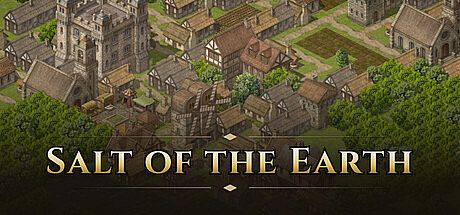


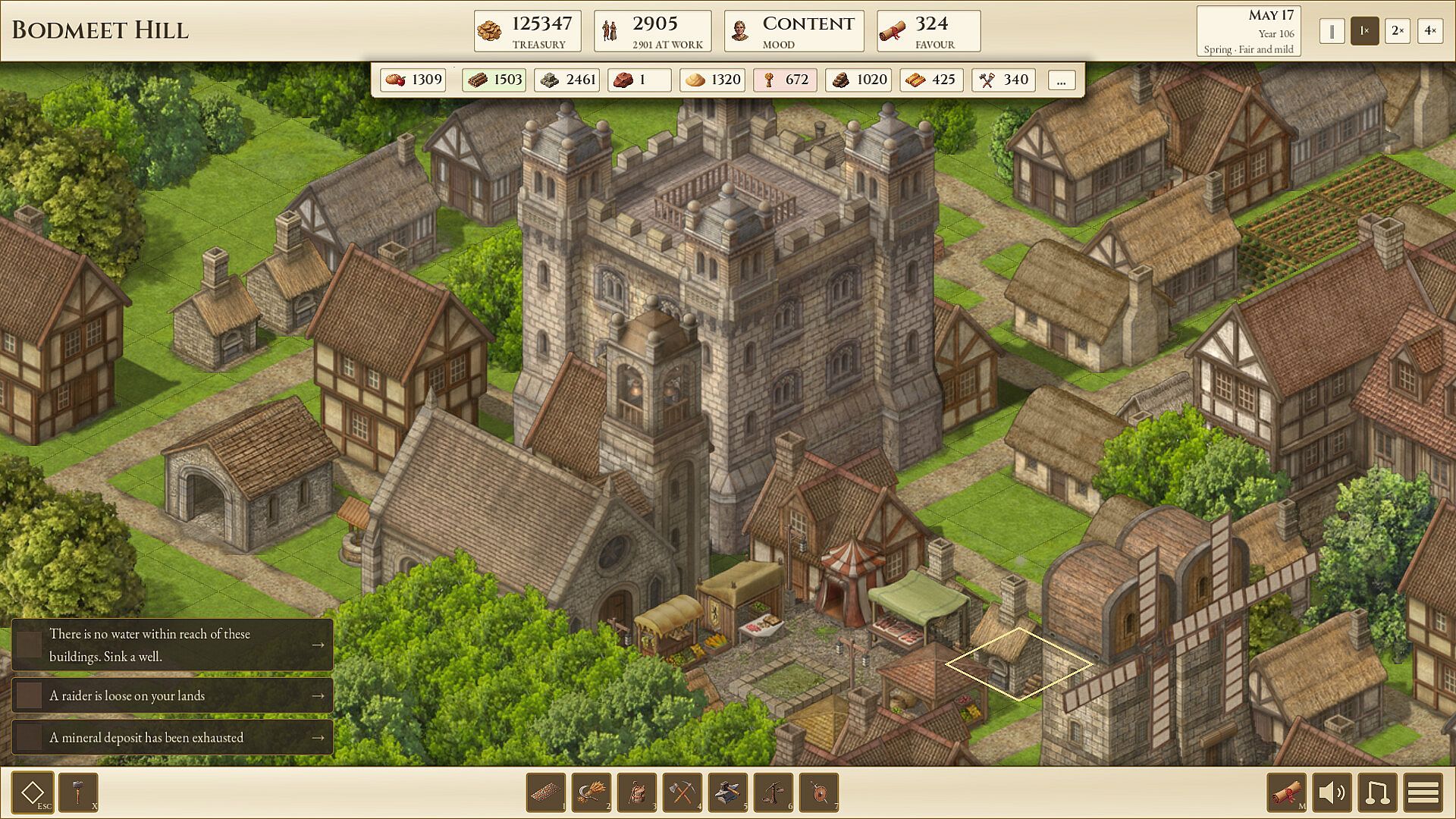
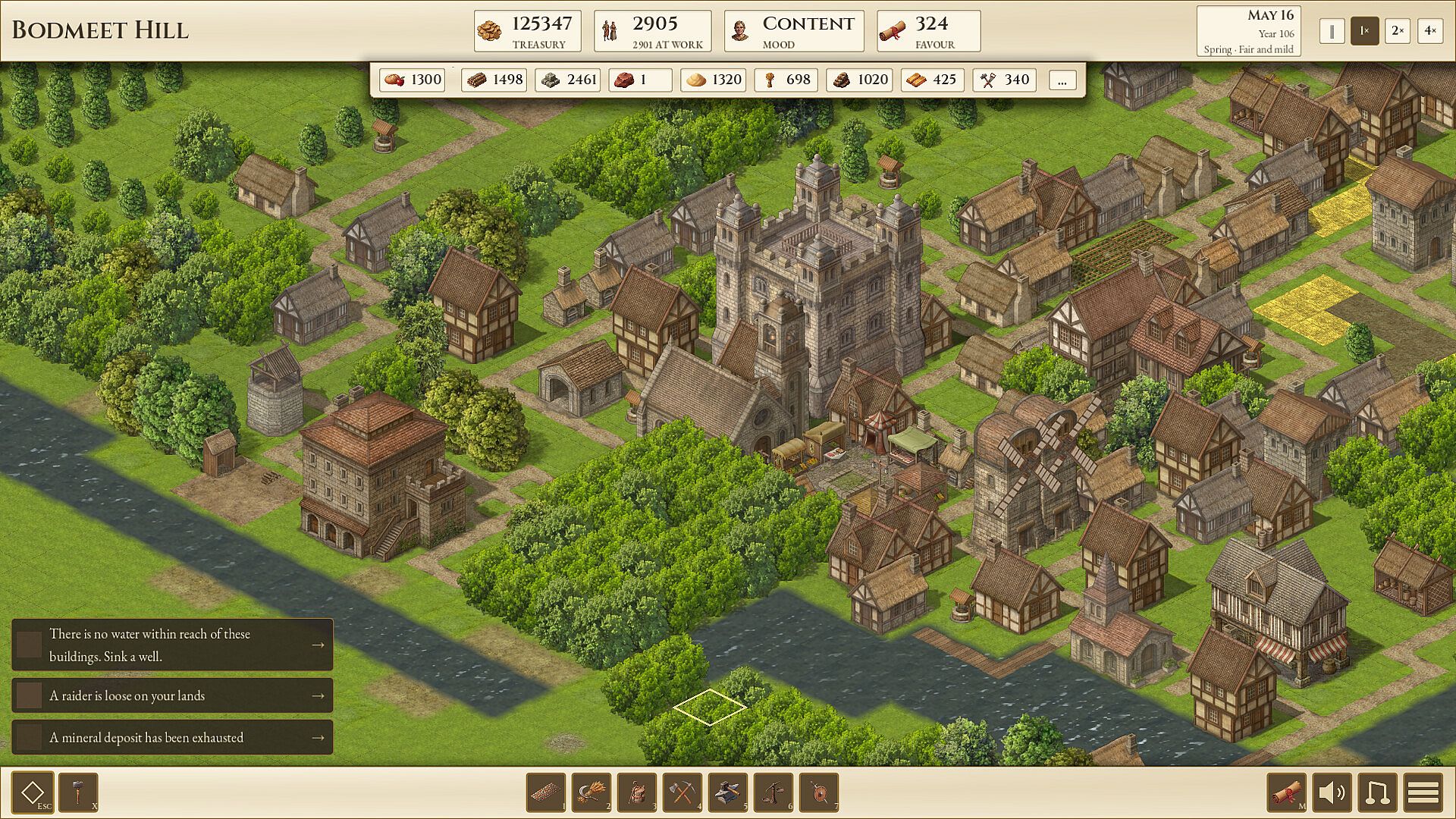
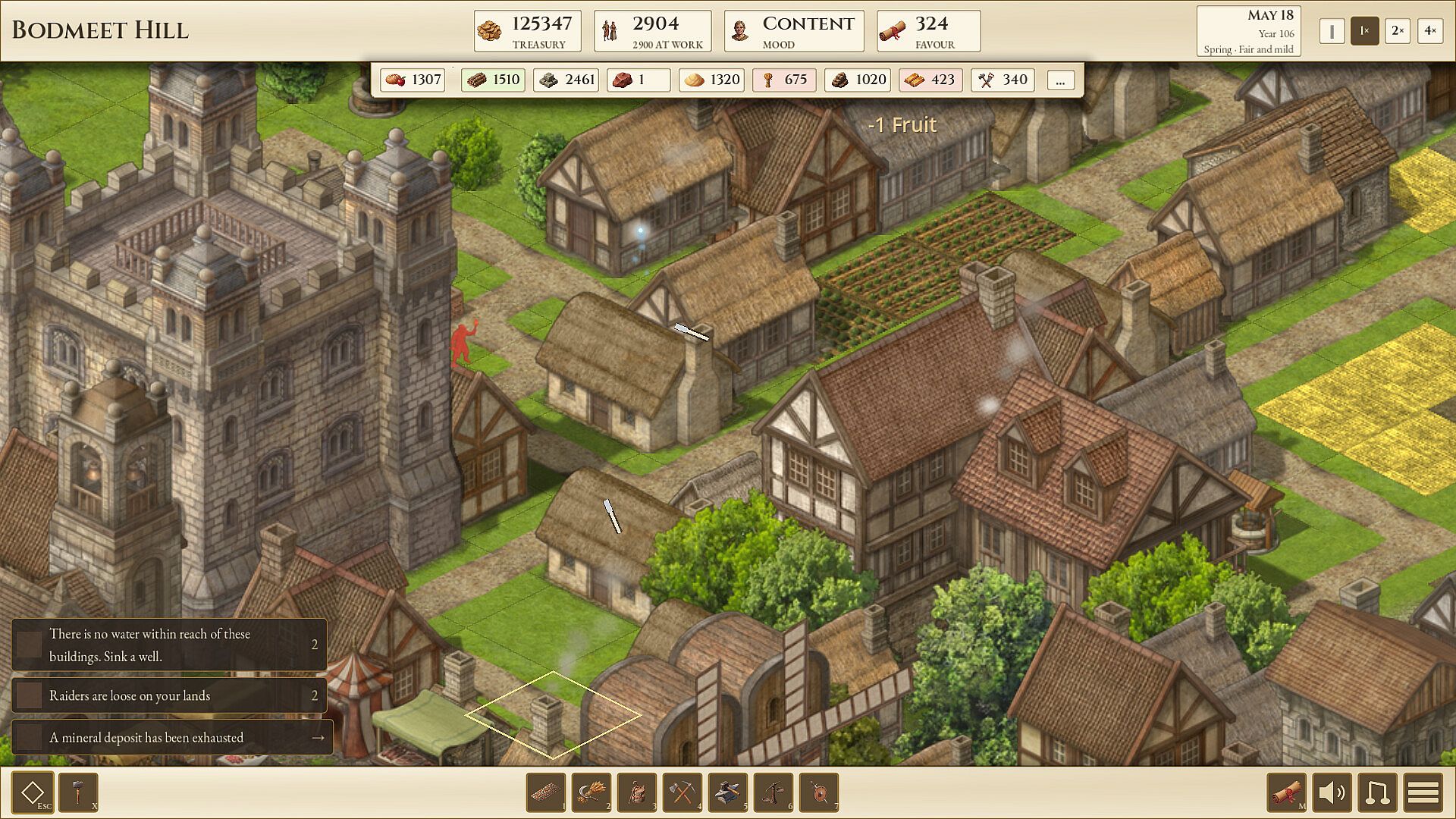
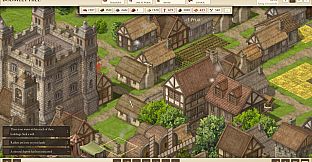
Salt of the Earth is a strategy indie simulation game set in a medieval world where players manage a single manor granted by charter. The experience centers on building and sustaining a settlement through careful placement of structures, resource management, and responses to seasonal changes and external visitors. Houses grow from basic hovels into more substantial town houses as the families living in them receive proper care, while workshops rely on nearby housing for labor. Every structure must connect to a road network, creating a layout that directly influences productivity and daily operations.
Gameplay
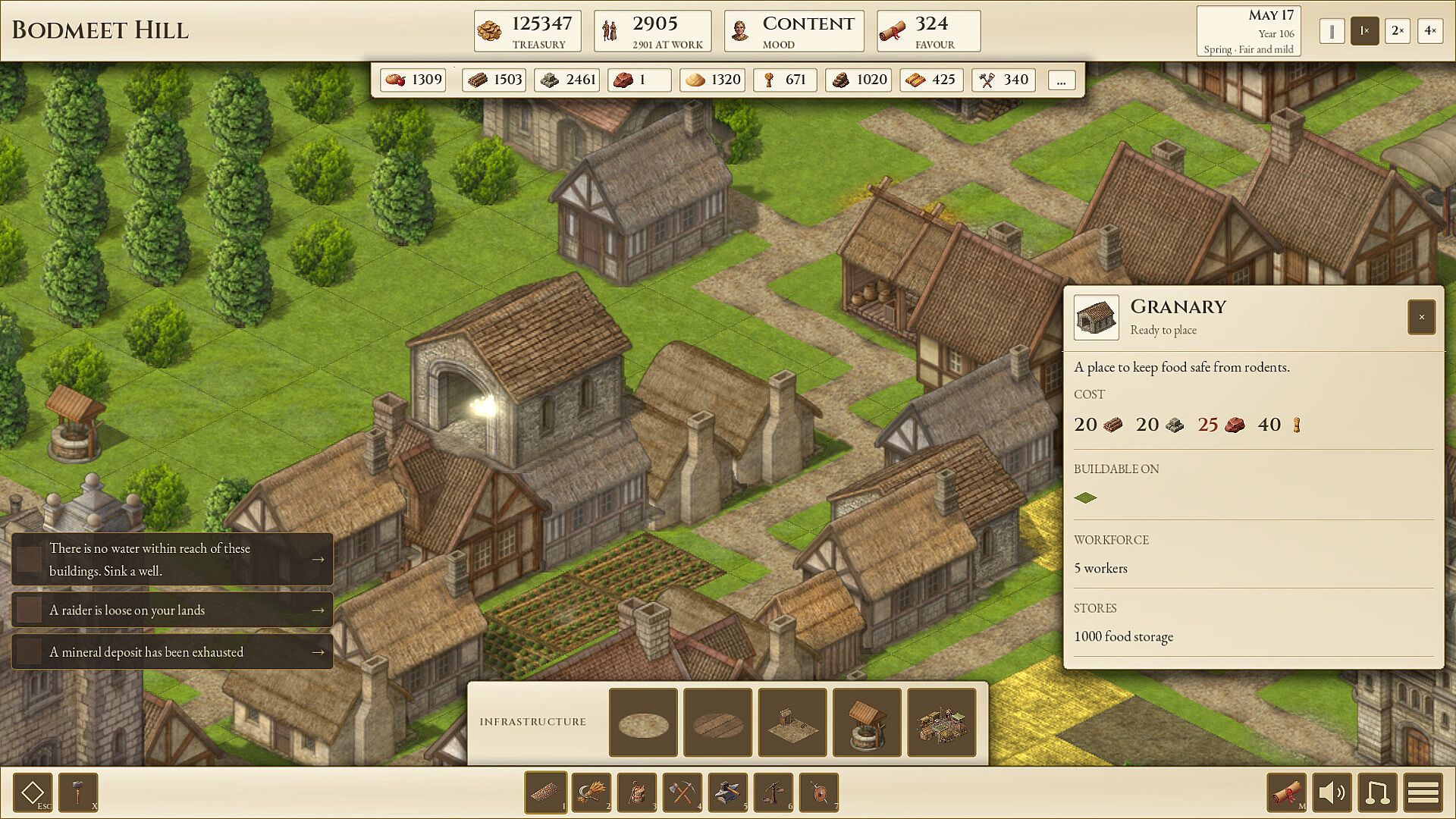
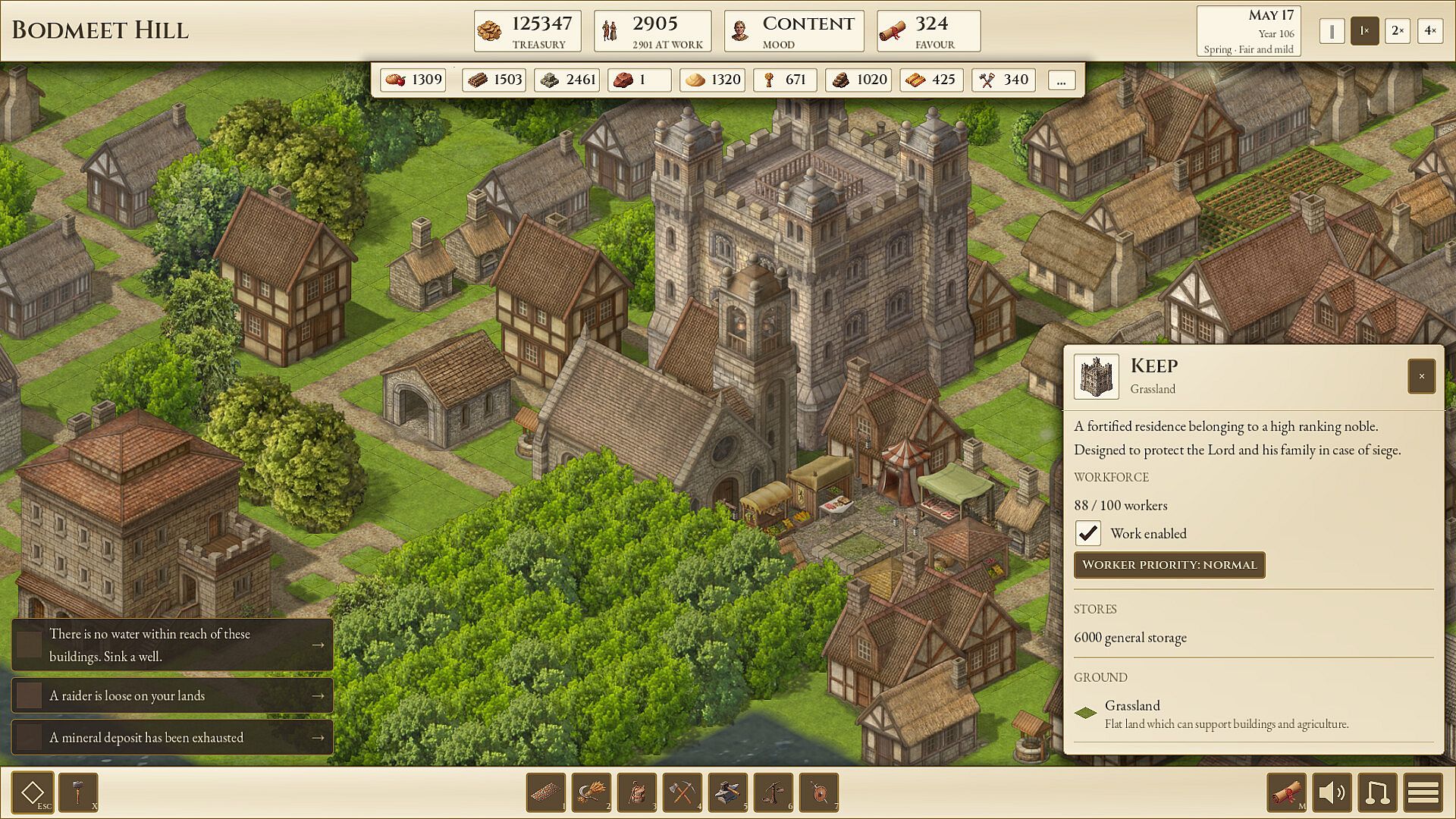
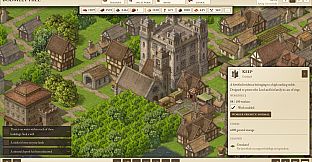
The core loop revolves around constructing over forty different buildings that range from simple wells and hovels to cathedrals, keeps, and border outposts. Placement matters because workshops draw workers only from houses within walking distance, leaving distant yards idle. Housing advances through four tiers based on fulfilled needs such as food, water, markets, churches, inns, and schools. Variety in provisions proves essential, as households limited to bread alone deplete supplies faster than those with access to meat and fruit. Unmet needs cause families to depart, leaving yards unworked.
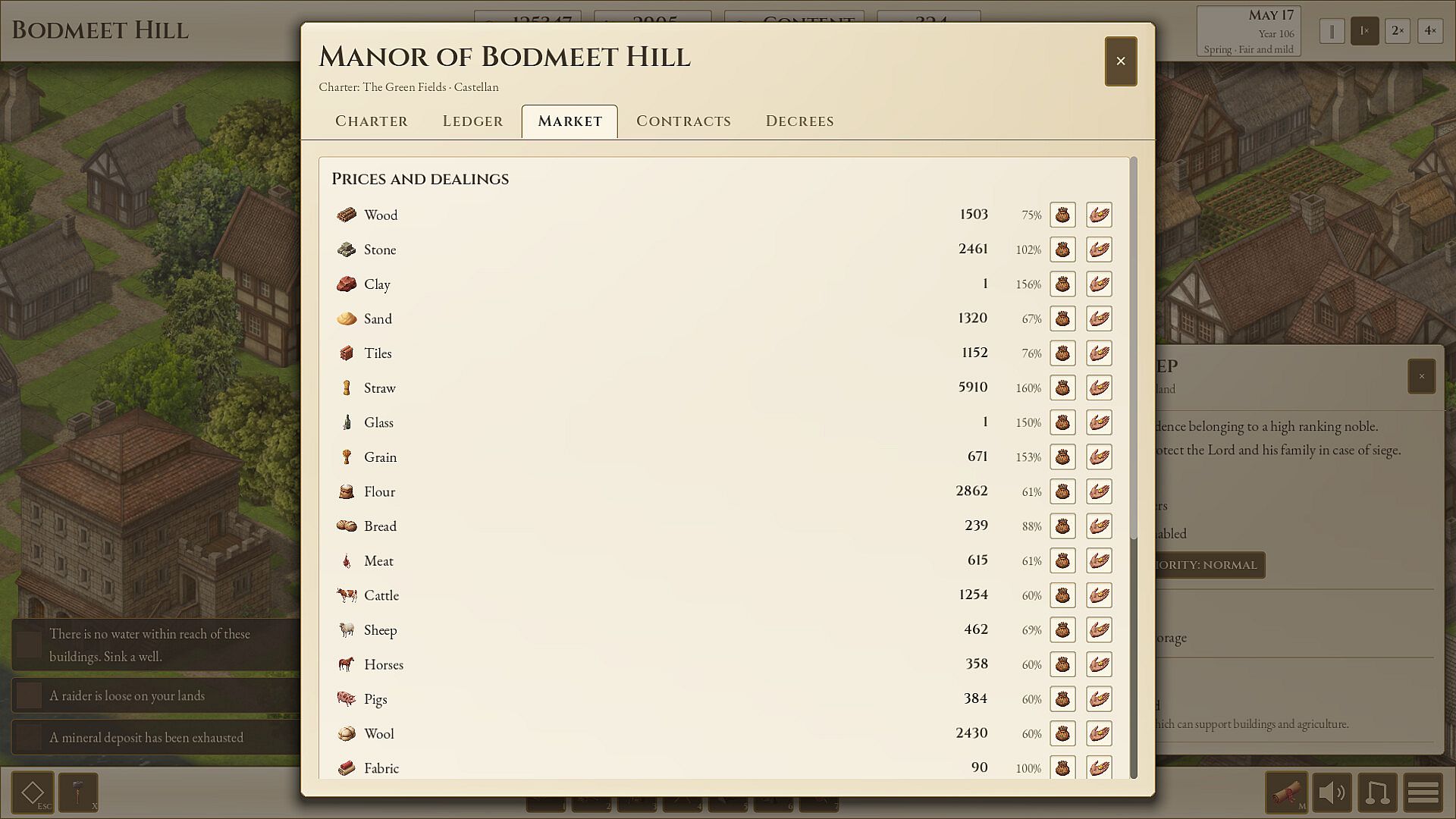
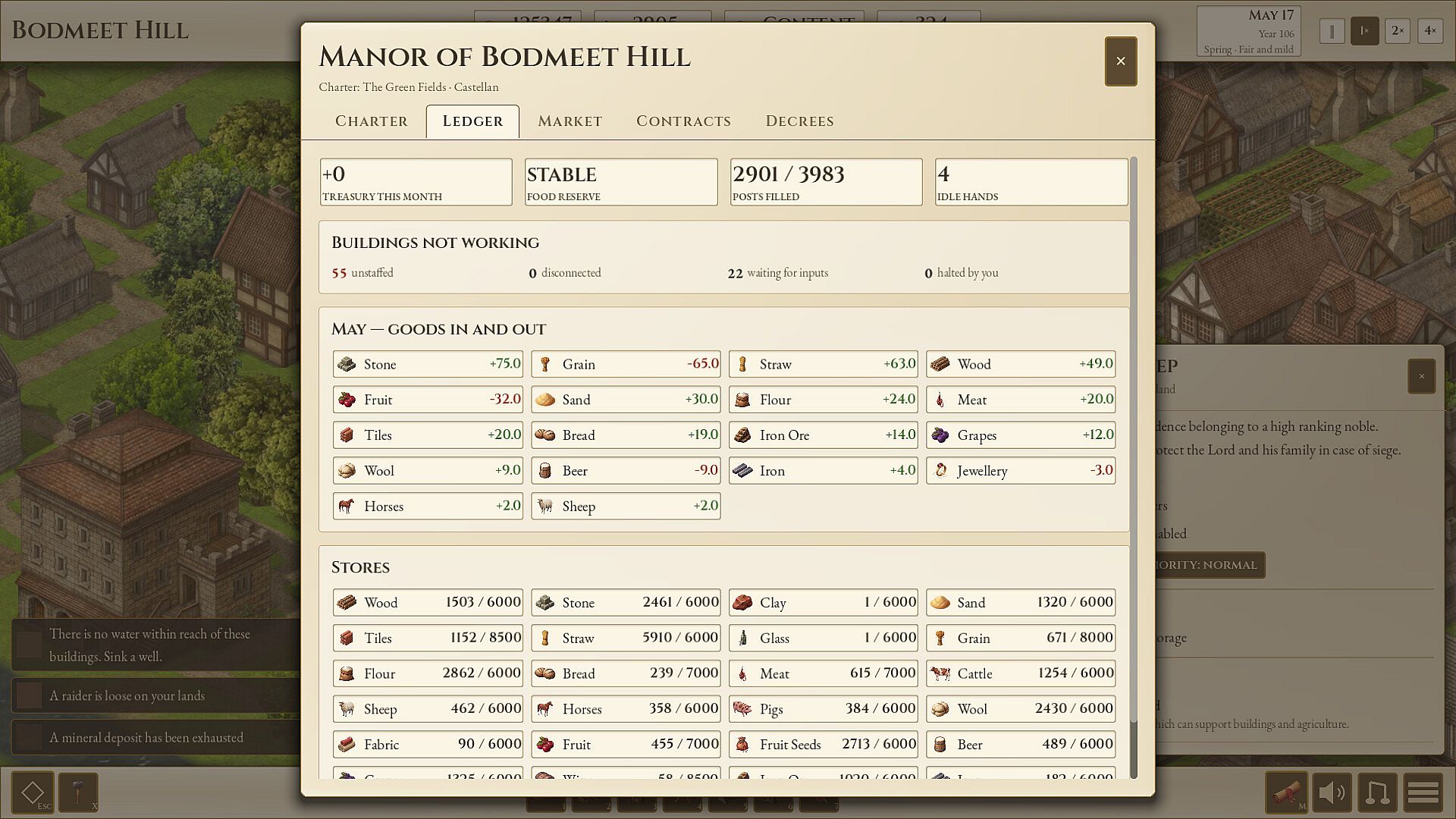
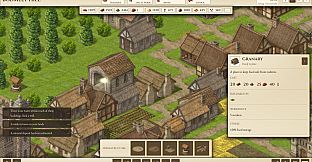
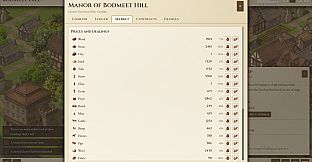
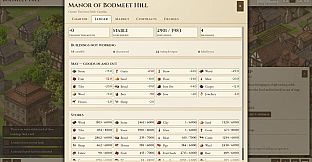
Production chains cover twenty eight goods that link together in logical sequences. Grain becomes flour and then bread, ore turns into iron and tools, clay forms tiles, grapes yield wine, and wool processes into fabric. Surplus items sell at the market square, and players can forbid specific goods to prevent consumption of items intended for trade. The year cycles through four seasons, with winter providing no new resources and forcing reliance on stored supplies from spring through autumn. Weather events including rain, hail, snow, and thunder occur on independent schedules, and heavy rain can extinguish fires threatening buildings.
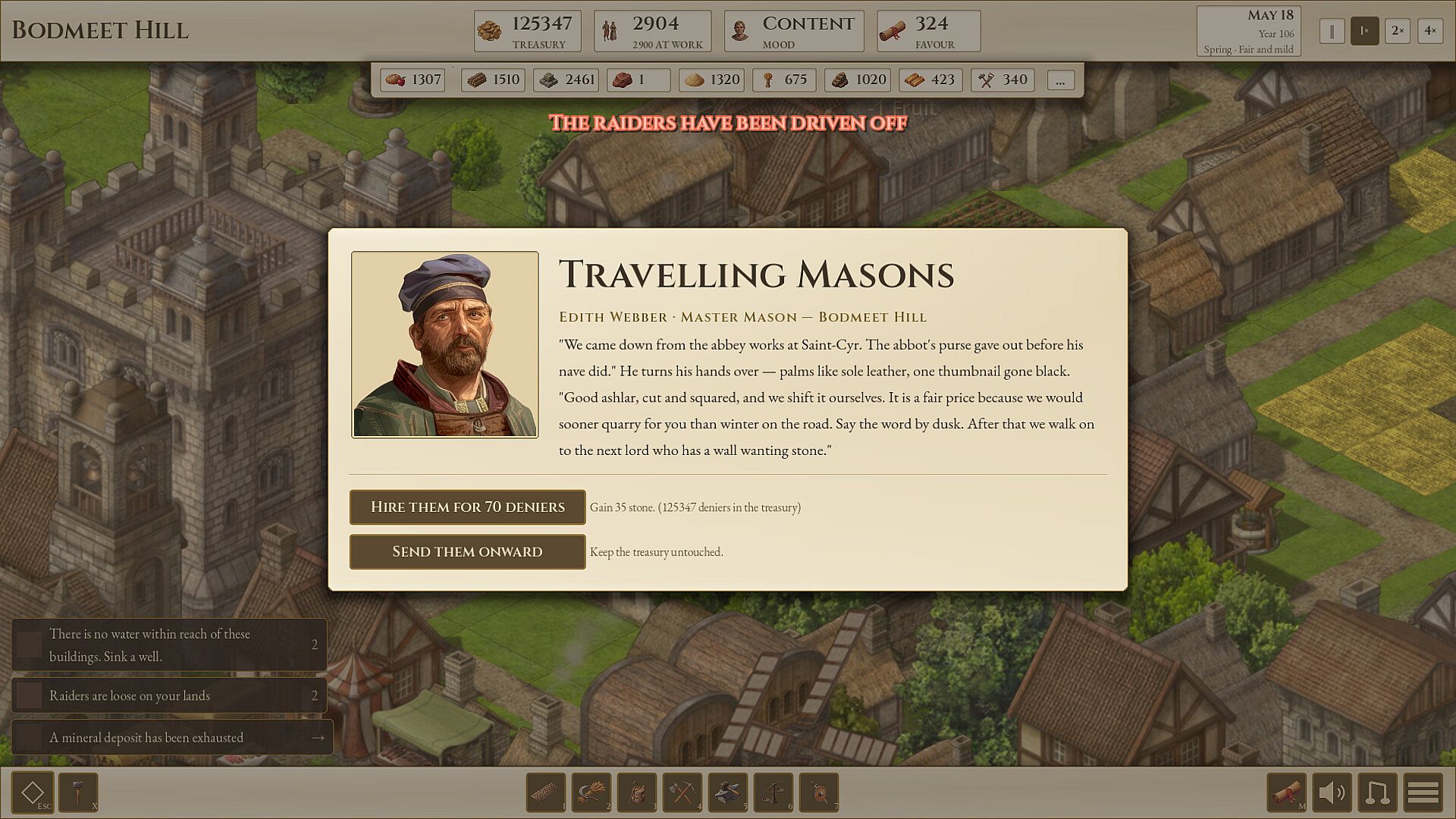
More than fifty decision events arrive as visitors at the door, each presenting choices with lasting consequences. Traders, tithe collectors, couriers, and raiders follow their own timetables and remember previous interactions. Raiders target the settlement for its valuables and set fires that spread through closely built structures but halt at gaps. A well offers limited fire suppression before running dry, while a manned tower can end a raid. Four neighboring towns maintain ongoing relationships that improve or decline over years, with couriers bringing export offers once the manor reaches market town status. Each town displays a distinct temperament that affects negotiations.
Game Modes
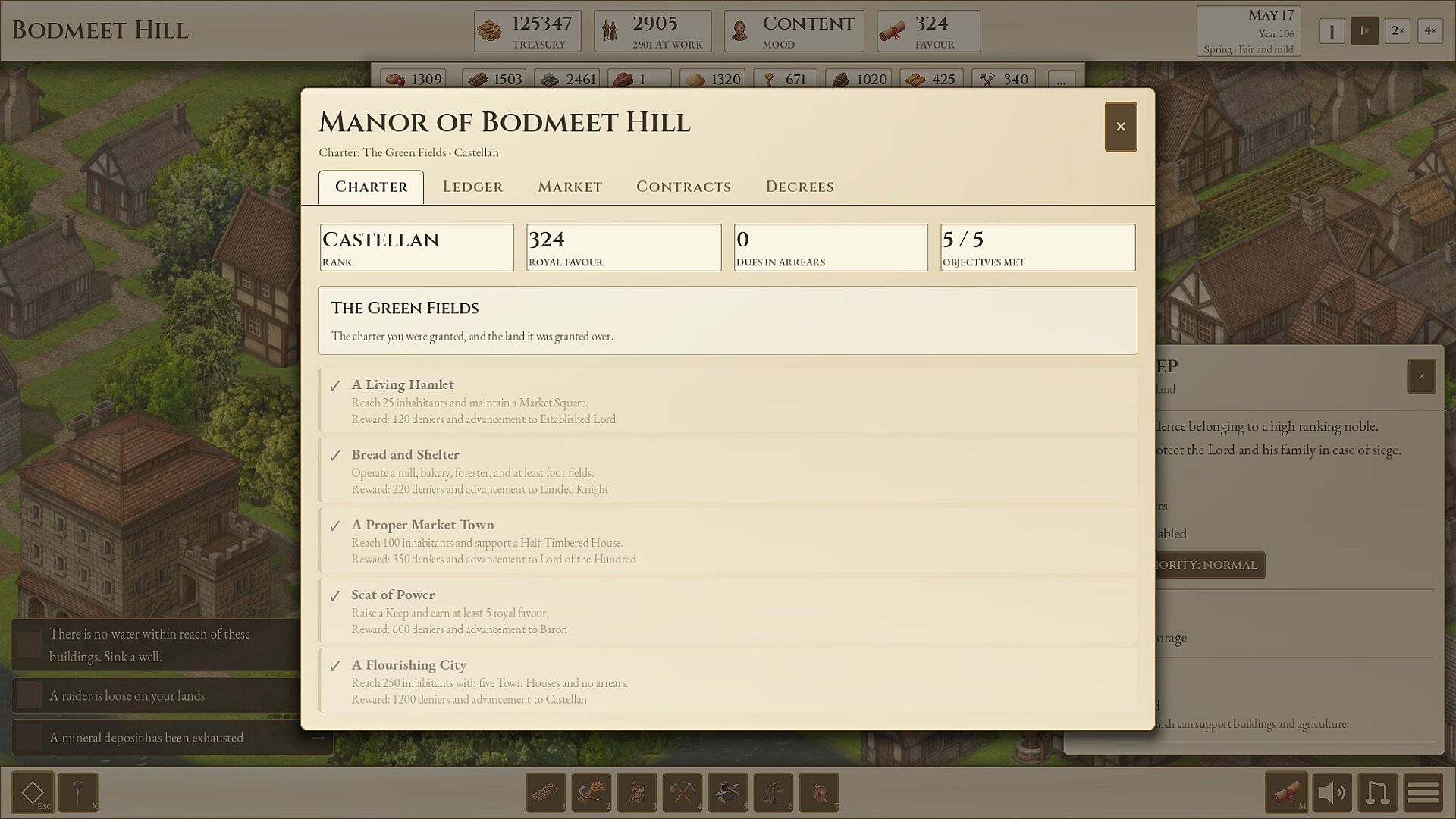
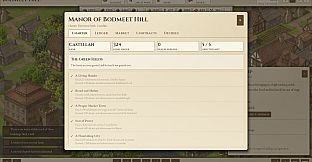
Salt of the Earth operates as a single player settlement builder without separate named modes or multiplayer components. Progress occurs through four charters that alter starting conditions, from fertile river soil to a harsher northern frontier. Five honours advance the manor from Minor Lord to Castellan, each unlocking additional features such as raiders, foreign correspondence, border outposts, and knights. Advancement depends on housing quality and overall development rather than a traditional research tree, with new buildings becoming available only once prerequisite structures stand.
Key Mechanics and Progression
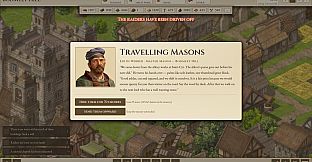
Industry scales directly with housing tiers. A bakery requires a mill, a tower needs a barracks, a school demands a church alongside a half timbered house, and a goldsmith appears only with a town house. This dependency chain ensures steady, logical growth without arbitrary unlocks. Decision events add narrative weight, as responses to masons from an abbey, a bishop's collector, or displaced families from adjacent manors shape long term standing with neighbors. Fire management and raid defense integrate into the building layout, rewarding gaps between structures and defensive towers.
Seasons enforce planning discipline. Spring, summer, and autumn focus on growth and storage to survive winter shortages. Weather adds unpredictability, with downpours providing both relief from fires and potential disruptions. The four neighboring towns create a persistent relationship system where export deals and complaints accumulate across multiple years, encouraging consistent management rather than short term gains.
Is It Worth Playing?
Salt of the Earth suits players who enjoy detailed settlement management and interconnected systems without tech trees or combat focus. The emphasis on needs based housing upgrades, road connected placement, and seasonal preparation creates a deliberate pace centered on foresight and adaptation. Those interested in medieval simulation with event driven decisions and neighbor relations will find the mechanics rewarding through their logical dependencies and visible cause and effect. The absence of separate modes keeps the experience unified around manor development across charters and honours. Availability on PC makes it accessible for those seeking an indie strategy title with specific building and resource rules drawn directly from its design.











