







SanGoFate is a strategy indie simulation game set in the Three Kingdoms period, where players shape an officer's entire life through card choices rather than direct control of battles or armies. The experience centers on drafting three Destiny Cards across multiple rounds to define a character's path, then observing how events unfold in a collapsing empire. This single-player title emphasizes personal narrative over large-scale conquest, with mechanics that blend card drafting, stat allocation, and simulated historical progression on PC.
Gameplay
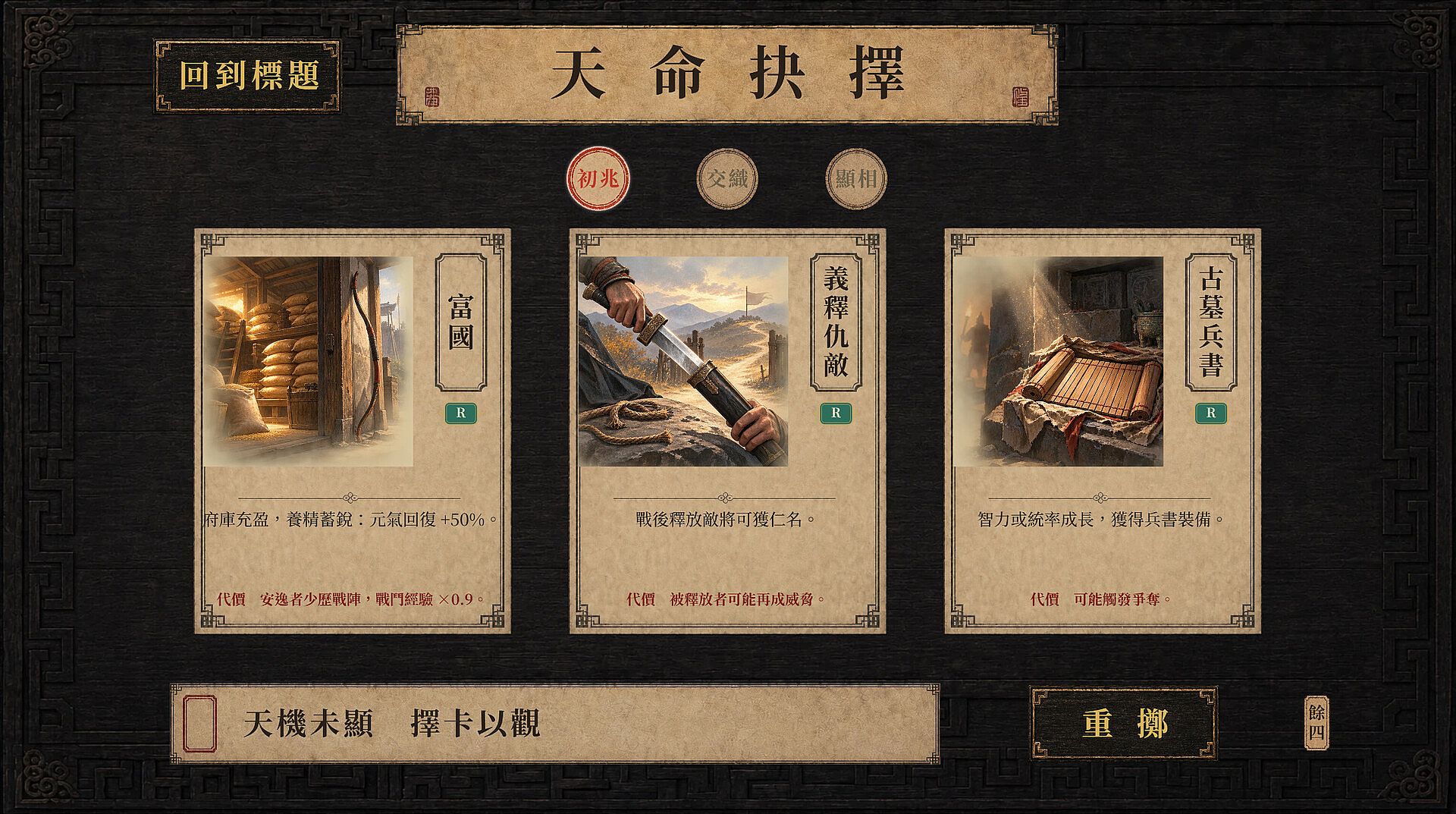
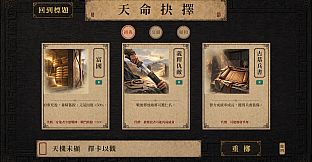
The core loop begins with drafting from a deck of 81 Destiny Cards divided into three rarities. Each card lists a cost in red text, forcing players to weigh immediate gains against long-term reputation effects. Choices like Ruthless Extermination or the Poisoner's Gambit alter alliances and public perception while advancing the officer's story. Rerolls remain available but draw from a limited pool of tokens.
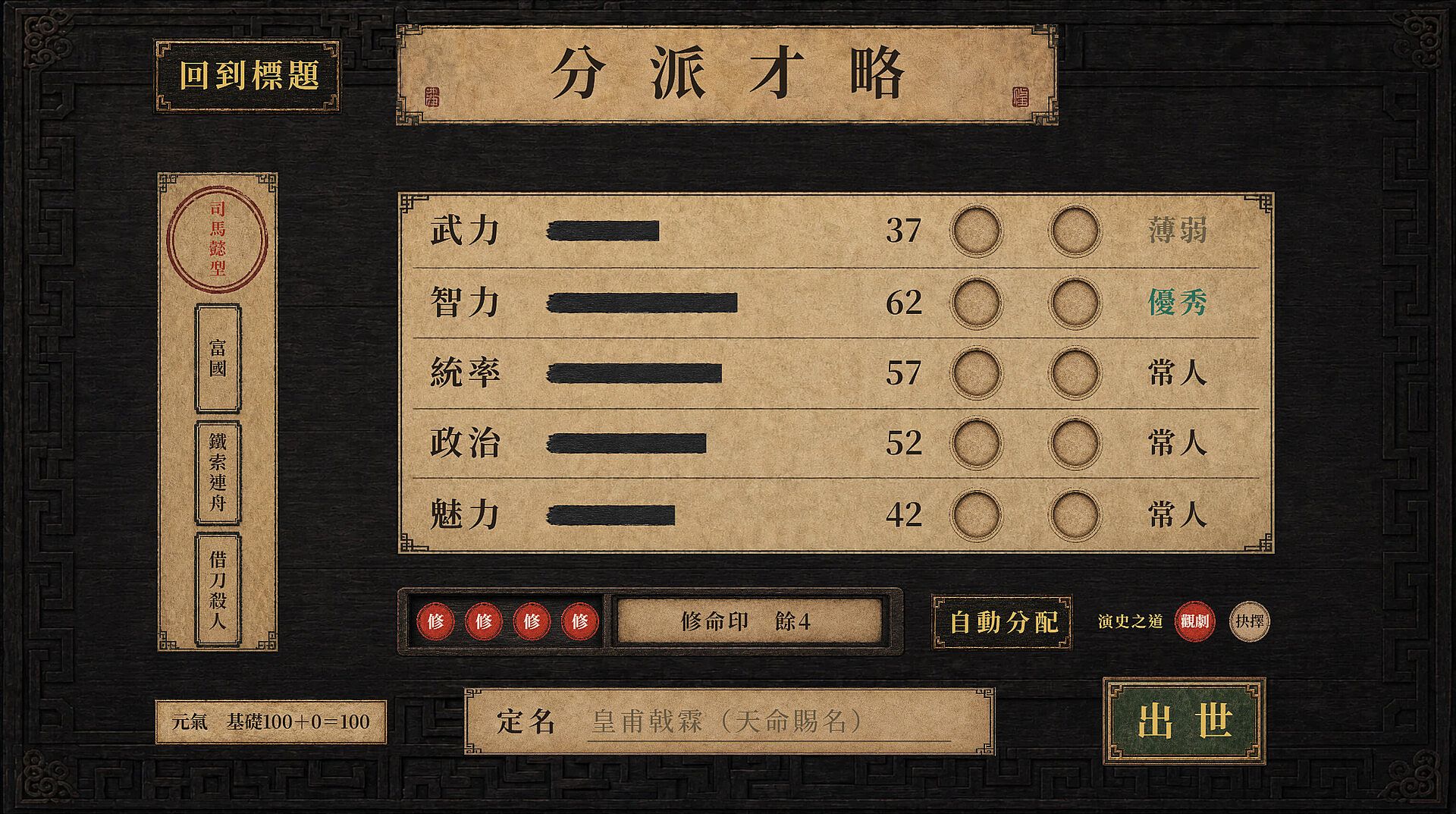
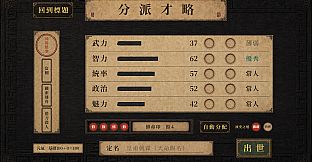
Three cards combine to form one of 15 officer archetypes drawn from historical figures, such as the Cao Cao type, the Sima Yi type, or the Lü Bu type. As drafting progresses, available options narrow based on prior selections. Players then distribute points across five attributes: Might, Intellect, Command, Politics, and Charisma. These values influence how the character interacts with the world during the simulated lifespan.
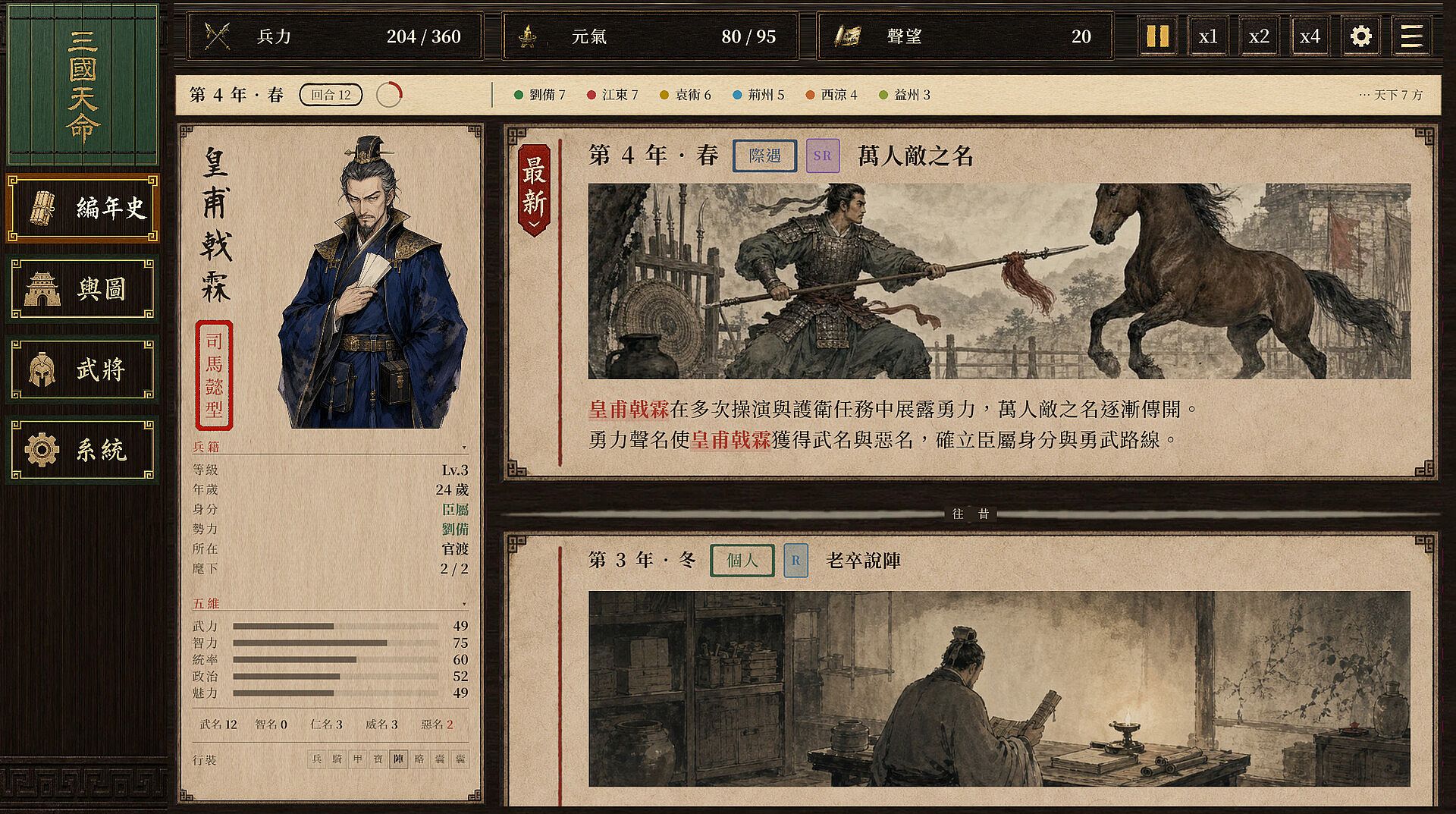
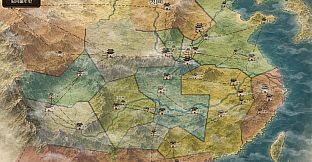
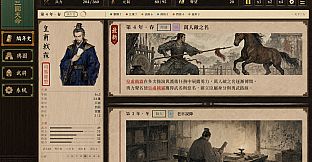
Once sent into the era, the officer's story advances season by season through an illustrated chronicle. Events appear as full painted scenes and include moments such as gaining recognition from a lord, sheltering refugees, facing false accusations, or welcoming allies from home. The character's portrait updates with each rise in status. Six warlords vie for control of the realm, their relative strengths shifting independently of player actions. Playback speed can be adjusted between paused and accelerated rates up to 4x to suit viewing preferences.
Game Modes
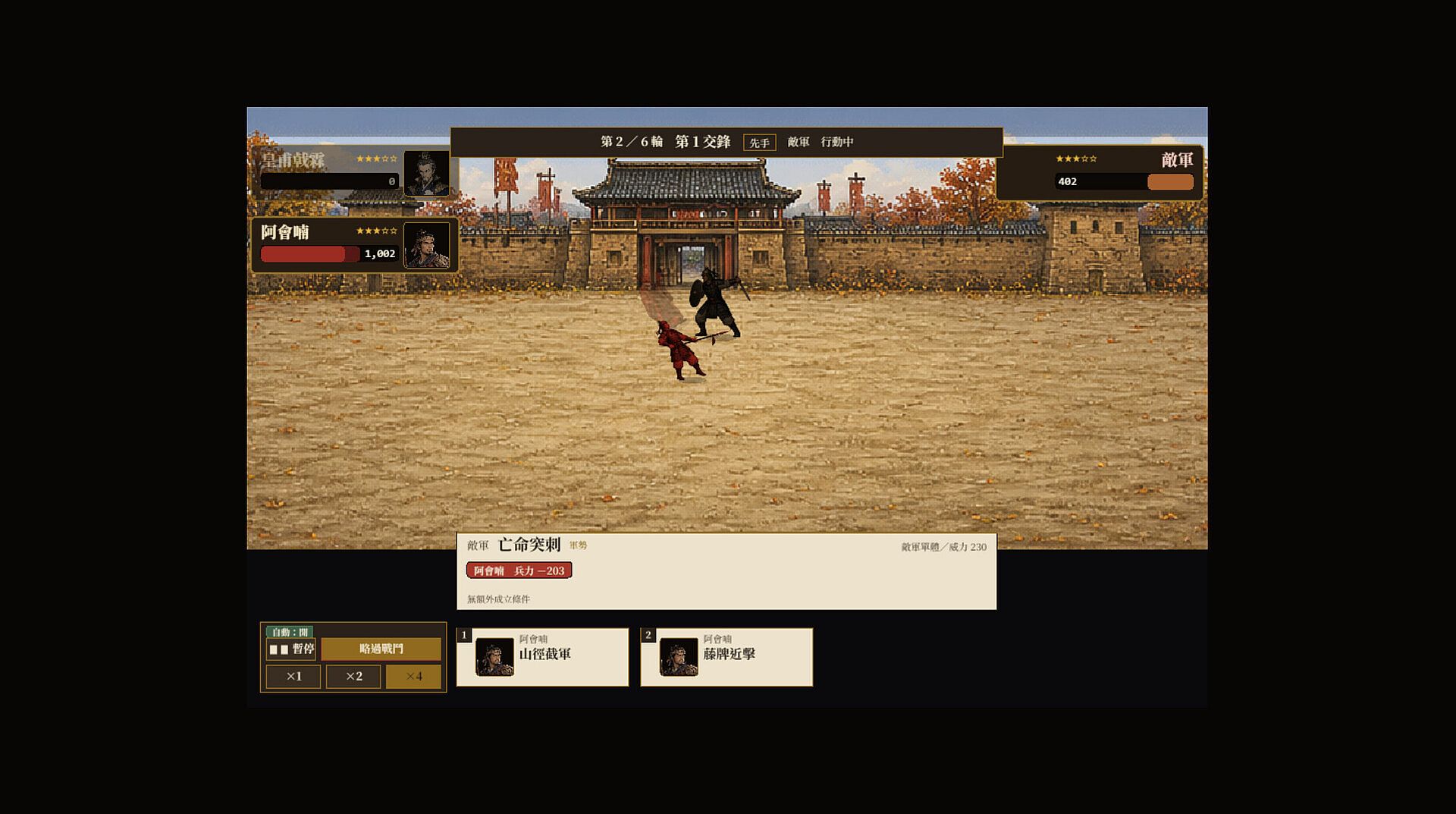
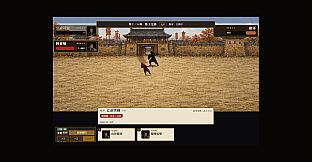
SanGoFate operates as a unified single-player experience built around repeated life runs rather than distinct multiplayer or campaign modes. The primary activity involves drafting cards, allocating stats, and watching the chronicle unfold until the officer's story concludes. Battlefield segments interrupt the chronicle when the character marches to war, shifting to six-round tactical card combat featuring animated pixel scenes. Players bring a lieutenant, deploy formations and stratagems, and manage accumulated stamina to resolve conflicts.
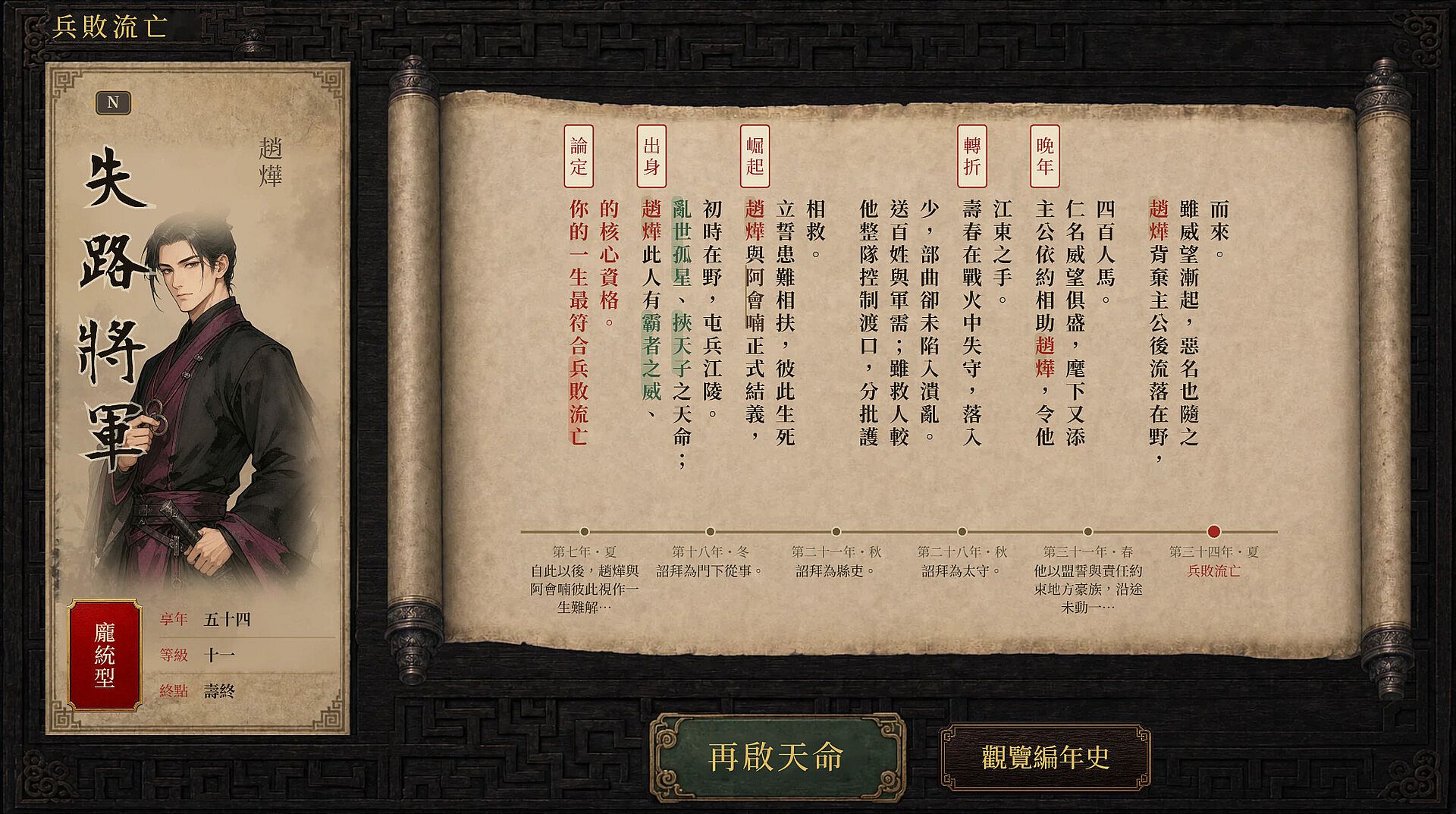
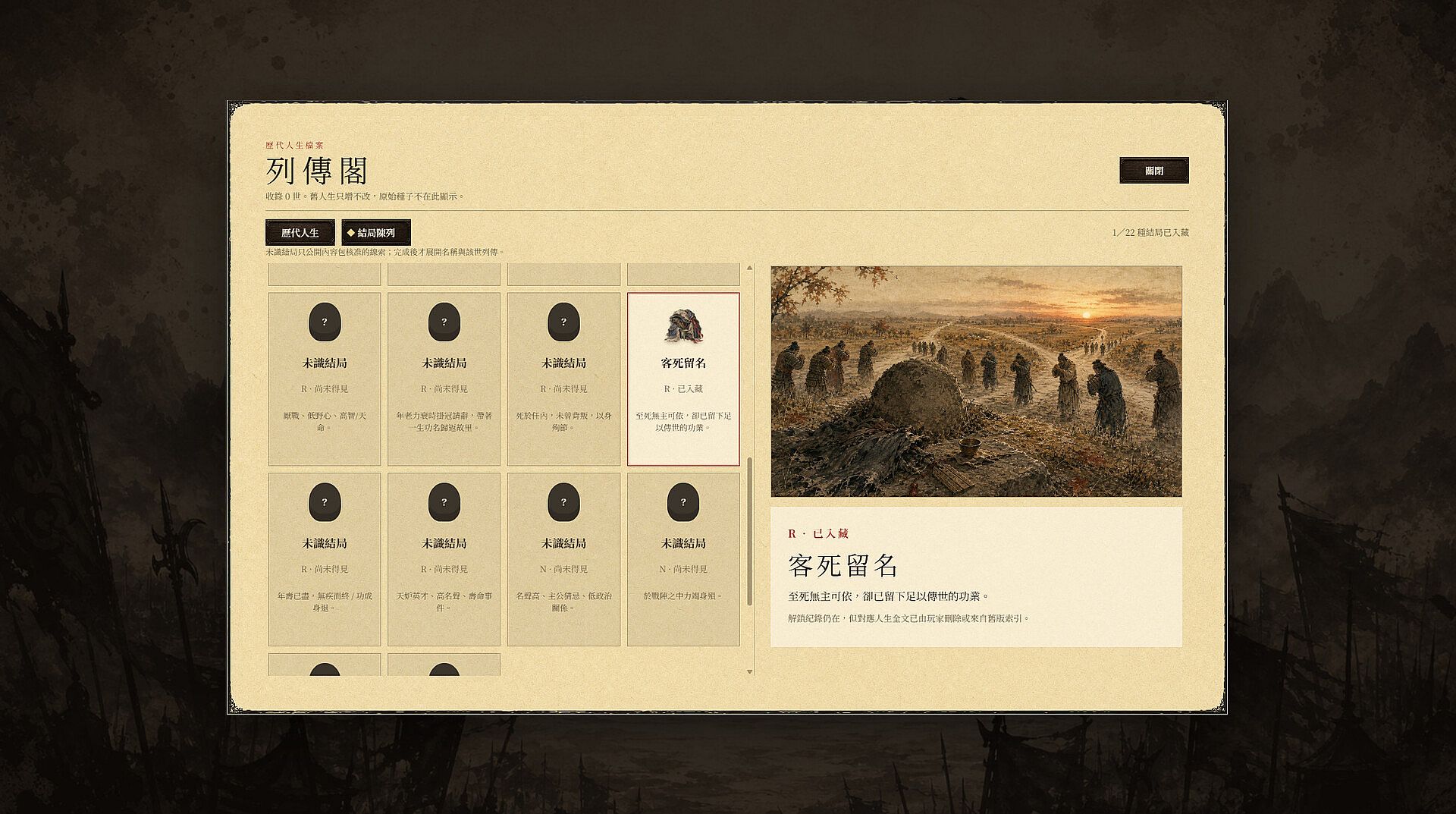
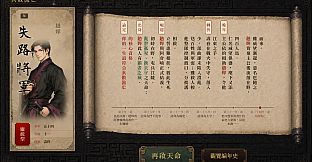
After each run ends, the game generates a personal liezhuan biography compiled exclusively from events that occurred during that specific playthrough. No pre-written templates fill the record. Completed biographies collect in the Hall of Biographies, which tracks progress toward 22 possible endings. Unreached endings appear locked behind a single descriptive line, sorted by rarity. Runs typically last between 20 and 30 minutes, encouraging repeated attempts to explore different archetypes and outcomes.
Character Development and Historical Context
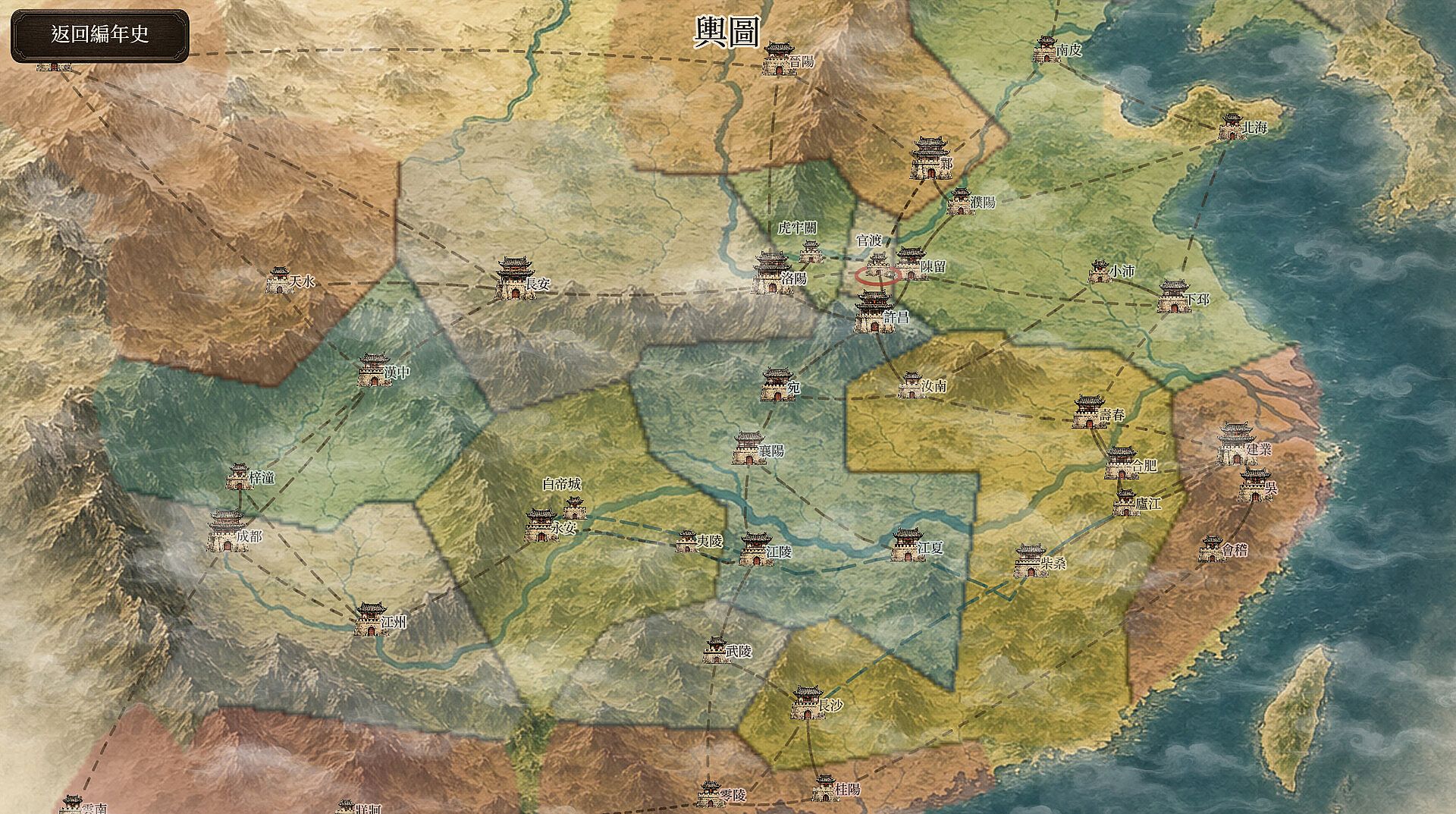
Progression ties directly to the five core attributes and the consequences of card choices. Reputation shifts affect how lords and commoners respond to the officer, while resource management during combat determines survival odds on the field. The six warlords operate as background forces whose power dynamics evolve regardless of direct intervention, creating a living world that reacts to the player's archetype and decisions. This setup rewards careful drafting and attribute balancing over aggressive expansion.
The Three Kingdoms setting provides the backdrop without requiring players to command entire factions. Instead, focus remains on one officer's personal trajectory amid the broader conflict. Events in the chronicle reflect historical flavor through painted illustrations and branching possibilities that feel grounded in the era's political intrigue and military campaigns.
Is It Worth Playing?
SanGoFate suits players who enjoy strategy and simulation titles centered on narrative emergence and short, replayable sessions. The card-drafting system combined with attribute allocation and chronicle observation creates a roguelite-like structure where each run produces a unique biography and ending. Combat integration through six-round tactical encounters adds depth without shifting the focus away from life simulation.
With a planned release in October 2026 and no user reviews available yet, the game appeals most to those interested in Three Kingdoms themes explored through personal rather than epic-scale mechanics. Its concise run length supports experimentation across the 15 archetypes and pursuit of all 22 endings. The permanent record of each completed life encourages multiple playthroughs for collectors of rare outcomes.












