




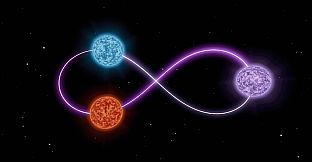
Can three stars keep orbiting each other without falling apart?
Yes, but it's rare. Most initial conditions end in a collision, or one star gets flung out and never comes back.
That's the three-body problem.
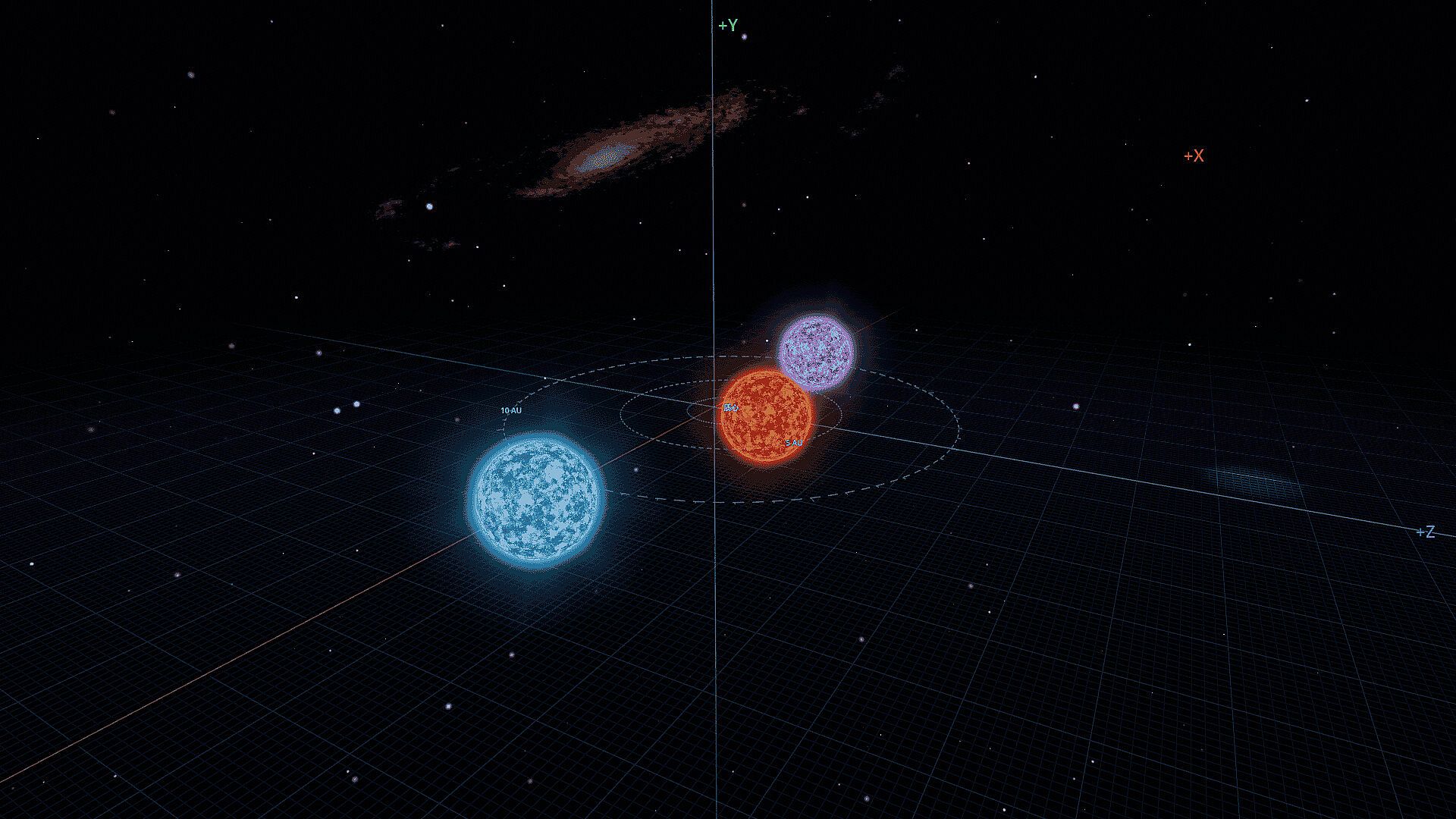
SEPARATRIX is a physics sandbox. You set the initial conditions for three stars: mass, position, velocity, and even how strongly each star pulls. Then you see how it ends.
Stable orbits are rare
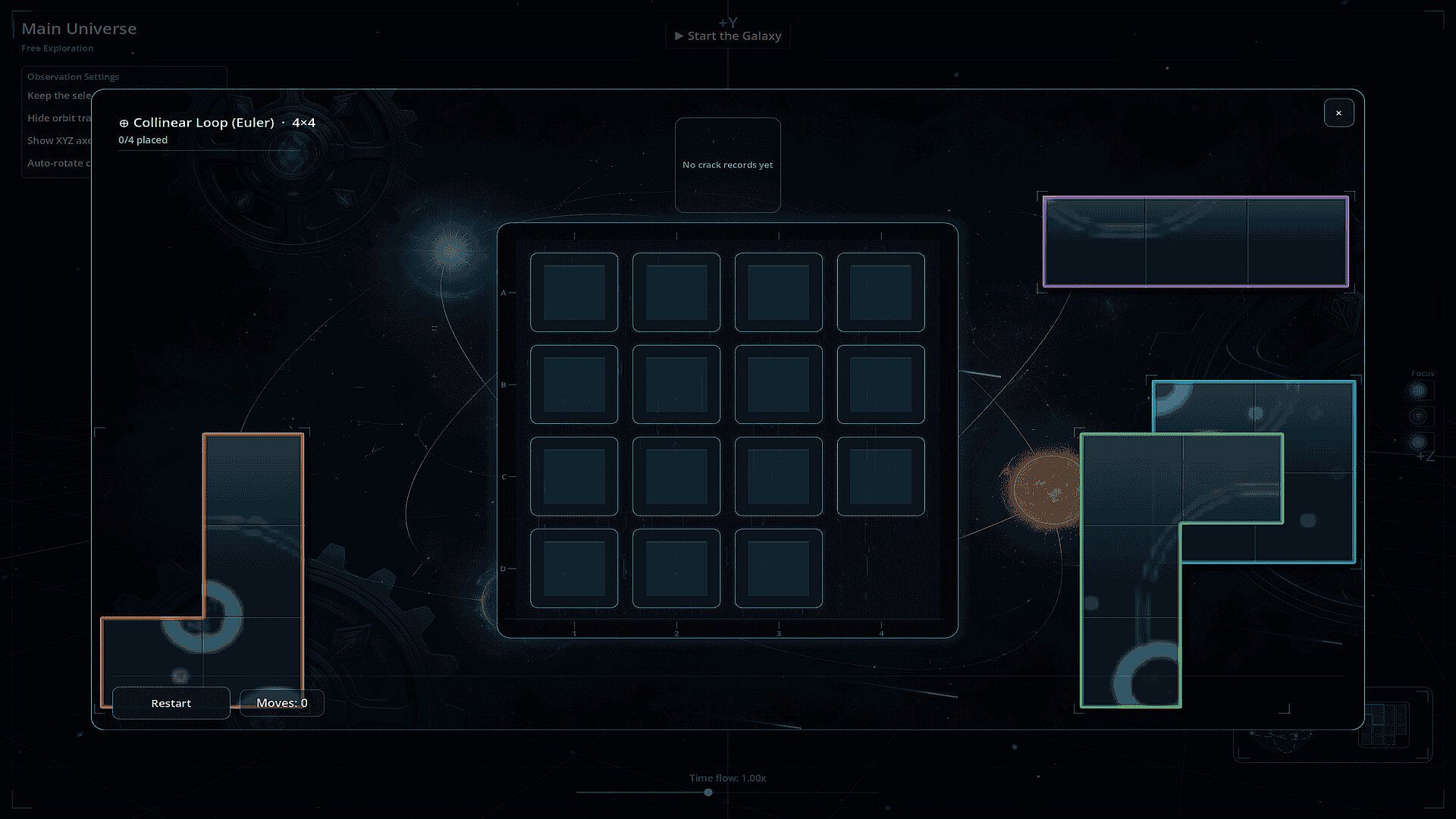
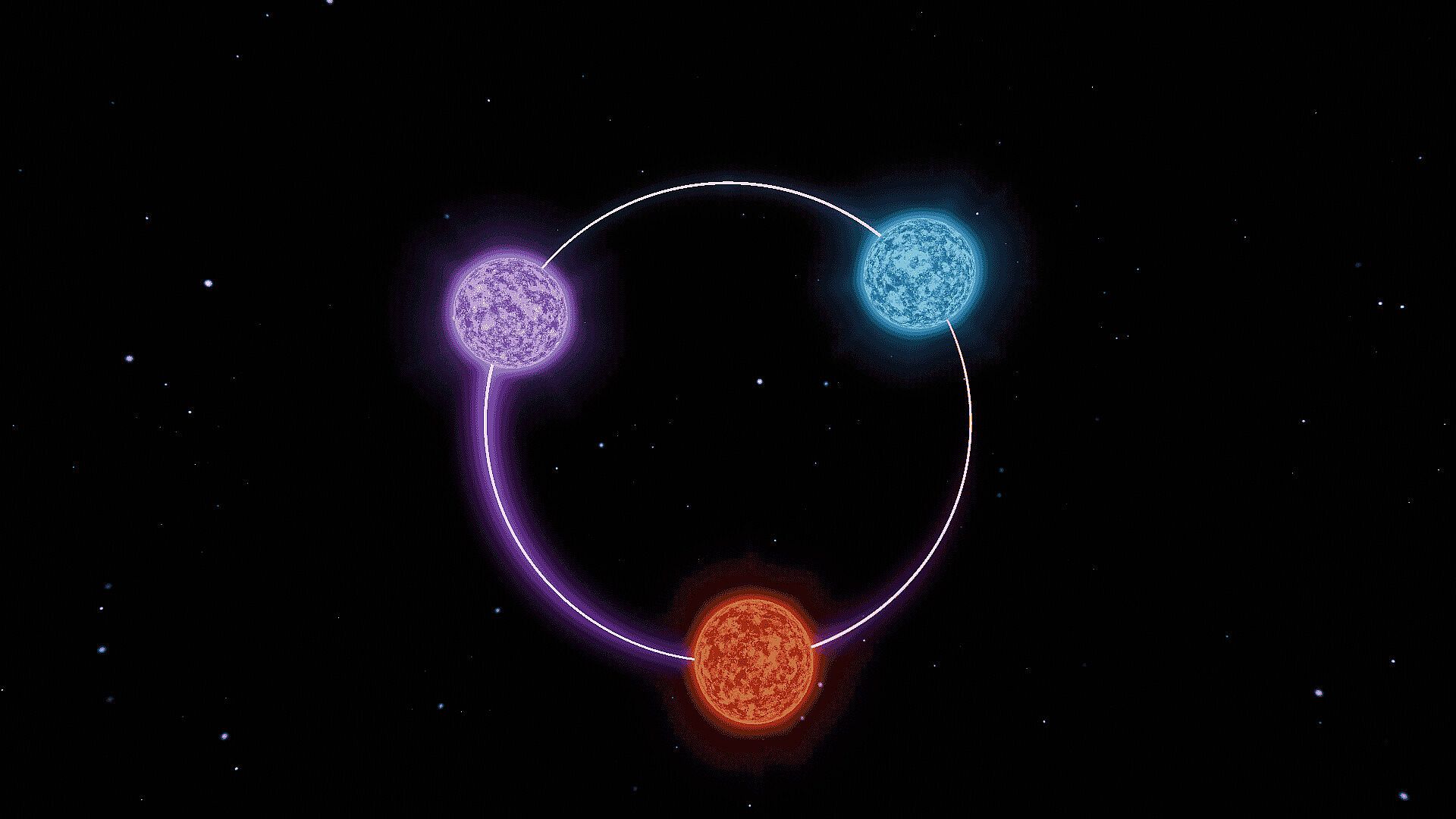
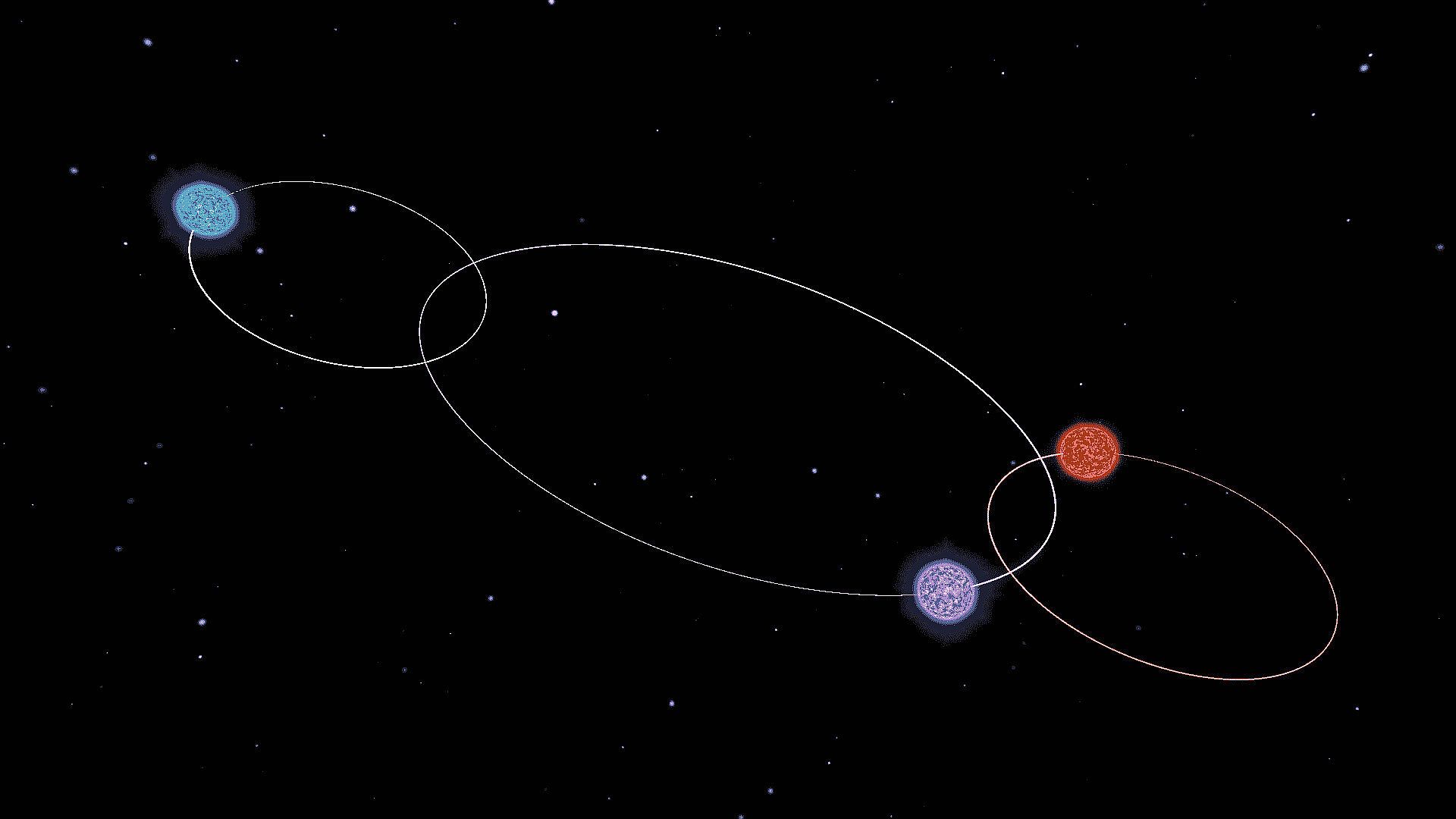
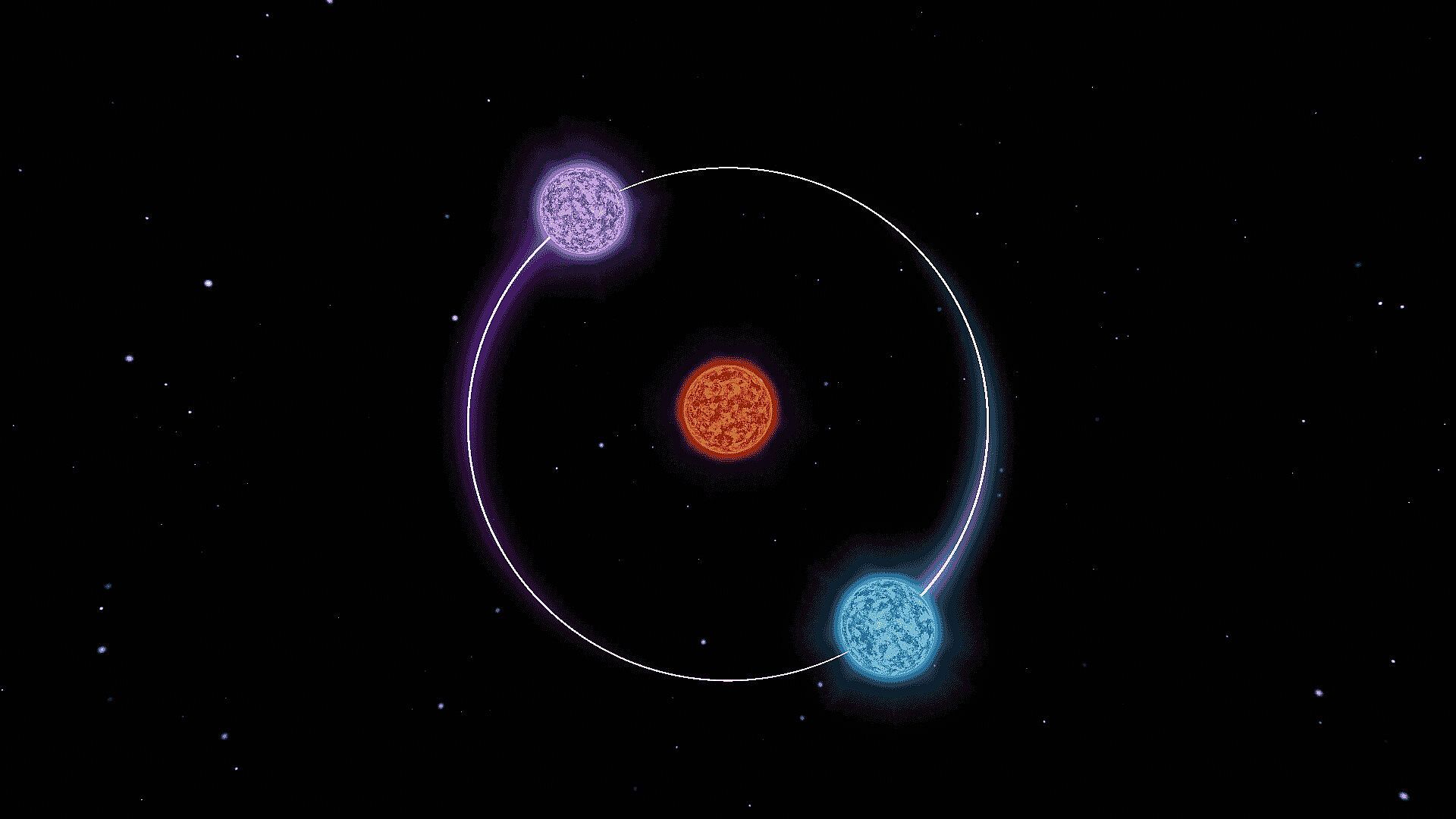
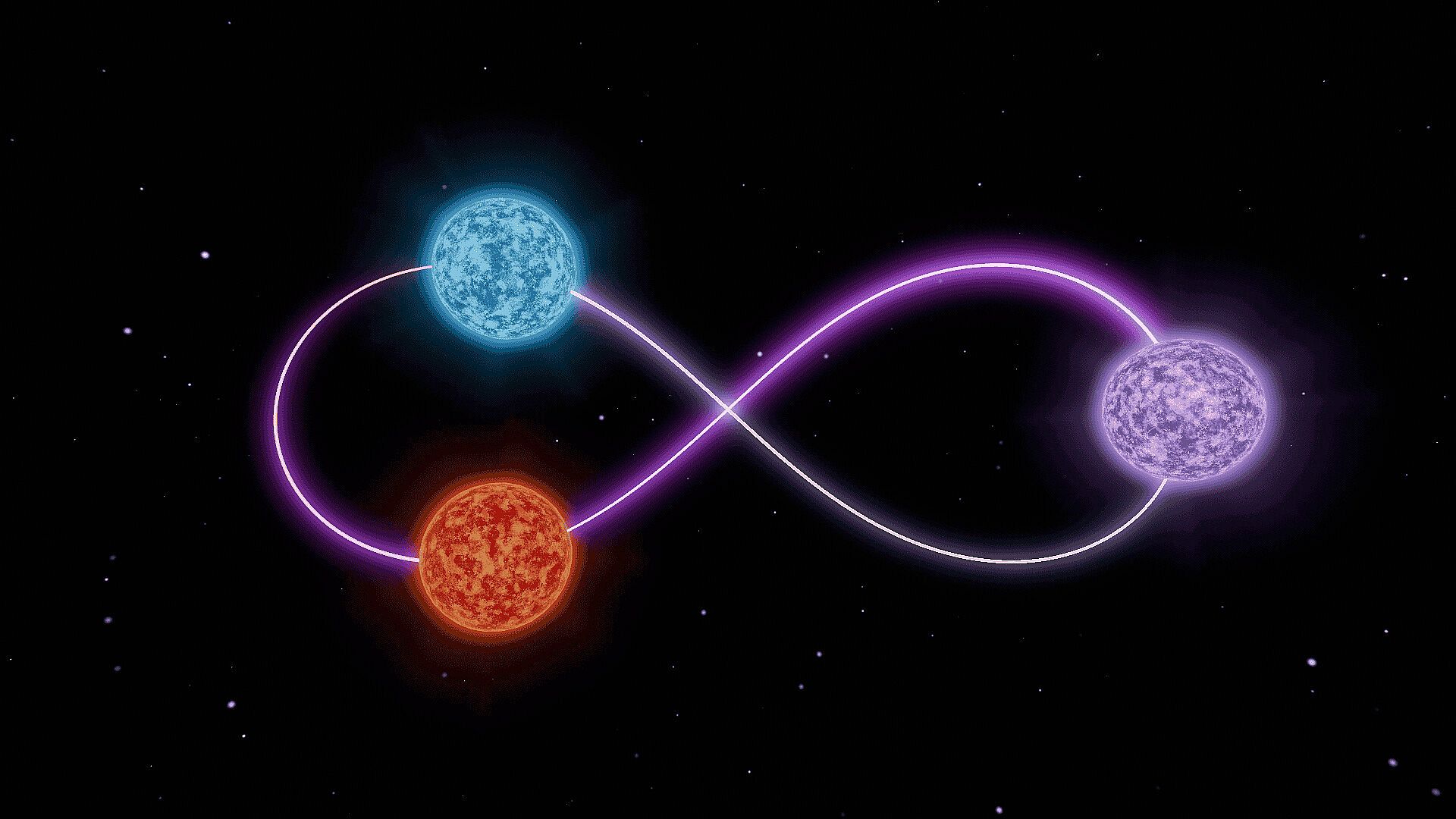
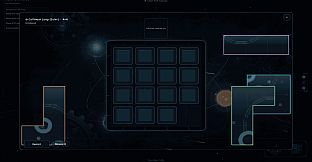
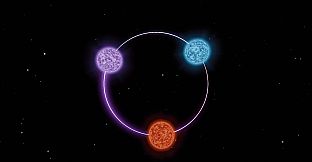
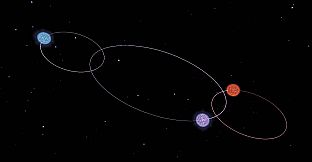
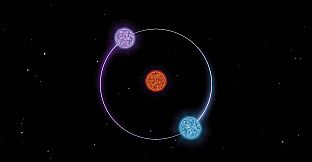
The game includes a set of named stable orbits, such as Collinear Loop, Equilateral Dance, Figure-Eight Chase, and Broucke A1. They're locked in the research archive, and some have been turned into puzzles—finish one to unlock the orbit.
You can also try your own
Those orbits are only a starting point. In Free Exploration, you can ignore them completely: put the three stars anywhere, give them any velocity, and try again and again. No goals, no hints, no right answer. Most attempts fall apart; now and then, you'll see an orbit that isn't in the catalog.
These orbits aren't made up
The classic solutions of Euler and Lagrange, Figure-8, the numerical solutions of Broucke and Hénon, the three classes of orbits from Šuvakov and Dmitrašinović—the catalog records the author, year, and source for each one.
No combat, no timers, no scores. The surfaces of the stars drift slowly, trails stretch along the orbits, and the occasional meteor crosses the sky. You can watch for as long as you like, or start over whenever you want.
For people who like physics, astronomy, puzzles—or just watching three stars turn slowly.
SEPARATRIX means the dividing line: the line between stability and chaos.












