



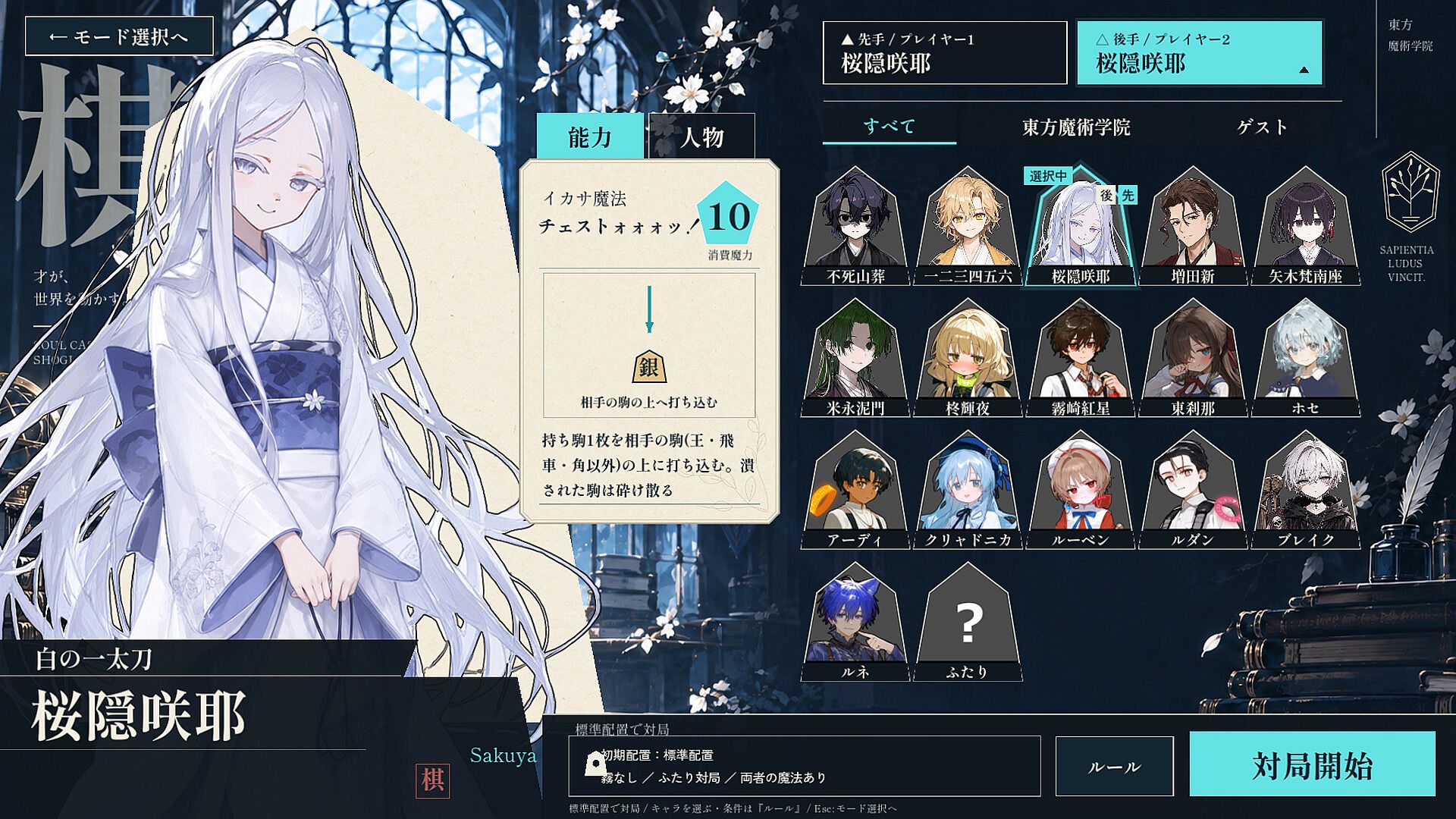
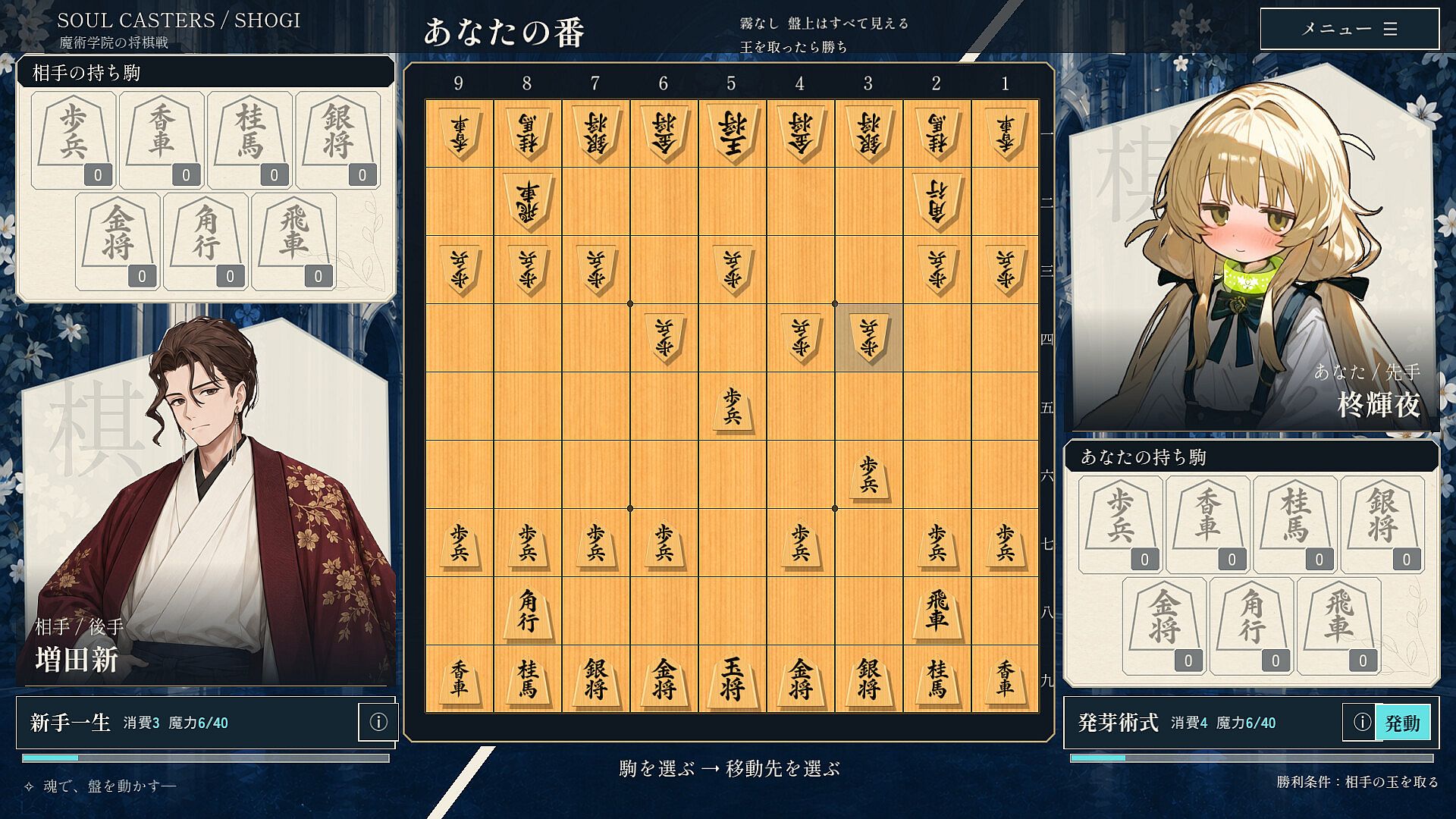
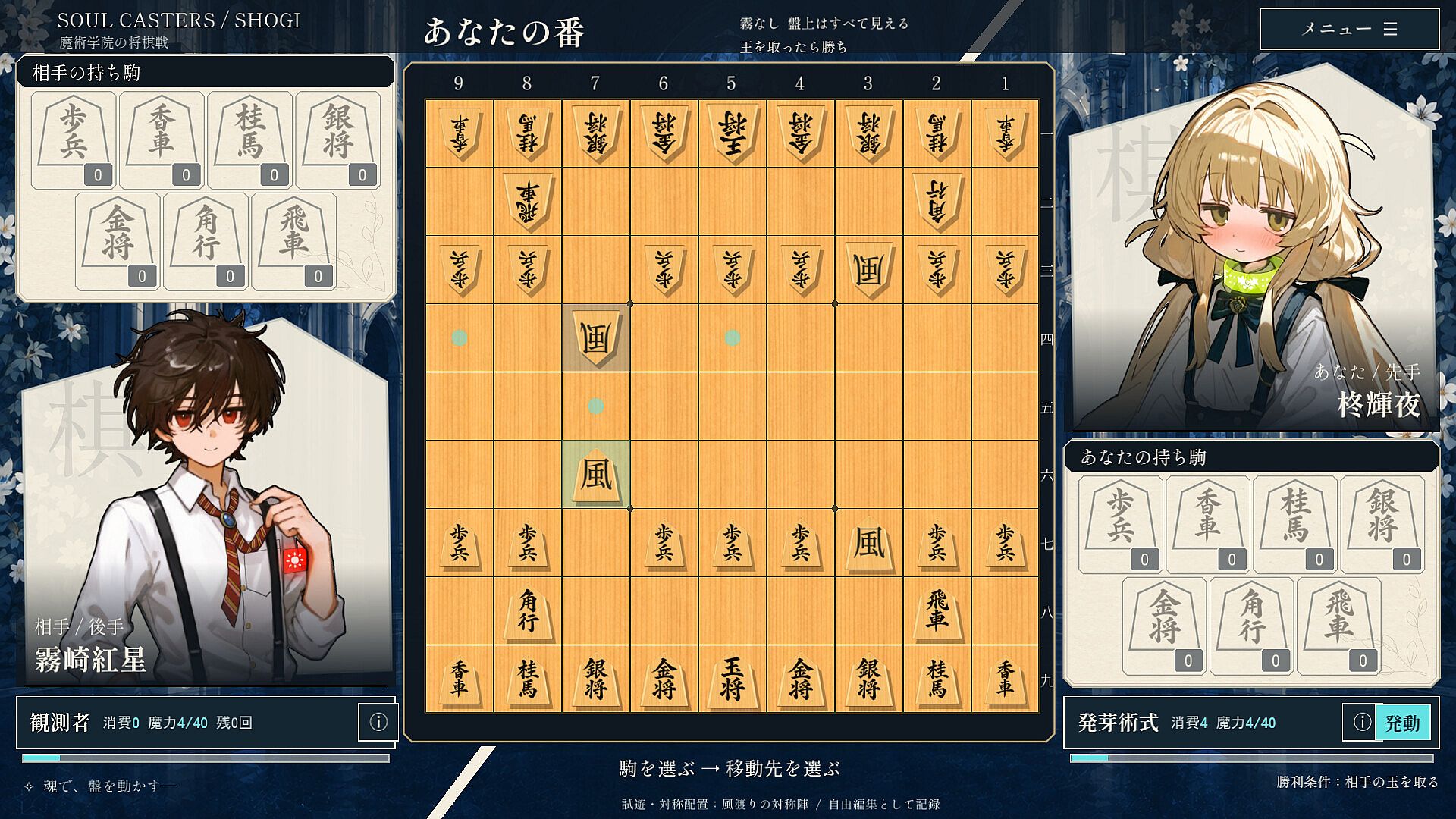


Shogi: Magic & Mischief is a turn-based strategy game that merges the core rules of shogi, or Japanese chess, with layers of hidden information and spell-based disruptions. Players face off on a board where standard movement meets unexpected twists, such as pieces that promote without advancing or opponents who execute extra actions through limited mana resources. The result is a cerebral contest that rewards careful reading of visible positions while accounting for concealed threats and rule alterations.
Gameplay
The central loop revolves around anticipating both standard shogi tactics and the added tricks that define each match. A pawn might promote in place, two allied pieces could exchange locations, or a player might complete two moves in one turn. These effects draw from character spell sets that consume mana, forcing decisions about when to hold back resources or commit them to disrupt an opponent. In matches that enable magic, the objective shifts to capturing the enemy king rather than the traditional checkmate condition.
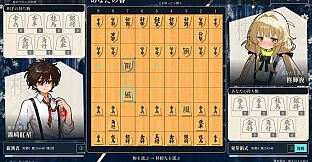
Fog conceals portions of the board, leaving players to deduce enemy locations and intentions from partial information. Careful probing or bold risks become necessary, as a single hidden square can alter the entire evaluation of a position. Toggle options let participants adjust the presence of fog and magic to suit their preferred balance of information and chaos.
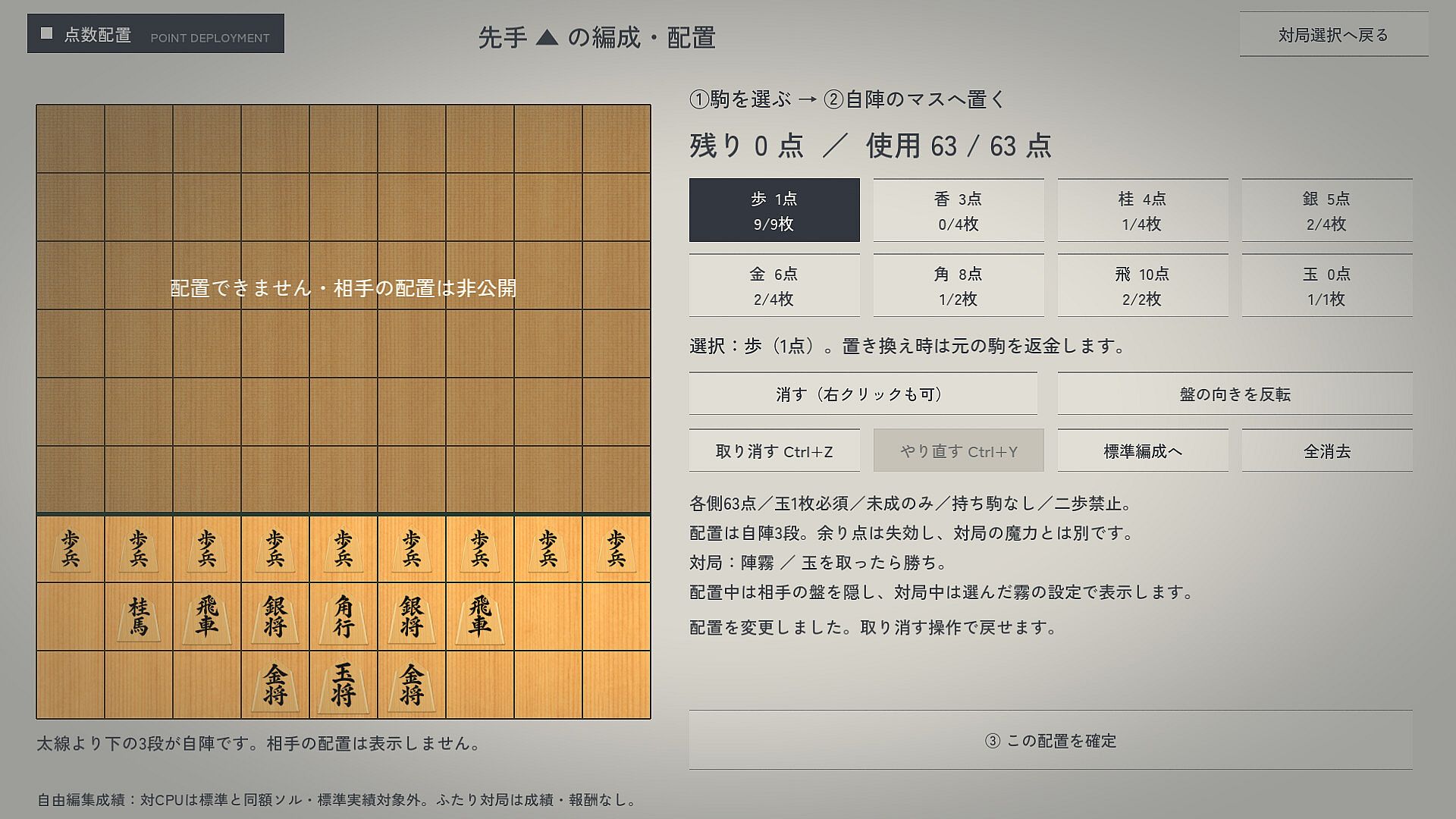
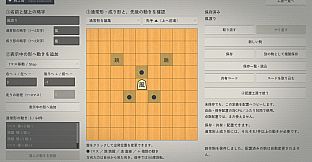
Preparation begins before any piece moves. Point-budget setup allows selection of pieces within a fixed allowance, then placement within a deployment zone. This system supports either concentrating resources on high-value units or spreading them across more pieces for greater board control. Custom arrangements further expand options through an editor that supports symmetrical layouts via 180-degree rotation.
Game Modes
Local play pits a player against CPU opponents or a second person on the same machine. When fog is active in these sessions, participants must avert their eyes during the opposing turn to preserve hidden information. Magic and fog settings remain adjustable per game, creating varied experiences from straightforward shogi to heavily altered contests.
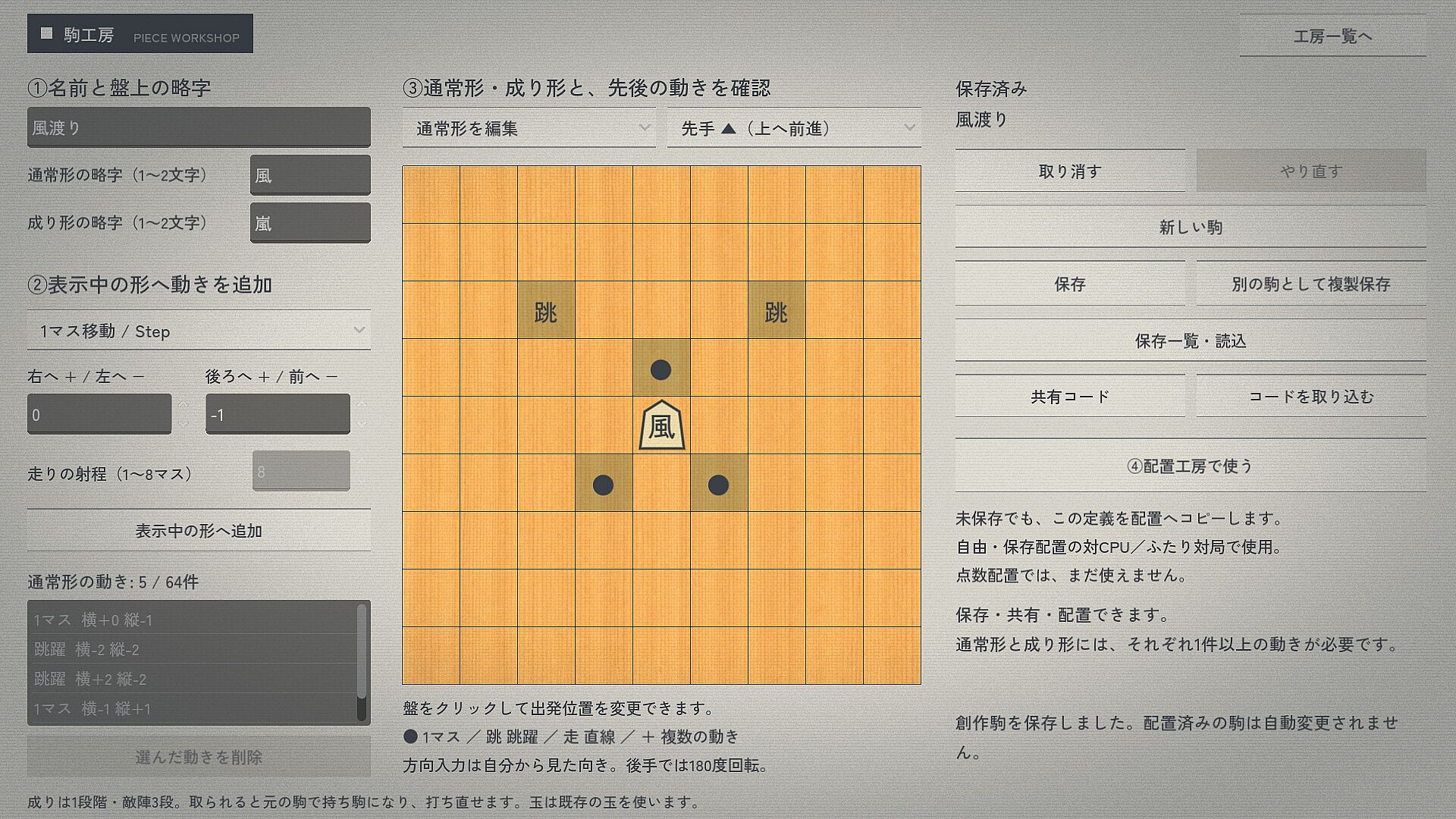
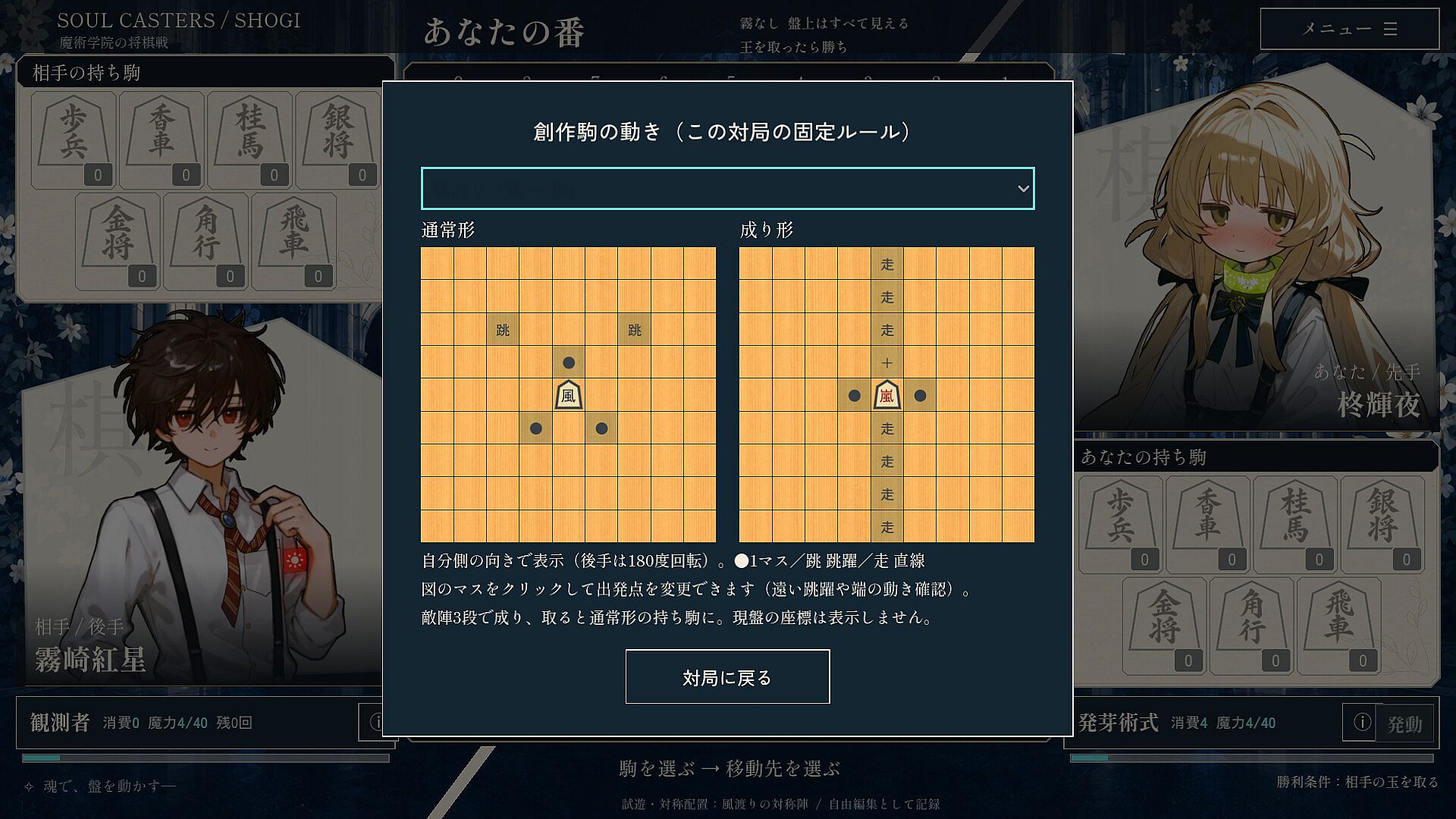
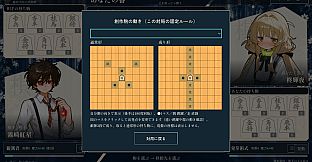
Point-budget setups form a core mode that emphasizes army composition and formation planning. The setup editor extends this by permitting saved and shared configurations through share codes, while the piece workshop lets users define movement patterns from steps, leaps, and slides, along with corresponding promoted forms. These custom elements integrate into matches that support point-budget rules.
Planned additions include online multiplayer and expanded character systems for equipping and combining spell sets. A free demo is scheduled to feature fog shogi, point-budget setups, and player-versus-player options, though it remains unavailable at present. The full release aims to incorporate free-form setups, custom pieces, and character creation with spell loadouts.
Customization and Sharing
Players build personal arsenals through the piece workshop by mixing movement types and assigning promoted versions. Completed pieces and full starting formations save for reuse or distribution via share codes. This framework encourages experimentation with army compositions that deviate from standard shogi rosters while remaining compatible with the underlying ruleset.
Symmetrical layout tools in the editor streamline creation of mirrored positions, reducing manual effort for balanced custom games. These features integrate directly with point-budget matches, allowing creators to test and refine ideas before challenging opponents.
Is It Worth Playing?
Shogi: Magic & Mischief targets enthusiasts of shogi who seek controlled variations on its classic structure. The combination of fog concealment, mana-limited spells, and pre-game army building adds strategic depth without abandoning the game's positional fundamentals. Local multiplayer supports both solo practice against the CPU and shared sessions, though fog-enabled games require physical separation of views between turns.
The game remains in development with a release date listed as coming soon. No user reviews or performance data exist yet, and the planned demo has not launched. Those drawn to customizable strategy experiences or shogi variants with hidden-information elements may find the described systems appealing once available. Interest in point-budget army design and custom piece creation provides additional reasons to follow its progress.