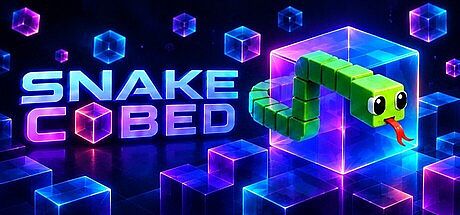


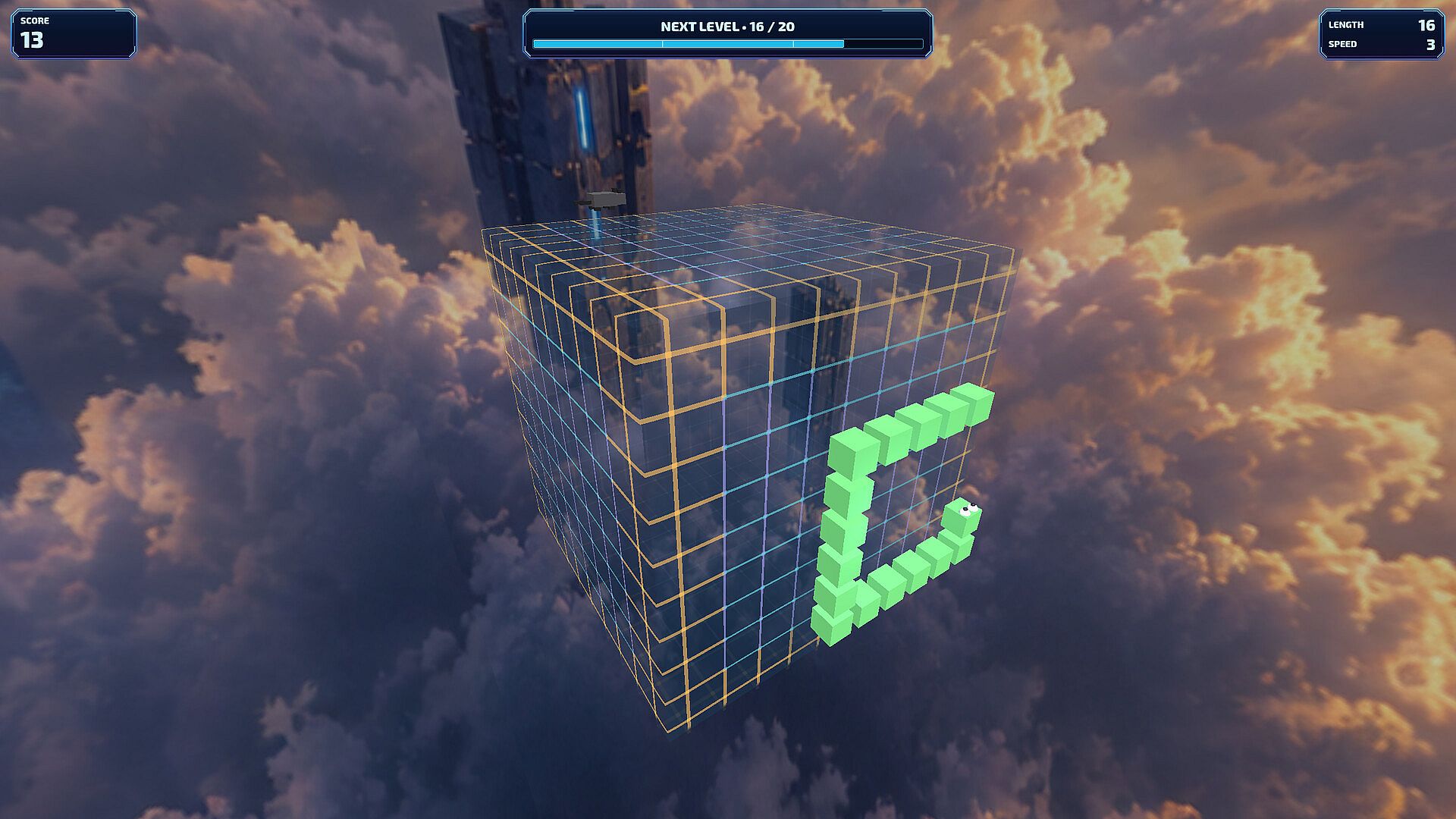
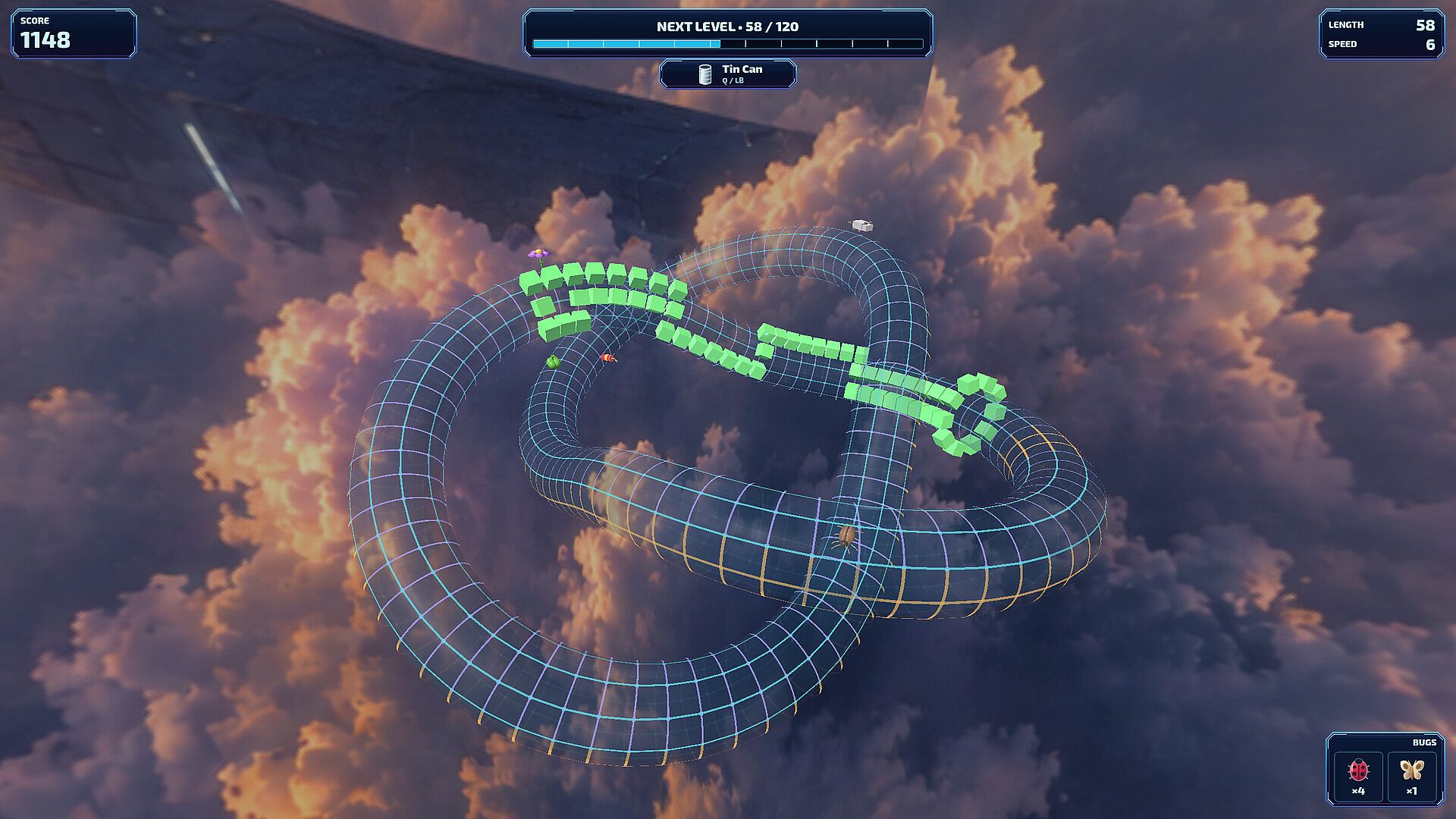
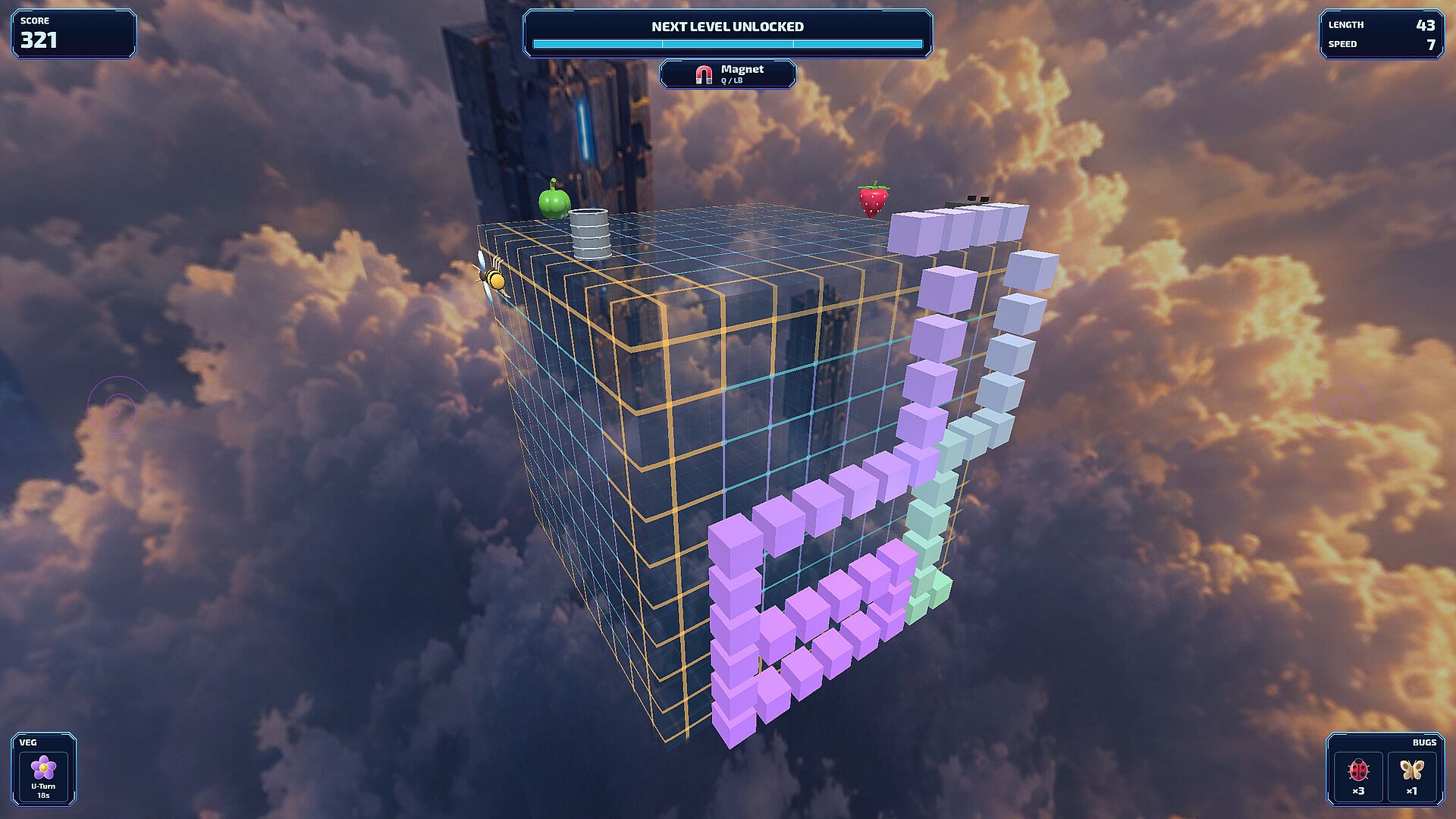
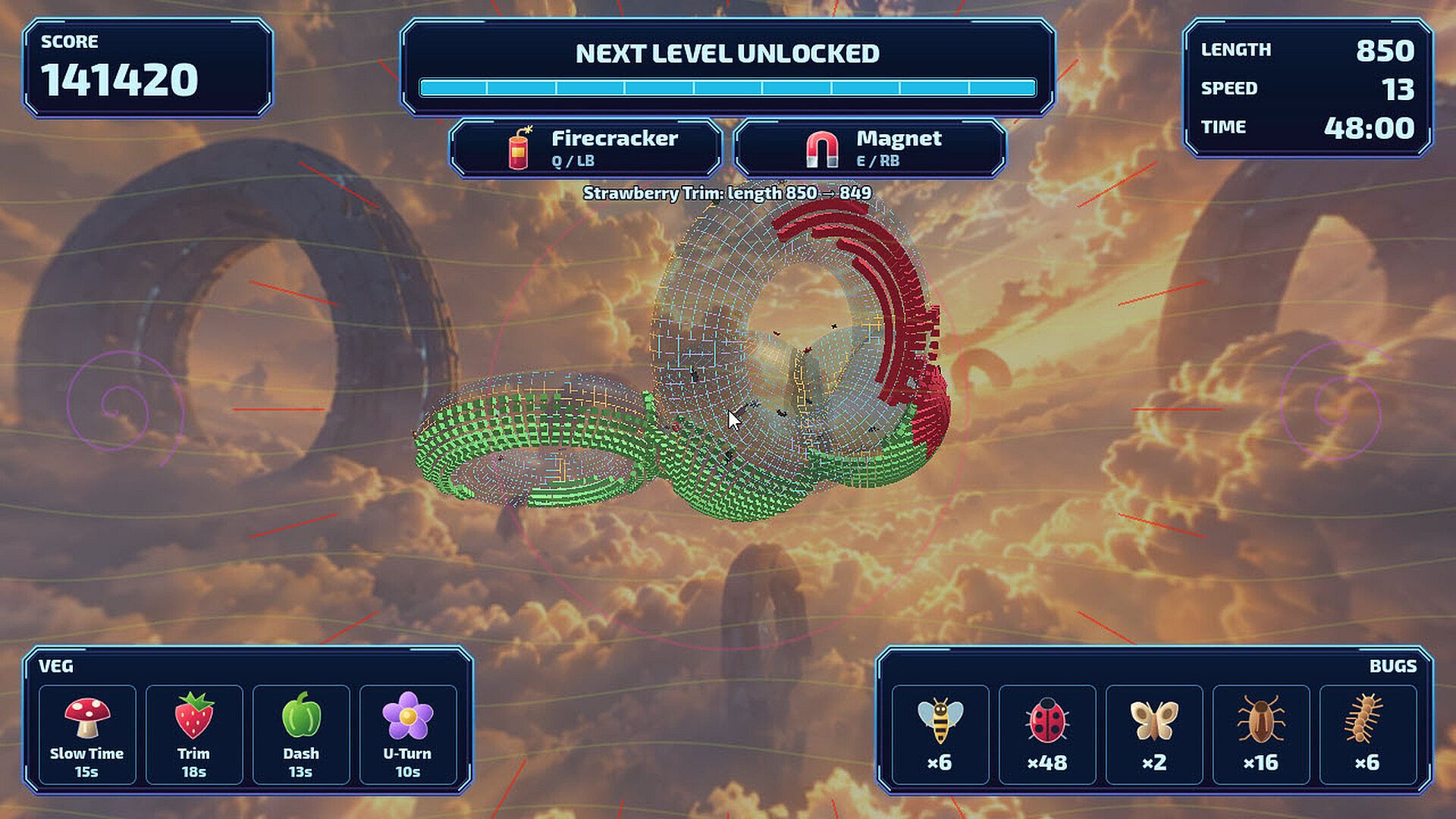
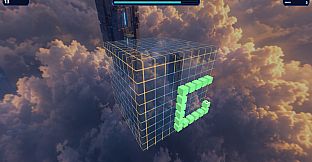
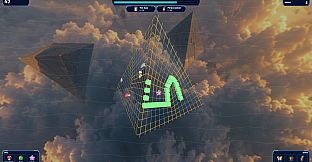
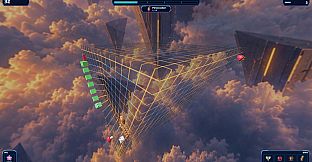
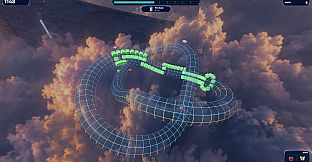
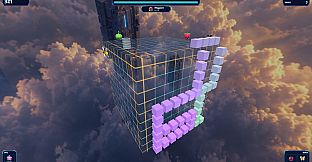
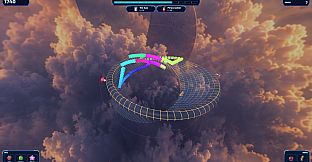
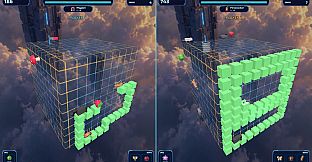
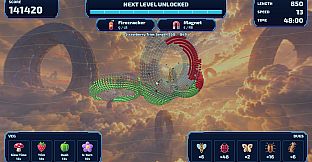
Snake Cubed is an action, indie, and casual game for PC that reimagines the classic Snake formula on three-dimensional surfaces. The core experience begins with a single cube and expands across a growing collection of geometric forms, turning straightforward grid movement into a test of spatial awareness and adaptive strategy.
Gameplay
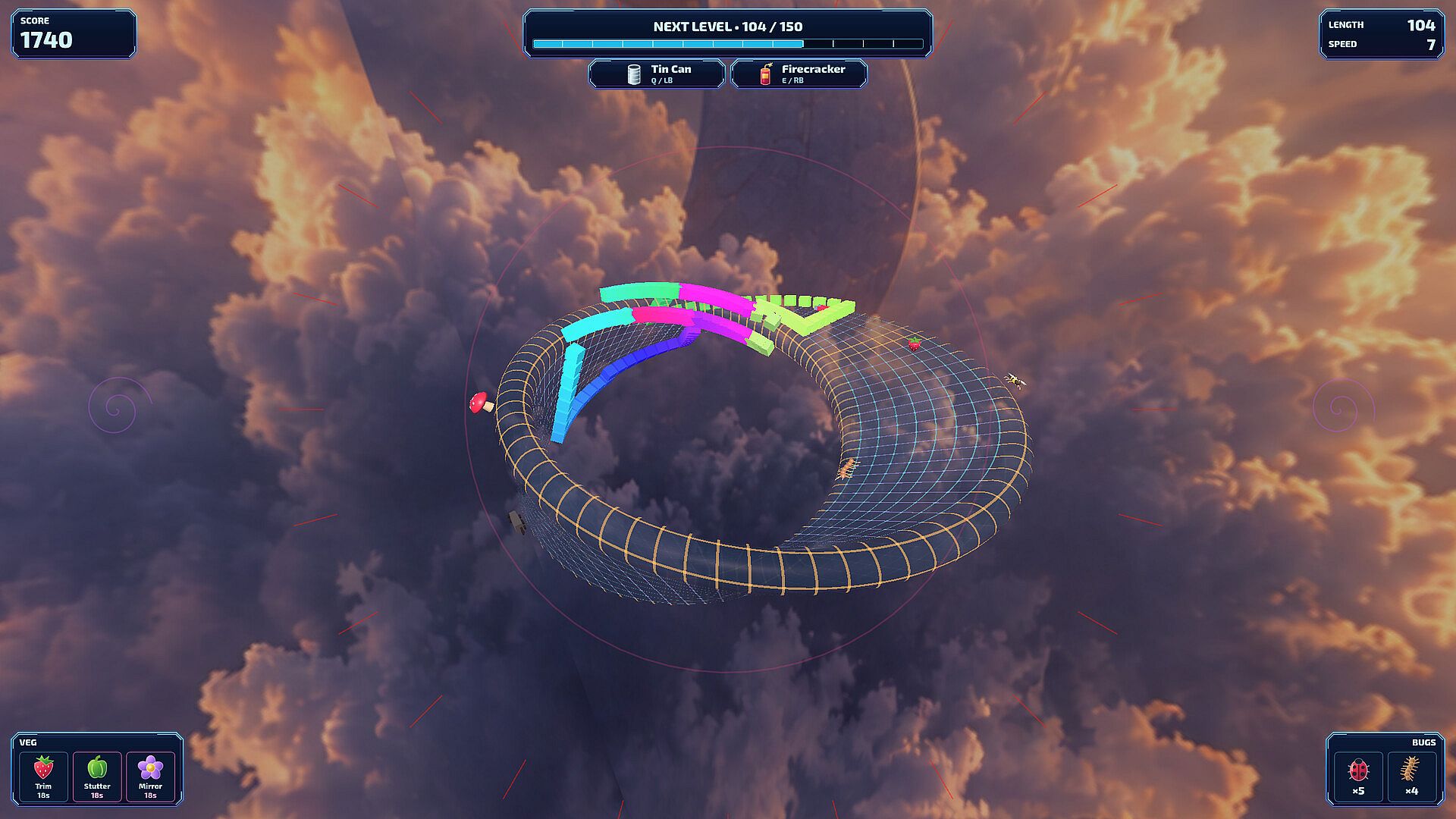
The game centers on navigating a snake across visible grid lines that cover every surface. Players start on a basic cube and progress to spheres, pyramids, prisms, polyhedra, curved tubes, waves, a saddle, a blob, a helical tube, and a Möbius strip. Each new shape introduces fresh navigation challenges while the grid keeps controls clear even as geometry twists and folds.
Unlocked shapes attach dynamically to the existing structure during a run, creating larger, interconnected environments. A session can begin on a single cube and evolve into a complex assembly of multiple forms in varying sizes and orientations. The snake eats rats to grow longer, and the objective remains avoiding collisions with its own body while the world expands around it.
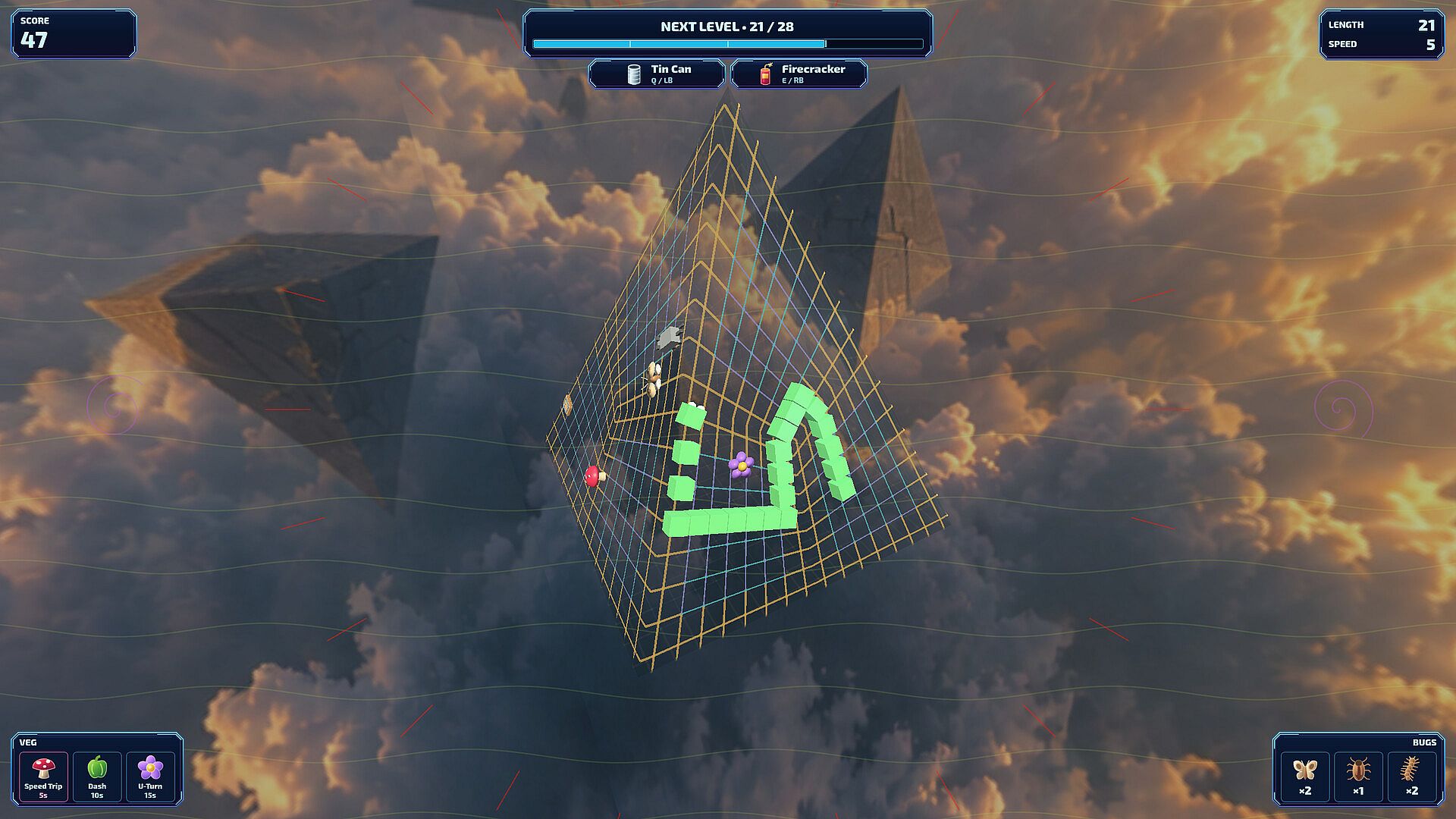
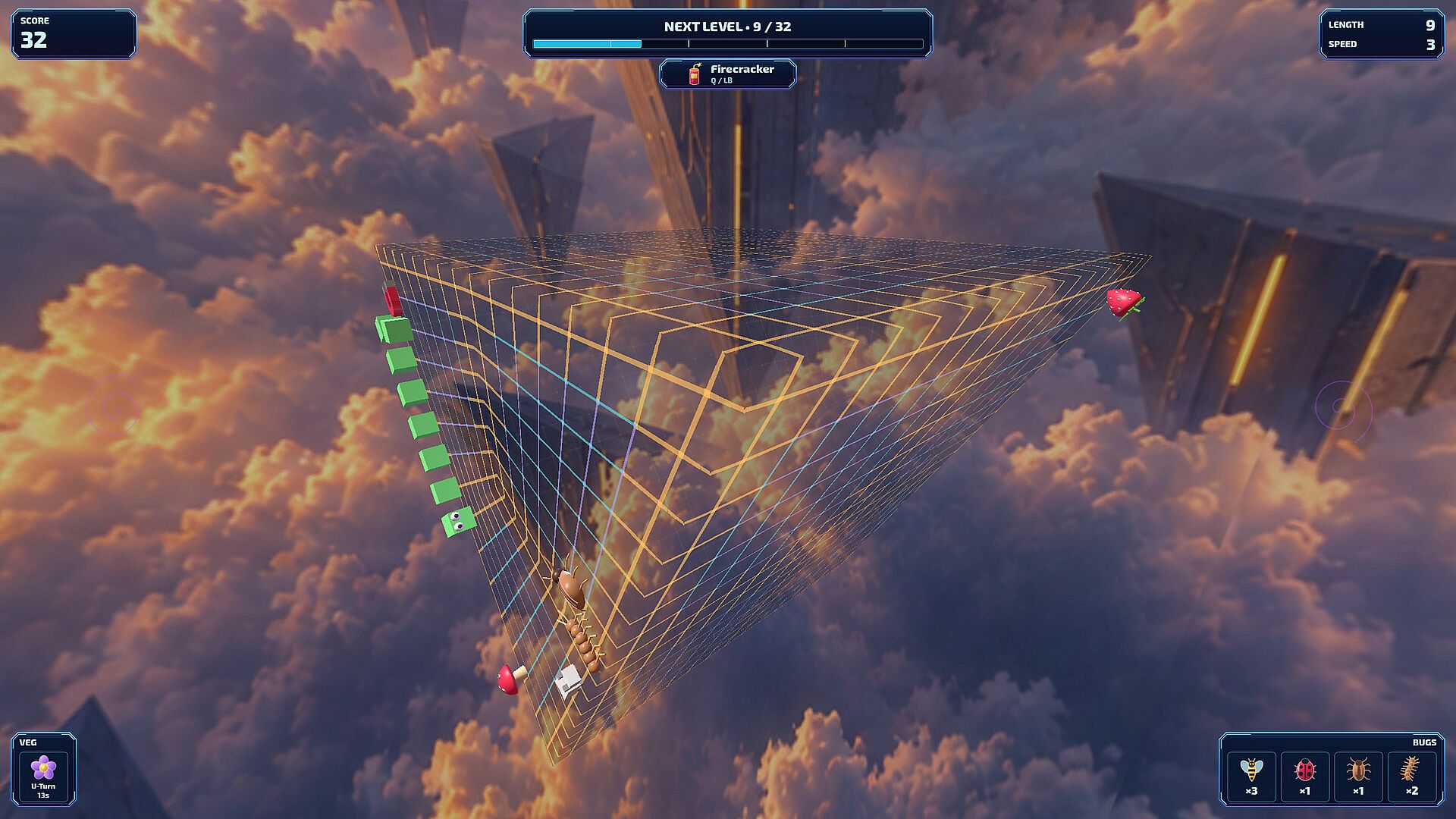
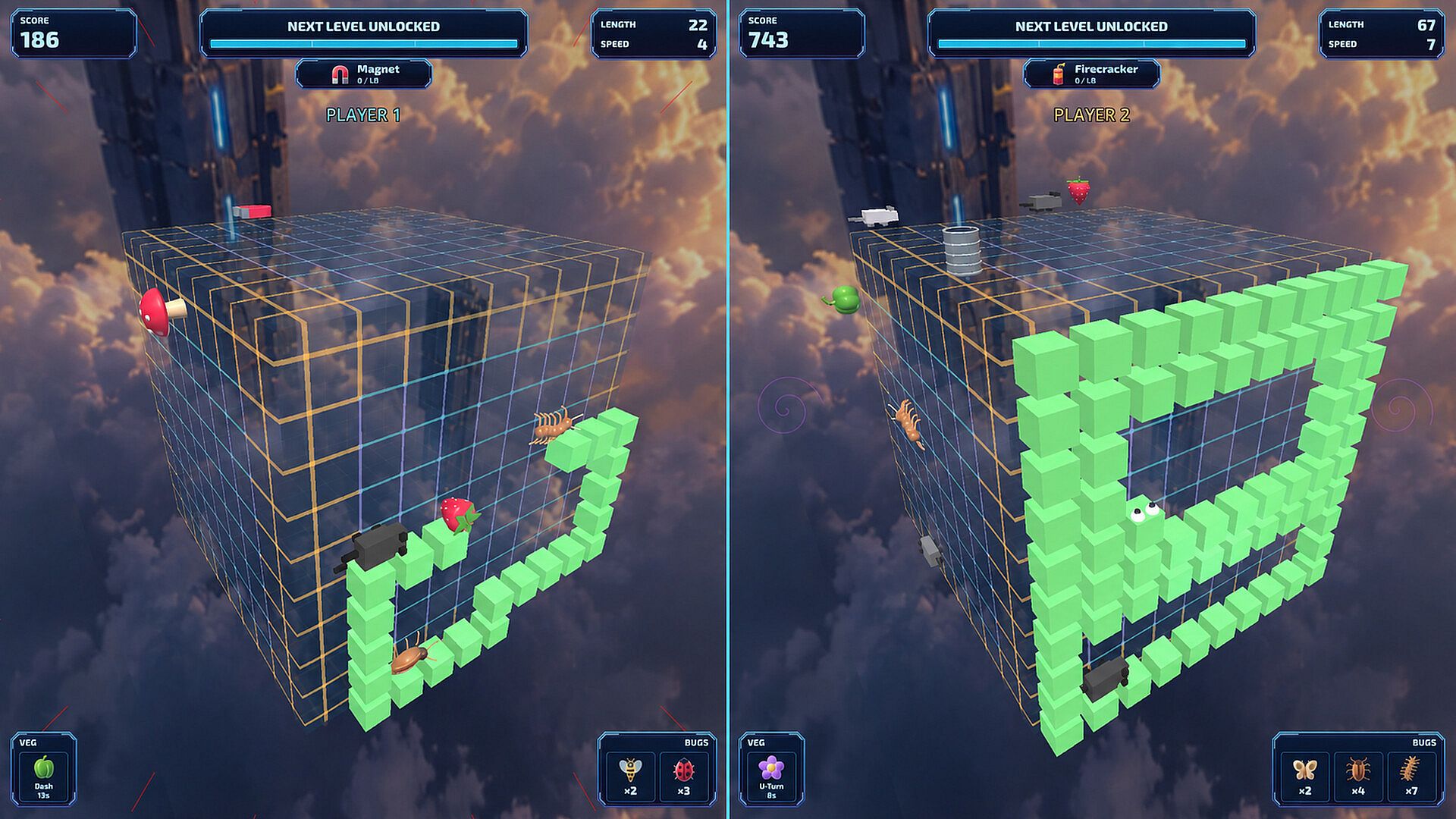
Permanent, stackable powers called bugs add roguelike depth. Wasp expands the areas where the snake can eat. Ladybug multiplies the score. Moth gradually weakens and eventually removes self-collision. Cockroach increases the number of rats on the level. Centipede allows chaining one meal into another. These effects persist for the entire run and combine in different ways.
Vegetation scattered through the levels triggers temporary mutations. Mushrooms change speed, strawberries alter length, peppers adjust movement timing, and flowers shift direction. The player sees which segment of the snake will be affected but cannot predict whether the outcome will be beneficial. Garbage items function as limited-use tools instead of automatic pickups. Up to two tools can be carried at once, offering options such as trapping rats, attracting them, blasting clusters, or cutting permanent tunnels through shapes.
Game Modes
Snake Cubed focuses on single-player runs that emphasize survival and adaptation across procedural structures. Each attempt starts simply and grows more intricate as shapes connect and stack. The emphasis lies on managing growth, selecting when to use tools, and stacking bug effects to handle increasingly tangled geometry. No separate named modes appear in the available details, so the experience revolves around repeated runs that test how far a player can push the systems before a collision ends the session.
Core Systems and Progression
Every mechanic stays simple on its own yet gains complexity when combined. The visible navigation grid prevents confusion even on curved or inverted surfaces. Procedural attachment of shapes keeps each run distinct, while the bug powers and vegetation mutations encourage different approaches on subsequent attempts. Garbage tools add a layer of resource management, forcing decisions about when to deploy limited abilities versus saving them for critical moments.
The loop of eating, growing, and navigating remains familiar, but the 3D surfaces and layered systems transform it into something closer to a geometric roguelike. Players must constantly adjust to new orientations, anticipate how mutations will interact with the current snake length, and decide whether to risk a tool or rely on existing bug effects.
Is It Worth Playing?
Snake Cubed appeals to players who enjoy the precision of classic Snake combined with roguelike elements of permanent upgrades and procedural variation. The expanding set of surfaces and the way bugs, mutations, and tools interact create depth without overwhelming complexity. Those who appreciate short, replayable sessions that reward experimentation with different power combinations will find the systems engaging. The game suits casual playthroughs as well as longer attempts to master the geometry and stacking mechanics. Availability on PC makes it accessible for keyboard or controller input, and the focus on single-player runs keeps the experience self-contained.