




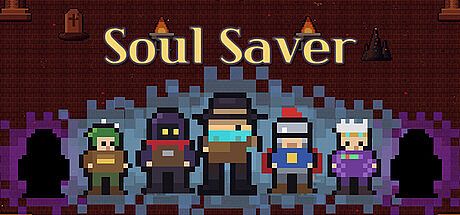




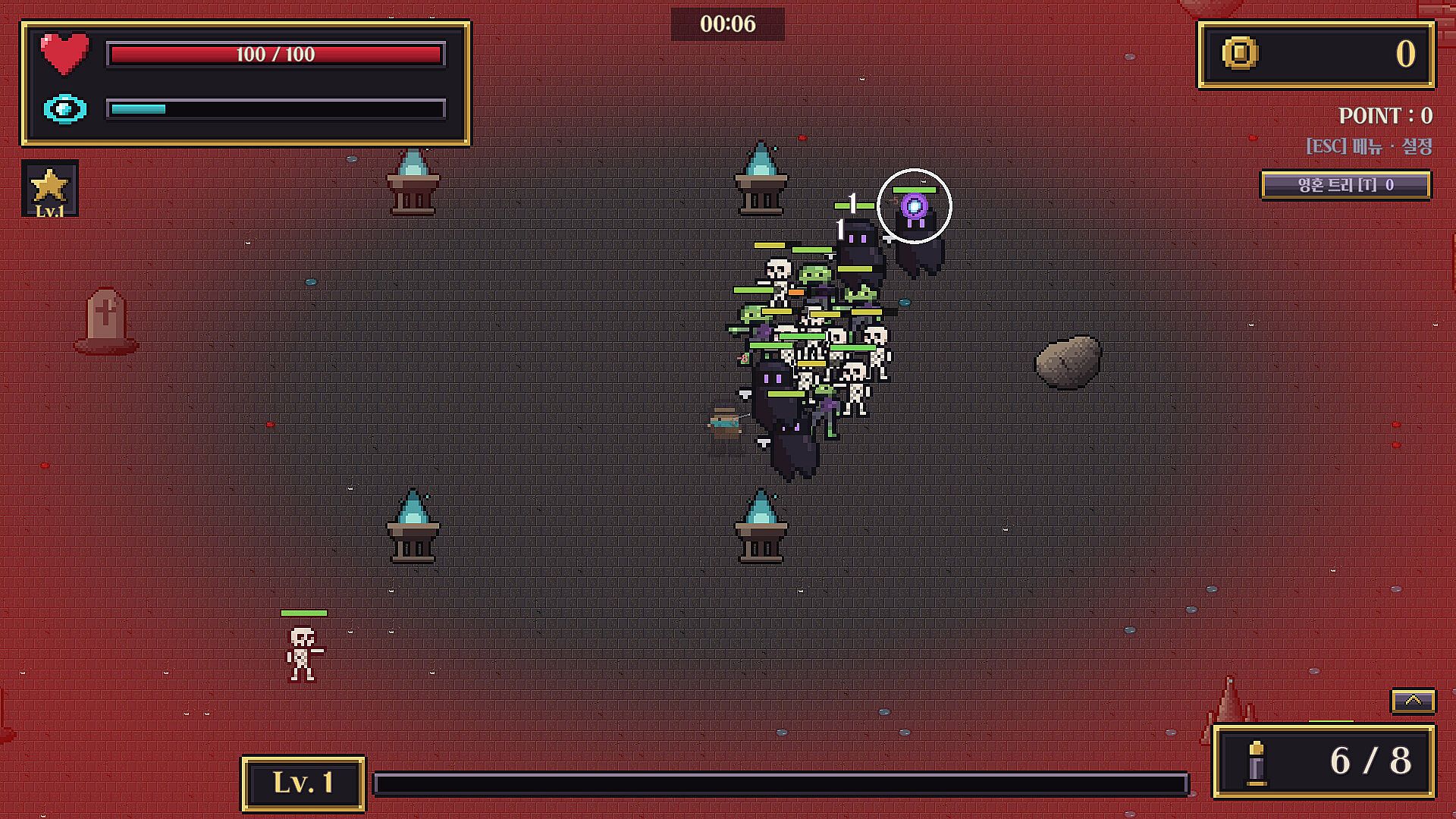

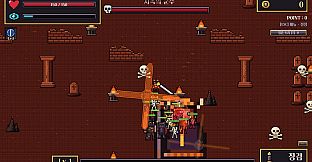
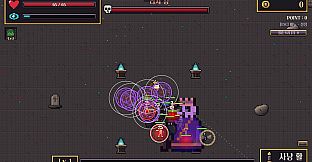
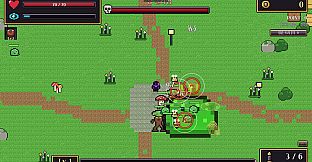
Soul Saver is an action indie game for PC that blends roguelike runs with hero-specific progression and weapon transformations. Players select from a roster of distinct heroes to descend into catacombs overrun by the undead after the Lich King awakens them. Each run focuses on defeating enemies, collecting soul shards, and pushing through stages until a boss appears.
Gameplay
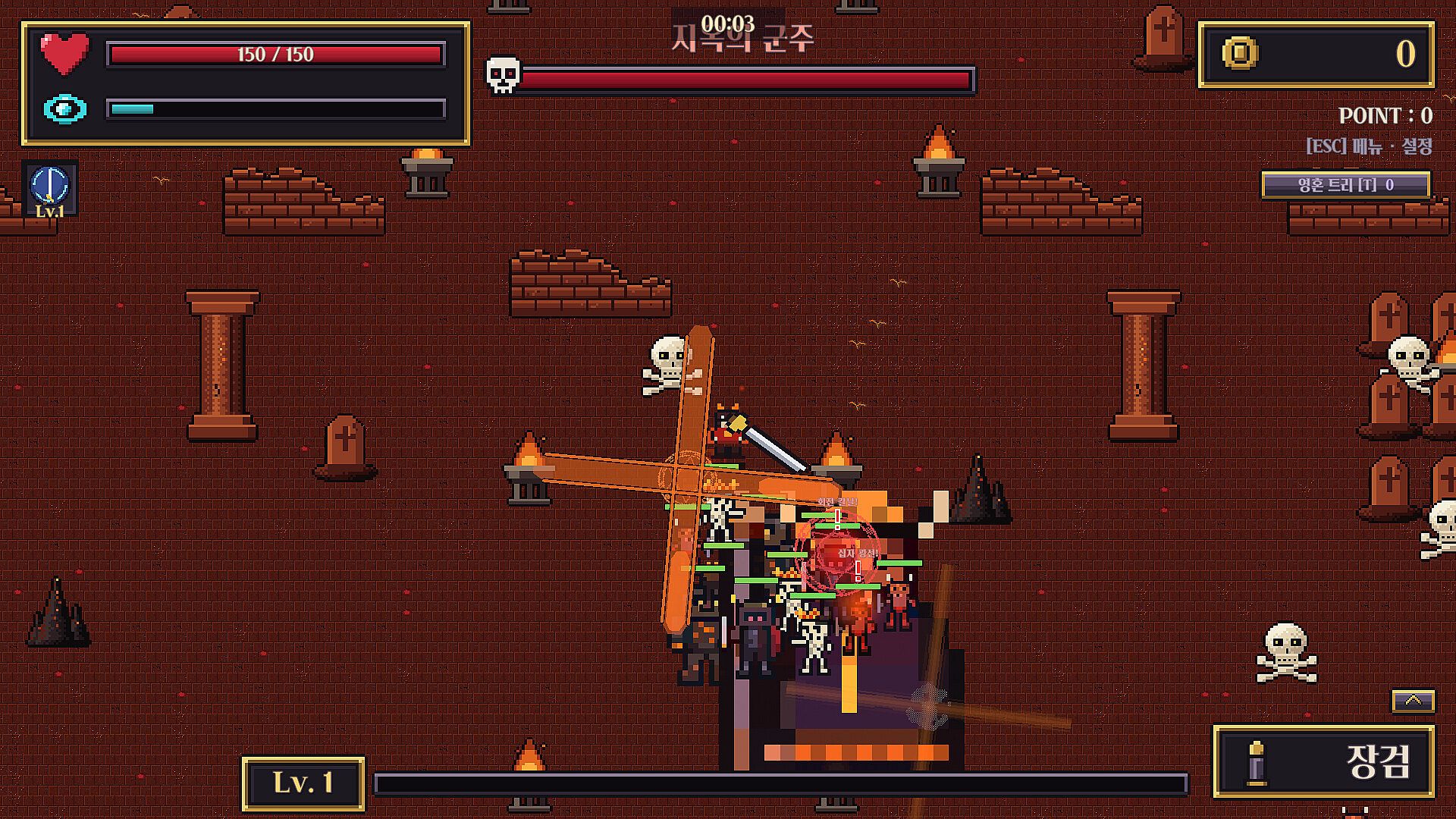
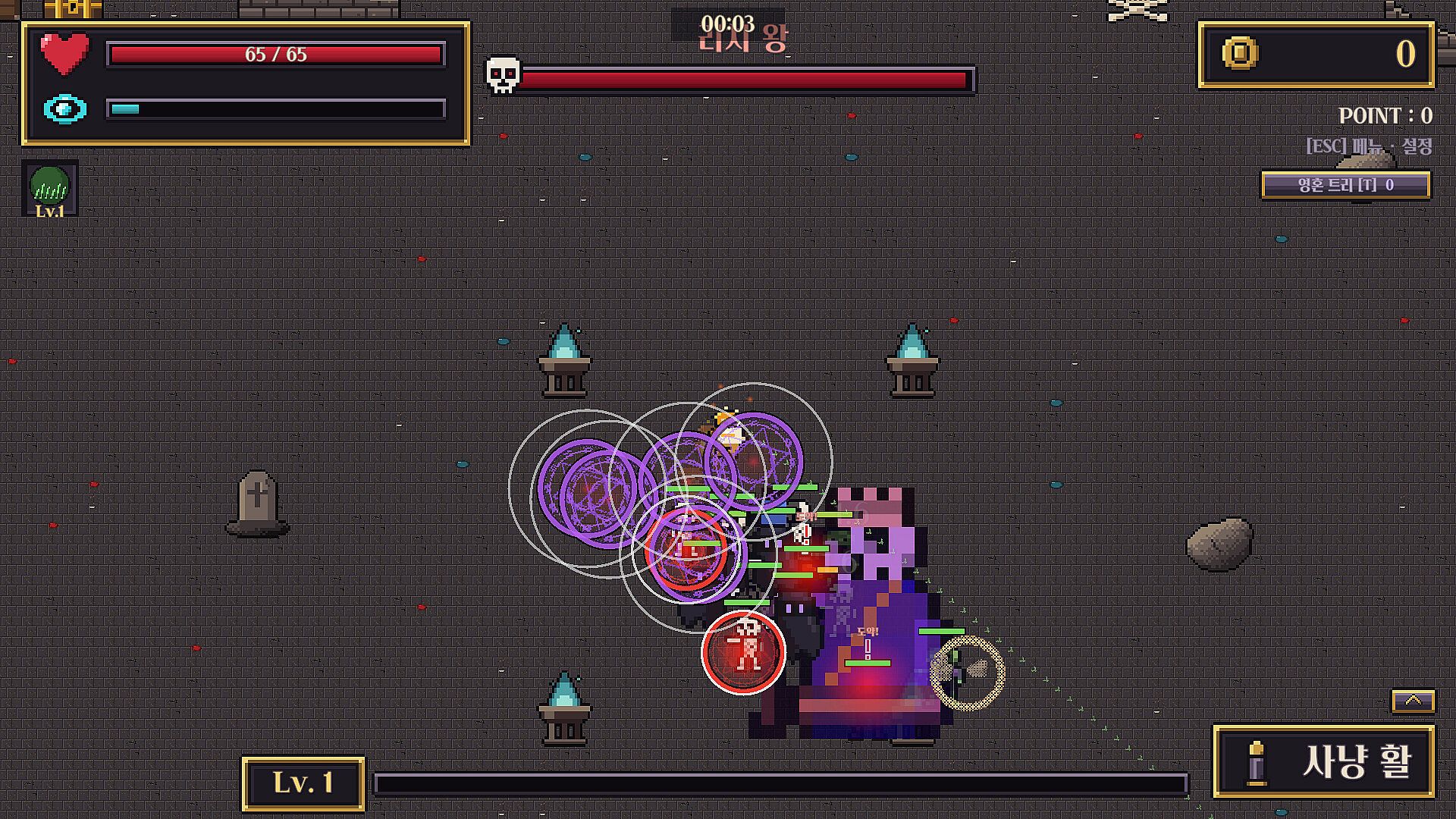
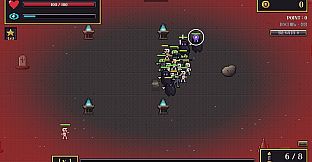
The core loop centers on controlling one hero at a time through side-scrolling stages filled with enemies. A 10-slot codex tracks available heroes, starting with three and unlocking others through points earned by defeating foes. Heroes include the Gunner with a revolver and time-slowing ultimate, the Swordsman swinging a longsword and building a growing spin slash, the Rogue hurling nonstop throwing stars alongside an invincible Bleeding Dash, the Archer charging arrows that strengthen over time before unleashing an arrow rain, and the Alchemist tossing exploding flasks with a holdable mega blast. Secret heroes remain hidden behind silhouettes until unlocked. Each hero carries unique opening and ending story segments.
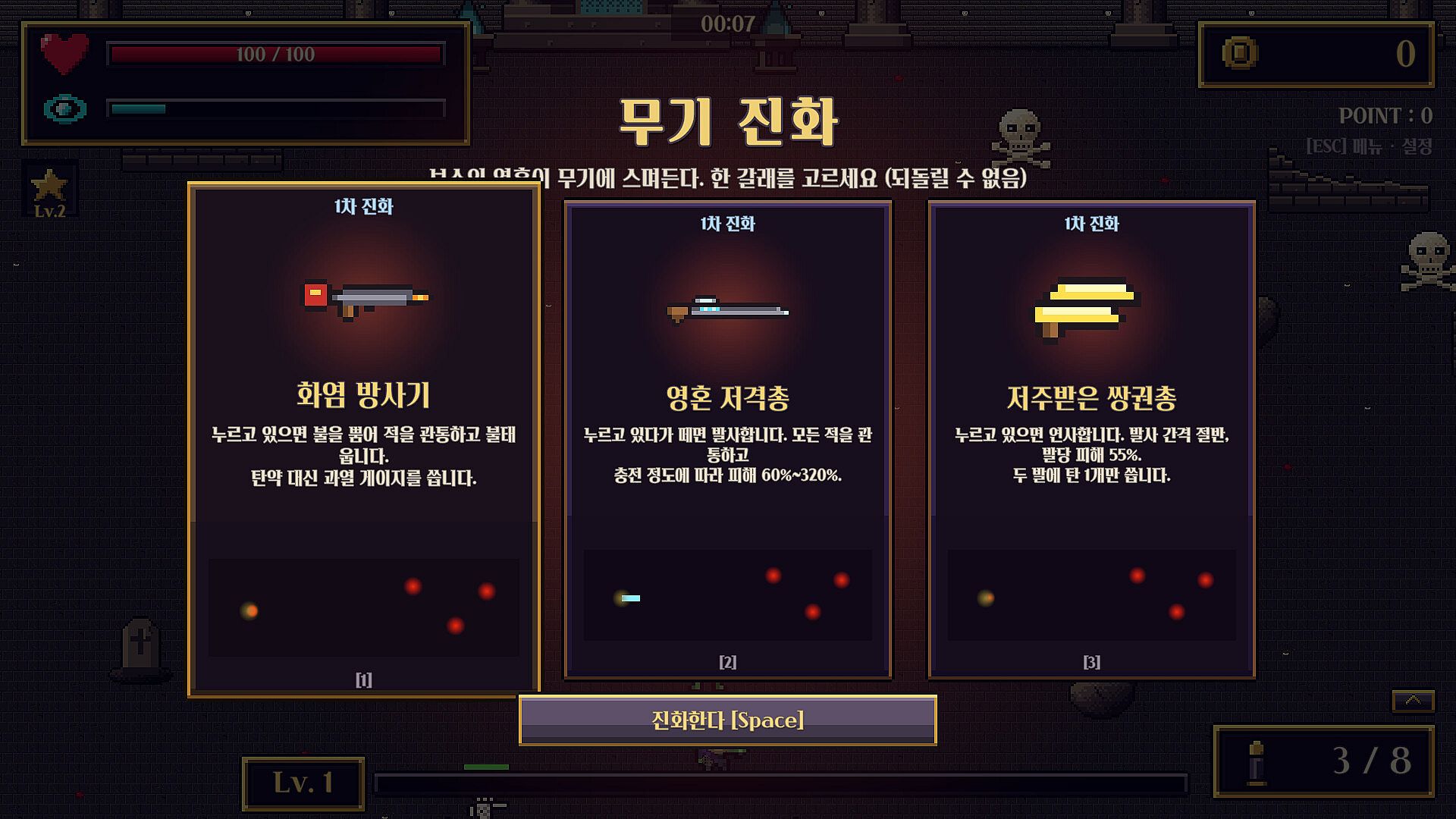
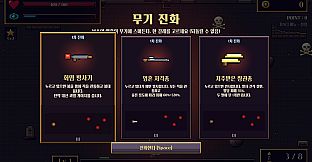
Weapon evolution forms a key mechanic. Defeating a stage boss shatters the current weapon and presents three evolution cards to choose from. This change happens twice per run with no reversal. The Gunner might shift from pistol to flamethrower, soul sniper, or cursed dual pistols before reaching railgun, chain-lightning gun, or boomerang scythe forms. Other heroes see their basic attacks reshape into options like war hammer, lance, gambler's cards, javelin, or magnet bomb. Level-up cards and Soul Tree upgrades persist across the evolved weapon.
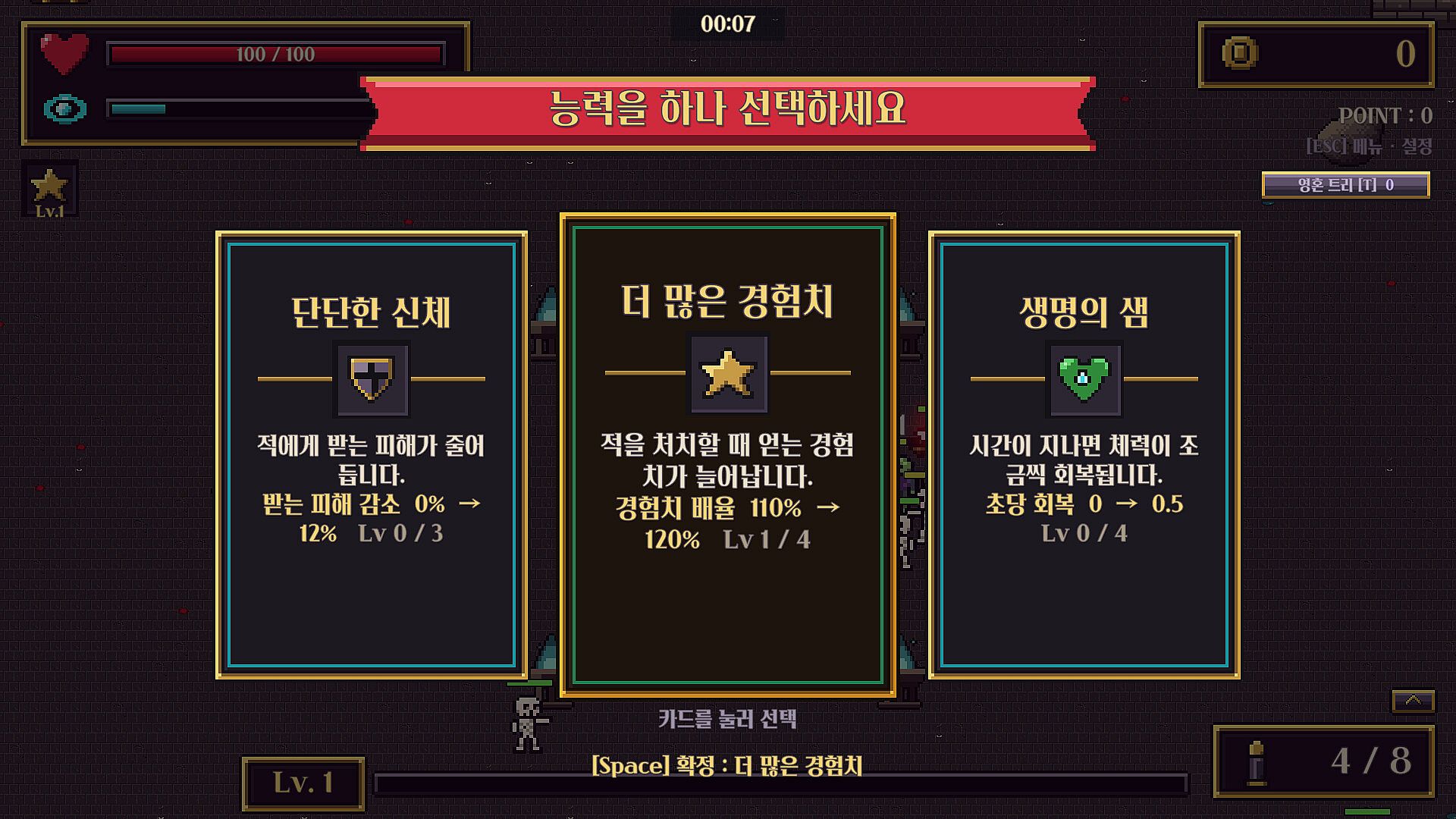
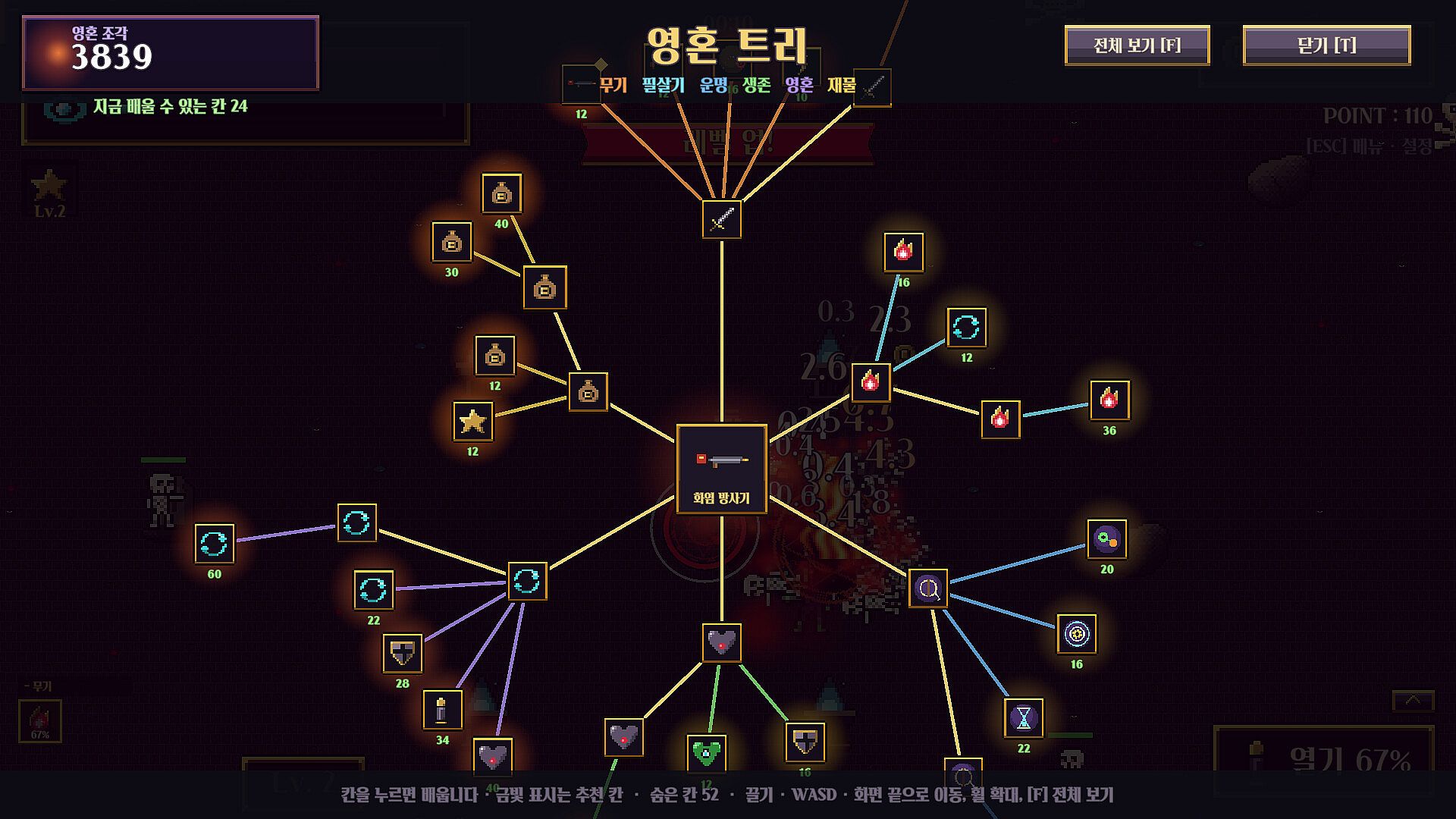
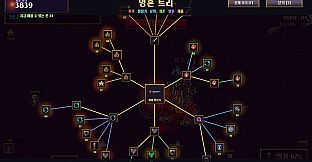
The Soul Tree offers over 100 nodes spread across six branches: Weapon, Ultimate, Fate, Survival, Soul, and Wealth. Each hero has a tailored tree with unique weapon nodes, passives, and evolutions. Hidden branches unlock progressively, and the Fate branch includes options such as rerolling level-up cards, Time Rift, Gravity Well, Curse Transfer, and Soul Echo. Nodes and cards incompatible with the current weapon do not appear. Enemy drops provide soul shards for spending on these upgrades, while flashy pixel effects, damage numbers, and stage-specific music enhance the visual and audio feedback.
Game Modes
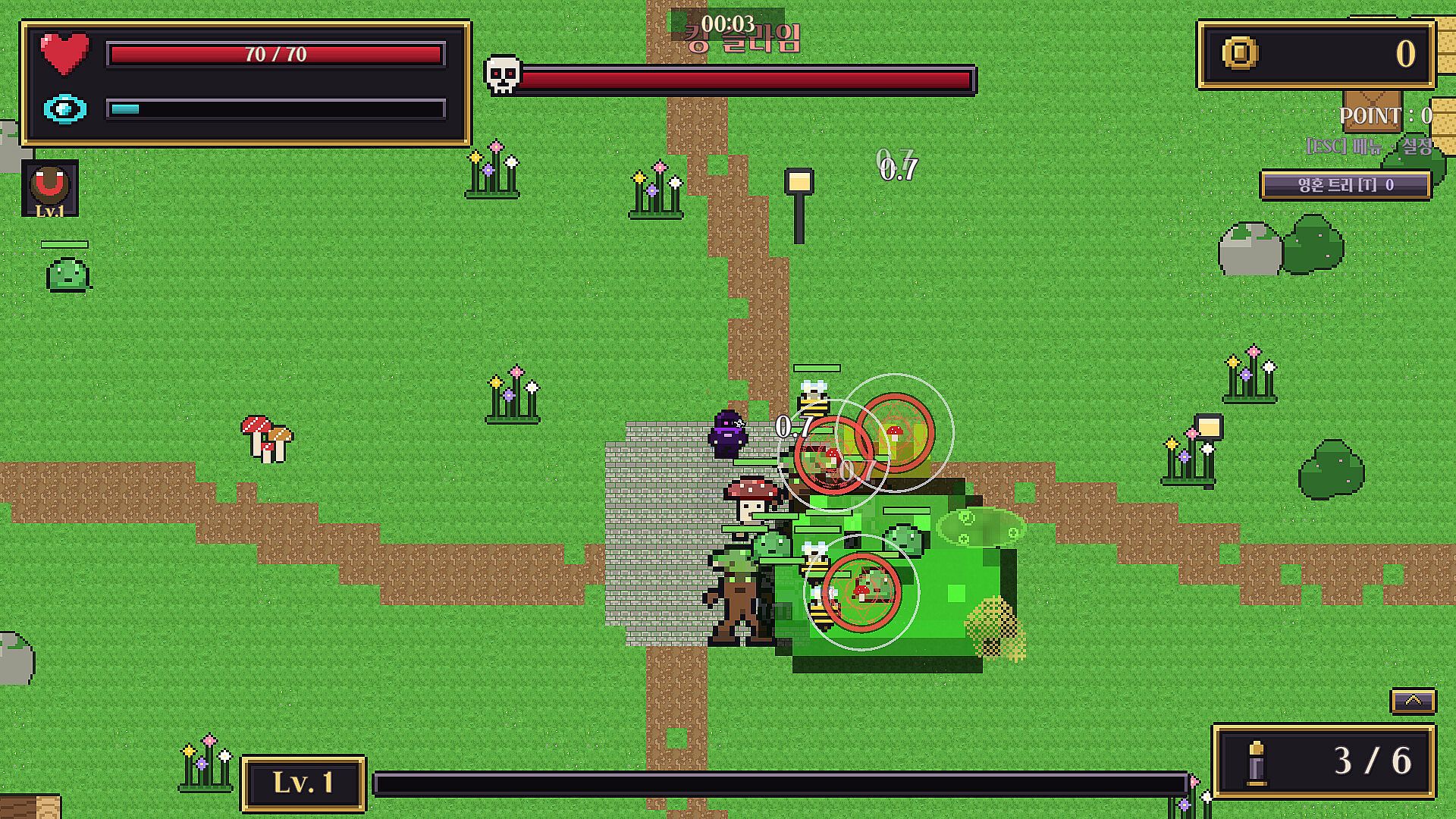
Three difficulty settings shape the experience: Easy, Normal, and Hard. Clearing Hard unlocks the Burning Desert Endless Mode, where waves of monsters and bosses continue indefinitely. The three main worlds each feature a distinct king as final challenge: the Lich King in the Catacombs, the Demon Lord in the Burning Hell, and the King Slime in the Meadow. Boss encounters include cinematic entrances, voiced lines, and altered patterns at low health.
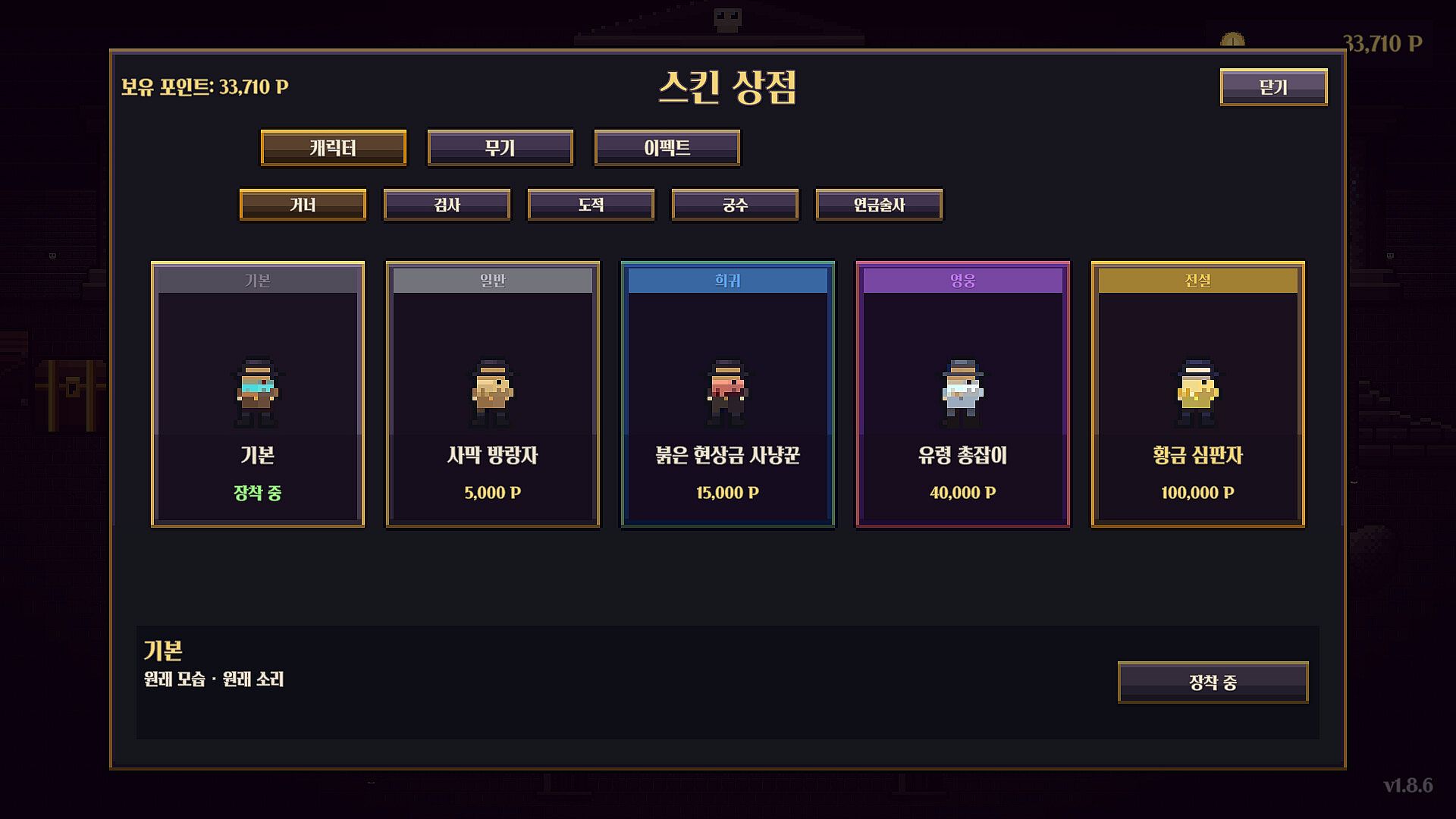
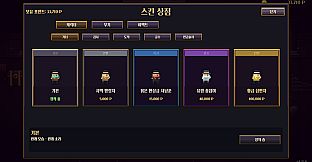
Additional systems support repeated runs without altering core combat. A codex catalogs enemies, bosses, weapons, Fate cards, and evolutions. Points earned can be spent in a skin shop on 20 character skins, 10 weapon skins, and 4 effect skins that add ornaments, motion trails, auras, kill effects, and unique sounds while leaving hitboxes unchanged. Thirty-two Steam achievements track progress across these elements.
Progression and Heroes
Hero selection and weapon evolution encourage experimentation across multiple runs. The three starting heroes provide immediate variety, while point-based unlocks expand options over time. Secret heroes add further discovery. Every hero maintains personal story beats that bookend each attempt, tying narrative threads to mechanical choices. The carryover of Soul Tree upgrades and level-up cards into evolved weapons creates layered buildcrafting that rewards adapting to new attack patterns.
Is It Worth Playing?
Soul Saver suits players who enjoy single-player action roguelikes with strong emphasis on hero variety, weapon transformation, and incremental upgrade systems. The combination of distinct right-click skills, boss-driven evolutions, and a deep per-hero Soul Tree delivers focused runs that reward planning around the current weapon. Difficulties scale the challenge appropriately, and the Endless Mode provides extended play once Hard is cleared. Those drawn to pixel-art action with branching progression and story snippets per character will find consistent depth in the verified mechanics. Availability on PC makes it accessible for repeated sessions without additional requirements.












