

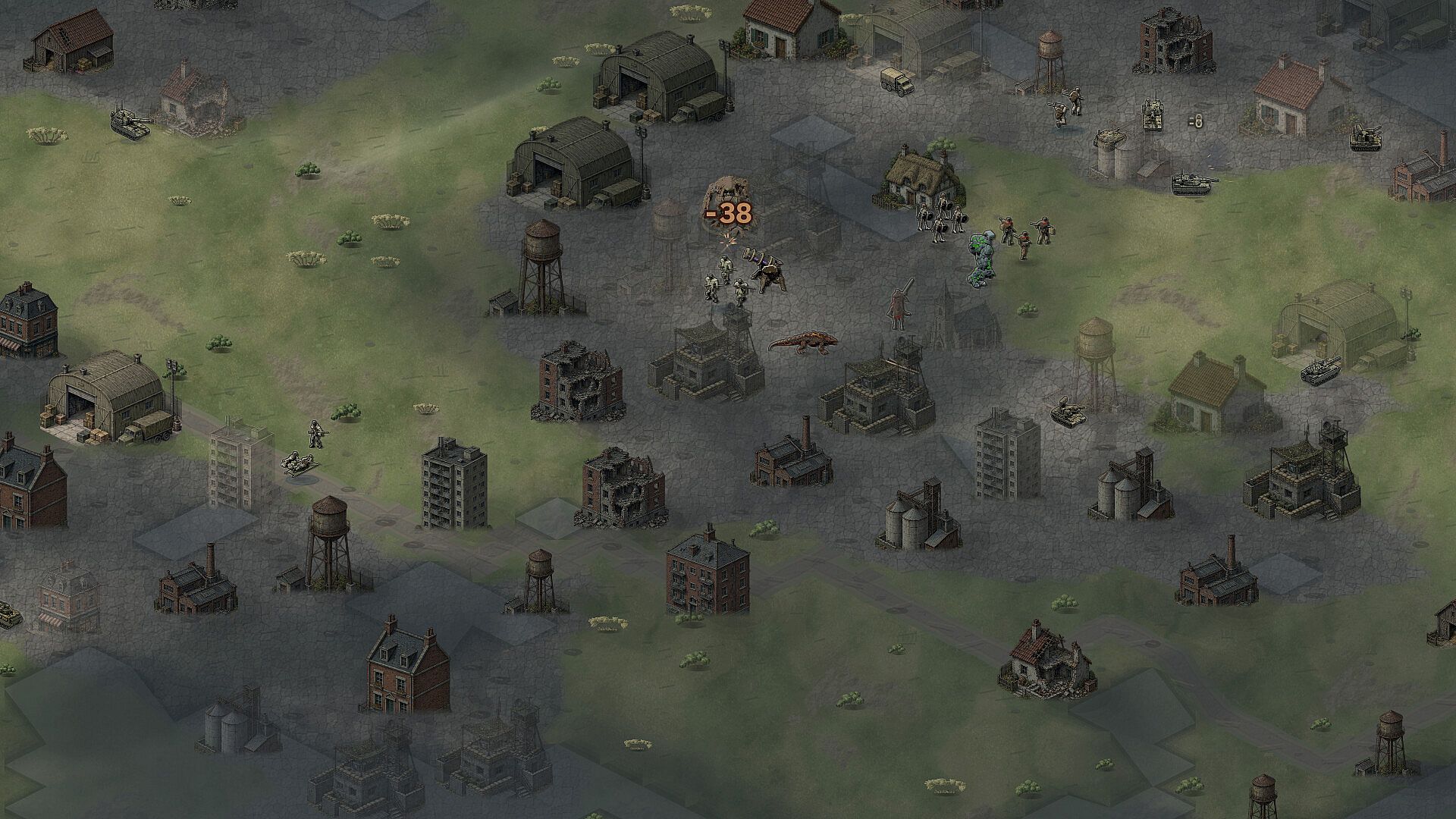
Spellraid is a turn-based strategy game set in an alternate Europe where rifts have unleashed waves of monsters. Players command modern military forces including tanks, infantry, artillery, and helicopters to push back the invasion across a linked campaign map and individual battles.
Gameplay
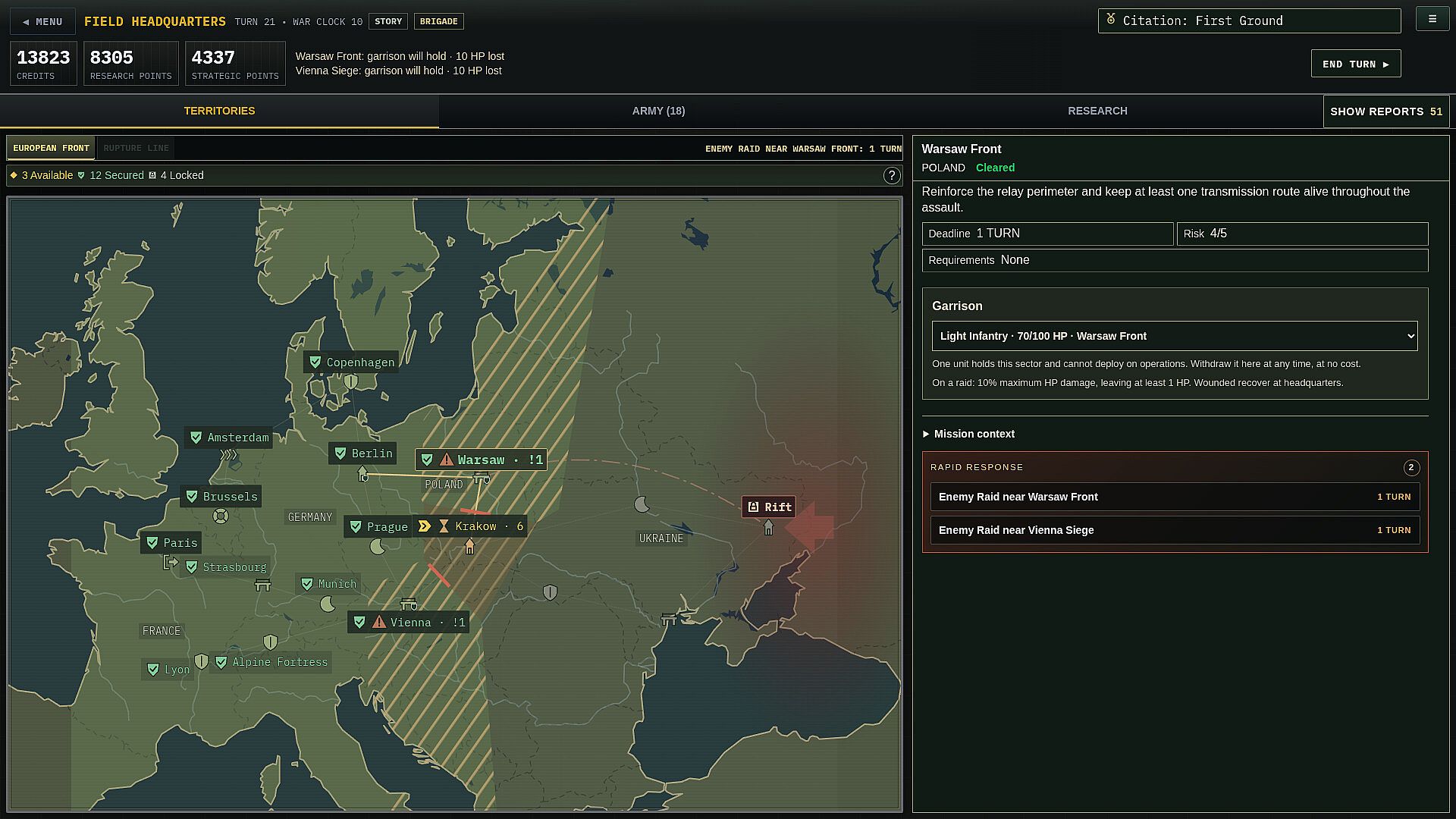
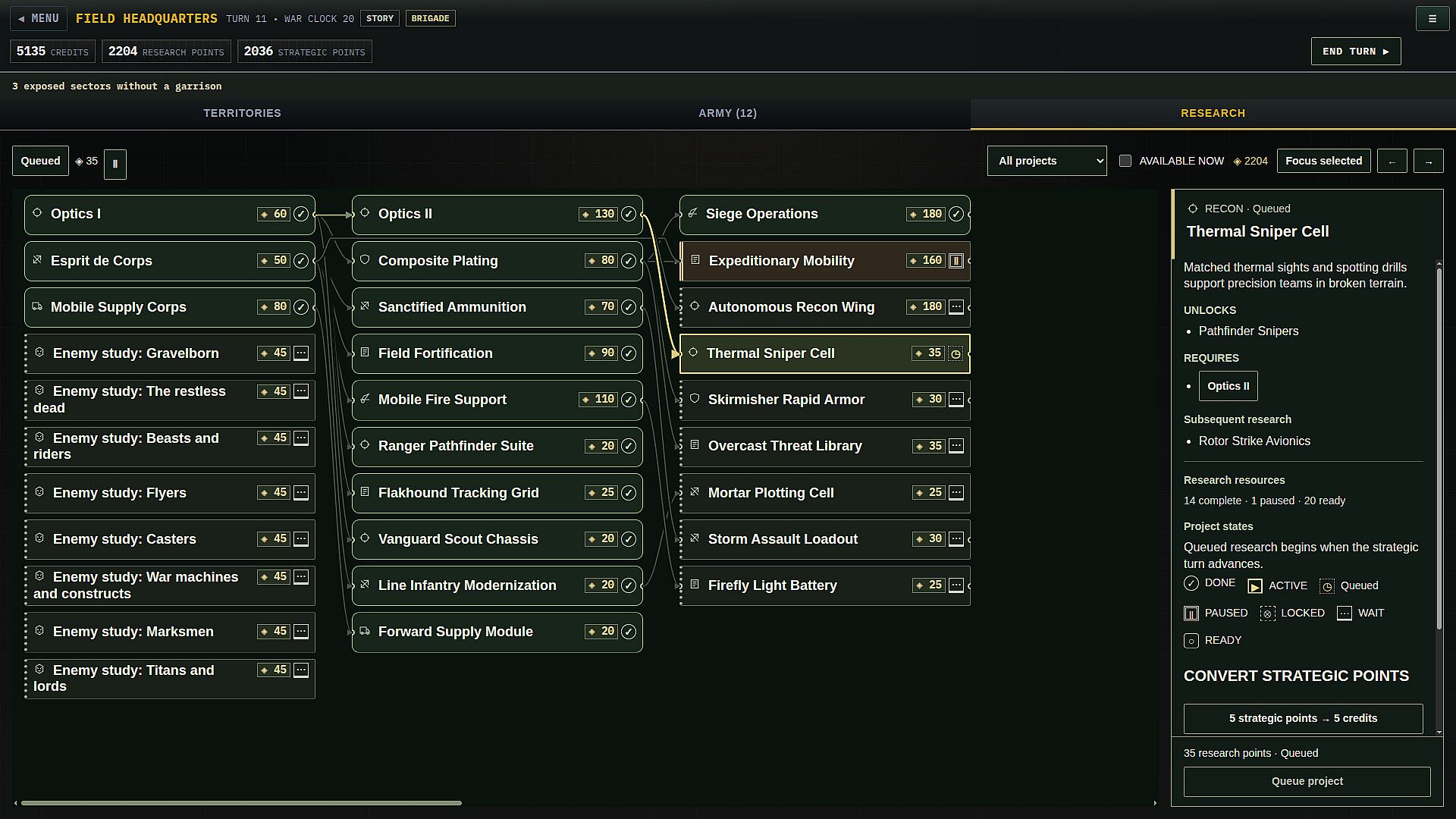
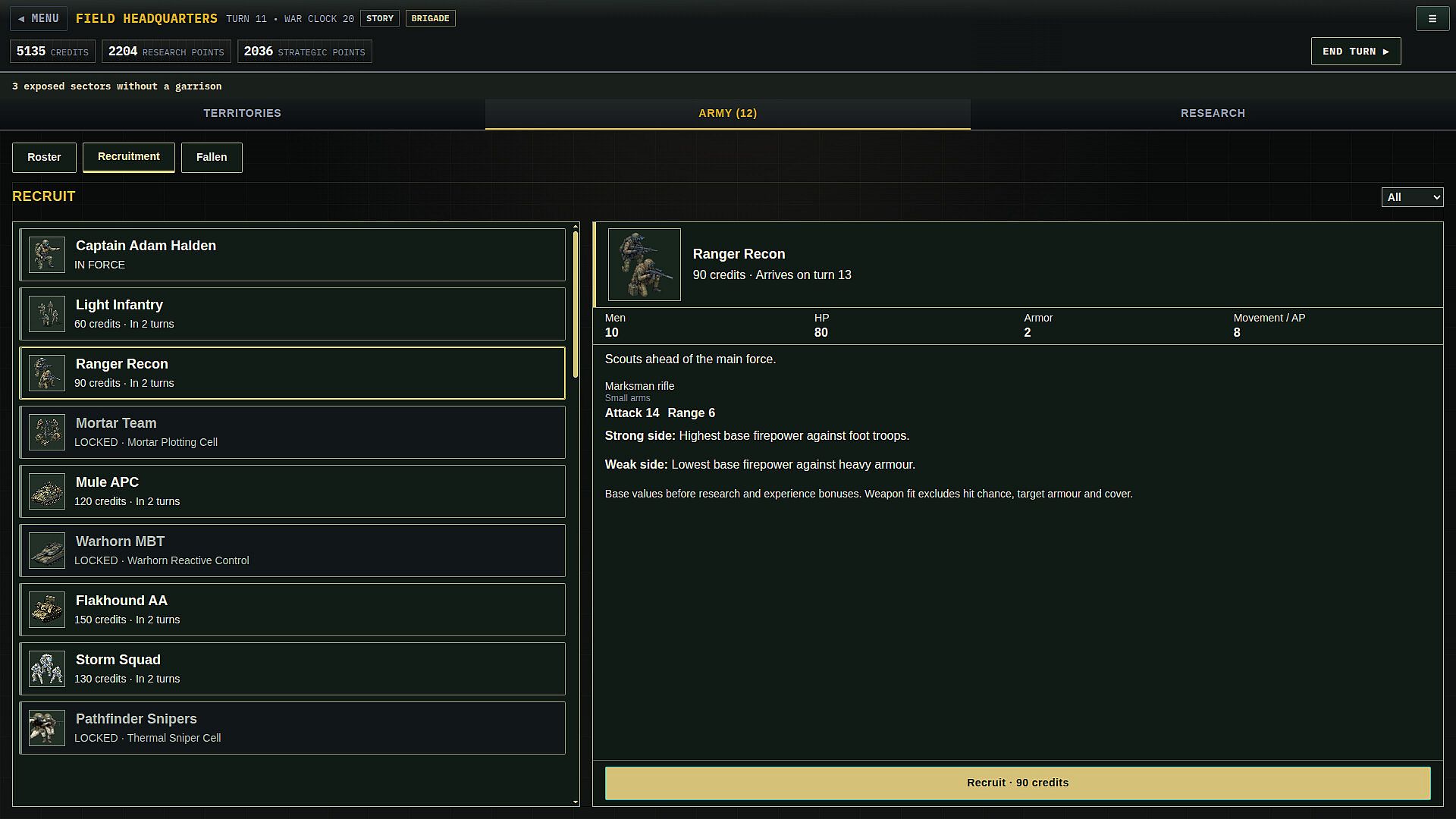
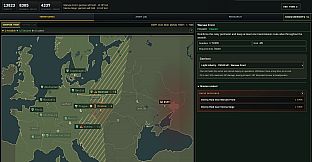
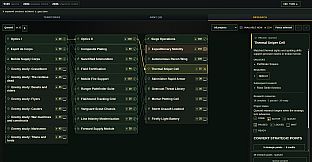
The core loop combines strategic campaign decisions with detailed tactical combat. On the campaign map, commanders select fronts among 29 territories while managing operation deadlines and a war clock. Captured ground generates income for a limited number of turns, which funds recruitment, reinforcement, officer assignments, and research into 59 projects. Persistent veteran squads carry experience forward, though new recruits can dilute overall effectiveness.
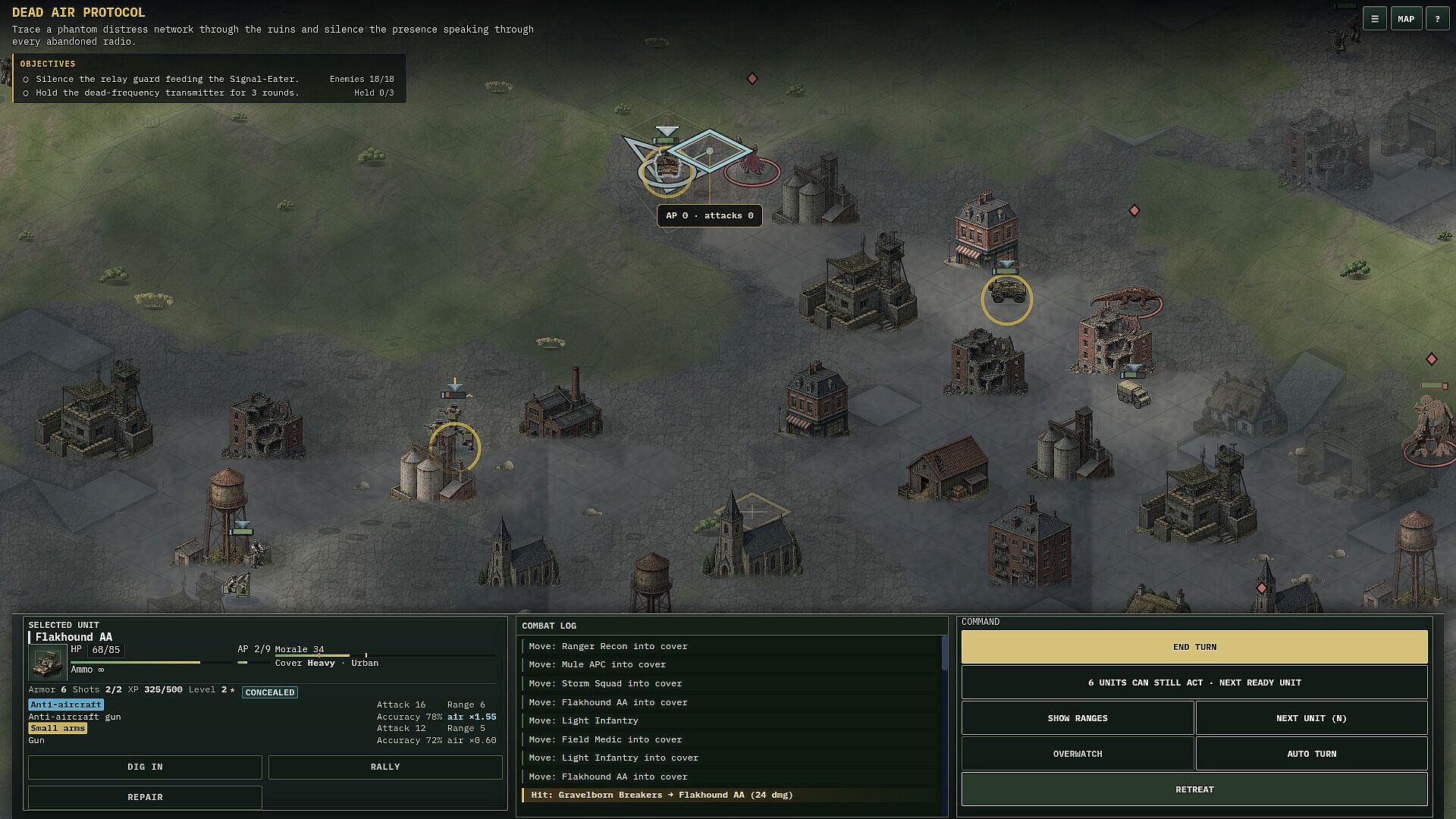
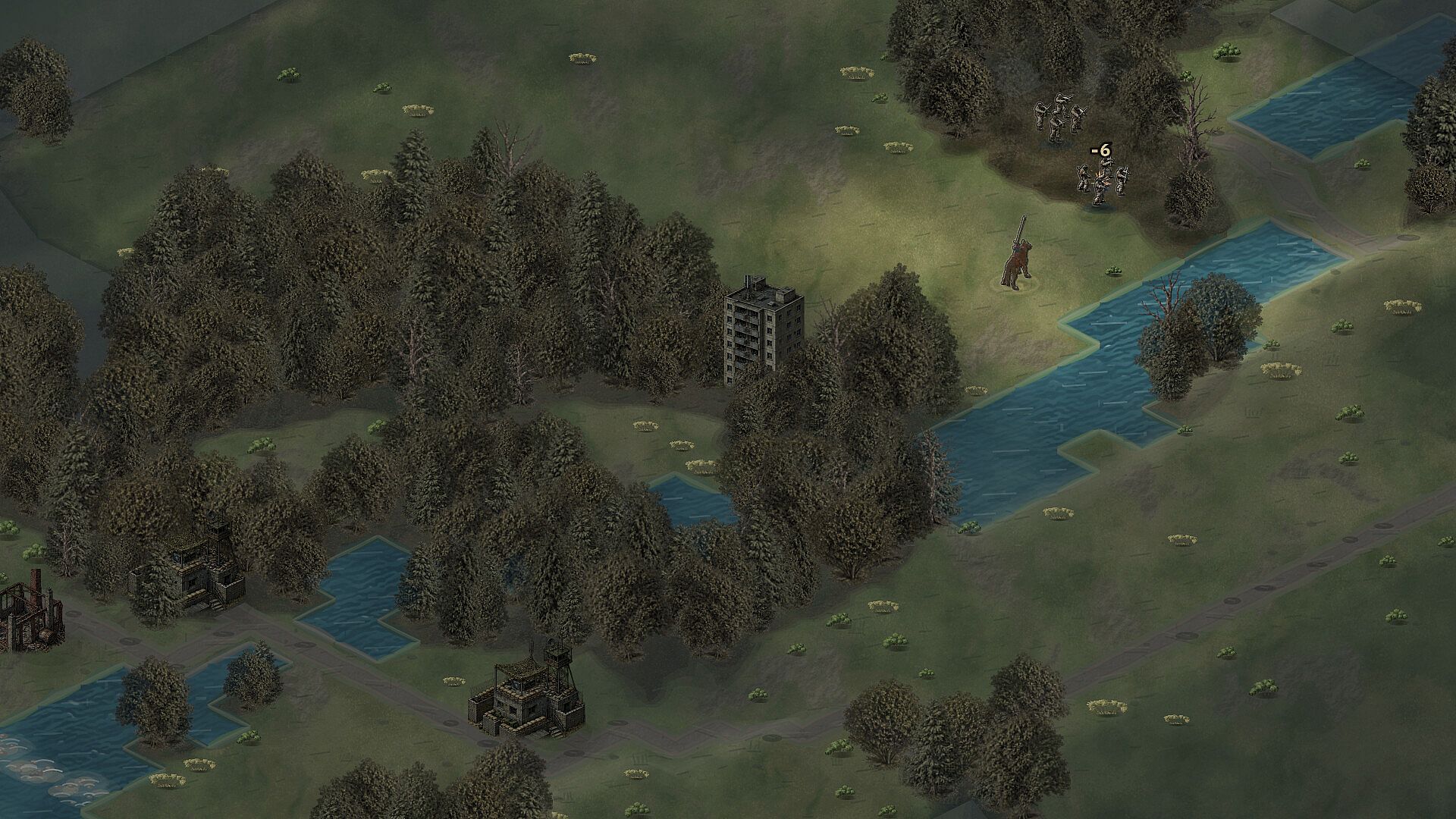
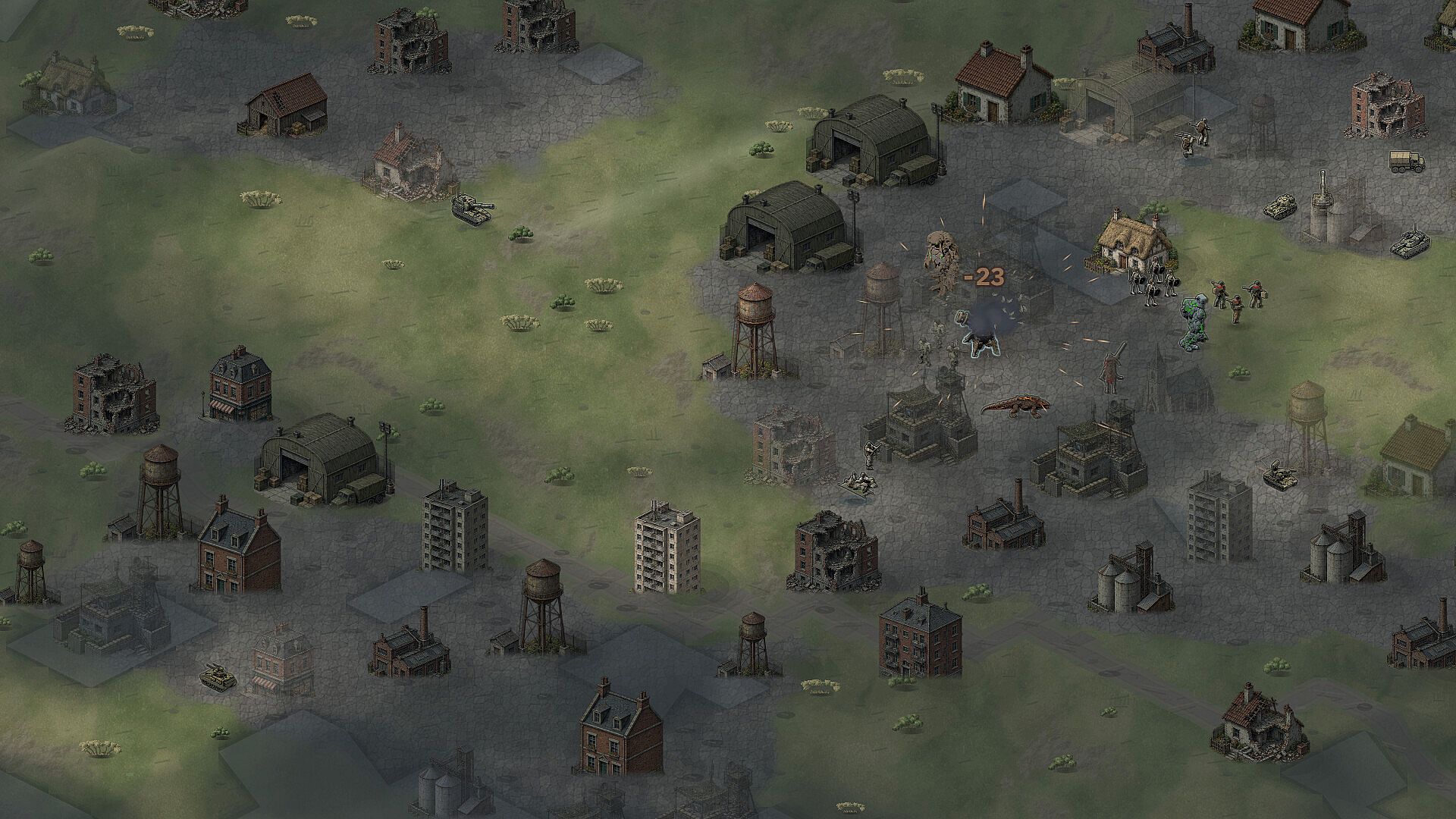
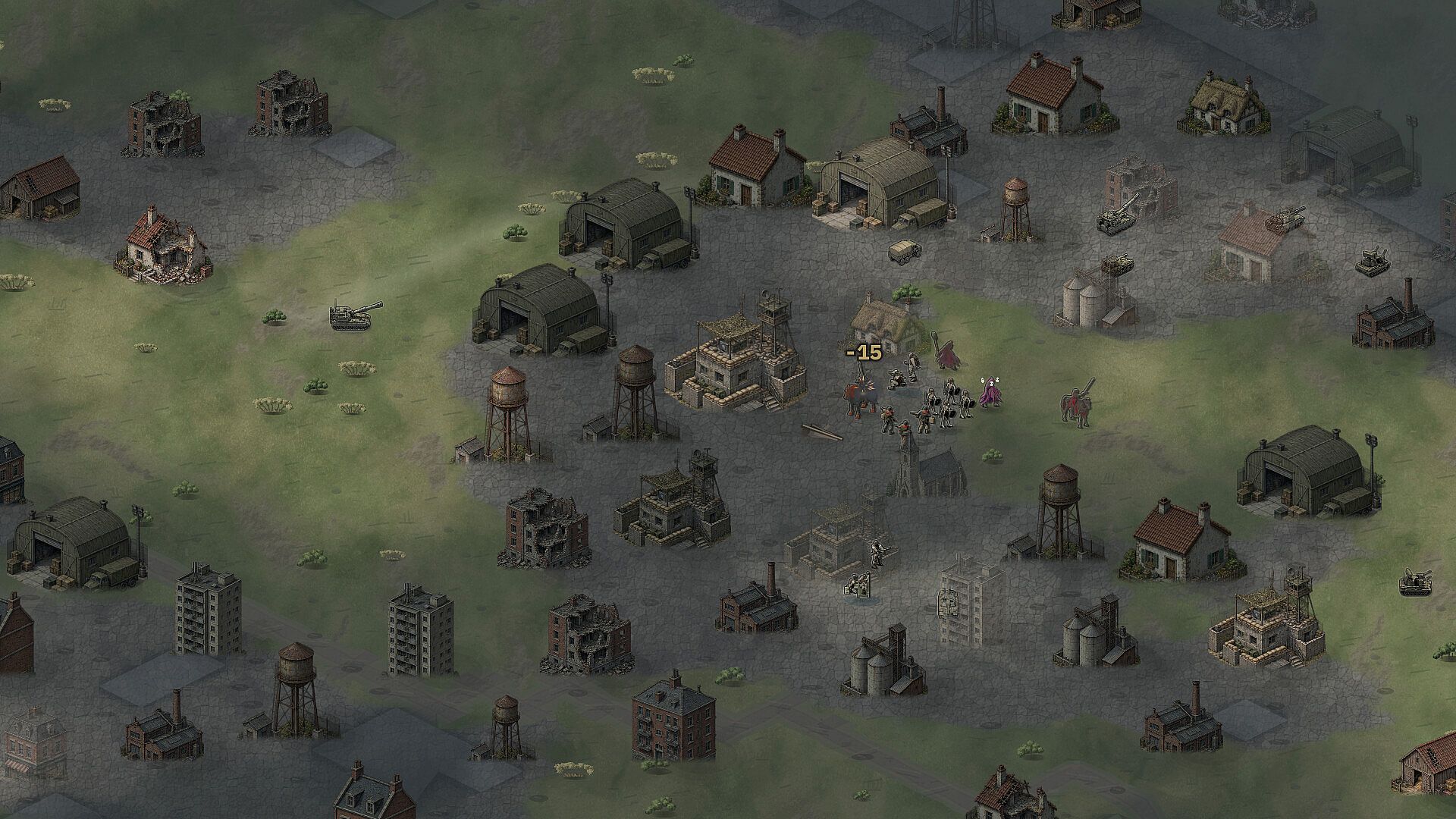
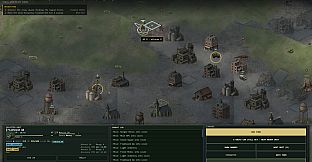
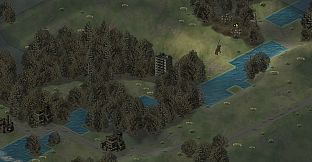
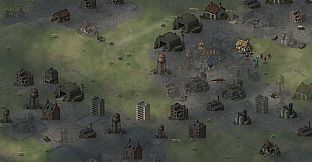
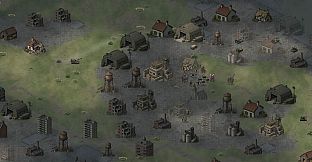
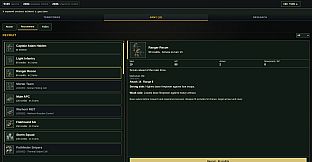
In battles, players field up to 38 Alliance unit types against 42 invader types across eight monster families. Terrain plays a major role: woods conceal infantry and block vehicles, hills extend sight lines and firing ranges, and crests block vision beyond. Firing reveals positions, so suppression, entrenchment, and morale management become critical when crossing open ground. Wounded soldiers can recover through rest or a field medic, while the dead require replacement. Survivors retain experience that improves performance over time.
Initial contacts show only rough condition and hit chance, keeping exact health and damage values hidden until an enemy family study is completed. Eight such studies unlock precise data and behavioral insights. Objectives range from escorting key figures and defending positions to rescues and demolition tasks, where holding ground often outweighs eliminating every foe.
Game Modes
Spellraid centers on a single-player campaign that links 29 territories through a strategic map. Each territory presents timed operations where players must reach and secure objectives while balancing resources and reinforcements. The campaign clock and income mechanics force careful choices about which fronts to prioritize before supplies run out.
Six short training chapters introduce core systems such as movement, cover, weapon roles, enemy studies, and morale. These chapters support optional narration in English, Slovak, German, or Polish and can be skipped without affecting the main campaign. The full interface, subtitles, and voice lines are localized in those four languages, with three difficulty levels available.
After launch, a free update will introduce a mission editor and Steam Workshop support for community-created battles. Players will be able to design custom maps, place units from both sides, define objectives and orders, then share or play those scenarios against the computer.
Campaign Structure and Mechanics
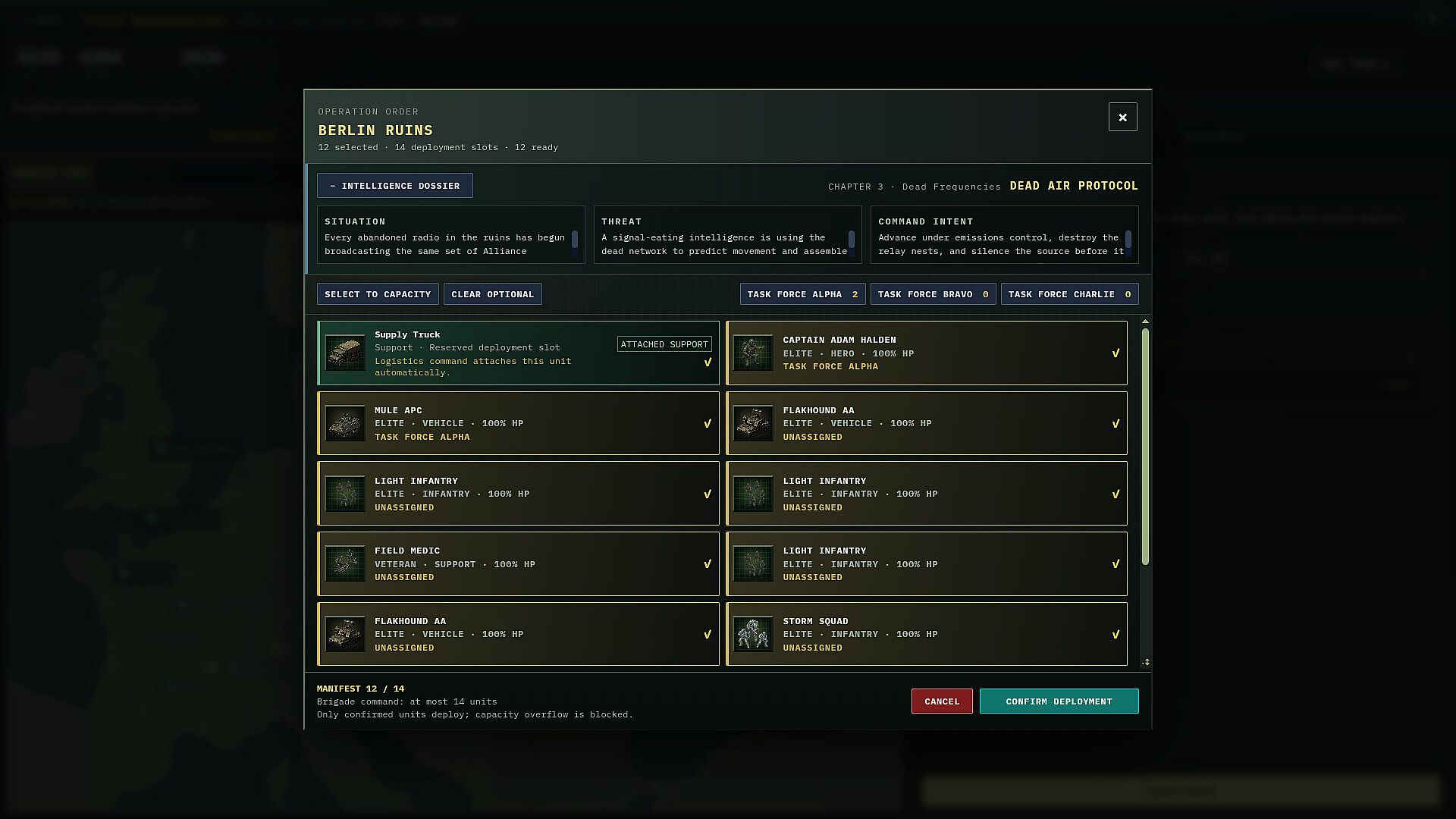
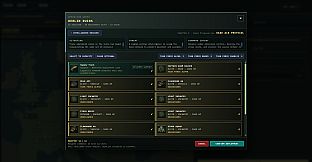
The campaign map serves as the strategic layer connecting individual turn-based battles. Each territory offers distinct challenges, from escorting Captain Halden out of Paris to holding the factory in Lyon or planting charges at the Rhine crossing. Reaching and securing key positions often proves more important than total enemy elimination.
Unit management emphasizes realism and attrition. Hits produce wounded or dead soldiers, altering squad composition permanently until replacements arrive. Research projects expand capabilities, while officers provide specialized bonuses. Persistent veterans grow stronger with experience, rewarding repeated use of successful units across multiple operations.
Visibility, elevation, and suppression add layers of tactical depth. Digging in improves defense, and morale affects how well units hold the line under pressure. Artillery and helicopters require careful positioning because not every weapon can engage every target type.
Is It Worth Playing?
Spellraid appeals to players who enjoy deliberate, information-driven turn-based tactics with persistent campaign consequences. The blend of hidden enemy details that unlock through study, squad attrition mechanics, and terrain-aware combat creates meaningful decisions in every engagement. Those who prefer fast-paced action or large-scale real-time battles may find the pace slower than expected.
The game runs entirely offline as a single-player experience with manual save export and import options. No multiplayer modes are present at launch. The planned mission editor and community content will extend replayability for those who enjoy creating or trying custom scenarios. Three difficulty levels and the optional training chapters make the systems accessible while still offering depth for experienced strategy fans.
Overall, the title suits players seeking a focused campaign of tactical battles tied to larger strategic choices rather than endless procedural runs or competitive ladders. Its emphasis on unit persistence, research, and terrain use rewards careful planning across the 29 territories.